I hadn't seen this posted here before and so I thought I'd post it for the benefit of anyone who hadn't seen it before.

Volume I
Volume II
Volume III
Volume IV

Not having the benefit of an education in aerospace, what is the meaning of the V Limit Design and V Max Design lines on the first envelope chart?

B-70 Aircraft Study Volume I
https://ntrs.nasa.gov/citations/19950002358

B-70 Aircraft Study Volume II
https://ntrs.nasa.gov/citations/19950002359

B-70 Aircraft Study Volume IV
https://ntrs.nasa.gov/citations/19950002361
Volume III seems to have disappeared offline, so I've uploaded it.

B-70 Aircraft Study Volume III
https://www.secretprojects.co.uk/B-70 Aircraft Study Vol 3.pdf
 
Last edited:
Hazegrayart has put out this interesting what-if video about the B-70 being used as a launch aircraft:


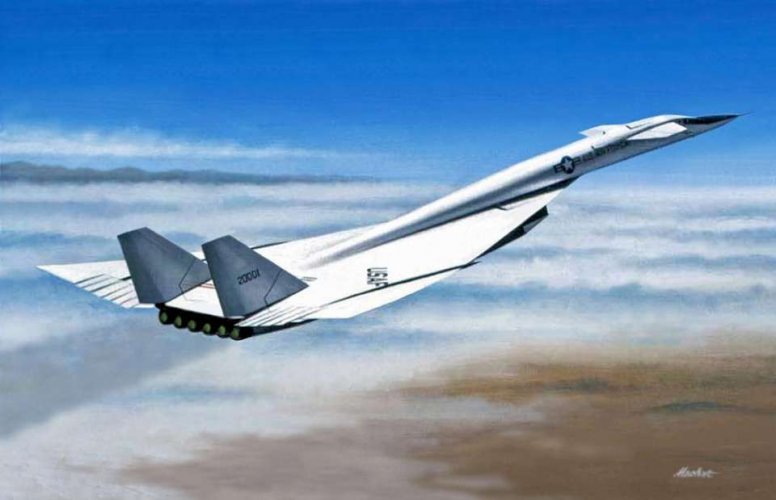
Alternate concepts for the XB-70 ranged from cargo and personnel transport, supersonic tanker and reusable launch vehicle to name a few. Some topics have enjoyed brief coverage in previous publications, yet most of what you will find resides in the archives of the Air Force Materiel Command History Office, a research facility located at Wright-Patterson Air Force Base in Dayton, Ohio. Research revealed a variety of gems in these archives, many a simple mention or illustration in an obscure report while others came from archived materials supplied by the manufacturer.
Source: A Look Back… NAA B-70 Valkyrie Variants – A Future That Never Was…
 
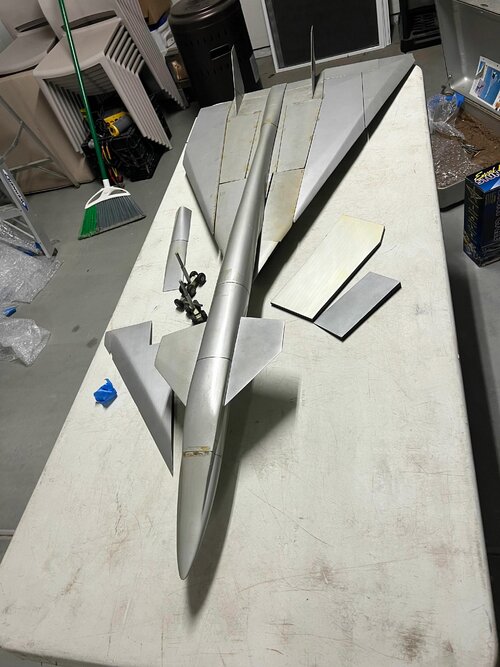
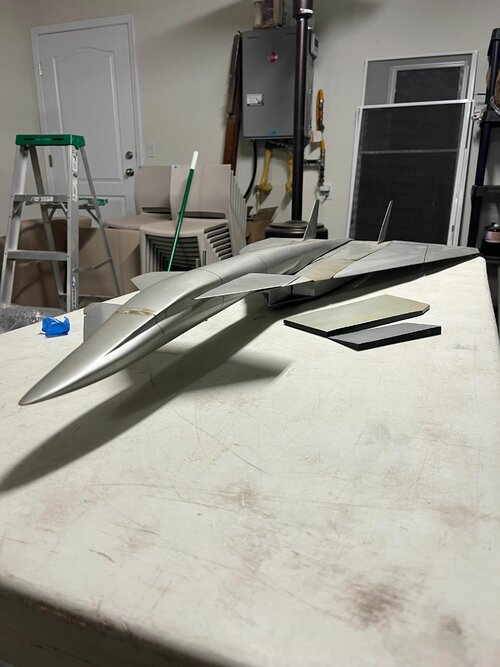
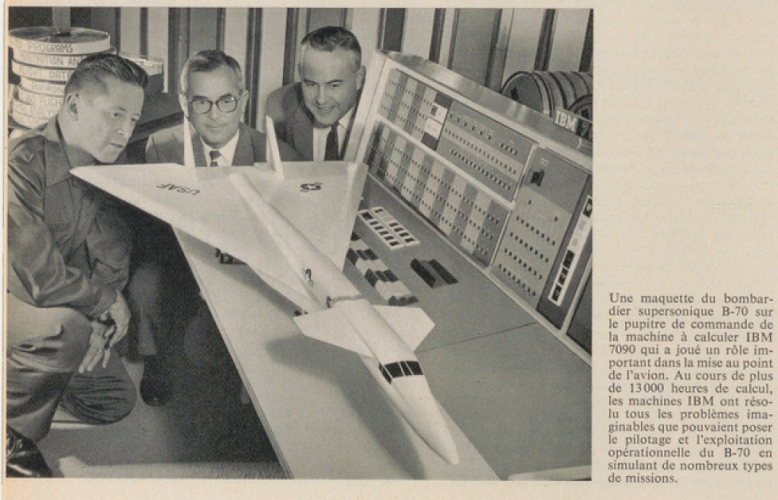
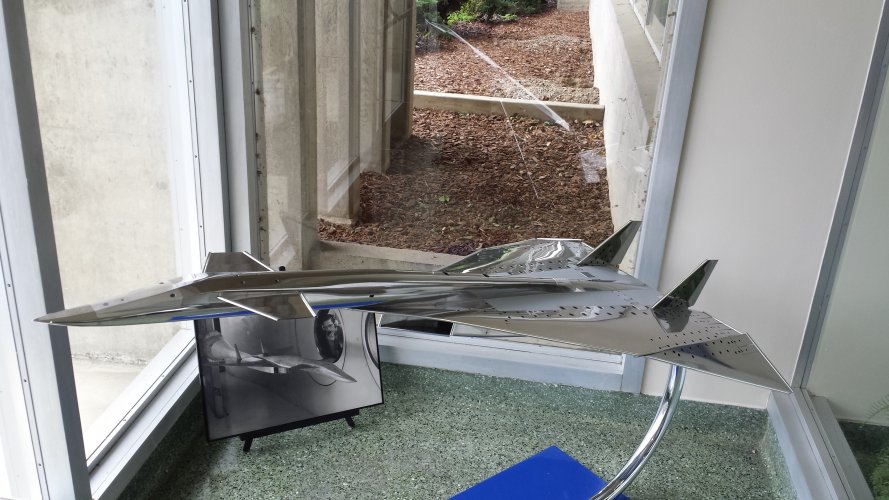
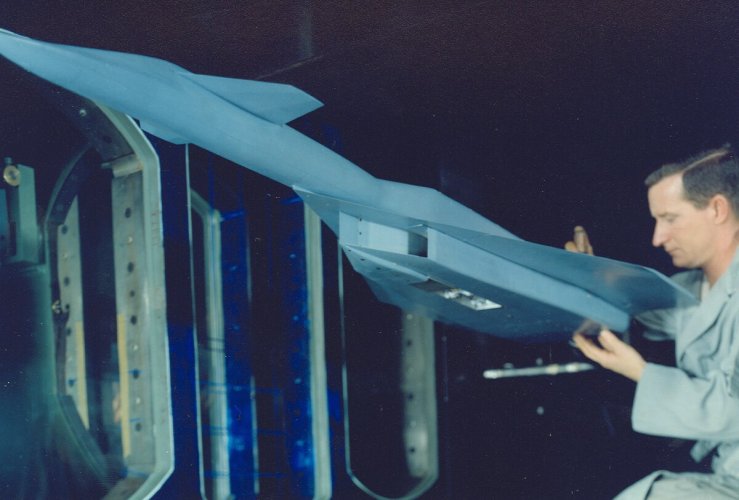
i’ve never posted this in here until now because it’s been a while since mydads put it together. but like the title says, this is the rough model of the Valkyrie that NAA brought to the pentagon to pitch the XB-70. my great grandfather worked for NAA and worked on the XB-70 project. he took this home one day when they were cleaning old stuff out of the office. pretty neat piece of history
the model that North American brought to the DOD to pitch the XB-70
 

Attachments

  • sf43rpdgvmud1.jpg
    sf43rpdgvmud1.jpg
    1.4 MB · Views: 184
  • yijhxpdgvmud1.jpg
    yijhxpdgvmud1.jpg
    1.2 MB · Views: 183
Hazegrayart has put out this interesting what-if video about the B-70 being used as a launch aircraft:


I checked the XB-70 dimensions and tried to extrapolate the size of that big belly fairing as seen in the video. Would have been huge: 8 feet deep by 80 feet long. Maximum width near the 6*J93s : 30 feet; and probably 15 to 20 ft near the air intake.
Imagine the rockets to be rolled inside that belly, to be dropped beyond Mach 3.
 
The XB-70 would have been one huge bomber that is for sure Archibald, it is a pity that it never got built because of the MIG-25 Foxbat. But even so they would have countered the threat with the F-108 which in itself was a beast armed with huge GAR-9 or AIM-47 missiles.
 
The weapons bay doors would have to be re-designed. The two prototypes used a single large door which unlocked, lifted then actuated as one single large unit I think aft. In some of the books I have on the XB-70, this door design did not work for M3 flight.
 
I just stumbled across this video about XB-70 test-flights:


Created by North American Aviation, this historic film shows the flight test program for the XB-70 Valkyrie at Edwards AFB in California including the first flight at supersonic speeds, and the various tests made prior to undertaking a flight at Mach 3.0 -- three times the speed of sound or 2200 miles an hour. It includes footage of test pilot Alvin "Al" White, who was badly injured in an accident that destroyed one of the two prototype aircraft.
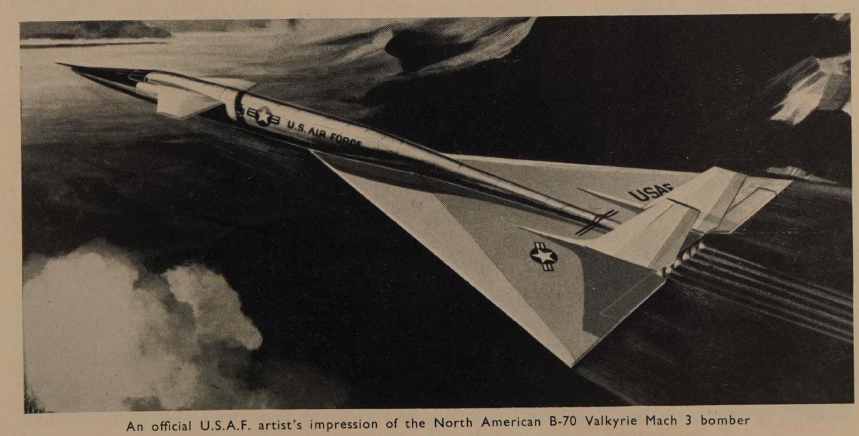
The North American Aviation XB-70 Valkyrie was the prototype of the B-70 nuclear-armed, deep-penetration strategic bomber for the U.S. Air Force's Strategic Air Command. North American Aviation designed the Valkyrie bomber as a large, six-engine aircraft capable of reaching Mach 3+ while flying at 70,000 feet; these speed and altitude capabilities would allow the evasion of interceptor aircraft, the only effective weapon against bomber aircraft at the time.
Due to improved high-altitude surface-to-air missiles (SAMs), the U.S. Air Force's doctrine changed to low-level penetration bombing, the large development costs of the B-70 program, and the introduction of intercontinental ballistic missiles (ICBMs) to the U.S. nuclear arsenal, led to the cancellation of the B-70 program in 1961. As such, two prototype aircraft were built, and designated XB-70A; these aircraft were used for supersonic test-flights during 1964–69. In 1966, one prototype crashed after colliding in midair with a smaller jet aircraft; the remaining Valkyrie bomber is in the National Museum of the United States Air Force, in Ohio.
The XB-70's maiden flight was on 21 September 1964. In the first flight test, between Palmdale and Edwards AFB, shortly after take-off one engine had to be shut down, and an undercarriage malfunction warning meant that the flight was flown with the undercarriage down as precaution, limiting speed to 390 mph - about half that planned. As seen in the film on landing, the rear wheels of the port side main gear locked, the tires ruptured, and a fire started.
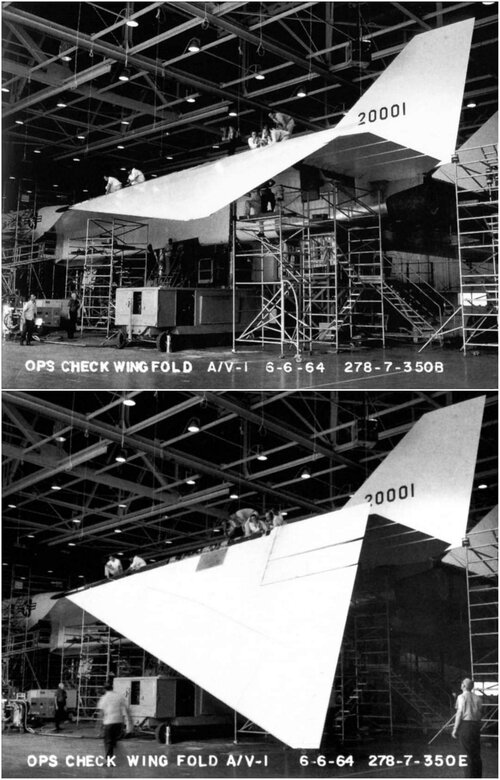
The Valkyrie first became supersonic (Mach 1.1) on the third test flight on 12 October 1964, and flew above Mach 1 for 40 minutes during the following flight on 24 October. The wing tips were also lowered partially in this flight. XB-70 No. 1 surpassed Mach 3 on 14 October 1965 by reaching Mach 3.02 at 70,000 ft. The first aircraft was found to suffer from weaknesses in the honeycomb panels, primarily due to inexperience with fabrication and quality control of this new material. On two occasions, honeycomb panels failed and were torn off during supersonic flight, necessitating a Mach 2.5 limit being placed on the aircraft.
The deficiencies discovered on AV-1 were almost completely solved on the second XB-70, which first flew on 17 July 1965. On 3 January 1966, XB-70 No. 2 attained a speed of Mach 3.05 while flying at 72,000 ft. AV-2 reached a top speed of Mach 3.08 and maintained it for 20 minutes on 12 April 1966. On 19 May 1966, AV-2 reached Mach 3.06 and flew at Mach 3 for 32 minutes, covering 2,400 mi in 91 minutes of total flight.
A joint NASA/USAF research program was conducted from 3 November 1966 to 31 January 1967 for measuring the intensity and signature of sonic booms for the National Sonic Boom Program (NSBP). Testing was planned to cover a range of sonic boom overpressures on the ground similar to but higher than the proposed American SST. In 1966, AV-2 was selected for the program and was outfitted with test sensors. It flew the first sonic boom test on 6 June 1966, attaining a speed of Mach 3.05 at 72,000 ft. Two days later, AV-2 crashed following a mid-air collision with an F-104 while flying in a multi-aircraft formation.Sonic boom and later testing continued with XB-70A #1.
The second flight research program (NASA NAS4-1174) investigated "control of structural dynamics" from 25 April 1967 through the XB-70's last flight in 1969. At high altitude and high speed, the XB-70A experienced unwanted changes in altitude. NASA testing from June 1968 included two small vanes on the nose of AV-1 for measuring the response of the aircraft's stability augmentation system. AV-1 flew a total of 83 flights.
The XB-70's last supersonic flight took place on 17 December 1968. On 4 February 1969, AV-1 took its final flight to Wright-Patterson Air Force Base for museum display (now the National Museum of the United States Air Force).

It has occurred to me that it has been 60 years since the XB-70A first flew.
 
The XB-70 would have been one huge bomber that is for sure Archibald, it is a pity that it never got built because of the MIG-25 Foxbat. But even so they would have countered the threat with the F-108 which in itself was a beast armed with huge GAR-9 or AIM-47 missiles.
Yet wasn't the XB-70 program canceled before YE-155 program was even approved in 1961? When did it entered the frame of thought?
 
Yet wasn't the XB-70 program canceled before YE-155 program was even approved in 1961?

As far as I know the Soviet Ye-155 programme was secret at the time, the B-70 programme was cancelled IIRC due to a combination of budgetary factors, massive improvement in the Soviet air-defence network (Re: the 1960 Gary Powers U-2 shoot-down) and US ICBMs starting to enter service (Starting with the Atlas D) rendering the B-70 obsolescent.
 
Are there any drawings showing the AV.3 overall configuration, i understand the canard foreplanes were to be of a different angle to the first two airframes ? was AV.3 intended to have the dihedral wing or flat ? (i am also unsure what wing was intended as 'production' form as i understand the third airframe was to represent ?)

cheers, Joe
What makes you think that?
Many of those old Data sheets use the early 58 designs which were not final.
Though that has be restated twice now in publication; I believe this to be inaccurate.
 
Last edited:
On a topical note, with regards as to proposed hardened aircraft shelters and such for the B-70:
1000010399-png.771982

1000010402-png.771985

(h/t A Tentative Fleet Plan)
 
Last edited:
A reminder of what a beautiful aircraft the XB-70A was, it's a pity it didn't see even limited production. I wonder if the US never got involved in the Vietnam war we might've seen limited production of the B-70A?
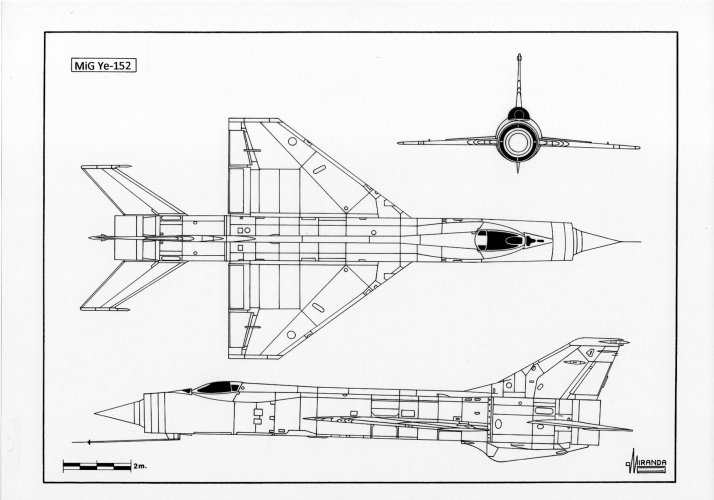
That streamlined beauty was a dead end in front of the Sams and MiG Ye-152s. The turning radius of the B-70 at Mach 3 and high altitude was equivalent to the extent of Texas. Countermeasures would not have been enough to offset the expense of losing a squadron of Valkyries.:(
 
Countermeasures would not have been enough to offset the expense of losing a squadron of Valkyries.:(

The ECM system the B-70 was supposed to be equipped with IIRC was supposed to be quite powerful (I think Westinghouse was going to make it) also there was a proposed B-70B variant that IIRC was to be equipped with two or four AGM-48 Skybolt ALBMs which would've fired them about 1,000 miles from its' targets.
 
That streamlined beauty was a dead end in front of the Sams and MiG Ye-152s. The turning radius of the B-70 at Mach 3 and high altitude was equivalent to the extent of Texas. Countermeasures would not have been enough to offset the expense of losing a squadron of Valkyries.:(
And yet the Blackbird showed that hitting an aircraft at Mach 3 isn't as easy as everybody had assumed.
 
A reminder of what a beautiful aircraft the XB-70A was, it's a pity it didn't see even limited production. I wonder if the US never got involved in the Vietnam war we might've seen limited production of the B-70A?
The B-70 was cancelled in 1961 - when there were less than 1,000 American servicemen in Vietnam (746 at the beginning of 1961).
 
In 1955 the USAF issued the specification GOR No. 48 calling for a supersonic bomber, with 6,000 miles range, to penetrate the Soviet air defense system. Six months later, the company North American Aviation Inc. proposed a six-engine canard-delta aircraft capable of cruising at Mach 3+ while flying at 70,000 ft. (21,341 m).

It was expected that the new bomber would practically be immune to the cannon-armed Soviet interceptors, but it had also been planned to install a five-element defensive system embodying active and passive warning devices to be capable of noise jamming 30 Soviet radars operating simultaneously, threat evaluation equipment, electronic countermeasures, infrared countermeasures as chaff dispersing rockets and plastic smoke to screen the engine exhaust.

In August 1958, the proposal had been approved by the USAF under the codename Weapons System 110A and was expected to enter service in 1963 as the B-70 Valkyrie.

On February 26, 1955, the Soviet CPSU Central Committee ordered the development of the weapons system Uragan-5, for the automatic guidance interception of enemy supersonic bombers flying at 82,000 ft. (25,000 m) and 1,234 mph (2,000 km/h).

The system was to be formed by 59 early warning ground radar stations with P-14 (Tall King) VHF radar sets and 400 km of detection range, digital control computer, IFF interrogation system, command data link and a point-defense interceptor with 120 km combat range.

The second generation of Soviet surface-to-air missile systems S-75 (SA-2 Guideline) was designed with the aim of correcting all the SA-1 shortcomings.

Each SA-2 launch site was capable of 360-degree coverage, to cope with the threat posed by a single bomber and consisted of six launcher pads deployed in a circular pattern around the RSNA/SNR-75 Fan Song fire control radar, with 120 km range. All the Guideline components were mounted on wheeled vehicles.

The V-750 rail-launched missile with Mach 4.0 top speed, 35 km range and 27,000 m ceiling, used one Kartukov solid fuel rocket booster to accelerate off its launcher and one bi-propellant rocket motor sustainer, with 3,000 kg peak thrust and 25-60 seconds burn time.

To offset the accuracy limitations of Fan Song guidance, the missile was fitted with 5E11 Shmel radio proximity fuse and 11D fragmentation warhead, with 250 kg of conventional explosive. The warhead blast radius for severe damage at high-altitude was 250 m, due to the rarified atmosphere.

Fan Song could simultaneously direct three missiles against a target to achieve acceptable success possibilities.

The new P-12 A (Spoon Rest) early warning radar had 275 km acquisition range and 32,000 m ceiling.

In spring of 1958 the Guideline system was deployed in 600 launch sites around Moscow, Leningrad, and Baku.

In the early 1960s the final U-2 overflight of the Soviet Union U-2 was planned under the code name Grand Slam.

The Pakistan-Norway nine hours flight was 3,800 miles long, with 2,900 miles over the Soviet airspace overflying Tyuratam, Chelyabinsk, Kyshtym, Sverdlovsk, Kirov, Severodvinsk, Kandalaksa, Murmansk, Polyarnyy and Bodo-Norway.

On May 1, 1960, one U-2 took-off from Peshawar at 6:26 AM, and once airborne the spy plane turned toward the Afghanistan border flying at 66,000 ft. (20,120 m).

The U-2 was spotted by Soviet radar over Afghanistan while it was still at fifteen miles of the USSR border.

An alert was called, all civilian airliners were grounded and all V-PVO airfields, SAM sites, radar stations and command posts over the southern Soviet Union were placed on full combat alert.

The U-2 was tracked by multiple PVO radars, thirteen fighters scrambled around Tashkent, and they carried out zoom-climb attacks in an attempt to catch the intruder despite the fact that experience had demonstrated that the MiG fighters were unable to intercept the U-2.

The intruder was lost on radar and reacquired over Tyuratam flying at 70,500 ft. (21,493 m)

Two MiG-19P fighters made an unsuccessful attempt to get into firing position, vectored by ground radar, but they could only ascend to 58,000 ft. (17,682 m).

The PVO staff predicting that the U-2 was heading toward Sverdlovsk, and all the SAM SA-2 sites of 4th Independent Army and the fighter units based in the area were instructed to down the intruder “whatever the cost”.

Captain Mentiukov, the pilot of one Sukhoi Su-9 Fishpot fighter that made a refueling stop at Kolcovo airfield, was ordered to intercept the U-2.

The Su-9 was in ferry configuration, it carried no air-to-air missiles, and none were available at Kolcovo, but Mentiukov received order to ramming the spy plane.

The mission was suicidal because the pilot did not have high-altitude pressure suit.

Instead of using the old Taran tactics, Mentiukov tried cutting the target trajectory and putting it out of control with the trail turbulence. This type of attack had been successfully used by a D.H. Mosquito FB VI of the 418th RAF Squadron to destabilize a V-1 flying bomb in June 1944.

The U-2 had to fly very near their never-exceeded speed and the margin with the stall speed at 70,000 ft. (21,341 m) was only 12 mph. Exceeding any of both limits could cause transonic airflow separation at the wings and structural damage.

The Su-9 was guided by ground control radar, but its zoom-climb attack was unsuccessful and overshot the target by 26,000 ft. (7,927 m).

The first salvo of SA-2 surface-to-air missiles failed because the U-2 was already out of range by the time the missiles reached its altitude.

When the intruder entered the engagement area of the next launch site at 08:36, only one SA-2 was fired due to fire control malfunction. At 70,500 ft. (21,493 m) over Sverdlovsk the missile warhead detonated near the U-2 damaging the tailplane. The aircraft was destabilized losing its wings due to the g-forces and the pilot Francis Gary Powers was captured, creating an international incident.

Meanwhile two MiG-19 P Farmer B fighters were airborne and approaching the engagement zone, but their IFF transponders did not work, and Lieutenant Safronov's plane was destroyed by the third salvo of missiles.

The incident was kept secret for many years.

On March 7, 1957, the MiG OKB was tasked with the design of the new interceptor, under the codename Ye-150. The prototype was flown on July 8, 1960, reaching a top speed of 2,816 km/h (Mach 2.65) and 73,000 ft. (22,500 m) ceiling.

The combat version Ye-152-1, that reached 2.28 Mach, armed with two underwing air-to-air missiles Mikoyan Raduga K-9-51, flew on May 16, 1961.

On July 7, 1962, the aircraft established the absolute speed record flying at 1,666 mph (2,681 km/h) under the fictitious designation Ye-166.


MiG Ye-152-1 technical data

Wingspan: 29 ft. (8.79 m), length: 64 ft. (19.65 m), wing area: 467 sq. ft. (42 sq. m), take-off weight: 31,678 lb. (14,350 kg), maximum speed: 1,883 mph (3,030 km/h), service ceiling: 74,358 ft. (22,670 m), power plant: one Tumansky R-15-300 turbojet rated at 10,210 kg thrust with afterburner, armament: two K-9 missiles.


The Valkyrie program suffered numerous delays due to inexperience with the new heat-resistant materials, as well as political and budgetary reasons. When the prototype XB-70 AV-1 was flown on September 21, 1964 the Soviet air defense system was already so consolidated that the WS110A specification was meaningless, and the B-70 was cancelled by the Kennedy Administration.

In August 1958, the North American project office submitted the proposal Defensive Antimissile System (DAMS) using air-to-air missiles launched by the Valkyrie.

The Defense Feasibility Study was completed in March 1959 and published by the Air Proving Ground Center-Eglin AFB the same month the U-2 incident occurred.

In 1948 the first experimental AAM-A-2 air-to-air missile was launched and entered in service with the USAF in 1955 as the Hughes AIM-4 Falcon.

The original purpose of the Falcon was a Mach 3.8 self-defense weapon for the B-52 bomber and was shortly revived during the B-70 development. The rail-launched missile was not particularly maneuverable and needed to be pointed in the right direction of the target.

Due to the B-70 speed the Falcon could just be used against any threat coming from its forward hemisphere, but the Valkyrie would have to defend itself against threats from all direction with spherical coverage.

The Falcon was a cylindrical rocket with four delta wings. Would it have been thrown sideways from a B-70 flying to Mach 3 it would have been destroyed by the crosswind shock waves.

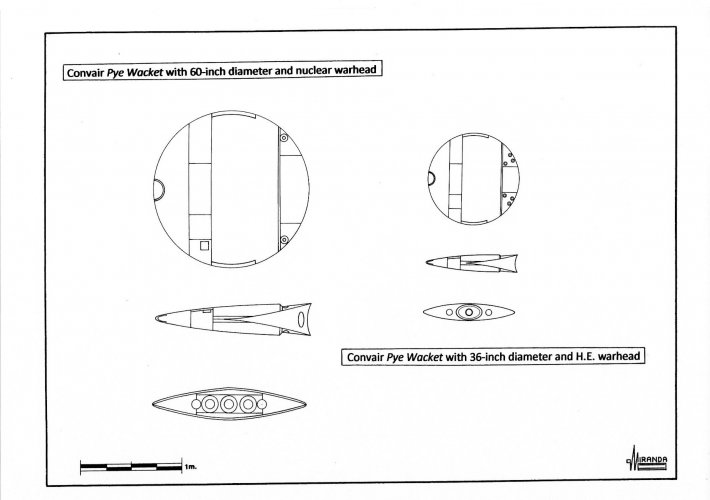
North American proposed the Weapons System WS-740A, a wingless lenticular-form rocket with omnidirectional launch capabilities, capable of engaging incoming missiles at relative speeds of Mach 10 and being able to survive and maneuver at 250g accelerations.

The project was awarded to the Convair Division of General Dynamics Corporation, under the codename Pye Wacket in June 1959.

A general aerodynamic evaluation was conducted to determine the technical feasibility of lenticular cross section/circular planform configuration. Wind tunnel tests with several 1/3 scale models were conducted in the Arnold Engineering Development Centre.

The results indicated that the lenticular configuration with blunted trailing edge, sharp leading edge and modified tangent contours, have best aerodynamic characteristics than the symmetrical lenticular cross section, and the most desirable volume distribution for the propulsion system.

The lenticular configuration was efficient at hypersonic velocities with good maneuverability at altitude. Additional tests demonstrated that the aerodynamic controls are not suitable for use in the omnidirectional launch phase of flight, due to the necessity of alignment with the relative wind.

One reaction-jet control system was used, control in yaw, roll and pitch could be obtained by means of the thrust forces generated by four nitrogen-injected binary thrusters, with exhaust through the top and bottom surfaces of the disc.

Pye Wacket had an inertial midcourse guidance system with terminal infrared homing. The Redeye IR seeker was mounted in the leading edge behind an IR window with a look angle of 40 degrees and cooling system.

The USAF determined that internal carriage of eight wingless missiles could be installed in the Valkyrie with no range penalty.

The weapon was to be structurally rigid to withstand extremely high launch accelerations, rapid change of thrust direction for quick maneuver, maximum flight duration of 50 seconds, cruising at Mach 6.5+ and terminal velocities of Mach 10.

The expected aerodynamic heating of 3,300 ºF at 11 seconds of flight, requires the use of a leading edge made of Pyrographite. The outer skin of the disc was made of polyester resin, with Titanium B-120 alloy honeycomb core, protected by a layer of Teflon ablating material to restrict skin temperatures to under 800ºF. The internal structure was made of magnesium-alloy.

Three Pye Wacket configurations were proposed in 1961:

60-inch diameter, 21 per cent thickness-to-chord ratio configuration

Power plant: three Thiokol M58A2 solid-fuel rocket motors with 10,200 lbf thrust each. Launch weight: 830 pounds. Warhead: one W54 nuclear device with 50 pounds weight. Range: 100,000 ft at 60,000 ft altitude.

60-inch diameter, 14 per cent thickness-to-chord ratio configuration

Power plant: one integral pancake-shaped solid-fuel rocket motor with 9,700 lbf thrust. Launch weight: 581 pounds. Warhead: 20 pounds of H.E. with impact fuse. Range: 120,000 ft at 60,000 ft altitude.

36-inch diameter, 21 per cent thickness-to-chord ratio configuration

Power plant: one integral pancake-shaped solid-fuel rocket motor with 5,000 lbf thrust. Launch weight: 200 pounds. Warhead: 20 pounds of H.E. with impact fuse. Range: 50,000 ft at 60,000 ft altitude.

 

Attachments

  • defr.jpg
    defr.jpg
    323.4 KB · Views: 143
  • ñol.jpg
    ñol.jpg
    165.4 KB · Views: 162
I think China hit a big-wing Canberra with three Guidelines, but with fighter pilots getting the credit, IIRC.

Perhaps Pye Wacket can make a return as a means of defending against hypersonic munitions aimed at cities.

Arsenal drones could dispense them like the old disc firing toy guns sold on racks.
 
The Valkyrie program suffered numerous delays due to inexperience with the new heat-resistant materials, as well as political and budgetary reasons. When the prototype XB-70 AV-1 was flown on September 21, 1964 the Soviet air defense system was already so consolidated that the WS110A specification was meaningless, and the B-70 was cancelled by the Kennedy Administration.

The cancellation was on 28 March 1961 (Kennedy took the oath of office in 20 January 1961).

Funding was continued to complete three prototypes for use as test aircraft to explore Mach-3 flight for large aircraft, but not to continue development of weapons etc for it. The 3rd prototype was cancelled not long after.

There were attempts by the USAF and part of Congress to get the project re-instated, but these all failed.
 
That kind of lazy speculative ignorance actually hurts even decades later in this august forum.
 
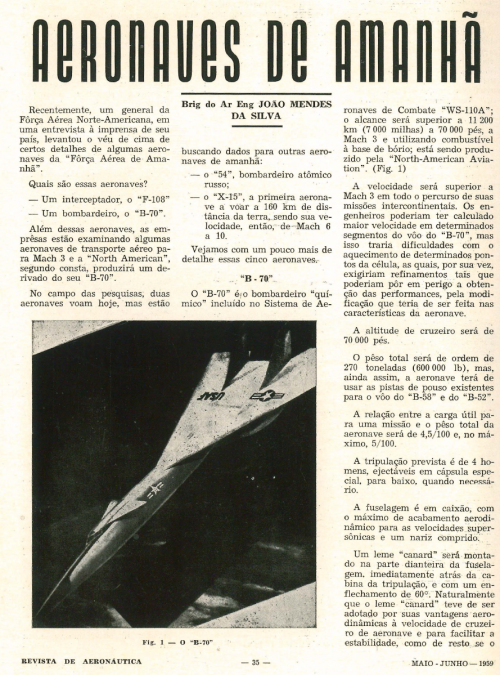
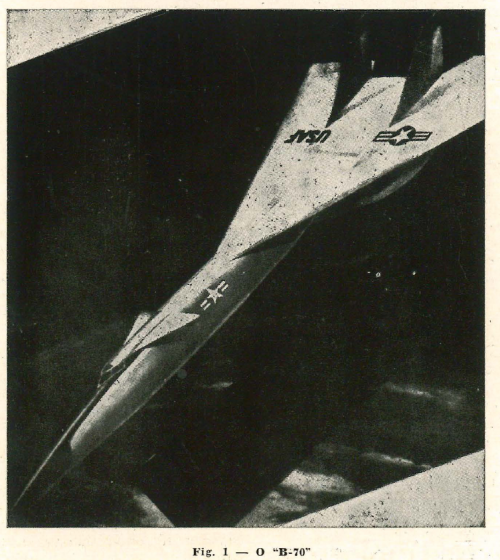
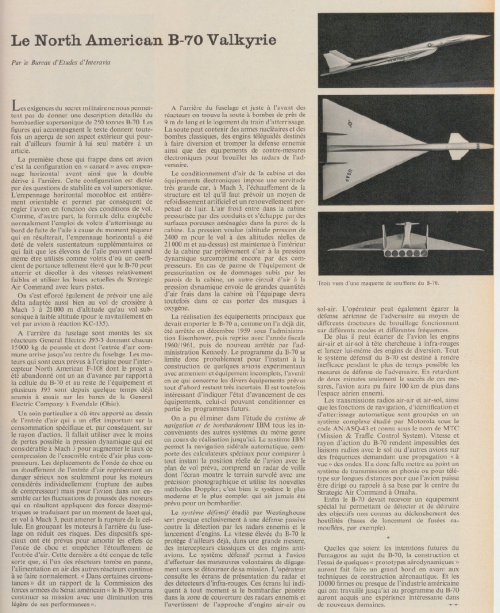
From Revista 1959,

here is a hypothetical design to XB-70,but I think it was wrong
name for it,and they probably meant another aircraft !, who
can help ?.
 

Attachments

  • 5.png
    5.png
    2 MB · Views: 83
  • 4.png
    4.png
    1.2 MB · Views: 82
Last edited:

Attachments

  • 2014-03-26-11.17.51.jpg
    2014-03-26-11.17.51.jpg
    3.3 MB · Views: 59
  • 240912-F-F3405-1002.jpeg
    240912-F-F3405-1002.jpeg
    211.8 KB · Views: 55
  • 240912-F-F3405-1003.jpg
    240912-F-F3405-1003.jpg
    152.2 KB · Views: 65
Last edited:
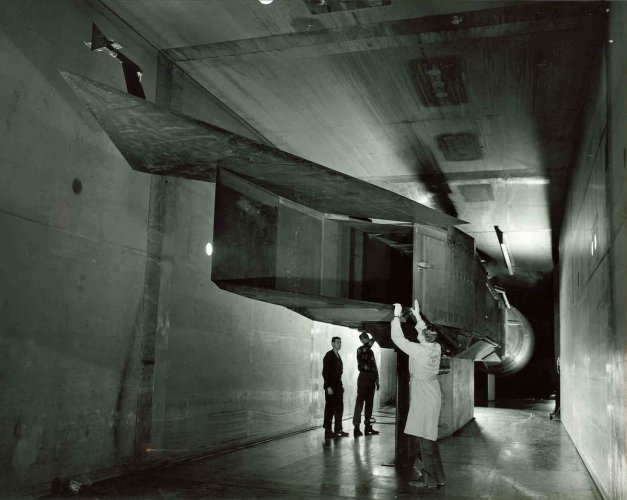
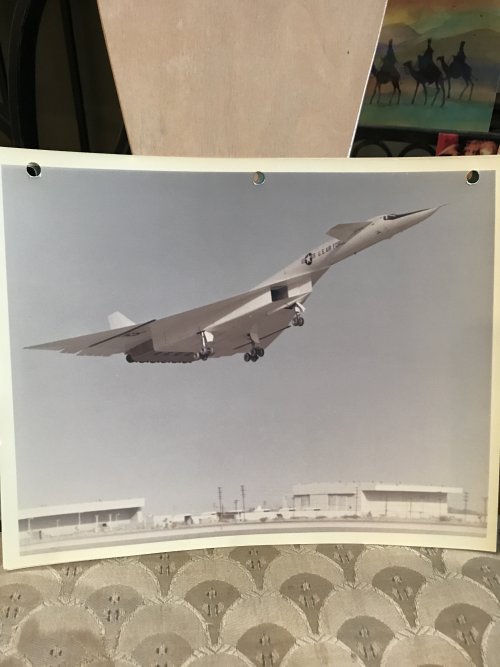
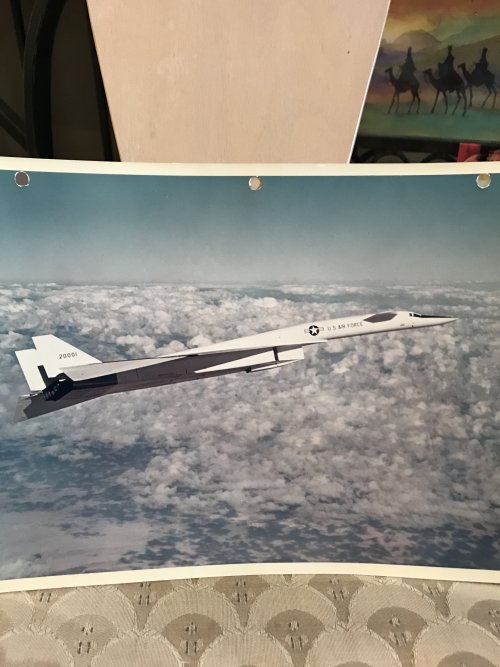
My Dad worked at Edwards AFB in 1964 (on the F-105) and had these pics of the XB-70. I remember seeing it either take off or land, from Lancaster, pretty far away, but like a giant white triangle. I was eight.
 

Attachments

  • IMG_4396.JPG
    IMG_4396.JPG
    1.3 MB · Views: 69
  • IMG_4397.JPG
    IMG_4397.JPG
    1.5 MB · Views: 71
I am starting to wonder if there were some in the USAF who thought that thing flew to space.

One of Barnes’ many quotes was about hiding assets from “ashcans,” a derisive term for Soviet satellites. I don’t think that was jingoism but a real hatred for rocketry.

Today, we have folks in the military that believe in UAP/UFOs, so I wouldn’t put it past some in defense from looking at XB-70’s coolness and thinking it could do more than it did…perhaps coming up with this art?

I can just hear this in my mind’s ear:
“Why put a capsule atop that ABMA Redstone when we can drop it?”

I will never forget looking at the John Berkey’s cover art for INTERNATIONAL COMBAT ARMS as a teenager and buying into it…ugh.
I truly hope that today's USAF personnel have a much firmer grip on fundamental aerospace science/engineering concepts than back then...
 

Similar threads

Back
Top Bottom