She confused aircraft carriers with frigates, lol. Definitely a very well informed lady.

One has to wonder by now why the French government continues to prop up the problematic Dassault rather than trying to bring the French components of Airbus into play to represent French interests in the program. It's not like Dassault has done anything significant to warrant their position, last thing they did was developing a sluggish delta canard strike fighter in 80s, so more than 40 years ago.
previous defense minister, now prime minister, was a very good one.
She has no real expertise in this field... The actual french government lacks of expertise.
 
From the articles they want to be able to go non stop from germany to the eastern front and back without tanker. Likely a good payload is also planed given that its one jet for all jobs ( yes yes F-35 also exist). So with that a ~1.700km range would be needed

800-900nm combat radius doesn't seem too unreasonable actually (I measured ~750-800nm from Germany's eastern air bases to targets inside Russia, so this would allow for some margin). That's also not much more than the initial German FFD requirement (which was for 1hr CAP endurance @ 550nm, equal to 780nm+ combat radius).

What I don't understand is why this couldn't be achievable with the 15t NGF that the French want. It's not like they need much less radius for carrier or nuclear strike (counting from the last tanker point).

Using F-35A as the baseline with 750-760nm combat radius (at high altitude) and a fuel fraction of ~0.36... it's not that hard to get to 850nm+ on internal fuel even with only a small increase in size. NGF should have less drag than F-35 and a more advanced engine with slightly lower fuel consumption. It should also have a higher fuel fraction (the FFD studies fuel fraction ranged from 0.35 to 0.40).

If you look at the various FFD variants studied (all with the same 1.8t payload):
  • Smallest FFD design: ~14.5t operating empty weight, 26.2t TO weight, ~0.375 fuel fraction with 9.9t int. fuel
  • Intermediate FFD (v3.2): ~16.5t OEW, 28.3t TO weight, ~0.35 fuel fraction with 9.9t int. fuel
  • Large FFD (v5.0): ~19.3t OEW, 35.1t TO weight, ~0.4 fuel fraction with 14t int. fuel
So despite the very large differences in empty weight, the payloads were identical and the fuel fractions not that different. All should meet the minimum 1hr CAP @ 550nm requirement, ie. 780nm+ combat radius. So why would a 15t empty NGF not meet the German combat radius needs? Especially if one factored in external fuel carriage for the most extreme range scenarios (ideally in dorsal CFTs).
 
Last edited:
The actual french government lacks of expertise.
As is the case with many governments, unfortunately.

This doesn't excuse the lack of exploring different options though. Which France should have and to a degree does have. Dassault has made decent fighters, half a century ago, but their expertise in what's important for this development is lacking. So positioning a different French representative in the program could at least remidy the issues with regards to cooperation. The R&D and resources provided by Airbus should suffice, especially as the manned fighter is not even the difficult part of the program. It's just a clean sheet design to serve as a vessel for the advanced next generation avionics, sensors, information processing, power plant, cooling and weapons systems. These are the difficult systems that are however developed under the different pillars anyway. So letting Airbus, which represents France, Germany and Spain, handle this is not unreasonable. Quite frankly, in a world where CAC can go from a J-10 to a J-20, or a KAI/TAI from virtually nothing to a KAAN/KF-21, it's nothing but a matter of spending and time for a conglomerate like Airbus to design a low observable fighter to satisfy the requirements given. Especially with all the R&D to draw from the companies that ultimately became Airbus and the research Airbus DS has done themselves (it's interesting how people act as if Airbus has never conducted research in the necessary fields).
 
And wich military jet has Airbus France developped in the last 50 years ?
Which low observable, manned, advanced fighter has dassault produced in the same time frame?

The answer for both is none. So this whataboutism is pointless and unbecoming of this forum.

Any "experience" Dassault has or had years ago is meaningless to the program. For one, most of the people associated with previous programs are gone. Second and more importantly, whatever NGF would come into being, it's so fundamentally different that nothing from the Rafale developpment would apply. They have to re-learn how to develop a modern jet fighter, which puts them at the same level as Airbus. The 80s Rafale is completely different, the way it was developed and is manufactured is archaic, even now. Not to mention what it is in 2040, so design processes, manufacturing processes, assembly processes, all of that has to be attained completely from scratch.

That's the reality. For comparison, can you imagine how much Boeing must've spent on R&D, physical and virtual demonstrators to win the NGAD contract? A company which hasn't built a fighter in several decades, which offers legacy fighters developed by a different company they absorbed. By people who left the company decades ago. Such an undertaking is also what FCAS faces, and a giant like Airbus, similar to Boeing, has the resources and pull to do that quicker than a smaller more cash strapped Dassault which has to go through the same steps but with less resources available to them.

This isn't a Dassault vs Airbus, or a France vs Germany debate, it's about what would ultimately produce results quicker and without all the political theater associated with dassault. And Airbus has a strong standing in France as well.
 
Thread re-opened and made "NEWS ONLY". I didn't end up doing a clean up as it was too tiring to have to read through so much garbage and not want to nuke the entire thread. As a result, I decided to just draw a line at this point and re-open.

Anyone digging up old arguments from earlier than today will get an instant thread posting ban.


Anyone going into another round of bickering such as the will find said posts deleted and potential thread posting ban.

Any non-news related posts will be deleted unless a case can be made that it is valid commentary - e.g. explaining some aspect of a news post.
 
Last edited:
Here's a recap of articles from the last 2 weeks.

First, the "German" point of view, with lobbying by Airbus CEO Guillaume Faury, various Bundestag defense committee members, unions and industry. There seems to be an organized push to limit the scope of FCAS to a joint "Combat Cloud", and potentially sensors and engines, with 2 separate fighter projects.

Faury is a little more nuanced, offering a potential compromise where Dassault could get a 51% share of the fighter in exchange for Airbus getting a larger share of the remote carrier pillar and EuroMALE program. Not sure if he has the backing of the German side of Airbus to suggest this?

Germany is increasing the pressure on the fighter jet project

Last chance for Europe's largest arms project

FCAS showdown: Mayer-Lay urges a "controlled departure"

FCAS: IG Metall breaks with Dassault and demands development of two fighter jets

 
Last edited:
Now from the French side things seem a lot quieter… there is no visible organized lobbying campaign. But in a recent French senate report for the first time there is some evidence of issues in Phase 1B with Airbus’ ability to deliver. These are said to have contributed to Dassault’s lack of confidence in Airbus DS and the push for a greater say on supplier selection.

 
Last edited:
Apart from the call by the French Metal Workers Union UIMM saying it cannot accept any expulsion of France from the program, coincidentally the chair of the UIMM is Eric Trappier... the CEO of Dassault.


German Chancellor Friedrich Merz and French President Emmanuel Macron are scheduled to meet at the Brussels summit between the 17th and 19th December.

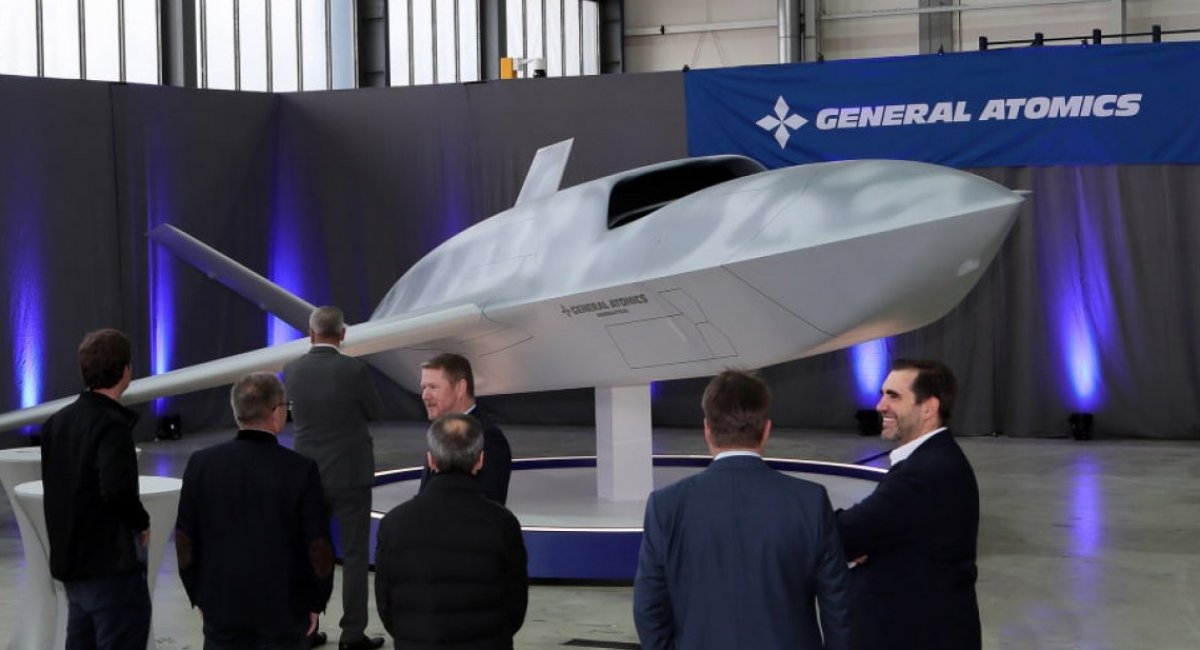
While General Atomics has been in Germany lobbying for a combat cloud collaboration exhibiting a drone mockup.

03c693bfb9a3816a.jpg
 
Last edited:
But in a recent French senate report for the first time there is some evidence of issues in Phase 1B with Airbus’ ability to deliver. These are said to have contributed to Dassault’s lack of confidence in Airbus DS and the push for a greater say on supplier selection.
I wonder what that actually means as my understanding was that 1B was continued design of the NGF demonstrator* rather than actually building anything. So I'm unclear what Airbus wouldn't have delivered? Maybe around maturity / TRL of some subsystems by some engineering gate review? Who knows

* and technology development for the other pillars
 
I wonder what that actually means as my understanding was that 1B was continued design of the NGF demonstrator* rather than actually building anything. So I'm unclear what Airbus wouldn't have delivered? Maybe around maturity / TRL of some subsystems by some engineering gate review? Who knows

* and technology development for the other pillars

Based on prior news reports, there are 800+ deliverables inside Phase 1B. This includes not just design efforts but also technology maturation and prototyping of key sub-systems using new materials and technologies.

For example, news reports have mentioned new actuators for the engine nozzle (for stealth or thrust vector control perhaps?), a new computer architecture, advanced sensor components, advanced engine materials, new power management solutions etc. While I haven't seen any details on Dassault and Airbus' deliverables, this would likely include their own technology demonstrations of various structural components, to demonstrate and validate weight reduction techniques, integration of stealth coatings, prototypes for the weapons bay etc.

Sources
800 deliverables:
New actuators for ITP's engine nozzle:
New computer architecture:
Sensor components:
Advanced engine materials and power management solutions:
 

BERLIN, Dec 16 (Reuters) - A meeting between the French, German and Spanish defence ministers last week failed to yield a breakthrough rescuing the troubled French-German-Spanish FCAS warplane programme, three people familiar with the matter said on Tuesday.

The 100-billion-euro-project project under which the three countries would jointly build a fifth-generation fighter jet to replace France's Rafales and Germany and Spain's Eurofighters was now "very unlikely", one of the sources added.

The sources said France was hoping to postpone into next year a decision Germany had hoped to see finalised by the end of 2025.

Two further industry sources also said they expected talks on the programme's next phase to slip into 2026 since there was nothing to be gained from having a public dispute now.
 
Seems to be some conflicting lines in that article. It starts with it all being very unlikely, to ending with talks about the next phase slipping into early 2026.

I imagine this is all just negotiations bubbling into the public realm, especially as it is being discussed over the next 3 days at a higher level.
 
Fifth?
The 100-billion-euro-project project under which the three countries would jointly build a fifth-generation fighter jet to replace France's Rafales and Germany and Spain's Eurofighters was now "very unlikely", one of the sources added.
 
France will stay forever with the Rafale , FCAS is a dead end European are unable to build a program like a 6th gen fighter.
Not to slightly get out of the doom loop, but GCAP is basically European.

It will not be good for Europe to lose the smaller 6th Gen, but I don't think it will.

It's all posturing right now and a deal will be found.
 
Not to slightly get out of the doom loop, but GCAP is basically European.

It will not be good for Europe to lose the smaller 6th Gen, but I don't think it will.

It's all posturing right now and a deal will be found.
There will be just the Tempest if the program go to his end. A deal will never be found , and its start to be too late , 5 years and still nothing for FCAS no demonstrator , nothing. https://www.reuters.com/business/ae...after-ministers-talks-source-says-2025-12-16/
Europe is unable to work and build disruptive technologies , innovation in fighter is dead , it is a very good news for Lockheed and his F-35.
 
Last edited by a moderator:
And, sadly, a lot money spent, if we include earlier Franco-British earlier attempt at the genre.

Also, @vikmto999 , GCAP is more Eurasian than European ;)
Considering that 2/3 are european user which with the current planing will also buy more fighter so i think we can say that GCAP is as mutch european as any 6 Gen rn.
Anyway where kinda leaving the goal of the channel...
 
That´s a strange view on things.

a. Mathematically: 1-2/3=1/3=0 ?
b. You might be a very good tax lawyer.
c. Eurasian continent englobes Europe, hence all European are Eurasian, which means 3/3rd of users are...

;)
 
A good, but very long and detailed, overview from France on the current position...

View: https://x.com/annebauerbrux/status/2001562016847106235


Google Translation of article

5 p.m., Thursday, December 11. In Berlin, in the large courtyard of the German Ministry of Defense, Boris Pistorius welcomes his counterpart, Catherine Vautrin, in French. Standing on a small red podium in the dark night, the two ministers listen to "La Marseillaise" and the German national anthem, lay a wreath, then hurry upstairs, accompanied by a throng of uniformed military personnel. Time is of the essence.

The goal is to find a solution to the conflict over the Future Combat Air System (FCAS), a key Franco-German project that has been stalled since the summer. Some still hope that President Emmanuel Macron and Chancellor Friedrich Merz will find a solution on the sidelines of the European Council meeting this Wednesday and Thursday. It's far from a done deal .

A mysterious 80% hegemony

After the meeting, Catherine Vautrin recited a oft-repeated refrain: "We are committed to continuing our joint work on the SCAF (Future Combat Air System) to have a future-proof aircraft and air combat system by 2040 and to studying the conditions for moving into a new phase of development for a demonstrator." At this stage, these conditions are clearly not met!

The dispute between Dassault and Airbus escalated last week with a letter from the German trade union IG Metall calling for Dassault's exclusion from the project. The union is demanding a new governance structure that clearly grants it leadership over the core component of the SCAF (Future Combat Air System), the fighter jet, before the construction of a prototype begins.

Officially the prime contractor for the fighter jet, Dassault must contend with a partner, Airbus, which claims a strictly shared cooperation between the three countries involved in the program. Dassault reportedly holds 33% of the project, while Airbus, present in Germany and Spain, holds 66%.

Everything changed last summer when a German specialist newsletter, Hartpunkt, revealed that Dassault was claiming an 80% stake in the future fighter jet project. "Dassault's now clearly stated intention to be responsible for the systems architecture and to have exclusive design authority for the next-generation fighter is, in our opinion, no longer compatible with the idea of cooperation," the German Aerospace, Defense and Security Industries Association (BDLI) immediately denounced.

Hartpunkt's revelation caused such a stir that Sébastien Lecornu, then Minister of Defense, arranged a visit in late July to his counterpart, Boris Pistorius, in his hometown of Osnabrück. The weather was fine. The two men got along well. They had received the same mission, one from Emmanuel Macron, the other from Friedrich Merz: to assess a realistic prospect for future cooperation.

Back at Villacoublay airport, Sébastien Lecornu seemed reassured. Boris Pistorius had reassured him on three points. Germany would allow France the freedom to export the new aircraft. They shared the same vision of the timeline: to have an operational aircraft by 2040. And they agreed on a relatively lightweight aircraft. On this last point, however, the German minister simply downplayed the problem: "The obstacles are not insurmountable."

They do exist, however. It becomes clear that despite three years of work, the engineers from Airbus and Dassault, meeting at the French aircraft manufacturer's headquarters in Saint-Cloud, haven't quite settled on a single, shared model. Of the half a dozen sixth-generation aircraft architectures studied, two remain. "They're not very different; we could reach an agreement," admits a source at Airbus.

If we go towards two aircraft models, there will be no SCAF.

A Safran executive

Berlin wants a powerful, heavy air superiority fighter capable of deploying a swarm of drones. Paris needs a model compatible with its future aircraft carrier, maneuverable, fast, and agile enough to carry out its nuclear mission. The German version of the NGF (New Generation Fighter) would therefore weigh 2 to 3 tons more than the French version.

Weight is crucial. "In the aircraft of the future, the critical point is the engine," several Air Force generals confirmed to Les Echos. Safran has divided the task with the German engine manufacturer MTU. The French aerospace equipment supplier must first develop the increased-thrust M88 engine for the Rafale F5 on its own, and then leverage it for the SCAF (Future Combat Air System). "MTU is incapable of producing a military engine on its own, especially if the aircraft is heavy. If we end up with two aircraft models, there won't be a SCAF," predicted a Safran executive.

August passes. Upon returning to work, Dassault Aviation CEO Eric Trappier claims he never requested 80% of the workload for the future aircraft, without offering further explanation. During parliamentary hearings, however, he becomes increasingly assertive, repeatedly stating that a leader, an architect—in short, a pilot in the cockpit—is necessary, and that he doesn't believe in "co-co-co"—three-way joint decision-making—to determine the technology required for a top-of-the-line aircraft. "I want the best athlete to lead, not do everything," he declares.

Airbus, for its part, continues to claim that Dassault wants 80% of the work. In fact, according to an investigation by Les Echos, the misunderstanding about the 80% figure stems from Dassault's responses to a questionnaire from the Combat Project Team, the team of military personnel and engineers monitoring the progress of the FCAS (Future Combat Air System). In this letter, the French aircraft manufacturer states that it can supply up to 80% of the prototype's components. This technical letter, however, was never intended for public release.

Airbus is stuck with intellectual property agreements with BAE Systems.

A source familiar with the work done

"In the future prototype, everyone has to contribute a part of the equipment. For example, Safran will provide the M88 engine. The Spanish responded as best they could, but Airbus Germany did not. Airbus is stuck with intellectual property agreements with BAE Systems on the Eurofighter, which prevents them from contributing," explains a source familiar with the work done.

In Saint-Cloud, relations between Airbus and Dassault engineers have deteriorated. "That's right, Airbus isn't contributing much," confirms another expert. Meanwhile, the damage is done.

The demands of Dassault Aviation CEO Eric Trappier regarding the governance of the project have contributed to inflaming the discussions.

Everyone in Germany is convinced that Dassault wants 80% of the project. "I never knew if French politicians really supported this 80% requirement. We never received a clear signal on the matter," a member of parliament from the ruling coalition told Les Echos.

In Paris, Eric Trappier, exasperated, saw red, raised his voice, and refused to meet with "the German," Michael Schoelhorn, head of Airbus Defence and Space. In this volatile situation, Emmanuel Macron and Friedrich Merz asked their generals to take action.

On November 5th at the Senate, the Chief of the Defence Staff, General Fabien Mandon, promised that "French, German, and Spanish military leaders are all in agreement on the need." The German military hierarchy, however, did not respond. "Politicians blame the industrialists, who blame the military; everyone's passing the buck," a high-ranking officer remarked with amusement.

And so the weeks go by. Without meetings, without dialogue. The leaders of Airbus and Dassault are no longer speaking to each other. The ball is in the German court, believes Dassault, which is waging an existential battle. What would become of Dassault Aviation if it were content to build only a third of the aircraft? "We can't ask Dassault to commit suicide; it needs 51% of Pillar 1 of the program, knowing that Airbus dominates other pillars, such as drones and the combat cloud," summarizes a source close to the group.

The idea does not convince everyone. "Dassault's industrial interest is contradictory to the national interest. The national interest, as defined by politicians, is to carry out a program in cooperation, both for a question of political symbolism, but also so that it is less expensive," explains Olivier Schmitt, professor and research director at the Royal Danish Defence College.

Plan Bs are being considered

Berlin is considering alternative plans. Should Germany join the competing sixth-generation aircraft project, GCAP, led by BAE Systems with Leonardo and Mitsubishi Industries, which also includes the UK, Italy, and Japan? The Italian Defense Minister has expressed support, but BAE Systems will be even more ruthless than Dassault in dividing the workload.

Airbus is also looking to Sweden, which has awarded Saab a study contract to design its own sixth-generation aircraft by the end of 2027. For the IG Metall union, Germany, which is going to invest massively in defense, must take advantage of this to become a leader in defense aeronautics again with its national industries.

This crisis situation reinforces the prejudices of some German elected officials and industrialists. "There is a very deep mistrust on the German side regarding the French arms industry's capacity for cooperation. And Dassault has done little, if anything, to dispel this mistrust," explains a German opposition member of parliament.

Across the Rhine, doubts are particularly strong regarding France's ability to finance a next-generation fighter jet on its own, and there are concerns about the potential outcome of the French elections, where extremist parties are fiercely attacking the SCAF (Future Combat Air System). "For us, what's important is making a decision. What we don't want is for people to be afraid to end this cooperation for political reasons when the companies aren't cooperating," said another member of parliament.

Several scenarios are on the table.

At this stage, all scenarios are still possible. A complete break: each side goes its own way and develops its projects according to its needs and timeline. Another scenario involves a period of waiting and continued discussions. The war in Ukraine has altered the hierarchy of military priorities, also giving rise to other Franco-German cooperation projects, particularly in space defense and long-range strikes.

There is also, and finally, the less than glorious path of compromise. Saving certain pillars of the program such as interoperability, the combat cloud, and the adaptation of drones and missiles, even if it means letting Airbus and Dassault develop different prototypes.

"The evolving geopolitical context requires prioritizing genuine industrial projects based on the prospects of both national and export orders, rather than large programs initiated by states to pool investments as was the case during the period of drastic reductions in military budgets," Senators Pascal Allizard and Hélène Conway-Mouret emphasize in a recent report on the European defense industrial and technological base.

 
Well, I disagree strongly. The last thing this project needs is another single line of grandiloquent summary. Action, decision and budgetary execution should be the only thing left on the menu for all parties. At this stage, it´s still all about a demonstrator. Better build a lemon (and learn something) than nothing.
 
Last edited:
Good and informative summary.
...

And so the weeks go by. Without meetings, without dialogue. The leaders of Airbus and Dassault are no longer speaking to each other. The ball is in the German court, believes Dassault, which is waging an existential battle. What would become of Dassault Aviation if it were content to build only a third of the aircraft? "We can't ask Dassault to commit suicide; it needs 51% of Pillar 1 of the program, knowing that Airbus dominates other pillars, such as drones and the combat cloud," summarizes a source close to the group.

The idea does not convince everyone. "Dassault's industrial interest is contradictory to the national interest. The national interest, as defined by politicians, is to carry out a program in cooperation, both for a question of political symbolism, but also so that it is less expensive," explains Olivier Schmitt, professor and research director at the Royal Danish Defence College.

...
Well, that's very questionable, national interest on the long term is also to keep an highly specialised hi tech industrial capable of designing a complete jet alone alive and at home, serious strategic asset, not selling it for the sake of cooperation at all cost, political symbolism (seriously ?) , and more than questionable cost effectiveness.

Anyway, let the Germans do their bigger fighter (which is not even what we need, talk about national interest...) alone or with anyone who wants to do it with them, time to end that poor horse suffering.
It's painful to watch. Hope someone will have the guts to pull the trigger.
 
Last edited:
Thanks @timmymagic for the article. There are so many major challenges mentioned in the article... each one potentially a dealbreaker.

I just don't see a path forward. Indeed the whole article reads like a post-mortem full of excuses about why FCAS died, with the French side washing its hands for the record and pointing the finger at Germany, acknowledging only a very small responsibility in cultural friction due to Dassault's attitude and French actions promoting Germany's suspicion of French motives.

All in all this article comes very late in the endgame. Are the French holding out a slim hope that the German side will realize they can't join GCAP, can't develop their own fighter, don't have an alternative engine, and there's no better deal for Germany out there?

SUMMARY / KEY CHALLENGES

1. SIZE: The German version of the New Generation Fighter (NGF) would weigh 2 to 3 tons more than the French version. Berlin wants a powerful, heavy air superiority fighter capable of deploying a swarm of drones. Paris needs a model compatible with its future aircraft carrier, maneuverable, fast, and agile enough to carry out its nuclear mission.
2. ENGINES: "MTU is incapable of producing a military engine on its own, especially if the aircraft is heavy. If we end up with two aircraft models, there won't be a SCAF," predicted a Safran executive.
3. WORK SHARE: Airbus continues to claim that Dassault wants 80% of the work. In fact, the 80% figure stems from Dassault's responses to a questionnaire from the Combat Project Team, the team of military personnel and engineers monitoring the progress of FCAS. In this letter, Dassault stated that it can supply up to 80% of the prototype's components.
4. EUROFIGHTER IP LIMITATIONS: "In the future prototype, everyone has to contribute a part of the equipment. Airbus is stuck with intellectual property agreements with BAE Systems on the Eurofighter, which prevents them from contributing," explains a source familiar with the work done. "That's right, Airbus isn't contributing much," confirms another expert.
5. NO ONE STEPPING UP: "Politicians blame the industrialists, who blame the military; everyone's passing the buck," a high-ranking officer remarked with amusement. And so the weeks go by. Without meetings, without dialogue. The leaders of Airbus and Dassault are no longer speaking to each other.
6. GCAP NOT THE ANSWER?: Should Germany join GCAP, led by BAE Systems with Leonardo and Mitsubishi Industries? The Italian Defense Minister has expressed support, but BAE Systems will be even more ruthless than Dassault in dividing the workload.
7. HIDDEN GERMAN MOTIVE? For the IG Metall union, Germany, which is going to invest massively in defense, must take advantage of this to become a leader in defense aeronautics again with its national industries.
 
Last edited:
One question that comes to mind is whether the design of PA NG would allow a heavier aircraft?
The EMALS should provide more than enough grunt and I'd be surprised if the arresting gear could not handle the additional load given its still in the design stage.
Is there any Navy - Air Force linkage in requirements going on for the design of both projects?
 
6. GCAP NOT THE ANSWER?: Should Germany join GCAP, led by BAE Systems with Leonardo and Mitsubishi Industries? The Italian Defense Minister has expressed support, but BAE Systems will be even more ruthless than Dassault in dividing the workload.

On this point it seems to miss that BAE Systems has been rather collaborative in GCAP by all accounts....and the workload has already been divided, equally between the 3 partners....but I don't think there is any room at the inn for Germany as a primary partner.

But perhaps its true, maybe BAE's previous involvement with the German's would make them utterly ruthless...
 
Atleast on the goverment side they seem to be open for germany. What i allways find interresting is how spain is allways "forgotten". We mostly hear about them when they part do there job...

View: https://x.com/UKDefJournal/status/2001929458299650324?s=20

There is Joining...and there is 'joining'...

Happy to have German orders, money...even let them have a production line...involvement in CCA, Combat Cloud etc. sure....but involved in the design or requirements for the main effort? Too late for that.

I think everyone assumes that Spain comes along with Germany...but they forget that Airbus ES is not the Spanish lead in SCAF, its Indra Sistemas....I don't think Spain necessarily does go with Germany...sure Airbus ES might....But Indra? I'm not sure....

Everyone forgets about Belgium though....but thats for sensible reasons...
 
There is Joining...and there is 'joining'...

Happy to have German orders, money...even let them have a production line...involvement in CCA, Combat Cloud etc. sure....but involved in the design or requirements for the main effort? Too late for that.
Yeah but then there is the question about how mutch the design would actualy need to change....
I think everyone assumes that Spain comes along with Germany...but they forget that Airbus ES is not the Spanish lead in SCAF, its Indra Sistemas....I don't think Spain necessarily does go with Germany...sure Airbus ES might....But Indra? I'm not sure....
Yeah spain is a bit of a mystery too me. On one side i can see them staying on the other i remember that even they hadn't have the best run with france in FCAS too (tho this could also be specificly for Airbus ES).
Everyone forgets about Belgium though....but thats for sensible reasons...
Well they had turned down there 300 million € investment into it because FCAS problems so...
 
@WatcherZero : Do you have a link for that?

Yeah, see below news story report on the defence committee hearing where the General was asked why they hadn't included the release of the 300m Euros in their budget submission. General Vansina is asked why he didnt request it and he replies that:

We are not certain, for the moment, on the direction that this program will take. It is clear that we are not going to suggest [...] that the government invest 300 million in something that may not see the light of day.

He then says they aren't outright cancelling and that in principle the funding requirement should just be carried over to the following budget year unless the project is finally cancelled.


Similar threads

Back
Top Bottom