Nardi Pre-1945 Aircraft and Projects

hesham

ACCESS: USAP
Senior Member
Joined
26 May 2006
Messages
38,285
Reaction score
20,424
Hi,

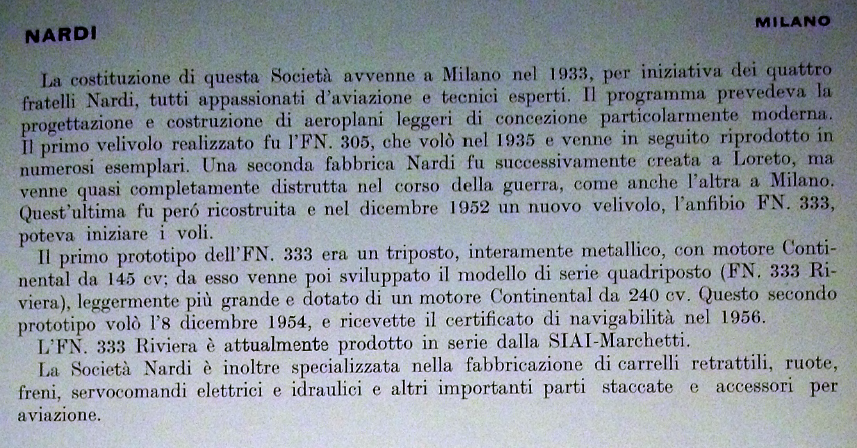
Brothers Nardi were Italian designers formed their firm in early 1930s,
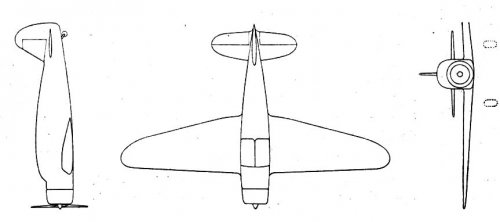
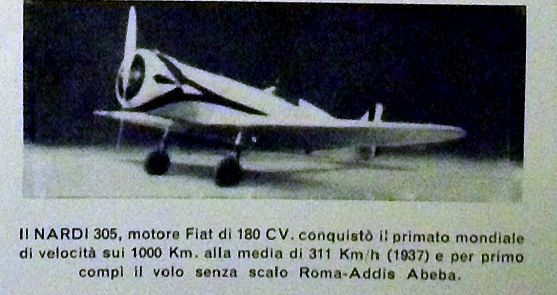
as I think they began with FN.305,it was a single/two seat trainer and
liaison low-wing aircraft of 1934/35,it appeared in four version,A to D,
the FN.306 was developed from it as a Project,but no confirm on this.

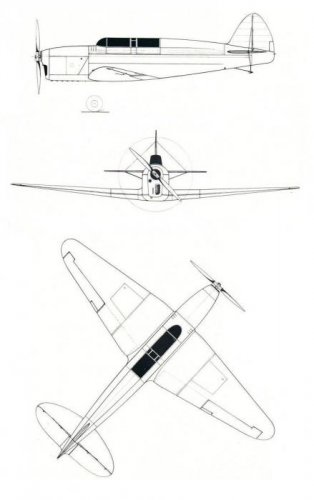
The FN.310 was a four-seat single engine low-wing touring monoplane,
followed by FN.314,which remained a Project,but no confirm about this,
except it appeared on Wikipedia with no more details.

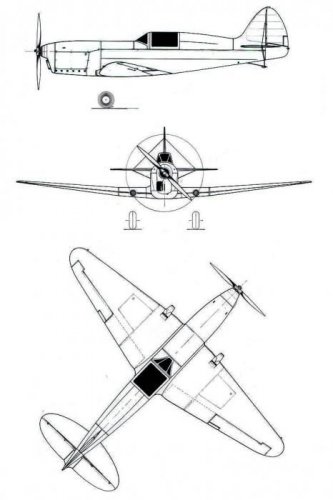
FN.315 was two-seat low-wing trainer monoplane,developed from FN.305,
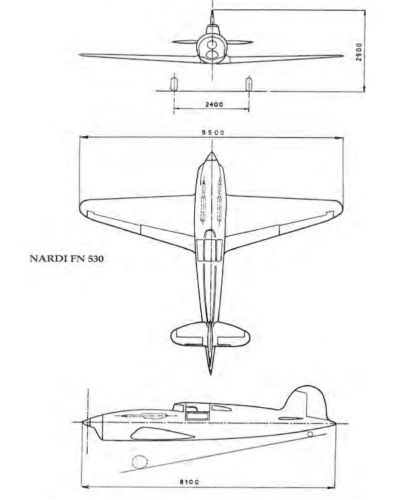
came after the FN.316,it was an advanced fighter monoplane of 1941,and
later the FN.530 was a single seat fighter Project,displayed by a member
from this forum before.
 

Attachments
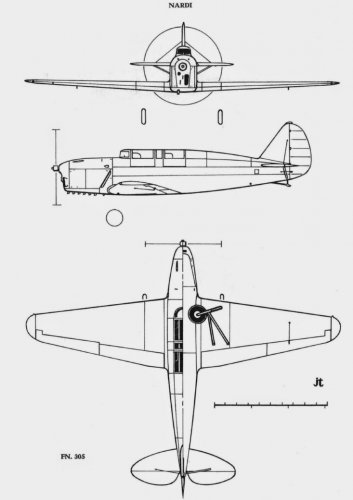
  • 305.jpg
    305.jpg
    65.5 KB · Views: 390
  • 310.jpg
    310.jpg
    23.7 KB · Views: 369
  • 315.jpg
    315.jpg
    23.5 KB · Views: 379
  • 316.jpg
    316.jpg
    29.8 KB · Views: 397
  • Nardi FN.530.png
    Nardi FN.530.png
    300.8 KB · Views: 401
Last edited:
hesham said:
Mr. Fratelli Nardi was Italian designer formed his firm in early 1930s
This is not a Mr Fratelli. Fratelli means "brothers" in Italian.

The three Nardi brothers Euste, Elio and Luigi created the company "Nardi Bros", ie Fratelli Nardi.
 
Hi,

Nardi FN.530, presented with both Mars 14 star engine and IF 120 RC35 Delta linear engine. Mixed structure
with wooden wings and central plane in steel tubes, rear part of the fuselage in durall. Aircraft a lot
Interestingly, based on wind tunnel tests it offers good speed and climb with low power and curb weight. SUITABLE with both engines without prejudice to the guarantee to be able to obtain supplies of foreign engines ".
 

Attachments

  • 1.png
    1.png
    32.9 KB · Views: 153
  • 2.png
    2.png
    245.9 KB · Views: 131
Hi,

Nardi FN.530, presented with both Mars 14 star engine and IF 120 RC35 Delta linear engine. Mixed structure
with wooden wings and central plane in steel tubes, rear part of the fuselage in durall. Aircraft a lot
Interestingly, based on wind tunnel tests it offers good speed and climb with low power and curb weight. SUITABLE with both engines without prejudice to the guarantee to be able to obtain supplies of foreign engines ".

Direct link,

https://www.asifed.it/wp-content/up...Commissione-Cultura-ASI-12-5-2016-leggero.pdf
 
The context may be helpful. (Edited machine translation from pp 11-15)

8. The New Fighter-Interceptor Competition of 1938

The RA, realising that speeds achieved by fighters abroad were significantly superior to domestic results, announced a new competition for Caccia Intercettori in 1938. This competition left the door open to biplanes, given the successes of the CR 32 in Spain. The main characteristics required for the new fighter were: 4 minutes climb to 6,000 m; 530 km/h maximum speed at 5,000 m; 135 km/h low altitude minimum speed; 1 hour endurance at 6,000 m and at 7/10ths power; armament of one or two medium-caliber machine guns; and a 500 m landing distance with a 9.9 m obstacle.

Compared to the previous competition, the maximum speed was higher, although still lower than that of some foreign fighters (the Spitfire was known to easily reach 560 km/h). Armament remained unchanged - or even reduced (despite it being known that British fighters had eight machine guns, and that the French and Germans also employed 20 mm cannons).

An Invitation to Tender, dated 05 January 1938, sent to manufacturers for the Interceptor Fighter, received the following responses:

- Fiat G 52, powered by 1,000 hp Fiat A.76, speed of 530 km/h;
- Macchi MC 201, powered by 1,000 hp Fiat A.76, speed of 558 km/h;
- Nardi FN 530 all-wood [sic] light fighter, 700 hp IF Asso, speed of 500 km/h;
- AVIS CO2 high-winged fighter, 1,350 hp Alfa Romeo 135, speed of 515 km/h;
- Reggiane RE 2000, 1000 hp Piaggio PXI, speed of 530 km/h;
- Breda BA 100, 1,350 hp Alfa Romeo 135, speed of 580 km/h;
- Caproni CA 175 biplane, 1000 hp IF L.122, speed of 532 km/h.

At the end of the evaluations of the projects and models carried out at the Centro Sperimentale di Guidonia, the Regia Aeronautica commission gave the following results in January 1939: [edited for Nardi FN 530 only]

"Nardi FN 530, presented with both a Mars 14 radial engine and an IF 120 R.C.35 Delta inline engine. Mixed structure with wooden wings, a tubular steel centre section, and a Dural rear fuselage. A very interesting aircraft that, based on wind tunnel tests, offers good speed and climb with low power and empty weight. SUITABLE with both engines, subject to a guarantee that foreign engines can be supplied." [...]

At the end of the evaluations, prototypes were declared suitable and commissioned for the G 52, MC 201, FN 530, CA 175, and RE 2000. [edited for Nardi FN 530 only]

Realisation of the FN 530 was slow. In any case, in February 1940, the RA decided not to proceed with its construction. This was due to the appearance of a new light fighter - the SAI 107 - which made its first flight in the summer of 1940.
 
From L'ALA 1961/7
 

Attachments

  • 5.png
    5.png
    931.2 KB · Views: 20
  • 6.png
    6.png
    398.7 KB · Views: 21

Similar threads

Back
Top Bottom