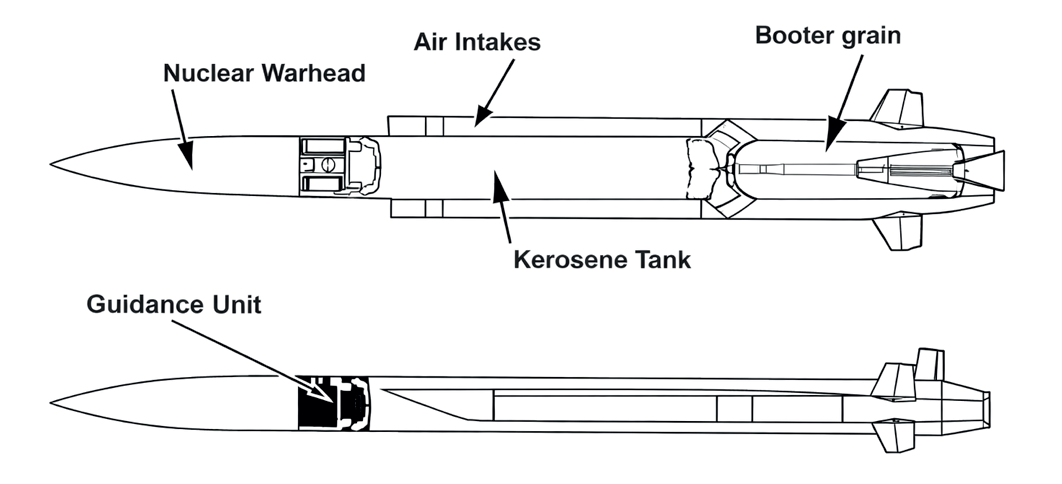
something something unforeseen consequences something something

By the wat, the XB70 faced concerning issues with the paint not holding at high speed. Sure, the Concorde didn't go as fast, but did it face similar problem?
No, ICI's finest semigloss undercoat. Good for tractors, compactors and Concorde.

The blue paint absorbed more heat than other colours though and this meant the pepsi Concorde was mach limited to 1.7.
 
Cross-posting from another section of the forum, as it was NEVER considered in real life.
That may not be entirely correct:
1775207989321.png
A few relevant excerpts:

The fact that the US President had almost agreed to a wide-ranging treaty without consultation with allies sent shockwaves across the NATO alliance. Margaret Thatcher, the Prime Minister, was horrified. In France, Europe’s other nuclear power also understood the implications. Discussions about Anglo-French defence and nuclear collaboration had been underway for some time, but after Reykjavik the French attempted to exploit British loss of confidence in Washington and put forward several radical collaborative proposals. In 1986, a new nuclear armed cruise missile, the Air-Sol Moyenne Portee (ASMP), entered service with the French Air Force. In April 1987, Jacques Chirac, the French Prime Minister suggested to Thatcher that ‘It would be an excellent idea were the United Kingdom acquire the missile for its Tornado’ and ‘He hoped that the Prime Minister would reflect further with a view to accepting the French proposal.’79

When MISC 7 met in November 1987, Ministers concluded that modernization was still important to the continued effectiveness of NATO’s strategy of flexible response and that replacement carried higher priority than acquiring a follow on to Lance, a sub-strategic nuclear surface to surface missile, which also required replacement. The Committee noted that the cost would be high and asked for the weapon specification to prioritise keeping costs to a minimum and that because ‘a successor UK TNW development would carry serious financial implications’, the MOD should ‘seek a collaborative approach to the procurement of a delivery system, specifically US/UK/France.’85 Ministers indicated that before final decisions were taken it was ‘essential that a clear assurance is given that the system in question is technically feasible and will be available within the prescribed timetable.’86

To enable the formal Feasibility Study to commence a formal Staff Target for what was now termed the Future Theatre Nuclear Weapon (FTNW) was defined by a FTNW Definition Committee.87 In June 1988, the MOD’s Equipment Policy Committee concluded that there was little prospect of completing the studies in time unless the number of delivery system and warhead options under consideration was reduced to no more than two or three and the number of the number of system options under consideration was reduced without any thorough analysis. The Modular Stand Off Weapon (MSOW) was dropped because it had no stealth characteristics and converting it to carry a nuclear warhead would have created difficult political problems with the other nations involved in its development. The modified Tomahawk cruise missile was also discarded because the US had at that point shown no interest in the modified system and the prospects of its development were slim.88 Controversially the French ASMP was also dropped from further evaluation due to doubts about its performance, specifically its range and accuracy, and the complications involved in exchanging warhead design information with France.89 On 8 June 1988, the Staff Target (SA)1244 for a Future Theatre Nuclear Weapons (FTNW) was endorsed by the EPC(N), and approved by the Minister (DP) on 4 August 1988.

To add to the difficulties the French expressed considerable disappointment at the decision to focus the Feasibility Studies on the two US systems.96 They offered to examine ‘stretching’ ASMP, to create a new missile, the so called ASMP II, or as it was otherwise known the Substrategic Air-to-Surface missile (SASM). However, they themselves had no requirement for such a weapon, which would have involved research, development and cost, for only a modest increase in range, the end result of which would still probably have fallen short of UK requirements.97 As a result, Younger ‘encouraged discussions with the French on their ideas for a successor’ missile, known as the Air Sol Longue Portee (ASLP).98 However, this new missile was only at the concept stage, and its projected in-service date was 2010, well beyond the timescale of British needs. Despite this, dialogue continued ‘as a hedge against an adverse turn of events in the United States’, as an ‘insurance policy’.99 In early July 1989, the French provided the UK with a briefing on their new proposals and the first detailed technical specifications of the ASMP II (SASM). A series of further discussions and technical exchanges then took place, and a feasibility study was conducted, to ‘further permit the establishment of a baseline upon which subsequent collaboration between our two countries on a system of this kind could be founded.’100

Following exchanges of information, and visits by UK officials to the French state owned aerospace company, Aerospatiale, the French
proposed another new missile, known as the Air Sol Moyenne Portee, ASLP-D2, a ‘sophisticated development of the basic ASMP ramjet vehicle incorporating stealth techniques, with provision for guidance and offering longer range’, ‘which, on paper at least’, met UK needs.101 However, it was ‘little more than a technology demonstrator’, required ‘extensive funding and maybe an input of UK know how’, and its in-service date was uncertain.102 Assessing the feasibility of mating the planned UK warhead, which was based on the US warhead for the SRAM-T to a French missile could only be pursued to a certain extent without involving the US in the exchange of sensitive information, such as the physical characteristics of the nuclear package and various aspects of the warhead/missile interface103

To assess ASLP-D2 it was necessary to undertake a detailed study of the ASMP Mk.II (SASM) and discussions were held with French officials to define the framework and management structure under which a Feasibility Study of their vehicles could take place. In December 1989, the EPC(N) authorized the extension of the Feasibility Studies to permit an expanded examination of the two French systems, which in turn delayed the completion of the full Feasibility study until the summer of 1990.104 By this time the Atomic Weapons Establishment (AWE) had completed the payload studies, which established that a common vehicle to payload interface could be adopted for the two US systems and probably for SASM, enabling progress on the payload to continue in isolation from vehicle selection to preserve the in-service date, and the first projected underground nuclear test of the warhead in 1993. An exchange mechanism was eventually devised to allow the Feasibility Study of French vehicles to proceed in the form of a Government to Government Arrangement to permit the UK access to French design information (caveated for both commercial and security reasons) and to allow the French full access to the UK Staff Target, which was classified Secret.105 US warhead ‘envelope data’ was also provided to the French to aid the study.106

On 18 October, the MOD’s Procurement Committee concluded that there was very little separating the US TIRRM and French ASLP-D2.110

The French ASLP-D2 had a low-level range of 760km and a high-level range of 980km. However, the French had no firm operational requirement and harmonisation with the British requirement was impossible.111 The missile was deemed to be technically high risk and could only enter service in 2003-2005 (later revised to 2010) at an estimated cost of £847m, some £380m more than the LTC provision. Warhead integration was expected to be difficult because of the differences between the French missile and US warhead design.112

To complicate matters the French attempted to keep the ASLP-D2 option alive by offering ‘the UK the French design of the nuclear warhead for the ASLP-D2 for production in the UK’ as well as ‘a co-operative warhead development’, but only if the ‘the UK reached a decision by the end of the year, since the whole approach was linked up to the French decision making of its future strategic systems.’115 Despite doubts about the feasibility of the French proposal, in advance of a December meeting of GEN1, the Ministerial Committee on Nuclear Policy, the successor to MISC7, King requested ‘a full assessment of the Anglo/French warhead option’.116 It concluded that while ‘Development of a closer nuclear relationship with France would be advantageous… collaboration with France on the FTNW warhead would constitute such a significant realignment of our nuclear efforts that it would carry unacceptable risk to our vital relationship with the US under the 1958 Agreement.’ It recommended ‘We should stick with UK manufacture of a UK design for the FTNW warhead, but regard the French option as one we might revert to later’, and in the interim ‘work at developing our interchanges with the French in the warhead area as far and as fast as financial constraints and the need to safeguard the American relationship allow.117
 
So, a committee needs to define the scope of the Feasibility Study to commence a Staff Target?
Government by Committee taken to its "highest" form; Yes Minister on 24/7 IV anabolic steroids.

Meanwhile, back in World War 2:

Britain: "We need a new, fast fighter. How soon?"

North American Aviation: "Three months from pencil on paper to prototype rollout."

Britain: "Do it."
 
So, a committee needs to define the scope of the Feasibility Study to commence a Staff Target?
Too damn right. Too many janky requirements have scuppered many a project, some of which should never have left the back of the fag packet.
Just because Group Captain Prune thinks 'X' is a good idea doesn't mean it is.
 
That may not be entirely correct:
https://www.secretprojects.co.uk/threads/uk-requirements-sr-a-1244.1285/post-895128
1775207989321.png

A few relevant excerpts:
Notably, the document does not refer to Concorde, therefore Archibald's statement is correct. The ASMP isn't the hypothetical bit.
Too damn right. Too many janky requirements have scuppered many a project, some of which should never have left the back of the fag packet.
Just because Group Captain Prune thinks 'X' is a good idea doesn't mean it is.
Precisely this. A Staff Target becomes a Staff Requirement when the system moves to a production contract. Not how I'd have defined it, but there we go. That means the Staff Target needs to be sufficiently solid to be used for the Assessment phase of procurement, and potentially into Design depending on contracting.

In order to have a Staff Target written, there needs to be a defined set of requirements. This is broadly the Concept phase – figuring out what the requirements should look like.

If the programme is for a stealthy supersonic nuclear-armed cruise missile, there's probably quite a big gap between 'what we have right now', 'what we think we'd like’, and 'what's actually possible with the time and budget constraints'. The feasibility study is to check that (b) fits within (c), before Grp Capt Prune hands Northeed Dougnamics a cost-plus contract to invent three new branches of physics.
 
I'm pretty sure most modern military aircraft surpass Concorde in terms of operating cost per mile flown
 
Concorde is hardly a modern aircraft. In terms of it's contemporaries, not far off the mark or even below a lot of them.

You want to compare with modern aircraft? Modern engines and systems with a few exotic materials would even out a lot of the operating costs.
 
I'm pretty sure most modern military aircraft surpass Concorde in terms of operating cost per mile flown
I have exactly, precisely zero doubt that you are indeed utterly correct with respect to your stipulated monetary metric, but in terms of actual *absolute* operational performance, as in sustained airspeed, range, and payload, please provide just a few examples that rival the White Lady.
 
Last edited:
I have exactly, precisely zero doubt that you are indeed utterly correct with respect to your stipulated monetary metric, but in terms of actual *absolute* operational performance, as in sustained airspeed, range, and payload, please provide just a few examples that rival the White Lady.
This was my thought when wondering as a 12 year old how to weaponize Concorde. Show me ANY other supersonic military aircraft that can do London-New York at Mach 2, clean and on internal fuel only (no IFR) from standard airport stock, ramp to ramp, and then get turned around as if it were any normal airliner. Not even the SR-71 can do that.
 
Not even the SR-71 can do that.
Concorde and the SR-71 both established transatlantic speed records. In 1974 the Blackbird made it in 1h 55 but had to slow down a few times to refuel with KC-135Q tankers.
Concorde in 1996 did it in 2h 53 minutes.
https://www.britishairways.com/cont...-ba/history-and-heritage/celebrating-concorde

Outside them the transatlantic record belongs to a 747 in 4 hours 56 minutes, and before it a VC-10 in 5 hours 1 minute. They had one heck of a jet stream in their backs to help them.
 
Last edited:
You want to compare with modern aircraft? Modern engines and systems with a few exotic materials would even out a lot of the operating costs.
Unconvinced,

Let’s not argue but look a little math/physics.

Firstly, it’s much more difficult to design a big aeroplane than a little one;- the mass is due volume, ie a cube law, whereas the lift to support that mass is driven by wing area which is a square law. A cube function will always diverge from a square function. As no military Mach 2.0, and 180 Ton class aircraft has been designed in the last 40years a valid comparison is not possible.

Yes modern engines have higher TET which will improve the efficiency, so fuel mass fraction should improve.

Modern miniature highly capable avionics provides much greater functionality Unfortunately the PAX demand much, much more so a modern avionics is surprisingly heavy. Yes I guess a forward looking camera will do away with a droop nose so there’s a mass fraction improvement from not having all the mechanism.

Although many claim CFRP yields a 20% structure mass reduction, the grime reality of making certified flying structures its more like 5-6% ( additional copper braid for lightning, additional material BVid, additional earth returns). Nevertheless there should be an improvement in the structure mass fraction.

Booms Overture gives a window on modern technology in this size of aircraft;- I mean not what the CEO says, but what is engineering team is offering as a customer specification. In most respect it’s a fraction of what Concorde had demonstrated …. except noise, where there’s a big improvement.

Speed- Concorde Mach 2.0 Overture Mach 1.7

Range Concorde 3990Nm Overture 4250Nm

MTOW Concorde 184 Tons Overture 188 Tons

Pax Concorde 92-120 Overture 60-80

So even with the “modern technology” Boom are transporting fewer passengers, slower with a heavier aircraft for 6% greater range (assuming real world mass growth during design doesn’t knock it back )

As for what the reason behind this, I would suggest that as a big supersonic aircraft hasn’t been optimised for forty years the deep technical expertise has disappeared, so has to be relearned from zero. The guys that did Concorde were exceptional good, with a wide range of real world try it, improve it experience… with today’s project taking so long you don’t find that so much.
 
Unconvinced,

Let’s not argue but look a little math/physics.

Firstly, it’s much more difficult to design a big aeroplane than a little one;- the mass is due volume, ie a cube law, whereas the lift to support that mass is driven by wing area which is a square law. A cube function will always diverge from a square function. As no military Mach 2.0, and 180 Ton class aircraft has been designed in the last 40years a valid comparison is not possible.

Yes modern engines have higher TET which will improve the efficiency, so fuel mass fraction should improve.

Modern miniature highly capable avionics provides much greater functionality Unfortunately the PAX demand much, much more so a modern avionics is surprisingly heavy. Yes I guess a forward looking camera will do away with a droop nose so there’s a mass fraction improvement from not having all the mechanism.

Although many claim CFRP yields a 20% structure mass reduction, the grime reality of making certified flying structures its more like 5-6% ( additional copper braid for lightning, additional material BVid, additional earth returns). Nevertheless there should be an improvement in the structure mass fraction.

Booms Overture gives a window on modern technology in this size of aircraft;- I mean not what the CEO says, but what is engineering team is offering as a customer specification. In most respect it’s a fraction of what Concorde had demonstrated …. except noise, where there’s a big improvement.

Speed- Concorde Mach 2.0 Overture Mach 1.7

Range Concorde 3990Nm Overture 4250Nm

MTOW Concorde 184 Tons Overture 188 Tons

Pax Concorde 92-120 Overture 60-80

So even with the “modern technology” Boom are transporting fewer passengers, slower with a heavier aircraft for 6% greater range (assuming real world mass growth during design doesn’t knock it back )

As for what the reason behind this, I would suggest that as a big supersonic aircraft hasn’t been optimised for forty years the deep technical expertise has disappeared, so has to be relearned from zero. The guys that did Concorde were exceptional good, with a wide range of real world try it, improve it experience… with today’s project taking so long you don’t find that so much.
I thought this thread was for the military device so pax are irrelevent.
 
Notably, the document does not refer to Concorde, therefore Archibald's statement is correct. The ASMP isn't the hypothetical bit.
I thought he was also referring to ASMP being seriously considered for the requirement. However, while Concorde is not mentioned directly, there is ambiguity, for example, on just what launch platform was being looked at for the MRALBM. Was the 'Bombcorde' concept perhaps being dusted off there, or were they hoping to just drop it out of the back of a suitably modified C-130 (which would have doubtless been the Treasury's preferred approach!).
 
Notably, the document does not refer to Concorde, therefore Archibald's statement is correct. The ASMP isn't the hypothetical bit.
Very much that, yeah. Should have said it myself.
 
Question: if it was meant for war, would it have been called Discorde?
By the way, still wondering why Discord is called, well, discord. Sounds like a very stupid name for a social network. Or maybe it is deliberate, and very cynical then. Tech bros, how we hate you.
 
By the way, still wondering why Discord is called, well, discord. Sounds like a very stupid name for a social network. Or maybe it is deliberate, and very cynical then. Tech bros, how we hate you.
Apparently it sounded cool and had to do with talking, and the founders were hoping to solve discord in the gaming community.
Drop the 'e'. That only found its way in to keep the French happy. If you're into discord, go for it. Properly.
I suppose the question there is whether the UK would for some reason want to keep the French happy while building a military version. Although I very much doubt it'd wear that name, 'e' or otherwise.
 
I thought he was also referring to ASMP being seriously considered for the requirement. However, while Concorde is not mentioned directly, there is ambiguity, for example, on just what launch platform was being looked at for the MRALBM. Was the 'Bombcorde' concept perhaps being dusted off there, or were they hoping to just drop it out of the back of a suitably modified C-130 (which would have doubtless been the Treasury's preferred approach!).
Certainly not 'Bombcorde' at that time, it would be decidedly strange to get back into the strategic bomber game for a tactical requirement, and to do so by ordering a two-decade-old airliner.

Eyeballing the MRALBM, it looks like it was probably envisaged as roughly Tomahawk/ALCM sized, which is manageable for tactical aircraft. And since Jinks states the weapon was to arm Tornado and possibly Nimrod, I'm not sure where the ambiguity is.
 
Certainly not 'Bombcorde' at that time, it would be decidedly strange to get back into the strategic bomber game for a tactical requirement, and to do so by ordering a two-decade-old airliner.
Whitehall logic is not the same as that of us mere mortals though.

Eyeballing the MRALBM, it looks like it was probably envisaged as roughly Tomahawk/ALCM sized, which is manageable for tactical aircraft. And since Jinks states the weapon was to arm Tornado and possibly Nimrod, I'm not sure where the ambiguity is.
The original requirement was indeed for a weapon that could be deployed from Tornado and Nimrod, but an additional sub-strategic tasking among other things appears to have quickly led to, for example, a licence built Pershing II variant being seriously considered for both the RAF and the Royal Navy (in the latter case fitted with a nuclear armed heavy torpedo in the shape of NST 7525 in order to provide a land based ASW [and probably secondary ASuW] capability). So a launch platform for MRALBM like the Concorde or similar may not have been beyond the bounds of possibility.
 
Last edited:
This was my thought when wondering as a 12 year old how to weaponize Concorde. Show me ANY other supersonic military aircraft that can do London-New York at Mach 2, clean and on internal fuel only (no IFR) from standard airport stock, ramp to ramp, and then get turned around as if it were any normal airliner. Not even the SR-71 can do that.
B-70. At Mach 3.
 
Last edited:
The original requirement was indeed for a weapon that could be deployed from Tornado and Nimrod, but an additional sub-strategic tasking among other things appears to have quickly led to, for example, a licence built Pershing II variant being seriously considered for both the RAF and the Royal Navy (in the latter case fitted with a nuclear armed heavy torpedo in the shape of NST 7525 in order to provide a land based ASW [and probably secondary ASuW] capability). So a launch platform for MRALBM like the Concorde or similar may not have been beyond the bounds of possibility.
I think you're putting the cart before the horse here.

Jinks tells us that Pershing II was the kind of system identified as needed to attack certain target sets, not that the UK seriously considered procuring such a system or that Pershing II (licenced or purchased) was envisaged as that system. If you've got sources that say as much, it would be interesting to see.

In fact, I'd argue that a combination ground-launched ballistic missile/nuclear torpedo would be almost impossible to meet with any reasonable modification of Pershing II. I'd love to know how they did think that would work, but it would surely need to be bespoke. Strapping a Spearfish to a Pershing II would be unlikely to result in anything except a very large bill for development, cleanup, or both.

If resurrecting a twenty year old transatlantic airliner as a tactical aircraft – or even the re-establishment of a strategic bomber force at all – had been seriously discussed, I'd be as amazed if it wasn't mentioned. At the very least, given the age and unsuitability of Concorde for the imagined role, it would make vastly more sense to either procure B-1s or design something entirely new. And if the argument is 'Whitehall doesn't always make sense,' then I'd like to propose the procurement of Sopwith Camels with phaser banks to replace the Tornado ADV.
 

Similar threads

Back
Top Bottom