
You are using an out of date browser. It may not display this or other websites correctly.
You should upgrade or use an alternative browser.
You should upgrade or use an alternative browser.
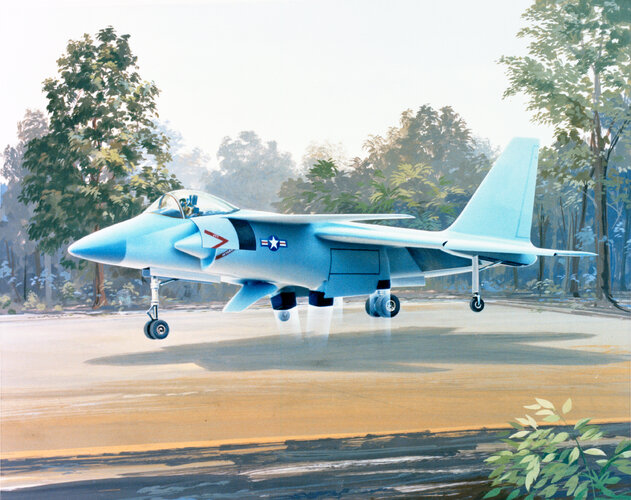
McDonnell-Douglas Model 279 VSTOL fighter
- Thread starter Deino
- Start date

Nik
ACCESS: Top Secret
- Joined
- 15 July 2009
- Messages
- 1,374
- Reaction score
- 1,211
Is there any indication how they got around those Pegasus' 'Plenum Chamber Burning' issues that thwarted the 'Super-Harrier' ??
I ask as, back in the late 80s, I could not get an explanation ("NDA.") from Rod (Rob ?) Rowe, who claimed his team solved the 'supersonic' thing just before political issues killed project. But he did scoff at 'Plenum Chamber Burning', strongly implying that was a 'dead end'.....
Whimsy:
Years later, I wondered if design had adopted a vertically stacked, staggered twin-Pegasus arrangement, akin to cross between Harrier and EE Lightning. Judicious combination of diverters and swivelling nozzles would provide both stable 'poster' thrust, mix-cooled, and an actual after-burner...
/
I ask as, back in the late 80s, I could not get an explanation ("NDA.") from Rod (Rob ?) Rowe, who claimed his team solved the 'supersonic' thing just before political issues killed project. But he did scoff at 'Plenum Chamber Burning', strongly implying that was a 'dead end'.....
Whimsy:
Years later, I wondered if design had adopted a vertically stacked, staggered twin-Pegasus arrangement, akin to cross between Harrier and EE Lightning. Judicious combination of diverters and swivelling nozzles would provide both stable 'poster' thrust, mix-cooled, and an actual after-burner...
/


- Joined
- 11 March 2011
- Messages
- 337
- Reaction score
- 1,486

scautomoton
ACCESS: Secret
- Joined
- 19 January 2024
- Messages
- 316
- Reaction score
- 789
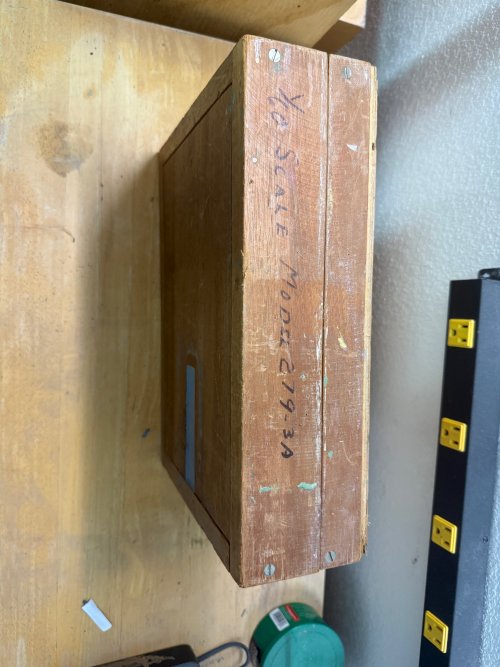
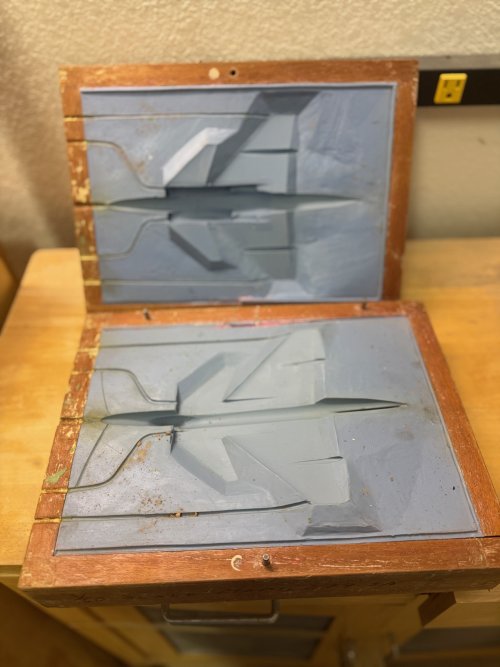
Wow what a find! I'll ask no questions so you can tell no lies...Here is something that I will be casting at some point.... this is THE master source whence all little baby 279's were born! ....... Don't ask!
- Joined
- 8 January 2006
- Messages
- 1,692
- Reaction score
- 993
I remember, "back in the day", seeing this also written in a paper for either an AIAA or SAE sympsoium. It made for interesting reading.Here is an info about Model 279-3JF;
To investigate the benefit in increased payload, the 279-3 and
the jet flapped 279-3JF were modeled on NASA's "Aircraft Synthesis
(ACSYNT) computer code and flown on a 250 ft. takeoff distance interdiction
mission. The increase in payload weight that the 279-3JF could
carry was converted into fuel in one case, and in another, converted
to bomb load. When the fuel was increased, the 279-3JF penetrated into
enemy territory almost four times the distance of the 279-3, and therefore
increased mission capability. When the bomb load was increased,
the 279-3JF carried 14 bombs the same distance the 279-3 carried four.
This increase in mission performance and improvements in turning rates
was realized with only a small penalty in increased empty weight.
http://ntrs.nasa.gov/archive/nasa/casi.ntrs.nasa.gov/19860021250_1986021250.pdf

Max8Seven
ACCESS: Restricted
- Joined
- 8 May 2026
- Messages
- 1
- Reaction score
- 20
Thank you, to everyone who’s contributed to this thread over the last couple decades! It’s been a primary source for me to learn more about this project, and I find it fascinating.
So, I hope you find my contribution to be an interesting addition!
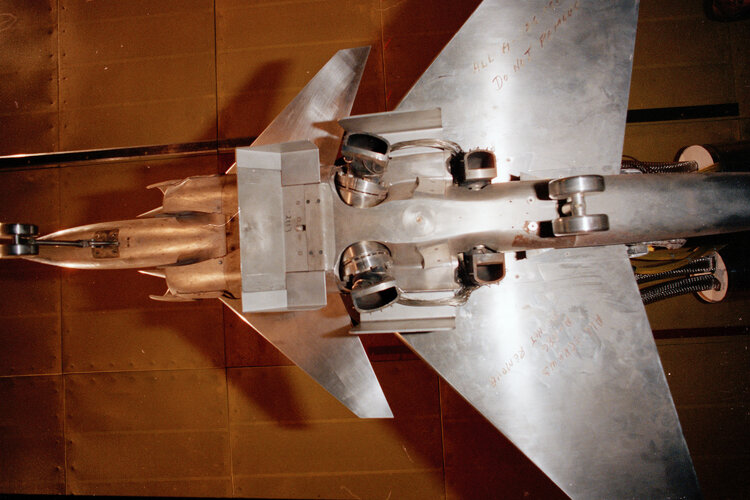
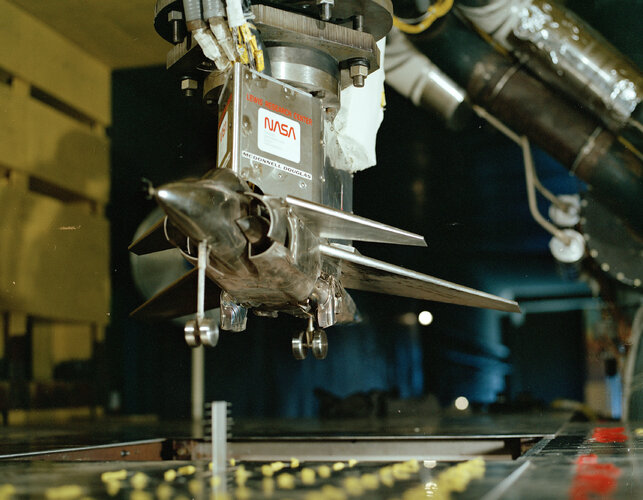
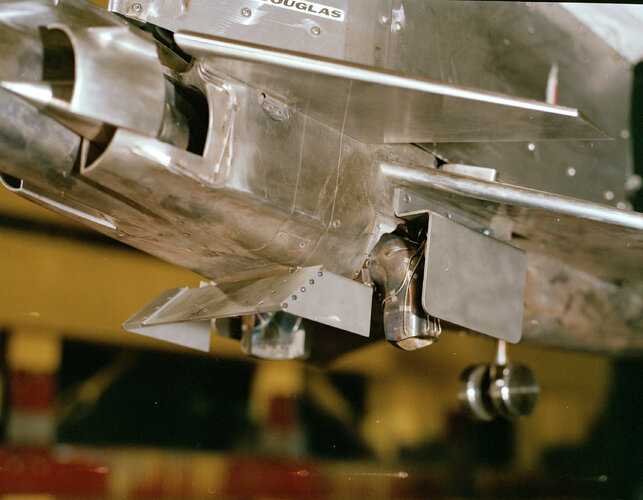
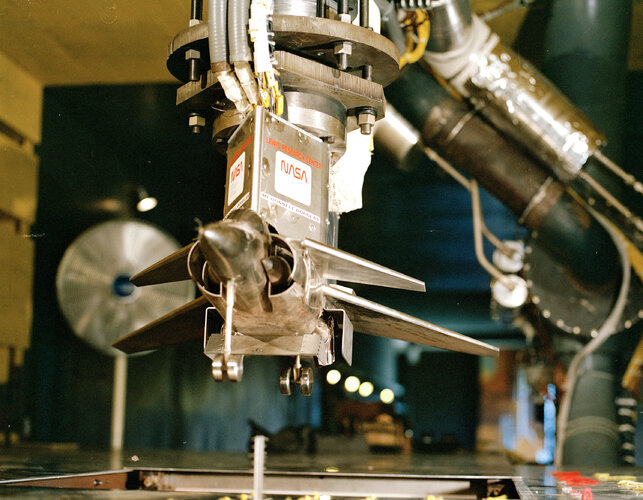
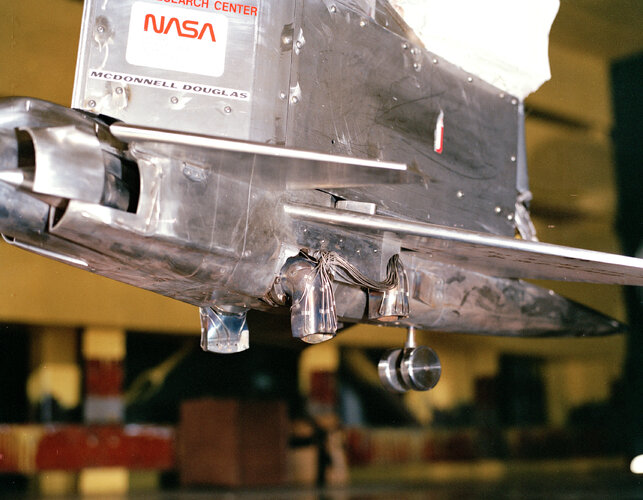
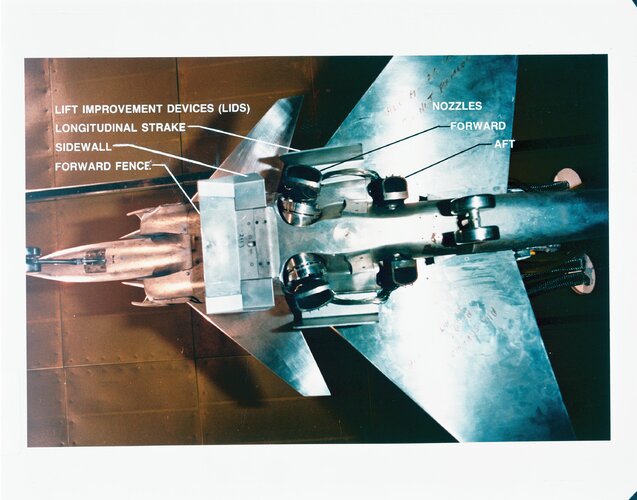
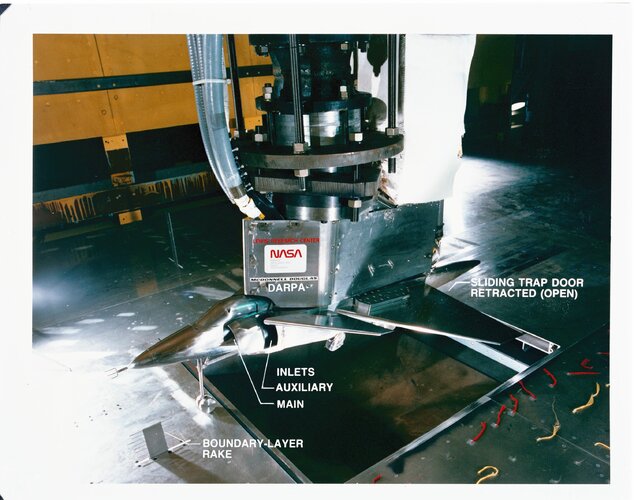
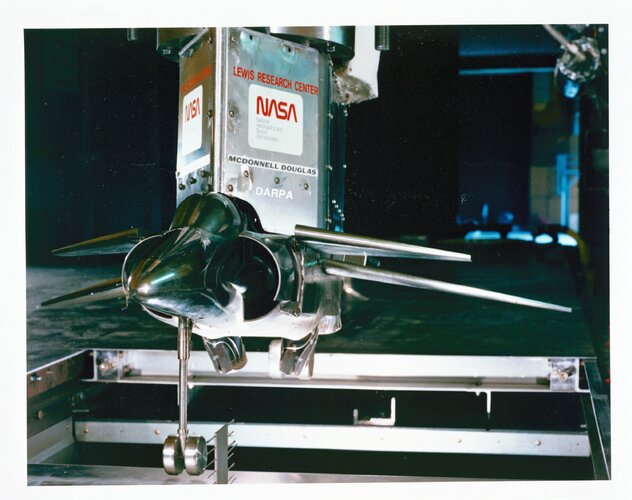
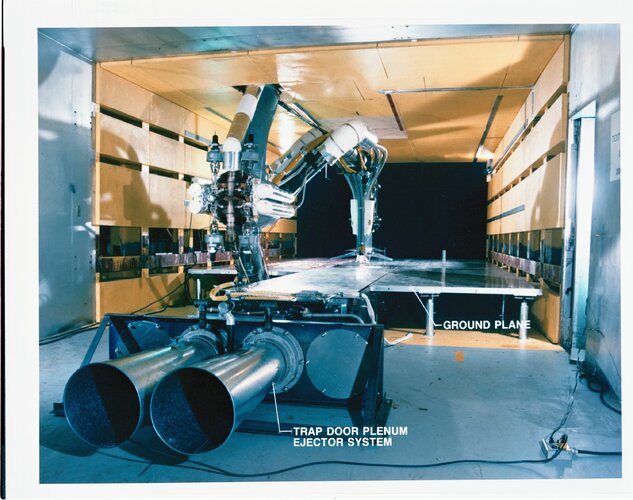
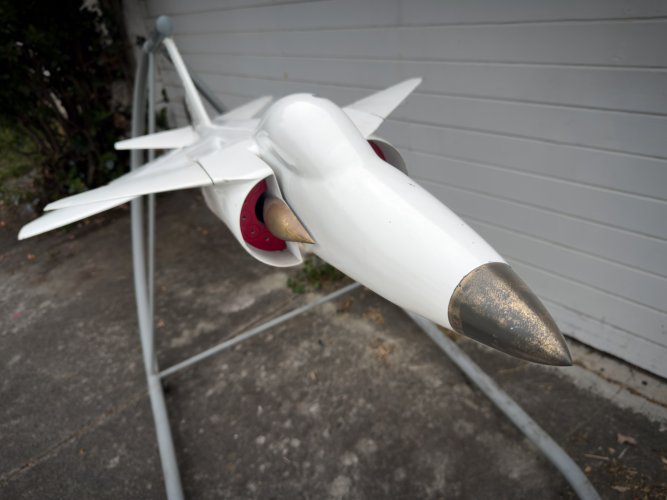
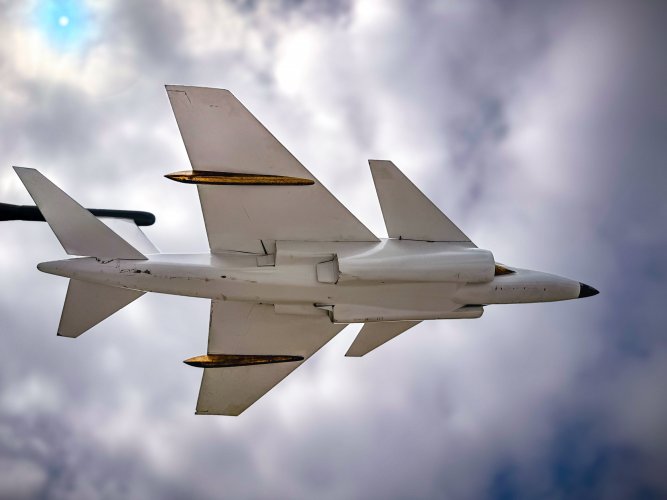
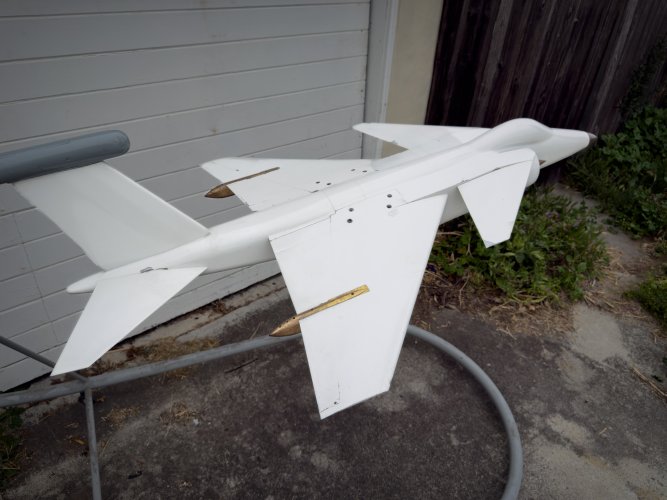
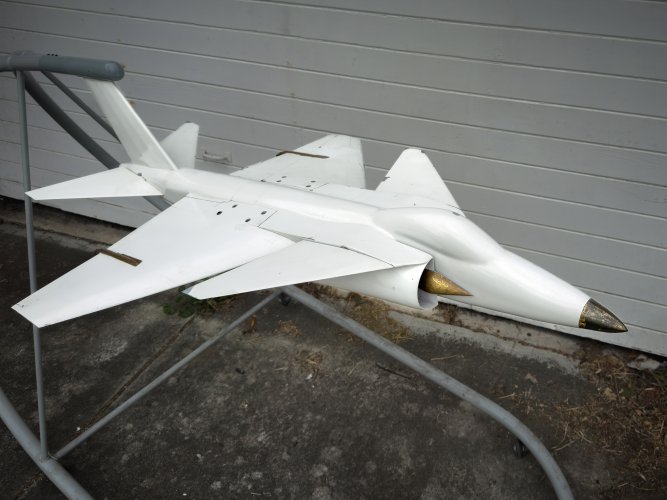
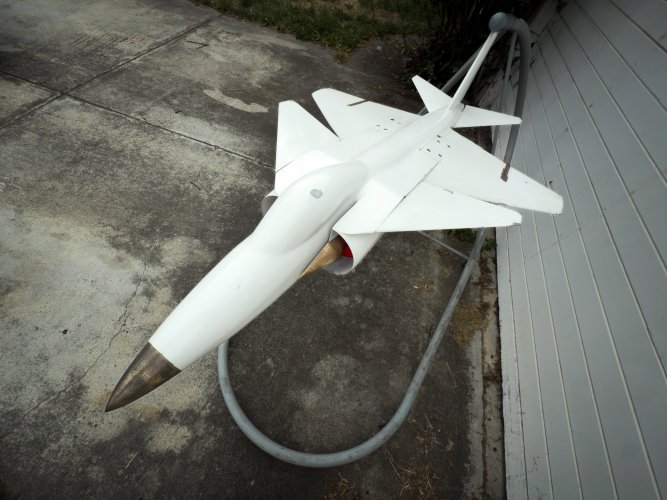
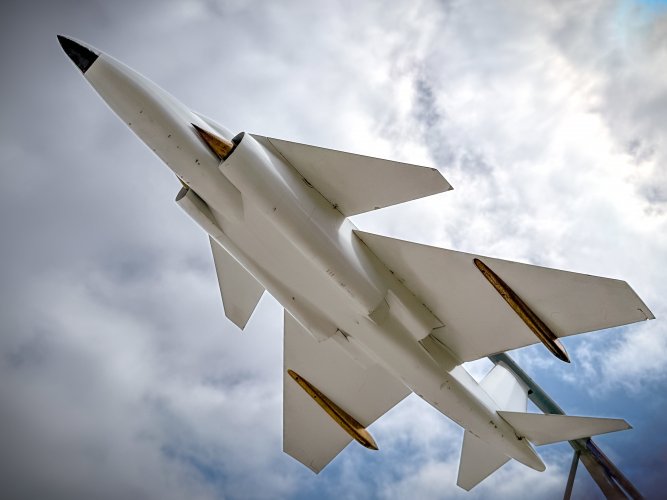
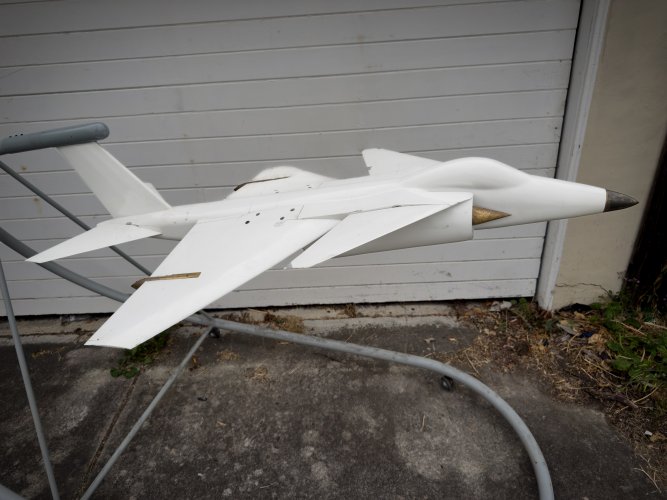
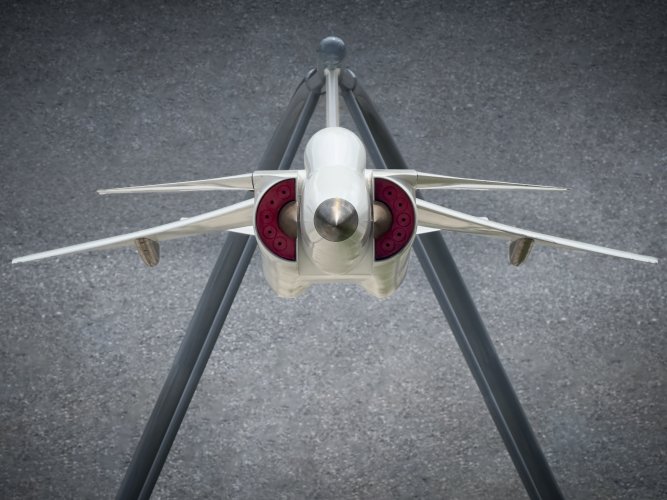
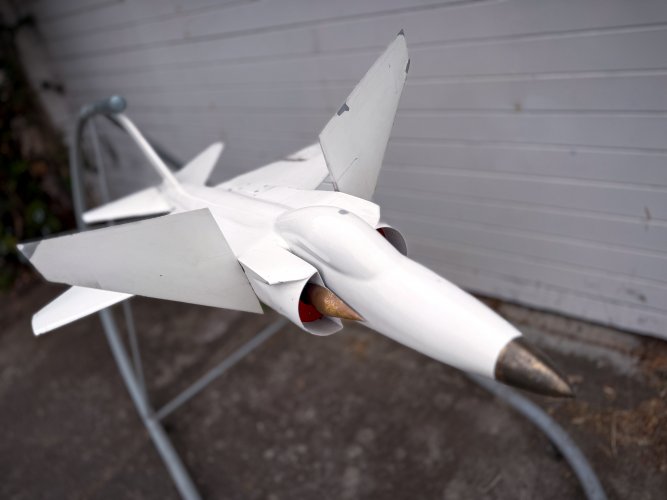
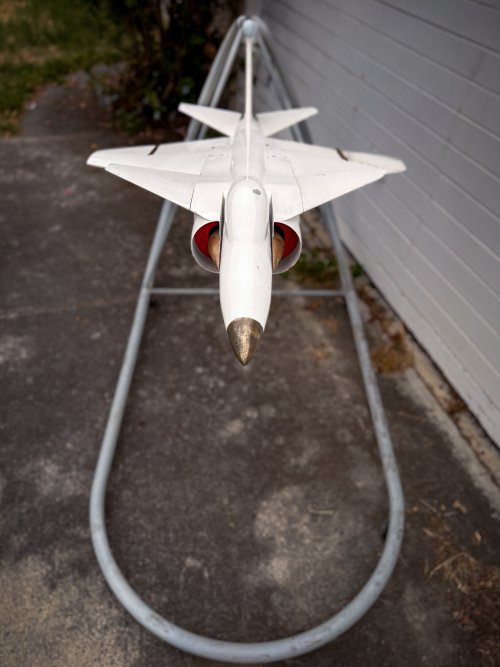
It’s a Model 279-3, built by Dynamic Engineering Inc under subcontract for McDonnell Douglas, which was used for testing in the 9 x 7 foot supersonic wind tunnel at NASA Ames Research Center at Moffett Field in California. It was involved in tests with wind speeds ranging from Mach 1.6 - Mach 2.4 in the course of an extensive research project to investigate various supersonic powered lift concepts in the early to mid-1980s.
The aircraft model itself is approximately 64” x 41” x 7” (163 x 104 x 18cm), and is constructed primarily from stainless steel. So, it’s fairly hefty, weighing in the neighborhood of 200 pounds (90kg)! I added the “selfie” style photo to illustrate the scale.


So, I hope you find my contribution to be an interesting addition!
It’s a Model 279-3, built by Dynamic Engineering Inc under subcontract for McDonnell Douglas, which was used for testing in the 9 x 7 foot supersonic wind tunnel at NASA Ames Research Center at Moffett Field in California. It was involved in tests with wind speeds ranging from Mach 1.6 - Mach 2.4 in the course of an extensive research project to investigate various supersonic powered lift concepts in the early to mid-1980s.
The aircraft model itself is approximately 64” x 41” x 7” (163 x 104 x 18cm), and is constructed primarily from stainless steel. So, it’s fairly hefty, weighing in the neighborhood of 200 pounds (90kg)! I added the “selfie” style photo to illustrate the scale.


- Joined
- 27 December 2005
- Messages
- 19,230
- Reaction score
- 35,692
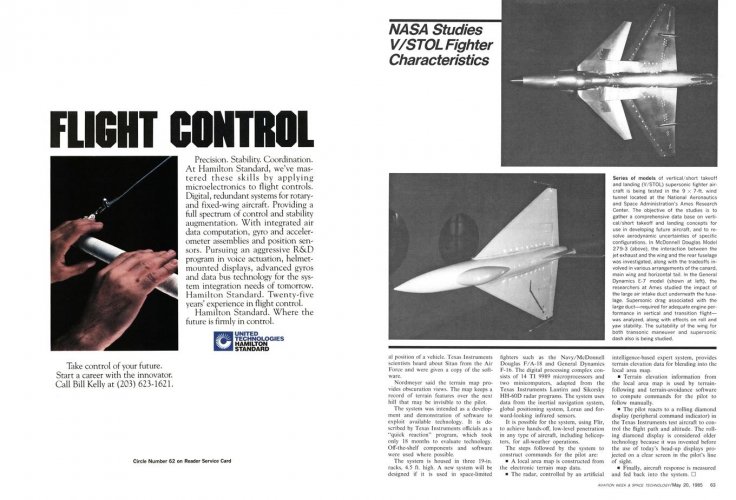
Awesome model. I was going to say i hadnt seen a version with tailplanes but they are indicated with dotted lines on at least one drawing.
Similar threads
-
 US Navy "V/STOL Type A" competition
- Started by flateric
- Replies: 57
-
 REQUIREMENT: US Navy VFA - V/STOL Fighters for Sea Control Ships
- Started by overscan (PaulMM)
- Replies: 5
-
 McDonnell-Douglas Model 260 VSTOL project
- Started by Antonio
- Replies: 71
-
Various McDonnell-Douglas Advanced Design Proposals
- Started by overscan (PaulMM)
- Replies: 70
-
Bell Tilt-Rotor Projects from NASA Ames website
- Started by overscan (PaulMM)
- Replies: 8