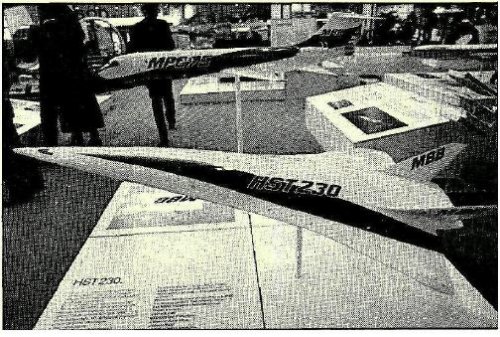
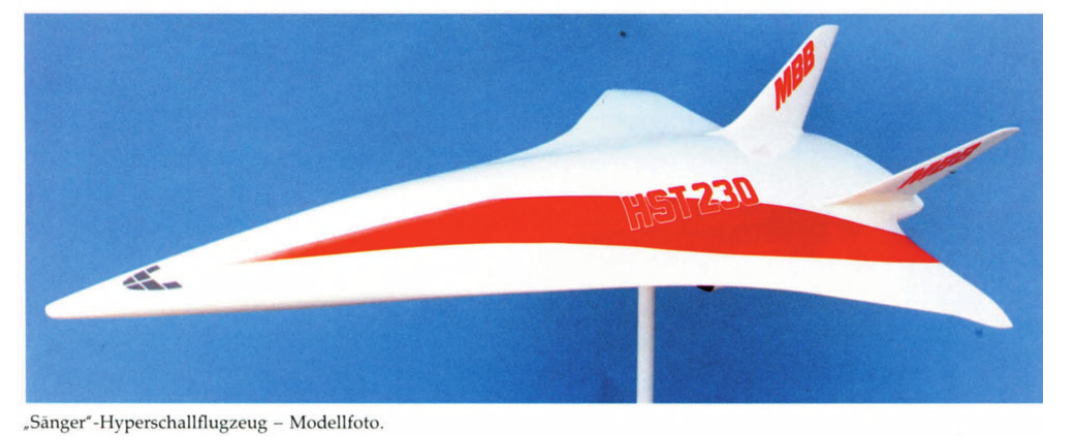
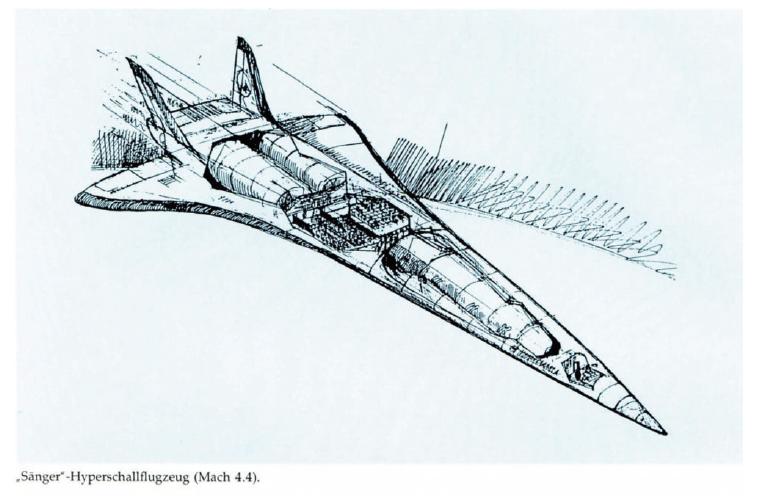
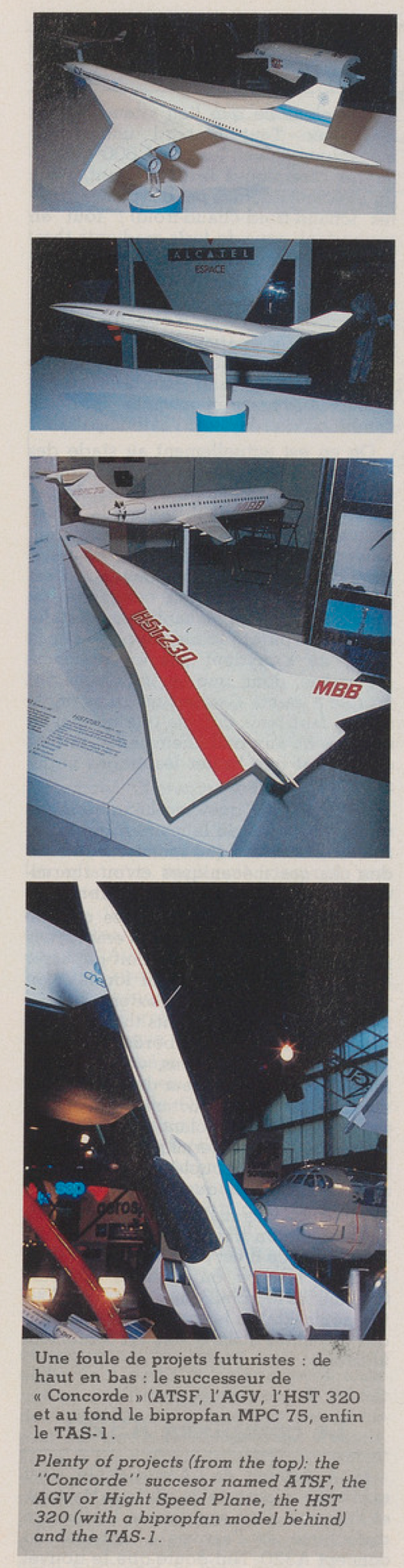
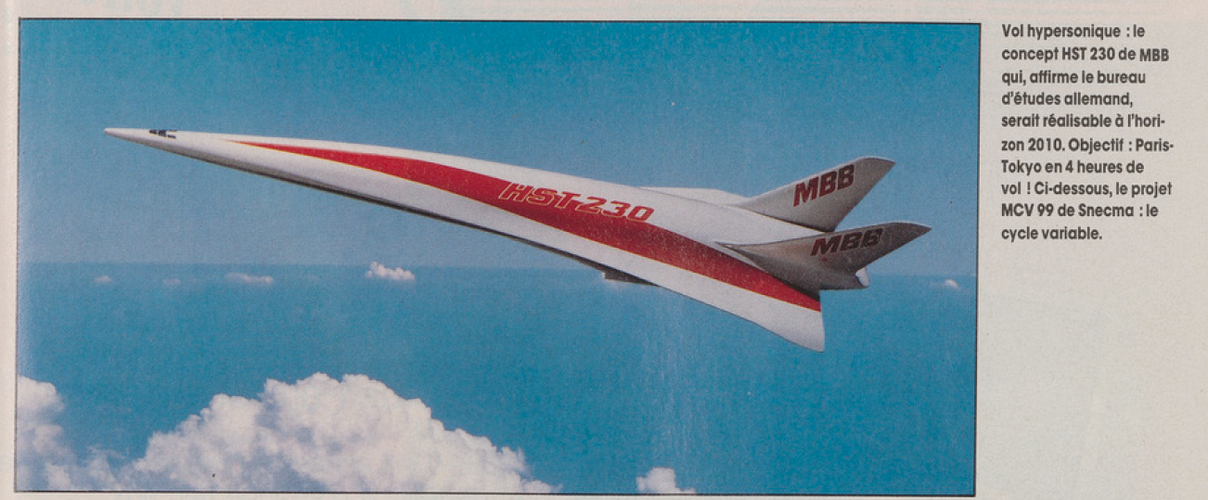
Yes, MBB used the Sänger II carrier-stage to propose this Mach 4+ intercontinental passenger aircraft (three hours for the distance from Frankfurt/Main to LA or Tokyo). A derivative named HST 256 also existed as a project (investigated in cooperation with Lufthansa and airbus engineers from Hamburg).
 
From Aviation magazine 1987.
 

Attachments

  • 10.png
    10.png
    2.6 MB · Views: 115
Yes, MBB used the Sänger II carrier-stage to propose this Mach 4+ intercontinental passenger aircraft (three hours for the distance from Frankfurt/Main to LA or Tokyo). A derivative named HST 256 also existed as a project (investigated in cooperation with Lufthansa and airbus engineers from Hamburg).

My dear Boxkite,

Please can you send a drawing to HST 256?
and thanks
 
Sorry, Hesham. I checked my sources again, but found no illustration - only the textual reference mentioned. :confused:
 
Sorry, Hesham. I checked my sources again, but found no illustration - only the textual reference mentioned. :confused:
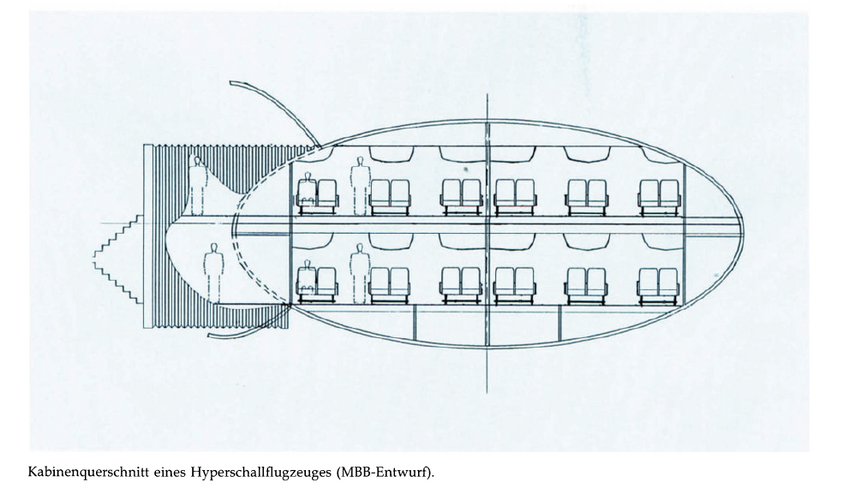
I found a brief discussion in a section on pages 120 through 124 of "Deutsche Raketenflugzeuge und Raumtransporter-Projekte" by Dietrich Koelle, Peter Sacher, and Herbert Grallert (all of whom I had the pleasure to personally know, and in the case of the latter two, work with in FESTIP), which shows that the HST-256 was designed with a two level mid-fuselage passenger cabin with elliptical cross section and 12 seats per row in each of the two cabin levels in a business class four isle configuration. Cruise conditions were to be Mach 4.4 at an altitude of 26 km with an L/D of 5.7. Empty mass was to be 155 t, top LH2 propellant mass was 100 t, and top payload mass was 35 t. At a nominal range of 10400 km the number of passengers was determined to be 256 (26 t). Overall length was 84.5 m, with a wing span 41.5 m. The overall shape was pretty much that of the Saenger lower stage, but without the shallow dorsal depression for accommodating the Horus orbiter, i.e. a purely elliptical cross section. Based on the single illustration available, the width/height ratio of the ellipse was approximately 2.178 at the shown cross section.
 
Last edited:
Sorry, Hesham. I checked my sources again, but found no illustration - only the textual reference mentioned. :confused:

OK my dear Boxkite,and many thanks to Marin for explanation.
 

Similar threads

Back
Top Bottom