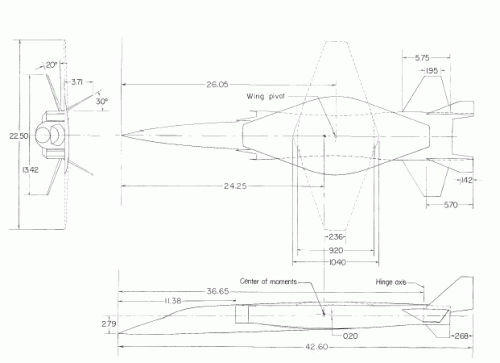
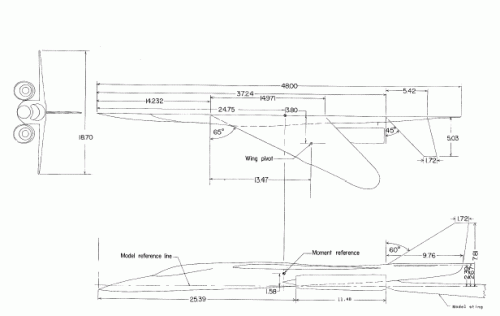
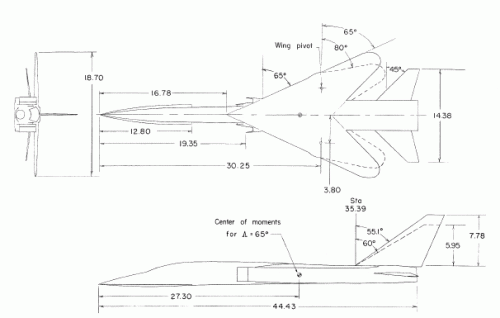
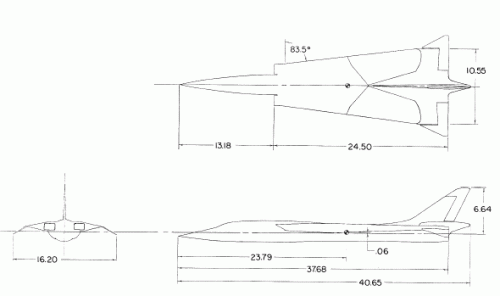
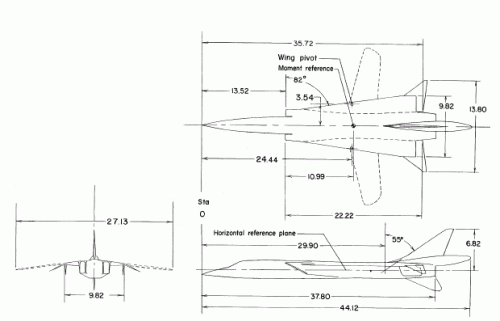
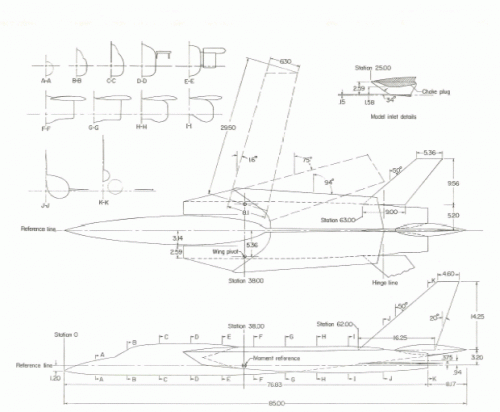
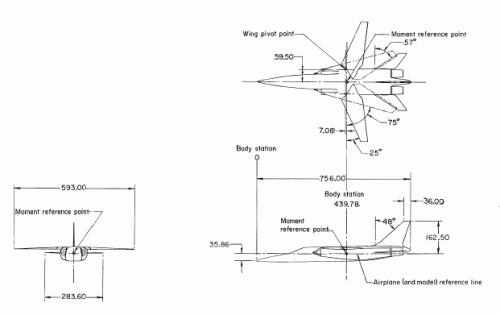
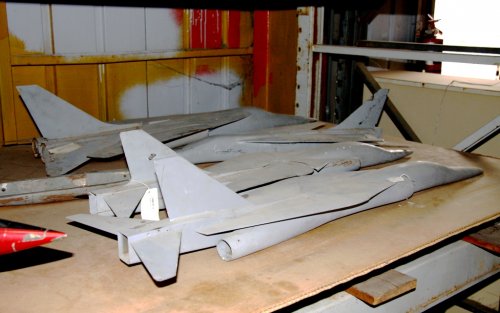
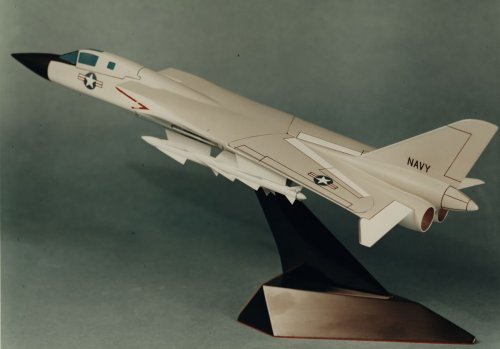
End 1959, Langley researchers stressed the importance of the development of a new turbofan engine to match the new aircraft versatility offered by the variable sweep wing.
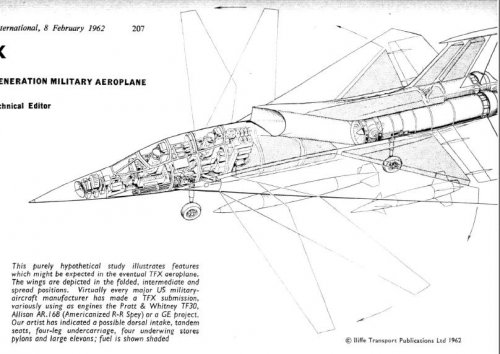
P&W, counting on Navy support in the multi-service competition, was proposing the TF30, an engine developed under a $30 million USN program.
Allison had reached a technical agreement with R-R and was proposing a version of the R-R Spey engine.
After originally submitting the J79 and not having it selected by any of the competing airframe companies. GE promptly came up with an entirely new design: the MF295, a dual rotor, front fan powerplant. The MF295 was several hundred pounds lighter than the Allson or P&W engine, and was smaller both in length and in diameter. This promised relief from the crushing limitation on weight, and also permitted the narrow fuselage so critical to the USAF requirements.
Boeing, which had been designing the TFX around the heavier P&W for two and an half years deided to switch the the MF295.
Other contractors apparently shared Boeing's views for North American, MCDonnell, Douglas, Lockheed, and indeed every one except Republic, Chance Vought and GD/Grumman, switched to the MF295. Five airframe companies had speified the MF295 as their engine of choice.
The TFX competition narrowed to two:
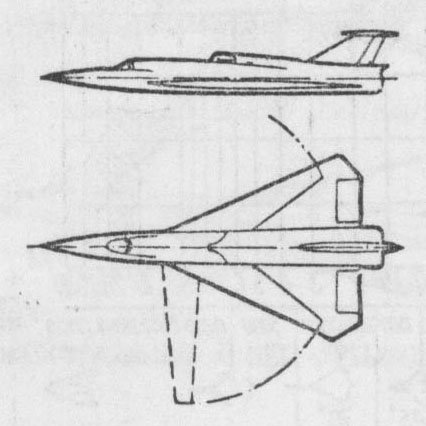
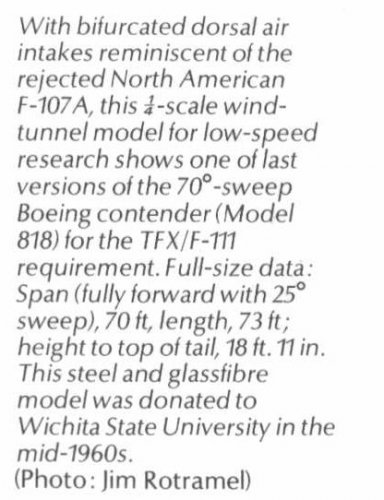
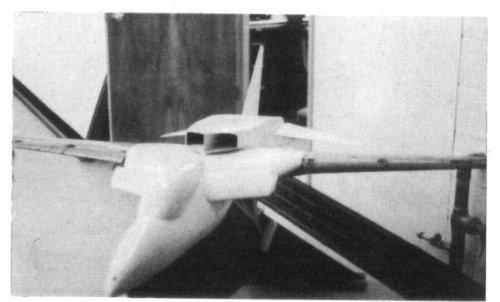
Boeing design/ GE MF295
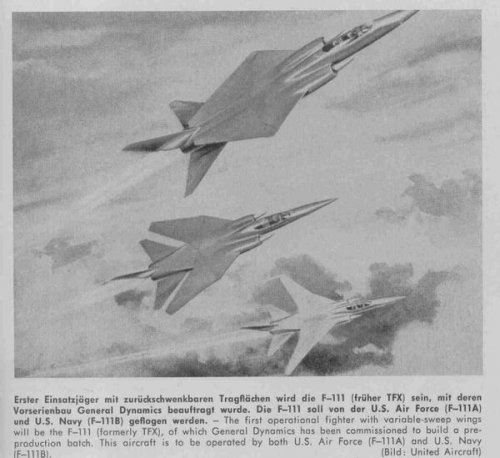
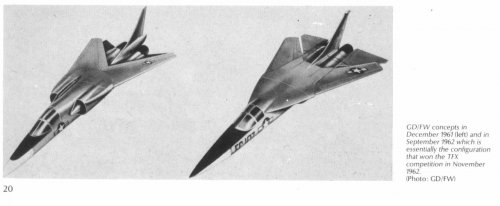
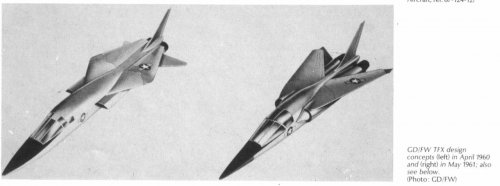
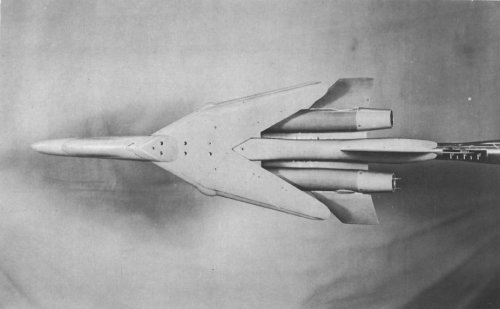
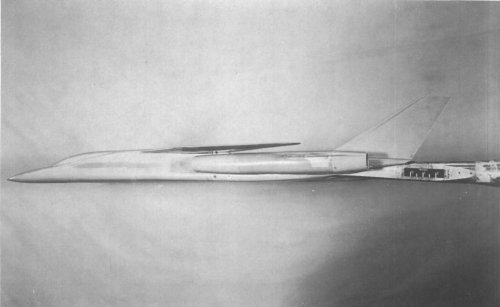
GD/Grumman design/P&W TF30



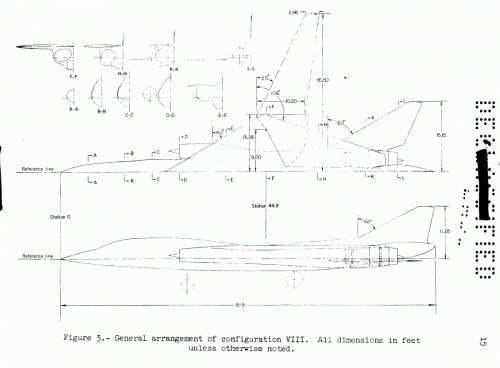
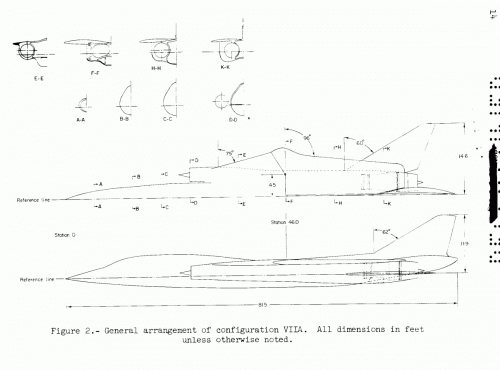

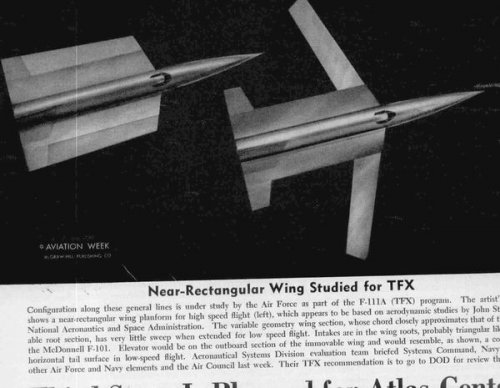

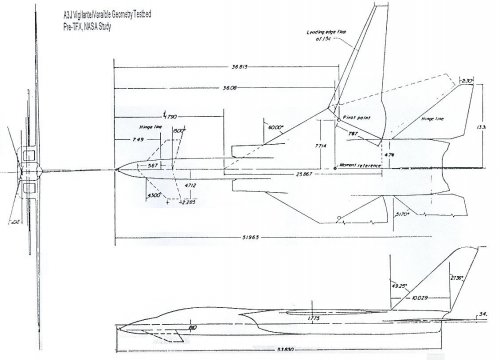
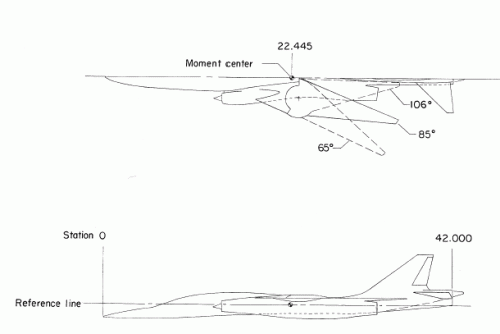
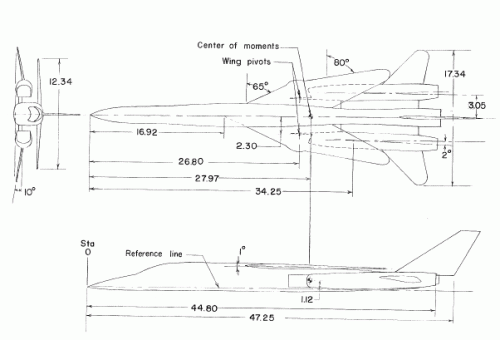
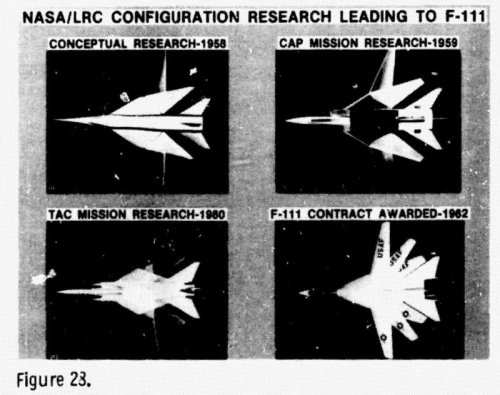
 . BTW, note that the original NASA VG studies were done using a Navy requirement (Fleet Defense). By that time, the USAF requirement was for a VTOL supersonic long-range strike (kind of super_NMBR-3). Only later SOR-183 turned on STOL.