The actuated neck is not flexible but a safety lock like a U bar that you insert in pin holes might be deemed necessary to prevent damage in Flight.
 
The actuated neck is not flexible but a safety lock like a U bar that you insert in pin holes might be deemed necessary to prevent damage in Flight.
I do not think the front section flexes directionally like the MUTANT.
 
Do we know the engine type for the AIM-260? Is it Boost+Sustain single pulse, Dual pulse boost+coast+terminal, Dual Pulse Boost+Sustain+Terminal

I wouldn't be surprised at all if the AIM-260A's rocket-motor is a three-pulse design with the timing of when the second and third pulses fire depending on if the missile is flying a short, medium or long-range profile.
 
Did you learn something from the video? I have to admit, I stopped watching this channel after one or two videos some time ago. I gave this one a try to see if maybe I'd made a mistake. It's the same regurgitation of known facts plus a bunch of speculation and "rumors" that I've never heard. The repeated rumor about speculation of F-35 integration problems was particularly silly.
 
Did you learn something from the video? I have to admit, I stopped watching this channel after one or two videos some time ago. I gave this one a try to see if maybe I'd made a mistake. It's the same regurgitation of known facts plus a bunch of speculation and "rumors" that I've never heard. The repeated rumor about speculation of F-35 integration problems was particularly silly.
Whilst simultaneously assuming the Su-57 is a viable 5th generation aircraft or the Su-75 has a bright future ahead.
 
Did you learn something from the video? I have to admit, I stopped watching this channel after one or two videos some time ago. I gave this one a try to see if maybe I'd made a mistake. It's the same regurgitation of known facts plus a bunch of speculation and "rumors" that I've never heard. The repeated rumor about speculation of F-35 integration problems was particularly silly.

Integration problems? The F-35 is only now being roadmapped for integration. They haven’t hit the point where they could run into any problems.

The F-22 and F-18 were the priority.
 
Sorry, came across this point and realized it hasn't been addressed.
I think another element to the AIM-260 is likely to be a highly digitized design and production process, and use of more open standards that could lend themselves nicely to follow on variants of the weapon to address other niche roles. Baseline A variant replaces the AIM-120 AMRAAM > Follow on larger diameter 'cousins' provide the long-range counter air capability to support LRKC efforts the USAF is investing in. A 10- or 11-inch diameter 'upsized' JATM could be very interesting. Especially if they were to adapt the PAC-3 MSE motor for air-launch.
Disagree. IMO the PAC-3 motor has the wrong burn profile for air launch. It should have a lot of thrust at the start due to need to start from stationary, while an air-launched missile can get away with a slower burn at start since it's already starting at 30kft and M0.9.

Unless of course you meant "replace the first pulse in the PAC3 MSE with one closer in, or same, burn rate to the second pulse" when you said "adapt"
 
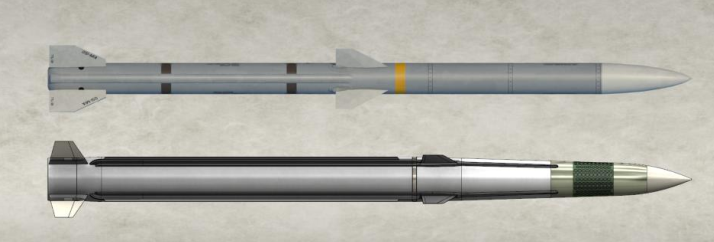
With just the rear set of fins how will this missile keep the level of maneuverability the AIM-120 had? Many modern short-range AAMs use thrust vectoring to increase maneuverability for the initial powered phase of their flight, but I don't believe such method is a common on medium/long range designs.

Progress over the years has allowed smaller flight surfaces to still provide a lot of maneuverability, hence why the AIM-120 didn't need the same large fins the AIM-7 Sparrow had, but physics still gets its say.

I'm a bit doubtful it incorporates the "neck control" that Mutant missile had. That's an interesting tech demonstrator but with all of the improvements this missile has to make elsewhere I'm skeptical if it's included here or worth all the trouble.

Was it even a design requirement to have the same maneuverability as an AIM-120? The only thing about requirements that the public knows is that it has the same form factor as an AIM-120 and a longer range. Both of those “facts” were derived either from statements made by people that presumably would have knowledge of the requirements or derived from ancillary evidence like test range size comparison. I would venture a guess that maneuverability requirements would be classified at the secret level or above and may not necessarily be the same as those of AIM-120.
 
Did you learn something from the video? I have to admit, I stopped watching this channel after one or two videos some time ago. I gave this one a try to see if maybe I'd made a mistake. It's the same regurgitation of known facts plus a bunch of speculation and "rumors" that I've never heard. The repeated rumor about speculation of F-35 integration problems was particularly silly.
F-35 is certainly a jet with a smooth and exemplary weapons integration pipeline.
Tbh, integration problems are a reasonable speculation - it's just that reality is even wilder(no one even started).
 
F-35 is certainly a jet with a smooth and exemplary weapons integration pipeline.
Tbh, integration problems are a reasonable speculation - it's just that reality is even wilder(no one even started).
It was particularly silly because (as pointed out by quellish), the F-35 wasn't on the list for initial integration.

 
It was particularly silly because (as pointed out by quellish), the F-35 wasn't on the list for initial integration.
Well the flip side of the argument is that the platform most capable of utilizing the weapon to its max capability in the current US fleet continues to be the F-22, whose sole job is to be the premier air superiority fighter. It makes sense to be doing integration for it first. With no new radar or radar related sensor upgrades, its debatable at this point that the F-22 can even have better / longer ranged sensors over the F-35 and if it also cant have the benefit of greater reach via a newer AAM then... whats the point of keeping it flying?

The F-18 is in a similar spot where it would be in greater need of a longer ranged weapon since its not stealthy and lugging an SM-6 sized weapon around really isnt great.

The F-35 being more modern than both and with a more multirole mission profile has less urgency with regards to firing a new AAM.
 
Last edited:
It was particularly silly because (as pointed out by quellish), the F-35 wasn't on the list for initial integration.
...which is the reality being sillier than the attempt at a reasonable speculation.
All of us speculate all the time. Before the same post by Quellish, I personally wouldn't have even imagined the USAF not starting to move in this direction yet.
 
...which is the reality being sillier than the attempt at a reasonable speculation.
All of us speculate all the time. Before the same post by Quellish, I personally wouldn't have even imagined the USAF not starting to move in this direction yet.
"We have limited bandwidth. What should we start with?"
"Everything."
 
Was it even a design requirement to have the same maneuverability as an AIM-120? The only thing about requirements that the public knows is that it has the same form factor as an AIM-120 and a longer range. Both of those “facts” were derived either from statements made by people that presumably would have knowledge of the requirements or derived from ancillary evidence like test range size comparison. I would venture a guess that maneuverability requirements would be classified at the secret level or above and may not necessarily be the same as those of AIM-120.
I'm sure the actual numbers are all classified but I'd have to assume requirements for maneuverability are at-least equal to the AIM-120, hopefully they require some improvement over that, but we can only guess.
 
I'm sure the actual numbers are all classified but I'd have to assume requirements for maneuverability are at-least equal to the AIM-120, hopefully they require some improvement over that, but we can only guess.
Not really no, its could also be a missile hybrid of sorts btw a r37M/airborne SM6 and the Aim 120 where it does possess some degree of maneuverability but not on the same scale as the Aim 120.
 
"We have limited bandwidth. What should we start with?"
"Everything."
:)

When the AIM-260 program was launched the F-35 was still very much in EMD and just getting into service with the AF and USMC (still awaiting full Block 3F IIRC). F-22 and F/A-18 were mature and mainstays for the mission with the AF and Navy. That makes the decision to focus on those platforms first pretty straightforward.
 
Last edited:
Not really no, its could also be a missile hybrid of sorts btw a r37M/airborne SM6 and the Aim 120 where it does possess some degree of maneuverability but not on the same scale as the Aim 120.
This is your conclusion based on precisely what evidence? It could also be more manouverable than AIM-120. I'm pretty confident we can predict it will either be more or less manouverable than AIM-120, but I fail to see what this would add to the conversation.

At minimum, point to features of the design that support your supposition.
 
Last edited:
Not really no, its could also be a missile hybrid of sorts btw a r37M/airborne SM6 and the Aim 120 where it does possess some degree of maneuverability but not on the same scale as the Aim 120.
A stopgap weapon (SM-6) and a low hypersonic weapon (r37) has little bearing on what looks to be for all intents and purposes a classical A2A missile. R-37 was developed from the R-33 and generally used for larger less maneuverable targets. The SM -6 derivative needs no introduction.

If range alone were a measure, then the PL-15 & friends should look very different as well but they dont. Pl-17 and AIM-260 both have a similar form factor and neither looks like an SM -6 or the r37.
 
A stopgap weapon (SM-6) and a low hypersonic weapon (r37) has little bearing on what looks to be for all intents and purposes a classical A2A missile. R-37 was developed from the R-33 and generally used for larger less maneuverable targets. The SM -6 derivative needs no introduction.

If range alone were a measure, then the PL-15 & friends should look very different as well but they dont. Pl-17 and AIM-260 both have a similar form factor and neither looks like an SM -6 or the r37.
This is your conclusion based on precisely what evidence? It could also be more manouverable than AIM-120. I'm pretty confident we can predict it will either be more or less manouverable than AIM-120, but I fail to see what this would add to the conversation.

At minimum, point to features of the design that support your supposition.
It was the lack of mid body fins that sort of led me to the possibility of it having lesser maneuverability but after actually thinking about it a bit more even the ASRAAM doesn't possess mid body fins while being extremely maneuverable via the tailfins. The Aim 9-X and the python series do possess 2 fins especially at the front like canards.

The aim 120 and the others similar range BVRAAMs(like the PL-15) use the mid fins both to generate lift and to allow the missile to be more stable in the air for the maneuvering at the end of the flight. But the Aim 260 and the PL-17 didn't. Which was what led me to believe that the Aim 260 might not be as maneuverable as the Aim 120.
The PL-17 from certain reports(idk how reliable) has TVC for the high altitude maneuvers it has to make.
Idk if the Aim-260 also has a confirmed TVC design. If it does then that solves a lot of my confusion.

The R37M/SM-6 comparisons were not to say the missile was as maneuverable as them but to say it was less than the aim 120 by a relatively significant amount. It was not to say they were structurally similar missiles.

Of course, I don't have a masters or a degree in aerodynamics so it could be quite easily be me making completely wrong assumptions or modern tech having caught up to the point where mid body fins are not needed for stability.

I just raised the point as a possibility for the missile not as a certain outcome.
 
Last edited:
Idk if the Aim-260 also has a confirmed TVC design.
Nothing has been confirmed yet.

Regarding the PL-17, I did a cursory search and the earliest mention in (chinese and english) of TVC nozzles was from...Tyler from TWZ (though the suggestion isnt outside the realm of possibility). so unless I missed something from one of those mysterious PLA watcher daddies, Im going to remain doubtful that either of these solutions have TWC until proven otherwise.

That said, I generally dont think it should be inferred that these missiles have reduced lethality otherwise. Aside from whatever hidden maneuverability schemes these missiles may have, endgame performance also mostly comes from energy rentention, and while it can be argued that midbody fins can help with that, better guidance, energetics and flight schemes do most of the heavy lifting.

I would think that if you expect to have a lock and target updates being transmitted for 70% of the flight profile, you might need some hogh g end game maneuvering. But if you can increase that to 80%, you should in theory need less maneuverability to hit the target since small adjustments along the flight path would have put the target in better position to be hit.

But like I said - the better assumption right now is simply "we dont know"
 
Well, the point is the mid body fins on the AIM-120 are fixed, and all control is via the tail, so there's absolutely no reason to expect it to have less manouverability. ASRAAM manages 50G just fine with body lift and tail fins.

The wings give a contribution to lift but also create drag. When optimising for long range, and higher flight speeds, the wings become more of a hinderance than a help.
 
Last edited:
Then you have the fact that alot of the old Sidewinder replacements like the AIM95 Agile that has similar set ups with both being able to pull well over 60 gs themselves.

In the 70s.

Or Stuff like the AIM-152 AAAM which also had only a single set of wings in some designs.

From what I recall the big deal for the forward wings on missiles is that it makes more stable and easiler to control for the early guidence systems that were insanely simple. With the newer missiles carrying that forward cause it work very well and we didn't to spend the time redoing the control system to gain a bit more performance over slapping in a new motor.

Now we are hitting the points of motor limits.

AND we are hitting the point that modern computers like the phone Im typing this on have more power in it then most of the missiles fire in Nam Combine with far more accurate IMU type deals in a package the size of my hand. For a price thats a fraction of what those old missiles were. WE can afford to spend some processing power to use a more unstable design to gain more performances and not break the bank since we have so much to spare.

Its very likely the 260 has enough agility to make all but the most agile fighter sweat, and even those need a good pilot to dodge if the EWAR doesn't work.
 
We know ASRAAM uses body lift, which is why it's designed that way as was work on tail only control versions of Skyflash and FLAME.
So the concepts and technology for this sort of tail only agile design date back decades, it's just getting the funding to realise the lot in modern hardware and testing.

AIM-152 AAAM versions did include 'darts' of a very similar design.

So pile in ruggedised modern chips, batteries, fuel, structures and new forumla explosives for the warhead and Bingo.
Compact, slim, long range AAM.
 
Nothing has been confirmed yet.

Regarding the PL-17, I did a cursory search and the earliest mention in (chinese and english) of TVC nozzles was from...Tyler from TWZ (though the suggestion isnt outside the realm of possibility). so unless I missed something from one of those mysterious PLA watcher daddies, Im going to remain doubtful that either of these solutions have TWC until proven otherwise.

That said, I generally dont think it should be inferred that these missiles have reduced lethality otherwise. Aside from whatever hidden maneuverability schemes these missiles may have, endgame performance also mostly comes from energy rentention, and while it can be argued that midbody fins can help with that, better guidance, energetics and flight schemes do most of the heavy lifting.

I would think that if you expect to have a lock and target updates being transmitted for 70% of the flight profile, you might need some hogh g end game maneuvering. But if you can increase that to 80%, you should in theory need less maneuverability to hit the target since small adjustments along the flight path would have put the target in better position to be hit.

But like I said - the better assumption right now is simply "we dont know"

Agree with the above, and would just like to add that if an AAM has a second solid rocket motor pulse, it can pretty much have “off the rail” levels of speed in the endgame, and that will likely matter more than any control surface arrangement. On top of that, reduced total flight time (higher average speed) is going to help kill ratios for BVR weapons.
 
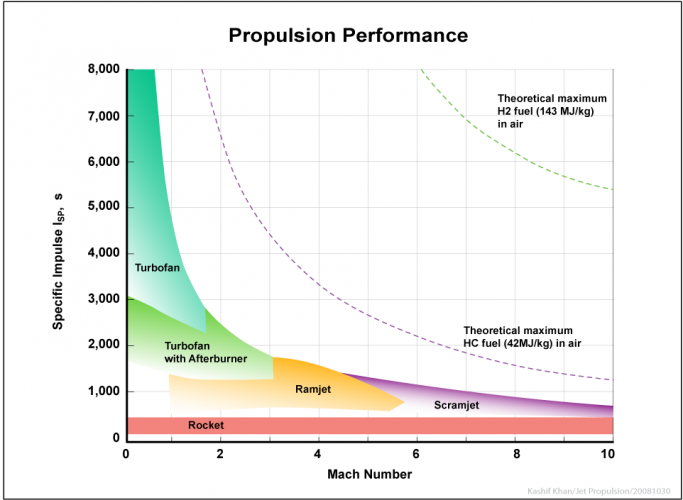
What are the differences between missiles with a second rocket motor or one with ramjet engines like for instance the Meteor? Could you design a missile with both systems so that the missile could have extra long range?
 
What are the differences between missiles with a second rocket motor
What you mean second rocket motor, it having literally 2 rockets like SM-6, Stunner; or Dual Pulse (its 1 rocket motor that reignite later)?

In any case, SM-6 and Stunner uses 2 stages (*AIM-152 had one proposal like this, 2 motors, a booster that would be left behind after it burns all propellant, and a second one on the main missile body) because they're based on ground/sea, so very high air density and its on inertia. The motor and casing itself represent a significant % of the overall missile weight, so when the motor run out of fuel is kinda dead weight (if it doesnt increase the drag, it will give more momentum to the missile), we have a perfect example of this, the AIM-174B is basically a SM-6 without the Mk 72 booster, they removed the booster coz its very heavy and the wider diameter of it probably would make harder to adapt to the F-18s;;; the Dual Pulse ones (PL-15 and probably AIM-260) have one rocket motor, but it has two sections of propellant separated, the first one provides speed to loft and flee from the draggier air, and the second one will reignite in a better enviroment, providing a 'better' efficiency to the acceleration;;; Ramjets like meteor usually have a rocket motor just to provide enough speed to start the Ramjet engine, because they require a higher airspeed to run in their best efficiency; i dont know if theres any launch limitation or booster detatchment restriction to make a "dual stage" Ramjet, but theorically seems a good idea, Meteor is said to have significant longer range than 200km, and its rocket motor will make it reach only mach ~2ish after it runs out, just the minimum to make the ramjet work properly, imagine a bigger booster that could boost it to mach ~4ish, it would not only make its range bigger, but decrease time to target, increase the NEZ even more, and avoid the slowish acceleration to cruise speed (mach ~3,3 for 100km distance), could see this working even for a land base anti-air system (for this last one, we can take the NASAMs example using AIM-120C-7; because of the conventional rocket motor, the C-7 doesnt perform THAT well from the ground, if a Meteor with Booster is put in the same scenarion, the Booster would provide altitude and speed enough to even mimick a regular air launch, so it would have probably around its regular maximum range)

sorry if the text is confuse to read, my english isnt that good, but i tried to make it clear

 
Last edited:
What are the differences between missiles with a second rocket motor or one with ramjet engines like for instance the Meteor?
Meteor has a small booster to get it up to whatever the ramjet's starting speed is. Then the booster's hot gasses light the solid fuel gas generator on the other side of the throttle blades and the exhaust gasses from that are flammable if you add more oxygen.

So instead of a kick up to ~M4.5 for ~7-9 seconds and then gliding for ~30, Meteor only kicks up to ~M4 but cruises under power for a lot longer/farther than AMRAAM does (powered for ~20 seconds and gliding for ~20. Meteor can't glide as far as AMRAAM because of those draggy air inlets).


Could you design a missile with both systems so that the missile could have extra long range?
I think you could in theory, it'd be like having a dual-pulse rocket motor but with the Meteor throttle nozzle and ramjet.

The first question is if that would actually give you more range than just using that terminal pulse volume for more ramjet fuel and still be under thrust that way.

The second question is if you could run a relatively normal rocket through the throttleable nozzle Meteor uses for the ramjet, because that would be the simplest way to make it work. If not you'd have to get creative for how the terminal pulse would work. Up to and including staging the ramjet section off entirely.
 
Thanks Scott Kenny, so in theory it could work having duel-purpose rocket motors plus a ramjet engines.
 
If you are going with some sort of solid fueled ramjet option then you want to transition to that more efficient form of propulsion as rapidly as possible to maximize performance and efficiency. No point in staging it within such a limited form factor. The Meteor already does that with its VFDR design.

1784024317704.png
 

Similar threads

Back
Top Bottom