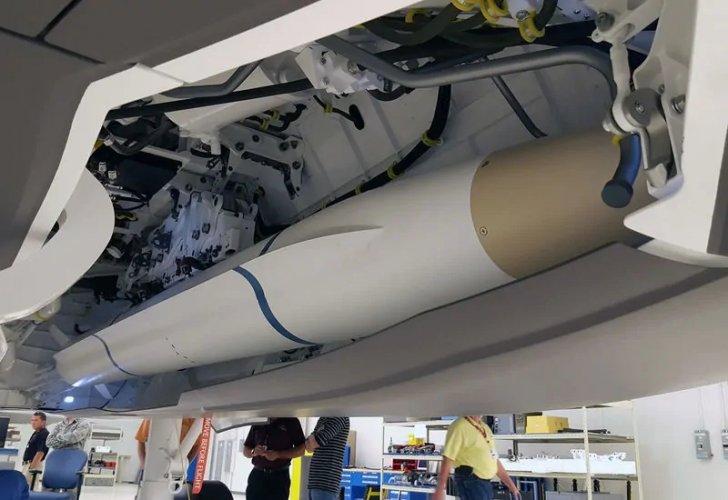
Keep in mind experience from artillery shells; "base bleed".
A relatively tiny pyrotechnical charge that keeps burning and releases gas - not for thrust, but for improving the rear end aerodynamics (less vortices).

This is below a "sustainer" rocket and can increase range substantially with little weight and volume.
Skvall, but smaller... perhaps explaining the vent in the nose of the fictional Orion III.

SLBMs used birch bits, I thought
 
maybe most of the aim260's range comes from battery life. the US did a study with the aim120A and basically if it had infinite battery life it could hit a non maneuvering target at 260~km away while still having some energy for maneuvering. but now with GPS guidance and much more fuel and potentially better fuel it reduces losses and better kinematics. if the same infinite battery was also assumed it may reach out as far as 500km with a very rough estimate
 
maybe most of the aim260's range comes from battery life. the US did a study with the aim120A and basically if it had infinite battery life it could hit a non maneuvering target at 260~km away while still having some energy for maneuvering. but now with GPS guidance and much more fuel and potentially better fuel it reduces losses and better kinematics. if the same infinite battery was also assumed it may reach out as far as 500km with a very rough estimate
this probably assume it is launched from Mach 2, altitude of 65kft against target with similar speed and altitude. Very massive max range but useless in reality. Against targets that cranking and diving down to lower altitude, I doubt it can go pass 100 km
 
Skvall, but smaller... perhaps explaining the vent in the nose of the fictional Orion III.

SLBMs used birch bits, I thought
"Birch bits"?

Trident uses an aerospike that extends out of the nose a good distance to get a better fineness ratio while in the atmosphere. As-is, SLBMs are short and fat compared to ICBMs.

But since AAMs already have the max fineness ratio, the only thing I could suggest would be the rocket continuing to make base bleed levels of not-thrust when it "burns out"
 
"Birch bits"?

Trident uses an aerospike that extends out of the nose a good distance to get a better fineness ratio while in the atmosphere. As-is, SLBMs are short and fat compared to ICBMs
I vaguelly remember that spike were used to miltigate aero heating because it stop the shock wave from touching missile body
 
I vaguelly remember that spike were used to miltigate aero heating because it stop the shock wave from touching missile body
There was sitka spruce as a cap...but I thought I read where the spike tip was ..my memory is no good.
 
maybe most of the aim260's range comes from battery life. the US did a study with the aim120A and basically if it had infinite battery life it could hit a non maneuvering target at 260~km away while still having some energy for maneuvering. but now with GPS guidance and much more fuel and potentially better fuel it reduces losses and better kinematics. if the same infinite battery was also assumed it may reach out as far as 500km with a very rough estimate
I'm a bit skeptical of these figures simply because it seems unlikely the rocket motor could hope to take it that far. The rocket motor used on the AIM-120A is likely somewhat better than the one used on the AIM-7M, but not greatly-so.

If you launched the missile at very high altitude while being well over Mach 2 at a non-maneuvering target approaching head-on you might get a pretty impressive number but in no way can that be considered the "practical" effective range of the missile.
 
maybe most of the aim260's range comes from battery life. the US did a study with the aim120A and basically if it had infinite battery life it could hit a non maneuvering target at 260~km away while still having some energy for maneuvering. but now with GPS guidance and much more fuel and potentially better fuel it reduces losses and better kinematics. if the same infinite battery was also assumed it may reach out as far as 500km with a very rough estimate
The chinese study measured a 28% increase in the motor compartment, in relation to 120D-3, which is said to have a little more propellant than previous iterations. Dual Pulse also should help a lot, if it has... I wonder if that High Loaded Grain is used in the 260 and what it really means (more propellant in the same volume?...)
 
If there isn't a dual-pulse rocket motor I'd be very underwhelmed.

Has it been spotted in the wild yet? I know those "official" CGI renditions of it seen in Powerpoints and such but I'm always a bit doubtful of those.
 
this probably assume it is launched from Mach 2, altitude of 65kft against target with similar speed and altitude. Very massive max range but useless in reality. Against targets that cranking and diving down to lower altitude, I doubt it can go pass 100 km
not sure about the launch conditions but the whole premise is infinite battery life meaning you can loft that missile above 100,000 ft let it slowly loose speed fall back down to earth and hit a target
 

Attachments

  • 1775884040113.png
    1775884040113.png
    125.7 KB · Views: 79
Last edited by a moderator:
not sure about the launch conditions but the whole premise is infinite battery life meaning you can loft that missile above 100,000 ft let it slowly loose speed fall back down to earth and hit a target
Yes but that also require both the launcher and the target at very very high altitude and high speed head on. In most case the enemy will go low or crank to defend which mean the range go down significantly.
 
Yes but that also require both the launcher and the target at very very high altitude and high speed head on. In most case the enemy will go low or crank to defend which mean the range go down significantly.
If they know they're being attacked.
 
Yes but that also require both the launcher and the target at very very high altitude and high speed head on. In most case the enemy will go low or crank to defend which mean the range go down significantly.
What happens when the target doesn't know that there is a missile inbound until it's close enough that the seeker is in terminal guidance?
 
Yes but that also require both the launcher and the target at very very high altitude and high speed head on. In most case the enemy will go low or crank to defend which mean the range go down significantly.
that doesnt have much todo with what i said. the whole point is maximum range is mostly limited to battery life. with modern batteries its possible to just increase max range from going from 80 seconds to 120 seconds. some suspect this is partially how the aim120D gains its 50% increase in range while producing no figures in motor or energetic improvement
 
that doesnt have much todo with what i said. the whole point is maximum range is mostly limited to battery life. with modern batteries its possible to just increase max range from going from 80 seconds to 120 seconds. some suspect this is partially how the aim120D gains its 50% increase in range while producing no figures in motor or energetic improvement
Oh, I follow you now!
 
What happens when the target doesn't know that there is a missile inbound until it's close enough that the seeker is in terminal guidance?
In this day and age when most modern fighters have very sensitive RWR , it very unlikely that they don’t realize that they are being tracked, and IRST likely ensure that that they can detect missiles launch signature (and contrail) especially at high altitude.
Even without these, it common for pilot to pre cranking after they launch their own missiles.
 
Last edited:
that doesnt have much todo with what i said. the whole point is maximum range is mostly limited to battery life. with modern batteries its possible to just increase max range from going from 80 seconds to 120 seconds. some suspect this is partially how the aim120D gains its 50% increase in range while producing no figures in motor or energetic improvement
My point is that if “AIM-260 gain its range only from increased battery life” then that probably not very useful and far inferior compared to range gain with bigger motor (R-37, PL-17, AIM-174) or unique propulsion method (Meteor, PL-15).
I think it is a lot more likely that AIM-260 gain its range from having more fuel, lower drag and more energetic fuel, maybe it can also control the burn rate.
 
In this day and age when most modern fighters have very sensitive RWR , it very unlikely that they don’t realize that they are being tracked
I'm not sure how we know this. Sure - RWR has gotten more sensitive, but ultrawideband radars are becoming a thing. Frequency hopping AESAs have been a thing for a long time now. Electronic warfare is ever more present and now with sensors spread out everywhere, you may be able to detect a lot more emissions, but localizing those emissions to figure out exactly what is the threat, what's targeting you and who's doing the shooting is anything but easy.
and IRST likely ensure that that they can detect missiles launch signature (and contrail) especially at high altitude.
Even without though, it common for pilot to pre cranking after they launch their own missiles.
In terms of missile defense, it's also gotten more complicated. The shooter might well be shooting from a direction that is offset from the targeter. It creates room even for less capable missiles to be lethal especially when you've disaggregated the sensor from the shooter.

My point is that if “AIM-260 gain its range only from increased battery life” then that probably not very useful and far inferior compared to range gain with bigger motor (R-37, PL-17, AIM-174) or unique propulsion method (Meteor, PL-15).
I think it is a lot more likely that AIM-260 gain its range from having more fuel, lower drag and more energetic fuel, maybe it can also control the burn rate.
Agreed
 
I'm not sure how we know this. Sure - RWR has gotten more sensitive, but ultrawideband radars are becoming a thing. Frequency hopping AESAs have been a thing for a long time now. Electronic warfare is ever more present and now with sensors spread out everywhere, you may be able to detect a lot more emissions, but localizing those emissions to figure out exactly what is the threat, what's targeting you and who's doing the shooting is anything but easy.
Radar bandwidth is significantly narrower compared to bandwidth of ESM system.. Even 500MHz can already be considered ultrawide band for a radar whereas average ESM can detect signal between 0.5-20 GHz.
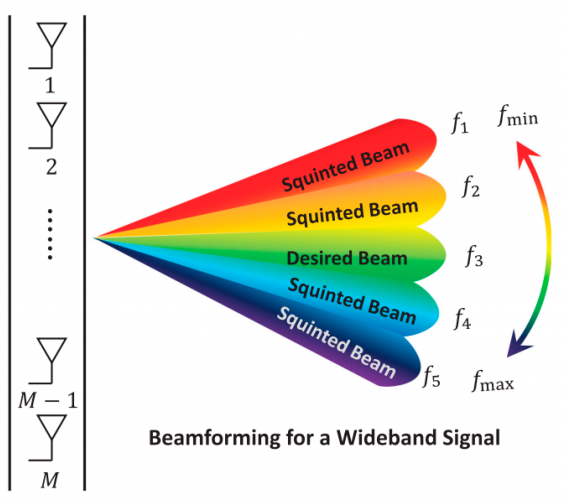
Because ESA radar suffer from beam squinting when its frequency are too far apart.
IMG_4411.png
And you don’t even need AESA for frequency hoping, you can also do it with mechanical steered radar, it nothing new.

In terms of missile defense, it's also gotten more complicated. The shooter might well be shooting from a direction that is offset from the targeter.
In the specific case where you fly very high to get the extreme range then the shooter probably very obvious both on IRST and also optical sensor due to their contrail


While max range itself isn't exactly a good measurement of a missile's capabilities, it does show that within the same range it could have better maneuverability and targeting capability. The threat has still increased even against maneuvering targets.
That true if we are talking about range increased by bigger motor or different propulsion system, but if you only gain range due to longer battery time then lethality at the same range should be the same (since it effectively the same missile)
 
Last edited:
My point is that if “AIM-260 gain its range only from increased battery life” then that probably not very useful and far inferior compared to range gain with bigger motor
Range is range, even if it was just from a different color paint.
 
What is beam-squinting?
In an AESA/PESA beam steering is done by applying phase shifts across antenna elements. However phase shift corresponds to a time delay only at one specific frequency, at other frequencies, that same phase shift translates into a different effective delay. So the radar will point at wrong direction if the transmit frequency is too far from center frequency
 
My point is that if “AIM-260 gain its range only from increased battery life” then that probably not very useful and far inferior compared to range gain with bigger motor (R-37, PL-17, AIM-174) or unique propulsion method (Meteor, PL-15).
I think it is a lot more likely that AIM-260 gain its range from having more fuel, lower drag and more energetic fuel, maybe it can also control the burn rate.
A couple things to note, and I don't know why this is so heavily debated when there is no substance of which to argue yet:
- The AIM-260 is considered the most lethal missile ever built to date, and the nomenclature used implies it is not a small jump in lethality.
- The wording about a range increase suggests it massively increases the no escape zone, not just a maximum range ballistic trajectory increase from battery life.

Some other things to consider:
- The U.S. has proposed, built, and tested dual pulse motors as alternatives for ramjet propulsion since the late 90s.
- The dual pulse rocket motors are in use by our adversaries, and the AIM-260 program was accelerated to counter these.
- The other features we don't know about likely make the missile far more lethal with or without a dual pulse motor, and who is to say it isn't something superior to existing dual pulse designs as well? It can go both ways.

Additionally, the U.S. has invested heavily in propellants that are superior to existing solid fuels regardless of them being dual pulse or not. These propellants can be liquid, burn cleaner, and offer much higher energy density. There is much to discuss, but until more information becomes available there isn't much to say on the matter that isn't conjecture.

 
Additionally, the U.S. has invested heavily in propellants that are superior to existing solid fuels regardless of them being dual pulse or not. These propellants can be liquid, burn cleaner, and offer much higher energy density. There is much to discuss, but until more information becomes available there isn't much to say on the matter that isn't conjecture.

What about the possibility of the AIM-260A using a hybrid (Liquid-oxidiser and solid-fuel) rocket-motor?
 
What about the possibility of the AIM-260A using a hybrid (Liquid-oxidiser and solid-fuel) rocket-motor?
Unlikely, IMO. Storable liquid oxidizers are not well thought of by the Navy, and the USN is likely buying half the production run.

Personally, I'm expecting Boost+Sustain and a separate Terminal pulse.
 
What about the possibility of the AIM-260A using a hybrid (Liquid-oxidiser and solid-fuel) rocket-motor?
No need, newer plasma based ignition systems allow for more efficient burning of propellants (of solid OR liquid variety), as well as the use of more advanced higher density propellants. Temperature has less effect on these and older schemes like liquid oxidizer are not really relevant. The use of higher density solid propellants and more controlled, efficient burning.. is.. well, this is conjecture.

The U.S. has been the only country doing serious research into plasma based ignition for high performance solid propellants and other countries haven't really looked that far into this yet to my knowledge.
 
Personally, I'm expecting Boost+Sustain and a separate Terminal pulse.

What about triple-pulse rocket-motor? Boost/sustain pulse, sustain pulse and a terminal pulse?

Another thing about a hybrid rocket-motor is that it can be throttled.
 
Last edited:
I suspect there’s diminishing returns with multiple pulses. The terminal pulse greatly increases no escape zone against high performance targets, but I would think anything more than that just adds weight and complexity.
 
3rd pulse could be useful for TTK since it can be activated on its highest alt so its most efficient and would lead to highest average speed but would lower PK since that fuel could be used for terminal phase.
 

Similar threads

Back
Top Bottom