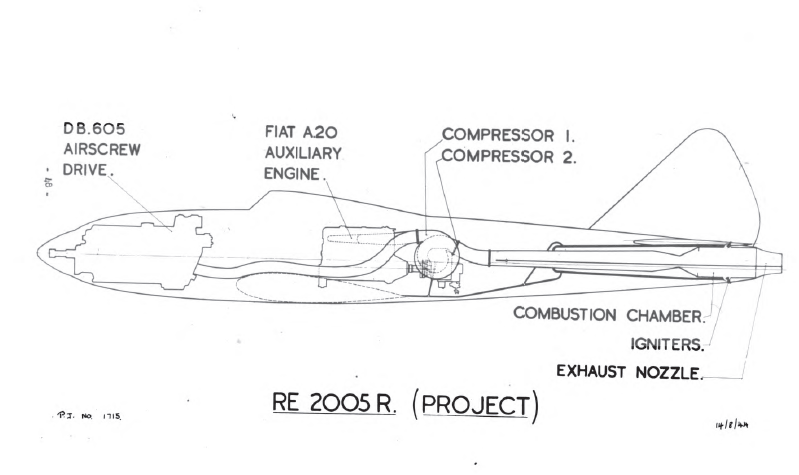
Italian Jet, Motorjet, Turboprop, Rocket, etc. Projects

It would be awesome if we could find that Google Scholar page, tell us more about it.
You said it mentioned a swept wing Arado Ar-234?
Try looking in your Google activity or something. It has everything, not just the browser history.
Or tell us more about the document so we can help you find it
Okay so actually I have a few things I've learned:
1. The design can't be the Campini twin engined bomber because I learned that this design is a part of the CS.11 lineage after looking at the technical documents.
1a. With that being said, I am pretty confident now that the "larger and more powerful" version the Italian Wikipedia claims to exist is actually the 1944 blueprint.
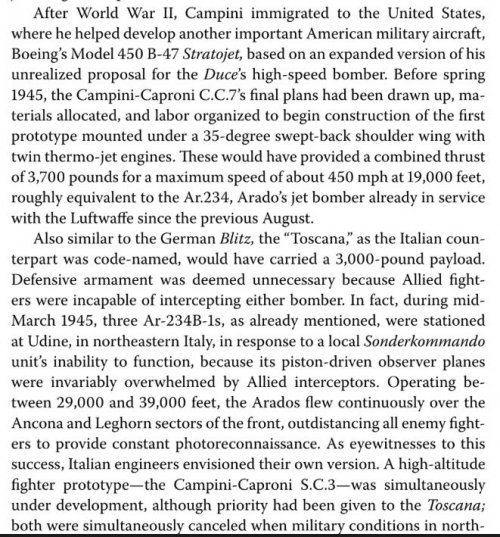
2. For your question, it was on a google scholar/ebook about Italian developments (or maybe just the war) post-armistice. It could've been this book about the Ar-234 which looks familiar to me:
Again, this was awhile ago so my memory may not be serving me well, and for all we know it could've just been an Ar-234. There's no shame in trying to look though! Knowing my internet presence in the late 2010s it had to have been on either the old WarThunder forums or the World of Warplanes forums.
 
Okay so actually I have a few things I've learned:
1. The design can't be the Campini twin engined bomber because I learned that this design is a part of the CS.11 lineage after looking at the technical documents.
1a. With that being said, I am pretty confident now that the "larger and more powerful" version the Italian Wikipedia claims to exist is actually the 1944 blueprint.
2. For your question, it was on a google scholar/ebook about Italian developments (or maybe just the war) post-armistice. It could've been this book about the Ar-234 which looks familiar to me:
Again, this was awhile ago so my memory may not be serving me well, and for all we know it could've just been an Ar-234. There's no shame in trying to look though! Knowing my internet presence in the late 2010s it had to have been on either the old WarThunder forums or the World of Warplanes forums.
Yea in fact, the C.C.7/C.S.11 was already well known, you mentioned it in your first post as well.
But the one you are talking about is different. Can you say again? A swept wing italian jet bomber? Or a variant of the Arado 234? I don't understand that part. Are you saying it was related to the Arado or just an italian bomber "equivalent" to the Arado 234?

On the Italian swept wing Arado 234, I read on this forum that the Germans wanted to equip the Italians with Me262 fighters, so maybe they also wanted to equip them with Ar234's... Or maybe there was an Italian project inspired by the Ar234. Everything is possible, look at how much new stuff we just recently discovered that we knew nothing about, like the Caproni jet target drone project.
And don't forget that there were factories in Italy (for example in the tunnels near Lake Garda) that built components for Messerschmitt and even for V-2 rockets according to some internet sources.

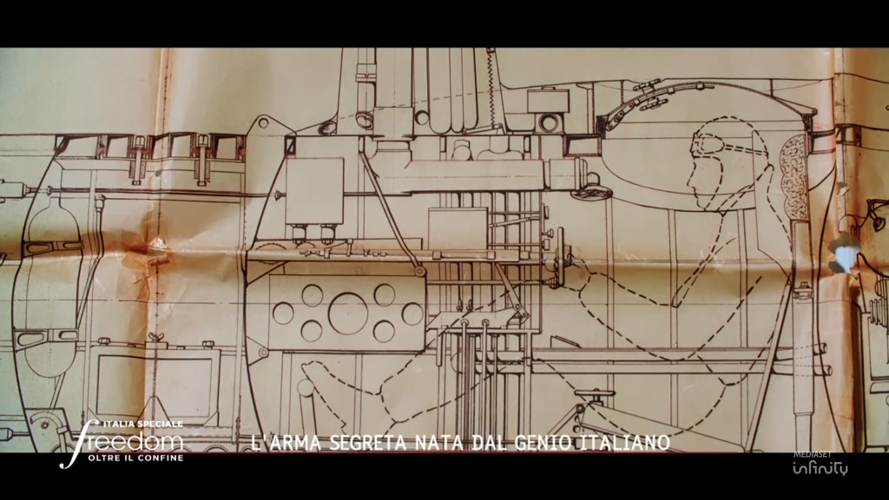
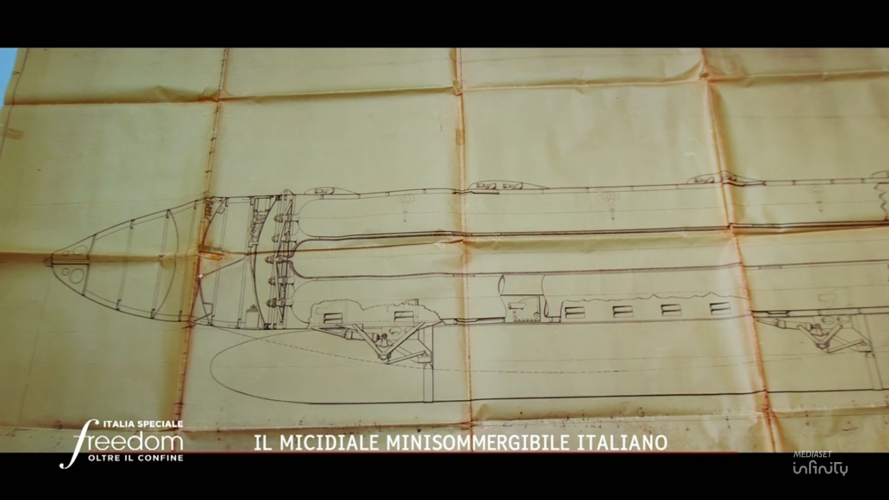
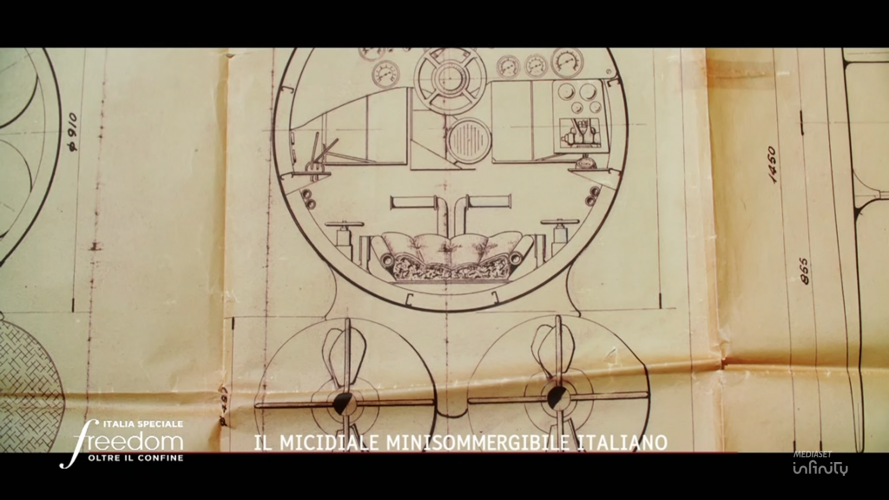
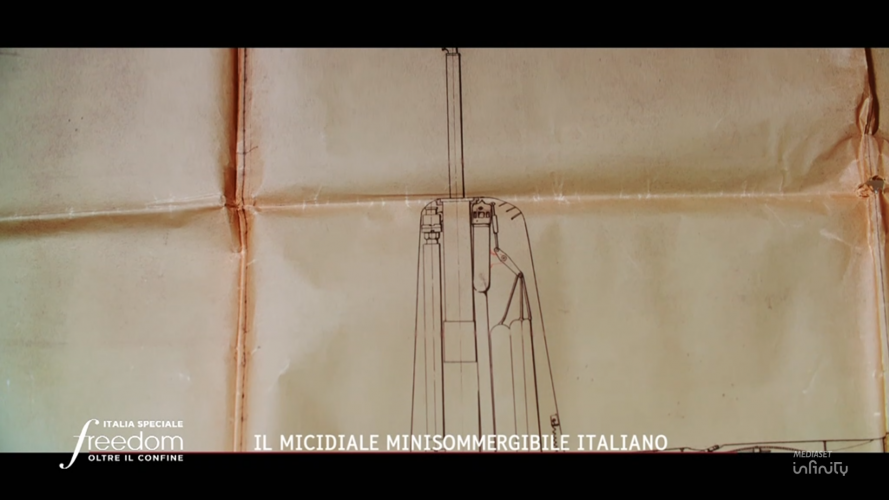
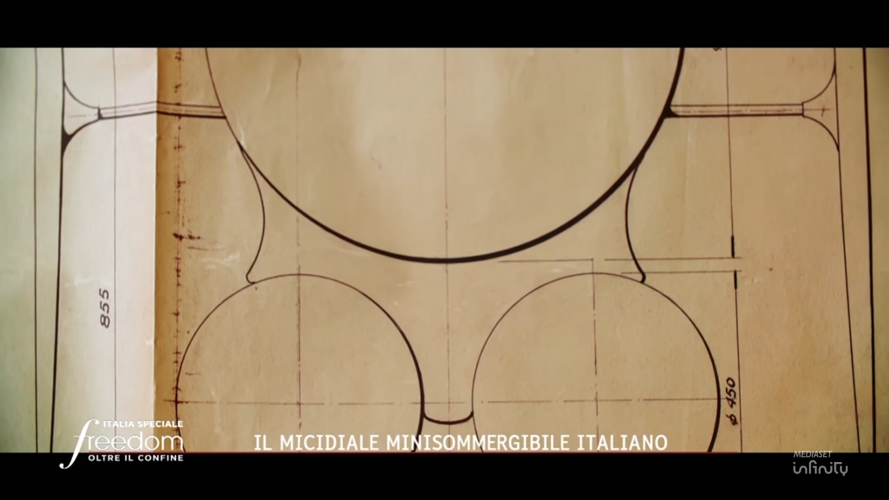
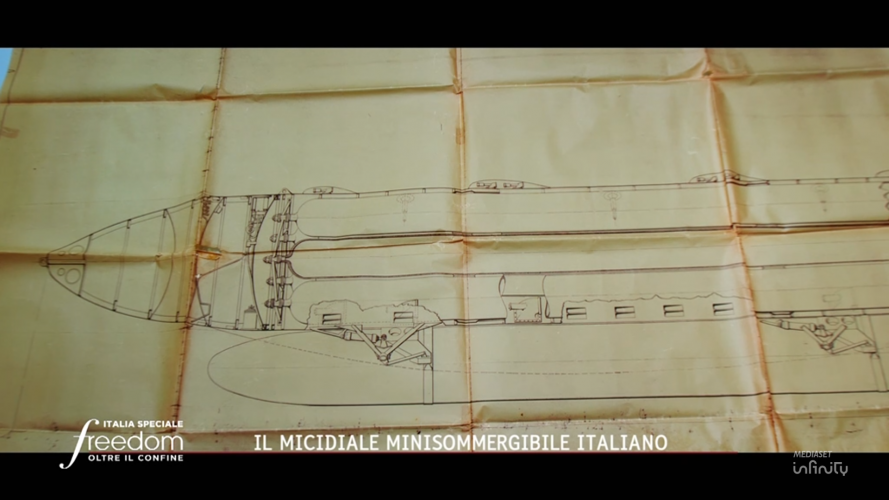
Which reminds me, there was even a secret small "reaction propelled" submarine designed by the legendary Mario De Bernardi and under construction by Campini-Caproni between fort San Nicolò and one of the Garda tunnels, between 1942 and 1945.
Lots to unpack with this one, first of all the name:
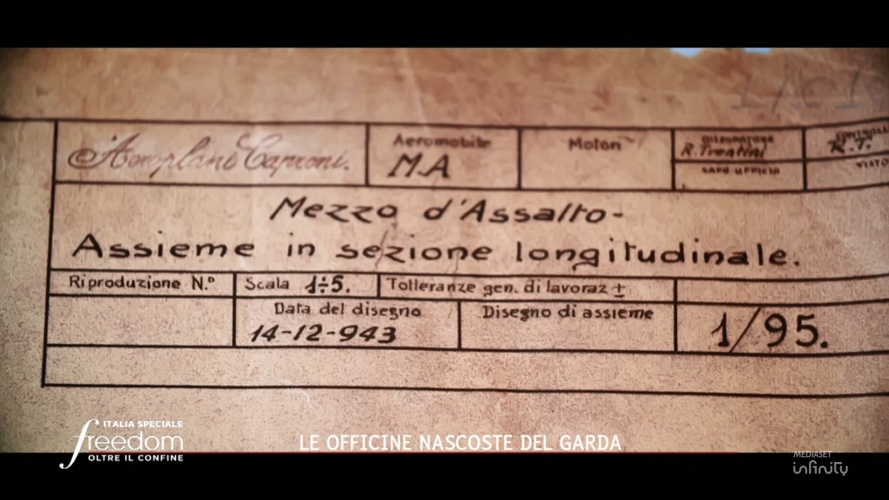
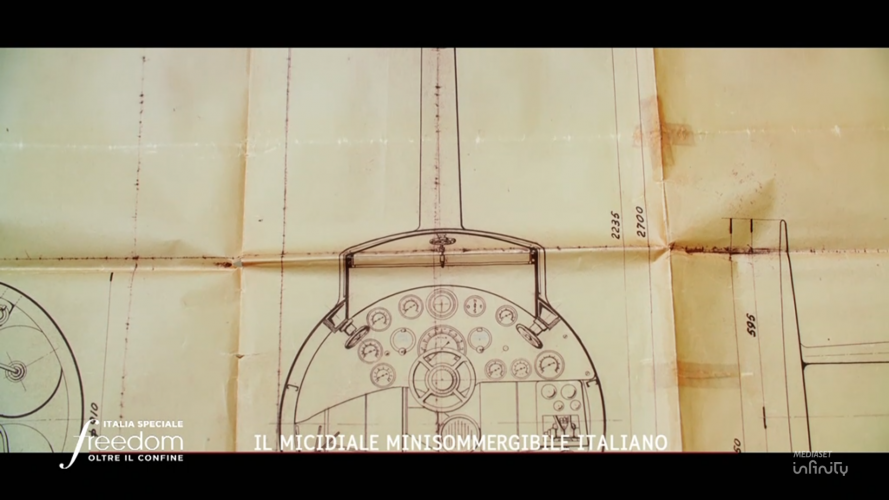
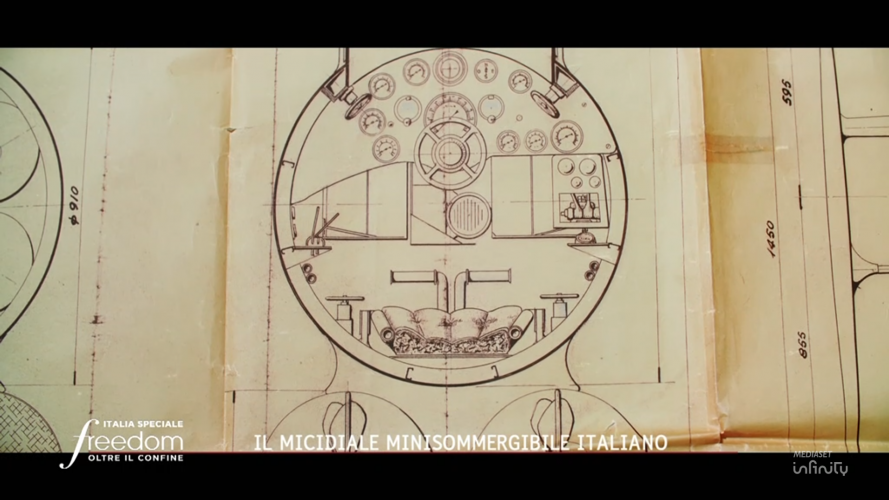
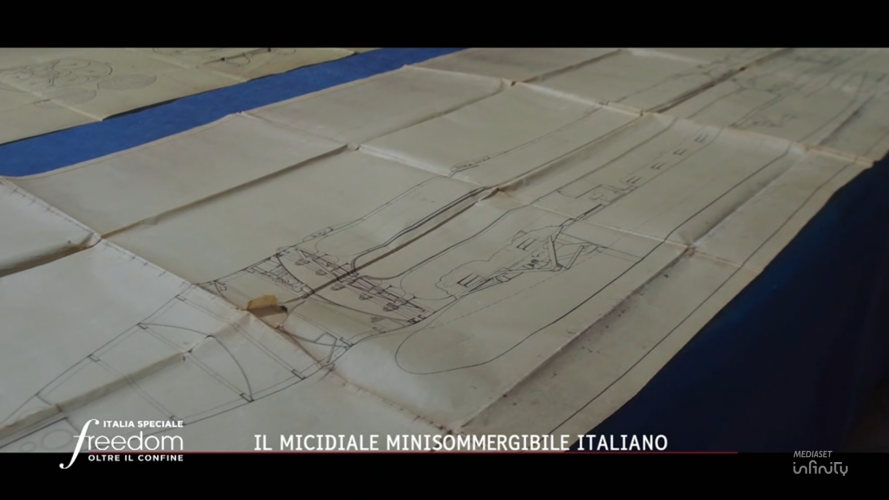
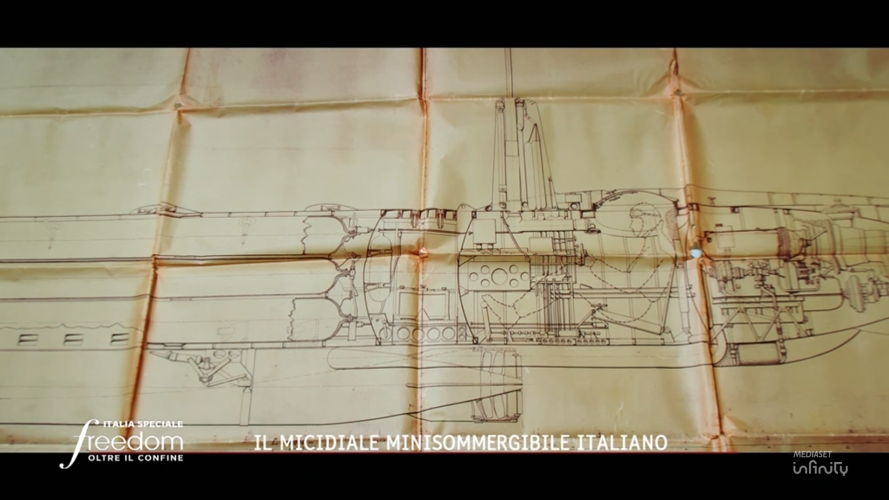
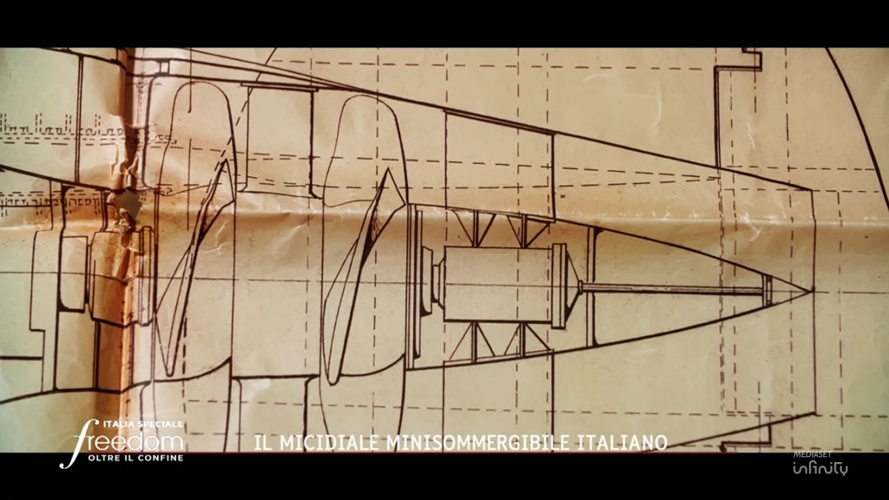
  • The submarine in the blueprint is just named "Mezzo d'Assalto" (assault vehicle), they used their usual template for aircraft blueprints so it says "aircraft name" even tho it's a submarine :D
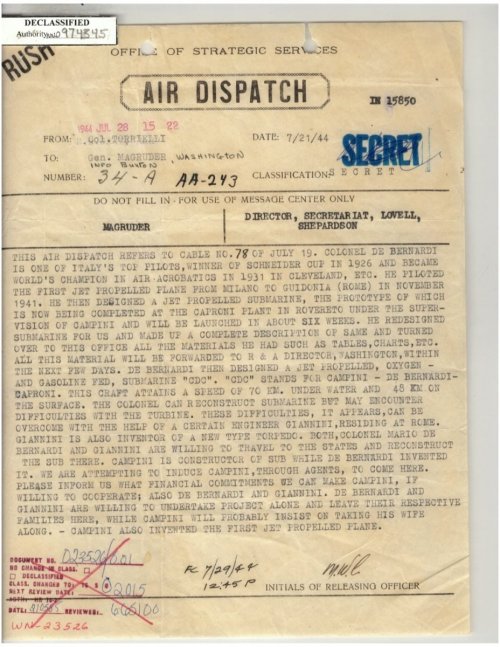
  • But there is a declassified OSS dispatch (see attachments) which calls it CDC, short for Campini-De Bernardi-Caproni.
  • 2 of these submarines were being built according to Donato Riccadonna, president of the Araba Fenice association and MUSE functionary.
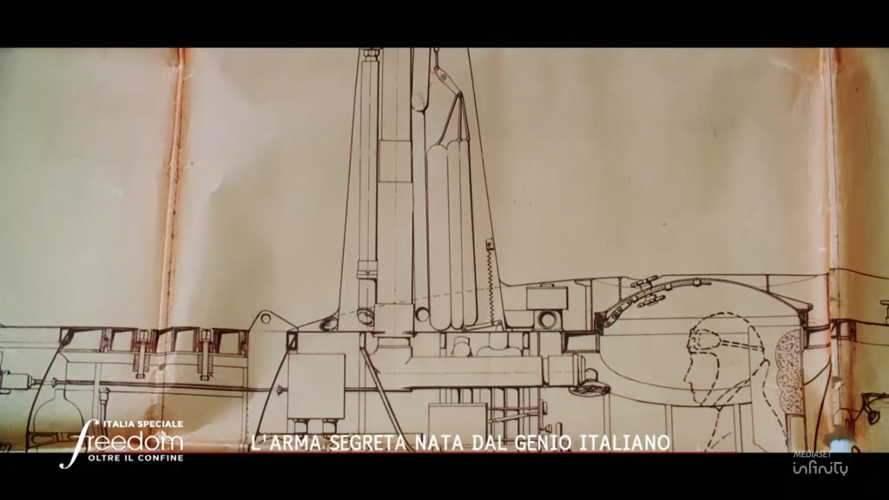
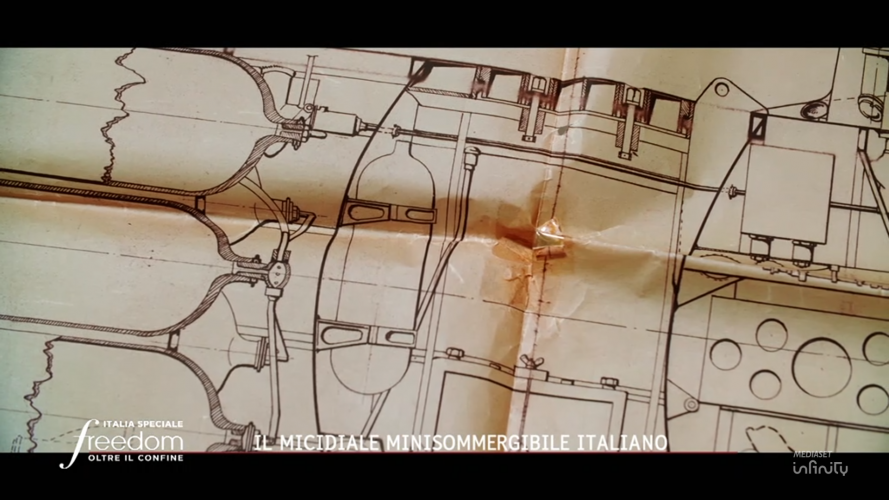
  • It looks like it would have been armed with 2 torpedos
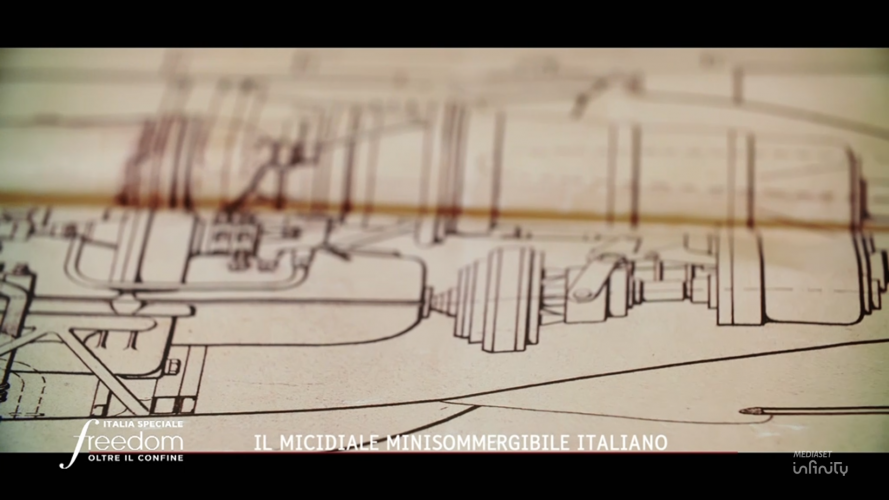
  • It was powered by a Campini turbine (it looks like the Campini 3500 in the blueprints), and was supposed to reach 70 km/h submerged and 48 km/h on the surface!
This would have been much faster than even modern nuclear powered submarines. The fastest submarine ever was the soviet K-222, part of project Anchar, which surpassed 80 km/h thanks to it's titanium hull and gas turbines. It was as loud as a jet plane and wasn't ideal for stealth so it was considered a failure by the Soviets, but I don't think the CDC "Assault Vehicle" was meant to be stealthy so... For that the Italians already had the SLC ;)
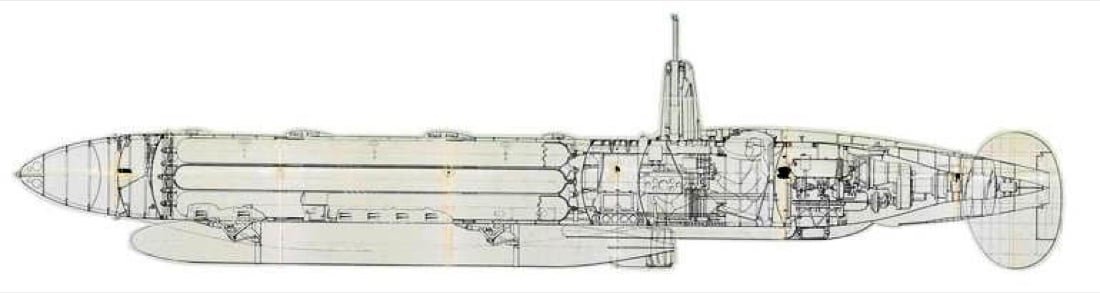
  • Photos of the blueprints appeared on the italian TV program "Freedom" a few years ago (see attachments), and now I also found a full image of the submarine cropped from the blueprints (but it's in very low quality)
  • The declassified air dispatch from the Office of Secret Services talks about the submarine (both of these images are from a Panorama article, which credits the aforementioned Araba Fenice organization as the source https://www.panorama.it/lifestyle/galleria-adige-garda-armi-segrete-tedeschi-guerra-foto).
    The dispatch says the submarine was invented by De Bernardi and was being constructed by Campini. The people in the documentary talk about Campini-Caproni as if it was it's own company, the blueprints template just say Caproni though. The dispatch says De Bernardi redrew the submarine for the americans, he said he'd be able to reconstruct it in the States with the help of engineer Giannini, also the inventor of a new type of torpedo.
    The dispatch shows that the Americans were very interested in the project, both Mario De Bernardi and Giannini were willing to travel to the States to reconstruct the CDC submarine there, and the americans were also trying to "induce" Campini to move to the United States, and we know he eventually worked for Preston Tucker and on government programs including the YB-35.
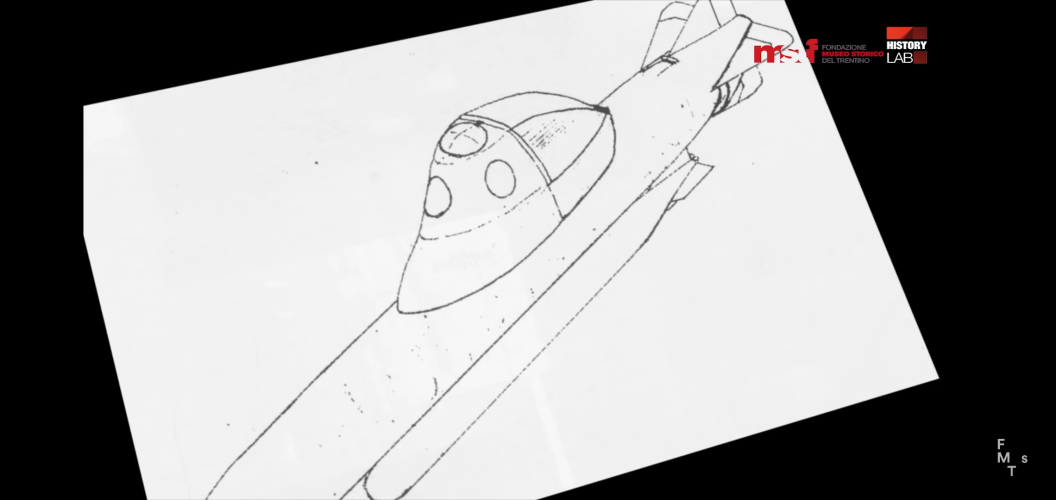
  • The image called image3 instead is from a YouTube video by the history museum of Trento where they talk about the history of the Adige-Garda tunnel, they interview elders who were alive at the time, miners who built the tunnels, and a man who worked for Campini-Caproni: he says the submarine was being tested in Lake Garda, they describe the war and the hardships they had to endure, it's a very interesting documentary.
    View: https://www.youtube.com/watch?v=bSs62P2Bu-g
    However the submarine in image3 is quite different from the blueprints, maybe it's a later development? They did say 2 submarines were being built. But image3 is not a blueprint, it's a three quarters view, like a reconstruction, maybe it's the drawing made by De Bernardi for the OSS? Unlikely. Maybe we should read the book to find an explanation.
  • Which brings us to the book, or rather BOOKS. To my surprise, the Italian Wikipedia article on Secondo Campini already talks about this project! Here is what it says:
"Between 1942 and 1945 he worked with Mario de Bernardi, former CC2 test pilot, on a project for a pocket assault submarine, with an oxygen-naphtha reaction turbine for submerged navigation. The Imperial Japanese Navy was also interested in the project and, after September 8 1943, the Kriegsmarine as well. During this period Campini found himself in Rovereto, where his offices were moved after the continuous air raids on Milan. On March 22 1944, Campini-Caproni signed a supply contract for 50 mini submarines with the German Navy. The devices were never supplied, but at least one prototype was subjected to some tests in Lake Garda.[1][2]"
The 2 sources listed for this paragraph are Annalisa Cramerotti: Il mezzo d’assalto Campini – De Bernardi pp. 225-236 and Achille Rastelli: Caproni e il mare. Progetti e realizzazioni per la guerra navale di un grande gruppo industriale milanese. pp. 95-97.
The first book is from 2016 while the second one is from 1999!!! Meaning that this project has actually been known to the press for many years! Maybe there weren't blueprints available and these were found only recently in the museum of Trento though. That's what I understood from the interviews. It would be better to read these books.
  • So we can add to the list of information the fact that the reaction turbine ran on "oxygen and naphtha" and that the Imperial Japanese Navy and Kriegsmarine were interested in the project. The German navy apparently SIGNED A CONTRACT for 50 of these mini submarines.
So I think this submarine project also goes well in this thread about italian jet and jet-adjacent projects I guess, since it has to do with Campini turbines.
 

Attachments

  • post-75769-17413096742241.jpg
    post-75769-17413096742241.jpg
    34.3 KB · Views: 109
  • post-75769-17413096805772.jpg
    post-75769-17413096805772.jpg
    190 KB · Views: 74
  • CDC Mezzo dAssalto 1.png
    CDC Mezzo dAssalto 1.png
    2.1 MB · Views: 57
  • CDC Mezzo dAssalto 2.png
    CDC Mezzo dAssalto 2.png
    1.3 MB · Views: 56
  • CDC Mezzo dAssalto 3.png
    CDC Mezzo dAssalto 3.png
    2.1 MB · Views: 56
  • CDC Mezzo dAssalto 4.png
    CDC Mezzo dAssalto 4.png
    1.6 MB · Views: 53
  • CDC Mezzo dAssalto 5.png
    CDC Mezzo dAssalto 5.png
    1.5 MB · Views: 48
  • CDC Mezzo dAssalto 6.png
    CDC Mezzo dAssalto 6.png
    1.8 MB · Views: 46
  • CDC Mezzo dAssalto 7.png
    CDC Mezzo dAssalto 7.png
    1.8 MB · Views: 45
  • CDC Mezzo dAssalto 8.png
    CDC Mezzo dAssalto 8.png
    1.3 MB · Views: 42
  • CDC Mezzo dAssalto 9.png
    CDC Mezzo dAssalto 9.png
    1.3 MB · Views: 42
  • CDC Mezzo dAssalto 10.png
    CDC Mezzo dAssalto 10.png
    1.6 MB · Views: 38
  • CDC Mezzo dAssalto 11.png
    CDC Mezzo dAssalto 11.png
    1.4 MB · Views: 38
  • CDC Mezzo dAssalto 12.png
    CDC Mezzo dAssalto 12.png
    1.8 MB · Views: 40
  • CDC Mezzo dAssalto 13.png
    CDC Mezzo dAssalto 13.png
    2 MB · Views: 45
  • CDC Mezzo dAssalto 14.png
    CDC Mezzo dAssalto 14.png
    1.5 MB · Views: 48
  • CDC Mezzo dAssalto 15.png
    CDC Mezzo dAssalto 15.png
    2.1 MB · Views: 54
  • image3.png
    image3.png
    361.4 KB · Views: 59
Last edited:
User Vepr157 on the Italian submarines thread made me realize that it's not actually a jet, that was my translation error. In Italian they just say "a reazione" (reaction), which is the same word used for jets too, but in this case there is no jet of fluid. The gas turbine spins screw propellers (at least in the blueprints). I have fixed the original post.
 
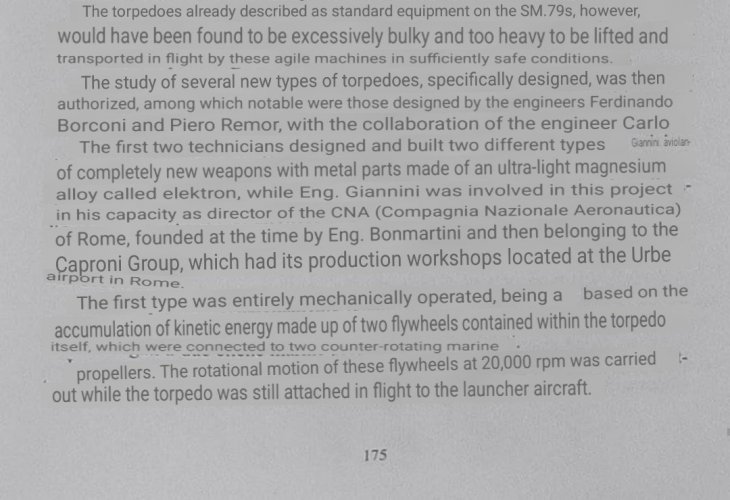
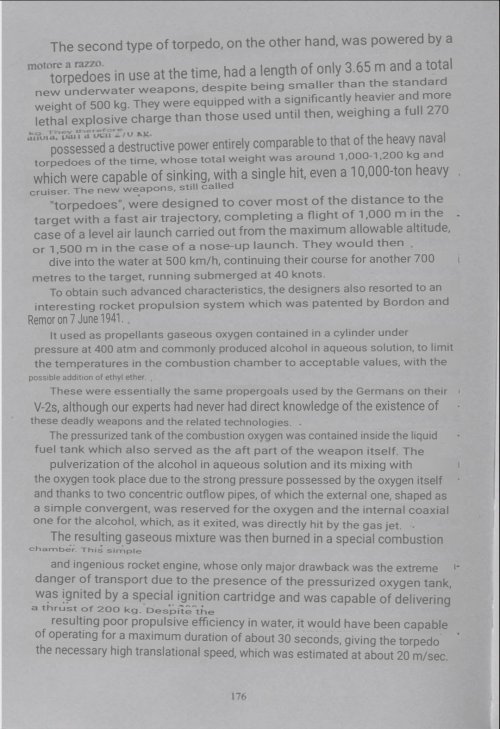
And about the Giannini torpedos this is what I found
 

Attachments

  • 20260219-111844.jpg
    20260219-111844.jpg
    135.2 KB · Views: 36
  • 20260219-111904.jpg
    20260219-111904.jpg
    270.9 KB · Views: 27
  • 20260219-111931.jpg
    20260219-111931.jpg
    268.8 KB · Views: 29
  • 20260219-111940.jpg
    20260219-111940.jpg
    93.2 KB · Views: 30
Thank you for this wealth of information! To specify, if my memory is in fact serving me, the aircraft was described as being like a swept wing Arado. So it wasn't an Arado design, but it was compared to it and with swept wings.
I think I found your book... Sadly it's from Frank Joseph aka Frank Collins who is not reliable, he makes crazy claims that are unfortunately baseless. I wish the things he wrote were true... Here he says that the C.C.7 (C.S.11) had swept wings and compares it to the Arado Ar234, this is what you saw. He goes on to claim that the F-86 Sabre is a copy of the Re2007 and that the Ca183bis was a vertical take-off plane like the Convair XFY... It's a fun read but unfortunaly it's all baseless
 

Attachments

  • book found.JPG
    book found.JPG
    150.7 KB · Views: 31
I think I found your book... Sadly it's from Frank Joseph aka Frank Collins who is not reliable, he makes crazy claims that are unfortunately baseless. I wish the things he wrote were true... Here he says that the C.C.7 (C.S.11) had swept wings and compares it to the Arado Ar234, this is what you saw. He goes on to claim that the F-86 Sabre is a copy of the Re2007 and that the Ca183bis was a vertical take-off plane like the Convair XFY... It's a fun read but unfortunaly it's all baseless
Thank you!!!!! This has to be it; I mean, it's the only thing that matches what I remember. It's unfortunate that it seems to be fake though. ):
 
I found a webpage that echoes some of the designs mentioned in the book:
Sadly all of the links go to empty Wikipedia pages. This doesn't help the case too much that the designs are real, however:
This forum post from 2007 mentions its existence. The post was an incorrect answer to a silhouette challenge, so sadly no photo is there. Perhaps Frank Josephs descriptions were wrong, but the designs were still real?
 
[...]
Perhaps Frank Josephs descriptions were wrong, but the designs were still real?
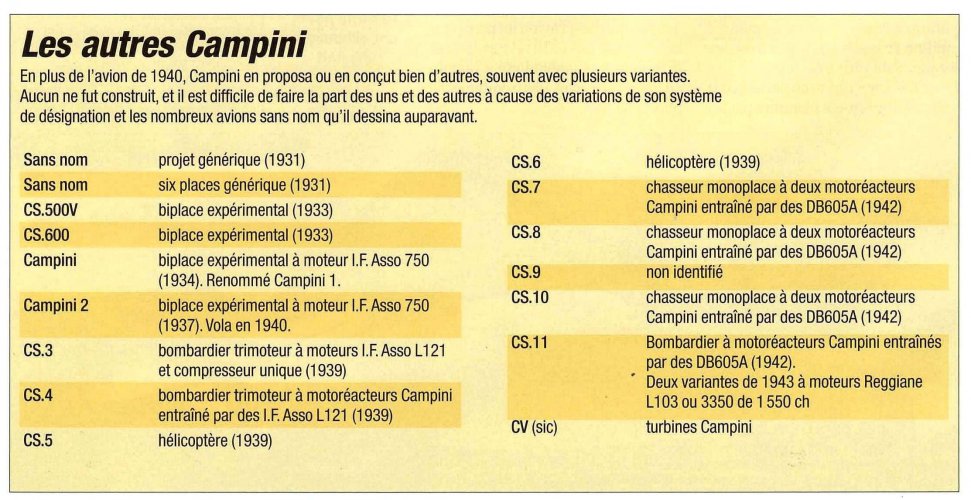
The Campini projects are real, we already know this, you can see them here https://www.secretprojects.co.uk/threads/ing-campini-projects.791/

Hesham also posted a post-war "airplane of the future" drawing by Campini, a jet airliner with swept wings in a "W" shape.
We know other designers in Italy also experimented with arrow wings (swept wings), even inverted, so it's possible that there was a design for a swept wing jet bomber, maybe based on the other Campini bombers, maybe inspired by the German projects.

And for the Ca.183bis, it wasn't a VTOL, maybe there was a different VTOL project, again everything is possible. Campini did design a helicopter, and so did other designers like Pegna, D'Ascanio, Marchetti, Piana-Canova etc.
Especially late into the war when, just like in Germany, planes needed to take off fast and many runways were destroyed by the bombings, a VTOL fighter may have been considered.
 
Last edited:
Regarding the Caproni R.105 mentioned in Aerei nella Storia N. 180 of March 2025, we read that the engine is not entirely certain and, in fact, about that projects we had very few sure information, even fewer than those relating to the RE 2007.
Hi Nico, can you (or anyone else) post the full article from Aerei nella Storia n.180 March 2025 about the Caproni R.105?
 
Last edited by a moderator:
In the mean time, this does therefore prove that the Italians did in fact have access to swept wing technologies, which in turn means that the Re.2007 having swept wings is a tad bit more likely now.
Swept wings may look cool but they only offer a good reduction of drag as the aircraft approaches transonic speeds (around Mach 0.75–1.0). If the plane isn't powerful enough to reach those speeds then swept wings become pointless, as the Germans themselves found out:

"Calculations showed that the use of modern aerodynamics did not promise any appreciable speed advantage. In addition, further investigation and wind tunnel tests indicated the distinct disadvantages inherent in a swept (leading edge) wing in terms of construction and, above all, in low speed flight performance." -Luftwaffe Secret Projects Fighters 1939-1945 by Walter Schick & Ingolf Meyer
And this was about Focke-Wulf proposals for a jet fighter! Not even for a common prop fighter.
The authors are also referring to the fact that swept wings actually reduce lift at low speeds, making takeoff and landing performance worse. They also shift the center of mass rearward and introduce stronger bending and torsional loads, which were hard to handle with the aluminum and wood structures of the time.

So yea, while Italy and Germany and other big powers had experimented with swept wings and other new aerodynamics (since ww1 biplanes in fact...), they didn't mass-adopt them immediately because A) they were harder to construct, B) unstable, C) did not offer better performance but introduced new problems.

Anybody could draw swept wings on paper and promise incredible performance, but then you had to face constraints. Many engineers preferred the simplicity and proven reliability of straight wings and conventional aerodynamics. You could also reuse the same designs that worked already on previous planes for new ones. The most effective planes and the ones that were produced the most during WW2 have their roots in the mid 30s, and were simply upgraded with better engines and things like that, not different aerodynamics.
This is why even after WW2 and well into the 50s and 60s you still had planes with conventional wings (especially naval ones). If swept wings were so revolutionary why didn't everybody simply mass adopt them on all planes? The same can be said for stealth and other technologies today, there are technologies that only make sense for some aircraft and not all.

The Jona J.10 had slightly swept wings in it's first design, and also the tail was different, but the later re-designs changed them for conventional aerodynamics, probably for the same reasons stated above.
The need for radically new designs came at the end of the war when the Axis was losing and needed something to counter the Allies.
It was called "emergency fighter programme" for a reason, they needed fast interceptors to take on allied bombers that were crossing the skies of Europe at will day and night, and so they came up with many interceptor designs, even rocket powered and VTOL as you know. Nobody was thinking that rocket planes and VTOL would replace ordinary planes forever, it was an extreme measure.
Years earlier, under normal circumstances, a rocket powered plane that can only fly a few minutes would have been laughed at, but during the last phases of WW2 it was a serious idea.
Most people today (especially people who don't know history) are under the false assumption that because Germany developed these rocket powered aircraft and other things, they must have been "years ahead" in technology or something. In reality they only developed them because their technology had been SURPASSED by the Allies. The Germans didn't have aircraft carriers or good strategic bombers for instance. They lost air superiority, and after their land based radars were also destroyed the Allies were free to bomb them day and night. This is why they suddenly came up with all kinds of new designs for interceptors, night fighters, etc. and old projects that had been proposed many years earlier were suddenly resurrected because now they were necessary...

But what do I know, I'm just a guy on the internet...

 
Last edited:
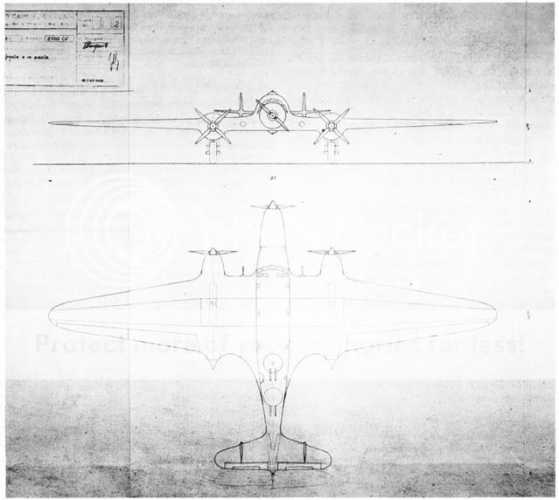
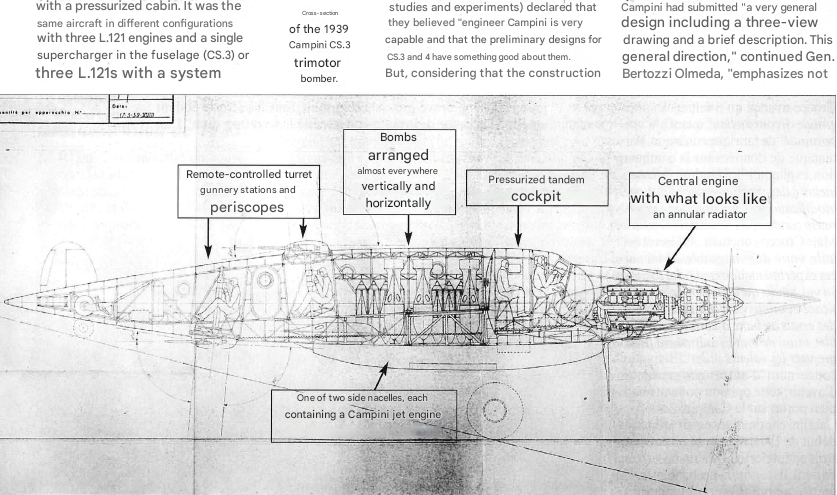
What exactly were the engines for the C.S.3 supposed to be?
1771640546729.png
(The below image with the help of Google Translates Image feature lol.)
1771640579688.png
The center engine was deemed to be an inline with an anular radiator, while the other two engines may be radials (?). I'm assuming the two wing engines are motorjets?
 
Caproni R.105
One of the lesser-known Italian aircraft designers, whose level of training had improved with work experience, was undoubtedly engineer Lelio Rossi. Biographical information about him is certainly limited, as are his photographs, almost all of which can be traced back to a newspaper article dating back to February 3, 1939, when Rossi was technical director of SAI Ambrosini, at the Passignano sul Trasimeno plant (Perugia). With his engineering department, he had worked on the final designs of the SS.4, conceived by engineer Sergio Stefanutti of the Construction Directorate of the Ministry of the Air Force, and participated in several other projects by Stefanutti and engineer Camillo Silva, devoting particular attention to the concept of the light fighter and its heavier derivatives, or those intended for advanced training.
Rossi, who moved to Caproni in Taliedo, perhaps in 1944, also dedicated himself to turbine propulsion. The company's documentation contains references to its study for a jet fighter "with a Jumo 004 engine." This project was the R.105, dated January 9, 1945, for which other types of engines may have also been considered. The idea was never implemented, given the current situation, and Rossi himself was a victim of the feuds between the two most extreme factions then raging in Italy. Knowing that the end of the war was a matter of days, they indulged in summary executions of their opponents or presumed opponents. On April 27, 1945, Lelio Rossi, accused of being one of the managers of an industrial group considered by the Resistance to be very close to the regime governing Northern Italy and having contributed to the German war effort (perhaps with Caproni Ca.313Gs and Reggiane RE 2002s), was executed. Information whose source is not easily traced attributes the killing to the partisan Bosi (the legal surname or nom de guerre of several Resistance members); another Caproni Technical Office employee, technician Mereu, was also killed along with Rossi.
It must be said that very little is known about the project on which these two technicians were working, along with Capt. Behle, head of the Technical Surveillance Office for the Aeronautica Nazionale Repubblicana and the Luftwaffe, nor about Rossi's exact role within the Caproni group. The very few available sources mention that Rossi was the technical director of the Group's Taliedo division (and, in fact, was shot in the nearby Linate cemetery); another account states that he was the head of an unspecified RE 200 Section.
The propulsion system, however, is decidedly mysterious. In the technical drawings we report, the Caproni R.105 appears to be inspired by various types of light piston-engine fighters, such as the French Caudron C.714 or the American Bell XP-77 (with the latter it shared the tricycle landing gear), with the cockpit in the rear half of the fuselage. While the morphological aspects are evident from the fairly detailed drawings, regarding the propulsion there are references to a "Jumo engine of 1,000 kg/s" but in the cross-sections what does not appear to be a turbojet with an axial flow compressor like the Jumo 004B Orkan of German fighter planes is represented. Instead, it seems to be the Rossi R.2000, of which there is a drawing dated 18 February 1945, which shows the side view of a turboprop, with a centrifugal compressor and two counter-rotating coaxial propellers (in reality the actual propellers are not visible but from the general architecture of the engine the double coaxial shaft can be perceived. The drawings also show two small exhausts in the nose and a long exhaust duct, with an exit in the lower tail section. It also seems that part of the exhaust gases could be conveyed onto the wings to obtain a "blowing" of the boundary layer, even if there are no documents that prove this). This solution certainly appears ill-suited to the needs of a time when productivity and ease of maintenance should have been paramount.
Given the insufficiency of data, it cannot be ruled out that, at the same time, Rossi and Behle had also considered developing something different, based on the German axial turbojet, although, in this case, at least the fuselage would have had to be completely redesigned.
The drawings we publish (which have practically never appeared in the mainstream press) are not dimensioned, and it is difficult to establish the dimensions, just as nothing can be said about the hypothesized performance. If, as it seems, the armament included five Mauser MG 151 cannons (perhaps excessive for a fighter of this size),
 
What exactly were the engines for the C.S.3 supposed to be?
View attachment 802968
(The below image with the help of Google Translates Image feature lol.)
View attachment 802969
The center engine was deemed to be an inline with an anular radiator, while the other two engines may be radials (?). I'm assuming the two wing engines are motorjets?
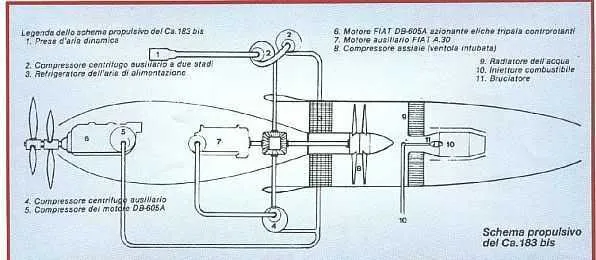
Yea probably mixed propulsion like the Ca.183bis. A combination of propellers and compressor and afterburner maybe.
 
Caproni R.105
One of the lesser-known Italian aircraft designers, whose level of training had improved with work experience, was undoubtedly engineer Lelio Rossi.
Amazing, this is huge. Thanks a lot Nico
 
Last edited by a moderator:
@Nico Nice info. I would quote you, but moderation apparently doesn't want to provide clarity on quoting standards...
Do you know how the turboprop would've been applied to the aircraft? All the drawings don't appear to show any propellers.
 
I found a forum post from 2009 that has some nice info:
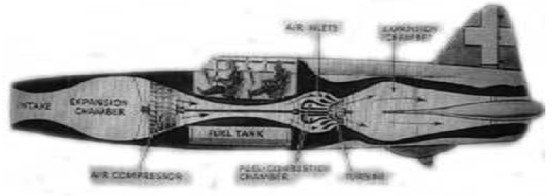
So, CS.3 only had after burning for the wing engines, while the central engine acted as a supercharger for the aforementioned wing engines.
Here is a photo giving some insight into how the Ca.183bis' engines would've worked:
1773421967025.png
 
Last edited:
I have recently found this incredible document talking about multiple Italian design projects:

It is actually period specific as all the included sources are from the 1940s, and one is from 1939. It has a huge wealth of information of jet and motorjet designs, among others. These are mostly on designs we already know of, but it still is really nice.
 
I have recently found this incredible document talking about multiple Italian design projects:

It is actually period specific as all the included sources are from the 1940s, and one is from 1939. It has a huge wealth of information of jet and motorjet designs, among others. These are mostly on designs we already know of, but it still is really nice.
Can you upload the pdf? It doesn't load for me
 
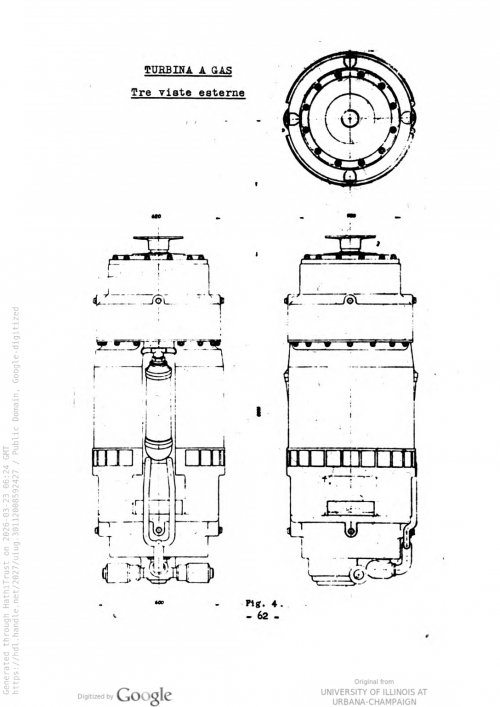
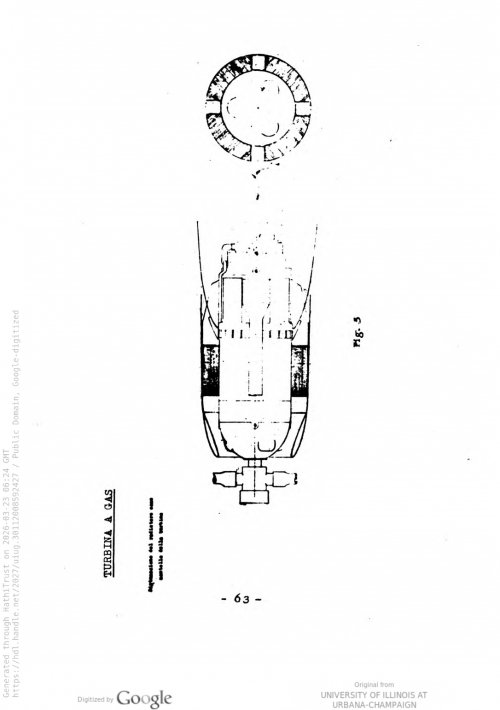
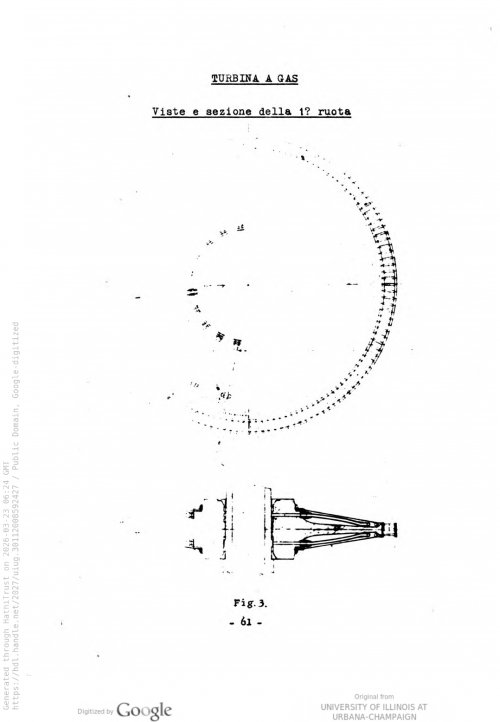
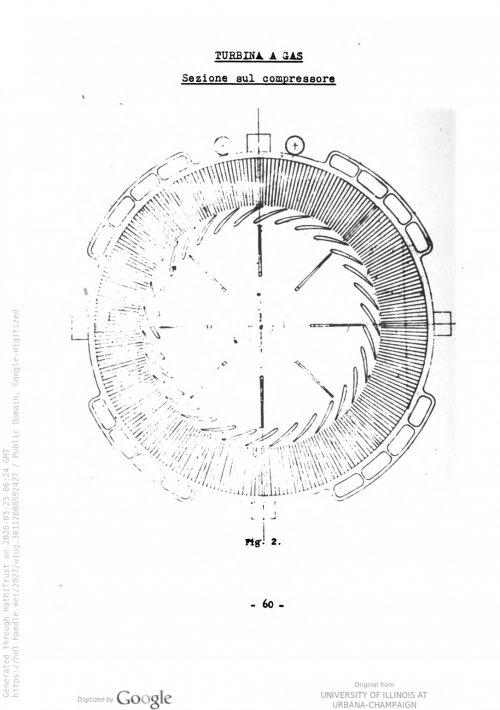
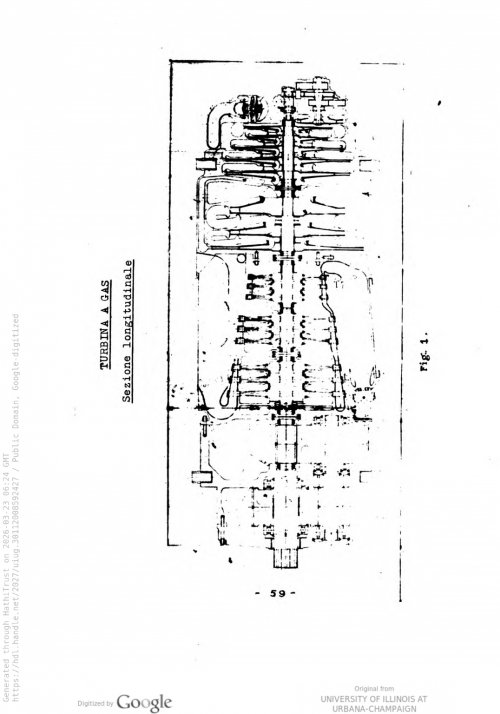
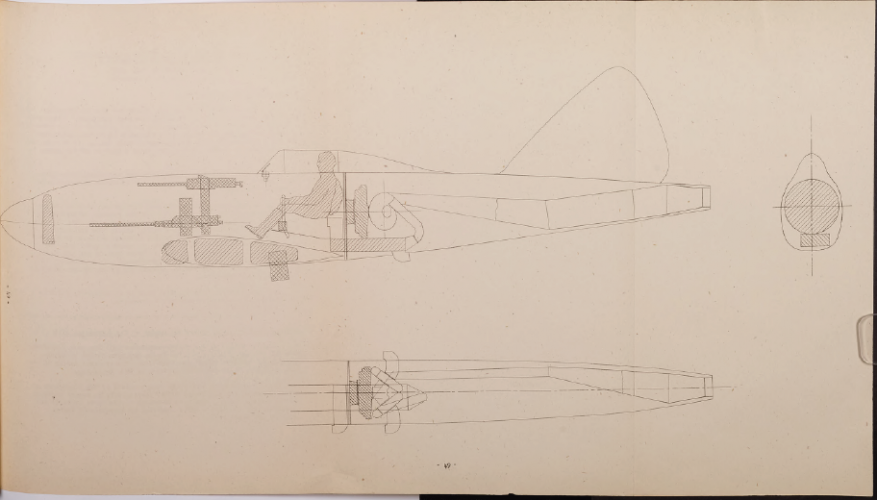
Yes it works, thanks. Unfortunately the document doesn't say much that we didn't know already, in fact we now know more. Imo the only notable thing is the schematics of the Campini gas turbine
 

Attachments

  • uiug-30112008592427-66-1774247085_page-0001.jpg
    uiug-30112008592427-66-1774247085_page-0001.jpg
    417 KB · Views: 12
  • uiug-30112008592427-67-1774247090_page-0001.jpg
    uiug-30112008592427-67-1774247090_page-0001.jpg
    281.6 KB · Views: 12
  • uiug-30112008592427-65-1774247078_page-0001.jpg
    uiug-30112008592427-65-1774247078_page-0001.jpg
    273.4 KB · Views: 13
  • uiug-30112008592427-63-1774247056_page-0001.jpg
    uiug-30112008592427-63-1774247056_page-0001.jpg
    451.9 KB · Views: 13
  • uiug-30112008592427-64-1774247070_page-0001.jpg
    uiug-30112008592427-64-1774247070_page-0001.jpg
    480.8 KB · Views: 30
Last edited:

Similar threads

Back
Top Bottom