Italian Jet, Motorjet, Turboprop, Rocket, etc. Projects

Airborne2001

ACCESS: Secret
Joined
19 June 2020
Messages
330
Reaction score
483
I think this is a pretty fascinating area of study that doesn't get as much attention as it deserves, so I am giving it a thread! Don't be afraid, of course, to add anything I will likely miss.

First we have jets:
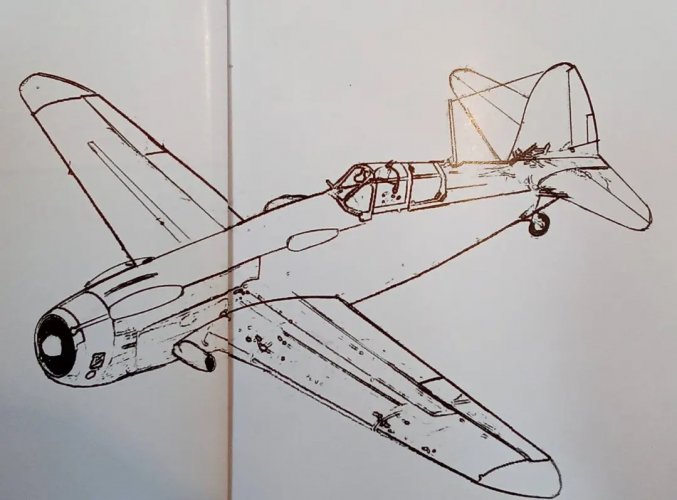
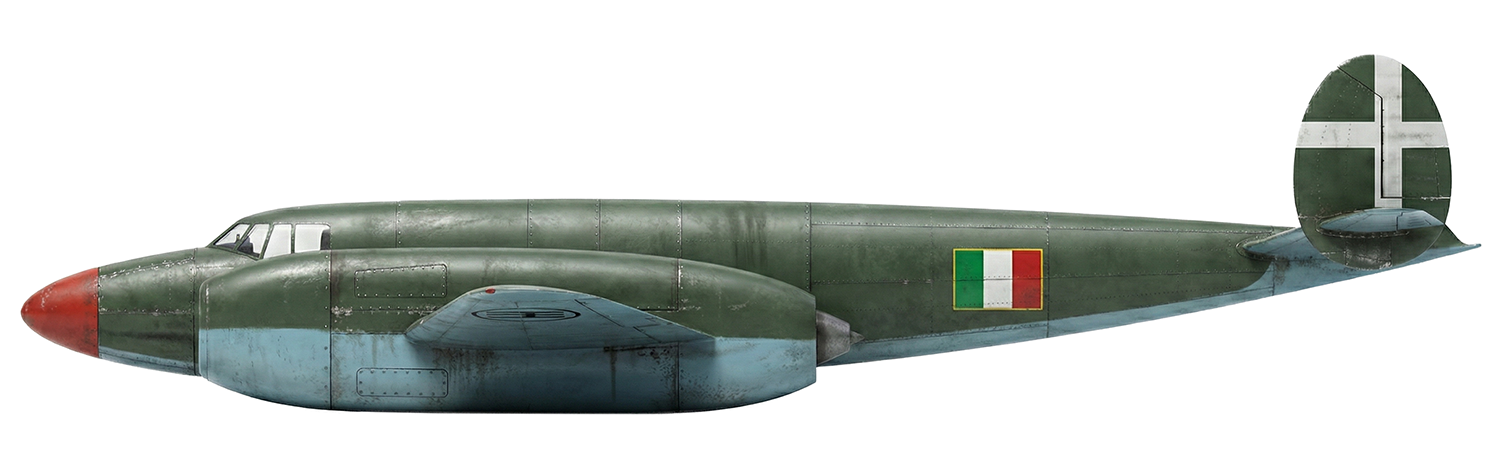
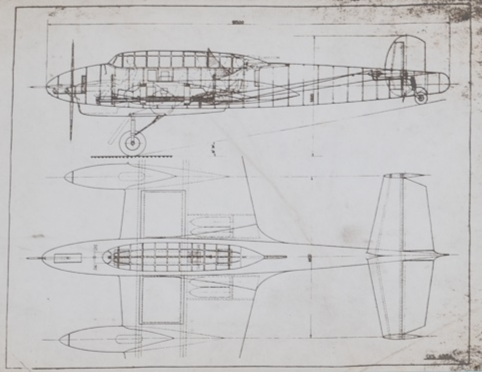
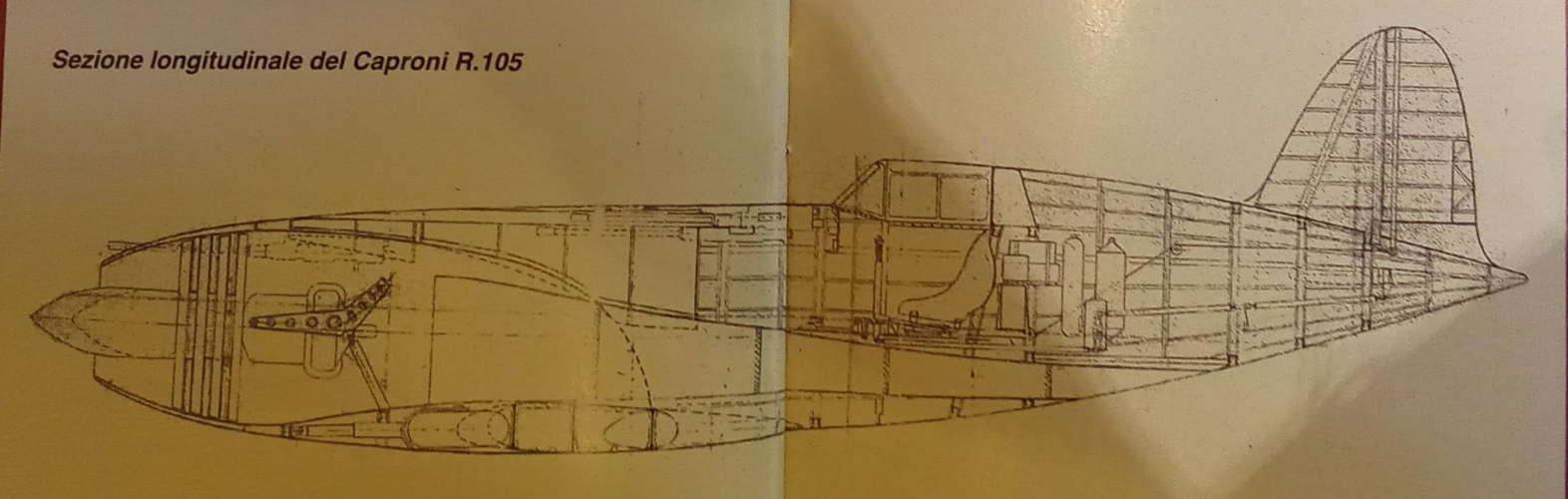
Caproni R.105 Jet Fighter Project (The tail section appears to have been lifted from the Caproni-Vizzola projects.)
1766884323063.png

Re.2007 Alleged Jet Fighter Project - This jet fighter is shrouded in mystery, however I do believe that it exists. We don't know exactly what the design was though. I will link a thread we have on here with debates about what it was. We do know that the following Re.2008 was real though.

Jet Bomber Project (?) - I remember reading in 2017-2018 about some kind of an Italian jet bomber project that was discovered post-Armistice in a Google Scholar page. I don't know where to find that page again though. Apparently, and my memory might not serve me so bear with me if this is incorrect, but it may have been kind of like a "swept wing Arado"? (Meaning Ar-234.)

Now we have "pure" motor jets:
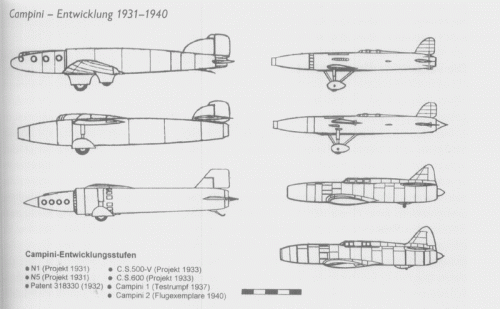
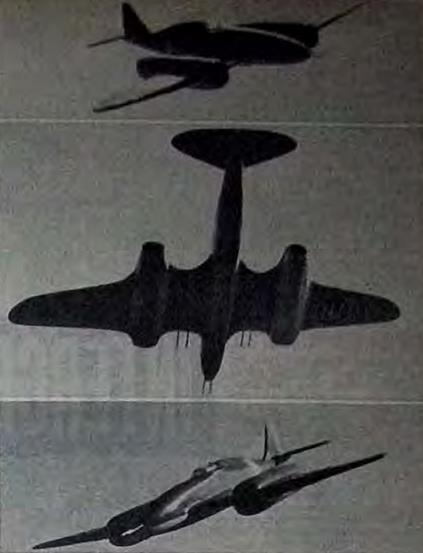
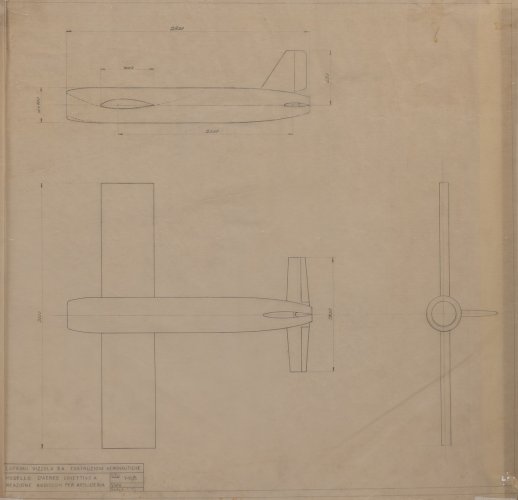
The whole host of unarmed Campini projects (including the famous Caproni-Campini N1/CC2)
1766884958625.png

Campini CS.10 Motorjet Fighter Project (Technically, like the N1/CC2, it was an afterburning aircraft. There were two earlier projects with different configurations; the CS.8 having shorter wings and a rearward cockipt, and the CS.9 having a forward cockpit and the engine in the center of the fuselage.)
1766885001675.png

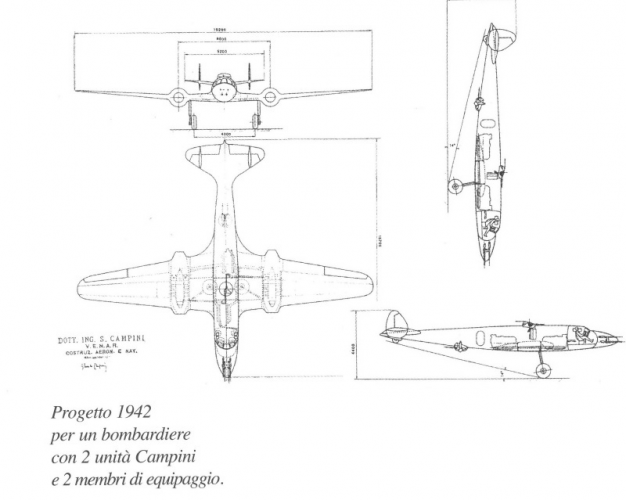
Campini CS.11 Motorjet Bomber Project - The Italian wikipedia entry for the CS.10 and CS.11 claims that another variant of the CS.11 was planned which would've been larger and more powerful
1766885086288.png

Next comes motorjet hybrids:
Caproni Ca.183bis Hybrid Interceptor Project - Arguably the most famous of all these types, next to the alleged Re.2007
1766885621636.png

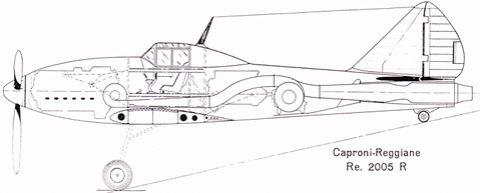
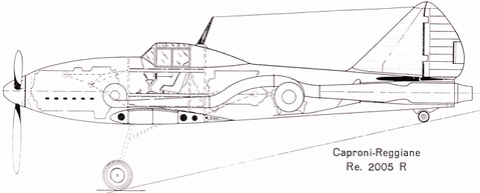
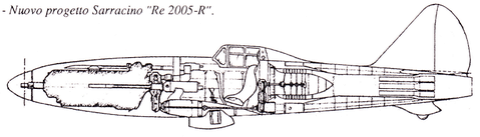
Re.2005R Hybrid Fighter Project
1766885724223.png

Turboprops:
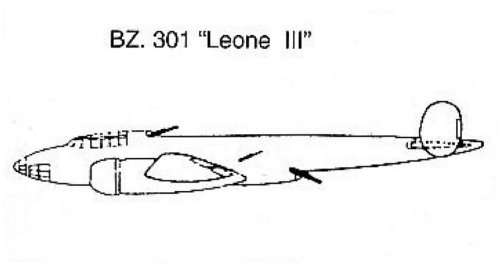
Breda-Zappata BZ 301 Turboprop Bomber variant - The Italian wikipedia claims that this version was intended for the Campini turboprops, and not the BZ 303. (Below is the base piston-engined BZ 301 for reference.)
1766886073034.png

Again, feel free to add anything I don't know about/add on to what I've shown/correct me on anything.
 
It would be relevant to get Italian expert-members' opinion on this. "Projects" are one thing; speculation 80 years later, a completely different thing.
 
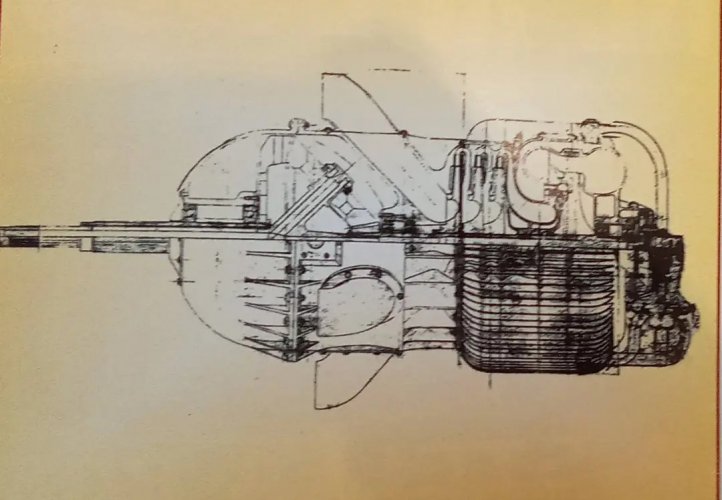
So the Campini turbine is actually fully explained in the book La propulsione a reazione in Italia dalle origini al 1943, with an image and all the history.

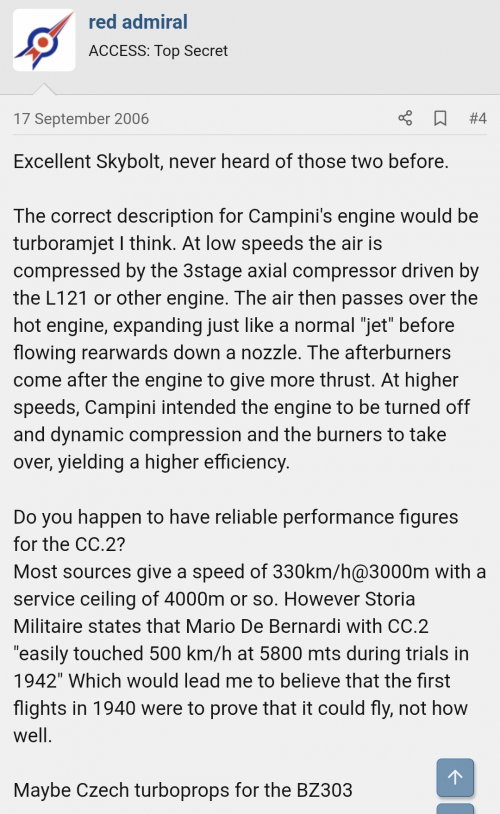
It was a turboprop, an 8 stage compressor connected to a 9 stage gas turbine to power a 4.2m wide propeller.
It needed liquid cooling (water and glicol) to keep the turbine below melting temperatures, and a gear rate reduction from 17.250 rpm to 1.400 rpm to allow the propellers to function without surpassing the speed of sound at the tips of the blades.

Luigi Crocco validated the project, he only advised making the combustion chamber bigger, and so eventually funding was granted and a new Experimental Center was created at Caproni in Arcore under Campini's leadership to develop the engine.

If this engine entered service, Italy would have had an engine similar to the first post-war turboprops, a project ahead of its time, even if this wasn't a turbojet as I was previously lead to believe.

The engine was initially supposed to be mounted on a bomber designed by campini, a variant of the C.S.11. Later it was famously considered for the BZ.303 heavy fighter according to this book, while others say the BZ.301 bomber.

This engine was supposed to erogate about 3000-3550 CV of power, more than the first generation of german turbojets, and they hoped it could push the two-engined planes up to 1000 km/h (today we know that turboprops can hardly go beyond 900 km/h, for example the TU-95 bear, because the propellers reach the speed of sound, and back then a fighter like the BZ.303 powered by these turbines could have maybe realistically reached 750-800 km/h).

At 730mm in diameter it was a bit smaller than the german Jumo 004 engines, while delivering twice the amount of power. It was about the same size as the DB 605, mentioned in the documents in regards to the BZ.303, but weighted more.

The reason given for why Campini didn't work on pure turbojets is because of the limited supply of chrome and nickel, which were necessary to withstand the high temperatures generated by such engines. Italy was put under sanctions and then later with the war the British withheld shipping of these materials from Norway and Turkey to Italy, and the situation only improved slightly when Italy acquired chrome from Albania and nickel from Greece.
A really nice post from @!Mark . This also reveals that a variant of the C.S.11 bomber was being considered with turboprop propulsion.
 
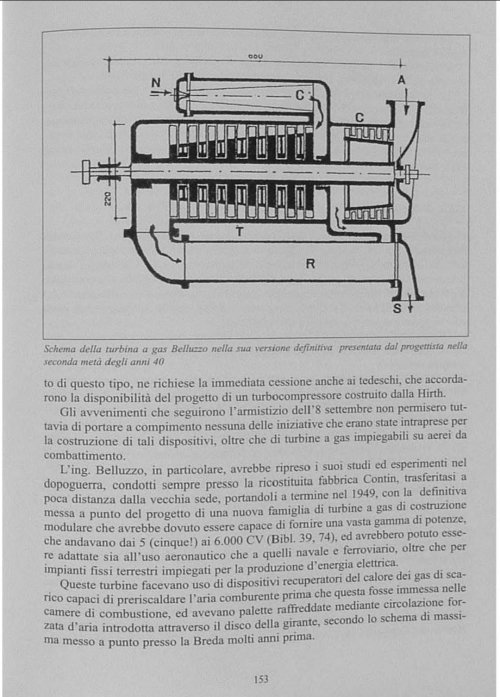
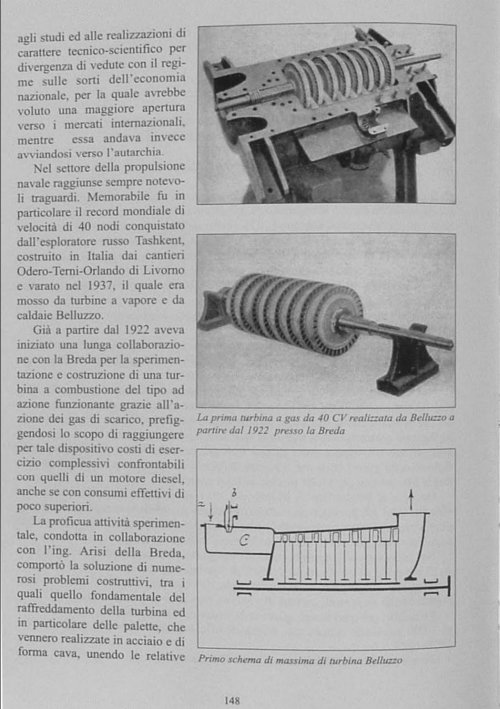
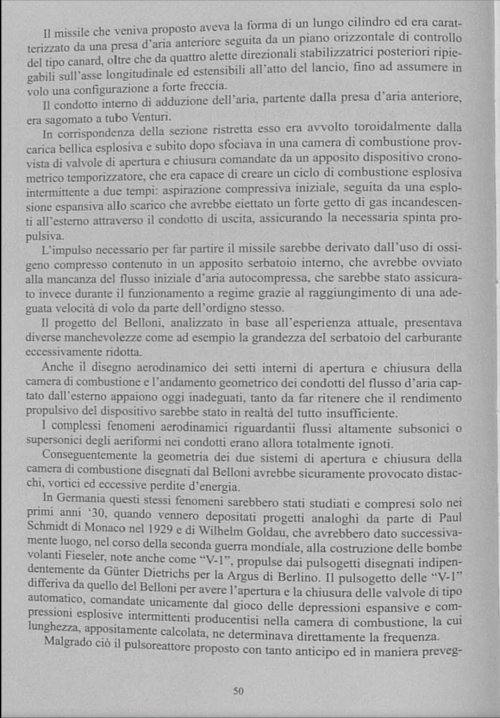
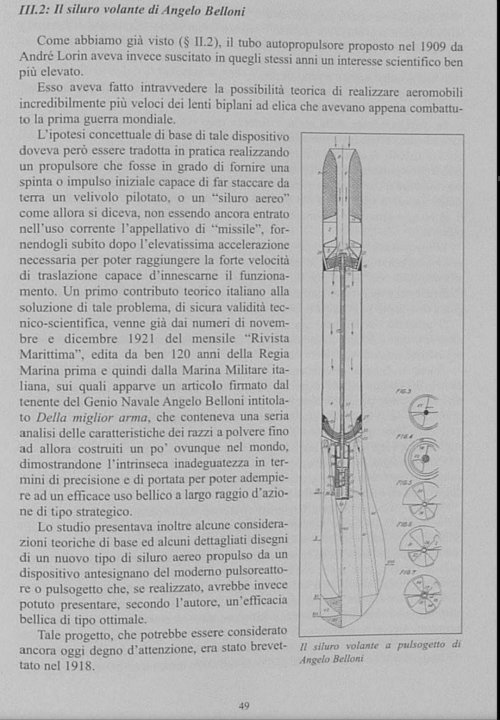
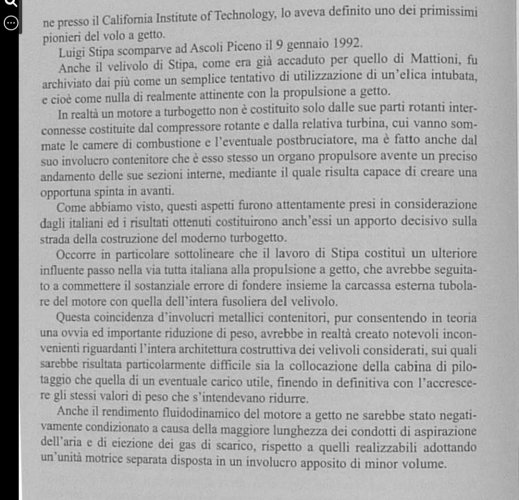
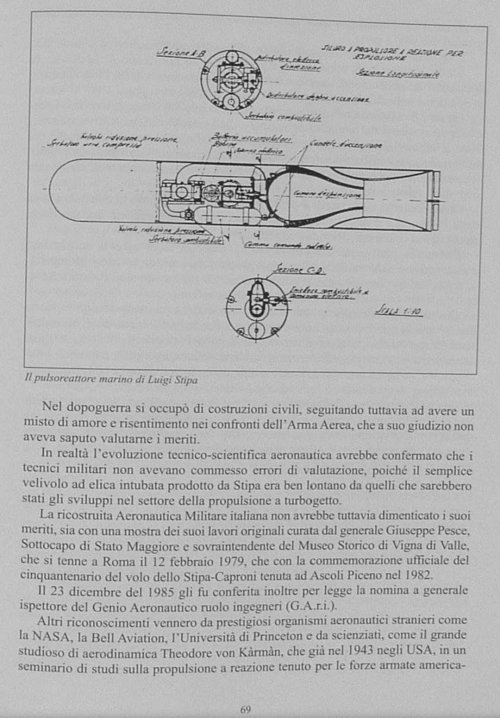
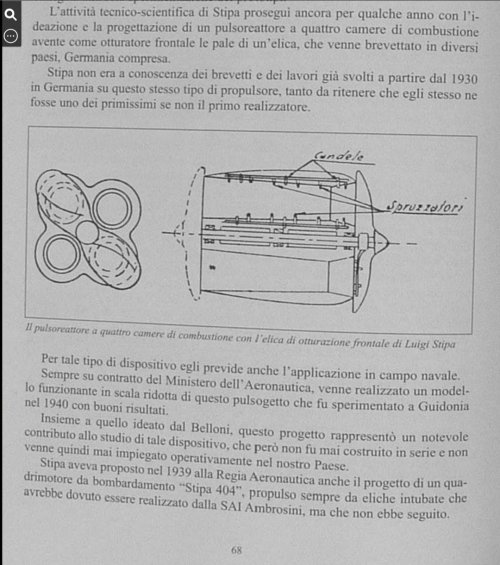
Let's also add these to the thread, the Broglio-Ferri-Sarracino Re2005R version with axial compressor (which the Allies were also interested in), some pulsejet projects by Luigi Stipa and a pulsejet aerial torpedo by Belloni, and the Belluzzo gas turbine.

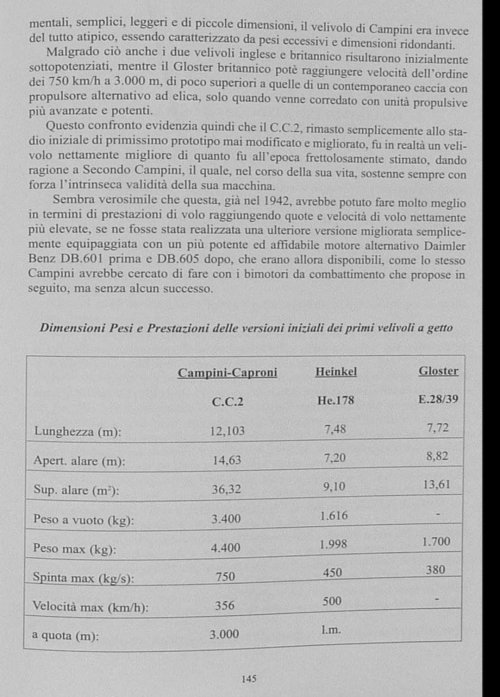
Also a table comparing the performance of the C.C.2, Heinkel He.178 and Gloster E.28/39. The C.C.2 was slow as we all know, but that's because it was underpowered for it's huge weight and size (twice that of the German and British prototypes). And yet the Campini reactor produced a lot MORE thrust.
Had it used a DB.601 or DB.605 to drive the motoreactor, or had the C.C.2 been smaller and lighter, the result would have been very different.

Screenshot_20260215_225852_Brave.jpg
 

Attachments

  • Screenshot_20260215_230157_Brave.jpg
    Screenshot_20260215_230157_Brave.jpg
    810.6 KB · Views: 69
  • Screenshot_20260215_225923_Brave.jpg
    Screenshot_20260215_225923_Brave.jpg
    734.6 KB · Views: 64
  • Screenshot_20260215_222624_Brave.jpg
    Screenshot_20260215_222624_Brave.jpg
    875.5 KB · Views: 60
  • Screenshot_20260215_222534_Brave.jpg
    Screenshot_20260215_222534_Brave.jpg
    865.3 KB · Views: 55
  • Screenshot_20260215_222406_Brave.jpg
    Screenshot_20260215_222406_Brave.jpg
    587.4 KB · Views: 60
  • Screenshot_20260215_222342_Brave.jpg
    Screenshot_20260215_222342_Brave.jpg
    846.7 KB · Views: 60
  • Screenshot_20260215_222323_Brave.jpg
    Screenshot_20260215_222323_Brave.jpg
    628.1 KB · Views: 72
  • Re-2005R axial.gif
    Re-2005R axial.gif
    55 KB · Views: 95
First we have jets:
Caproni R.105 Jet Fighter Project (The tail section appears to have been lifted from the Caproni-Vizzola projects.)
View attachment 796631

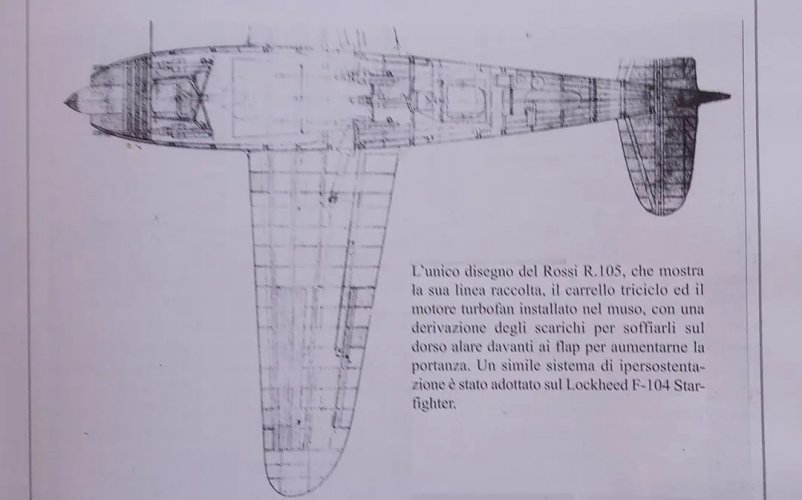
I attach more images and info about the Caproni R.105 that claim this was a turbofan!
A turbofan is more efficient than a turbojet, it's the kind of engines that modern airliners use.
The engine looks a lot similar to the Campini turbine.
The hot air stream was also to be blown on the back of the wings flaps to increase negative lift, an incredibly modern solution.
This turbofan could have pushed a light fighter like the R.105 to speeds up to 900-950 km/h much more efficiently than a common turbojet.
Engineer Lelio Rossi was the inventor apparently, but this project is still obscure and I would like to know more about it
 

Attachments

  • img_3_1771223210401.jpg
    img_3_1771223210401.jpg
    97.8 KB · Views: 91
  • img_2_1771223206350.jpg
    img_2_1771223206350.jpg
    133.1 KB · Views: 95
  • img_1_1771223201638.jpg
    img_1_1771223201638.jpg
    124.1 KB · Views: 91
Abaiut the RE 2007 In 1967, I saw the 1:8 scale cross-section , which, according to what a senior colleague later said, had been designed by Giuseppe Cometti (author of several books on Italian aircraft). It presented two obvious anomalies: the wing portion appearing in the cross-section had evidently been added later; furthermore, it featured a visible anhedral (-5°), suggesting its sole purpose was to emphasize the aircraft's swept wing (20°).

The actual dates during which that project was developed (which, among other things, did not appear to reproduce the Jumo 004B turbojet but something vaguely similar to an English Metropolitan Vickers Beryl) are unknown, but could have been between August 1945 and June 1949.

What explanation can be given for the legend of the RE 2007? Here the story ends and the door opens to speculation. Dr. Giovanni Caproni (son of Count Gianni Caproni) tried to keep the brand alive; Longhi, who had returned to the US, had not severed ties with his home country and perhaps, with his story of the RE 2007, wanted to confirm his reputation as a designer (even though, in reality, he had designed nothing: the RE 2000 had been designed by Sacha Kartveli and "Italianized" by Giuseppe Pambianchi). It is possible that he had convinced Caproni to submit the Ca.2008 derivative to the Italian Air Force, in competition with other national designs of the period (FIAT G.80, SAI Ambrosini Sagittario, Piaggio P.146). There is no evidence that the Ca.2008 project was actually submitted.

Regarding the Caproni R.105 mentioned in Aerei nella Storia N. 180 of March 2025, we read that the engine is not entirely certain and, in fact, about that projects we had very few sure information, even fewer than those relating to the RE 2007. The documentation, which comes from the Caproni archive, reports references to a 1,000 kg/s Jumo engine but in the drawing we see what appears to be a turboprop. The designer Lelio Rossi died more than 80 years ago and it will be very difficult to find further information on this project.
Nico S.
 
Didn't Longhi write that he was thinking about designing his own engine? (Crazy I know, but that would explain the different engine)
I think he writes that in the letters, idk it's been a long time since I read them.

Also what do you mean Longhi didn't design anything??
 
Hello Mark
Robert G. Longhi didn't have an engineering degree and was hired by the Caproni group as he had been instrumental for obtaining the production license for the Seversky P-35, which was redesigned in Italy as the Reggiane RE 2000 Falco I, translating the imperial measurements into metric ones, and incorporating some modifications. He served as production manager/supervisor at the Reggio Emilia plant. The designs for the Reggiane fighters were signed by engineers Pambianchi and Maraschini. Even during his time in the United States, he didn't work on engines.
Nico S.
 
Hello Mark
Robert G. Longhi didn't have an engineering degree and was hired by the Caproni group as he had been instrumental for obtaining the production license for the Seversky P-35, which was redesigned in Italy as the Reggiane RE 2000 Falco I, translating the imperial measurements into metric ones, and incorporating some modifications. He served as production manager/supervisor at the Reggio Emilia plant. The designs for the Reggiane fighters were signed by engineers Pambianchi and Maraschini. Even during his time in the United States, he didn't work on engines.
Nico S.
Thanks, I didn't know that. I will have to look more into this topic of the Re2007, can you suggest any books/sources? Anche in lingua Italiana vanno benissimo ;)
 
So weird. I always heard that Longhi was an engineer, but as you point out he would have been too young to graduate (could the date of birth be wrong? Did we check his birth certificate?)
He worked in America at several companies in key positions, which would be very hard to do if you didn't have some kind of engineering background. And if he didn't, he must have learned something from all those jobs!
All the websites say he designed the Reggiane planes (but you say the projects weren't signed by him).

The only way we are gonna get to the bottom of this is with actual historical documents.
 
Let's also add these to the thread, the Broglio-Ferri-Sarracino Re2005R version with axial compressor (which the Allies were also interested in), some pulsejet projects by Luigi Stipa and a pulsejet aerial torpedo by Belloni, and the Belluzzo gas turbine.

Also a table comparing the performance of the C.C.2, Heinkel He.178 and Gloster E.28/39. The C.C.2 was slow as we all know, but that's because it was underpowered for it's huge weight and size (twice that of the German and British prototypes). And yet the Campini reactor produced a lot MORE thrust.
Had it used a DB.601 or DB.605 to drive the motoreactor, or had the C.C.2 been smaller and lighter, the result would have been very different.

View attachment 802263
I've read that part of the problem with the CC2 was that the motor jet exhaust was more like a ducted fan, and less like a compressor. If it had been more like that latter it would've been stronger.
 
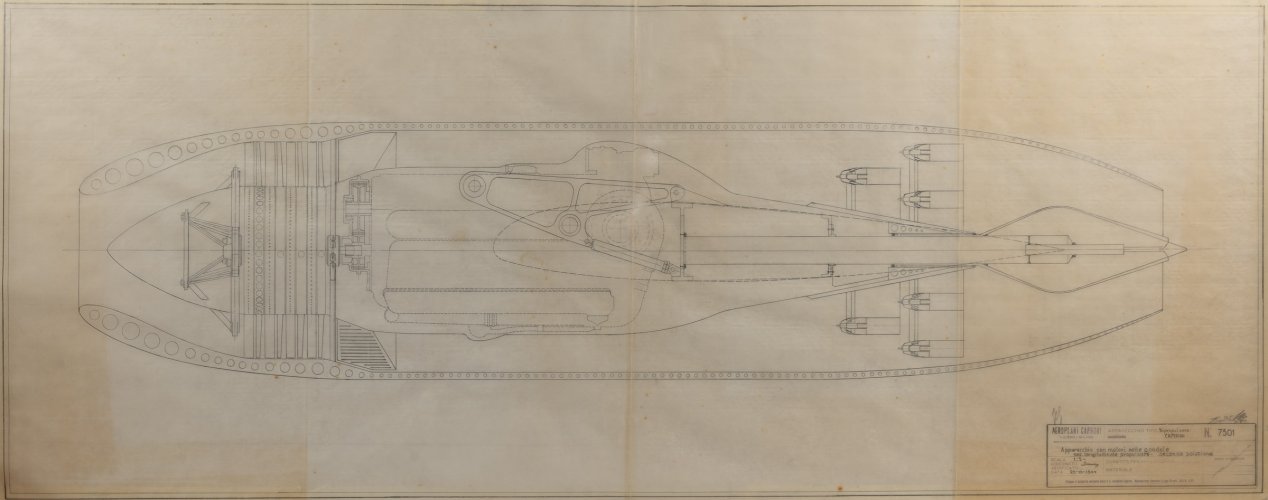
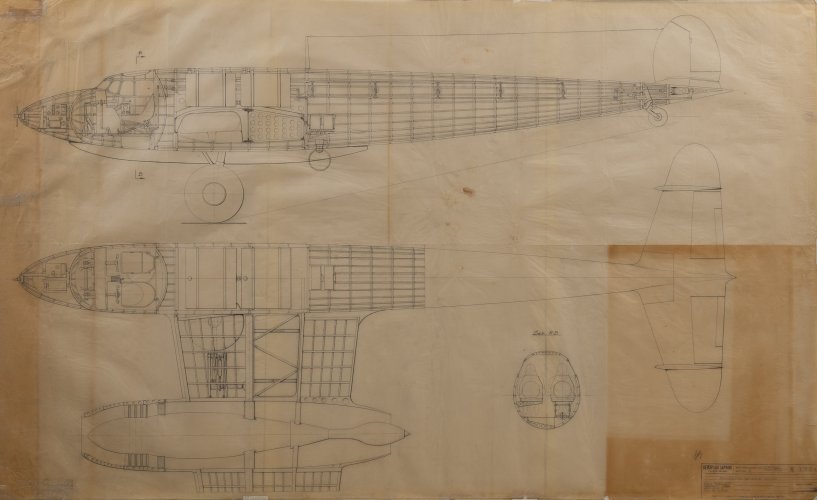
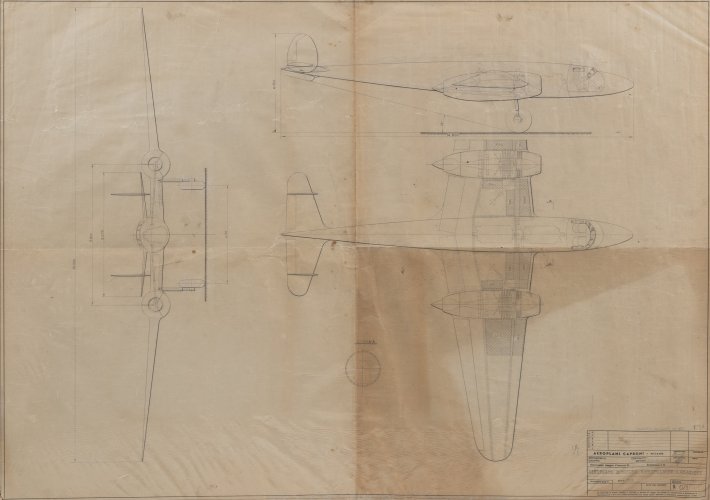
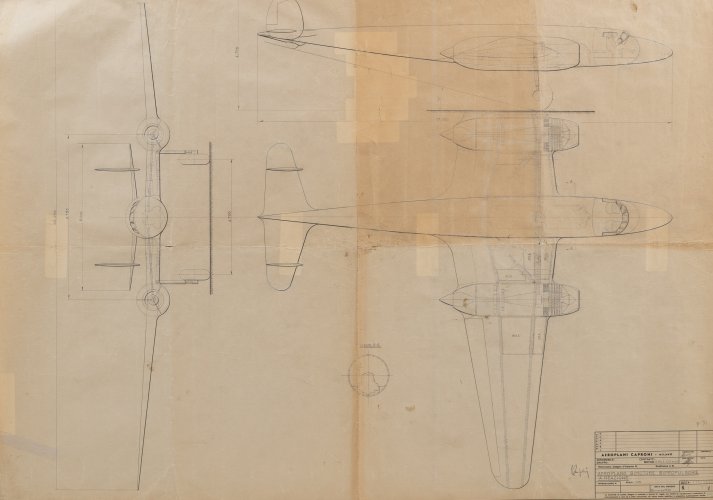
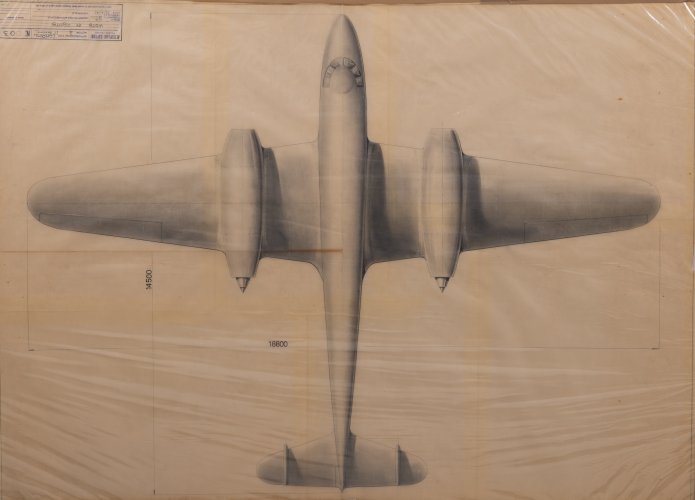
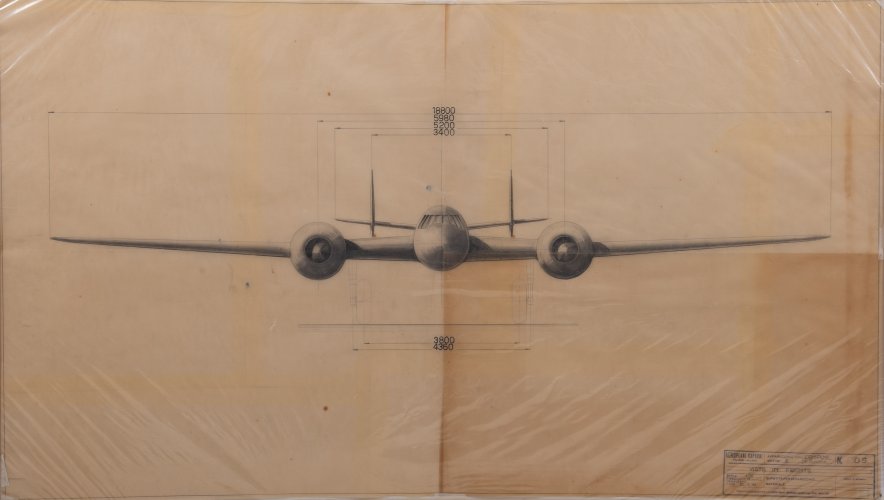
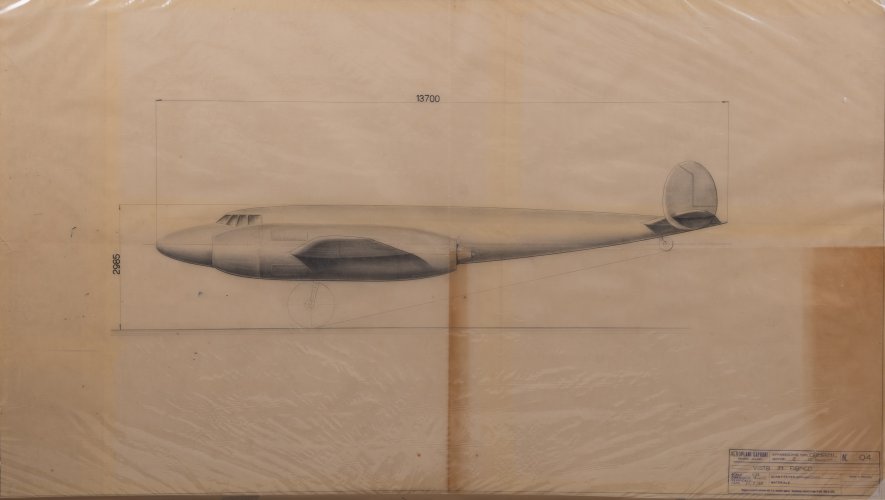
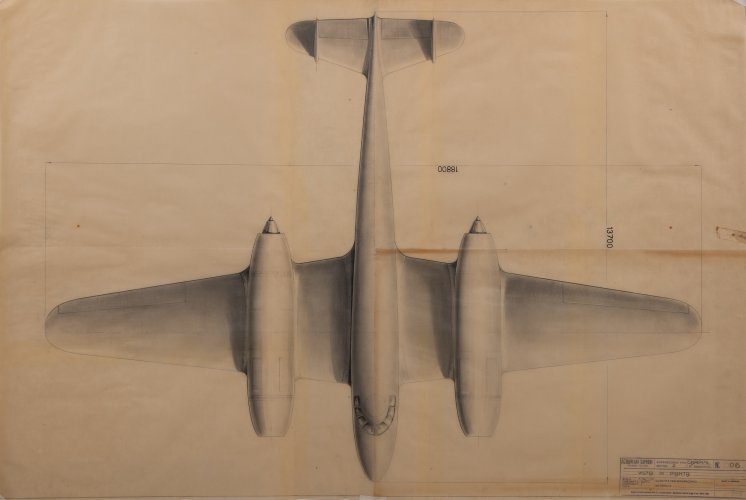
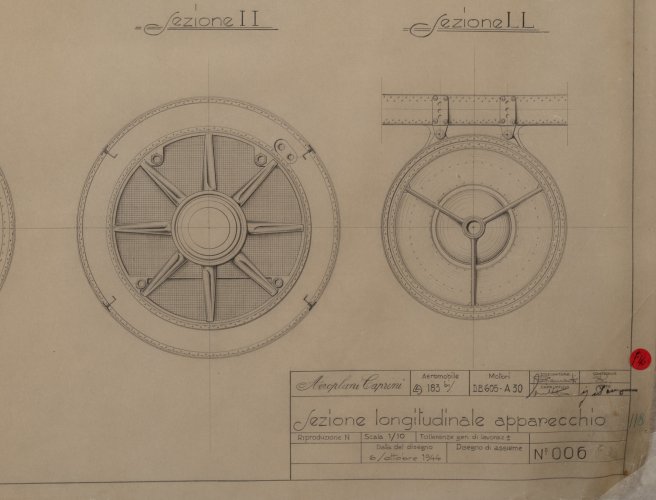
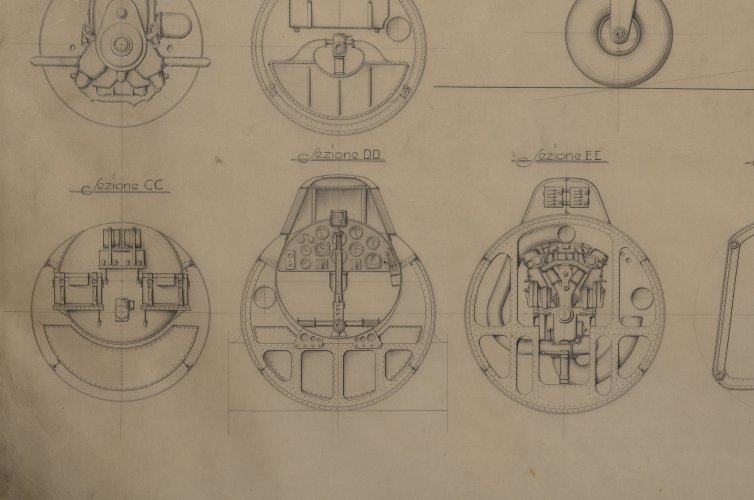
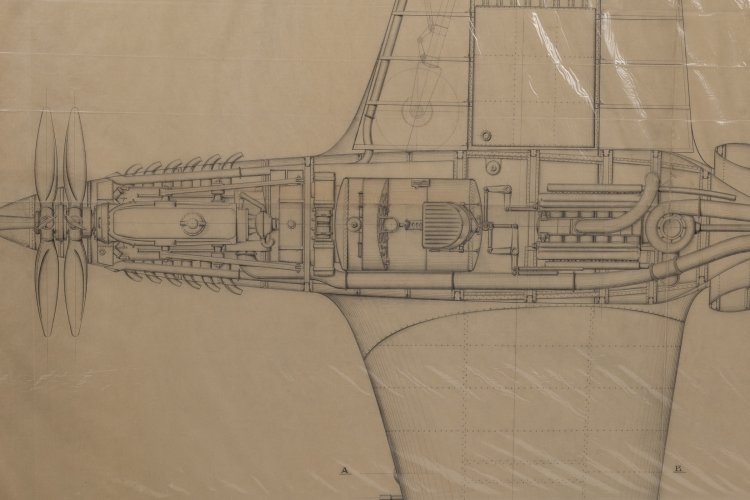
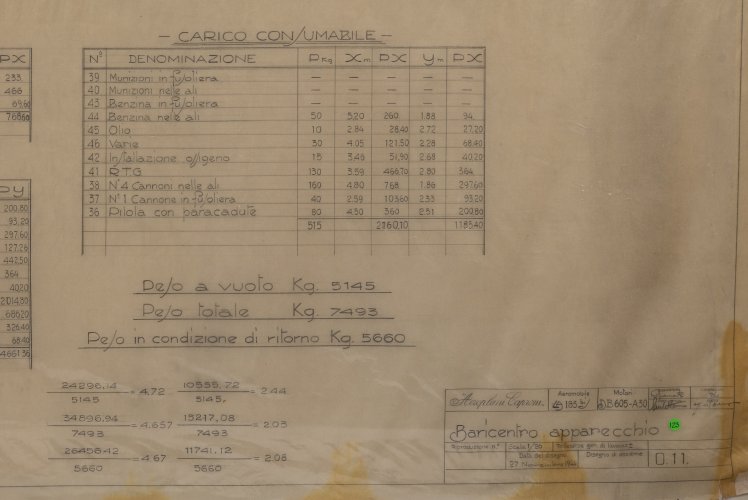
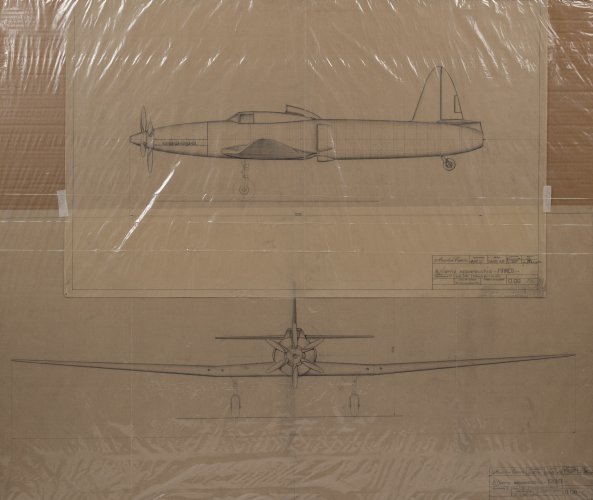
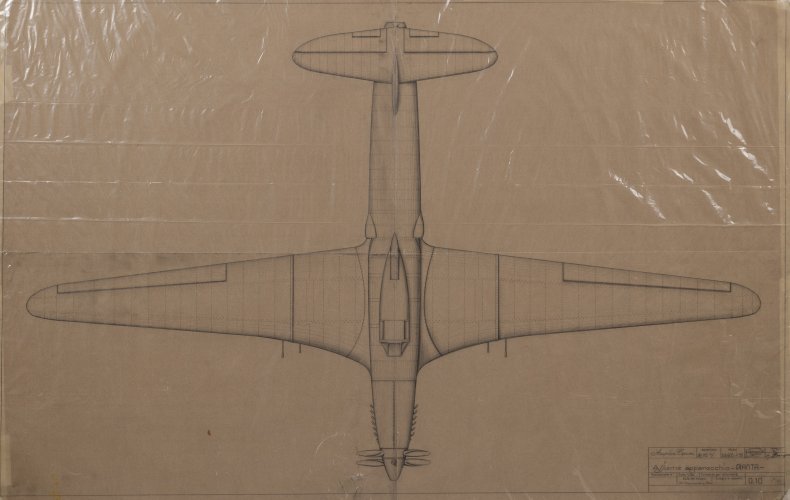
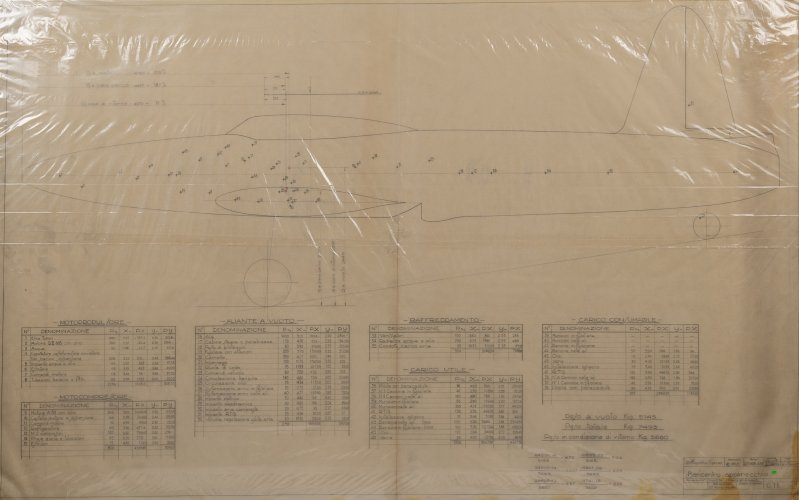
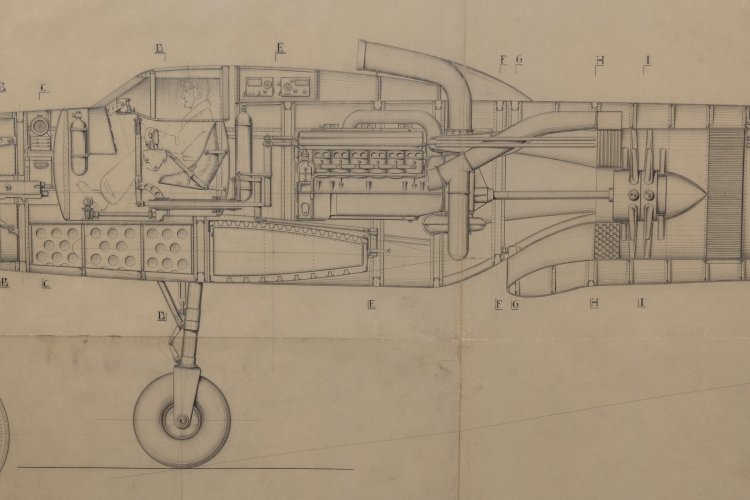
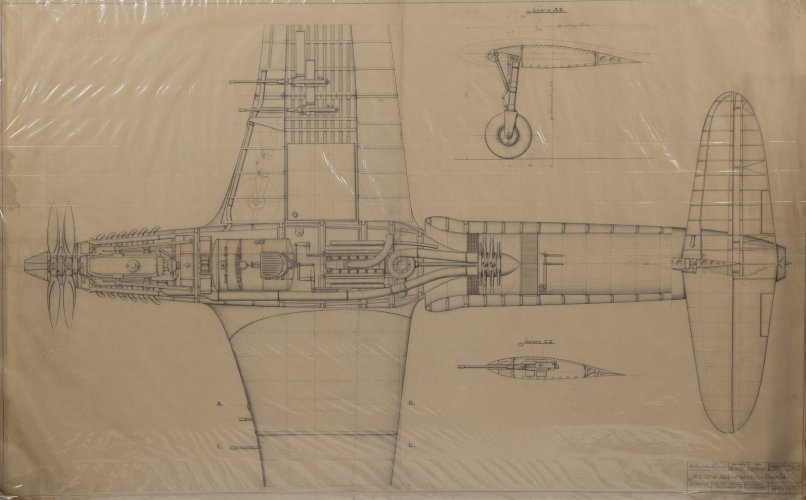
And here are more blueprints for the Campini twin engine bomber, from 1941, 1943 and 1944. There is also a blueprint of just the engine.
Different versions were designed. This project was being seriously worked on throughout the whole war it seems, even after 1943.
 

Attachments

  • 100201213-0.jpg
    100201213-0.jpg
    416.5 KB · Views: 88
  • 100201211-0.jpg
    100201211-0.jpg
    720.7 KB · Views: 81
  • 100201198-1.jpg
    100201198-1.jpg
    850.2 KB · Views: 77
  • 100201198-0.jpg
    100201198-0.jpg
    998.3 KB · Views: 78
  • 100191786-3.jpg
    100191786-3.jpg
    635.5 KB · Views: 74
  • 100191786-2.jpg
    100191786-2.jpg
    471.8 KB · Views: 75
  • 100191786-1.jpg
    100191786-1.jpg
    447.6 KB · Views: 74
  • 100191786-0.jpg
    100191786-0.jpg
    564 KB · Views: 76
And here are more blueprints for the Ca.183bis
 

Attachments

  • 100191801-10.jpg
    100191801-10.jpg
    928.2 KB · Views: 68
  • 100191801-9.jpg
    100191801-9.jpg
    956.2 KB · Views: 65
  • 100191801-8.jpg
    100191801-8.jpg
    968.8 KB · Views: 62
  • 100191801-7.jpg
    100191801-7.jpg
    929.8 KB · Views: 58
  • 100191801-6.jpg
    100191801-6.jpg
    1.2 MB · Views: 61
  • 100191801-5.jpg
    100191801-5.jpg
    914.2 KB · Views: 62
  • 100191801-4.jpg
    100191801-4.jpg
    1,014.8 KB · Views: 60
  • 100191801-3.jpg
    100191801-3.jpg
    781.8 KB · Views: 60
  • 100191801-2.jpg
    100191801-2.jpg
    951.9 KB · Views: 56
  • 100191801-1.jpg
    100191801-1.jpg
    749.3 KB · Views: 62
  • 100191801-0.jpg
    100191801-0.jpg
    810.5 KB · Views: 72
Thanks, I didn't know that. I will have to look more into this topic of the Re2007, can you suggest any books/sources? Anche in lingua Italiana vanno benissimo ;)
From Skybolt post of 24 September 2006

Most important of all is:

Sergio Govi , Dal Re 2002 al Re 2005, Giorgio Apostolo Editore 1984 and

Sergio Govi I Reggiane dall'A alla Z - Giorgio Apostolo Editore 1985

both are long out of print, but there is a CD-ROM editon. You can order directly to Giorgio on http://www.apostoloeditore.it (I think no longer available – Note by Nico)


First diffusion of the fake was via

Piero Prato I Caccia Caproni Reggiane 1938-1945, Intyrama 1968 (text in Italian and english)


A condensed version of the Longhi position, with copies of the letters, both real and fakes is in

Giorgio Evangelisti, Gente dell'Aria 4, Editoriale Olimpia 1997


More info on the uncovering of the fake in

Gregory Alegy, Reggiane Re-2005, Ali d'Italia, La Bancarella Aeonautica Pub. 2001 (text in Italian and english)


The bible on he Re.2006 and derivatives (and more info on the fake) is now:

Alessandro Berteletti Reggiane Re 2006 Una storia vera - A true History (text in Italian and english) IBN Editore 2002

This is more difficult to find: try http://www.aviolibri.it

I (Nico) add that a good account of the genesis of the “Italian P-35” can be found in the very good book of Giulio Cesare Valdonio: “Frecce, Saette, Folgori e Veltri” (2019, Edizioni Rivista Aeronautica): googleing around you can find easy a dealer.

Nico S.
 
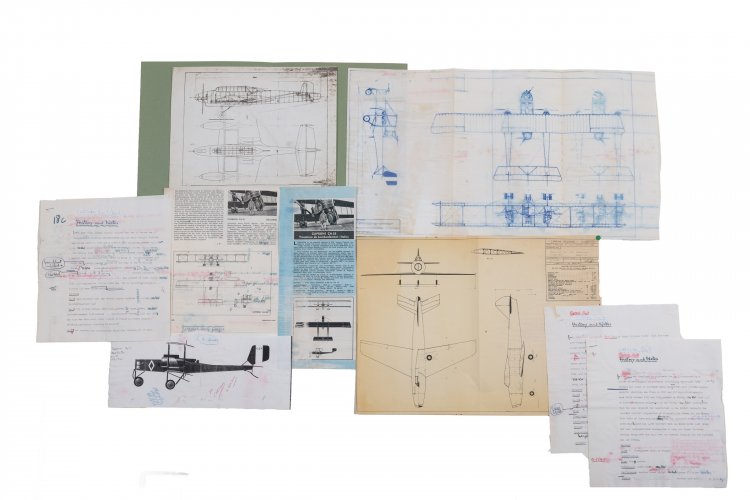
@Nico I found the technical drawings of the Re2007 among other Caproni documents in the Mallams auction lot 29.
How did it end up in the collection of authentic Caproni documents?
 

Attachments

  • Mallams lot 29 with Re2007.jpg
    Mallams lot 29 with Re2007.jpg
    583.2 KB · Views: 74
And here are more blueprints for the Campini twin engine bomber, from 1941, 1943 and 1944. There is also a blueprint of just the engine.
Different versions were designed. This project was being seriously worked on throughout the whole war it seems, even after 1943.

And I discovered it in this topic,

 
Actually I don't know! I didn't even notice that plane. It's similar to the Caproni Vizzola CV6 but it's not the same. Maybe some other Caproni we previously didn't know about!


Yes I remember seeing that :)
Hi Mark and Hesham, you have found quite a wealth of drawings of Caproni designs... I can only add that, long ago, when I edited the book by Piero Prato (not to be confused with test pilot Tullio De Prato) about Reggiane aircraft, I visited the Caproni archive in Milan where there wa a large collection of large scale technical drawings. In that occasion I was interested only in some specific topics of Reggiane production (including RE 2007). Later on I paid a visit to the Vizzola Ticino Caproni premises but I saw only real aircraft and some relics. About the same time I met once or twice Roberto/Robert Longhi during his brief tours in Italy. I know that at least part of the above mentioned document and aircraft joined the Museum in Trento. Getting older, I no longer had occasion to visit any Caproni premise nor meet any member of the Caproni family.
Nico
 
Hi Mark and Hesham, you have found quite a wealth of drawings of Caproni designs... I can only add that, long ago, when I edited the book by Piero Prato (not to be confused with test pilot Tullio De Prato) about Reggiane aircraft, I visited the Caproni archive in Milan where there wa a large collection of large scale technical drawings. In that occasion I was interested only in some specific topics of Reggiane production (including RE 2007). Later on I paid a visit to the Vizzola Ticino Caproni premises but I saw only real aircraft and some relics. About the same time I met once or twice Roberto/Robert Longhi during his brief tours in Italy. I know that at least part of the above mentioned document and aircraft joined the Museum in Trento. Getting older, I no longer had occasion to visit any Caproni premise nor meet any member of the Caproni family.
Nico
Were you able to see those Re2007 technical drawings in person?
And thank you for your service, we all admire your work
 
I wonder, how efficient would be a hybrid propeller-motorjet engine, with the same piston motor driving both propeller AND compressor? Not at the same time, of course; compressor and fuel injection would be activated only for speed boost.
 
I wonder, how efficient would be a hybrid propeller-motorjet engine, with the same piston motor driving both propeller AND compressor? Not at the same time, of course; compressor and fuel injection would be activated only for speed boost.

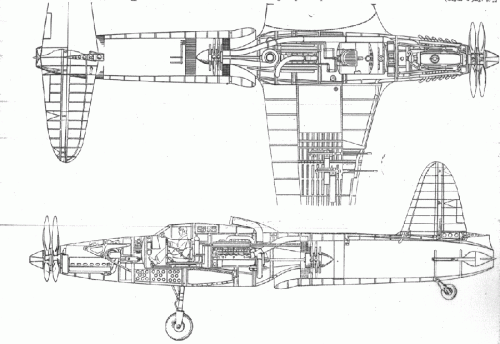
Reggiane tested exactly this setup! These weren't just theoretical ideas but reached the stage of detailed weight calculations and performance projections.

There were 2 versions of the Re.2005R:

1) The Twin-Engine Configuration (The "Dual-Power" Approach).
re200510.png
This was the initial design presented in November 1942. It used a Daimler-Benz DB 605 for the propeller and a Fiat A-20 (370 HP) auxiliary engine for the compressors.
This version was designed for a burst of speed, it was expected to reach 730 km/h at 7,800 meters (originally predicted at 760 km/h). However, this boost could only be sustained for 12 minutes to avoid draining the fuel completely.
The biggest drawback was the added weight which caused instability issues: the auxiliary engine and compressors added 510 kg to the airframe and, to compensate, the engineers had to remove the two 20mm wing cannons and the pilot's seat armor.
The extra engine shifted the Center of Gravity (CG) from 21% to 31%.
Roberto Longhi was very critical of this, noting it would significantly degrade the aircraft's legendary stability and flight characteristics.
The efficiency was extremely low, fuel consumption was staggering: 290 kg/h for the main engine, 100 kg/h for the auxiliary engine, and a massive 540 kg/h for the reactor burner. Total range was reduced by 20% compared to a standard Re.2005.

2) The Single-Engine Configuration (The "Direct-Drive" Approach)
re200511.png
Refined later by major Sarracino, this version eliminated the auxiliary engine in favor of a more rational system.
While specific speed figures aren't as widely cited for this variant, it replaced the centrifugal compressors with a multi-stage axial compressor. This type of compressor is inherently more efficient at high speeds than the centrifugal ones used in the first version.
By removing the heavy Fiat A-20 engine, the aircraft would have been much closer to its original weight and balance. This meant it could likely have kept its wing cannons and armor, making it a far more viable combat aircraft.
The power for the compressor was taken directly from the DB 605 main engine via a clutch system. The pilot would only engage the clutch when they needed the post-combustion thrust, similar to how modern pilots engage an afterburner.
This version was significantly more efficient, it didn't have to carry the dead weight of the secondary engine when it wasn't in use.
So this was a better solution overall, it allowed to retain the same armament and almost the same stability, it was simpler to build, drained less fuel.
Ultimately, the forum notes that Reggiane's engineers (like Longhi) preferred focusing on the Re.2006, which would achieve similar high speeds using the more powerful DB 603 engine without the complexity and higher fuel consumption of the motorjet system.
 
I meant to say the second project was actually studied at Guidonia, there may be more errors like this
 
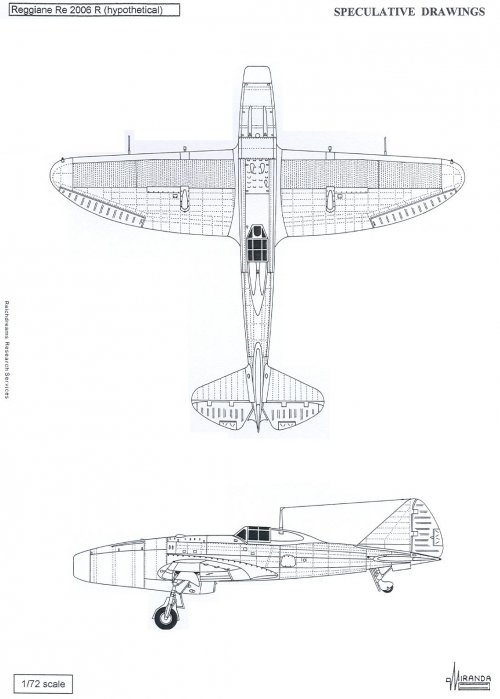
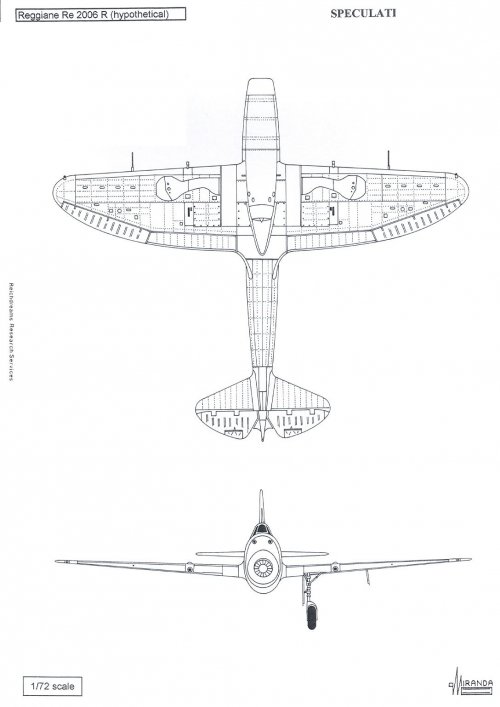
The fact the Re.2005R was canceled because they didn't want to remake the fuselage and because the Re.2006 with DB603 engine would have been more powerful, tells me that it is unlikely that they planned to also convert other planes like the Re.2006 to use the compressor. So no Re.2006R as far as I know.
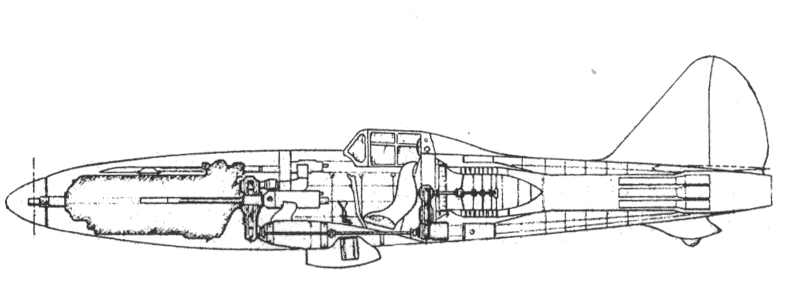
They would have instead focused on other projects that were planned with these new engines from the start, like the Ca.183bis high altitude interceptor, the C.C.7 (C.S.11) twin engine bomber, and the R.105 turbofan fighter which still remains obscure. Now if only someone could find more about the history of the R.105...
 
Abaiut the RE 2007 In 1967, I saw the 1:8 scale cross-section , which, according to what a senior colleague later said, had been designed by Giuseppe Cometti (author of several books on Italian aircraft). It presented two obvious anomalies: the wing portion appearing in the cross-section had evidently been added later; furthermore, it featured a visible anhedral (-5°), suggesting its sole purpose was to emphasize the aircraft's swept wing (20°).

The actual dates during which that project was developed (which, among other things, did not appear to reproduce the Jumo 004B turbojet but something vaguely similar to an English Metropolitan Vickers Beryl) are unknown, but could have been between August 1945 and June 1949.

What explanation can be given for the legend of the RE 2007? Here the story ends and the door opens to speculation. Dr. Giovanni Caproni (son of Count Gianni Caproni) tried to keep the brand alive; Longhi, who had returned to the US, had not severed ties with his home country and perhaps, with his story of the RE 2007, wanted to confirm his reputation as a designer (even though, in reality, he had designed nothing: the RE 2000 had been designed by Sacha Kartveli and "Italianized" by Giuseppe Pambianchi). It is possible that he had convinced Caproni to submit the Ca.2008 derivative to the Italian Air Force, in competition with other national designs of the period (FIAT G.80, SAI Ambrosini Sagittario, Piaggio P.146). There is no evidence that the Ca.2008 project was actually submitted.

Regarding the Caproni R.105 mentioned in Aerei nella Storia N. 180 of March 2025, we read that the engine is not entirely certain and, in fact, about that projects we had very few sure information, even fewer than those relating to the RE 2007. The documentation, which comes from the Caproni archive, reports references to a 1,000 kg/s Jumo engine but in the drawing we see what appears to be a turboprop. The designer Lelio Rossi died more than 80 years ago and it will be very difficult to find further information on this project.
Nico S.
Here are my thoughts that I put in the Re.2007 debate thread: It is not impossible that Reggiane did work on a jet on their own accord given that they were under the Caproni group and the Caproni R.105 project exists (regardless of the propulsion type considered). This shows that they did have access to materials and research regarding how to make a jet (or "jet") fighter of some kind. I know that this isn't a confirmation, but given the nature of this alleged project it works to show that Reggiane very well could've known how to make a jet plane.
 
And here are more blueprints for the Campini twin engine bomber, from 1941, 1943 and 1944. There is also a blueprint of just the engine.
Different versions were designed. This project was being seriously worked on throughout the whole war it seems, even after 1943.
I'm surprised that I haven't seen this...

I wonder if this is the mystery bomber I mentioned in my post. I still wish I could find that Google Scholar page...
 
I'm surprised that I haven't seen this...

I wonder if this is the mystery bomber I mentioned in my post. I still wish I could find that Google Scholar page...
It would be awesome if we could find that Google Scholar page, tell us more about it.
You said it mentioned a swept wing Arado Ar-234?
 
I'm surprised that I haven't seen this...

I wonder if this is the mystery bomber I mentioned in my post. I still wish I could find that Google Scholar page...
Try looking in your Google activity or something. It has everything, not just the browser history.
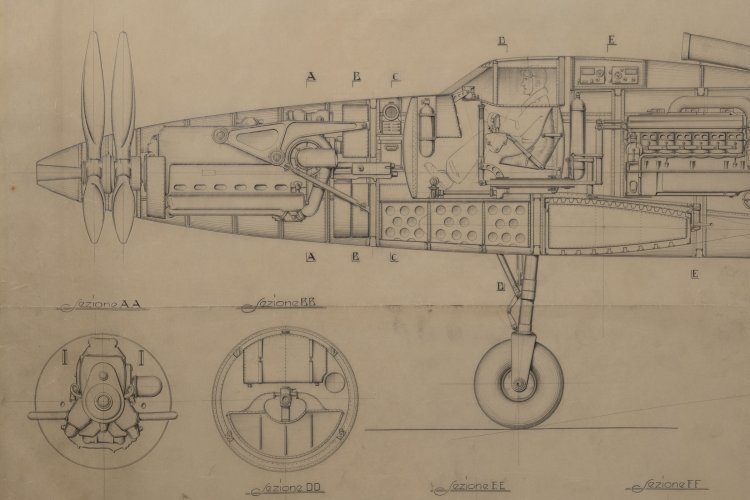
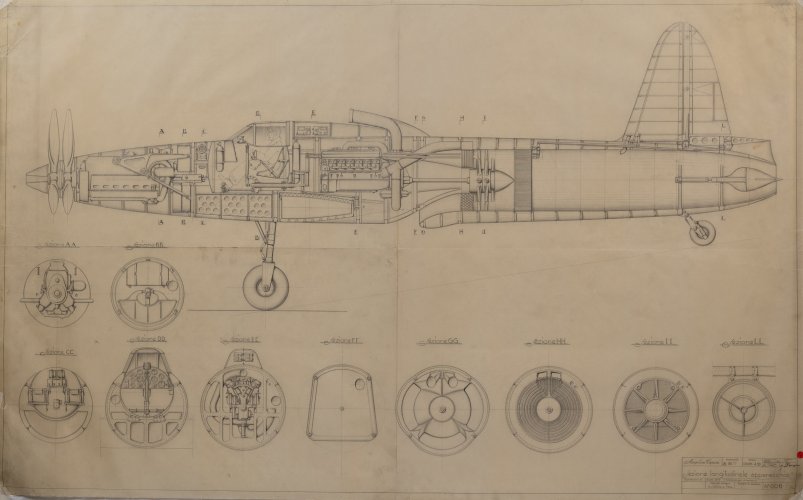
Or tell us more about the document so we can help you find it
 

Similar threads

Back
Top Bottom