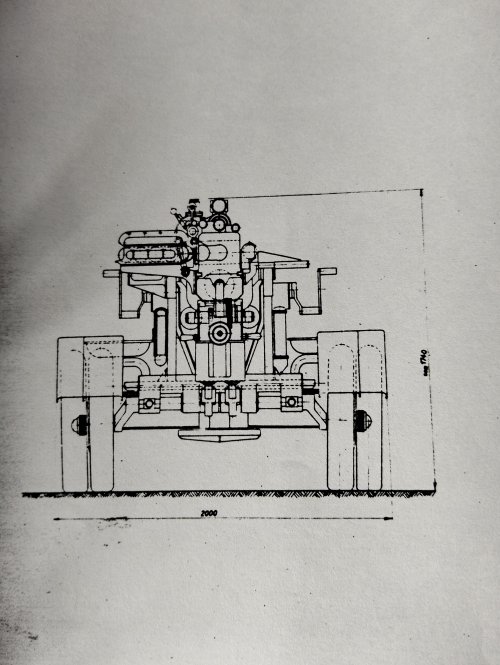
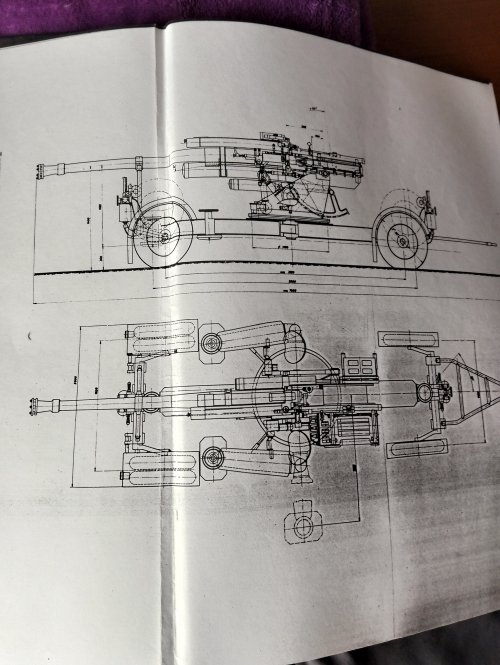
24cm Super Heavy Flak
(Überschwere Flak 24cm Flak - Luftwaffe - Kriegsmarine - Krupp, Rheinmetall & Skoda)
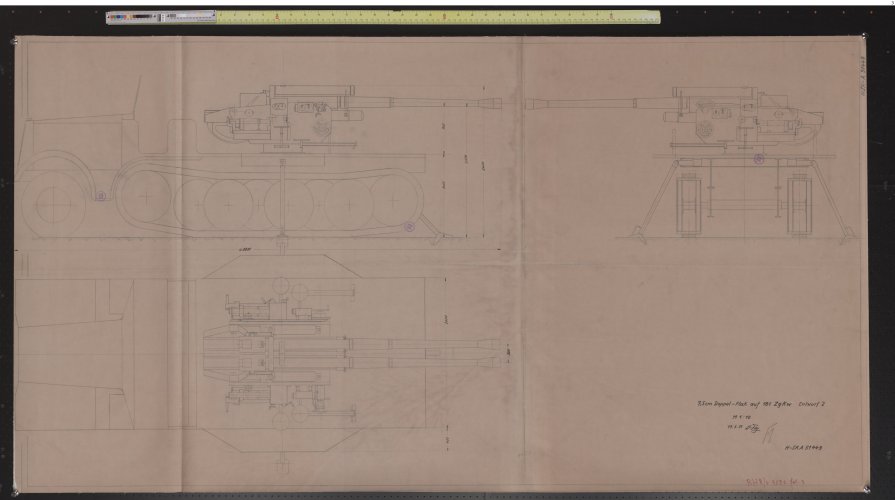
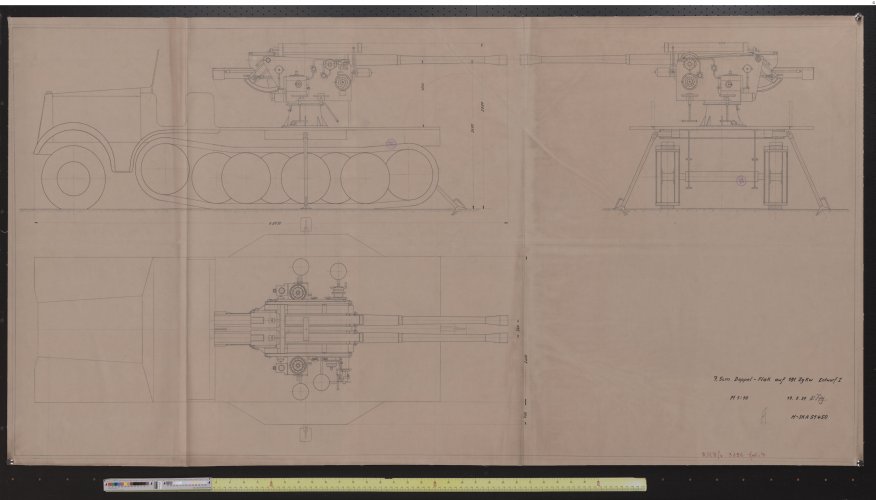
The 24cm Flak was developed in cooperation with the Kriegsmarine. Development contracts were awarded to Krupp and Rheinmetall, and—at the request of the Waffenkommission —to Škoda as well.
These guns were primarily intended for the defense of high-priority targets such as Hamburg, Berlin, or the Ruhr region. The Kriegsmarine was to deploy these guns on land rather than on ships.
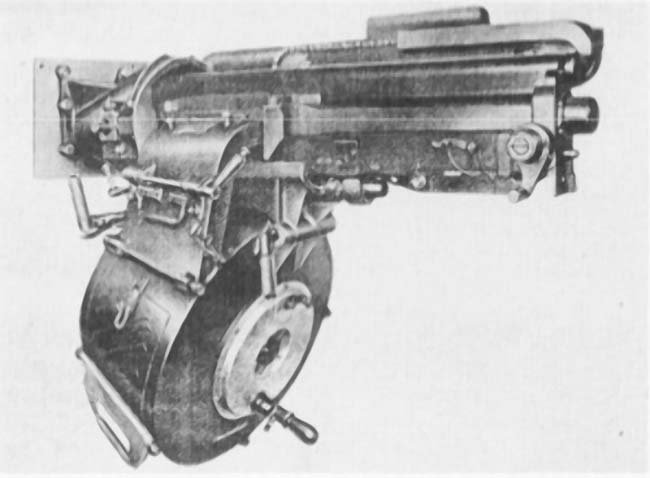
The 24 cm Flak was to be developed primarily for use with remote-controlled, rocket-assisted projectiles. The rate of fire was at least 8 rounds per minute, or 16 rounds per minute for the twin version. Since the projectile was required to weigh at least 200 kg, an automatic loading system was necessary. Great importance was attached to the remote control of the projectiles. Remote control of the projectiles was considered difficult (due to the stresses to which internal components were subjected during firing) it was not deemed impossible.
The lifespan of the gun barrels will be approximately 250 rounds. In a report dated November 13, 1942, Rheinmetall also considered integrating a water-cooling system for such high-performance guns.
At most, 24 guns could be produced per year—though only if a corresponding number of guns fewer were manufactured for the Army and Navy.
Generalfeldmarschall Milch questioned whether it would be better to focus exclusively on anti-aircraft missile projects from the outset and skip the development of the super-heavy anti-aircraft gun entirely. The Führer expressed reservations regarding the development of a super-heavy anti-aircraft gun—albeit under the assumption that the concept was purely ballistic, without remote control. Speer also had concerns regarding the manufacturing aspects.
September 18, 1942, the topic of
engaging enemy aircraft at high altitudes was discussed. The 24cm anti-aircraft gun was also mentioned in this context; regarding remote control, L FLAK is to contact Dr. Brey.
November 9, 1942, it was decided that expert reports from the companies, the Forschungsführung, and the Waffenkommission regarding the 24cm anti-aircraft gun should be obtained.
On December 7, 1942, the reports from Krupp, Rheinmetall, the Forschungsführung, and the Waffenkommission regarding the super-heavy anti-aircraft gun were available.
Due to a shortage of personnel, it was anticipated on January 19, 1943, that the first prototype units of the 24cm anti-aircraft gun could not be completed until January 1948, rather than October 1945.
On April 5, 1943, it was decided to defer the further development of the 24cm anti-aircraft gun in favor of anti-aircraft missiles. Should difficulties arise in the development of the anti-aircraft missiles, the development of the 24cm anti-aircraft gun is to be continued to the extent possible.
On September 30, 1943, the decision was made to halt the development of the 24 cm anti-aircraft gun.
Source:
"Berichte über die Flak-Entwicklungsbesprechungen"
Bundesarchiv
Signatur: RL 3/57
Page: 161, 251, 301, 317 - 319, 339, 367
Direct Link:
https://invenio.bundesarchiv.de/invenio/direktlink/3a122d0a-a629-4b60-9210-ee962aca7259/
Further reading:
State of Development and Development Plans for Anti-Aircraft Artillery
June 22, 1942
Source: Bundesarchiv
Signatur: RL 16-4/11; Page: 8 & 26
Direct Link:
https://invenio.bundesarchiv.de/invenio/direktlink/d1acd55d-606d-498a-a6e3-847d800f5c5f/
Flak-Entwicklungsbesprechung:
Anti-aircraft artillery development meeting on December 7, 1942
Discussion among Milch, von Renz, Löhr, von Axthelm, Steinkopf-Hartig, and Polte regarding the operational potential and development of the super-heavy 24cm anti-aircraft gun.
Source:
Bundesarchiv
Signatur: RL 3/1362; Page: 65 - 121
Direct Link:
https://invenio.bundesarchiv.de/invenio/direktlink/3ee21637-cfd3-4b74-8cdd-8ba4a6500cba/
24cm Rocket-assisted projectile
A rocket-assisted projectile was envisaged for the 24 cm gun. The rocket motor was designed to ignite 1,000 meters after leaving the gun barrel and to maintain a speed of 750 m/s until reaching the target. In addition, the use of a proximity fuze or a self-homing warhead was considered.
Source:
Bundesarchiv
Signatur: ZA 3/836; Page 454
Direct Link:
https://invenio.bundesarchiv.de/invenio/direktlink/f9c815d3-e4b2-4640-bda3-ccf84dff8919/