
You are using an out of date browser. It may not display this or other websites correctly.
You should upgrade or use an alternative browser.
You should upgrade or use an alternative browser.
General Dynamics Convair Models 200 / 201 / 218 Sea Control Ship fighters
- Thread starter overscan (PaulMM)
- Start date

- Joined
- 3 June 2006
- Messages
- 3,538
- Reaction score
- 6,212
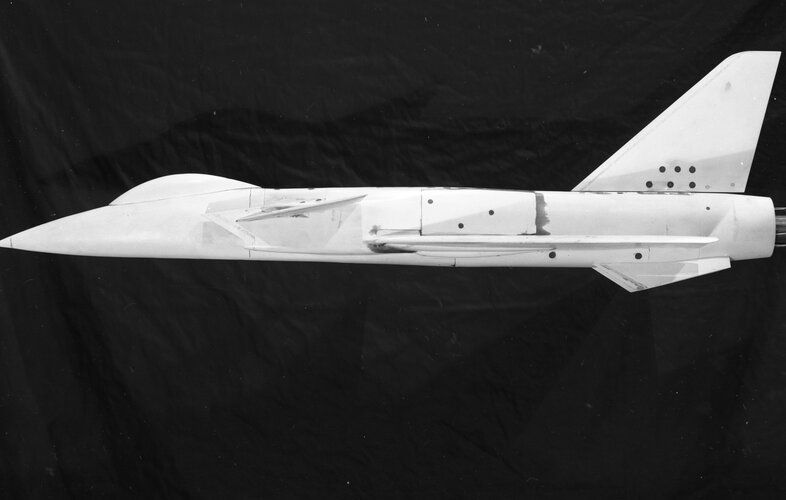
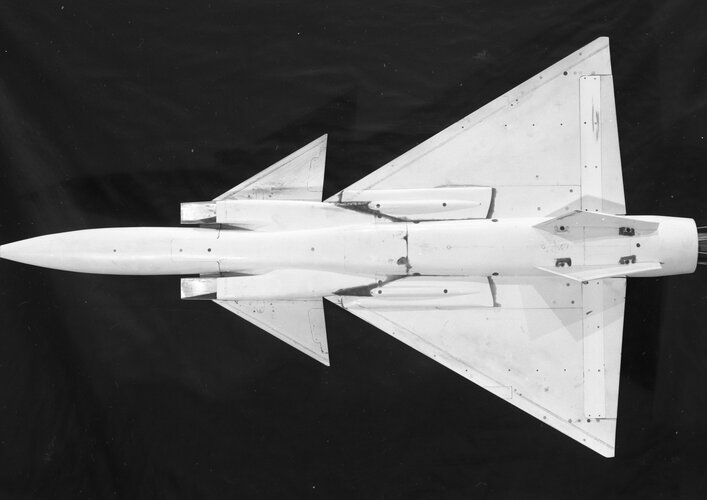
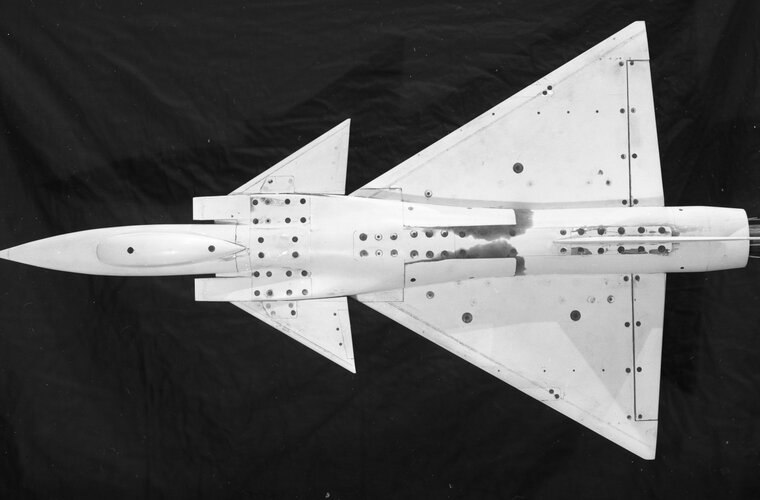
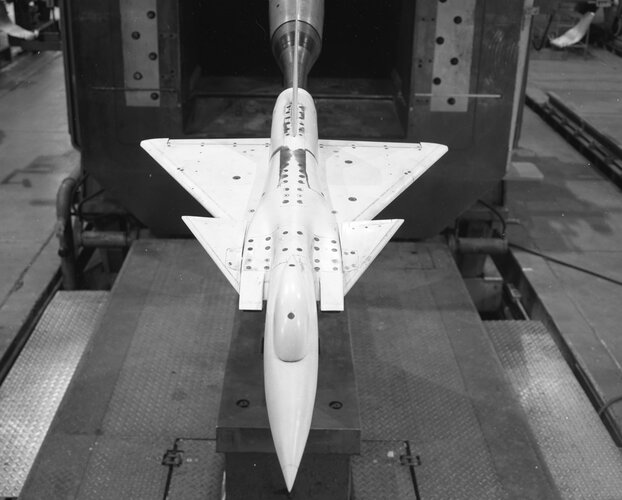
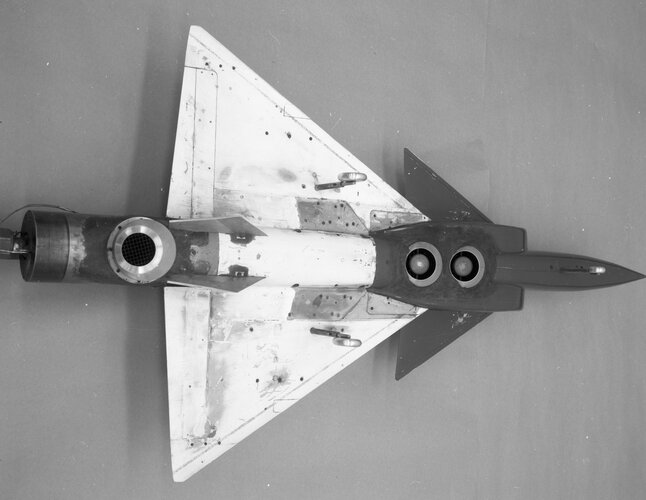
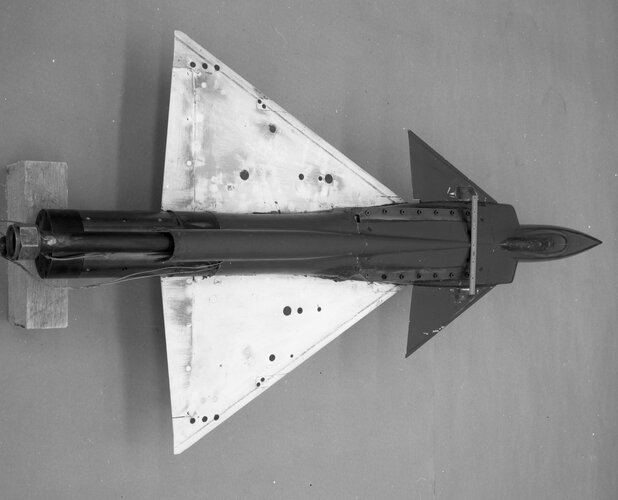
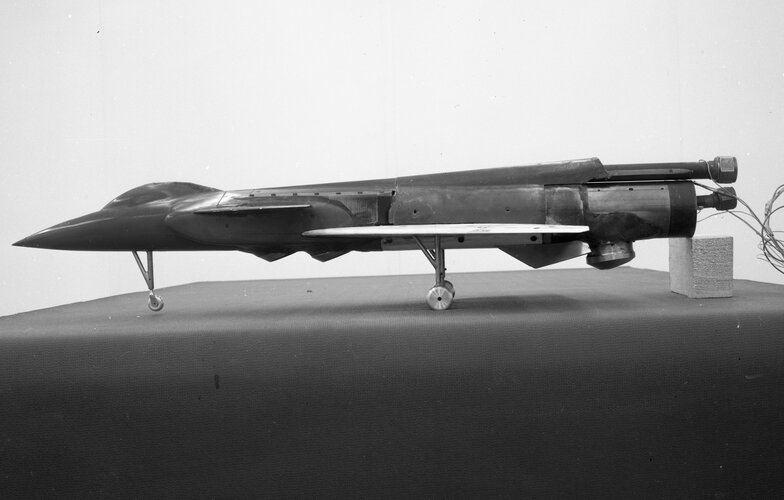
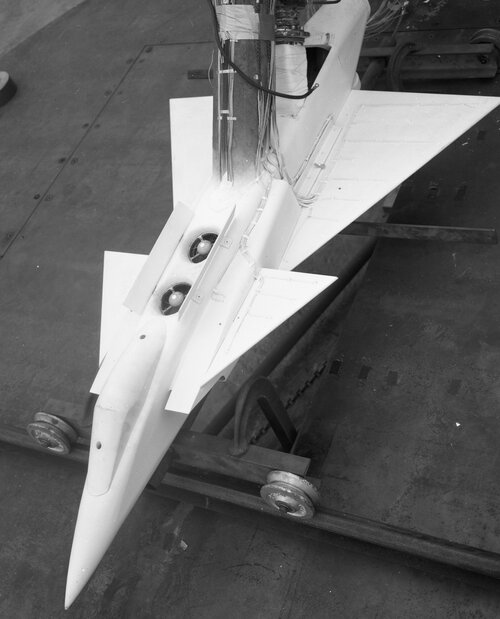
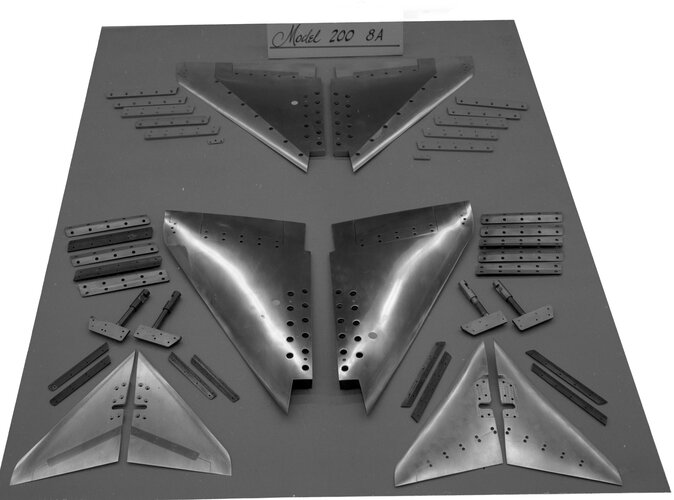
Some pictures showing a Convair Model 200 wind tunnel or an engineering modell were posted recently at SDASM Flickr Archives. IMHO here the three most interesting pictures:
View: https://flic.kr/p/2p3Qm51
View: https://flic.kr/p/2p3Mwq8
View: https://flic.kr/p/2p2od2B
View: https://flic.kr/p/2p3Qm51
View: https://flic.kr/p/2p3Mwq8
View: https://flic.kr/p/2p2od2B

- Joined
- 29 January 2008
- Messages
- 975
- Reaction score
- 2,505
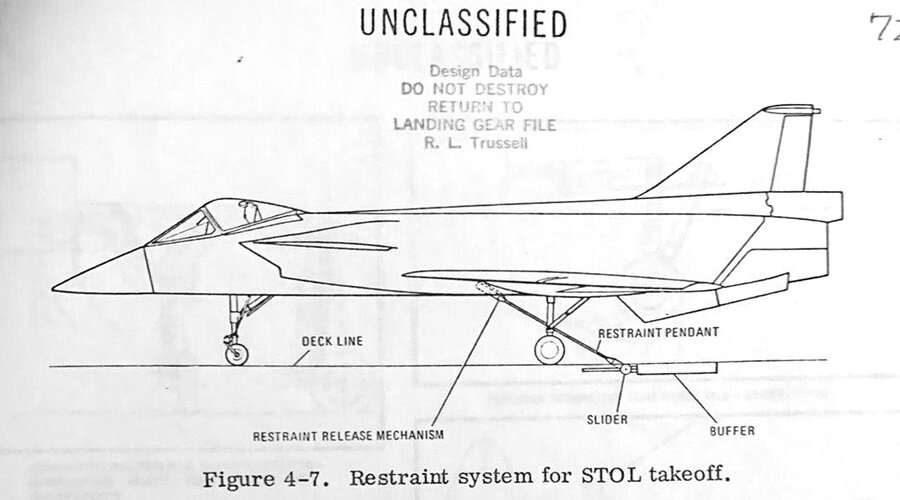
Some things I noticed: the model 200 had a significantly higher thrust at takeoff (~37.5 klbs) than it's maximum thrust in level flight (~28.1 klbs). The same is true for for many VTOL/STOVL designs like including the VFW VAK 191, Mirage III-V, Do 31, Yak-38 and Yak-141. Meanwhile the F-35B and Harrier both have the same max thrust at takeoff and level flight (Harrier because they don't have an AB, F-35 because its fan happens to add about the same thrust as its AB). I am not sure if/how much that helps in STO, but it does mean CTO and VTOL are a lot nearer. (edit1: I should say "installed thrust", obviously actual thrust differs depending on flight conditions) (edit4: I am fucking stupid, the Harrier had the water injection thingy which increased thrust by 50% for 90 seconds)
Additionally I don't quite buy the the "the lift engines are dead weight, therefore the F-35 lift fan is better" argument. RR/Allision were designing lift engines with a 20:1 TW back in the 70s. The lift fan system also weights a shitton ("dead weight"), very possibly more than lift engines would. The lift fan probably has other advantages, e.g. better fuel economy in VTOL or better lifecycle cost. edit3: D'oh, the lift system has also a cooler exhaust and doesn't melt carrier decks as easily.
And lastly, the F135 has a very low bypass ratio, which means that if you think about the whole engine system, the F-35B goes from a "high" bypass design in VTOL to a low bypass design in level flight. Meanwhile the Model 200 would go from low bypass at VTOL to "high" bypass at level flight. Not sure that meany anything though, never mind what it means.
Edit2: on another note, the 30klbs MTOW figure is obvious bullshit imho unless you are in a high and hot scenario. The harrier does that, with a significantly lower thrust and as a smaller plane.
Additionally I don't quite buy the the "the lift engines are dead weight, therefore the F-35 lift fan is better" argument. RR/Allision were designing lift engines with a 20:1 TW back in the 70s. The lift fan system also weights a shitton ("dead weight"), very possibly more than lift engines would. The lift fan probably has other advantages, e.g. better fuel economy in VTOL or better lifecycle cost. edit3: D'oh, the lift system has also a cooler exhaust and doesn't melt carrier decks as easily.
And lastly, the F135 has a very low bypass ratio, which means that if you think about the whole engine system, the F-35B goes from a "high" bypass design in VTOL to a low bypass design in level flight. Meanwhile the Model 200 would go from low bypass at VTOL to "high" bypass at level flight. Not sure that meany anything though, never mind what it means.
Edit2: on another note, the 30klbs MTOW figure is obvious bullshit imho unless you are in a high and hot scenario. The harrier does that, with a significantly lower thrust and as a smaller plane.
Last edited:

XP67_Moonbat
ACCESS: Top Secret
- Joined
- 16 January 2008
- Messages
- 2,322
- Reaction score
- 733
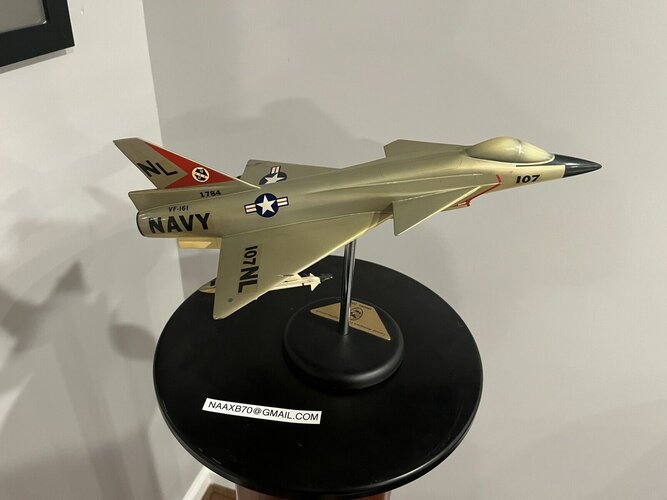
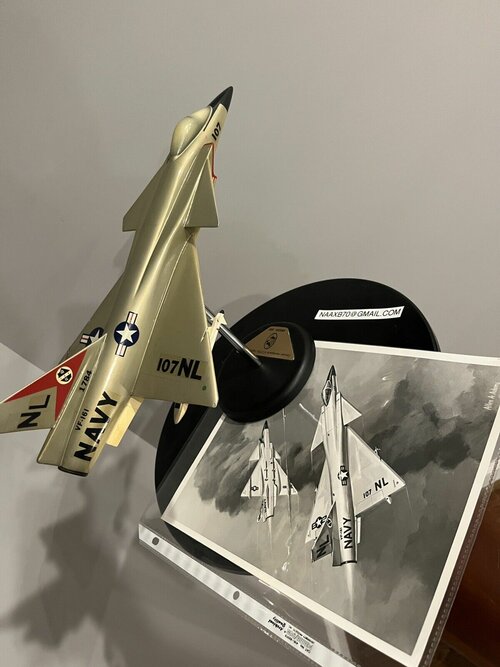
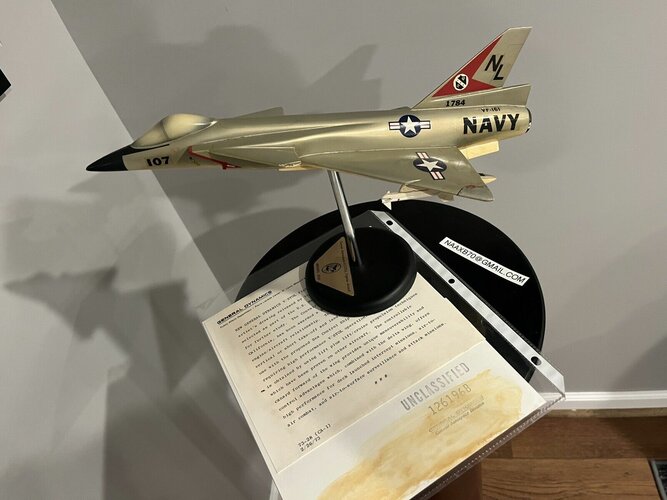
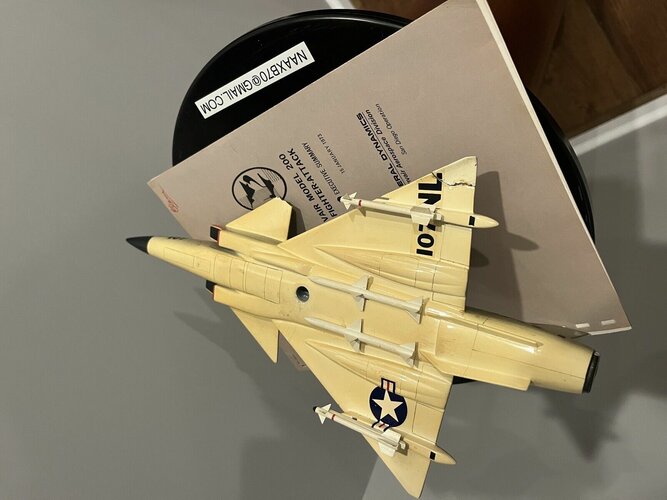
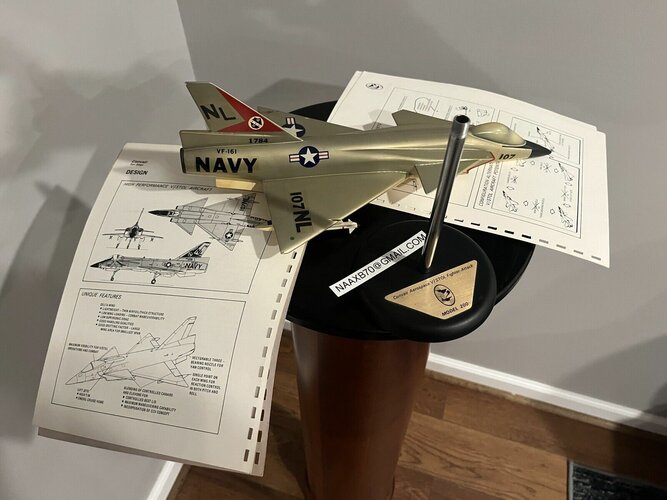
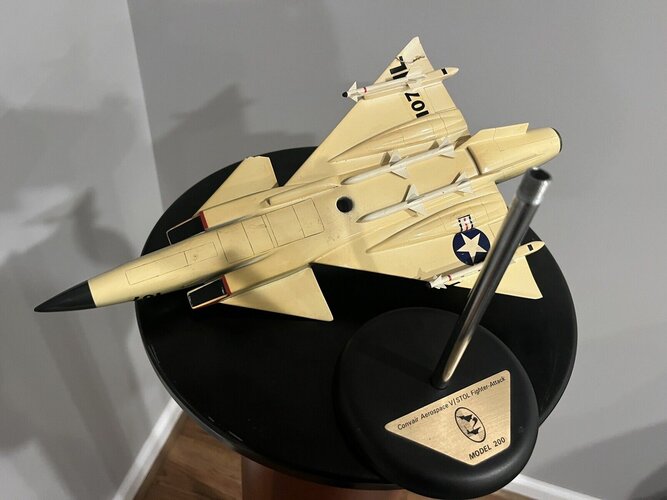
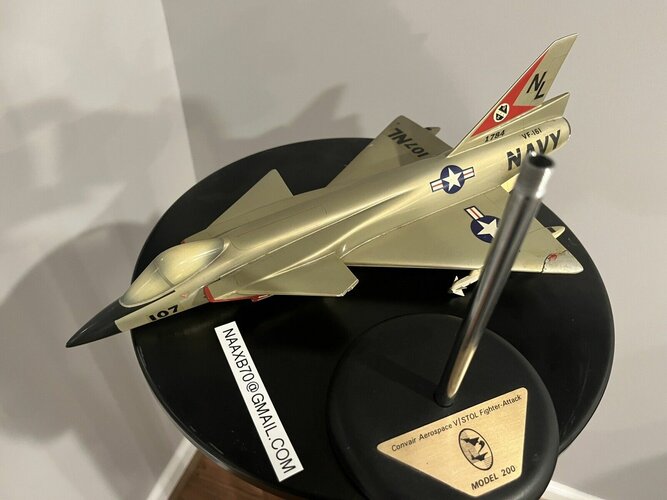
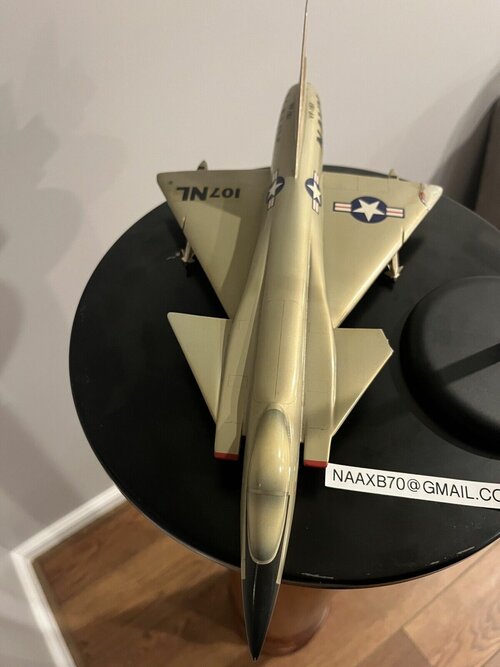
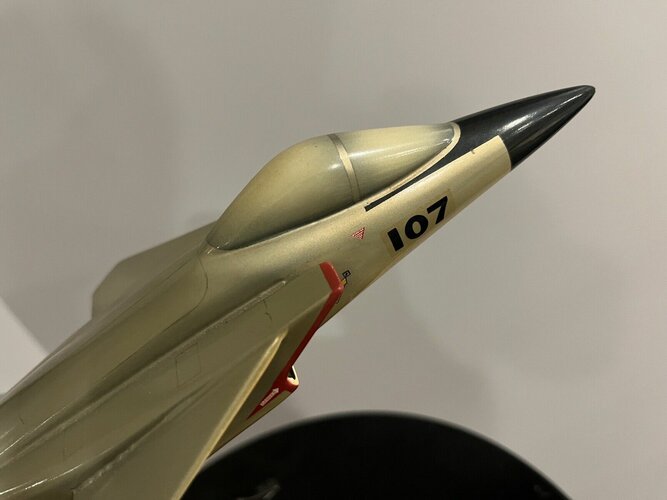
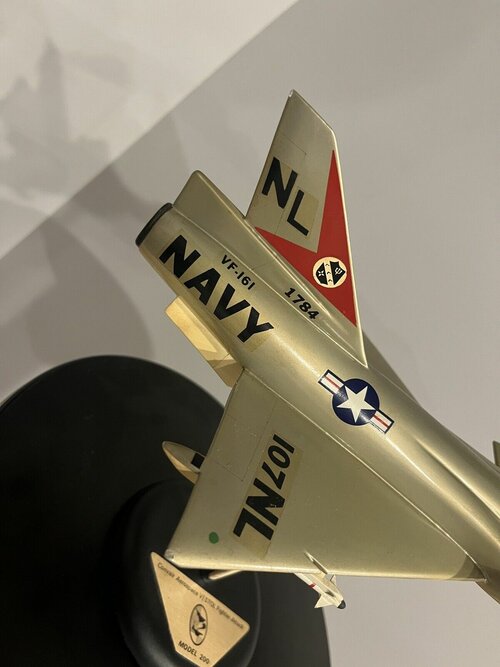
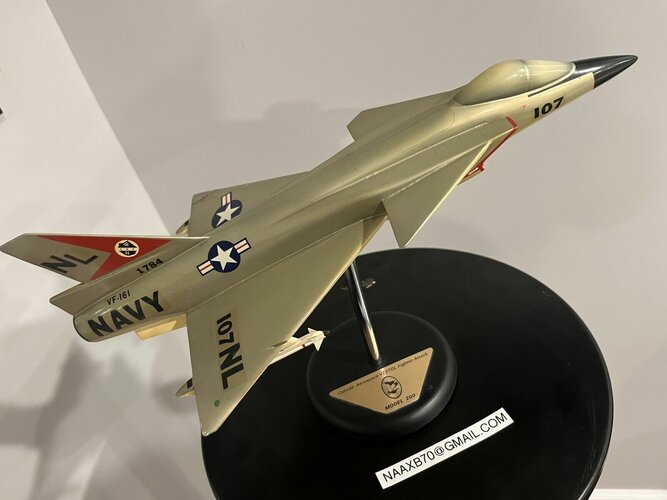
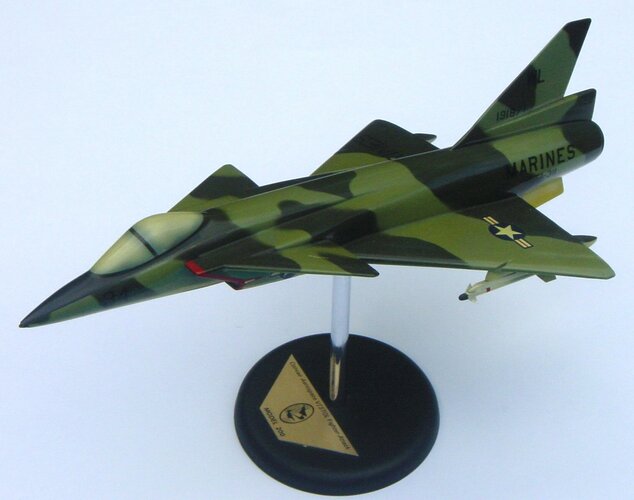
If you have some deep pockets, this is currently selling on Ebay. Gotta admit though, it's a definite catch. Not only do you get a rare model, you get some rare docs as well. It's a win-win :
Convair V/STOL Model 200 Prototype Factory In-house Rare Like Topping Model
Item description from the seller:
As found, pictures to determine condition. To include rare relevant unclassified documents dated 26 Feb, 1973 and original Executive Summary. Free shipping and discounts may apply. Making room for other models. The model is 14” long.
https://www.ebay.com/itm/2762082162...ooltYYmSYm+INmFdF/u8bjhA==|tkp:Bk9SR-jL0aCMYw
Convair V/STOL Model 200 Prototype Factory In-house Rare Like Topping Model
Item description from the seller:
As found, pictures to determine condition. To include rare relevant unclassified documents dated 26 Feb, 1973 and original Executive Summary. Free shipping and discounts may apply. Making room for other models. The model is 14” long.
https://www.ebay.com/itm/2762082162...ooltYYmSYm+INmFdF/u8bjhA==|tkp:Bk9SR-jL0aCMYw
Attachments
-
 Model200-01.jpg170 KB · Views: 308
 -
 Model200-02.jpg220.9 KB · Views: 249
 -
 Model200-03.jpg233 KB · Views: 231
 -
 Model200-04.jpg219.4 KB · Views: 225
 -
 Model200-05.jpg257.1 KB · Views: 217
 -
 Model200-06.jpg205.2 KB · Views: 197
 -
 Model200-07.jpg195.1 KB · Views: 193
 -
 Model200-08.jpg175 KB · Views: 174
 -
 Model200-09.jpg167.5 KB · Views: 163
 -
 Model200-10.jpg185.1 KB · Views: 160
 -
 Model200-11.jpg181.4 KB · Views: 308
Last edited by a moderator:

- Joined
- 27 December 2005
- Messages
- 19,225
- Reaction score
- 35,635
Nice. I took the liberty of adding better quality images to your post.
Its a lovely model and some interesting documents, hope it finds a good home with a forum member
Its a lovely model and some interesting documents, hope it finds a good home with a forum member
XP67_Moonbat
ACCESS: Top Secret
- Joined
- 16 January 2008
- Messages
- 2,322
- Reaction score
- 733
Thanks! Yeah, actually did save the pics from eBay. Unfortunately they didn't save as jpg's and were unable to be uploaded here. So I went back and took screenshots which I then uploaded with my post.Nice. I took the liberty of adding better quality images to your post.
Its a lovely model and some interesting documents, hope it finds a good home with a forum member
Thank you, though.
- Joined
- 27 December 2005
- Messages
- 19,225
- Reaction score
- 35,635
An hour to go and 'just' $300 US. Not too bad.
- Joined
- 27 December 2005
- Messages
- 19,225
- Reaction score
- 35,635
US $739.99. Sold.

- Joined
- 27 December 2005
- Messages
- 19,225
- Reaction score
- 35,635
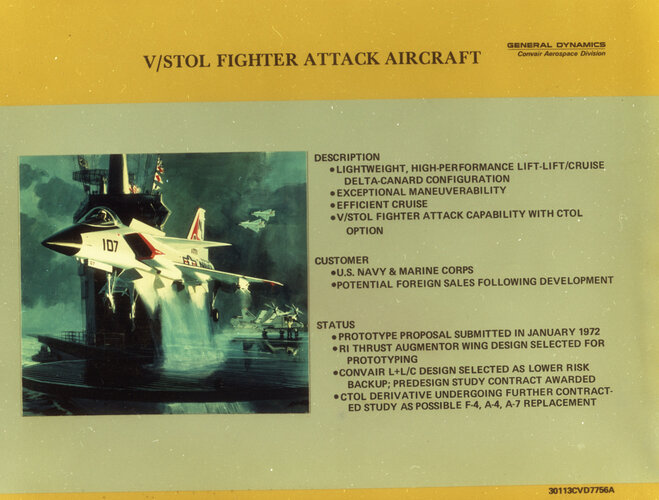
View: https://www.flickr.com/photos/sdasmarchives/53718768649/in/photostream/
View: https://www.flickr.com/photos/sdasmarchives/53718863220/in/photostream/
View: https://www.flickr.com/photos/sdasmarchives/53718768669/in/photostream/
View: https://www.flickr.com/photos/sdasmarchives/53717523982/in/photostream/
View: https://www.flickr.com/photos/sdasmarchives/53718432486/in/photostream/
View: https://www.flickr.com/photos/sdasmarchives/53718432491/in/photostream/
View: https://www.flickr.com/photos/sdasmarchives/53717524002/in/photostream/
View: https://www.flickr.com/photos/sdasmarchives/53718432526/in/photostream/
View: https://www.flickr.com/photos/sdasmarchives/53718863275/in/photostream/
View: https://www.flickr.com/photos/sdasmarchives/53718863270/in/photostream/
https://www.flickr.com/photos/sdasmarchives/53718768739/in/photostream/
https://www.flickr.com/photos/sdasmarchives/53717524022/in/photostream/
View: https://www.flickr.com/photos/sdasmarchives/53718863220/in/photostream/
View: https://www.flickr.com/photos/sdasmarchives/53718768669/in/photostream/
View: https://www.flickr.com/photos/sdasmarchives/53717523982/in/photostream/
View: https://www.flickr.com/photos/sdasmarchives/53718432486/in/photostream/
View: https://www.flickr.com/photos/sdasmarchives/53718432491/in/photostream/
View: https://www.flickr.com/photos/sdasmarchives/53717524002/in/photostream/
View: https://www.flickr.com/photos/sdasmarchives/53718432526/in/photostream/
View: https://www.flickr.com/photos/sdasmarchives/53718863275/in/photostream/
View: https://www.flickr.com/photos/sdasmarchives/53718863270/in/photostream/
https://www.flickr.com/photos/sdasmarchives/53718768739/in/photostream/
https://www.flickr.com/photos/sdasmarchives/53717524022/in/photostream/
Attachments
-
 53717524022_cb72f07bba_o.jpg184.5 KB · Views: 173
 -
 53718768739_d708628fbd_o.jpg228.3 KB · Views: 132
 -
 53718863270_fc153dc66d_o.jpg232.5 KB · Views: 110
 -
 53718863275_13e2c1aefa_o.jpg322.1 KB · Views: 106
 -
 53718432526_8687b0d0ba_o.jpg361.2 KB · Views: 106
 -
 53717524002_9ecd487b39_o.jpg378.5 KB · Views: 113
 -
 53718432491_813475147a_o.jpg297.7 KB · Views: 110
 -
 53718432486_813475147a_o.jpg377.8 KB · Views: 115
 -
 53717523982_d61112de9a_o.jpg257.1 KB · Views: 125
 -
 53718768669_c3e2f4e5a2_o.jpg538.8 KB · Views: 124
 -
 53718863220_1e9e08affc_o.jpg503.6 KB · Views: 149
 -
 53718768649_871eddab69_o.jpg1,010.9 KB · Views: 186
apparition13
I really should change my personal text
- Joined
- 27 January 2017
- Messages
- 758
- Reaction score
- 1,396
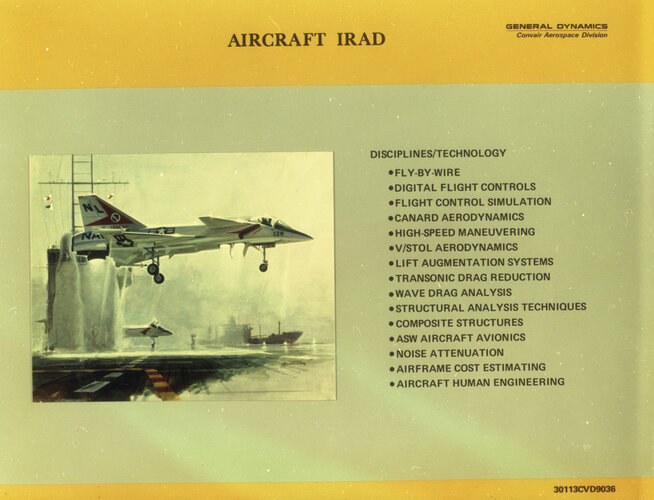
ASW aircraft avionics? What does that mean?
- Joined
- 27 December 2005
- Messages
- 19,225
- Reaction score
- 35,635
This is a slide on general aircraft IRAD (Internal Research and Development) activities ongoing at Convair (San Diego). Convair bid on the VSX (S-3 Viking) program.ASW aircraft avionics? What does that mean?
apparition13
I really should change my personal text
- Joined
- 27 January 2017
- Messages
- 758
- Reaction score
- 1,396
Weird. The slide makes it look like it's all related to the 200 program.This is a slide on general aircraft IRAD (Internal Research and Development) activities ongoing at Convair (San Diego). Convair bid on the VSX (S-3 Viking) program.
- Joined
- 3 June 2006
- Messages
- 3,538
- Reaction score
- 6,212
New pictures showing the General Dynamics Convair Models 200, 201 and 218 Sea Control Ship fighters were uploaded to SDASM Flickr Archives today. Some of these drawings by the illustrator Roy Gjertson might have already posted in topic before.New pictures of the General Dynamics Convair Models 200, 201 and 218 Sea Control Ship fighters at SDASM Archives. B)
[...]
View: https://flic.kr/p/2qqDZxk
View: https://flic.kr/p/2qqDyN9
View: https://flic.kr/p/2qqDZwi
View: https://flic.kr/p/2qqCfz5
View: https://flic.kr/p/2qqDZxR
View: https://flic.kr/p/2qqEA4L

- Joined
- 25 June 2009
- Messages
- 15,515
- Reaction score
- 9,424
This image from SDASM is described as showing the Model 200, but I have my doubts...

The design looks a little different, and the date (7 November 1963) seems a little early for the Sea Control Ship program. Any ideas?
View: https://www.flickr.com/photos/sdasmarchives/53718641178
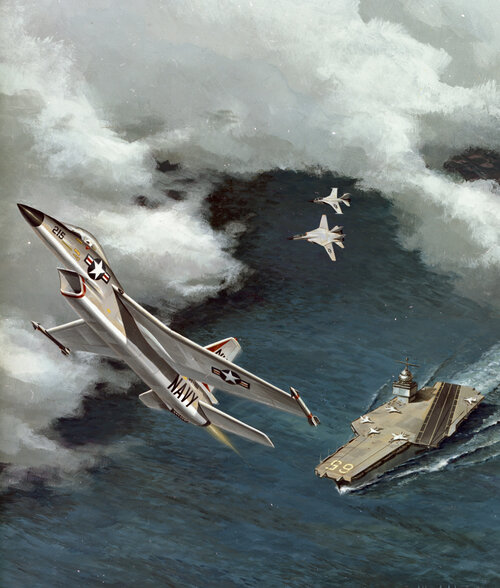
The design looks a little different, and the date (7 November 1963) seems a little early for the Sea Control Ship program. Any ideas?
View: https://www.flickr.com/photos/sdasmarchives/53718641178
Last edited by a moderator:
- Joined
- 27 December 2005
- Messages
- 19,225
- Reaction score
- 35,635
We discussed this in May 2024.
https://www.secretprojects.co.uk/threads/convair-san-diego-model-23-naval-fighter-1970-1973.30621/
Its a lightweight fighter study from early seventies, ancestral to Model 200 studies as per this diagram.
https://www.secretprojects.co.uk/threads/convair-san-diego-model-23-naval-fighter-1970-1973.30621/
Its a lightweight fighter study from early seventies, ancestral to Model 200 studies as per this diagram.
Last edited:
Darthtabby
ACCESS: Restricted
- Joined
- 9 September 2021
- Messages
- 34
- Reaction score
- 71
Does anyone have any information on the Model 218 specifically? I thought it might provide some insights into the direction the Model 200/201 might have evolved into. Though according to Tony Buttler's American Secret Projects the Navy was ordered to choose one of the Air Force lightweight fighters for its lightweight fighter requirement in August 1974 while the October 1974 Aviation Progress article clipping posted by Paul indicated the Model 200A was the subject of ongoing design studies at the time so the 200 arguably outlived the 218.
The part I find really interesting is that the angle of the canards on that model suggest they were supposed to be all moving whereas a lot of illustrations just have flaps on the canards.
American Secret Projects lists a VTO gross weight of 25,000lbs and a CTO gross weight of 31,090lbs for the Model 200A (as an aside while the data chart does not list fuel capacity the write up earlier in the chapter credits the Model 200A with an internal fuel load of 5875lbs). It might be worth noting that the aircraft was intended to be able to land with one of the lift engines out.
Exhaust on deck is still an issue with the F-35B if the rear nozzle is aiming down, but the lift fan presumably helps a lot with preventing the engine from reingesting hot gases.
Edit: Realized the VTOL data page in American Secret Projects lists gross weight which is not necessarily the same thing as MTOW. I do wonder if the book used the terms interchangeably for some of the aircraft though the figures for the AV-8C seem light for that at 20,450lbs VTO and 24,250lbs CTO. Though given that the max speed for the AV-8C is listed as Mach 1.2 at altitude it was obviously differed somewhat from the subsonic AV-8B that was eventually built instead.
Some pictures showing a Convair Model 200 wind tunnel or an engineering modell were posted recently at SDASM Flickr Archives. IMHO here the three most interesting pictures:
View: https://flic.kr/p/2p3Qm51
View: https://flic.kr/p/2p3Mwq8
View: https://flic.kr/p/2p2od2B
The part I find really interesting is that the angle of the canards on that model suggest they were supposed to be all moving whereas a lot of illustrations just have flaps on the canards.
Some things I noticed: the model 200 had a significantly higher thrust at takeoff (~37.5 klbs) than it's maximum thrust in level flight (~28.1 klbs). The same is true for for many VTOL/STOVL designs like including the VFW VAK 191, Mirage III-V, Do 31, Yak-38 and Yak-141. Meanwhile the F-35B and Harrier both have the same max thrust at takeoff and level flight (Harrier because they don't have an AB, F-35 because its fan happens to add about the same thrust as its AB). I am not sure if/how much that helps in STO, but it does mean CTO and VTOL are a lot nearer. (edit1: I should say "installed thrust", obviously actual thrust differs depending on flight conditions) (edit4: I am fucking stupid, the Harrier had the water injection thingy which increased thrust by 50% for 90 seconds)
Additionally I don't quite buy the the "the lift engines are dead weight, therefore the F-35 lift fan is better" argument. RR/Allision were designing lift engines with a 20:1 TW back in the 70s. The lift fan system also weights a shitton ("dead weight"), very possibly more than lift engines would. The lift fan probably has other advantages, e.g. better fuel economy in VTOL or better lifecycle cost. edit3: D'oh, the lift system has also a cooler exhaust and doesn't melt carrier decks as easily.
And lastly, the F135 has a very low bypass ratio, which means that if you think about the whole engine system, the F-35B goes from a "high" bypass design in VTOL to a low bypass design in level flight. Meanwhile the Model 200 would go from low bypass at VTOL to "high" bypass at level flight. Not sure that meany anything though, never mind what it means.
Edit2: on another note, the 30klbs MTOW figure is obvious bullshit imho unless you are in a high and hot scenario. The harrier does that, with a significantly lower thrust and as a smaller plane.
American Secret Projects lists a VTO gross weight of 25,000lbs and a CTO gross weight of 31,090lbs for the Model 200A (as an aside while the data chart does not list fuel capacity the write up earlier in the chapter credits the Model 200A with an internal fuel load of 5875lbs). It might be worth noting that the aircraft was intended to be able to land with one of the lift engines out.
Exhaust on deck is still an issue with the F-35B if the rear nozzle is aiming down, but the lift fan presumably helps a lot with preventing the engine from reingesting hot gases.
Edit: Realized the VTOL data page in American Secret Projects lists gross weight which is not necessarily the same thing as MTOW. I do wonder if the book used the terms interchangeably for some of the aircraft though the figures for the AV-8C seem light for that at 20,450lbs VTO and 24,250lbs CTO. Though given that the max speed for the AV-8C is listed as Mach 1.2 at altitude it was obviously differed somewhat from the subsonic AV-8B that was eventually built instead.
Last edited:
Note that takeoff weight isn't necessarily related to bringback weight at all. It's pretty common for carrier aircraft to not be able to land with as much weight as they launch with.[...}
American Secret Projects lists a VTO gross weight of 25,000lbs and a CTO gross weight of 31,090lbs for the Model 200A (as an aside while the data chart does not list fuel capacity the write up earlier in the chapter credits the Model 200A with an internal fuel load of 5875lbs). It might be worth noting that the aircraft was intended to be able to land with one of the lift engines out.
[...]
Edit: Realized the VTOL data page in American Secret Projects lists gross weight which is not necessarily the same thing as MTOW. I do wonder if the book used the terms interchangeably for some of the aircraft though the figures for the AV-8C seem light for that at 20,450lbs VTO and 24,250lbs CTO. Though given that the max speed for the AV-8C is listed as Mach 1.2 at altitude it was obviously differed somewhat from the subsonic AV-8B that was eventually built instead.
And yeah, 31klbs gross weight makes *a lot* more sense than CTO MTOW.

Grey Havoc
ACCESS: USAP
- Joined
- 9 October 2009
- Messages
- 24,500
- Reaction score
- 18,168
Greetings everyone, I discovered the Sea Control Ship concept by the company Rohr Marine Inc. in the SDASM Flickr Archives yesterday. Please take note of the Convair Model 200 aircraft stationed onboard.
View: https://flic.kr/p/2rHrHaQ
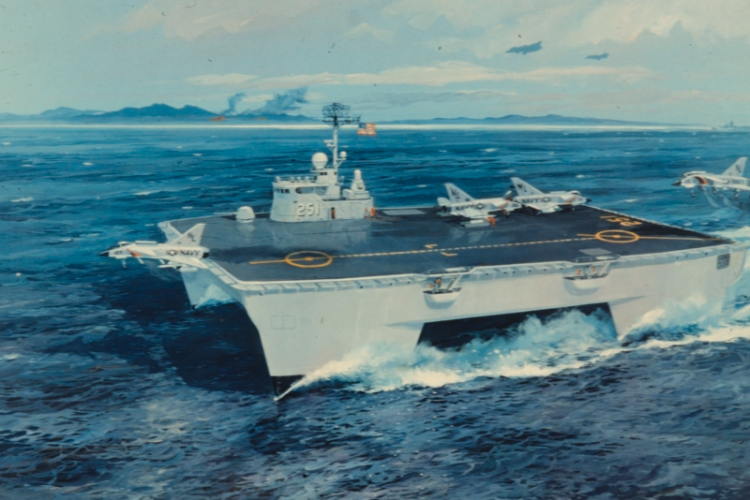
Similar threads
-
 REQUIREMENT: US Navy VFA - V/STOL Fighters for Sea Control Ships
- Started by overscan (PaulMM)
- Replies: 5
-
The Convair Model 200 / 201 /218 TL
- Started by Archibald
- Replies: 13
-
VFAX (1974) / NACF Projects (Pre F/A-18 concepts)
- Started by overscan (PaulMM)
- Replies: 56
-
VSS - VSTOL Support Ship - exotic air group
- Started by Archibald
- Replies: 112
-
 General Dynamics (Convair) ASW V/STOL seaplane
- Started by hesham
- Replies: 4