TorpedoJ
ACCESS: Secret
- Joined
- 11 October 2023
- Messages
- 433
- Reaction score
- 865
AhemYou mean because nobody is smart enough to insist on LO shaping the airframes.
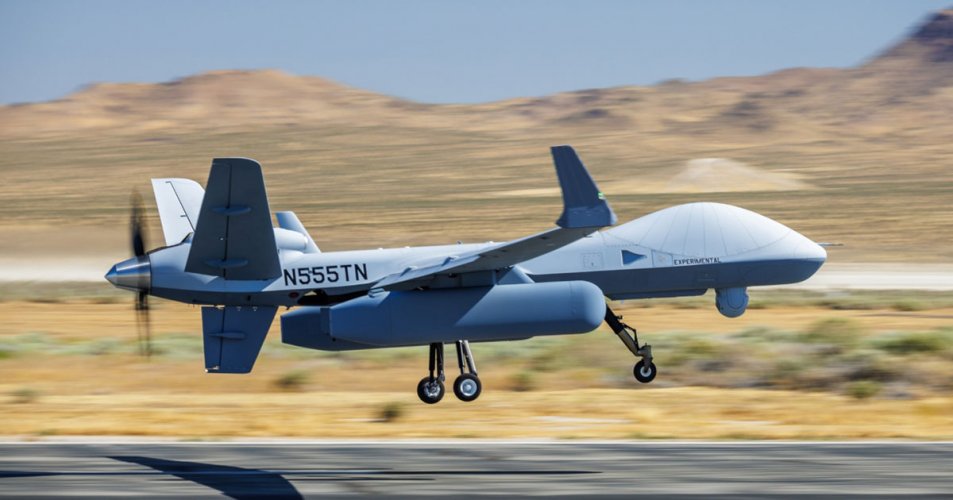
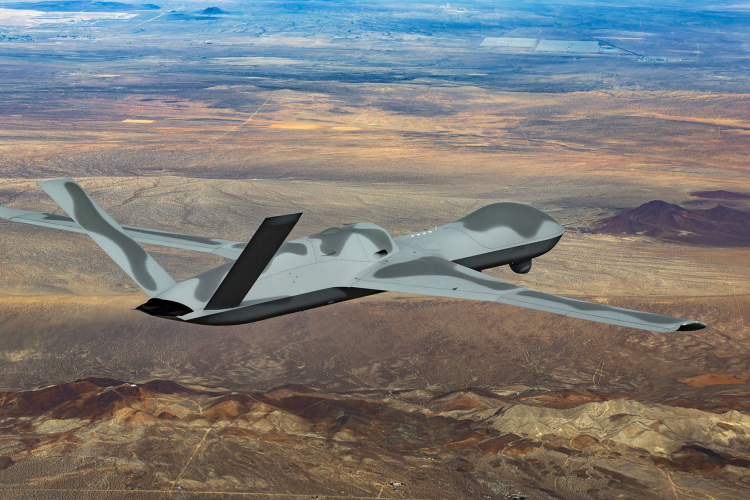
Imagine a Reaper II that is the shape of the TACIT BLUE.

AhemYou mean because nobody is smart enough to insist on LO shaping the airframes.
Imagine a Reaper II that is the shape of the TACIT BLUE.
Even stealthier than that. At the very least, with a faceted cover for the EOTS eyeball like the F-35 has.
They did. Though, to be fair, this is largely a signal of the utter need for a proper replacement.Haven't Reapers became already de-facto attritables?!
Similarly they are definitively checking the boxes of endurance, lifespan and open mission systems...

How many decades of prop driven craft stealth tech were just not pursued in favor of a "relatively expensive" simple plane which is in turn detected & downed. No wonder higher losses.
Losses be losses, but key value is I guess sensor/armed overwatch time over hostile land.How many decades of prop driven craft stealth tech were just not pursued in favor of a "relatively expensive" simple plane which is in turn detected & downed. No wonder higher losses.

MALE just describes endurance and altitude. The Reaper and many of the similar UAVs (Orion, Heron, Forepost etc.) have proven to be entirely unsuitable for modern battlefields, even less intensive ones like Ukraine or Iran.Losses be losses, but key value is I guess sensor/armed overwatch time over hostile land.
Basically, MALE is not just key enabler, it's the closest, enabling analog an air force can have to boots on the ground.
I don't think that's the case. They suffer heavy losses, sure(though heavy usually means ~even exchange with AD, who sees opponent first - wins), but they enable control. No drones, no control.MALE just describes endurance and altitude. The Reaper and many of the similar UAVs (Orion, Heron, Forepost etc.) have proven to be entirely unsuitable for modern battlefields, even less intensive ones like Ukraine or Iran.
They really don't enable control, they enable real-time reconaissance and give you the added capability of engaging targets of opportunity. I don't know what leads you to that conclusion, but a lowly Reaper isn't the eye of Sauron, it's a set of fairly capable optical sensors mounted to a very large, very fragile, yet somehow still rather expensive airframe.I don't think that's the case. They suffer heavy losses, sure(though heavy usually means ~even exchange with AD, who sees opponent first - wins), but they enable control. No drones, no control.
US/Israel could compete over control over Iran as long as they had MALEs to do so.
Ukraine mostly proves that a force too institutionally inert to accept drones can't maintain control even when it has absolute and uncontested air dominance. It just doesn't know what to do with it.
This is definition of armed overwatch though. Infantry strong point with some arty overall does same thing.They really don't enable control, they enable real-time reconaissance and give you the added capability of engaging targets of opportunity.
But we saw that over and over. And yes, they were taking heavy casualties. But as long as they were in the air - entire countryside was suppressed.You cannot effectively establish control through such UAVs when they are easily engaged and caught off guard by mobile fireteams and SAM units at ranges exceeding the range of the weapons carried by the drone.
While VLO ones certainly will be better, for now persistent ISR is done as it is.But the layout popularized by the MQ-9 and MQ-1 is not suitable for modern near peer and definitely inadequate for peer conflicts.
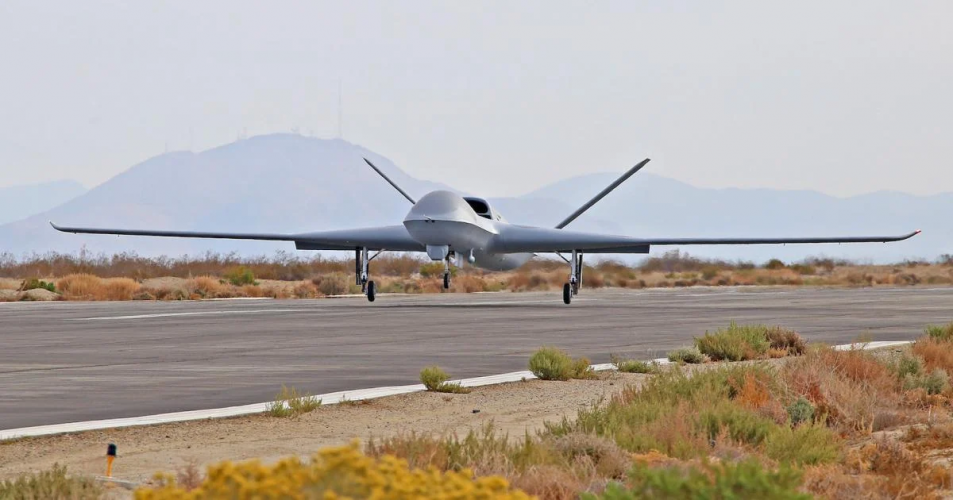
SAN DIEGO – 21 May 2026 – General Atomics Aeronautical Systems, Inc. (GA-ASI) flew its MQ-9B Remotely Piloted Aircraft for the first time with Airborne Early Warning (AEW) pods. The much-anticipated AEW capability is being provided through a partnership with Saab. Once the AEW sensor, named LoyalEye, is made available to MQ-9B operators and new customers, it will deliver persistent and cost-effective air surveillance capabilities in regions where it is currently unavailable.
GA-ASI conducted a validation flight of MQ-9B using AEW radar pods on May 19 from GA-ASI’s Desert Horizon flight operations facility in Southern California using a company-owned aircraft. The flight signaled the first step in a development process that is expected to take several months and culminate with a full-capability demonstration later this year.

And while the turkey shoot that has taken a toll on the Reapers has not killed any pilot or weapons operator, losing such a number of fairly expensive assets is still not acceptable.
Nope, it's actually per bird. System(2 planes, 2 control stations) is way over that.You do know that Reapers are only about 6-10mil per bird, right?
The 30-50mil price quoted is for an entire system of 4 birds, the control stations, and a satcom link.
Even if that was the case (I'm aware of differences between cost per system and cost per airframe, similar to how a SAM system consists of multiple components not only the launcher and it's missiles).You do know that Reapers are only about 6-10mil per bird, right?
The 30-50mil price quoted is for an entire system of 4 birds, the control stations, and a satcom link.
The US regularly shoots missiles that cost as much as a Reaper!
When your drone is the same price as missiles, your drone is expendable.Even if that was the case (I'm aware of differences between cost per system and cost per airframe, similar to how a SAM system consists of multiple components not only the launcher and it's missiles).
For such a drone that is not acceptable. Losing several millions for impact repeatedly is not the same as expending munitions on targets. Not to mention that unlike a missile, being destroyed is not the desired outcome for the drone, it's not accounted for in it's design, cost and procurement. It is not an expendable asset, because expendable assets are in the tens of thousands to hundreds of thousands of dollars range, not in the two figure multimillion dollar bracket. While more expensive, more sophisticated drones bring vastly higher survivability to the table in order to justify their cost and high value nature (the very opposite of expendable).
This I happen to agree with.The Reaper has no place in near peer and peer warfare,

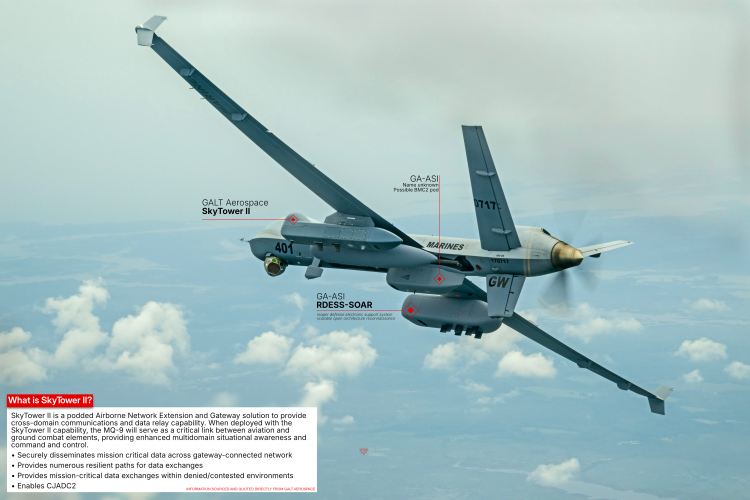
American MQ-9s fly with the RDESS-SOAR jamming pods right now. They are operational.maybe jammers too
Oh my goodness. I have to laugh. About 25 years ago a very smart man, who has since taken off on runway 27, said that once we get past UAS being the panacea to world hunger, we would find them as expensive as manned platforms and the politicians would howl at their loss as much as they have about manned platforms. We will end up putting ASE on them and making them even more expensive. I wonder if I will be alive when it becomes cheaper to put a human in the platform.

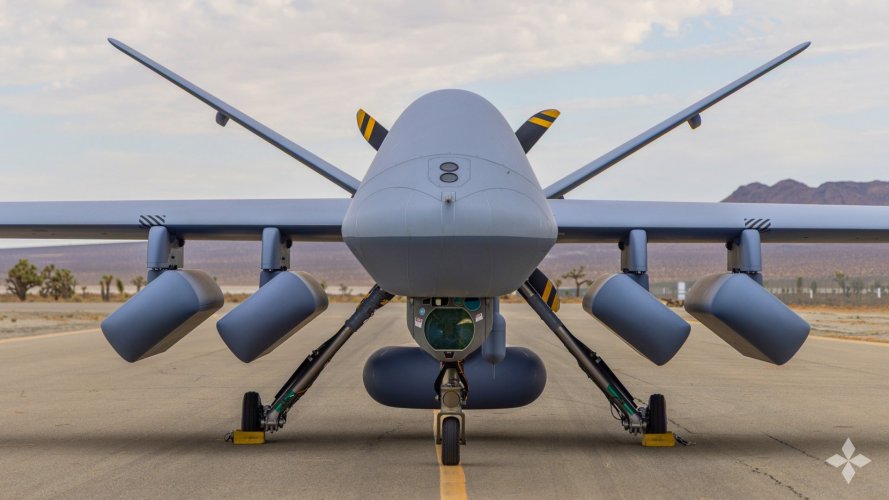
Even if the range is cut in half, that's still a 10 hour flight.GA-ASI showed off an MQ-9B with four of their sonobuoy pods with RTX's SeaVue radar pod. Pretty impressive wing loading they've been able to accomplish with this. I'm curious how badly it cuts into the range, though.
Well the iranians certainly shot something down judging by the wreckage washed up on the shore of qeshm island.

Interestingly it now appears the us forces have started using the old MQ-1s,judging by irans shootdown of one on the 31st of may,& centcoms admission that it was of theirs.
Maybe they`re running out of MQ-9s?
Twice is quite likely an underestimation. Payload forces the aircraft lower and lower, and it bites way worse than "just" drag/weight.Even if the range is cut in half, that's still a 10 hour flight.
Base MQ9B endurance is 40hrs according to GA-ASI. Presumably that's clean at high altitude, SeaGuardian with the Seaspray radar has '30+' though that might include sonobuoy pods as well.Twice is quite likely an underestimation. Payload forces the aircraft lower and lower, and it bites way worse than "just" drag/weight.
The SeaGuardian endurance number does not include the sono pods. When I worked with CBP MQ-9Bs with the SeaVue (not Sea Spray), the book included the hours similar to that without pods.Base MQ9B endurance is 40hrs according to GA-ASI. Presumably that's clean at high altitude, SeaGuardian with the Seaspray radar has '30+' though that might include sonobuoy pods as well.
Yep, likely what it was, they're being phased out anyway, probably why they're getting used. About $4m each, so Kh-101 price range.Interestingly it now appears the us forces have started using the old MQ-1s,judging by irans shootdown of one on the 31st of may,& centcoms admission that it was of theirs.
They are not being phased out.
I mean, they are completely non-stealthy and utterly undefended. No chaff/flares, no RHAW or MAWS, no jammers, and terrible situational awareness. They're not much better than the dumber end of modern target drones.“Obsolete and Outdated”: U.S. Army Axed MQ-1C Gray Eagle Drone
https://defencesecurityasia.com/en/obsolete-and-outdated-u-s-army-axed-mq-1c-gray-eagle-drone/
U.S. Army Outlines MQ-1C Replacement Plan
https://aviationweek.com/defense/aircraft-propulsion/us-army-outlines-mq-1c-replacement-plan
One of these articles is behind a $1,750 paywall and the other is a random 'asia' source I don't think anyone has ever heard of. The MQ-1C fulfills the army's light armed reconnaissance role since the cancellation of FARA. It serves dual-purpose missions within JSOC and Army military intelligence brigades. If it's being phased out, it's on the same track as the MQ-9 which is the preliminary steps to figuring out what the service might, possibly think it wants the replacement to be. Saying the drone is being used in combat theaters because it is being phased out is a misnomer and objectively incorrect.“Obsolete and Outdated”: U.S. Army Axed MQ-1C Gray Eagle Drone
https://defencesecurityasia.com/en/obsolete-and-outdated-u-s-army-axed-mq-1c-gray-eagle-drone/
U.S. Army Outlines MQ-1C Replacement Plan
https://aviationweek.com/defense/aircraft-propulsion/us-army-outlines-mq-1c-replacement-plan
As with the MQ-9, the MQ-1C carries a jamming pod.I mean, they are completely non-stealthy and utterly undefended. No chaff/flares, no RHAW or MAWS, no jammers, and terrible situational awareness. They're not much better than the dumber end of modern target drones.
Still no chaff or flares unless that's part of the pod. And it only took what, 20 years of running the things before they started using jammers.As with the MQ-9, the MQ-1C carries a jamming pod.
I know where you're coming from. I genuinely believe it is a doctrine issue rather than an ignorance issue (or I suppose the two go hand-in-hand). Look at the F-15EX; the DAF intentionally opted to not buy the MAWS for it when every other country that flies it (Qatar, for example) has had it installed.Still no chaff or flares unless that's part of the pod. And it only took what, 20 years of running the things before they started using jammers.
So it's still not a whole lot better than a freaking target drone.
A quick Google reveals dozens of sources saying the same.One of these articles is behind a $1,750 paywall and the other is a random 'asia' source I don't think anyone has ever heard of. The MQ-1C fulfills the army's light armed reconnaissance role since the cancellation of FARA. It serves dual-purpose missions within JSOC and Army military intelligence brigades. If it's being phased out, it's on the same track as the MQ-9 which is the preliminary steps to figuring out what the service might, possibly think it wants the replacement to be. Saying the drone is being used in combat theaters because it is being phased out is a misnomer and objectively incorrect.
As with the MQ-9, the MQ-1C carries a jamming pod.
Even if the range is cut in half, that's still a 10 hour flight.