
You are using an out of date browser. It may not display this or other websites correctly.
You should upgrade or use an alternative browser.
You should upgrade or use an alternative browser.
FFG(X)
Ainen
I really should change my personal text
- Joined
- 25 August 2011
- Messages
- 2,116
- Reaction score
- 3,602
Significant, no, but NSM has secondary land attack capability, and it isn't particularly bad.FFG(X) had no significant land-attack role, despite Congress pushing to add Tomahawk. It was an ASW platform first and foremost, with the G indicating some area air defense capacity, just as the FFG-7 was an ASW specialist with a small area AAW capacity.
Which btw made tomahawk push all the more harmful.
Granted, more SM-6/Tomahawk cells were useful, but last thing USN lacks is cells. What it lacks is SM-6s.
Find me cost data with a source on the new ships.
This is above the average costing (as presented by the USCG) and above the fixed cost contracts awarded for later ships. Respectively these were $670 million USD (before the 10th ship is accounted for) and $499.76 million. While I can understand that the first ship may cost this much (or indeed more when we factor in restarting a closed line), successive ships will (much the same as NSC) cost much less and likely the average cost per ship will be lower when compared to NSC due to the maturity of the designNo, that's a pretty solid cost estimate. Ship from mid production so most of the early/easy efficiencies have already been identified.
What are you talking about. You're thinking it will cost 4/5ths an Arleigh Burke.By the time they are fully equipped I expect a $2 billion price tag.
Theoretically 600 missiles can be produced per year, more than 250 missiles can be procured per year without particular strain on the system. The Tomahawk line is probably the most scalable and best maintained missile production line the US has. It has been recently announced that the US will build the line to produce 1000 missiles per year.I don't know why we want to put Tomahawks on them when we have no Tomahawks left to put in them
At the current time ship costs have significantly soared. They will need to start thinking again in five rates rather than three.
First Rate: BBG(X) and any future CCG(X) on minimal par of Zumwalt
Second Rate: DDG(X) on minimum par with Arleigh Burke Flight III+
Third Rate: FFG(X) on minimum par with Constellation class
Fourth Rate: FF(X) on minimum par with Legend class
Fifth Rate: any other vessels on par with the previous LCS or less
With that in mind some number of Tomahawk belong.
First Rate: BBG(X) and any future CCG(X) on minimal par of Zumwalt
Second Rate: DDG(X) on minimum par with Arleigh Burke Flight III+
Third Rate: FFG(X) on minimum par with Constellation class
Fourth Rate: FF(X) on minimum par with Legend class
Fifth Rate: any other vessels on par with the previous LCS or less
With that in mind some number of Tomahawk belong.
Kegsbreath with his "Cult of the Warrior" bullshit probably thinks that whenever people are talking about tomahawks, they're referring to shit like this, and is wondering why everyone talks about these being hard to get hold of:I don't know why we want to put Tomahawks on them when we have no Tomahawks left to put in them
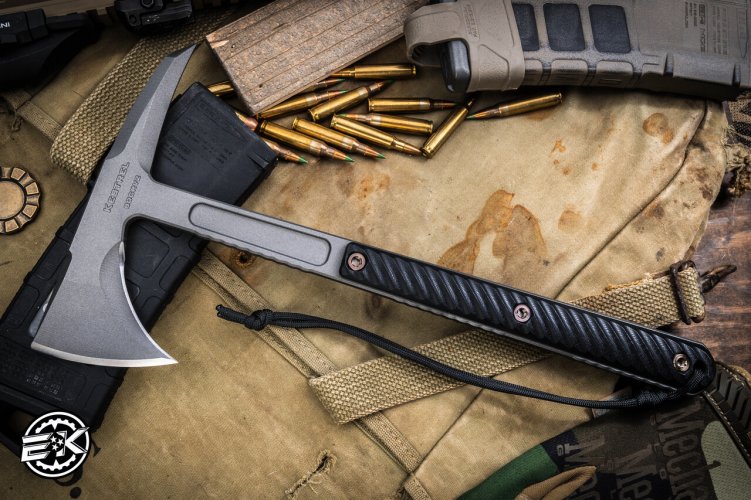
Last edited:
Hi,
With respect to ship costs its important to consider that the amount awarded to a shipyard for the construction of a ship is not the total cost of the ship, as it typically does not include Government Furnished Equipment, etc. Here is a link to an MIT Thesis that helps explain what costs fall into Basic Contract Cost, Lead Ship Cost, Follow Ship Costs, the Total Shipbuilder Portion of the Costs (including change orders), and Total Government Costs (including Other Support, Program Manager's Growth, Combat System GFE, HM&E (including Ship's Boats and Interior Comms) and additional Ship Outfitting Costs (to make the ship ready to operate once delivered by the yard). (https://dspace.mit.edu/handle/1721.1/44876)
Regards
With respect to ship costs its important to consider that the amount awarded to a shipyard for the construction of a ship is not the total cost of the ship, as it typically does not include Government Furnished Equipment, etc. Here is a link to an MIT Thesis that helps explain what costs fall into Basic Contract Cost, Lead Ship Cost, Follow Ship Costs, the Total Shipbuilder Portion of the Costs (including change orders), and Total Government Costs (including Other Support, Program Manager's Growth, Combat System GFE, HM&E (including Ship's Boats and Interior Comms) and additional Ship Outfitting Costs (to make the ship ready to operate once delivered by the yard). (https://dspace.mit.edu/handle/1721.1/44876)
Regards
The Navy signed a Fixed-Price Incentive (FPI) contract, which is premised on "a highly stable design". In particular, the original intention of selecting the FREMM as the parent design was to quickly obtain a finished product. However, after the contract was finalized, the Naval Sea Systems Command (NAVSEA) forced in traditional U.S. Navy specifications with almost obsessive rigidity:
NAVSEA unilaterally rejected European naval standards under the pretext of “survivability assessments.” They showed no regard for compatibility or commonality between European and U.S. systems.
- NAVSEA insisted on conducting the highest-level shock tests in accordance with U.S. Military Specifications (MIL‑SPEC). They refused to even review European naval standards and simply demanded everything be redone.
- Internal compartments, watertight doors, and fire suppression systems all had to adopt U.S. Navy designs.
- Regardless of whether the original FREMM power supply was sufficient, the entire ship’s power distribution architecture had to be revised to meet U.S. requirements.
- Since the Aegis system was to be installed, they insisted on adding the latest Baseline 10 patches.
- For anti-submarine warfare, the Variable Depth Sonar (VDS) had to be the most advanced available.
NAVSEA unilaterally rejected European naval standards under the pretext of “survivability assessments.” They showed no regard for compatibility or commonality between European and U.S. systems.

Sintra
ACCESS: Confidential
- Joined
- 7 April 2008
- Messages
- 126
- Reaction score
- 383
- For anti-submarine warfare, the Variable Depth Sonar (VDS) had to be the most advanced available.
In the end the VDS that ended being selected (the latest Thales Captas 4) was exactly the same used on the French FREMM´s and on the latest two Italian ones, so i imagine that particular point was not exactly a major problem.
Cheers
Last edited:
Scott Kenny
ACCESS: USAP
- Joined
- 15 May 2023
- Messages
- 16,977
- Reaction score
- 24,090
That does deserve abuse and mocking for stupidity.
- NAVSEA insisted on conducting the highest-level shock tests in accordance with U.S. Military Specifications (MIL‑SPEC). They refused to even review European naval standards and simply demanded everything be redone.
For refusing to review for compatibility.
So that they can use existing supply lines, instead of having to buy class-specific spare parts from Europe.
- Internal compartments, watertight doors, and fire suppression systems all had to adopt U.S. Navy designs.
Because the US uses 110VAC/60hz (or 400hz) not 220VAC/50hz. And 450VDC for the dewatering pumps and battery packs (don't know what the European DC standard is).
- Regardless of whether the original FREMM power supply was sufficient, the entire ship’s power distribution architecture had to be revised to meet U.S. requirements.
Yes, so that all the Aegis systems are the same. One school for all the radar techs.
- Since the Aegis system was to be installed, they insisted on adding the latest Baseline 10 patches.
It's a freaking ASW ship, it had better have the best available VDS!
- For anti-submarine warfare, the Variable Depth Sonar (VDS) had to be the most advanced available.
Navy originally picked Raytheon in May '17 for the new Dart SQS-62 an all digital VDS originally for the LCS in preference to the CAPTAS-4 but under testing DART exhibited hydrodynamic instability and transducer performance/unreliability problems and was terminated March '22.It's a freaking ASW ship, it had better have the best available VDS!
Navy then reverted back to the well proven Thales (France) CAPTAS-4 VDS though to be manufactured in US, presuming to gain Congress funding.

Kat Tsun
eeeeeeeeeeeeeee
- Joined
- 16 June 2013
- Messages
- 1,813
- Reaction score
- 2,525
I don't understand why all analysis of current events in this place is based upon Cold War conditions, also this is just dumb
Because the USSR in the 1980s was probably the last time America was seriously threatened at sea in any real terms.
Relative to the U.S., the Soviets had overmatch in anti-ship air and undersea platforms, and an extensive satellite surveillance network, which meant carriers had to operate in FCTFs to survive. The Chinese only have one of these, and it's rather unlikely they will achieve the former two before the 2040s when the USN's submarine cliff arrives, so call it 10-20 years of non-investment before the PLA becomes a Soviet level threat to the USN i.e. regional sea control with advanced aircraft, equivalence or superiority in submarine platforms and a real-time satellite observation/targeting system over the Pacific.
That assumes no real changes in production or delivery of ships to DOD beyond the current schedules and maybe a few more delays for USN.
The U.S. as of now is able to keep China as a modest threat to Japan and Taiwan by spending less than 4% of its GDP on DOD. In the 1980s it was closer to 6-7% of its GDP, so about double what it would be now. China can probably still keep up with a $1.5-1.6 trillion defense budget from DOD, but it would be much harder to pace that budget, at least without cutting into their civilian economic investments.
If the U.S. gets closer to the hull cliffs without meaningful change in ship schedules, it will simply start ratcheting up its defense spending for a presidential term or two, and the Chinese will find it harder to pace (they have a weirdly sluggish MIC in their own right), and this would probably translate to getting the LHAs, carriers and SSNs sorted out within a couple years, and back on track for long leads within 5 years, in real terms. I'm not sure there's much that can be done in a decade of high investment quickly in any other manner for shipbuilders since U.S. yard expansions are somewhat glacial. They can definitely send out ships as fast as the PRC though.
Last edited:

- Joined
- 16 April 2008
- Messages
- 10,318
- Reaction score
- 17,231
Since the Aegis system was to be installed, they insisted on adding the latest Baseline 10 patches.
Baseline 10 is the only version of the AEGIS Weapon System designed to work with SPY-6, so it was kind of a package deal. From a computing hardware perspective, though, it's basically the same as Baseline 9. So that's not a significant design impact. BL10 also improves how AWS handles active missiles, which is important because the FFGs can't use semi-active ones (no illuminators).
Sorry to hear about IDTBecause the USSR in the 1980s was probably the last time America was seriously threatened at sea in any real terms.
Relative to the U.S., the Soviets had overmatch in anti-ship air and undersea platforms, and an extensive satellite surveillance network, which meant carriers had to operate in FCTFs to survive. The Chinese only have one of these, and it's rather unlikely they will achieve the former two before the 2040s when the USN's submarine cliff arrives, so call it 10-20 years of non-investment before the PLA becomes a Soviet level threat to the USN i.e. regional sea control with advanced aircraft, equivalence or superiority in submarine platforms and a real-time satellite observation/targeting system over the Pacific.
That assumes no real changes in production or delivery of ships to DOD beyond the current schedules and maybe a few more delays for USN.
The U.S. as of now is able to keep China as a modest threat to Japan and Taiwan by spending less than 4% of its GDP on DOD. In the 1980s it was closer to 6-7% of its GDP, so about double what it would be now. China can probably still keep up with a $1.5-1.6 trillion defense budget from DOD, but it would be much harder to pace that budget, at least without cutting into their civilian economic investments.
If the U.S. gets closer to the hull cliffs without meaningful change in ship schedules, it will simply start ratcheting up its defense spending for a presidential term or two, and the Chinese will find it harder to pace (they have a weirdly sluggish MIC in their own right), and this would probably translate to getting the LHAs, carriers and SSNs sorted out within a couple years, and back on track for long leads within 5 years, in real terms. I'm not sure there's much that can be done in a decade of high investment quickly in any other manner for shipbuilders since U.S. yard expansions are somewhat glacial. They can definitely send out ships as fast as the PRC though.

Kat Tsun
eeeeeeeeeeeeeee
- Joined
- 16 June 2013
- Messages
- 1,813
- Reaction score
- 2,525
Sorry to hear about IDT
It's a cyclical thing I'll be back when a new friendslop jank game drops.

Hull down
ACCESS: Confidential
- Joined
- 19 February 2023
- Messages
- 132
- Reaction score
- 323
What?I don't know why we want to put Tomahawks on them when we have no Tomahawks left to put in them
Kat Tsun
eeeeeeeeeeeeeee
- Joined
- 16 June 2013
- Messages
- 1,813
- Reaction score
- 2,525
What?
TLAM production is very low but I think the obvious counter-example is that the TLAMs in Burkes would be swapped for SM-whatevers.
Hull down
ACCESS: Confidential
- Joined
- 19 February 2023
- Messages
- 132
- Reaction score
- 323
TLAM production is low but rapidly speeding up, very rapidly.. and just because the production was low for a few years, doesn’t mean the overall stockpile is,TLAM production is very low but I think the obvious counter-example is that the TLAMs in Burkes would be swapped for SM-whatevers.
Not James Stockdale
ACCESS: Confidential
- Joined
- 29 August 2025
- Messages
- 95
- Reaction score
- 185
The general consensus is that the Navy had about 4,000 Tomahawks and used about 800 of them, which is about the same number used during OIF in 2003.The stockpile is low now. We just blew a whole bunch of them on Iran and a bunch of SMs as well.
Scott Kenny
ACCESS: USAP
- Joined
- 15 May 2023
- Messages
- 16,977
- Reaction score
- 24,090
Thought experiment for you: How many Burkes in the USN right now? 76.The stockpile is low now. We just blew a whole bunch of them on Iran and a bunch of SMs as well.
At a rough guess, how many Tomahawks do they normally load? 20 for sake of argument?
How many subs? 49 attack subs (some sources say 53, but maintenance backlogs and we're not counting the Seawolfs), 4 SSGNs.
That means the USN has at least 1520 in the Burkes, ~600 in the attack subs, and another 600ish in the SSGNs; for a total of 2700 or so loaded onto ships. (We can make an argument that only about 1800 or so are actually loaded on ships, since 1/3 of the fleet is in maintenance with the missiles offloaded.)
That doesn't count reloads, that is purely what is loaded onto ships. So let's assume only 1 reload per missile per ship, so 1800 to 2700 times 2 for fleet+stockpile of 3600 to 5400. And that is a really minimal assumed stockpile size for something the US uses a lot for "
Add a known build rate of ~75 per year that is supposed to be scaling way up to ~1000 for FY2026.
Not James Stockdale
ACCESS: Confidential
- Joined
- 29 August 2025
- Messages
- 95
- Reaction score
- 185
The Tomahawk stockpile remains sufficient for the normal strike platforms (DDGs, SSNs, and SSGNs) though this is clearly a significant hit. I think a large proportion of the increase will be in preparation for large-scale introduction of MUSVs. If they field dozens or hundreds of USVs, each carrying 8 or 16 Tomahawks in Mk 70 containerized launchers, that would add a huge amount of extra capacity to fill. At-sea reloading would also give shooters the opportunity to reload more often and therefore give them a higher rate of fire over the course of days or weeks.
Firefinder
ACCESS: Top Secret
- Joined
- 5 October 2019
- Messages
- 1,223
- Reaction score
- 2,300
Thing is the Tomahawk IS the SOLE missile in it Role in the entire Navy.I believe when people mention Tomahawk they really are speaking of the role, not necessarily just that missile. Articulation of strike length missile tubes just does not convey the role properly.
Hell its one of like three in its freaking range bracket in the entire Force. That being a 1000 miles with a 1000pounds of bomb in.
The only missiles in the military that has that range is the JASSMERs, MAYBE, and... Actually no I believe that it. The other I was thinking of is retired, being the ALCM family. That was the only other weapon system that has the same or greater range of the Tomahawk til it was retired over half a decade ago in 2019.
Even the SM6 in full surface strike mode of the Army maxs out at an expected 400 miles and only carries what, a 200 pound warhead? The JASSMER has a 1000 pound bomb but only has maybe 300 miles more range at 700, with it listed as greater then 575.
For the navy... Yeah just the JASSMER for the long-range air launch weapons...
The Army has the Black Eagle Hypersonic but that still in development hell with like only 2 batteries in the force so...
In its Role Bracket the Tomahawk is the only thing in the entire US military.
If the navy is launching stuff from ships to attack land targets.
It going to be the Tomahawk.
Not counting the USELESS nukes, useless in that they are NEVER GOING TO BE USED so can be ignore 99 percent of the for these arguments. Those have their own dedicate weapons, even if it shares a common frame.
Nice patchIt's a cyclical thing I'll be back when a new friendslop jank game drops.
They have also managed to waste 1900 JASSM-ER against Iran of all countries. When after the first day or two, they should’ve been dropping gravity bombs. Basically the entire cruise missile stock pile is gone.Thing is the Tomahawk IS the SOLE missile in it Role in the entire Navy.
Hell its one of like three in its freaking range bracket in the entire Force. That being a 1000 miles with a 1000pounds of bomb in.
The only missiles in the military that has that range is the JASSMERs, MAYBE, and... Actually no I believe that it. The other I was thinking of is retired, being the ALCM family. That was the only other weapon system that has the same or greater range of the Tomahawk til it was retired over half a decade ago in 2019.
Even the SM6 in full surface strike mode of the Army maxs out at an expected 400 miles and only carries what, a 200 pound warhead? The JASSMER has a 1000 pound bomb but only has maybe 300 miles more range at 700, with it listed as greater then 575.
For the navy... Yeah just the JASSMER for the long-range air launch weapons...
The Army has the Black Eagle Hypersonic but that still in development hell with like only 2 batteries in the force so...
In its Role Bracket the Tomahawk is the only thing in the entire US military.
If the navy is launching stuff from ships to attack land targets.
It going to be the Tomahawk.
Not counting the USELESS nukes, useless in that they are NEVER GOING TO BE USED so can be ignore 99 percent of the for these arguments. Those have their own dedicate weapons, even if it shares a common frame.
I doubt there’s a tomahawk reload for all the Burkes left either.

U.S. deploys bulk of stealthy long-range missile for Iran war | Fortune
After the moves, only about 425 JASSM-ER out of a prewar inventory of 2,300 will remain available for the rest of the globe.
Production also isn’t anticipated hit 1000 a year until 2033
Last edited:
Kat Tsun
eeeeeeeeeeeeeee
- Joined
- 16 June 2013
- Messages
- 1,813
- Reaction score
- 2,525
Nice patch
Everything on the tiny BMDette is based on a true story too. Especially the giant brass telescope.
This is such as insane waste of high end resources... So many of those targets should/would have been struck by AGM-190A, Kratos Ragnorak, RAACM, Barracuda-Ms etc had they been available.They have also managed to waste 1900 JASSM-ER against Iran of all countries. When after the first day or two, they should’ve been dropping gravity bombs. Basically the entire cruise missile stock pile is gone.
I doubt there’s a tomahawk reload for all the Burkes left either.
U.S. deploys bulk of stealthy long-range missile for Iran war | Fortune
After the moves, only about 425 JASSM-ER out of a prewar inventory of 2,300 will remain available for the rest of the globe.fortune.com
Production also isn’t anticipated hit 1000 a year until 2033
I can't lie, the news has also been saying Russia is a week away from total collapse for going on 4 years at this point. Let's be slightly reasonableThey have also managed to waste 1900 JASSM-ER against Iran of all countries. When after the first day or two, they should’ve been dropping gravity bombs. Basically the entire cruise missile stock pile is gone.
I doubt there’s a tomahawk reload for all the Burkes left either.
U.S. deploys bulk of stealthy long-range missile for Iran war | Fortune
After the moves, only about 425 JASSM-ER out of a prewar inventory of 2,300 will remain available for the rest of the globe.
Production also isn’t anticipated hit 1000 a year until 2033
The article states there were 4000 missiles in US reserves and "hundreds" have been fired...I doubt there’s a tomahawk reload for all the Burkes left either.
10-10 in my booksEverything on the tiny BMDette is based on a true story too. Especially the giant brass telescope.

- Joined
- 11 February 2007
- Messages
- 3,823
- Reaction score
- 8,088
So that they can use existing supply lines, instead of having to buy class-specific spare parts from Europe.
If you want a ship in a hurry, you take it no matter the need to source spare parts from outside of your normal channels. The USN is perfectly happy buying mission critical aerospace components such as flight control systems* from Europe, so why wouldn't they take hatches and similar low tech components?
It does make me wonder whether Fat Leonard or someone similar had an investment (ahem!) in the existing supply chain.
There's slightly more of a case here, but opting for an existing design as a crash programme still implies taking as much of it at the existing standard and paying to deal with the issues that creates. It's not as if frequency converters and transformers are an unknown technology.Because the US uses 110VAC/60hz (or 400hz) not 220VAC/50hz. And 450VDC for the dewatering pumps and battery packs (don't know what the European DC standard is).
* And the entire back third of every F-35B or C.
More than 850 (let’s call that 900) have been fired over a week ago. They are still firing them that’s 200 a week ish. So they are well over 1000 by now, with an expected large surge tonight if bridges and power plants will be hit.I can't lie, the news has also been saying Russia is a week away from total collapse for going on 4 years at this point. Let's be slightly reasonable
The article states there were 4000 missiles in US reserves and "hundreds" have been fired...
10-10 in my books
So I’m skeptical there will be reloads left, and tomahawk production rates are 200 a year right now
I think you'd find this is a Congressional issue, not a DoN issue for the record. I believe there were similar requirements for LCSThe USN is perfectly happy buying mission critical aerospace components such as flight control systems* from Europe, so why wouldn't they take hatches and similar low tech components?
Source?They are still firing them that’s 200 a week ish
I thought current production rates were slightly lower. This morning they requested funding for the procurement of 785 missiles, off the top of my head the line has historically had a maximum capacity of 600 a year. With recent news that the US will aim to increase the capacity of the line to greater than 1000 I don't see why it won't be possible to replenish stocks with decent rapidity over the next few years.and tomahawk production rates are 200 a year right now
The new variants are indeed low observable via coatings and some other changes. I am unsure if this is backfittable. I would guess the bulk of TLAMs being fired are old stocks anyway given the seriously degraded EW and air defense, similar to the old TLAMs launched on Boko HaramAnd thats not allowing for the fact that Tomahawk is not a stealthy missile so may need multiple shots to get through an advanced air defence or EW.
Last edited:
So Thales says remaining CAPTA-4 VDS can be containerised and go on a MUSV. Could be interesting.
Naval News https://www.navalnews.com/event-news/sea-air-space-2026/2026/04/whats-next-for-the-thales-sonar-systems-destined-for-cancelled-u-s-navy-frigates/
Naval News https://www.navalnews.com/event-news/sea-air-space-2026/2026/04/whats-next-for-the-thales-sonar-systems-destined-for-cancelled-u-s-navy-frigates/
Similar threads
-
 Royal Navy frigates in the 70s
- Started by uk 75
- Replies: 45
-
-

-
-
Could NATO Frigate 90 have been made to work?
- Started by uk 75
- Replies: 7