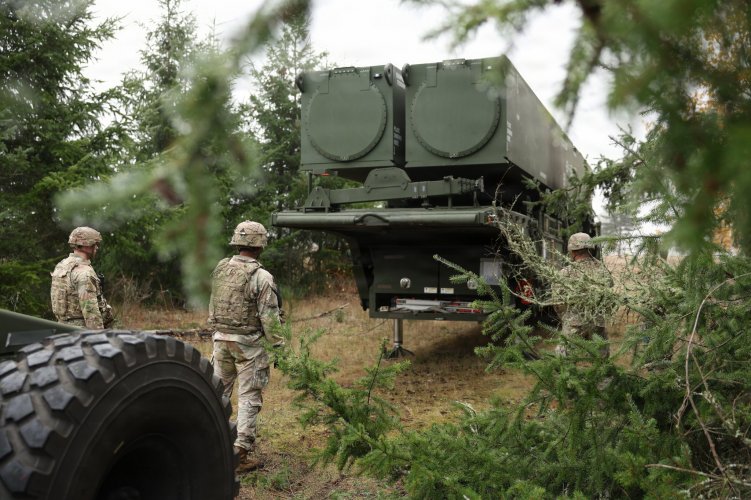
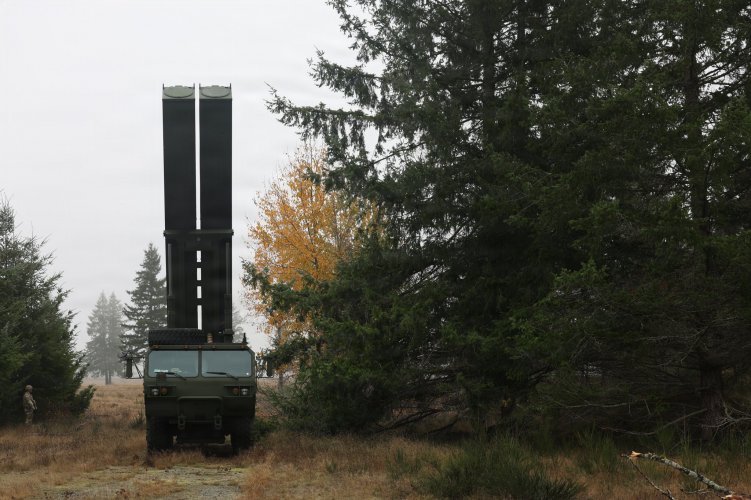
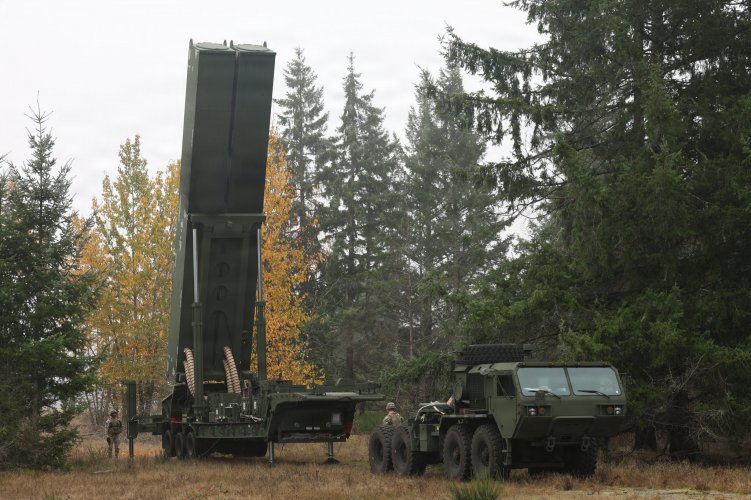
It would make sense to keep the weapon dimensions close to AGM-86 to facilitate B-52 carriage. I know F-15 and F-18 are the threshold aircraft, but bomber integration must have been a consideration. X-51 had a flow through interstage 4-5 feet long, so you could get to 20-21 feet just removing that. The booster is supposed to be 90”/7 1/2 feet, so the cruiser would have to be a bit shorter than the 14 feet of X-51 to make the whole stack twenty feet.
 
View: https://x.com/AirPowerNEW1/status/2024091203193479476?s=20

MACH-TB 2.0 Program Award to Explore Reusable & Recoverable Hypersonics Testing​

 
Last edited:
I'm not familiar with the HASTE launcher.
It's basically a Rocket Lab Electron LV, with a modified 3rd stage for larger (up to 700kg) sub-orbital payloads.
 
I was all excited but then saw it was Australian. (Nothing wrong with Australia doing things but had hoped the US was finally showing something new.)
Well it has a number of invested parties outside Australia:

NRF, QIC Join Global Defence Investors in $46m Series A for Australian Hypersonic Flight Pioneer​

The Series A will help fund the NASA-backed and Rocket Lab boosted flight of DART AE - a 3.5-metre-long hypersonic vehicle powered by SPARTAN. DART AE will fly under the US Department of Defense’s HyCAT program, delivered by the Defense Innovation Unit (DIU) and launched from NASA’s Wallops Flight Facility in Virginia.
The DIU is the only US defense organisation solely focused on accelerating the adoption of disruptive commercial technologies by the military. Hypersonix was the first prototype contract awarded under HyCAT, selected from over 60 applicants.
The round was led by High Tor Capital, a UK investor in national security and frontier technology, with European defence company Saab and Polish family office RKKVC also supporting the raise. North Ridge Partners acted as exclusive financial advisor on the transaction.
 
Well it has a number of invested parties outside Australia:

NRF, QIC Join Global Defence Investors in $46m Series A for Australian Hypersonic Flight Pioneer​

"Hypersonix was the first prototype contract awarded under HyCAT, selected from over 60 applicants."

So the DIU in the US is funding this? Interesting.
 

DIU Eyes First Launch for Its Commercial Hypersonic Testbed​


First flight for Australian hydrogen-fulled hypersonic aircraft​

 
What about liquid-methane?
It's a little easier from an engineering perspective, but methane is still a cryogenic liquid fuel. The company's website specifically states their intent to develop a reusable aircraft, so any military application would probably be closer to strategic surveillance (like a satellite) than a strike weapon. This is the kind of flight that would be planned weeks or months ahead of time.
 
Shame it's hydrogen fueled. Not much military use there.
I think we have enough work going on the military side of scramjet cruisers and engines that its good for these startups to focus on the commercial leaps. HAWC and HACM are flying or will soon be, and they have completed ground testing on significantly larger engines which hopefully will find a cruiser design to test in the medium term.
 
IIRC, UM is also working with AFRL to fly the liquid fuel draper engine equipped Angry Tortoise in the coming months first at WSMR and then over the Pacific at higher Mach. This appears to be a pitch to continue to evolve the engine and put together some sort of weapon system utilizing it.
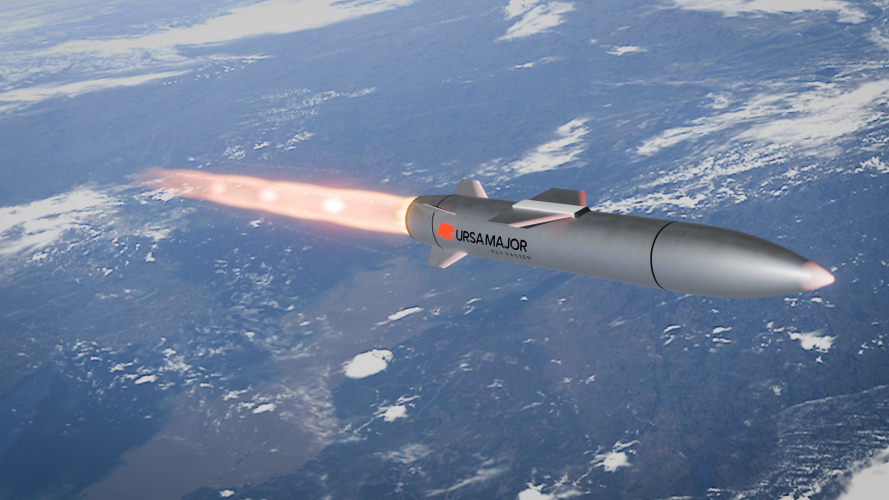
Unveiled today is the “Ursa Major HAVOC Missile System,” a complete hypersonic capability designed to deliver high-speed, affordable mass at scale to meet urgent warfighter requirements, with a core module that can also be used for hypersonic targets. HAVOC is engineered for rapid production and scalability, addressing the growing need for optionality in survivable, maneuverable hypersonic systems that can be fielded in operationally relevant quantities.

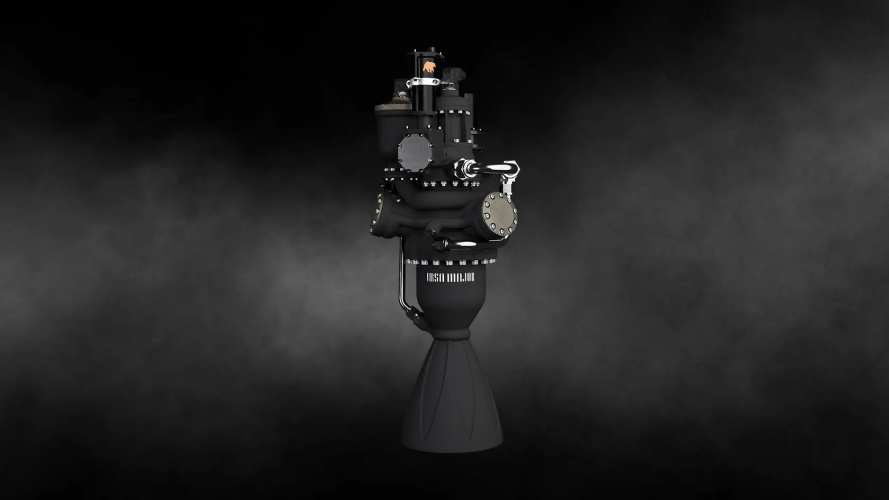
Ursa Major’s HAVOC missile system is powered by the Company’s Draper engine, a safe, storable, and tactical liquid rocket engine
, which costs a fraction of airbreathing alternatives. Beyond the engine, Ursa Major achieves affordability of the system using advanced additive manufacturing, innovative design, and modern production processes.

“Keeping pace with our adversaries requires more than exquisite systems, it requires speed to delivery, affordability, and the ability to build at scale,” said Chris Spagnoletti, CEO of Ursa Major. “The Ursa Major HAVOC Missile System delivers a highly capable hypersonic weapon designed from the start to be produced rapidly and in quantity, giving the warfighter a credible and adaptable capability.”

HAVOC can be programmed to throttle and restart throughout all phases of flight, providing capabilities beyond hypersonic boost glide and cruise missile systems. Additionally, this capability eliminates the need for expensive thermal protection systems to achieve the affordability and ensure the robust supply chain the nation needs.

HAVOC is multi-domain; the system can operate endo- or exo-atmospherically and eliminates the restrictions and high cost of airbreathing alternatives. The highly modular approach enables integration with various solid rocket motor boosters to enable launch from a wide range of platforms, including fighters, bombers, vertical launch systems, or ground-based launchers with extended range options.

Ursa Major brings more than a decade of hypersonic development, production, and flight heritage to the HAVOC Missile System. The company’s Hadley liquid rocket engines have flown hypersonic several times, validating propulsion performance under real flight conditions and supporting U.S. hypersonic superiority. Ursa Major has also demonstrated the ability to design and build complete vehicles and all-up rounds through the Affordable Rapid Missile Demonstrator program with the Air Force Research Laboratory, which is on track to fly soon.

HAVOC represents a highly capable, next-generation hypersonic missile capability designed to meet the demands of today’s threat environment and the evolving needs of the joint force. The system directly aligns with multiple Department of War hypersonic priorities, including rapid design, build, test, and learn approaches; reducing the cost of hypersonic systems while increasing industrial capacity to build warfighting inventories; and identifying, developing, and demonstrating next-generation capabilities.

 

Attachments

  • 1771953327730.png
    1771953327730.png
    3.5 MB · Views: 37
IIRC, UM is also working with AFRL to fly the liquid fuel draper engine equipped Angry Tortoise in the coming months first at WSMR and then over the Pacific at higher Mach. This appears to be a pitch to continue to evolve the engine and put together some sort of weapon system utilizing it.


So, a modern Rascal? That's the last liquid fueled rocket powered airborne missile that comes to mind (ignoring things like Bullpup).
 
Draper is a 4,000-pound-thrust closed catalyst cycle engine that uses storable hydrogen-peroxide/kerosene propellant, making it ideal for vehicles that need to launch on demand. Draper contains architectural and manufacturing heritage from the Hadley engine, but unlike Hadley, it doesn’t require cryogenic conditions for its fuel.

Draper bears the storable characteristics of a solid motor with the higher performance and maneuverability of a liquid engine. Those qualities allow it to better simulate hypersonic threats as a target vehicle, which is a critical gap in America’s hypersonic capabilities today.

Solid rocket motors have traditionally powered the vehicles used for testing missile defense systems, but they cannot change thrust in real-time to actively throttle and respond to changing conditions. With adversarial hypersonic weapons becoming increasingly complex and erratic, liquid rocket engines provide active throttle control and throttle range, giving them the maneuverability and flexibility needed for hypersonic defense.

Advantages of a Closed-Cycle Hydrogen Peroxide Engine

  • Engine cycle maximizes performance and draws on the testing heritage of Ursa Major’s Hadley engine.
  • Can be stored at room temperature to support on-demand launch.
  • High propellant density fits more capability into space-constrained hypersonic vehicles.
  • Hydrogen peroxide is a “green” storable propellant, which improves safety and reduces risk of environmental harm compared to the toxicity of traditional hydrazine systems.
  • Autoignition supports many restarts without a dedicated ignition system.
  • Hydrogen peroxide can be used for attitude control systems (ACS) eliminating the need for additional ACS propellants.
The Air Force Research Laboratory (AFRL) is funding Draper’s development. Under the newly announced contract, Ursa Major will build and test a prototype of Draper, build a fourth, Draper-specific test stand at its Berthoud, Colorado, headquarters, and further develop the 200,000-pound thrust Arroway engine. Arroway debuted in 2022 and is one of the few commercially available engines that, when clustered together, can displace the Russian-made RD-180 and RD-181, which are no longer available to U.S. launch companies.
 

Attachments

  • 1771959298408.png
    1771959298408.png
    295.7 KB · Views: 29

Ursa Major unleashes HAVOC with new hypersonic missile​

HAVOC could serve a variety of roles, Spagnoletti reasoned, from strike missions to target practice for defending against other hypersonic systems. Ursa Major has also marketed the Draper engine as a potential propulsion system for space-based interceptors in line with the Trump administration’s Golden Dome project, but Spagnoletti clarified that HAVOC specifically is not being marketed for that purpose.
 
Seems a little unlikely the USN would be interested in a weapon longer than its ordnance elevators.
I know. Its strange. But that is what the USN mentioned in work its previously funded to Castelion. We could be looking at a surface launched version with a booster and an air launched system without one so that's also something to consider.
 

Rocket-Powered, Space-Based Interceptors Enter Golden Dome Discussion​

But the U.S. military selected the XB-34 to become a second-source supplier to Northrop Grumman on two hypersonic missile programs, removing a potential production capacity constraint. That decision makes X-Bow a future supplier for the 34.5-in.-dia., two-stage rocket that powers the Navy’s Conventional Prompt Strike (CPS) missile and the Army’s Long-Range Hypersonic Weapon (LRHW), also known as the Dark Eagle.

To qualify for the hypersonic missile role, X-Bow Systems plans to modify the XB-34 motor with the same type of flexseal nozzle that Northrop uses for the CPS and LRHW missiles. The flexseal nozzle includes a swivel bearing, which allows the rocket to meet the CPS and LRHW requirement for thrust-vector control steering.

Making that single change, however, opens a new path for the XB-34 as the steerable propulsion system for a space-based missile.
 

Rocket-Powered, Space-Based Interceptors Enter Golden Dome Discussion​

A rocket nozzle made with flexseal?

1772916667152.png

How well do solid rocket motors do with long-duration spaceflight? I can't think of anything off the top of my head besides the Soyuz landing retromotor. The vast majority of Star/PAM motors were burned within a few hours of launch, but this kind of application would involve years in space.
 

Scott Manley uploaded a video a few hours ago concerning this test-flight:


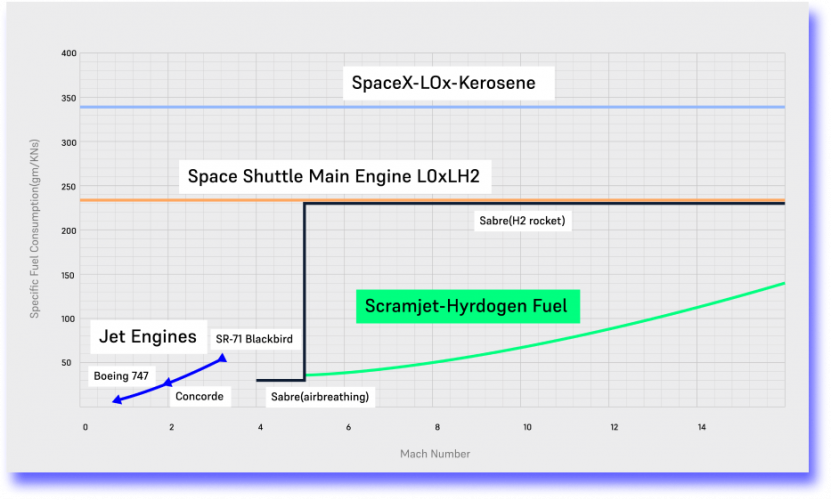
There are limits on conventional jet engines as the supersonic air entering the engine slows down and heats up to the point it can damage the engine, even ramjets have problems above about mach 5 as more of the pressure is lost to heat during the compression stage of the engine. Scramjets are jet engines which don't slow the air to subsonic speeds, so they lose less to heat and can continue to operate up to speeds of at least Mach 9, and probably more.​

but this kind of application would involve years in space.

The interceptor missile could be kept in a launch-tube which is environmentally-controlled, specifically being heated to keep the rocket-motor within a narrow temperature range to avoid cracking of the propellant-grain.
 

Similar threads

Back
Top Bottom