
You are using an out of date browser. It may not display this or other websites correctly.
You should upgrade or use an alternative browser.
You should upgrade or use an alternative browser.
Competition of Ryan FR-1 Fireball
- Thread starter nugo
- Start date
Hi my friends!
ei, my friend hesham, Douglas Model 558--proposal of 1945 year and Model 592--proposal of 1943 ???
D-592 proposal since WWII.
Douglas could be respond competition of XFR-1---Douglas Model 4??
ei, my friend Apophenia Curtiss his Model 99 (later XF15C-1) not respond competition of XFR-1.
ei, my friend hesham, Douglas Model 558--proposal of 1945 year and Model 592--proposal of 1943 ???
D-592 proposal since WWII.
Douglas could be respond competition of XFR-1---Douglas Model 4??
ei, my friend Apophenia Curtiss his Model 99 (later XF15C-1) not respond competition of XFR-1.

- Joined
- 26 May 2006
- Messages
- 38,288
- Reaction score
- 20,425
Hi,
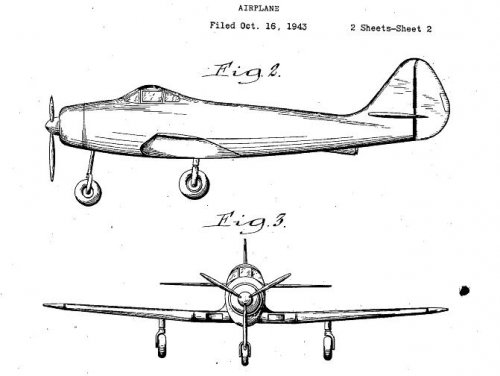
I think this aircraft may be submitted to this competition ,as a Bell
Aircraft Corporation proposal for mixed powered naval fighter.
http://www.google.com/patents?id=AidxAAAAEBAJ&pg=PA3&dq=bell+aircraft+corporation+airplane&hl=en&ei=LVRiTt2nJI-D-wbZnrCPCg&sa=X&oi=book_result&ct=result&resnum=5&ved=0CDcQ6AEwBDgo#v=onepage&q&f=true
I think this aircraft may be submitted to this competition ,as a Bell
Aircraft Corporation proposal for mixed powered naval fighter.
http://www.google.com/patents?id=AidxAAAAEBAJ&pg=PA3&dq=bell+aircraft+corporation+airplane&hl=en&ei=LVRiTt2nJI-D-wbZnrCPCg&sa=X&oi=book_result&ct=result&resnum=5&ved=0CDcQ6AEwBDgo#v=onepage&q&f=true
Attachments

hesham said:Hi, and may be the Goodyear GA-5 was submitted to this competition,which
was discovered by my dear Tailspin.
The Ryan XFR-1 had already flown by the time the Goodyear submitted a proposal to BuAer in December 1944. I suspect that it was an unsolicited proposal, which was not uncommon.
hesham said:Thank you my dear Tailspin, and for the Douglas D-592, it was not submitted to this tender.
? The Douglas 592 was submitted against the 1948 VF interceptor requirement that was won by the McDonnell proposal of its Model 58 that became the F3H.
hesham said:Thank you my dear Tailspin, but do you know the other contenders in This Ryan FR-1 competition ?.
I don't have anything with me that addresses the initiation of the Ryan FR-1 program and I didn't trip over any documents that described a competition in my my most recent visit to Archives II. I'll keep my eye out for it.
- Joined
- 26 May 2006
- Messages
- 38,288
- Reaction score
- 20,425
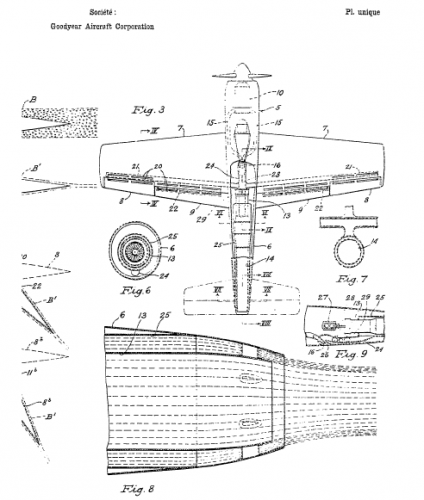
My dear Tophe discovered this patent,
for Goodyear,and I suspect if it was GA-5,but we can't confirm it was submitted to this contest.
https://worldwide.espacenet.com/pub...16&DB=fr.worldwide.espacenet.com&locale=en_EP
for Goodyear,and I suspect if it was GA-5,but we can't confirm it was submitted to this contest.
https://worldwide.espacenet.com/pub...16&DB=fr.worldwide.espacenet.com&locale=en_EP
Attachments
Last edited:

snark
But Dad, don't we EAT the antelopes?
- Joined
- 2 December 2007
- Messages
- 111
- Reaction score
- 90
Hi Folks
In Fighters Over the Fleet: Naval Air Defence from Biplanes to the Cold War (Friedman), there is mention of the Grumman G-67, an F7F-2 with an I-20 jet engine in each nacelle behind the radials. It was a proposal submitted to BuAir in August 1943, so the timing seems right.
Also appears here:
https://www.secretprojects.co.uk/forum/index.php/topic,3149.msg25421.html#msg25421
Harry
In Fighters Over the Fleet: Naval Air Defence from Biplanes to the Cold War (Friedman), there is mention of the Grumman G-67, an F7F-2 with an I-20 jet engine in each nacelle behind the radials. It was a proposal submitted to BuAir in August 1943, so the timing seems right.
Also appears here:
https://www.secretprojects.co.uk/forum/index.php/topic,3149.msg25421.html#msg25421
Harry

- Joined
- 25 June 2009
- Messages
- 15,515
- Reaction score
- 9,447
snark said:In Fighters Over the Fleet: Naval Air Defence from Biplanes to the Cold War (Friedman), there is mention of the Grumman G-67, an F7F-2 with an I-20 jet engine in each nacelle behind the radials. It was a proposal submitted to BuAir in August 1943, so the timing seems right.
Yeah. And it was also described in the exact same manner in the old Docavia book "Les Avions Grumman". Surely a likely contender.
- Joined
- 26 May 2006
- Messages
- 38,288
- Reaction score
- 20,425
Hi,
I saw on Net,a patent for mixed powered fighter,with inverted gull-wing shape,and it was never mentioned in this thread,unfortunately I was searched in anther subject,so I didn't care,can anyone help or remember me,what was it ?,and it was from early 1940s !.
I saw on Net,a patent for mixed powered fighter,with inverted gull-wing shape,and it was never mentioned in this thread,unfortunately I was searched in anther subject,so I didn't care,can anyone help or remember me,what was it ?,and it was from early 1940s !.
Last edited:

Airborne2001
ACCESS: Secret
- Joined
- 19 June 2020
- Messages
- 377
- Reaction score
- 541
The XF15C-1 is one of my favorite projects of all time, mainly because I got to see it in real life.Curtiss XF15C-1 ?
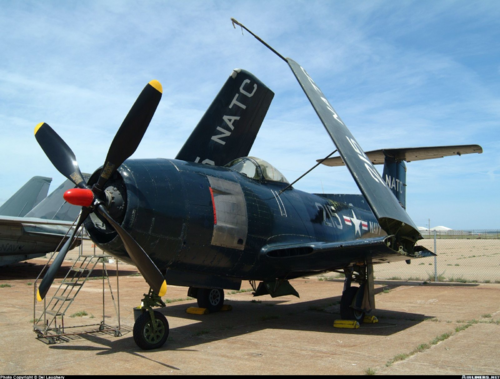
(Picture not taken by me.)
Last edited:
- Joined
- 26 May 2006
- Messages
- 38,288
- Reaction score
- 20,425
Hi,
I think the Curtiss XF15C-1 was not involved in this competition,because it was appeared after chosen Ryan,but may or I suggest that,the Curtiss submitted a design in "P" series,then the company made a private venture and developed it into this ?.
I think the Curtiss XF15C-1 was not involved in this competition,because it was appeared after chosen Ryan,but may or I suggest that,the Curtiss submitted a design in "P" series,then the company made a private venture and developed it into this ?.
Last edited:
- Joined
- 26 May 2006
- Messages
- 38,288
- Reaction score
- 20,425
We can say about the contenders,
1- Ryan Model 28 or XFR-1
2- Grumman Design 57(G-57)
3- Goodyear GA-5
4- McDonnell Model-18H ?
5- Bell D-22 ?
6- Douglas D-?
7- Curtiss P-?
8- ------?
9- ------?
1- Ryan Model 28 or XFR-1
2- Grumman Design 57(G-57)
3- Goodyear GA-5
4- McDonnell Model-18H ?
5- Bell D-22 ?
6- Douglas D-?
7- Curtiss P-?
8- ------?
9- ------?
Last edited:
Silencer1
That now I am the Ruler of the Queen's Navee!
- Joined
- 3 August 2009
- Messages
- 943
- Reaction score
- 703
Hello!We can say about the contenders,
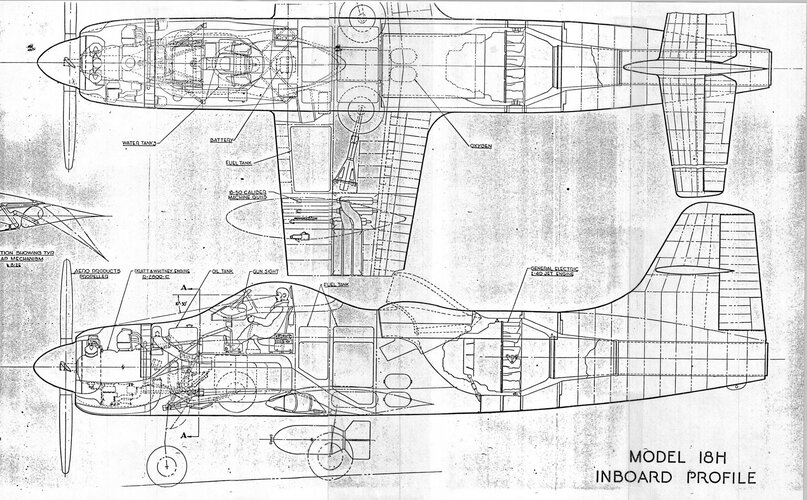
4- McDonnell Model-18J ?
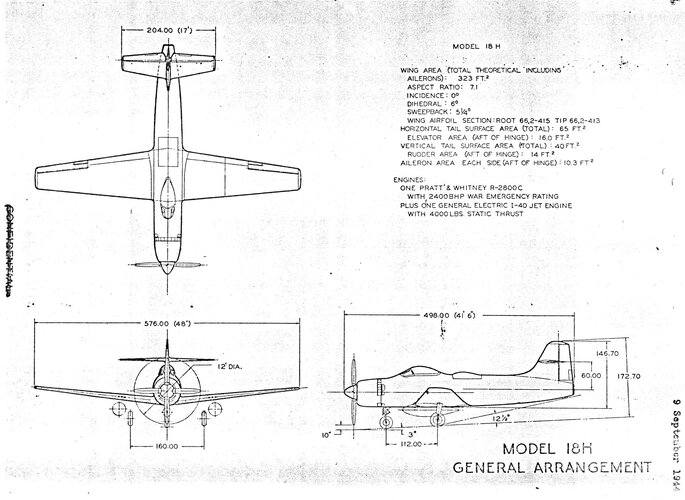
I couldn't find this on SPF, although, here the small page about McDonnell Model 18H
Don't know, if it fits to the contender of the above mentioned competition, though.
Attachments
- Joined
- 26 May 2006
- Messages
- 38,288
- Reaction score
- 20,425
Hello!
I couldn't find this on SPF, although, here the small page about McDonnell Model 18H
Don't know, if it fits to the contender of the above mentioned competition, though.
Amazing my dear Silencer,and as I expect or speculate that,the Fleetwings
company involved ?.
Silencer1
That now I am the Ruler of the Queen's Navee!
- Joined
- 3 August 2009
- Messages
- 943
- Reaction score
- 703
I kindly suggest to extensively browse Aviation Archives blog - it's definitely the comprehensive source of all McDonnell, Douglas and other aircraft. Good luck in searches!Amazing my dear Silencer,and as I expect or speculate that,the Fleetwings
company involved ?.

T. A. Gardner
ACCESS: Top Secret
- Joined
- 18 February 2021
- Messages
- 2,024
- Reaction score
- 3,576
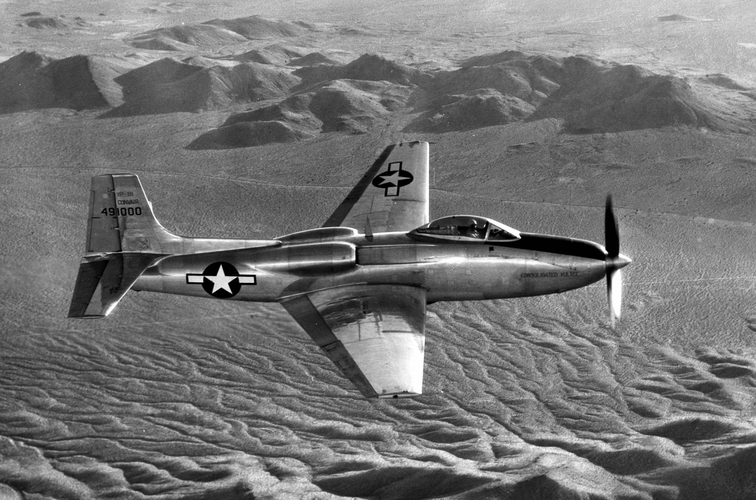
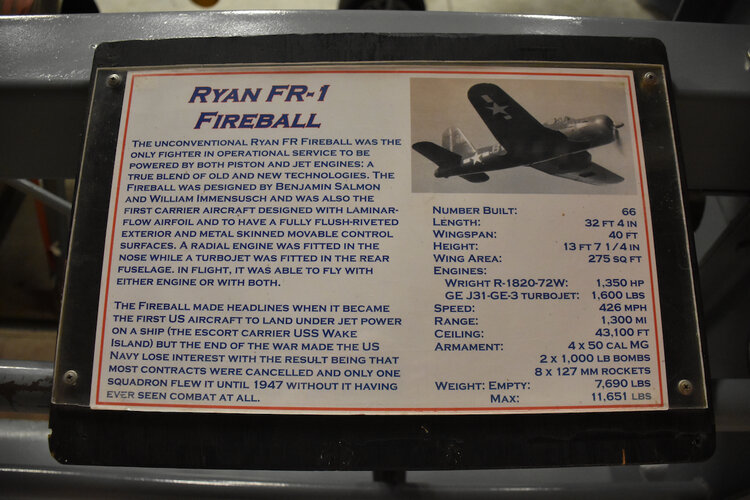
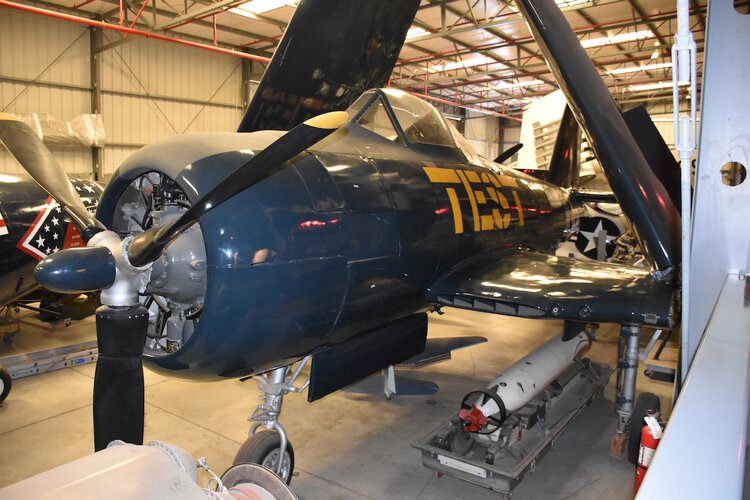
Well, while not a direct competitor with the FR-1 Fireball, it was a similar design with mixed powerplants, and that was the XP-81

- Joined
- 26 May 2006
- Messages
- 38,288
- Reaction score
- 20,425
We can say about the contenders,
1- Ryan Model 28 or XFR-1
2- Grumman Design 57(G-57)
3- Goodyear GA-5
4- McDonnell Model-18H ?
5- Bell D-22 ?
6- Douglas D-?
7- Curtiss P-?
8- ------?
9- ------?
As I suggested before,the eighth may Fleetwings,and the ninth could
be Lockheed as I think ?.
- Joined
- 26 May 2006
- Messages
- 38,288
- Reaction score
- 20,425
As I suggested before,the eighth may Fleetwings,and the ninth could
be Lockheed as I think ?.
And for Lockheed,maybe L-127 or L-143 ?.
- Joined
- 26 May 2006
- Messages
- 38,288
- Reaction score
- 20,425
We can say about the contenders,
1- Ryan Model 28 or XFR-1
2- Grumman Design 57(G-57)
3- Goodyear GA-5
4- McDonnell Model-18H ?
5- Bell D-22 ?
6- Douglas D-?
7- Curtiss P-?
8- ------?
9- ------?
I was wrong, for McDonnell,it could be Model-18J and not 18H.

- Joined
- 25 July 2007
- Messages
- 4,916
- Reaction score
- 5,538
I was wrong, for McDonnell,it could be Model-18J and not 18H.
The XFR-1 had already flown (25 June 1944) by the time that drawings appeared for the McDonnell Models 17 and 18 (2 Sept 1944 and 9 Sept 1944, respectively).
Can anyone illuminate the differences between these McDonnell Aircraft designs?
The McDonnell Model 17A is describe as a turboprop - its GE TG-100 producing both tailpipe thrust and driving a propeller (eg: in Friedman's Fighters Over the Fleet). So it had a single powerplant? Not a mix of TG-100A turboprop and I-16 turbojet (as in the Consolidated-Vultee XP-81)?
The Model 18s were definitely mixed-power designs with a larger I-40 turbojet (derived from the TG-100) and a Pratt Whitney R-2800 radial. But how else did these three McDonnell designs differ from one another? Eg: was the Model 17A airframe closely related to that of the mixed-power Model 18s?

Grey Havoc
ACCESS: USAP
- Joined
- 9 October 2009
- Messages
- 24,500
- Reaction score
- 18,175
- Joined
- 26 May 2006
- Messages
- 38,288
- Reaction score
- 20,425
Hi,
I think this aircraft may be submitted to this competition ,as a Bell
Aircraft Corporation proposal for mixed powered naval fighter.
http://www.google.com/patents?id=Ai...resnum=5&ved=0CDcQ6AEwBDgo#v=onepage&q&f=true
The link is died,how to get it again ?.
- Joined
- 25 July 2007
- Messages
- 4,916
- Reaction score
- 5,538
The link is died,how to get it again ?.
There is no easy way to get back there. For some reason, Google Patents changed all of its urls since you posted that image (reinforcing the need to provide patent numbers and application titles - not just ever-changable urls).
So, go to Google Patents and search: bell+aircraft+corporation+aircraft "1943".
Around the date of your image, a slew of Design Patent applications were submitted on behalf of the Bell Aircraft Corporation. Reading the description sections of such Design Patent applications, you will see phrases such an "ornamental design for an airplane". In other words, the external appearance or layout is being claimed to be original ... so not a 'design' in the way we used that word.
To know precisely what you're looking at, you must read the summary information for details. But, even then, Google Patents can present plenty of false leads. One pitfall is the use of the word "attorney".
For example, US Design Patent 136,580 (USD 136580S) was submitted for the Model 32 (later XP-77) with Robert J. Woods listed as "inventor". In the description, Woods refers specifically to "my new design". And, of course, we know Bob Woods to have been Bell Aircraft's chief engineer. But the descriptions are rarely that categorical.
Google Patents cannot seem to distinguish between "attorney" and "inventor". For example, Google Patents lists "Inventor Herbert L. Bowers" for Des.146,072 (titled the "Bowers airplane") which covers the Design Patent for Bell's D-16/Model 40 (later XP-83). Herbert L. Bowers is given as another "attorney". But, actually, Herbert Bowers was an aeronautical engineer and had been Bob Woods' assistant. Alas, Woods is not usually the engineer attributed with the design of the D-16/Model 40.
Closer in time to your image was Des. 143,758 (USD143758S) listing a "RHODES AIRPLANE" - which looks like a very early stab at a jet-powered Kingcobra. The "inventor" section is garbled. In the text, this is given as "attorney" E.P. Rhodes (who, in reality, would later become project engineer on the Model 40). BTW, to further confuse matters, many sources list 'Charles' Rhodes as the designer of the XP-83. In its summary, Google Patents lists "Inventor Greiner Road". This bit of Google AI-generated nonsense comes from the garbling of Edgar Rhodes' Clarence, NY, home address at the time.
The take-home here is read Google Patents descriptions very carefully and approach any Google summaries with scepticism.
- Joined
- 26 May 2006
- Messages
- 38,288
- Reaction score
- 20,425
When I saw the Republic AP-47 project,I felt may the company submitted an earlier
proposal to this competition ?,if so,that needs to re-set my speculations about the
firm.
https://www.secretprojects.co.uk/th...d-support-thunderbolt-proposal-of-1948.14378/
proposal to this competition ?,if so,that needs to re-set my speculations about the
firm.
https://www.secretprojects.co.uk/th...d-support-thunderbolt-proposal-of-1948.14378/
- Joined
- 26 May 2006
- Messages
- 38,288
- Reaction score
- 20,425
We can say about the contenders,
1- Ryan Model 28 or XFR-1
2- Grumman Design 57(G-57)
3- Goodyear GA-5
4- McDonnell Model-18H ?
5- Bell D-22 ?
6- Douglas D-?
7- Curtiss P-?
8- ------?
9- ------?
As my dears Tony Buttler and PaulMM explained that,the Curtiss P-1032 had a variant
of mixed powered propulsion,may earlier version was submitted to this contest ?,
https://www.secretprojects.co.uk/threads/1946-usaaf-penetration-fighter-xf-88-xf-90.624/page-4
Similar threads
-
U.S.Navy-BuAer Specification SD 112.14 (1938)
- Started by lark
- Replies: 9
-
 Ryan Model 38, 84, 112, 115: VATOL Fighters for the USAF and USN
- Started by overscan (PaulMM)
- Replies: 27
-
U.S. Navy Bureau of Aeronautics specification of 1935 calling for a 300-m.p.h. carrier-based single-seat fighter.
- Started by Justo Miranda
- Replies: 18
-
-