- Joined
- 3 June 2011
- Messages
- 20,908
- Reaction score
- 19,103
Except they're building fewer Columbias that have 33% fewer tubes.Having a larger number of Columbias with a smaller number of missile tubes is a more survivable sea-based deterrent.

Except they're building fewer Columbias that have 33% fewer tubes.Having a larger number of Columbias with a smaller number of missile tubes is a more survivable sea-based deterrent.
Yeah, I didn't want to get too deep in the weeds on needing drydock length to replace shafts etc.TRF-B (and presumably KB) are 751 ft. SSBN is 560 ft. The docks could certainly physically fit a longer boat, problem becomes the amount of additional space needed for things like shaft replacement. I suspect one could go up to 600 ft or so without significant impact, though it might limit ability to do a shaft and removing the bow dome at the same time (not that removing the dome is overly common).
I expect it to end up more work-hours in refits. While individual systems will likely require less maintenance, not having that midlife refit time will cause all that work to happen across a dozen or so standard patrol refits at the ~20-30 year mark.Fully understand maintenance done during refits. However, Ohio plan has that and the multiple year refueling. Columbia presumably does the same refit schedule, but without the refueling, which means either there's less major maintenance needed, or even more work is going to need to get done in refits. Probably some of both.
I get 18 to get an equivalent number of tubes as 14x20 OHIOs. Or probably 15, once you allow for two OHIO out of service for major work that COLUMBIA (allegedly) doesn't require.I did the math a bit back and we need something like 24-36 boats to equal the Ohios. (24 for the current 14x20, 27 for 18x24, and 36 for the planned 24x24 Ohios).
Not that much of a nightmare. The nuclear lot get a bit squirrelly about the condition of the boat at each docking evolution, but refloat and reposition is a standard operation at any competent dockyard.Or one nightmare mid-refit refloat&reposition (*shudder*).
Sure, if you design the hull plug to be neutrally buoyant. The question is, will there be adequate reserve buoyancy once you've done that? Depending on the pressure hull and MBT arrangement, you might be able to add plugs to the fore and aft MBTs at the same time without screwing things up too badly. But it'd be expensive to do that redesign.Would a Columbia+2 be able to submerge without redesigning the ballast tanks?
The problem comes if something big fails that needs holes cut in the pressure hull. If you have planned refuelling intervals, it only screws up the programme until the next major docking. If you plan never to need to cut the hull open, it screws up the programme for the life of the entire fleet.While individual systems will likely require less maintenance, not having that midlife refit time will cause all that work to happen across a dozen or so standard patrol refits at the ~20-30 year mark.
The issue you run into is crew costs and training pipeline, since each needs two crewsHaving a larger number of Columbias with a smaller number of missile tubes is a more survivable sea-based deterrent.
I may have made a math error, that's a mea culpa. I had notes on this somewhere but couldn't find them.I get 18 to get an equivalent number of tubes as 14x20 OHIOs. Or probably 15, once you allow for two OHIO out of service for major work that COLUMBIA (allegedly) doesn't require.
But worth bearing in mind that when the OHIOs replaced the Polaris/Poseidon boats, they went from 41x16 down to a (planned) 24x24, rather than the 27x24 that would be needed to maintain tube count.
Not that much of a nightmare. The nuclear lot get a bit squirrelly about the condition of the boat at each docking evolution, but refloat and reposition is a standard operation at any competent dockyard.
Sure, if you design the hull plug to be neutrally buoyant. The question is, will there be adequate reserve buoyancy once you've done that? Depending on the pressure hull and MBT arrangement, you might be able to add plugs to the fore and aft MBTs at the same time without screwing things up too badly. But it'd be expensive to do that redesign.
The problem comes if something big fails that needs holes cut in the pressure hull. If you have planned refuelling intervals, it only screws up the programme until the next major docking. If you plan never to need to cut the hull open, it screws up the programme for the life of the entire fleet.
And that's assuming that nobody took advantage of 'we'll never need to open the hull' to put something large and expensive in the way of whatever wound up breaking. Which, on a submarine, they will have done. They're tight enough for space without adding more design constraints.
Except we had 18x24 Ohios, of a planned 24x24 (thanks "Peace Dividend"). We only dropped to 14x20 to be in compliance with a now defunct treaty. It could be argued that we need the equivalent of 24 Ohios (or more, given China wasn't the threat then as it is now). That's 24^2/16 = 36. Minimum.I get 18 to get an equivalent number of tubes as 14x20 OHIOs.
I think "36 for Liberty" has a nice ring to it tbqhExcept we had 18x24 Ohios, of a planned 24x24 (thanks "Peace Dividend"). We only dropped to 14x20 to be in compliance with a now defunct treaty. It could be argued that we need the equivalent of 24 Ohios (or more, given China wasn't the threat then as it is now). That's 24^2/16 = 36. Minimum.
Like "41 for Freedom".I think "36 for Liberty" has a nice ring to it tbqh
Exactly!
It's not the refloat-and-reposition action that is the issue, it's the having to stop work for however-many hours/days while it's happening that is the issue.Not that much of a nightmare. The nuclear lot get a bit squirrelly about the condition of the boat at each docking evolution, but refloat and reposition is a standard operation at any competent dockyard.
Exactly. Painfully expensive.Sure, if you design the hull plug to be neutrally buoyant. The question is, will there be adequate reserve buoyancy once you've done that? Depending on the pressure hull and MBT arrangement, you might be able to add plugs to the fore and aft MBTs at the same time without screwing things up too badly. But it'd be expensive to do that redesign.
Which comes back to how often you're doing it: if it's a once-a-patrol task, that's unreasonable. If it's a once-in-five-years job, then don't worry about it. You need to alternate docking positions anyway to make sure you get access to the entire hull for coating maintenance.It's not the refloat-and-reposition action that is the issue, it's the having to stop work for however-many hours/days while it's happening that is the issue.
Regardless of the reasons why you reduced the force, you currently have 280 tubes in the fleet, and somewhat fewer in active service. Increasing that – whether to 336, 432, 576, 676, or some other number – isn't a decision to be made lightly, and shouldn't be done on the basis of vibes or a catchy slogan.Except we had 18x24 Ohios, of a planned 24x24 (thanks "Peace Dividend"). We only dropped to 14x20 to be in compliance with a now defunct treaty. It could be argued that we need the equivalent of 24 Ohios (or more, given China wasn't the threat then as it is now). That's 24^2/16 = 36. Minimum.
No, it should be done based on reality. And the reality was we were getting something for that reduction, and the nuclear threat was less. That changed (and it's not a catchy slogan).Regardless of the reasons why you reduced the force, you currently have 280 tubes in the fleet, and somewhat fewer in active service. Increasing that – whether to 336, 432, 576, 676, or some other number – isn't a decision to be made lightly, and shouldn't be done on the basis of vibes or a catchy slogan.
Sure. And what is the reality, in terms of increase to the target set and/or the risk to the platforms? Because that may not justify 36 boats. It may equally well justify more than 36 boats. An argument could be made for all sorts of numbers.No, it should be done based on reality.
It still puts a multiple-day crimp in the work getting done, and when you're talking some 10k work-hours per day that's kinda a big crimp in getting things done.Which comes back to how often you're doing it: if it's a once-a-patrol task, that's unreasonable. If it's a once-in-five-years job, then don't worry about it. You need to alternate docking positions anyway to make sure you get access to the entire hull for coating maintenance.
12x16x8=1536 weapons deployed. Well, actually that should be 8-or-9x16x8, 1024-1152 additional weapons deployed (SSBN optempo ends up between 2/3 and 3/4 of all subs in service deployed at one time).Sure. And what is the reality, in terms of increase to the target set and/or the risk to the platforms? Because that may not justify 36 boats. It may equally well justify more than 36 boats. An argument could be made for all sorts of numbers.
But also resources are finite, especially if you're expanding the fleet. Just counting reactors (and therefore reactor operators) - would you rather have 10 CVNs and 36 SSBNs, or 16 CVNs and 24 SSBNs? What if we put nukes on those CVNs? That isn't an easy move either, but could actually mean more deployed weapons.
Without knowing the timing, separation, etc. it amounts to hand-waving.Wellerstein doesn't (IIRC) model the interactions of multiple shocks, which tend to strengthen blast effects.


WASHINGTON — Congressional Republican leaders today put forward a stopgap funding bill to keep money flowing to the federal government through Nov. 21, but notably left out the White House’s request for an extra $3.9 billion for Columbia-class submarines.
The White House had advocated for the addition of $3.9 billion for the Columbia class submarine in a list of “anomalies” sent to Capitol Hill, Inside Defense reported last week, but the CR does not include that funding.


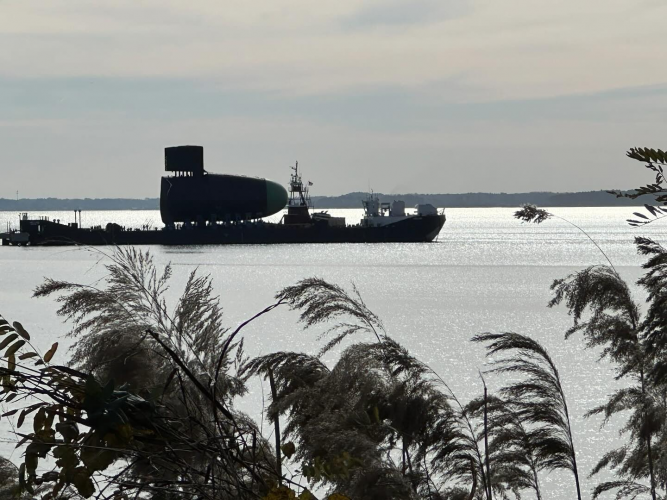
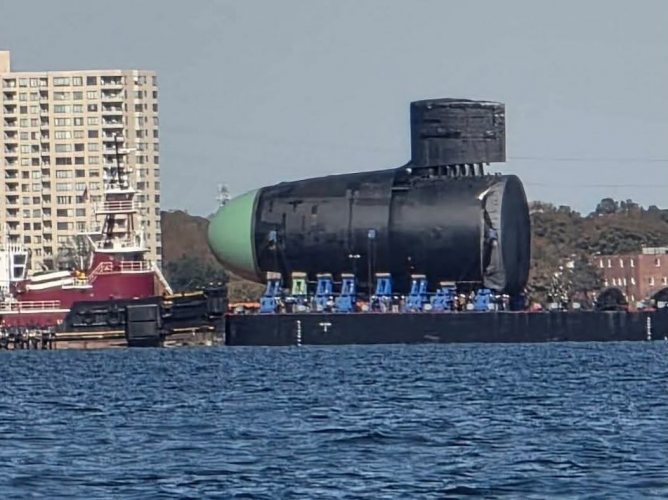
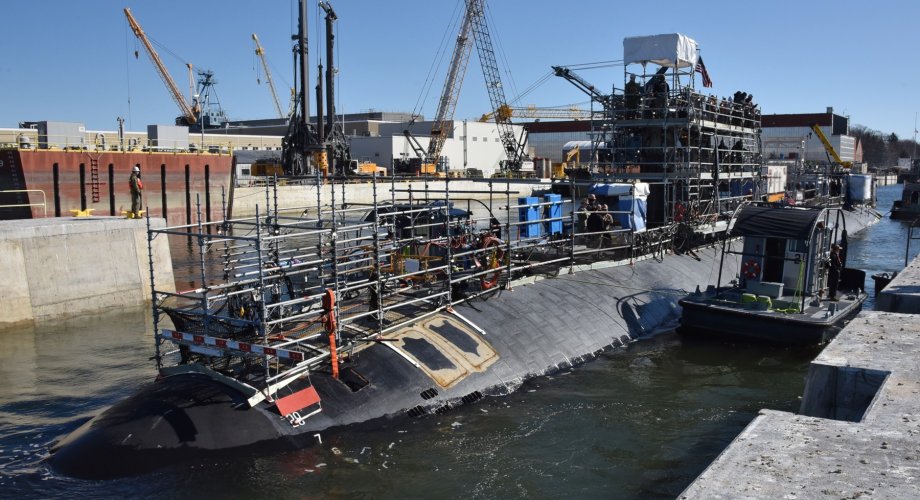
It's not even remotely finished, I think it's way to early to judge the vessel and the workmanship involvedYe Gods. Why does the workmanship on today's subs in the US look like complete dog $hit?

You are aware this isn't finished, right?Ye Gods. Why does the workmanship on today's subs in the US look like complete dog $hit?
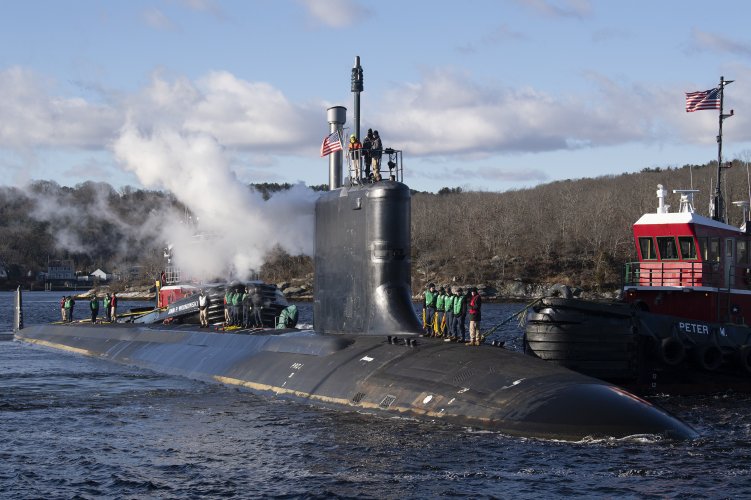
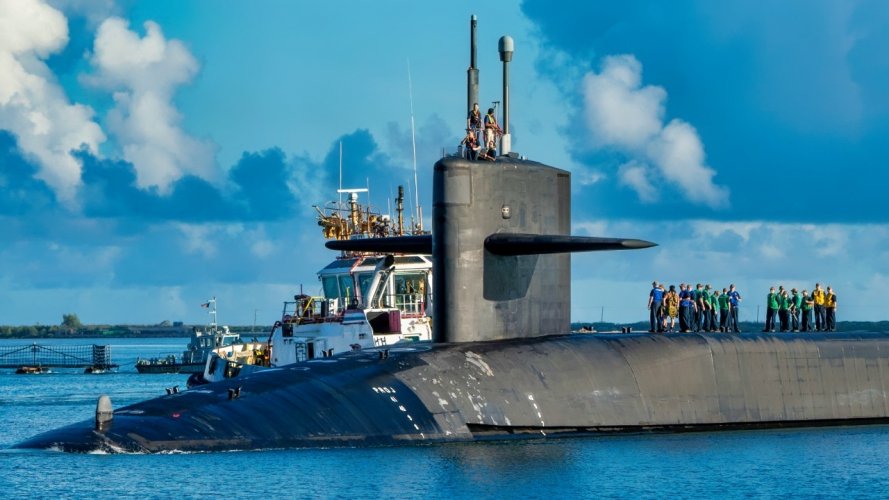
Wait. You mean that's not a complete SSBN? Looking at that sail. Now look at this Virginia sail right off the showroom floor and compare it to this Ohio that's been in service for 20 years. Terrible.You are aware this isn't finished, right?
I'm not entirely certain I see what you're complaining about. There's nothing wrong with either of those sails. What do you see in either of these images that is "terrible" in any operationally relevant sense?Wait. You mean that's not a complete SSBN? Looking at that sail. Now look at this Virginia sail right off the showroom floor and compare it to this Ohio that's been in service for 20 years. Terrible.
Build quality. Surface finish. I don't expect a class A surface but these things are supposed to be quiet underwater. Maybe they're quiet enough and my expectations are too high. Just seems like we've slipped. That 20 year old Ohio sail looks better than a brand new Virginia.I'm not entirely certain I see what you're complaining about. There's nothing wrong with either of those sails. What do you see in either of these images that is "terrible" in any operationally relevant sense?

Build quality. Surface finish. I don't expect a class A surface but these things are supposed to be quiet underwater. Maybe they're quiet enough and my expectations are too high. Just seems like we've slipped. That 20 year old Ohio sail looks better than a brand new Virginia.
Maybe they're quiet enough and my expectations are too high. Just seems like we've slipped. That 20 year old Ohio sail looks better than a brand new Virginia.

Huh? The Virginia has an anechoic (rubber) coating applied, the slightly uneven surface of which you are misinterpreting as poor (metal) workmanship. The Ohio has no anechoic coating, just painted steel.Wait. You mean that's not a complete SSBN? Looking at that sail. Now look at this Virginia sail right off the showroom floor and compare it to this Ohio that's been in service for 20 years. Terrible.

Wow, the Ohio Class relies purely on other means to reduce noise and detectability to sonar? I always thought it also used anechoic tiles/coating. What was the first USN sub to introduce the tech?The Ohio has no anechoic coating, just painted steel.
At least some of the -688s have them.Wow, the Ohio Class relies purely on other means to reduce noise and detectability to sonar? I always thought it also used anechoic tiles/coating. What was the first USN sub to introduce the tech?

Quieting was all internal, tiles were real bad for a long time (Sov boats had them and were still loud as shit for decades), plus they fell off too easily. The USM and RN both put tiles on test boats in 1980, the T-boats and 688i class were the first to hit the water with tiles from the start. Some of the best tiles out there today are arguably the RAN tiles from their SSKs.Wow, the Ohio Class relies purely on other means to reduce noise and detectability to sonar? I always thought it also used anechoic tiles/coating. What was the first USN sub to introduce the tech?
I wonder if the USN is getting that via AUKUSSome of the best tiles out there today are arguably the RAN tiles from their SSKs.
The first submarines to introduce anechoic coatings were the German U-boats fitted with the Alberich coating during WWII. The concept was dormant for about forty years. The U.S. Navy first installed Special Hull Treatment (SHT) tiles on the Batfish around 1980, and on all 688-class SSNs after SSN 719 (earlier 688s and some 637s had the tiles retrofitted).Wow, the Ohio Class relies purely on other means to reduce noise and detectability to sonar? I always thought it also used anechoic tiles/coating. What was the first USN sub to introduce the tech?