
You are using an out of date browser. It may not display this or other websites correctly.
You should upgrade or use an alternative browser.
You should upgrade or use an alternative browser.
Chinese Space Program

- Joined
- 21 January 2015
- Messages
- 15,040
- Reaction score
- 24,291

- Joined
- 13 August 2007
- Messages
- 10,428
- Reaction score
- 18,130

pagliacci
ACCESS: Confidential
- Joined
- 14 June 2023
- Messages
- 82
- Reaction score
- 276
I’d have told you to cheer up and accept that stuff like this will keep happening, blah blah. But this quiet stigmatization is really damaging. People might claim it’s just a joke, yet it fills uninformed people with biased prejudices and undermines the worth of decades of hard work from masses of engineers.


Dilandu
I'm dissatisfied, which means, I exist.
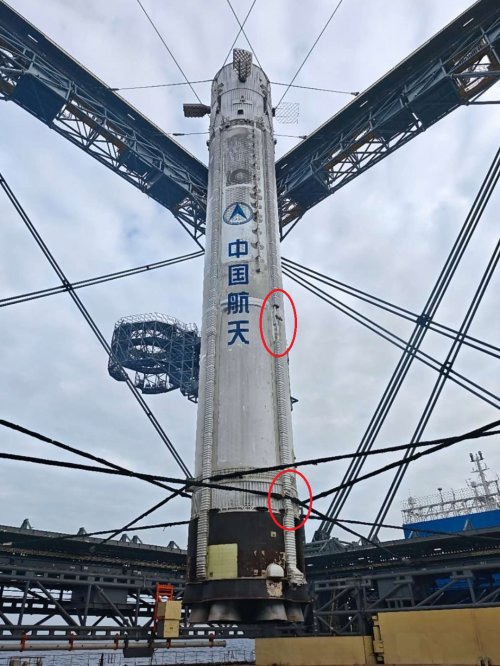
Awesome idea! It basically done the same "catching" job as SpaceX Mechazilla "chopsticks", but Chinese concept is simpler and more elegant. Instead of heavy manipulators moving with high precision to catch the rocket, they use cables stretched between trolleys; the control is simplified (each trolley could only move along guiding rail), and the precision requirements are far less strict. All the rocket need to do, is to get within the square, and trolleys would move to catch it no matter where inside the square it would be descending.Long March-10B landing explained:
Dilandu
I'm dissatisfied, which means, I exist.
Those attachement points seems to be integrated into the same frame as control rudders, and this part of the rocket obviously made strong enough (otherwise the rudders would risk to fell away). I rather doubt that cable catchers create more strain on barely moving rocket's structure than rudders during supersonic descent.Behind those cable attachement points there has to be inside the rocket some serious structuel reinforcements.
Not that it weigh so much as 4 landing legs, but not all of this landing method is profit.
- Joined
- 21 January 2015
- Messages
- 15,040
- Reaction score
- 24,291

snne
ACCESS: Top Secret
- Joined
- 3 July 2022
- Messages
- 2,435
- Reaction score
- 8,943

- Joined
- 13 August 2007
- Messages
- 10,428
- Reaction score
- 18,130
Seems that cable catch system has some issues to solve
View: https://twitter.com/BoDiplo/status/2076156463475458444
View: https://twitter.com/BoDiplo/status/2076156463475458444

TheKutKu
ACCESS: Top Secret
- Joined
- 13 February 2023
- Messages
- 555
- Reaction score
- 1,855
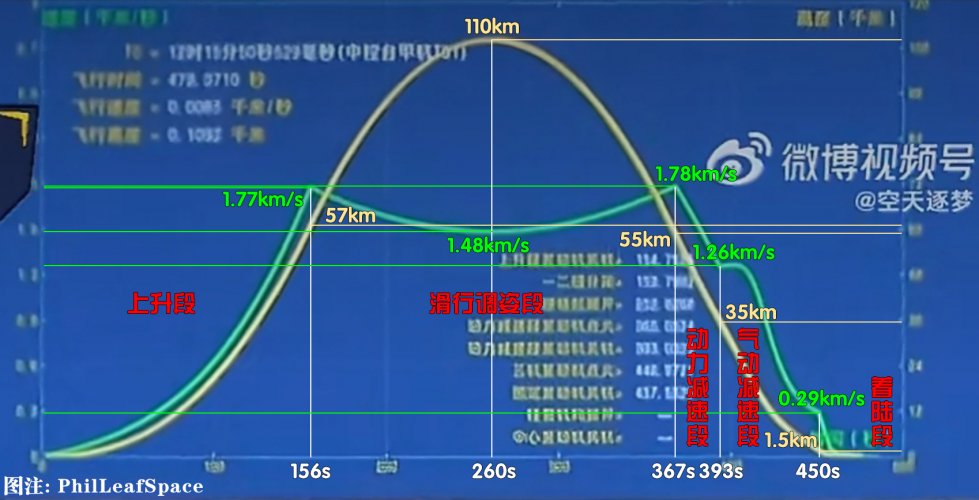
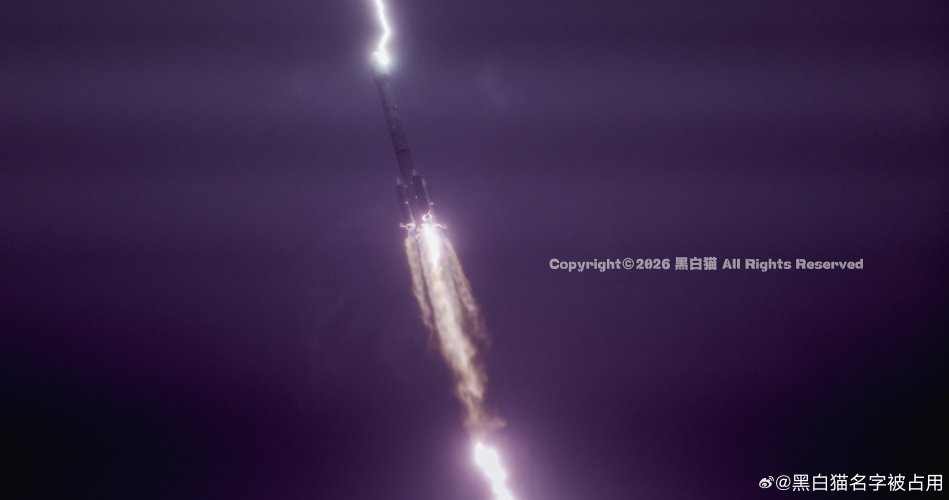
Flight timeline
1st stage Trajectory:T-9s, ignition
T0, 26/07/10-12:15:50.529, liftoff
T+18s, pitch-over maneuver
~T+85s, Max-Q (maximum dynamic pressure)
T+154.7525s (video shows 154–156s), first-stage engine cutoff, V=1.77 km/s, H=61 km
T+159.7992s, stage separation
T+168.9620s, second-stage ignition
T+(170s), second-stage engine at full thrust
T+212.7199s, fairing jettison
T+252.8268s (253–255s), first-stage grid fin deployment
~T+260s, first stage reaches apogee, V=1.48 km/s, H=110 km
T+365.0524s (367s), first-stage powered deceleration burn (two engines), V=1.78 km/s, H=59 km
T+393.0325s, first-stage powered deceleration burn cutoff (two engines), V=1.26 km/s, H=35 km
T+446.9724s (450s), first-stage landing burn (three engines) , V=0.29 km/s, H=1.5 km
T+457.5525 s (458 s), first-stage fixed engines cutoff
T+477.3347 s (473–475 s), first-stage cable deployment
T+483 s, first-stage center engine cutoff; net-capture recovery; landing point 439 km from launch site; coordinates approx. 16°29.9' N, 113°31.7' E
T+525.8325 s, second-stage first cutoff
T+1767.2524 s, propellant settling prior to second-stage second ignition
T+2922.2200 s, second-stage second ignition
T+2927.6123 s, second-stage second cutoff
T+2932.6125 s, terminal velocity correction cutoff
T+3094.9912 s, spacecraft-rocket separation
Attachments
Last edited by a moderator:

SUPER=BUG
ACCESS: Top Secret
- Joined
- 25 September 2024
- Messages
- 884
- Reaction score
- 2,426
Open-source the technical data of CZ10B to domestic manufacturers.The "Notice on Issuing the Guidelines for Reusable Launch Vehicle Research Projects (Third Batch)" has been officially released. Various enterprises and institutions can consult the declaration requirements and guidelines through the appropriate channels and are encouraged to submit their applications actively.
Attachments

snne
ACCESS: Top Secret
- Joined
- 3 July 2022
- Messages
- 2,435
- Reaction score
- 8,943
SUPER=BUG
ACCESS: Top Secret
- Joined
- 25 September 2024
- Messages
- 884
- Reaction score
- 2,426
According to some rumors, CZ12A will launch on the 5th of next month and try to recover, while ZQ3 will launch on the 13th of next month and try to recover.
Also, the launch of the Mengzhou-1 manned spacecraft might be delayed due to the progress of the launch site.
Snne's statement is based on the stock market, while mine is based on the schedule of the rocket sightseeing tour.
Also, the launch of the Mengzhou-1 manned spacecraft might be delayed due to the progress of the launch site.
Snne's statement is based on the stock market, while mine is based on the schedule of the rocket sightseeing tour.
Last edited:

TwoTribes
ACCESS: Secret
- Joined
- 3 July 2025
- Messages
- 441
- Reaction score
- 1,657
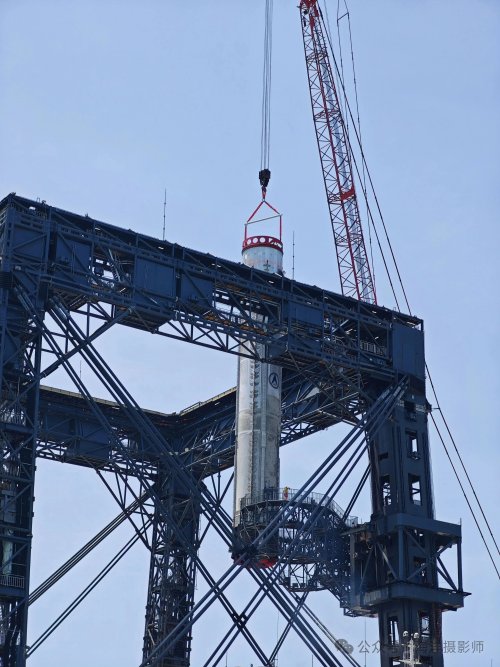
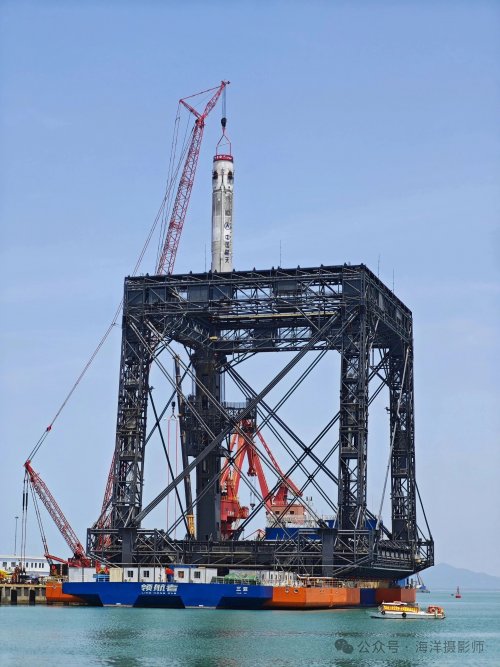
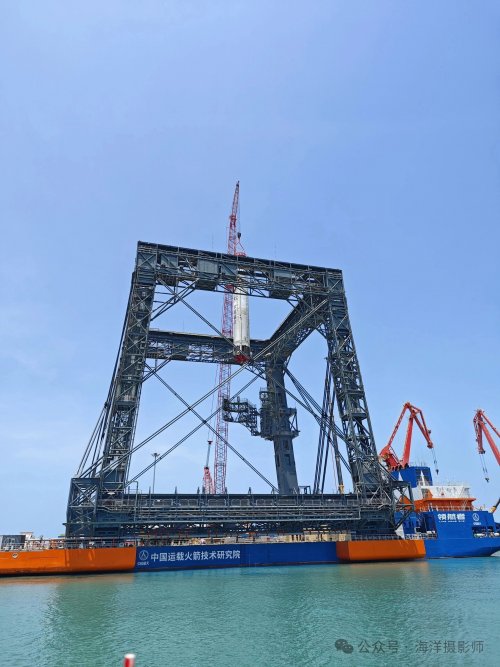
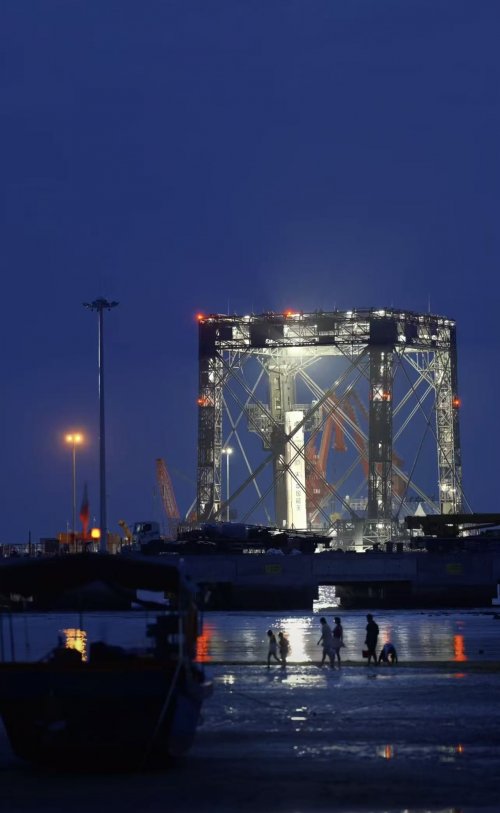

southwestforests
ACCESS: Top Secret
- Joined
- 28 June 2012
- Messages
- 1,018
- Reaction score
- 1,981
Even having a couple imperfections in the landing/catch this was quite an accomplishment, I'm impressed.
Ya know, that night at the docks scene would make a nice poster ...
Ya know, that night at the docks scene would make a nice poster ...

- Joined
- 3 June 2011
- Messages
- 21,000
- Reaction score
- 19,297
Any clue as to dimensions? Or where it's home-ported?So that's how big it is.
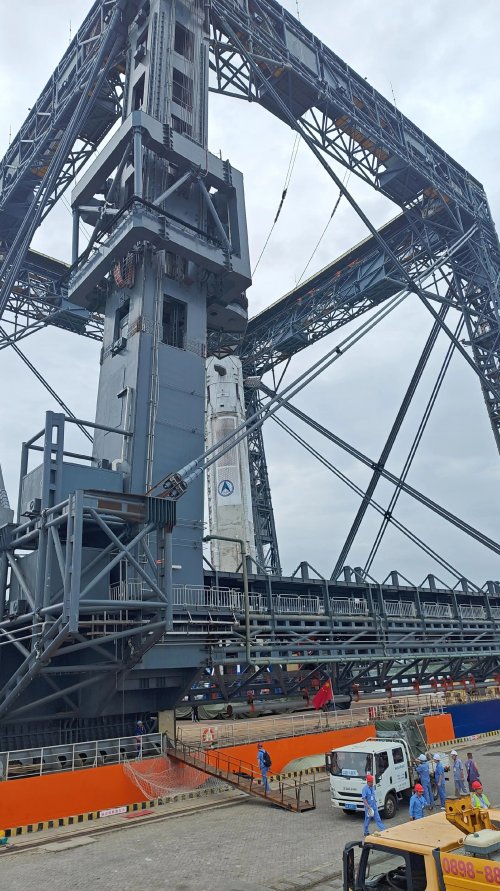
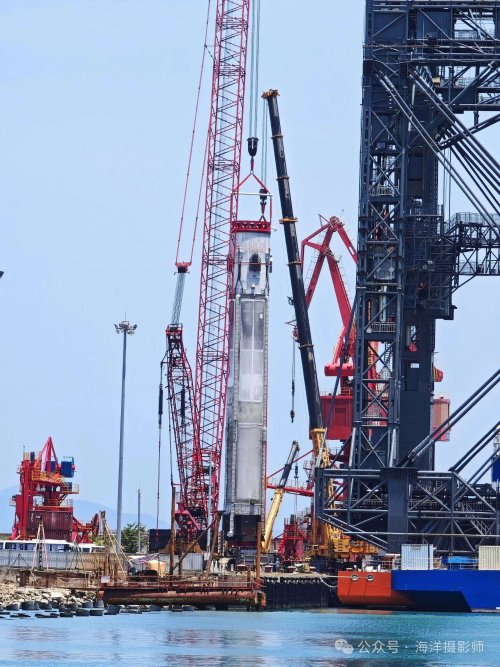
‘Linghangzhe' the booster recovery ship is 144m long, 50m, and has a maximum full load displacement of 25,000 tons. The height of the catch tower is around 67m with a structural weight of around 3,500 tons. It's home port is Sanya Nanshan Port.Any clue as to dimensions? Or where it's home-ported?
https://www.chinadaily.com.cn/a/202607/10/WS6a50eb55a310986e2b464acc.html
Cannonfodder43
ACCESS: Confidential
- Joined
- 8 December 2019
- Messages
- 127
- Reaction score
- 360

jeffb
ACCESS: Top Secret
- Joined
- 7 October 2012
- Messages
- 1,592
- Reaction score
- 3,156
Long march 3B successfuly returns to flight 5 months after its failure, launching the Shijian 31 satellite to a mid-inclination Medium Earth orbit, similar launch trajectories on CZ-3B have recently been used to launch Early warning TJS satellites, built by SAST like Shijian-31, in Molniya orbit , although the use may be different given the different name, Shijian 31 is officially used for "space environment exploration". The cause of the failure on the previous flight was not disclosed.
View attachment 815540
Interesting wrinkle on the Molniya orbit on this one.
View: https://x.com/COMSPOC_OPS/status/2079695761277608123?s=20
- Joined
- 21 January 2015
- Messages
- 15,040
- Reaction score
- 24,291
- Joined
- 13 August 2007
- Messages
- 10,428
- Reaction score
- 18,130
New image of assembly building for Long March 9
in comperasion to VAB and Gigabay
View: https://twitter.com/Truthful_ast/status/2079706898383691958
in comperasion to VAB and Gigabay
View: https://twitter.com/Truthful_ast/status/2079706898383691958
- Joined
- 3 June 2011
- Messages
- 21,000
- Reaction score
- 19,297
Doesn't really compare them though. How does it stack up size-wise?New image of assembly building for Long March 9
in comperasion to VAB and Gigabay
Last edited by a moderator:
NASA VAB:Doesn't really compare them though. How does it stack up size-wise?
Height: 160m, High Door Height: 139m
GIGABAY TX:
Height: 116m, High Door Height: 87m
CALT VAB:
Height: 119m, High Door Height: 85m
TheKutKu
ACCESS: Top Secret
- Joined
- 13 February 2023
- Messages
- 555
- Reaction score
- 1,855
The launch and landing attempt of the 2nd Zhuque 3 is expected for no earlier than August 10th 23:37 UTC according to NOTAM; it will probably only carry a dummy payload like the first one
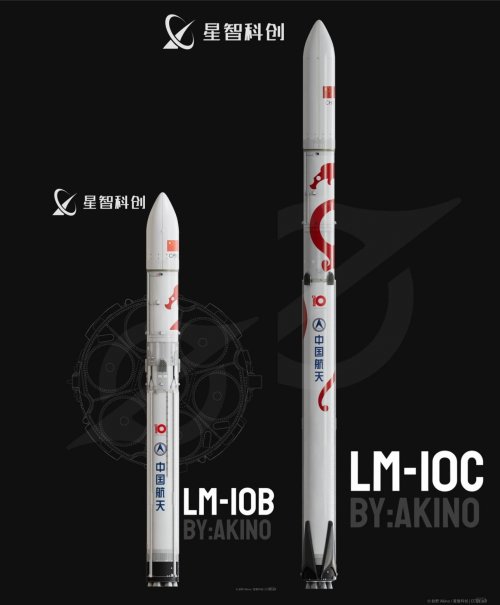
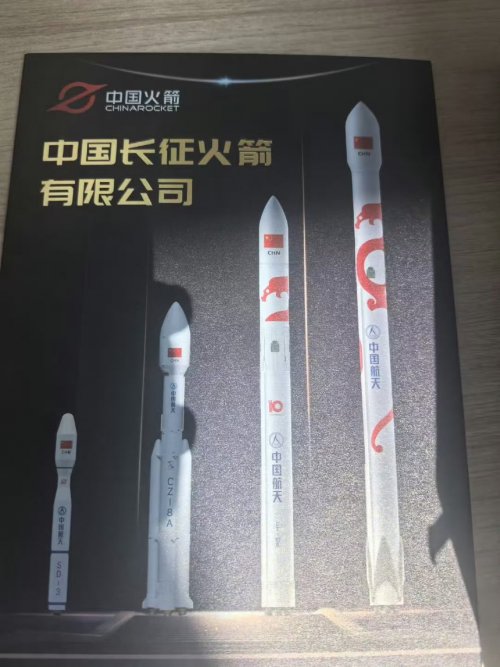
Also here are official (left) and unnoficial renders of CALT's upcoming CZ-10C, which is expected to fly next year; the official one has wrong dimensions for both 10B and 10C, it's expected that 10C will launch 22t to LEO in reusable mode, it is in a similar class as Relativity space's Terran R
Also here are official (left) and unnoficial renders of CALT's upcoming CZ-10C, which is expected to fly next year; the official one has wrong dimensions for both 10B and 10C, it's expected that 10C will launch 22t to LEO in reusable mode, it is in a similar class as Relativity space's Terran R
Attachments
Last edited by a moderator:
- Joined
- 21 January 2015
- Messages
- 15,040
- Reaction score
- 24,291
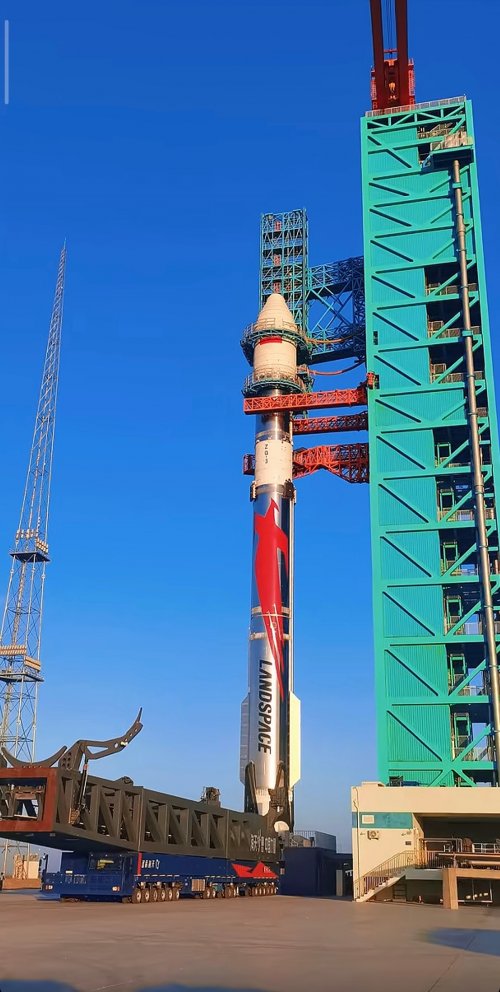
Chinese company Landspace targets Aug. 10 for historic rocket launch and landing attempt
Now, Landspace is poised for a second attempt at liftoff and landing, with airspace closure notices indicating that launch is scheduled from the Dongfeng commercial space innovation pilot zone at Jiuquan spaceport, in northwest China, at around 7:45 p.m. EDT on Aug. 10 (23:45 GMT, or 7:45 a.m. Beijing time, Aug. 11).
- Joined
- 13 August 2007
- Messages
- 10,428
- Reaction score
- 18,130
- Joined
- 3 June 2011
- Messages
- 21,000
- Reaction score
- 19,297
"Monday night closes with the second flight of LandSpace’s ZhuQue-3 (ZQ-3), China’s first privately developed reusable orbital rocket, lifting off from Launch Area 96B at Jiuquan with an undisclosed payload at 23:37 UTC. The 66-meter, stainless steel, methane-fueled vehicle was built from the start for recovery, with a nine-engine first stage designed to return to a downrange landing pad. This is the 191st orbital launch attempt of 2026 and LandSpace’s second recovery attempt."Zhuque 3 Y2
https://www.nasaspaceflight.com/2026/08/launch-preview-081026/
- Joined
- 16 June 2025
- Messages
- 41
- Reaction score
- 171
ZQ-3 Y2 launch *might* be delayed due to bad weather at launch and land site. Nothing fixed yet though.
- Joined
- 21 January 2015
- Messages
- 15,040
- Reaction score
- 24,291
Chinese rocket explodes less than 90 seconds after liftoff
The state-owned China Aerospace Science and Technology Corporation (CASC) launched a Long March 7A rocket today (Aug. 10) from the Wenchang Space Launch Site, in the country's Hainan province, just after 8:00 a.m. EDT (1200 GMT; 8:02 p.m. local time). Around 85 seconds into the launch, the rocket exploded, generating a massive fireball and a cloud of smoke and debris while still soaring through Earth's atmosphere.
CASC had not yet released a statement about the incident by the time of this story's publication, but video reposted to social media captured the shock of onlookers the moment that the rocket burst into flames. Based on such views, the mission will almost certainly be deemed a complete failure, with total loss of vehicle and payload.
TheKutKu
ACCESS: Top Secret
- Joined
- 13 February 2023
- Messages
- 555
- Reaction score
- 1,855
- Joined
- 21 January 2015
- Messages
- 15,040
- Reaction score
- 24,291
Yeah it does appear to be weather delayed.ZQ-3 Y2 launch *might* be delayed due to bad weather at launch and land site. Nothing fixed yet though.
Similar threads
-

-
International Lunar Research Station (Sino-Russian project)
- Started by Grey Havoc
- Replies: 25
-

-
 Queqiao - Chinese Lunar Communication Relay Satellite
- Started by Flyaway
- Replies: 11
-