Save a few dozen kilograms?
Probably several hundred pounds of insulation.

Save a few dozen kilograms?

Protect the payload.
I thought of one possibility. Perhaps it's a measure by the engineers to squeeze out every bit of payload capacity. The insulation material that was originally covering the inside of the fairing was designed to be attached on the outside and shed during launch to reduce weight. Save a few dozen kilograms? Maybe?
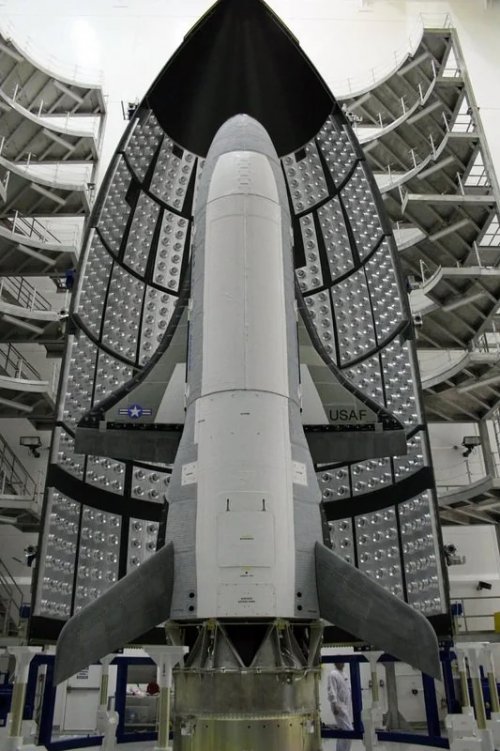
Could be something as simple as others would rather not have foam falling all over the launch site.I'm still dubious. The NASA photo shows acoustic protection that does its job all the way up, past Max Q to the quiet zone in LEO. The Chinese insulation tumbles away AT LIFTOFF. There is something more here.


Any idea why it tipped over?

Fire caused by residual fuel. Maybe?Any idea why it tipped over?

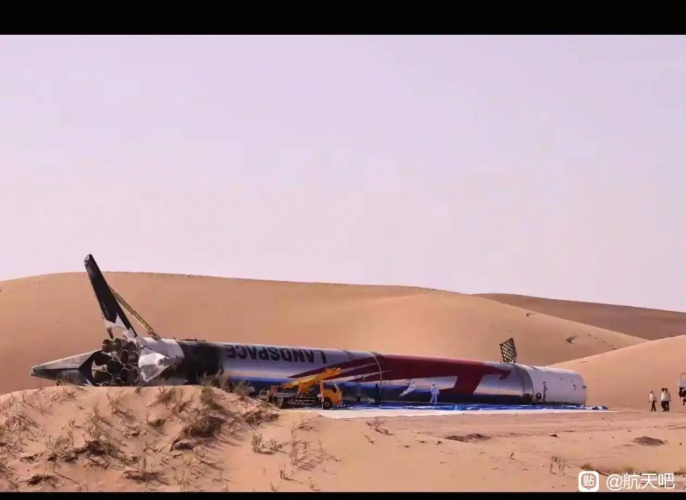
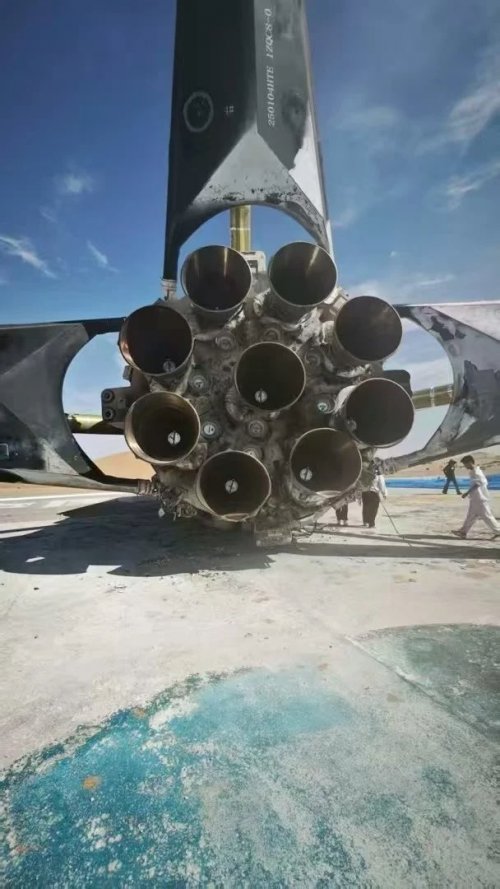
High resolution shots of the ZQ-3 Y2 1st stage. via Chen Xiao photos
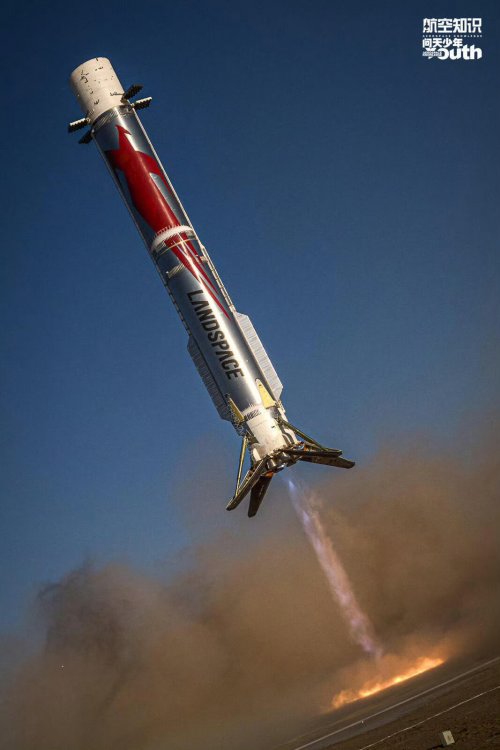
When it landed, it was already sitting a bit crooked, during the fuel purge there was a fire which seems to have exacerbated the lean. Not sure if it fell over on its own or it was "helped" down, but there seems to be damage on some of the engine bells on one side.Any idea why it tipped over?

I like that they captured the sound.【朱雀三号遥二 回收全程箭上画面-哔哩哔哩】 https://b23.tv/t6xODNi
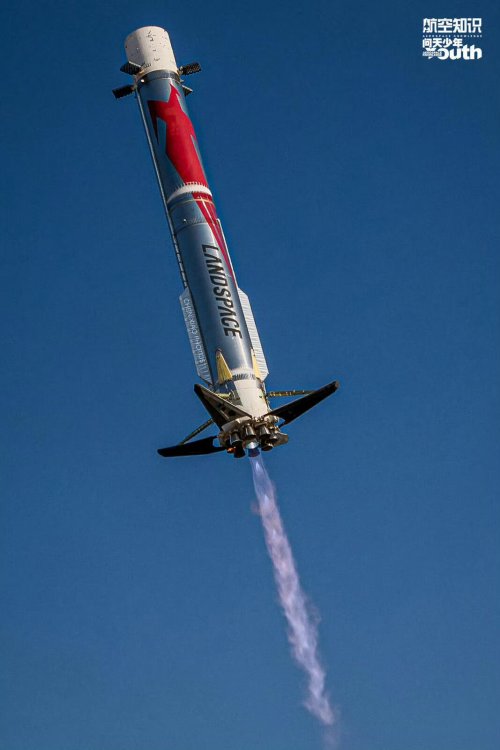
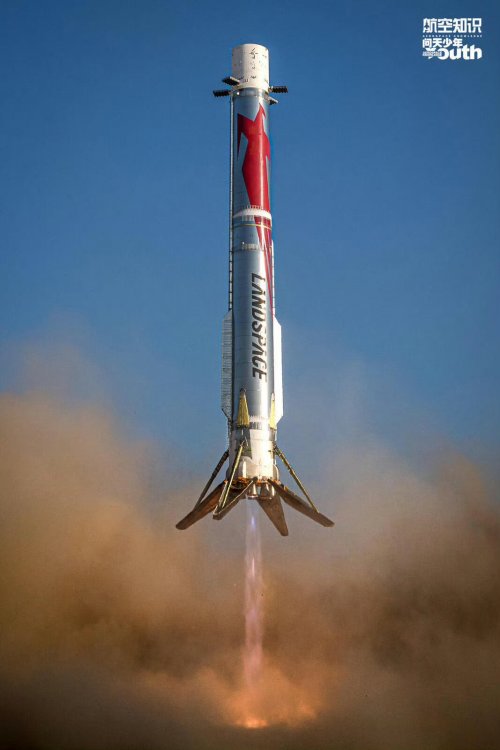
Footage from the camera on the rocket, letting you experience the entire rocket launch to landing from a first-person perspective, with no speed-up, 10 minutes in total.
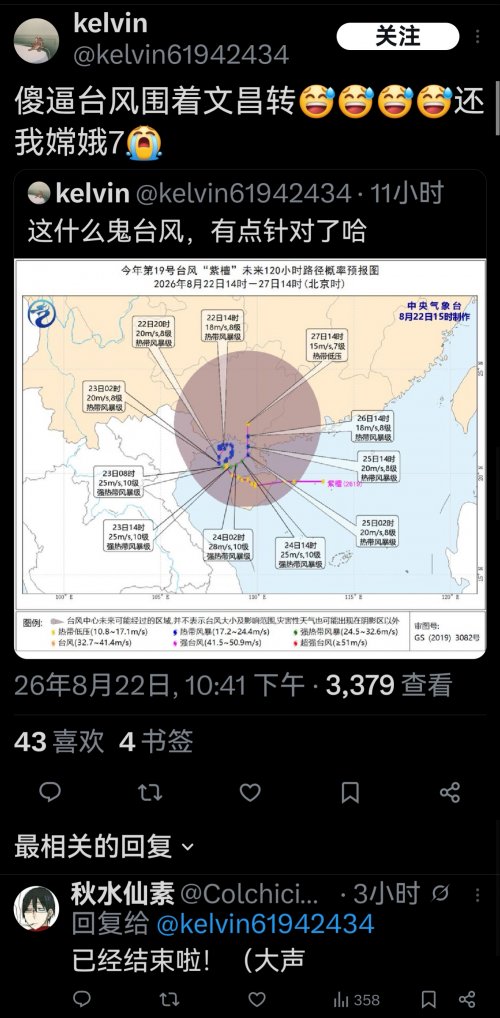
The launch is delayed to the next opportunity in September according to international partners following a briefing.Unfortunately, it seems that typhoons have been a bit fond of visiting the launch site lately, so the launch of Chang'e 7 will likely be postponed until next year… Damn, there hasn't been an official announcement yet, but the outcome probably won't be an issue. Unless the typhoon magically decides to leave tomorrow or the day after, I don't have much hope.
I've always been a fan of horizontal RLV landings, although I prefer designing for it rather than arriving there by accident.
I suggest that before you vent your malice, you first get the full picture of what happened. It had already landed successfully; it fell over only after it had landed.I've always been a fan of horizontal RLV landings, although I prefer designing for it rather than arriving there by accident.
Still, a peculiar operational failure, and one of a quite particular nature that is unlikely to happen with VTHL craft, but hopefully time will tell - I'm all for competing systems duking it out - Darwin and all that jazz... But as an aerospace engineer that as spent quite some years of my professional career in RLV design studies, I have come to the conclusion that VTHL RLVs, irrespective of the number of stages, are the way to go.I suggest that before you vent your malice, you first get the full picture of what happened. It had already landed successfully; it fell over only after it had landed.
VTHL is certainly cooler. But it is less efficient. Each has their own strengths and weaknesses. Unfortunately, one of VTHLs weaknesses is cost-to-orbit so. . .yeah.Still, a peculiar operational failure, and one of a quite particular nature that is unlikely to happen with VTHL craft, but hopefully time will tell - I'm all for competing systems duking it out - Darwin and all that jazz... But as an aerospace engineer that as spent quite some years of my professional career in RLV design studies, I have come to the conclusion that VTHL RLVs, irrespective of the number of stages, are the way to go.
The first successful Starship landing, for comparison.
Thank you.The first successful Starship landing, for comparison.

View: https://x.com/outerspacetoday/status/2093807904965230600?s=20
Long March 6C rocket stage fragments in orbit, creating cloud of debris
https://spacenews.com/long-march-6c-rocket-stage-fragments-in-orbit-creating-cloud-of-debris/
Not necessarily, there could have been any number of reasons, including a collision. But if I recall correctly some Chinese rockets do not “safe” themselves. That is, they do not vent excess fuel, discharge batteries, etc to remove potential energy from the used system. Leftover fuel, oxidizer, or even charged batteries can deteriorate over time into an explosive event.