
You are using an out of date browser. It may not display this or other websites correctly.
You should upgrade or use an alternative browser.
You should upgrade or use an alternative browser.
Chinese Space Program

SUPER=BUG
ACCESS: Top Secret
- Joined
- 25 September 2024
- Messages
- 884
- Reaction score
- 2,426
According to the China Manned Space Engineering Office, the selection process for the first batch of foreign astronauts in China's manned space program concluded in late April 2026. Two Pakistani candidates, Muhanmad Zeeshan Ali and Khurram Daud, were ultimately selected. Recently, they will come to China as reserve astronauts for training. After completing all the training and passing the assessment, one of them will participate in the flight mission as a payload specialist, becoming the first foreign astronaut to enter the Chinese space station.

- Joined
- 21 January 2015
- Messages
- 15,030
- Reaction score
- 24,272
The CZ-10B rocket is a two-stage tandem configuration, based on the reusable first stage of the CZ-10A rocket. The second stage uses a 5-meter diameter liquid oxygen-methane module and is equipped with a 5.2-meter diameter fairing. It adopts a "three-horizontal" launch and test mode, with the first stage recovered via a sea-based net system. Its LEO payload capacity is no less than 16 tons (in the first-stage recovery state), comparable to the Falcon 9 rocket. Its maiden flight is planned for the first half of 2026, with flight of a reused booster scheduled for November.
https://mp.weixin.qq.com/s/B1U06b2uzKdtFzBD2Uh6Bw
- Joined
- 21 January 2015
- Messages
- 15,030
- Reaction score
- 24,272
The China Academy of Launch Vehicle Technology (CALT) has developed a 5-meter-diameter composite material power module (engine bay-thrust structure).
On April 11, the first 5-meter-diameter composite material power module developed by CALT officially rolled off the production line. This power module is the largest integral composite material module for reusable launch vehicles in China's aerospace field, marking a breakthrough in CALT's manufacturing technology innovation and providing strong support for the smooth progress of major national engineering projects.
Wang Guohui, Secretary of the Party Committee of CALT, along with the chief designers of the project, relevant departments of CALT, and personnel from affiliated units, witnessed the successful completion of the product.
At the production workshop, Wang Guohui fully affirmed the hard work and achievements of the research and development team. He pointed out that the team's work plays a vital supporting role in promoting the high-quality development of China's aerospace industry, and their dedication is worthwhile. He expressed his expectation for the success of subsequent flight missions. He emphasized the need to build on previous work, stay focused on the goals, accelerate the progress of subsequent missions, push the technology to a new level, and continuously take effective measures to steadily achieve large-scale production.
The power module uses composite materials for over 60% of its structure. The wall panels are capable of withstanding a Thousand-ton Axial Compression Load on a lightweight structure and have adaptive adjustment interfaces.
The research and development team adopted a highly parallel and collaborative approach in the development of the power compartment structure, overcoming challenges such as high-precision and high-quality manufacturing of the new large-size composite material overall structure and complex technical status management under a highly parallel and collaborative mode. The first product was completed from scheme design to product delivery in 7 months.
https://mp.weixin.qq.com/s/ePfMYSwuCHt6LsGaetXCug
SUPER=BUG
ACCESS: Top Secret
- Joined
- 25 September 2024
- Messages
- 884
- Reaction score
- 2,426
About Tianwen-3
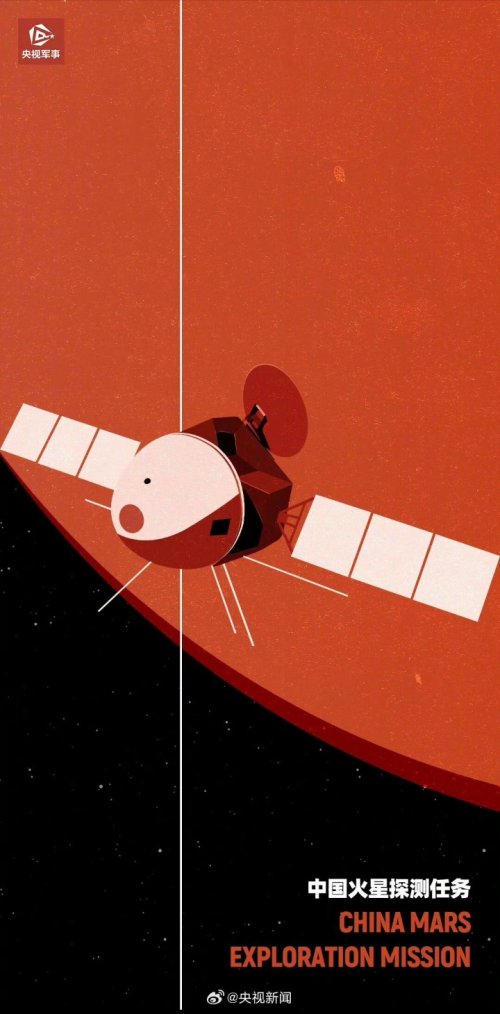
Since the announcement of the cooperation opportunities in April 2025, a total of 28 letters of intent for cooperation have been received. Following the selection principles of 'high scientific value, strong support for the mission, strong engineering feasibility, and high technological maturity,' five cooperative projects were ultimately selected.
The orbiter will carry three cooperative payloads: the Mars PEX spectrometer developed under the leadership of the International Space Research Committee's exploration working group, designed to investigate traces of life on Mars and the surface mineral composition; the Mars molecular ion composition analyzer led by Macau University of Science and Technology, used to study the atmospheric escape processes on Mars; and the laser heterodyne spectrometer led by the Chinese University of Hong Kong, used to investigate the vertical distribution of water isotopes in the Martian atmosphere and the Martian wind field.
The server will carry the Mars high-resolution hyperspectral imager developed under the leadership of the University of Hong Kong, intended for the detection of life traces, hydrated minerals, and resource surveys.
The lander will carry a laser retroreflector array developed under the leadership of the Italian National Institute for Nuclear Physics—Frascati National Laboratory, used to establish precise reference points on the Martian surface.

Since the announcement of the cooperation opportunities in April 2025, a total of 28 letters of intent for cooperation have been received. Following the selection principles of 'high scientific value, strong support for the mission, strong engineering feasibility, and high technological maturity,' five cooperative projects were ultimately selected.
The orbiter will carry three cooperative payloads: the Mars PEX spectrometer developed under the leadership of the International Space Research Committee's exploration working group, designed to investigate traces of life on Mars and the surface mineral composition; the Mars molecular ion composition analyzer led by Macau University of Science and Technology, used to study the atmospheric escape processes on Mars; and the laser heterodyne spectrometer led by the Chinese University of Hong Kong, used to investigate the vertical distribution of water isotopes in the Martian atmosphere and the Martian wind field.
The server will carry the Mars high-resolution hyperspectral imager developed under the leadership of the University of Hong Kong, intended for the detection of life traces, hydrated minerals, and resource surveys.
The lander will carry a laser retroreflector array developed under the leadership of the Italian National Institute for Nuclear Physics—Frascati National Laboratory, used to establish precise reference points on the Martian surface.
Last edited:
- Joined
- 21 January 2015
- Messages
- 15,030
- Reaction score
- 24,272
https://www.news.cn/20260424/f0c0b487dc004eafbcd9c5359a1983dc/c.html
Presentation video: https://www.bilibili.com/video/BV1rSoLBWEyL/?p=1
China unveils Tianwen-3 plans in search for life on Mars
https://news.cgtn.com/news/2026-04-...in-search-for-life-on-Mars-1MBpH50kBYA/p.html
The Tianwen 3 orbiter will carry three international/partner payloads: a Mars PEX spectrometer developed under the leadership of the COSPAR's PEX, used to search for traces of life on Mars and detect surface mineral composition; a Mars molecular ion composition analyzer developed under the leadership of the Macau University of Science and Technology, used to detect atmospheric escape processes on Mars; and a laser heterodyne spectrometer developed under the leadership of the Chinese University of Hong Kong, used to detect the distribution of water isotopes in the Martian atmosphere and the Martian wind field.
The cruise/service/relay module will carry a Mars surface hyperspectral imager developed under the leadership of the University of Hong Kong, used for the detection of traces of life, water-bearing minerals, and resource surveys.
The lander will carry a laser corner reflector array developed under the leadership of the Italian National Institute for Nuclear Physics-Vlascatti National Laboratory, used to establish precise reference points on the Martian surface.
Presentation video: https://www.bilibili.com/video/BV1rSoLBWEyL/?p=1
China unveils Tianwen-3 plans in search for life on Mars
https://news.cgtn.com/news/2026-04-...in-search-for-life-on-Mars-1MBpH50kBYA/p.html
View: https://x.com/AJ_FI/status/2047579204150067441#mTianwen-3 Mars sample return: CNSA has selected five international and Hong Kong and Macao cooperation payloads to add to the mission, scheduled to launch in late 2028 via two Long March 5 rockets. Return to Earth with ~500g of samples in 2031.
- Joined
- 21 January 2015
- Messages
- 15,030
- Reaction score
- 24,272
Via NSF:
The China National Space Administration released a series of major information in the aerospace field, including Tianwen-3, Xihe-2, and commercial spaceflight.
According to a report by China National Radio's "News and Newspaper Summary," the China National Space Administration (CNSA) released several major announcements on the 24th, including information on new lunar minerals, the selection results for collaborative projects for the Tianwen-3 mission, an announcement of international cooperation opportunities with the Xihe-2 mission, and the "Commercial Spaceflight Standards System (Version 1.0)."
Chinese scientists discovered two new lunar minerals in lunar samples from the Chang'e-5 lunar probe, naming them magnesium Chang'e stone and cerium Chang'e stone, respectively. These are the second and third new lunar minerals discovered by Chinese scientists, following Chang'e stone discovered in 2022.
Hou Zengqian, Academician of the Chinese Academy of Sciences and Chief Scientist of China's Planetary Exploration Program, stated: "Next, we will continue to study the new material composition of lunar samples to further expand our understanding of the formation and evolution of planets in outer space, and at the same time provide scientific basis for future resource development and utilization."
China's Tianwen-3 mission is scheduled to launch around 2028 and return Martian samples to Earth around 2031. Five collaborative projects from institutions such as the International Space Research Council and the Italian National Institute of Nuclear Physics were selected.
Guan Feng, Director of the Lunar Exploration and Space Engineering Center of the China National Space Administration (CNSA), stated that the five cooperative projects are progressing smoothly, with prototype products already delivered and undergoing domestic testing. The CNSA will continue to work with international partners to advance these projects and expand the boundaries of human knowledge.
A simultaneous announcement of international cooperation opportunities for the Xihe-2 solar probe satellite was also released. The plan is to carry international collaborative scientific payloads onto the Xihe-2 probe platform to jointly conduct space science exploration and research.
- Joined
- 21 January 2015
- Messages
- 15,030
- Reaction score
- 24,272
Two Sessions 2026: NPC deputy on deep-space exploration and its contributions to the world [Mar. 12]
Over the next five to eight years, we expect the Tianwen-3 mission to bring back samples from Mars, and Tianwen-4 will explore Jupiter. Looking further ahead to 2035, the 15th Five-Year Plan emphasizes early planning for major national science and technology projects and proposes advancing the second phase of the planetary exploration program. International cooperation will continue, with opportunities for international payloads on future missions. The plan brings both new opportunities and new responsibilities for China's space development."
- Joined
- 21 January 2015
- Messages
- 15,030
- Reaction score
- 24,272
China Focus: Shenzhou-21 astronauts send Space Day greetings from orbit.
The Shenzhou-21 crew aboard China's Tiangong space station recorded a special video message on Friday to mark the 11th Space Day of China, extending their best wishes for the steady progress of the nation's space program.
- Joined
- 21 January 2015
- Messages
- 15,030
- Reaction score
- 24,272
https://www.weibo.com/2196038737/QzFDXmPnh
Launch is expected around the 10th May.
The China Manned Space Engineering Office officially released the logo for the Tianzhou-10 mission.
The logo features a circular design, symbolizing the mission's complete success and the harmonious unity of space-ground collaboration. The golden gradient lines on both sides, like radiant rays, symbolize the mission's vibrant power and brilliant achievements, representing the splendid future of China's space program.
The central image focuses on the Tianzhou cargo spacecraft traveling along a golden trajectory towards the space station, directly presenting the mission's core objective. The visual center innovatively integrates the silhouette of the number "10" with the official engineering logo, conveying China's unwavering belief in the accumulated strength and mission accomplishment of its space program.
The color scheme is predominantly deep space blue, symbolizing the precise operation of the space mission in the vast universe; the interplay of red and gold gradients symbolizes the fearless courage and pursuit of excellence of the space personnel.
Launch is expected around the 10th May.
SUPER=BUG
ACCESS: Top Secret
- Joined
- 25 September 2024
- Messages
- 884
- Reaction score
- 2,426
The CZ-10B rocket is a two-stage tandem configuration. It reuses one stage from the CZ-10A rocket, while the second stage adopts a 5-meter-diameter liquid oxygen-methane module and is equipped with a 5.2-meter-diameter fairing. It uses the 'three-flat' test and launch mode, with the first stage recovered via an offshore net system. Its LEO payload capacity is no less than 16 tons (with first-stage recovery). The first flight is planned for the first half of 2026, with reusable flight operations planned for November.
SUPER=BUG
ACCESS: Top Secret
- Joined
- 25 September 2024
- Messages
- 884
- Reaction score
- 2,426
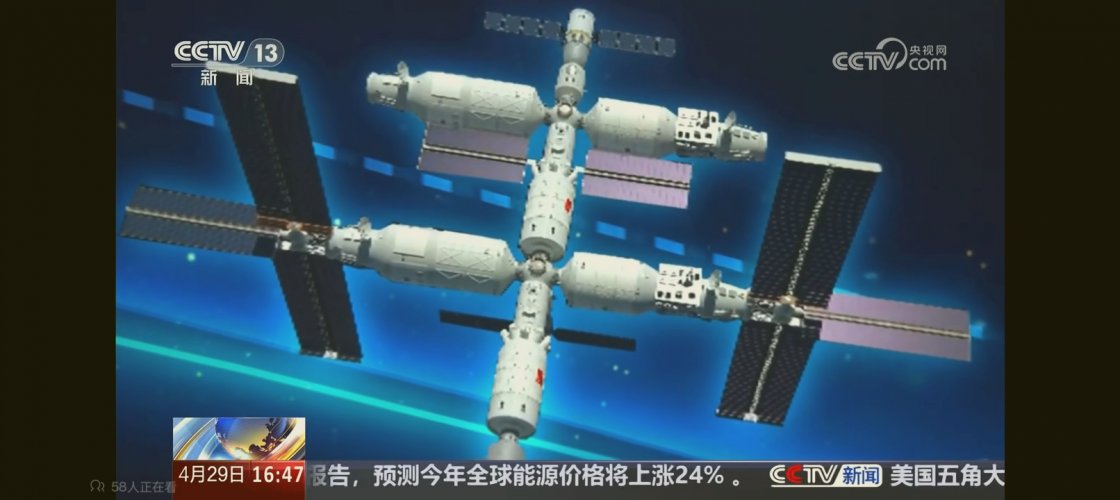
According to the latest plan, the Chinese space station will undergo a second expansion, using an upgraded Long March 5 to launch another core module, two laboratory modules, and the '巡天' astronomical telescope to fly in the same orbit.

【中国空间站 天和核心舱在轨稳定运行五周年 空间站将迎来"二次扩容"-哔哩哔哩】 https://b23.tv/VSn1pkg
【中国空间站 天和核心舱在轨稳定运行五周年 空间站将迎来"二次扩容"-哔哩哔哩】 https://b23.tv/VSn1pkg
- Joined
- 21 January 2015
- Messages
- 15,030
- Reaction score
- 24,272
大航跃迁完成 5 亿元融资,国内首款塔架回收火箭首飞加速
The Yaoqian-1 (跃迁一号) is plan to be Maiden in 2027.Dahang Leapfrog completed a 500 million yuan financing round, accelerating the maiden flight of China's first rocket with a launch tower recovery system.
IT Home News, April 30th – Dahang Yueqian announced last night that it has completed a 500 million yuan financing round. The funds raised will primarily be used to accelerate the development and maiden flight of Dahang Yueqian's core product – the "Yueqian-1," China's first reusable launch vehicle with a launch tower, and the research and testing of a 100-ton-class liquid oxygen-methane engine.
IT Home learned from Dahang Yueqian's official website that the company's maiden flight rocket has fully entered the production and testing phase, with final assembly and testing planned to begin in the second half of 2026 and the maiden flight to be completed in 2027.
Furthermore, Yueqian-1 is China's first reusable liquid rocket with a "chopstick" launch tower for recovery. Its design was approved in December 2024. In January of last year, the Yueqian-1 auxiliary propulsion system successfully completed its ground hot-fire test; in March of last year, the joint test of the Yueqian-1 rocket engine and control system was successfully completed; and in May of last year, the overall coordination test of the Yueqian-1 liquid launch vehicle's auxiliary propulsion system was successfully completed, entering the mass production stage.
- Joined
- 21 January 2015
- Messages
- 15,030
- Reaction score
- 24,272
April 29th marks the fifth anniversary of the launch and orbit insertion of the Tianhe core module of China's space station. With the continuous expansion of space station missions, the station will face the problem of insufficient space in the future. So what will be done? Reporters have learned that the space station will undergo a second expansion in the future.
Currently, the space station has deployed and implemented 267 scientific and application projects in orbit. In addition to astronauts from Hong Kong and Macau joining the station, a Pakistani astronaut will also perform a short-term flight mission as a payload specialist. Projects in cooperation with the United Nations Office for Outer Space Affairs are also progressing steadily. At this pace, the space station's most important "space" will soon be insufficient.
The Space Station Will Welcome a Sky Survey Telescope
According to relevant experts, the space station will welcome the Xuntian telescope in the future. The Long March 5B rocket will also be upgraded for future space station missions, developing a new, larger diameter fairing and adding another stage to the existing Long March 5B to adapt to the Chinese space station project. The space station will thus enter a new "expansion" cycle.
Future Expansion to Transform "T" Shape into "Cross"
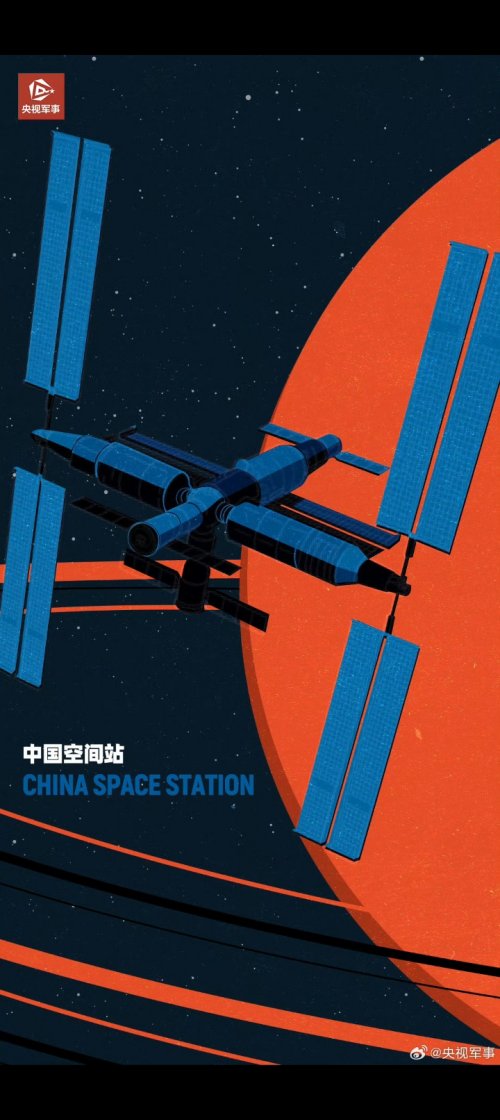
The current space station assembly is a stable, operating "T"-shaped structure. Future expansion plans will add a new expansion module forward of the current core module, forming a "cross" shape. According to the mission plan, this new expansion module will be larger than the core module, providing multiple new docking ports and adding an extra exit for astronauts, meeting the needs of frequent cargo and manned spacecraft travel and astronaut extravehicular activities.
Furthermore, this module will provide docking ports for new experimental modules. On October 31, 2013, the official logo for China's manned space program was released, its graphic design inspired by the space station's exterior modules and solar panels combining to form the Chinese character "中" (zhong). Thirteen years ago, China's manned space program had already depicted the space station's configuration on its mission logo. (CCTV)
https://weibo.com/tv/show/1034:5293187405643854
- Joined
- 21 January 2015
- Messages
- 15,030
- Reaction score
- 24,272
The new module will have multiple docking ports, including for a pair of future laboratory units, paving the way for a six-module structure with a total mass of about 180 tonnes.
No timeline for the expansion has been released.
https://www.scmp.com/news/china/sci...space-station-double-size-nasa-phases-out-iss

- Joined
- 13 August 2007
- Messages
- 10,423
- Reaction score
- 18,114
I look into why there is so many start up for Reusable rockets in China
it got to do with way the Communist Party (CP) manage there economy and it's brutal:
1. allot Startups got Loans and subsidiary by CP to become Company.
2. once the companies prosper, CP cut the subsidiary and let them fight and compete under each other.
3. the Survivor is let lose on World Market.
This cutthroat policy made companies big like Xiaomi (smartphone), BYD (electric Cars).
On others it backfires like Chip production, who is 18 years behind Wester standards !
But what outcome has this all to do with Chinese Space Flight ?
The CP initiate brutal competition like any company in China and only the toughest will survive it.
But will that Launcher Company establish Big on World Market ?
actually NO
Those Chinese launcher get part of launch Market in China, in shadow of State companies that build Launch for Military and CNSA.
There will market for Chinese constellation network by Xiaomi, China Mobile and JD.com
but no US satellite or Europan satellites do Political struggle, there also competition SpaceX, Arianespace, RocketLab, Blue Origin.
what also have upcoming Reusable rocket startups on that market !
India launch it own satellites by ISRO, Likewise Russia
So what left is third world countries who want to launch a Satellite.
A Market were private Chinese launcher could establish by build and launching Satellite for those clients.
it got to do with way the Communist Party (CP) manage there economy and it's brutal:
1. allot Startups got Loans and subsidiary by CP to become Company.
2. once the companies prosper, CP cut the subsidiary and let them fight and compete under each other.
3. the Survivor is let lose on World Market.
This cutthroat policy made companies big like Xiaomi (smartphone), BYD (electric Cars).
On others it backfires like Chip production, who is 18 years behind Wester standards !
But what outcome has this all to do with Chinese Space Flight ?
The CP initiate brutal competition like any company in China and only the toughest will survive it.
But will that Launcher Company establish Big on World Market ?
actually NO
Those Chinese launcher get part of launch Market in China, in shadow of State companies that build Launch for Military and CNSA.
There will market for Chinese constellation network by Xiaomi, China Mobile and JD.com
but no US satellite or Europan satellites do Political struggle, there also competition SpaceX, Arianespace, RocketLab, Blue Origin.
what also have upcoming Reusable rocket startups on that market !
India launch it own satellites by ISRO, Likewise Russia
So what left is third world countries who want to launch a Satellite.
A Market were private Chinese launcher could establish by build and launching Satellite for those clients.

- Joined
- 3 June 2011
- Messages
- 20,986
- Reaction score
- 19,254
Any word?NOTAM confirm that a launch attempt is planned no earlier than April 28th 02:00 UTC, the drop zone 500-600km downrange seems compatible with a rumored recovery attempt.
Here's how it should look like:
View attachment 809228

TwoTribes
ACCESS: Secret
- Joined
- 3 July 2025
- Messages
- 441
- Reaction score
- 1,657
Delayed.Any word?
- Joined
- 3 June 2011
- Messages
- 20,986
- Reaction score
- 19,254
Obviously. Any new date?Delayed.

TheKutKu
ACCESS: Top Secret
- Joined
- 13 February 2023
- Messages
- 555
- Reaction score
- 1,854
The recovery ship set sail yesterday after 2 months at port, there are also rumors of a launch from the CZ-12/10B launch pad around May 24th, but there is no maritime or aerial notice for a flight.Obviously. Any new date?
- Joined
- 3 June 2011
- Messages
- 20,986
- Reaction score
- 19,254
Thanks.The recovery ship set sail yesterday after 2 months at port, there are also rumors of a launch from the CZ-12/10B launch pad around May 24th, but there is no maritime or aerial notice for a flight.
- Joined
- 21 January 2015
- Messages
- 15,030
- Reaction score
- 24,272
https://finance.sina.com.cn/jjxw/2026-05-09/doc-inhxhuvc1426705.shtml
On the morning of May 8th, a full-area rehearsal for the Tianzhou-10 cargo spacecraft launch mission was held. Currently, all systems involved in the launch mission have completed relevant functional verifications, and all launch preparations are complete.
This full-area rehearsal is the most comprehensive simulation exercise for the Tianzhou-10 mission, excluding the ignition and launch itself, in terms of the number of participating systems and the number of elements tested.
CCTV reporter Tian Ruonan: This is the Wenchang Space Launch Site. Today, the full-area rehearsal for the Tianzhou-10 mission officially commenced. This is also the final comprehensive exercise before launch, simulating the entire launch procedure for all systems. Currently, personnel and equipment are in stable condition, and the weather conditions within the launch window meet launch requirements.
The launch site system is strictly conducting functional tests and data interpretation and comparison according to standards, assessing the interface compatibility and operational coordination between systems.
Wei Wei, China Aerospace Science and Technology Corporation (CASC): First, we need to establish connections between the rocket and ground equipment, ensuring the connection of the rocket's gas and liquid systems. Second, we need to conduct pre-launch functional checks on the electrical system. After that, the focus will shift to the propulsion system. Once all preparations are complete, the final fueling and launch will be completed on launch day.
Wang Weichen, CASC: Tianzhou-10 is the fifth cargo mission since the space station's application and development phase. This mission will allow Tianzhou-10 to remain in orbit for 12 months, exceeding the previous 9-10 months of cargo spacecraft. This was a situation we considered during the design phase.
Currently, the three astronauts on the Shenzhou-21 mission at the space station are systematically carrying out tasks such as material organization and equipment inspection, cooperating with ground preparations for the propulsion mission. The space station assembly is in good condition and operating stably, awaiting the arrival of Tianzhou-10.
- Joined
- 21 January 2015
- Messages
- 15,030
- Reaction score
- 24,272
Official English report from LandSpace (thread):
View: https://twitter.com/LandSpace_Tech/status/2054791925002051814
View: https://youtu.be/Mvn2zRgkK_4
MISSION SUCCESS | ZhuQue-2E Y5 Launch Vehicle Achieved Full Mission Success
On May 14, 2026, 11:00 a.m. (UTC+8), the ZhuQue-2E (ZQ-2E) Y5 launch vehicle successfully lift-off from LandSpace Launch Complex in Dongfeng Commercial Space Innovation Pilot Zone. The vehicle completed all planned flight tasks, achieving full mission success.
ZQ-2E Y5 is a two-stage cryogenic liquid launch vehicle evolved from the ZhuQue-2 family through systematic iterative design. ZQ-2E Y5 delivered a 2.8-tons customized payload to a 900 km polar orbit, designed for large-scale constellation deployment experiment. This mission marks that the ZQ-2E launch vehicle has achieved high-mass payload launch capability and demonstrates readiness for multi-satellite launch services, providing reliable support for internet constellation development.
ZQ-2E features a 3.35-meter body diameter, a 4.2-meter fairing, an overall length of 55.9 meters, and a liftoff mass over 267 tons, delivering over 338 tons of liftoff thrust.
– Stage 1: 4 × TQ-12A LOX–methane engines, 828 kN sea-level thrust (enhanced thrust by 108 kN + thrust self-correction)
– Stage 2: 1 × TQ-15A LOX–methane engine, 858 kN vacuum thrust
By extending stage 1, ZQ-2E Y5 propellant load is increased with subcooling, and in conjunction with structural mass reduction and enhanced engine thrust, ZQ-2E significantly improves payload efficiency and mission adaptability across multiple orbital mission profiles.
Beyond engineering, the mission reflected the broader value of space exploration. Landspace invited students and teachers from Pinghu’s Huanggu Experimental School to the launch site for a firsthand look at launch mission operations and an exchange with Jingyu Qiu, chief designer of the ZQ-2E launch vehicle. On launch day, the same group watched the livestream from Landspace’s Jiaxing manufacituring facility alongside engineers. The school’s educator, Aiying Yao, has been sowing space dreams for 34 years. Since 1992, she has led her students in writing letters and making small donations to support China’s space program, championing the slogan, “Follow scientists, not celebrities.” As the countdown ticked to zero, that multi-decade legacy of encouragement took root in a new generation of young minds.
This mission stands as a concentrated demonstration of the commercial space industrial cluster taking shape in Beijing’s Yizheng area. The vehicle livery prominently featured “Beijing Yizhuang,” — a gesture of tribute from the company to this thriving industrial hub, and a reflection of how a well-developed support ecosystem can tangibly boost the aerospace sector.
In parallel, co-branding elements highlighted collaboration with JingDong Logistics. This collaboration showcases how socialized industrial resources can co-power a space campaign. The partnership aims to open a new paradigm of coordinated Earth-space intelligent logistics.
The ZQ-2E Y5 mission marks the ZhuQue-2 series’ entry into a mature and stable operational phase. From the ZQ-2 Y1 to the ZQ-2E Y5, LandSpace has continuously iterated and refined key technologies around LOX–methane launch vehicles, steadily forging a development path built on an vertically integrated supply chain and real-flight campaigns driving serial upgrades. That trajectory lays a solid foundation for China’s commercial space sector to achieve high-cadence, large-scale launch services.
ZQ-2E can now delivers 4-tons to a 500 km Sun-Synchronous Orbit (SSO) or 6-tons to Low Earth Orbit (LEO), placing it among the leading medium-lift liquid launch vehicles in the commercial sector. The vehicle is designed to support a wide range of mission profiles, including multi-satellite deployment and high-mass launches, and can be combined with the ZhuQue-3 (ZQ-3) reusable launch vehicle to form an integrated launch service package, enhancing capabilities for high-frequency, low-cost access to space.
This successful flight provides high-value flight data to support cross-vehicle technology evolution and further strengthens the ZhuQue series’ launch service capabilities. LandSpace will always advancing LOX–methane propulsion and scalable, cost-efficient launch systems, delivering flexible solutions including dedicated launches, rideshare missions, and constellation deployment services.
View: https://twitter.com/LandSpace_Tech/status/2054791925002051814
- Joined
- 21 January 2015
- Messages
- 15,030
- Reaction score
- 24,272
View: https://twitter.com/planet4589/status/2055263140900683780
Two objects cataloged from the Zhuque-2E launch in 209 x 872 km x 89.0 deg orbit. The parameters are consistent with the theory that this is the SECO-1 orbit, the second stage failed to restart, and the payload then separated.

Tomboy
ACCESS: Top Secret
- Joined
- 4 January 2025
- Messages
- 543
- Reaction score
- 1,972
I'm pretty sure QF satellites are meant to climb themselves into target orbit after being placed in a transfer orbit by the LV like Starlink, since this launch was basically a dummy payload meant to simulate a stack of 10 QF satellites hence it obviously lacked the ability to finish the transfer.
Last edited:
- Joined
- 21 January 2015
- Messages
- 15,030
- Reaction score
- 24,272
“安庆造”致航一号液体运载火箭进入全箭合练阶段
The "Anqing-made" Zhihang-1 liquid-propellant carrier rocket has entered the full-rocket integration training phase.
Reporters learned from the Anqing Economic and Technological Development Zone that the Zhihang-1 liquid-propellant launch vehicle, independently developed by Anhui Space Zhihang Technology Co., Ltd., has completed its final assembly and testing, and has officially entered the full-rocket joint training phase. This marks a significant milestone for the development of Anqing's commercial aerospace industry, bringing the liquid rocket one step closer to launch.
This afternoon (May 16th) at approximately 1 PM, under strict coordination and scheduling, the Zhihang-1 launch vehicle was smoothly transported from the research and development workshop to its designated joint training area via a large flatbed truck. This full-rocket joint training exercise is the most comprehensive simulation exercise before the rocket's maiden flight, involving the most systems and elements, excluding ignition and launch. It is also a crucial final verification stage before the rocket's maiden flight. The Zhihang-1 is truly the first liquid-propellant launch vehicle "made in Anqing." Since the start of assembly work last year, the research and development team has overcome difficulties and steadily advanced various development tasks, successfully completing the core processes of final assembly and testing during the May Day holiday this year. According to the overall development plan, the rocket will undergo ten days of full-rocket joint training starting today. Liu Xinhao, General Manager of Anhui Space Navigation Technology Co., Ltd.
"The main tasks are to conduct site transfer and erection, rocket-ground connection, pre-launch inspection, and simulated launch procedures. The purpose is to verify rocket interface compatibility, standardize operating procedures, and verify the effectiveness of contingency plans. After the full rocket integration training is completed, the rocket will be ready for launch."
SUPER=BUG
ACCESS: Top Secret
- Joined
- 25 September 2024
- Messages
- 884
- Reaction score
- 2,426
On the morning of May 16, at the Jiuquan Satellite Launch Center, the Shenzhou-23 manned spacecraft and the Long March 2F Yao-23 carrier rocket spacecraft/rocket combination began transportation to the launch area. According to the mission schedule, the Shenzhou-23 manned spacecraft will be launched at an opportune time in the near future.
Now there is an interesting question: how many more times will the Shenzhou series spacecraft be launched before it is completely replaced by the Mengzhou series spacecraft?
Now there is an interesting question: how many more times will the Shenzhou series spacecraft be launched before it is completely replaced by the Mengzhou series spacecraft?
TheKutKu
ACCESS: Top Secret
- Joined
- 13 February 2023
- Messages
- 555
- Reaction score
- 1,854
Shenzhou isn't expected to be replaced until 2030 at least, Mengzhou will be initially dedicated to the crewed lunar program. So probably 8-10 more times at a semestrial rotation rate.On the morning of May 16, at the Jiuquan Satellite Launch Center, the Shenzhou-23 manned spacecraft and the Long March 2F Yao-23 carrier rocket spacecraft/rocket combination began transportation to the launch area. According to the mission schedule, the Shenzhou-23 manned spacecraft will be launched at an opportune time in the near future.
Now there is an interesting question: how many more times will the Shenzhou series spacecraft be launched before it is completely replaced by the Mengzhou series spacecraft?
- Joined
- 21 January 2015
- Messages
- 15,030
- Reaction score
- 24,272
- Joined
- 21 January 2015
- Messages
- 15,030
- Reaction score
- 24,272
- Joined
- 21 January 2015
- Messages
- 15,030
- Reaction score
- 24,272
First astronaut from Hong Kong to embark on China's spaceflight mission.
China upgrades Shenzhou-23 spaceship porthole protection against space debris.
Chinese astronaut to have one-year space residency: CMSA.
Li Jiaying, or Lai Ka-ying in Cantonese, the first astronaut from China's Hong Kong Special Administrative Region, has been selected as a payload specialist for the Shenzhou-23 spaceflight mission, the China Manned Space Agency (CMSA) said on Saturday.
China upgrades Shenzhou-23 spaceship porthole protection against space debris.
The Shenzhou-23 crewed spaceship, set for launch on Sunday, has been adaptively improved with enhanced porthole protection against space debris, boosting its resilience to such threats, the China Manned Space Agency announced at a press conference on Saturday.
Chinese astronaut to have one-year space residency: CMSA.
An astronaut from the Shenzhou-23 crew to be launched to space Sunday is set to carry out a one-year-long in-orbit stay experiment, the China Manned Space Agency (CMSA) said on Saturday.
- Joined
- 21 January 2015
- Messages
- 15,030
- Reaction score
- 24,272
China discloses Shenzhou-23 mission tasks, testing artificial embryos, year-long stay.
China to launch Shenzhou-23 crewed spaceship on May 24.China's Shenzhou-23 crew, during their upcoming mission, will carry out experiments involving "artificial embryos," rare-earth alloys and novel batteries, while contributing data on long-duration space residency, the China Manned Space Agency (CMSA) announced on Saturday.
China's Shenzhou-23 crewed spaceship is scheduled to be launched at 11:08 p.m. on Sunday (Beijing Time) from the Jiuquan Satellite Launch Center in northwest China, the China Manned Space Agency (CMSA) announced on Saturday.
- Joined
- 21 January 2015
- Messages
- 15,030
- Reaction score
- 24,272
The key aspect of Chang'e-7 is the hopper/mini-flying probe designed to head into permanently shadowed craters near the lunar south pole and drill for water-ice. Many plans for lunar exploration hinge on the presence of water
View: https://x.com/AJ_FI/status/2042573409842855985#m
China's upcoming lunar mission to target moon's south pole.
China's Chang'e-7 lunar exploration mission, scheduled for launch in the second half of 2026, will conduct environmental and resource surveys of the moon's south pole, and carry out international cooperation, the China Manned Space Agency said on Saturday.
- Joined
- 21 January 2015
- Messages
- 15,030
- Reaction score
- 24,272
- Joined
- 21 January 2015
- Messages
- 15,030
- Reaction score
- 24,272
China launches Shenzhou-23 crewed spaceship.
SZ-23 is the 2nd Shenzhou of the 3rd production batch, and the first to carry crew
https://news.cnr.cn/native/gd/20260524/t20260524_527633464.shtml
China launched the Shenzhou-23 crewed spaceship on Sunday, which will send three astronauts to its orbiting Tiangong space station.
SZ-23 is the 2nd Shenzhou of the 3rd production batch, and the first to carry crew
https://news.cnr.cn/native/gd/20260524/t20260524_527633464.shtml
With the Shenzhou-23 spacecraft about to launch, what improvements has it undergone as the second spacecraft in the new batch? What mission will it undertake?
Upgraded Human-Machine Interface and Expanded Interior Space
The new batch of spacecraft has undergone multi-dimensional technological upgrades based on existing mature technologies. Firstly, the instrument system of the return capsule has been significantly upgraded, optimizing the human-machine interface for a clearer and more user-friendly visual experience. Simultaneously, the miniaturization of the instrument panel has freed up more space for the downlink payload installation in the return capsule.
Secondly, while maintaining the original three-module configuration, space utilization has been further improved, providing astronauts with more ample space for work and activities.
Li Zhe, China Aerospace Science and Technology Corporation: Shenzhou-23 belongs to the third batch of spacecraft in the space station phase. Compared to previous spacecraft, its payload transport capacity has been greatly improved, and the time for rendezvous, docking, and return has been significantly reduced. The spacecraft has also undergone some optimized and improved design, resulting in a comprehensive improvement in reliability and safety.
More Efficient and Reliable Rendezvous and Docking, Enhanced Multi-Mission Adaptability
The Shenzhou-23 spacecraft utilizes and optimizes the 3.5-hour rapid rendezvous and docking scheme. The docking mechanism has been upgraded to a "rigid-flexible" controlled damping buffer system, adaptable to docking conditions of varying tonnage and initial conditions. The docking adaptability, success rate, and reliability have all been significantly improved.
The new batch of spacecraft supports flexible mission adjustments: It routinely performs manned missions, and in emergencies, it can switch to a cargo platform, forming a dual-track material support system in conjunction with the Tianzhou cargo spacecraft. Simultaneously, the spacecraft has reserved interfaces to be compatible with international collaborative payloads, adapting to the mission scheduling needs of future international visitors entering the space station.
Li Zhe, China Aerospace Science and Technology Corporation: After the window problem experienced with Shenzhou-20, we improved and reinforced the window to ensure safe manned return. In addition, we have also proposed many new quality control measures to ensure that all aspects of the operation, development, and testing processes are carried out effectively, guaranteeing the safety and reliability of the spacecraft.
- Joined
- 21 January 2015
- Messages
- 15,030
- Reaction score
- 24,272
Shenzhou-23 docking:
View: https://www.youtube.com/watch?v=HYL0hVNEfGE
View: https://twitter.com/planet4589/status/2058724915696521526
View: https://twitter.com/planet4589/status/2058724915696521526
Shenzhou-23 docked with the nadir port on the Chinese Space Station's Tianhe module at 1845 UTC May 24.
Last edited:
- Joined
- 21 January 2015
- Messages
- 15,030
- Reaction score
- 24,272
- Joined
- 21 January 2015
- Messages
- 15,030
- Reaction score
- 24,272
http://finance.people.com.cn/n1/2026/0525/c1004-40726286.html
Innovation Highlights:
Rice will be "re-sown" in space, achieving the first-ever continuous in-orbit cultivation of two generations of rice.
The manned spaceflight program's space application system is led by the Chinese Academy of Sciences (CAS), with the CAS Space Application Engineering and Technology Center serving as the overall unit.
It is understood that the space application system conducted nine scientific experiments via the Shenzhou-23 manned spacecraft, including space experiments on rice seeds, liver cells, nanozymes, actinomycetes, and perovskite batteries.
How to achieve "high-efficiency, high-quality, and high-yield" in-situ production of crops in space is a key scientific problem that urgently needs to be solved. Cang Huaixing, a researcher at the CAS Space Application Engineering and Technology Center, explained that the rice carried into space by Shenzhou-23 will be harvested first, and then the harvested seeds will be used to plant another crop of rice, achieving the first-ever continuous in-orbit cultivation of two generations of rice and analyzing the effect of long-term microgravity on the genetic stability of rice.
Simultaneously, two different rice samples served as control groups in space: one was a descendant of rice whose ancestors had previously been to space, and the other was rice samples sent to space for the first time. By comparing the growth status of rice in the space environment, the theoretical basis for human "food cultivation" on the moon or Mars can be further explored.
In the field of space life sciences, experiments on "the effects of space biological phase separation on lipid metabolism" will be conducted. This will help understand the molecular mechanisms by which microgravity affects lipid metabolism in hepatocytes from the perspective of phase separation, providing potential targets for early intervention and prevention strategies for related fatty liver diseases during long-term space stays.
In addition, three experiments will be conducted: "Research on the mechanisms of nanozymes in the synthesis and protection of biological macromolecules," "Research on the influence of the space environment on the phenotype and genetics of typical actinomycetes and its molecular mechanisms," and "Analysis of the regulatory mechanisms of DNA methylation in rice and Arabidopsis thaliana caused by space radiation and microgravity based on physical and biological radiation metrology."
Perovskite solar cells are also expected to open a new chapter in research. Experts explain that perovskite solar cells possess the characteristics of high efficiency, lightweight, ultra-high power-to-weight ratio, and low-temperature solution fabrication, offering potential energy supply solutions for future space stations and deep-space bases. However, whether perovskite cells can withstand the challenges of the space environment, including ultraviolet and particle radiation, high concentrations of atomic oxygen corrosion, and more intense temperature fluctuations, requires further research. This mission will focus on addressing these questions by conducting the first dynamic service experiment of perovskite cells on the Chinese space station, obtaining data on the conversion efficiency degradation of the cells under the extreme conditions of real space, and gaining further scientific understanding.
What new features did the Shenzhou spacecraft have in this mission? What space science experiments will the crew conduct?
Innovation Points:
The Shenzhou spacecraft has undergone significant upgrades, with its windows featuring triple ablation protection.
Compared to previous models, the biggest innovation of the Shenzhou-23 spacecraft is the optimized and upgraded window structure.
Experts from the Fifth Academy of China Aerospace Science and Technology Corporation explained that a crack in the Shenzhou-20 spacecraft's window forced the astronauts to remain in space, necessitating the first emergency launch mission in the subsequent manned space program. This experience gave aerospace workers a profound understanding of the space debris situation and the protection requirements for space debris protection of on-orbit spacecraft, accumulating experience for subsequent management and response to such risks.
Therefore, the Shenzhou team decided to replace the windows of the Shenzhou-23 spacecraft. Experts explained that the previous windows used a single layer of ablation-resistant glass. The team increased the number of layers of ablation-resistant glass in the new windows to two, plus an additional layer of internal cabin protection, giving the Shenzhou-23 spacecraft windows a total of triple ablation protection. This enhances its ability to withstand space debris impacts, adding an extra layer of "insurance" for the astronauts' safety and well-being in orbit.
When the porthole was replaced, the Shenzhou-23 spacecraft had already completed production and assembly and was on emergency duty at the Jiuquan Satellite Launch Center. Unlike replacing the porthole during the final assembly process, this porthole replacement required researchers to perform extremely delicate operations within a very confined space, while also avoiding scratching the spacecraft's coating and other components. The team conducted repeated rehearsals and ultimately completed the task.
Compared to previous missions, the downlink capability of Shenzhou-23 and its batch of spacecraft has also been significantly improved.
Previously, Shenzhou spacecraft could only carry approximately 50 kilograms of payload upon return, limiting scientific achievements to the best available. Now, after technological upgrades, the downlink capability of Shenzhou-23 and its batch of spacecraft can reach over 100 kilograms, three times the previous payload capacity. Upon return, scientific achievements, core equipment, and astronauts' personal belongings can all be loaded onto the spacecraft.
A close inspection of the interior of the Shenzhou-23 spacecraft reveals cutting-edge technology throughout. This spacecraft features specially customized, "slimmed-down" display and manual control instruments. While reducing weight and size, these instruments allow astronauts to easily understand complex spacecraft parameters. The hatch rapid leak detector can determine the sealing status in a very short time, ensuring safe entry and exit from the space station for astronauts. The retractable control stick, made of carbon fiber, is designed to fit perfectly in the palm of the hand, helping astronauts operate the equipment more effectively.
Innovation Points:
my country will attempt its first 3.5-hour radial rapid rendezvous and docking.
The radial rendezvous and docking of the Shenzhou-23 manned spacecraft with the Chinese space station marks the first time a Chinese manned spacecraft has attempted a radial rendezvous and docking under the 3.5-hour rapid rendezvous and docking mode.
Radial rendezvous and docking is the most technically challenging of all spacecraft and space station docking modes, often referred to as "threading a needle in space."
While the Shenzhou-13 and Shenzhou-14 missions verified radial rendezvous and docking technology, both used a 6.5-hour rendezvous and docking mode. Shenzhou-21 and Shenzhou-22 initiated a 3.5-hour rapid rendezvous and docking mode, but both employed forward docking. This mission marks the first deep integration of the 3.5-hour rapid rendezvous and docking technology with the radial docking mode, achieving a first-ever "combined application" of these two modes.
Experts from the spacecraft's GNC (Guidance, Navigation, and Control) system explained that forward and backward rendezvous and docking have stable intermediate stopping points. Even if the spacecraft's engines stop working, it can maintain attitude and orbital stability for a relatively long period, reducing the control pressure on the GNC system.
However, radial rendezvous and docking lacks stable stopping points. The spacecraft needs to continuously adjust its attitude and orbit, remaining in a dynamic control state throughout. This not only requires real-time consideration of propellant consumption but also places stringent demands on the real-time response and control accuracy of the GNC system, making it more reliant on the system's fully autonomous control capabilities.
Another significant new change is that the Shenzhou-23 spacecraft and other spacecraft in its batch support flexible mission adjustments. For example, these spacecraft routinely perform manned missions, but can be switched to cargo platforms in emergencies, forming a dual-track logistics support system in conjunction with the Tianzhou cargo spacecraft. Simultaneously, these spacecraft also have reserved interfaces to be compatible with international collaborative payloads, adapting to the scheduling needs of future international visitors to the space station.
Experts from the Eighth Academy of China Aerospace Science and Technology Corporation explained that the Shenzhou-23 spacecraft uses long-life, high-capacity lithium-ion batteries, effectively solving energy anxiety. Even in the face of severe conditions such as a large solar incidence angle and a sharp drop in solar array power generation, this power system remained rock-solid.
The Long March 2F Y23 carrier rocket, which carried out this mission, has also undergone 16 technical improvements compared to the rocket used in the previous mission, continuously strengthening the foundation for the safety and reliability of manned rockets.
Regarding environmental control, various sensors equipped by the China Electronics Technology Group Corporation can measure signals such as cabin pressure, temperature, humidity, and gas levels in real time. Experts stated that the data collected by these sensitive components allows for the determination of environmental parameters within the spacecraft cabin.
Similar threads
-

-
International Lunar Research Station (Sino-Russian project)
- Started by Grey Havoc
- Replies: 25
-

-
 Queqiao - Chinese Lunar Communication Relay Satellite
- Started by Flyaway
- Replies: 11
-