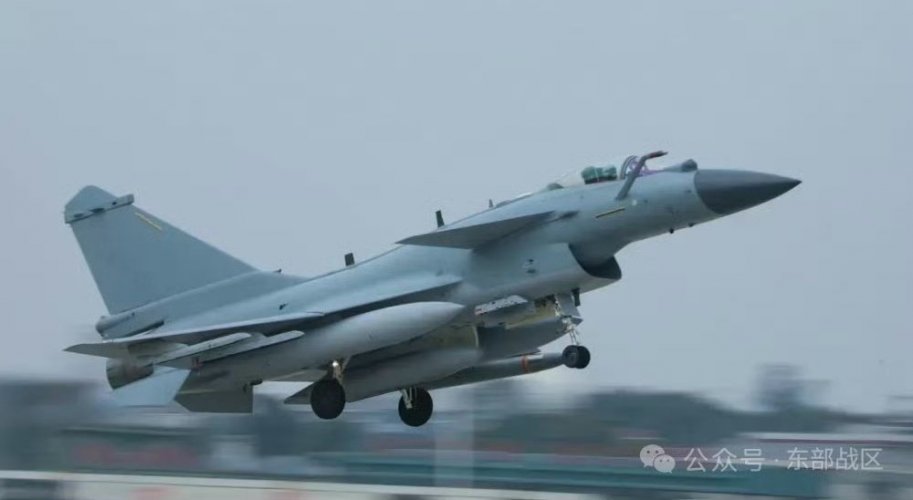
The J10 would be viable as the "low" part of an air force, but it seems to have a rather short combat range of 670nmi/1250km (unless wiki is confusing range and radius again?). That means it would not be the primary air patroller, but more of a point interceptor.

Indonesia has the downside of being most of the geographical size of the US Lower 48 but spread across a bunch of islands with a long way between airfields. This suggests their primary air patroller needs to be something like a Flanker or F-15: big because of lots of fuel. I'd say an F-15 with CFTs and the two big external tanks, Flanker with two big external tanks.
I'm pretty sure 670nmi/1250km is the usual quoted number for combat  radius not range.

https://zh.wikipedia.org/wiki/歼-10
IMO, the Chinese wiki is typically more accurate when it comes to these stuff.
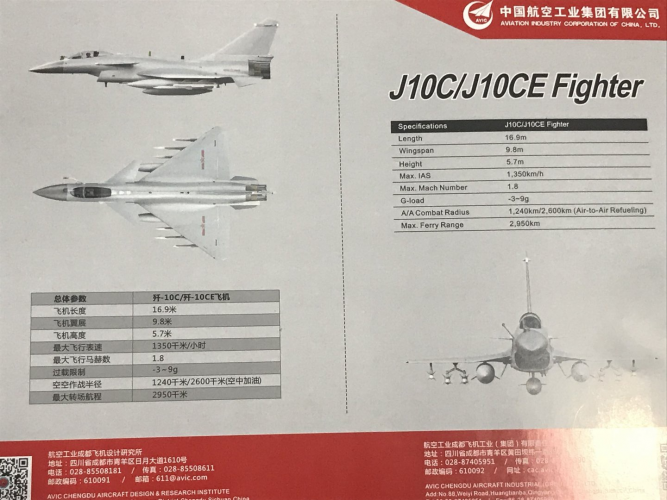
 
I'm pretty sure 670nmi/1250km is the usual quoted number for combat  radius not range.

https://zh.wikipedia.org/wiki/歼-10
IMO, the Chinese wiki is typically more accurate when it comes to these stuff.

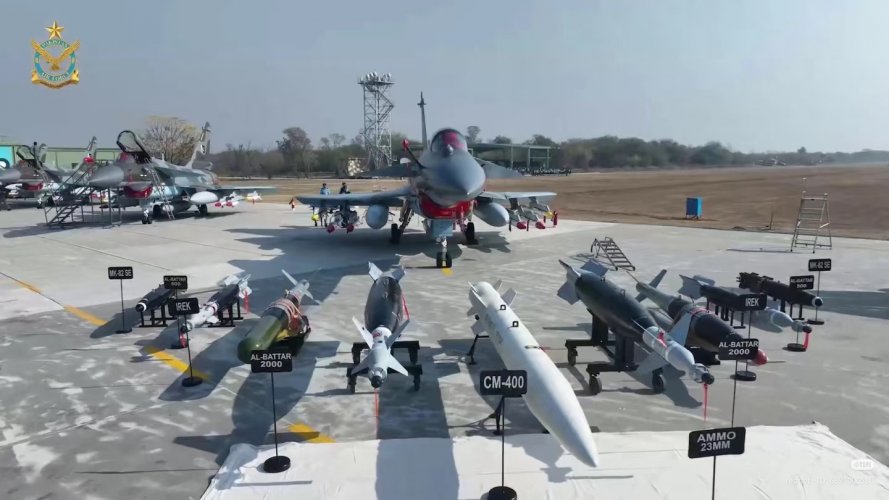
Another more direct source, corroborating it (1240km AA combat radius given, but close enough)

1769300267976.png
 
Not sure it's a good replacement for MiG-23/27s, I'm not knowledgeable about what A2G stuff the J-10 can carry.
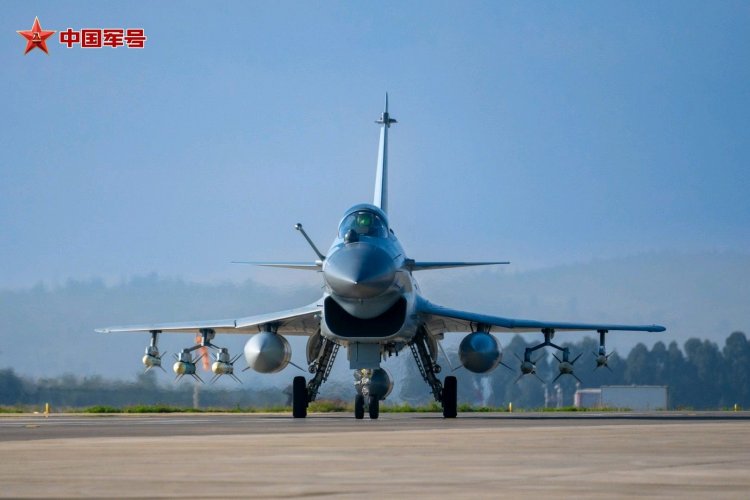
It is multirole otherwise PAF would have never acquired it and can replace almost all 3rd gen russian or chinese ones + early 4th gen F16 and Su27/Mig29.

As for specific munitions you can just google it.
Camera_XHS_17694183304411040g2sg30u0s1ciu4o6g5p3nc22qmqua8hj2g60.jpg
 
Last edited:
In Russia there's popular opinion J-10 is what Mig-23 replacement should've been all along.
Mig-29 instead was a left-leaning F-18 identifying itself as F-15...which went a long, 40 yr path to recognize what it is a F-18.
Nobody ever considered it an F-15 analog. That would be the Flanker.
 
Which is why I think that every nation looking to replace MiG-21s should take a look at the J-10.
I don’t think calling it a “modern MiG-21 replacement” does it justice. It’s a highly capable, great package that can go toe-to-toe with far more expensive aircraft on its own; it's got a great radar for its size, good kinematics, low RCS, and a reliable high-thrust engine. In various exercises, it has regularly beaten the Su-35, contested the far more capable J-16, and outperformed the Eurofighter Tranche 3A (reportedly) and Rafale F3R.

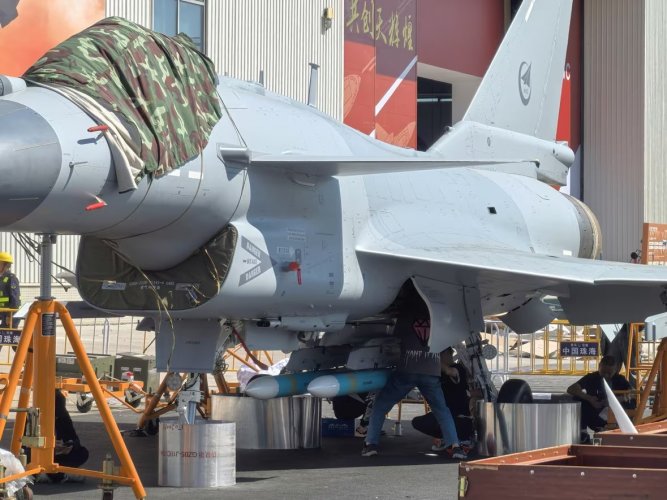
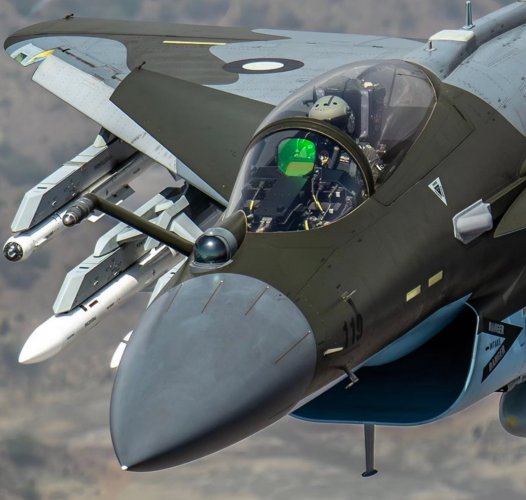
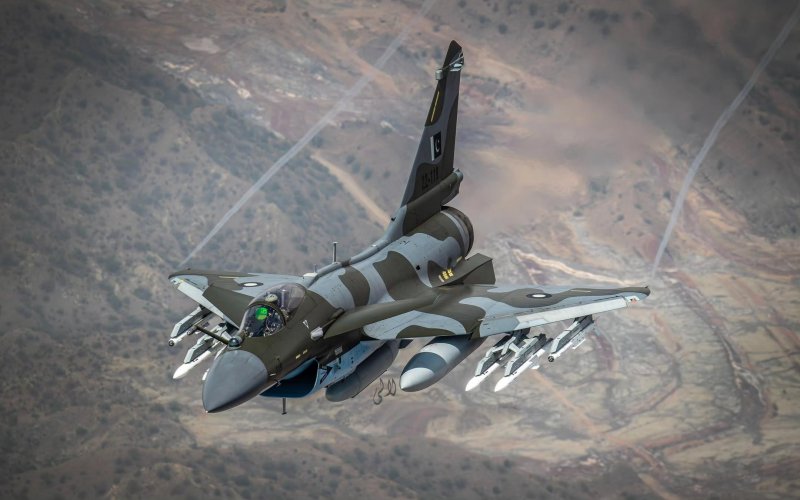
In my view, it offers the best bang for the buck among 4.5th-gen fighters (including the KF-21B1). The only area that still needs further improvement is the AAM load; double racks per pylon help somewhat, but triple racks like the TMLA would be even better.

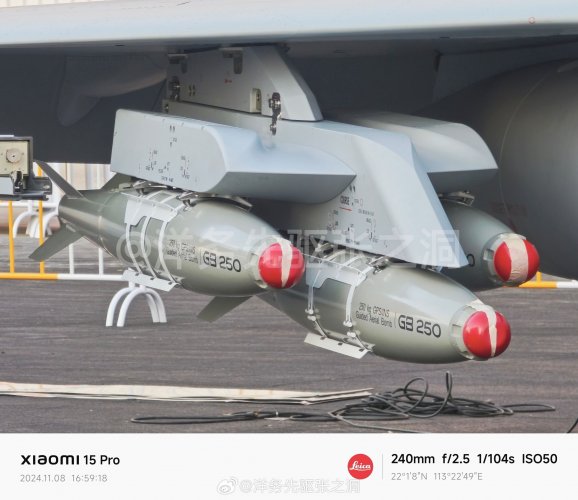
1000079920.jpg 1000079921.jpg
 
Last edited:
and IIRC Greek went for it(plus turks wanted, but it went down together with additional procurement).
False memory, Turkey was supposed to be its first operator. Technically, it could still happen since Trump is pushing Turkey to reverse its decision and order the aircraft as a prerequisite for even considering the resale of F-35s.

Not sure it has fuel/drag coefficient space to efficiently make use of more.
It's ultimately a Rick plane, in and out.
This thing has triple 250-kg bomb racks and PL-17 pylons for stations 2–6 (as well as YJ-21E AShBM)...


It is indeed the most "PDI" among the modern Chinese fleet, which is mostly comprised of Flankers & J-20s, but even that is not as bad as you make it to be (especially with 3 fuel tanks). The Triple rack adapter also has other uses beyond hunting CMs or drones as well (especially slinging lots of BVRAAMs, cued by friendlies in the air, against enemy jets – this is why Turkey wanted the TMLAs)... If you may possibly need better pK, just deplete the external fuel tanks first and then drop em when sh.t hits the fan...

You can technically plumb the belly hard points for AAMs but the process is difficult for vanilla birds. And if you do go with max load you are gonna have very short combat radius.
I’ve read about that as well...
 
Last edited:
emmmm, you can‘t replace more than 1000 aircrafts by your keyboard.
What are you talking about? There are only ~500 J-10s built in total, with 60+ percent of them being old J-10As and J-10Bs which are already starting to get phased out. The only J-10 variant that is going to stay for a near future is the J-10Cs of which only 200 or so are built and their roles are likely going to be replaced by UADFs going forward from 2030s. Given the production rate of J-20As and rumored capacity for J-35A, it is very likely by the end of this decade all legacy J-10 variants are going to be retired except for the J-10S as trainers.
 
According to the content discussed in a closed-door lecture by an academician, it is possible that in a conflict between Pakistan and India last year, the J10 did not use more complex tactics such as launching A and guiding B; they simply completed the mission using their own onboard radar and their own PL-15E.
 
According to the content discussed in a closed-door lecture by an academician, it is possible that in a conflict between Pakistan and India last year, the J10 did not use more complex tactics such as launching A and guiding B; they simply completed the mission using their own onboard radar and their own PL-15E.
I heard that J-10C actually have relatively big AESA with around 1500-1600 T/R modules which actually make it radar on F-35, Su-57 level in term of aperture size, much bigger than Rafale, Gripen-E, F-16V, F-18E/F radar
 
I heard that J-10C actually have relatively big AESA with around 1500-1600 T/R modules which actually make it radar on F-35, Su-57 level in term of aperture size, much bigger than Rafale, Gripen-E, F-16V, F-18E/F radar
I don’t have the number but the jf-17 is 12kw peak for 1075 modules (Pak defense forum count) if it’s 15kw peak (same as the super hornet) it would be around 1344 modules which is about what the super hornet has an consistent with the 12xx+ figure.
 
I heard that J-10C actually have relatively big AESA with around 1500-1600 T/R modules which actually make it radar on F-35, Su-57 level in term of aperture size, much bigger than Rafale, Gripen-E, F-16V, F-18E/F radar
This wouldn't actually surprise me in the least.
I posted elsewhere during Op Sindoor that IAF's initial tactics seemed to play directly into PAFs hands.
PAF had excellent radar coverage via their AWACS and networked radars.

They launched fighters and gained altitude advantage to give both radar and missile range/lofting advantage and their RoE allowed them to fire upon aircraft believed to be on attack run, approaching stand weapon launch points.

The tactical misuse of Rafale in the 1st couple of days also contributed greatly to IAFs woes.
It should have been flying top cover, above and behind the strike elements, not lobbing SCALP from low level when so obviously exposed to PAF surveillance measures.
India may not have afforded much weight to the J10 & PL15 capability, that was a very obvious mistake IMHO.

Yes IAF operational tactics improved during the confrontation, but the ignoring of even the possibility of PAF defence improvements over what India experienced during Balokot was a huge error.
 
This wouldn't actually surprise me in the least.
I posted elsewhere during Op Sindoor that IAF's initial tactics seemed to play directly into PAFs hands.
PAF had excellent radar coverage via their AWACS and networked radars.

They launched fighters and gained altitude advantage to give both radar and missile range/lofting advantage and their RoE allowed them to fire upon aircraft believed to be on attack run, approaching stand weapon launch points.

The tactical misuse of Rafale in the 1st couple of days also contributed greatly to IAFs woes.
It should have been flying top cover, above and behind the strike elements, not lobbing SCALP from low level when so obviously exposed to PAF surveillance measures.
India may not have afforded much weight to the J10 & PL15 capability, that was a very obvious mistake IMHO.

Yes IAF operational tactics improved during the confrontation, but the ignoring of even the possibility of PAF defence improvements over what India experienced during Balokot was a huge error.
I think IAF just didn't expect to be shot at. Had they thought PAF would actually shoot at them they would surely have been more careful. Imo it is mostly a polical/intelligence failure.
 
The tactical misuse of Rafale in the 1st couple of days also contributed greatly to IAFs woes.
It should have been flying top cover, above and behind the strike elements, not lobbing SCALP from low level when so obviously exposed to PAF surveillance measures.
Strike element is the most exposed one, both spatially and RCS-wise(it carries the worst stores). If possible, it makes sense to make the engaged element as survivable as possible.
 
I think IAF just didn't expect to be shot at. Had they thought PAF would actually shoot at them they would surely have been more careful. Imo it is mostly a polical/intelligence failure.
I tend to agree.
The pre conflict OSINT that was available claiming China had supplied PL15 non-monkey variants direct from PLAAF stockpiles were seemingly ignored.
Similarly the widespread operationalisation of AESA & BVR by PAF compared to 2019 was also ignored as IAF believed they had the initiative and would shape the battle space.
Strike element is the most exposed one, both spatially and RCS-wise(it carries the worst stores). If possible, it makes sense to make the engaged element as survivable as possible.
Agreed, but there was no possibility of IAF approaching undetected.
The PAF had AWACS up and had a good radar picture.
Using the IAFs most capable A2A platform to launch the strikes rather than as top cover was at best misguided.
The IAF made choices that left themselves greatly outranged in a BVR fight where the PAF knew they were coming.
 
Agreed, but there was no possibility of IAF approaching undetected.
Undetected is one thing; being tracked earlier than necessary is another.
It's quite relevant, as Rafales themselves were largely beyond their effective radar scope; launches happened well beyond RBE2A range for 5m2 target, and at the likely intersection point for incoming missiles, they were already within tracking range of J-10CE sets.

Using the IAFs most capable A2A platform to launch the strikes rather than as top cover was at best misguided.
Another problem is Dassault: Rafale is outside of IAF main data exchange environment (which is L-band Israeli NETCOR / ODL; you can identify installation by low thick "shark fin" on the back, visible on Tejas mk.1a/29UPG/part of MKI fleet).

Rafale was supposed to be integrated via it's native radio set, but apparently it went about as well as x-guard.
 
I heard that J-10C actually have relatively big AESA with around 1500-1600 T/R modules which actually make it radar on F-35, Su-57 level in term of aperture size, much bigger than Rafale, Gripen-E, F-16V, F-18E/F radar
I've read on another forum that it is air cooled, as JF-17 one, reducing its capacity.
 
I've read on another forum that it is air cooled, as JF-17 one, reducing its capacity.
Our understanding is that J-10C one isn't, the jet was fully redesigned(C is a de facto deep MLU, not unlike what Rafale will soon get with F5).
Air-cooled AESA is usually mentioned in the context of upgrading the remaining J-10As.
 
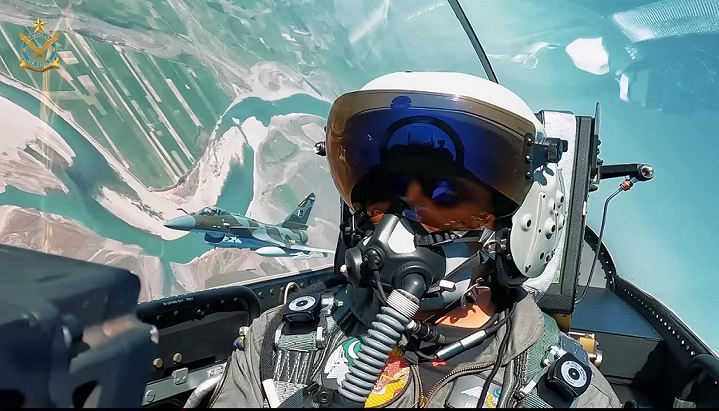
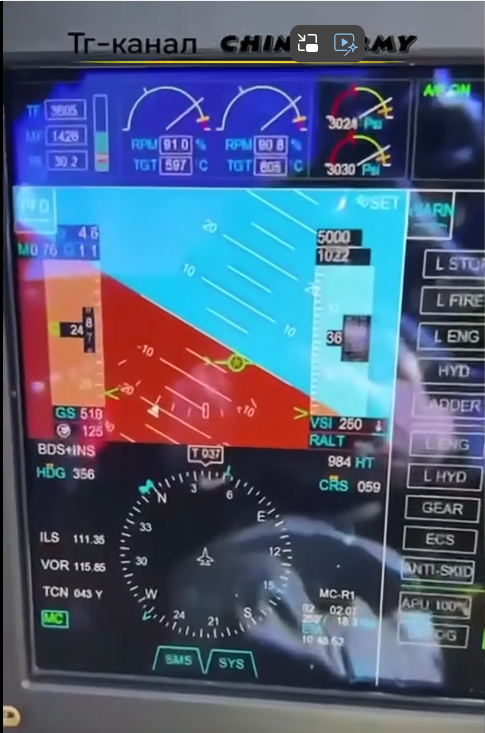
many months ago, there was a social media video of an Uzbek pilot flying a Chinese aircraft. Several of us here were trying to identify the cockpit as it didn't look like any plane we've seen before, but perhaps it was a J-10 variant in the end.
I believe people were claiming it was the J-35, while I thought it was unlikely and thought of either the L-15 or JF-17
 
I guess that's a trainer aircraft, letting those pilots from Uzbekistan get familiar with Chinese fighter jets in advance, and then prepare for receiving the J10CE.
here it is again
View: https://www.youtube.com/watch?v=NIheAfOpbF0


the main thing is the HUD and the MFDs. Looks like it's one giant/long MFDs, which doesn't correlate with any of the ones I've seen for the L-15, J-10 or JF-17 which use 3 smaller ones. Unless there's a new variant of those three.
 
here it is again

the main thing is the HUD and the MFDs. Looks like it's one giant/long MFDs, which doesn't correlate with any of the ones I've seen for the L-15, J-10 or JF-17 which use 3 smaller ones. Unless there's a new variant of those three.
We're just repeating the same discussion we had over a year ago...

1000031844-jpg.765987
 
and again, the HUD in that picture is different. I recall you claimed to know what it was but never got back to me.
 
and again, the HUD in that picture is different. I recall you claimed to know what it was but never got back to me.
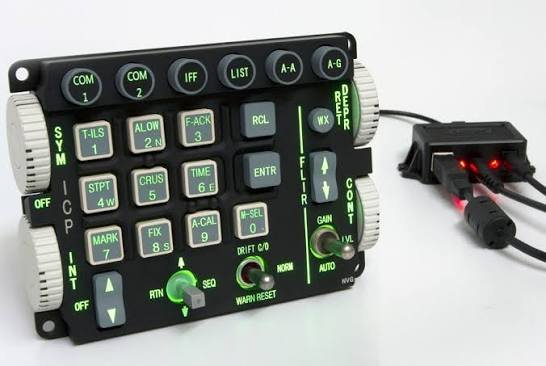
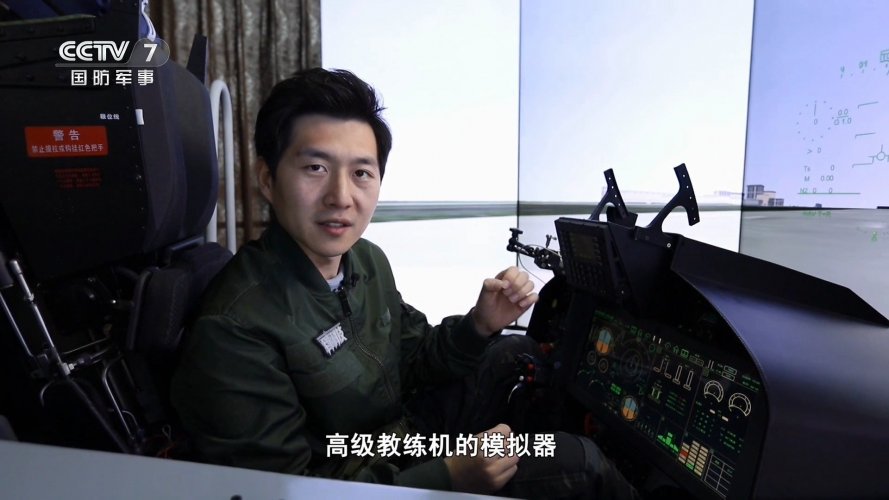
You mean the Integrated Control Panel, i.e. the buttons below the HUD? (See attachment #1)

Such small equipment variations between different production batches are to be expected (especially among different customers/operators). I mean, the JL-10/L-15 alone has probably gone through three dashboard revisions by now. But the large single-piece MFD (especially the smaller trapezoidal displays above it) and the overall dashboard layout (aside from minor details) seem to match perfectly, IMO.
 

Attachments

  • 1000102522.jpg
    1000102522.jpg
    26.9 KB · Views: 39
  • 53409579155_def65c0116_k.jpg
    53409579155_def65c0116_k.jpg
    242.6 KB · Views: 44
Last edited:
You mean the Integrated Control Panel, i.e. the buttons below the HUD? (See attachment #1)

Such small equipment variations between different production batches are to be expected (especially among different customers/operators). I mean, the JL-10/L-15 alone has probably gone through three dashboard revisions by now. But the large single-piece MFD (especially the smaller trapezoidal displays above it) and the overall dashboard layout (aside from minor details) seem to match perfectly, IMO.
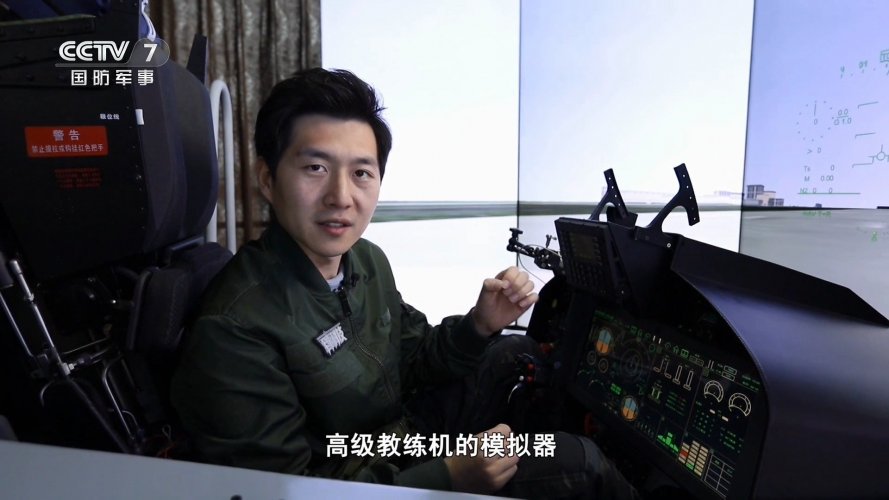
again you are pulling up pictures of simulators.
the UAE L-15's which are still pretty recent, show 3 MFDs rather than one large one.
View: https://x.com/RupprechtDeino/status/1216081984428167168
 
again you are pulling up pictures of simulators.
the UAE L-15's which are still pretty recent, show 3 MFDs rather than one large one.
Different operators :) AFAIK, the Emirati L-15s were first delivered in 2023, meaning they were built in 2021/22, which could've been before this large single-piece MFD dashboard layout was introduced on the export version (L-15). OTOH, this layout had already been around for a while...

But you're still not getting my point: In the first simulator cockpit photo I posted, you can see a touch-screen ICP, whereas in the second attachment from my last post, you can see the same exact buttoned-ICP as the one seen in the video you reposted. This means there are indeed such small equipment variations between different batches, at least for the PLA's JL-10s (which the Uzbek pilots would be training with); while every visible detail in your video matches what is seen in the publicly available JL-10 simulator cockpit footage...
 
Different operators :) AFAIK, the Emirati L-15s were first delivered in 2023, meaning they were built in 2021/22, which could've been before this large single-piece MFD dashboard layout was introduced on the export version (L-15). OTOH, this layout had already been around for a while...

But you're still not getting my point: In the first simulator cockpit photo I posted, you can see a touch-screen ICP, whereas in the second attachment from my last post, you can see the same exact buttoned-ICP as the one seen in the video you reposted. This means there are indeed such small equipment variations between different batches, at least for the PLA's JL-10s (which the Uzbek pilots would be training with); while every visible detail in your video matches what is seen in the publicly available JL-10 simulator cockpit footage...
Because you have not provided any clear evidence of anything.

There are pictures of actual flying L-15s that show their HUD and MFD configuration. That is proof of something in operation.
You are posting pictures of random screenshots of simulators, but we do not know where they come from or what they are supposed to represent exactly, you are only providing your own interpretation of it.
Your first screenshot looks more like a J-35 simulator based on the image on the screen with the bays and wing configuration.
 
Obviously, that Uzbekistani pilot was flying a twin-engine fighter. You can tell just from the dashboard, so we can naturally rule out the J10 and JF17. As for twin-engine fighters, the J35 is completely out of the question, and the cockpits of the J11, J15, and J16 don’t look like this. J20? No way… JH7 is also impossible, and the J8 doesn’t have such a modern cockpit. After eliminating all the options, the only relatively reasonable choice left is the L15 or L10.

Also, the trainer style in that SNNE picture looks a lot like the style in the video that pilot posted.

But given that this is within China, I tend to think this is the PLA's own JL-10. The JL-10 and L-15 are basically different extensions of the same platform. Most importantly, according to past interviews, PLA personnel have described it based on performance as a 'little J10'.There's no better way for it to serve as a transition for Uzbekistan air force cadets before flying the J10CE...
 

Attachments

  • 1000012739.png
    1000012739.png
    720.5 KB · Views: 34
  • 1000012740.jpg
    1000012740.jpg
    242.6 KB · Views: 29
Last edited:

Similar threads

Back
Top Bottom