Something to consider, most of those losses at Jutland appear to have been a result of poor magazine security and the practice of storing charges OUTSIDE of secure areas. In other words the "Lazy bastard" mantra and "Rate of fire is everything" culture led by mostly, one commanding officer. We all know his name so no point in repeating it. The fact that he got away scott free is a shame on the navy to this day.

I disagree, Foo. You lay blame for severe British losses during the Battle of Jutland on Vice-Admiral David Beatty's alleged lax propellant handling procedure. That played a part, but I say that battlecruisers Invincible, Indefatigable, and Queen Mary (and certainly the three armored cruisers) had been designed and constructed too flimsily to stand up to a few German 283mm shells without exploding. By strictest contrast, more sturdily built Tiger, under Beatty's command and with that same handling procedure, endured fifteen heavy shell hits at Jutland and kept fighting.

After the battle, the Royal Navy took the time and trouble to add considerable weight of new armor around the magazines of all surviving battlecruisers, and to thicken their turret roofs. The authorities there on the spot must have disagreed with you that the losses were the fault of Beatty's culture. And they hurriedly redesigned HMS Hood to add more protection, in vain as it turned out. Do you blame Beatty, who died in 1936, for the explosive end of Hood in 1941 from a mere two 380mm shells (after one 203mm)?

Earlier this year I read Stephen Roskill's comprehensive biography of Beatty. Yes, Roskill does write (pp190-91) Beatty "considered that the additional protection [added to his battlecruisers after Jutland] was inadequate and did not 'compensate for radical defects in design' which in his opinion the battle had revealed. Though Beatty probably also had in mind the damage suffered by Lion in the Dogger Bank action, when her armour protection had failed against 11- and 12-inch shells, the loss of three of his battle cruisers at Jutland may have been attributable to faults in the make-up of cordite charges and in the drill used to get them from the magazines to the guns rather than to inadequate armour protection... The emphasis placed by Beatty among others on achieving the highest possible rate of fire resulted in thoroughly dangerous practices being adopted in the magazines and handling rooms, such as stacking charges at the bottom of the hoists."

But author Roskill criticizes (pp186-87) naval historian Arthur J Marder who stated "that 'There is at least no firm proof that the German armour was superior to British', and castigates what he calls 'the legend' of our battle cruisers' 'indifferent protection'—which ignores Beatty's grave concern over the failure of Lion's 5-inch side armour against a German 11-inch shell at the Dogger Bank action... Marder also considers that even if British armour was 'indifferent to moderate' it probably was 'no more than a contributory factor' to the loss of the three ships on 31st May 1916... Though the manufacture and testing of armour is a complicated story all the evidence of the 1914-18 war points to the inadequacy of our ships' protection as well as to the inefficiency of our armour-piercing shell... Thus there is at the very least a possibility that penetration of the weak and inadequate British armour caused an internal explosion (e.g. in a secondary armament magazine) which spread quickly to the highly vulnerable main armament cordite supply system, and so blew up the ships; and that may have happened in the case of Hood in 1941 as well as at Jutland. In sum there is no doubt that Beatty was right to point to the inadequacy of his ship's protection in 1915, and the whole question of ship design, including the manufacture and testing of armour plate, during the Fisher era at the Admiralty is open to question."

I think Roskill gives a judicious and fair summation.
 
It's quite incorrect to say that Tiger survived Jutland since she was simply the most sturdy British battlecruiser present. Tiger had an almost identical armor scheme to Queen Mary, and Lion too for that matter. The only difference was that her secondary battery was more heavily protected, with a 6" casemate belt instead of no protection for the guns and 3" sides and 2" roofs for the 4" magazines on the previous battlecruisers. However, given the placement of the 4" magazine that casemate belt was not relevant to Tiger's survival vice Queen Mary's as it's unlikely the shell trajectory would've taken it through it.

Meanwhile, both Invincible and Indefatigable, and very nearly Lion, were all turret detonations that traveled down the hoists to detonate the magazines. Tiger did sustain turret hits that did not penetrate, but Lion had the exact same armor - Tiger's good fortune compared to Lion was shot placement, i.e. luck. Lion was incredibly unlucky that the shell that penetrated her Q turret hit the joint between the face and forward roof plates. With the ships sunk it's not possible to know where on the turrets Invincible and Indefatigable were penetrated, so possibly Tiger with her thicker turret armor would have shrugged off the hits. But equally truly, with safer ammo handling procedures, or safer propellant in the first place, the turret fires would have not led to catastrophic magazine detonations.

And, of course, there's Princess Royal, who took nine hits herself, one of which disabled her X turret, I would assume via concussion rather than penetration.

Overall, I tend to agree with Marder more than Roskill - on the Cats the armor was generally adequate and where it wasn't more often than not catastrophe was avoided. That said, the earlier 12" battlecruisers had clearly inadequate protection in comparison and Beatty rightfully sidelined them after Jutland.

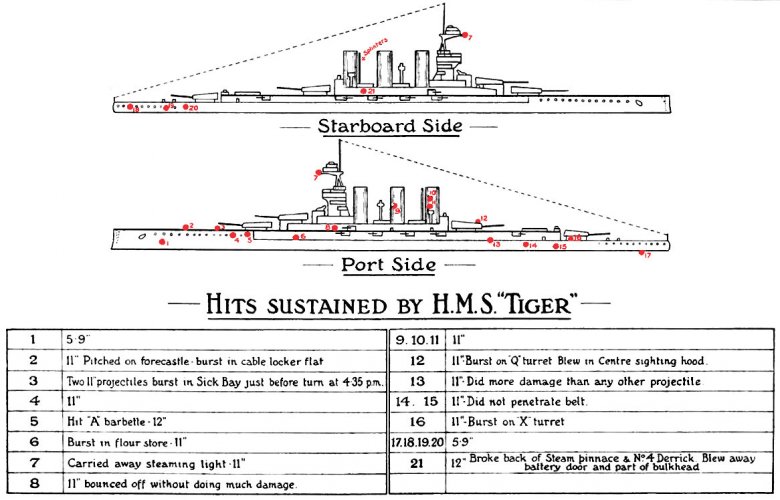
On a related note, I figured out where the 21-hit claim on Tiger came from. It's the attached chart.
 

Attachments

  • HMS_Tiger_Jutland_damage_diagrams.jpg
    HMS_Tiger_Jutland_damage_diagrams.jpg
    172.8 KB · Views: 52
I disagree, Foo. You lay blame for severe British losses during the Battle of Jutland on Vice-Admiral David Beatty's alleged lax propellant handling procedure. That played a part, but I say that battlecruisers Invincible, Indefatigable, and Queen Mary (and certainly the three armored cruisers) had been designed and constructed too flimsily to stand up to a few German 283mm shells without exploding. By strictest contrast, more sturdily built Tiger, under Beatty's command and with that same handling procedure, endured fifteen heavy shell hits at Jutland and kept fighting.

After the battle, the Royal Navy took the time and trouble to add considerable weight of new armor around the magazines of all surviving battlecruisers, and to thicken their turret roofs. The authorities there on the spot must have disagreed with you that the losses were the fault of Beatty's culture. And they hurriedly redesigned HMS Hood to add more protection, in vain as it turned out. Do you blame Beatty, who died in 1936, for the explosive end of Hood in 1941 from a mere two 380mm shells (after one 203mm)?

Earlier this year I read Stephen Roskill's comprehensive biography of Beatty. Yes, Roskill does write (pp190-91) Beatty "considered that the additional protection [added to his battlecruisers after Jutland] was inadequate and did not 'compensate for radical defects in design' which in his opinion the battle had revealed. Though Beatty probably also had in mind the damage suffered by Lion in the Dogger Bank action, when her armour protection had failed against 11- and 12-inch shells, the loss of three of his battle cruisers at Jutland may have been attributable to faults in the make-up of cordite charges and in the drill used to get them from the magazines to the guns rather than to inadequate armour protection... The emphasis placed by Beatty among others on achieving the highest possible rate of fire resulted in thoroughly dangerous practices being adopted in the magazines and handling rooms, such as stacking charges at the bottom of the hoists."

But author Roskill criticizes (pp186-87) naval historian Arthur J Marder who stated "that 'There is at least no firm proof that the German armour was superior to British', and castigates what he calls 'the legend' of our battle cruisers' 'indifferent protection'—which ignores Beatty's grave concern over the failure of Lion's 5-inch side armour against a German 11-inch shell at the Dogger Bank action... Marder also considers that even if British armour was 'indifferent to moderate' it probably was 'no more than a contributory factor' to the loss of the three ships on 31st May 1916... Though the manufacture and testing of armour is a complicated story all the evidence of the 1914-18 war points to the inadequacy of our ships' protection as well as to the inefficiency of our armour-piercing shell... Thus there is at the very least a possibility that penetration of the weak and inadequate British armour caused an internal explosion (e.g. in a secondary armament magazine) which spread quickly to the highly vulnerable main armament cordite supply system, and so blew up the ships; and that may have happened in the case of Hood in 1941 as well as at Jutland. In sum there is no doubt that Beatty was right to point to the inadequacy of his ship's protection in 1915, and the whole question of ship design, including the manufacture and testing of armour plate, during the Fisher era at the Admiralty is open to question."

I think Roskill gives a judicious and fair summation.
You’ll have
I disagree, Foo. You lay blame for severe British losses during the Battle of Jutland on Vice-Admiral David Beatty's alleged lax propellant handling procedure. That played a part, but I say that battlecruisers Invincible, Indefatigable, and Queen Mary (and certainly the three armored cruisers) had been designed and constructed too flimsily to stand up to a few German 283mm shells without exploding. By strictest contrast, more sturdily built Tiger, under Beatty's command and with that same handling procedure, endured fifteen heavy shell hits at Jutland and kept fighting.

After the battle, the Royal Navy took the time and trouble to add considerable weight of new armor around the magazines of all surviving battlecruisers, and to thicken their turret roofs. The authorities there on the spot must have disagreed with you that the losses were the fault of Beatty's culture. And they hurriedly redesigned HMS Hood to add more protection, in vain as it turned out. Do you blame Beatty, who died in 1936, for the explosive end of Hood in 1941 from a mere two 380mm shells (after one 203mm)?

Earlier this year I read Stephen Roskill's comprehensive biography of Beatty. Yes, Roskill does write (pp190-91) Beatty "considered that the additional protection [added to his battlecruisers after Jutland] was inadequate and did not 'compensate for radical defects in design' which in his opinion the battle had revealed. Though Beatty probably also had in mind the damage suffered by Lion in the Dogger Bank action, when her armour protection had failed against 11- and 12-inch shells, the loss of three of his battle cruisers at Jutland may have been attributable to faults in the make-up of cordite charges and in the drill used to get them from the magazines to the guns rather than to inadequate armour protection... The emphasis placed by Beatty among others on achieving the highest possible rate of fire resulted in thoroughly dangerous practices being adopted in the magazines and handling rooms, such as stacking charges at the bottom of the hoists."

But author Roskill criticizes (pp186-87) naval historian Arthur J Marder who stated "that 'There is at least no firm proof that the German armour was superior to British', and castigates what he calls 'the legend' of our battle cruisers' 'indifferent protection'—which ignores Beatty's grave concern over the failure of Lion's 5-inch side armour against a German 11-inch shell at the Dogger Bank action... Marder also considers that even if British armour was 'indifferent to moderate' it probably was 'no more than a contributory factor' to the loss of the three ships on 31st May 1916... Though the manufacture and testing of armour is a complicated story all the evidence of the 1914-18 war points to the inadequacy of our ships' protection as well as to the inefficiency of our armour-piercing shell... Thus there is at the very least a possibility that penetration of the weak and inadequate British armour caused an internal explosion (e.g. in a secondary armament magazine) which spread quickly to the highly vulnerable main armament cordite supply system, and so blew up the ships; and that may have happened in the case of Hood in 1941 as well as at Jutland. In sum there is no doubt that Beatty was right to point to the inadequacy of his ship's protection in 1915, and the whole question of ship design, including the manufacture and testing of armour plate, during the Fisher era at the Admiralty is open to question."

I think Roskill gives a judicious and fair summation.
We’d do well to remember that Beatty was First Sea Lord when the official history of Jutland was written up, the Hood redesigned and the lesson of Jutland became greater armour.

Queen Mary and Tiger had virtually identical protection systems, the armoured cruisers were in totally the wrong place and were lost to stiff upper lip, not thin belt armour. The Invincible was surprised by a superior number of enemy warships and overwhelmed.

There was lots of things in play, but the lax handling of ammunition aboard some of the battlecruisers did make a difference.

Hood’s loss, like Lutzow’s, the near loss of Derflinger, Sedlitz, Moltke and Lion, the loss Indefatigable, Queen Mary and Invincible was all due to an opponent firing great big shells at them.

As someone must have said once in the heat of battle ‘this is bloody dangerous!’.
 
The fact that none of the battlecruisers machinery spaces were penetrated also makes the claim of inadequate armour suspect. Given those spaces were larger than the magazine spaces and similarly armoured, there would surely have been some penetrating hits to those areas if the smaller magazine spaces were also penetrated.

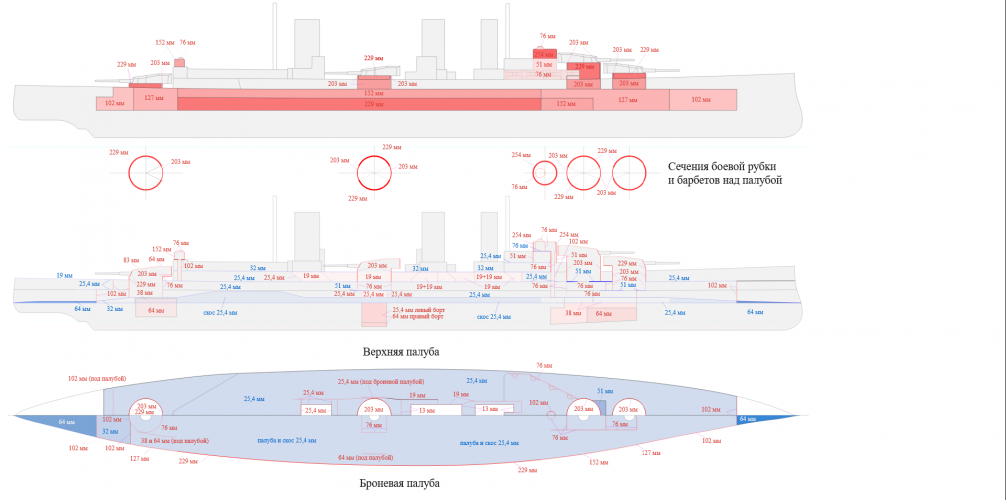
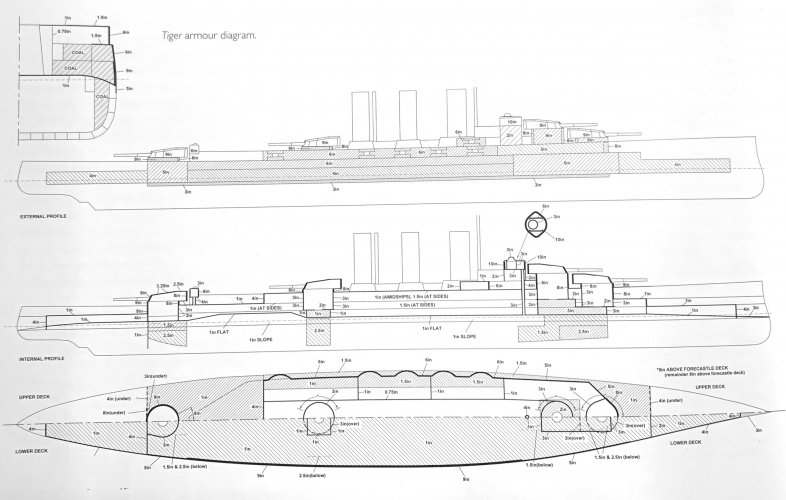
Also thought these images of Tiger and Queen Mary's armour scheme would be useful, what tends to go unmentioned when discussing the armour of these ships is the numerous internal plates
 

Attachments

  • Queen Mary Armour.png
    Queen Mary Armour.png
    228.9 KB · Views: 48
  • HMS Tiger Armour.jpg
    HMS Tiger Armour.jpg
    445.6 KB · Views: 37
It's quite incorrect to say that Tiger survived Jutland since she was simply the most sturdy British battlecruiser present. Tiger had an almost identical armor scheme to Queen Mary, and Lion too for that matter. The only difference was that her secondary battery was more heavily protected, with a 6" casemate belt instead of no protection for the guns and 3" sides and 2" roofs for the 4" magazines on the previous battlecruisers. However, given the placement of the 4" magazine that casemate belt was not relevant to Tiger's survival vice Queen Mary's as it's unlikely the shell trajectory would've taken it through it.
...Tiger's good fortune compared to Lion was shot placement, i.e. luck...
...Queen Mary and Tiger had virtually identical protection systems, the armoured cruisers were in totally the wrong place and were lost to stiff upper lip, not thin belt armour. The Invincible was surprised by a superior number of enemy warships and overwhelmed. There was lots of things in play, but the lax handling of ammunition aboard some of the battlecruisers did make a difference. Hood’s loss, like Lutzow’s, the near loss of Derflinger, Sedlitz, Moltke and Lion, the loss Indefatigable, Queen Mary and Invincible was all due to an opponent firing great big shells at them...
The fact that none of the battlecruisers machinery spaces were penetrated also makes the claim of inadequate armour suspect. Given those spaces were larger than the magazine spaces and similarly armoured, there would surely have been some penetrating hits to those areas if the smaller magazine spaces were also penetrated. Also thought these images of Tiger and Queen Mary's armour scheme would be useful, what tends to go unmentioned when discussing the armour of these ships is the numerous internal plates

As mentioned earlier, while battlecruiser HMS Tiger was about the same dimensions as the previous Lion-class ships, she was built two thousand tons heavier. Evidently the extra mass was put to good use. You shrug and state that Tiger enduring fifteen or more heavy German shells and continuing to steam and fight, while battlecruisers Invincible (after one or two heavy German shells), Indefatigable (four or five), Queen Mary (five), and Hood (two) exploding, killing almost their entire crews, is explained away by random luck. British-made battlecruisers seemed to have had a lot of such bad luck. Strangely, German-made battlecruisers did not.

Contra this 'it was just the luck of the draw' bunk, which would not be acceptable in any after-action report today, the whole point of this thread is that in fact Tiger was designed and constructed substantially better than earlier (and later) British battlecruisers, more like her German counterparts; that she proved her durability in extremis both at Jutland and at Dogger Bank (where the six heavy shell hits she took were more than what obliterated Invincible, Indefatigable, Queen Mary, or Hood); and that it was a regrettable loss to the Royal Navy's 1939-45 war effort that this valuable capital ship had been prematurely scrapped in 1932. Some here have disagreed, but they're wrong.

I suspect that if the random-chance commenters had to take their place in actual combat aboard one of the fifteen British battlecruisers, 100% would select HMS Tiger. Random indeed... funny how that works.
 
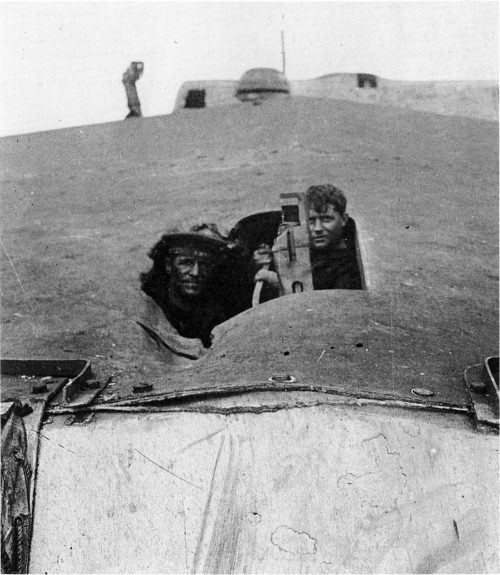
Tiger did sustain turret hits that did not penetrate...

You must have a different definition of "penetrate" than I and the Admiralty do; see the attached photo of one of her turrets immediately after the Battle of Jutland. The two aft turrets (Q and X) of Tiger were both put out of action by German hits, with casualties, but both were shooting again before the battle ended. And obviously Tiger did not explode.

...On a related note, I figured out where the 21-hit claim on Tiger came from. It's the attached chart.

I see your illustration of the hits Tiger suffered, which has an old-time look to it. Its caption on Wikipedia is 'An early, and not necessarily reliable, diagram showing shell hits sustained at Jutland'. The illustration shows two 305mm, fifteen 283mm (i.e. seventeen heavies), and five 149mm. I read the DK Brown book at the library and don't have it handy to cross-reference, but I think I will stick with his itemized list of fifteen heavies and one 149mm. In any case, Tiger took a beating, and fought on. A tough ship.
 

Attachments

  • Tiger turret roof.png
    Tiger turret roof.png
    816.6 KB · Views: 37
We’d do well to remember that Beatty was First Sea Lord when the official history of Jutland was written up, the Hood redesigned and the lesson of Jutland became greater armour...

Like Foo Fighter, you ascribe to David Beatty's self-interested biases the decision to add better protection to the surviving battlecruisers after Jutland. You therefore ignore that, for example, Jellicoe ordered the same thing. And maybe other persons around at that time had biases too; right? In his biography of Beatty, author Stephen Roskill engages with the official post-Jutland report of Eustace Tennyson D'Eyncourt. But Roskill noted archly, and I think with justice, that D'Eyncourt, as Director of Naval Construction since 1912, was perhaps not a disinterested authority to ask about battlecruiser design and construction flaws. If we check for bias, let's check thoroughly, Derfel Cadarn.
 
As mentioned earlier, while battlecruiser HMS Tiger was about the same dimensions as the previous Lion-class ships, she was built two thousand tons heavier. Evidently the extra mass was put to good use. You shrug and state that Tiger enduring fifteen or more heavy German shells and continuing to steam and fight, while battlecruisers Invincible (after one or two heavy German shells), Indefatigable (four or five), Queen Mary (five), and Hood (two) exploding, killing almost their entire crews, is explained away by random luck. British-made battlecruisers seemed to have had a lot of such bad luck. Strangely, German-made battlecruisers did not.

Contra this 'it was just the luck of the draw' bunk, which would not be acceptable in any after-action report today, the whole point of this thread is that in fact Tiger was designed and constructed substantially better than earlier (and later) British battlecruisers, more like her German counterparts; that she proved her durability in extremis both at Jutland and at Dogger Bank (where the six heavy shell hits she took were more than what obliterated Invincible, Indefatigable, Queen Mary, or Hood); and that it was a regrettable loss to the Royal Navy's 1939-45 war effort that this valuable capital ship had been prematurely scrapped in 1932. Some here have disagreed, but they're wrong.

I suspect that if the random-chance commenters had to take their place in actual combat aboard one of the fifteen British battlecruisers, 100% would select HMS Tiger. Random indeed... funny how that works.
Bringing in Hood makes your fallacious reasoning that much more obvious. If Tiger being 2000 tons heavier than the other Cats made her that much more durable, how do you explain Hood, with thicker armor and 14,000 tons on Tiger exploding in only two hits?

Or, for that matter, Princess Royal's nine hits with similar lack of explosion?

The answer is that it's complicated and your simplistic reasoning does not explain the whole story. Yes, protection mattered. So did shot placement. So did the known sensitivity and explosive nature of British propellant - much like with armor post-Jutland the RN put a lot of effort into making their powder less prone to exploding. And so did flash protection, beyond just Beatty's orders - another thing the RN did post-Jutland was dramatically up the flash protection on every subsequent design, from Hood reversing the order of the magazines and handling rooms to the Nelson and KGV classes being bedeviled by turret reliability issues in significant part by elaborate flash protection measures.

Further, we do, in fact, know why Tiger is 2000 tons heavier than her predecessors: that 6" battery. The Iron Dukes added 2000 tons over the King George V-class for much the same purpose. Further, Tiger is bigger in dimensions than the other Cats: four feet longer and, crucially, with a foot and a half more beam than Queen Mary and two feet more than Lion. That's not much, but it is significant.

It's also not true that the German battlecruisers did not sustain similar bad luck in terms of shot placement, because they did: Lutzow was lost, unlike the other battlecruisers, because her bow was repeatedly holed by heavy shell hits. That meant her attempts to withdraw steadily worsened the matter until she succumbed to progressive flooding. It's not nearly as spectacular as their British counterparts blowing up, but shot placement did matter there.

Further, a survey of hits to German battlecruisers shows that frankly if they'd been British most of them would have blown up in similar fashion. Seydlitz took a penetrating barbette hit; Lutzow a turret penetration that obliterated one of her guns; and Moltke had a shell hit her secondary battery and the resulting fire burned down to her magazine. Why did they not explode? Two reasons: first, the Germans had incorporated stronger anti-flash measures after Seydlitz pulled a Lion at Dogger Bank and came about as close to blowing up herself; second, German powder was less sensitive than British and more likely to burn than explode:

Prior to 1912, the Germans used solvents in their manufacturing process, including for RP C/06, the standard propellant in use prior to World War I. There were several compositions used between 1912 and 1945, all of a solventless double-based nature using centralite (symmetrical Diethyl Diphenyl Urea) as a non-volatile solvent. Centralite was not removed from the finished propellant and acted as an excellent stabilizer. Leaving this solvent in also greatly reduced shrinkage during the drying process.


The first of these solventless propellants, RP C/12, was the primary propellant used during World War I. This and RP C/32 used nitroglycerin while formulations starting with RP C/38 used diethylene glycol dinitrate (DGN), which was cooler-burning and less bore erosive.

All of these formulations were resistant to exploding even when exposed to a hot fire. For instance, when the small battleship Gneisenau was bombed at Kiel in 1942, over 23 tons (24 mt) of RP C/32 propellant was ignited in a forward magazine. There was no explosion even though the 750 mt (738 ton) turret "Anton" was lifted at least 50 cm (20 inches) from its mounting by the gas pressure generated by the deflagration. As noted above, both the British and the French did extensive studies of RP C/12 after World War I and developed their own "solventless" propellants based upon the results.

I was also reminded that there were significant differences in shell design between the two navies that probably contributed. British shells had short fuze times and sensitive fillers, with the result they tended to explode immediately on impact and tended to result in more localized damage. The Germans had less sensitive fillers and some of the earliest delay fuzes put to sea; this resulted in a high dud rate but when the shells exploded they exploded well behind the armor and caused more damage. This is, notably, another area where the British identified a deficiency and rushed to correct it, resulting in the Greenboy shells:

You are right about the German BCs at Jutland. As Tony says the British shells used Lyddite, which was a pyric acid, or Trinitrophenol. While somewhat unstable - it readily attacks metals to form metal-picrates, which are so sensitive as to be used as priming cap fillers, replacing the even more unstable mercury fulminates in this role - upon detonation, it had a very powerful shock-wave. Nathan Okun has pointed out that this was not the only potential deficiency in British shells. They were designed to punch holes through armor, but not to penetrate behind it. The resultant effect was far more localized damage (from concussion and splinters) than was the case with fully penetrating shells. So shell design and fuzing were less effective than they should have been, with a result that the German ships survived (albeit Von der Tann, Seydlitz and Derfflinger, barely)from the number of hits that should have sunk them. The post-Jutland investigationresulted in the design of new APC shells, as Nathan has pointed out, calledGreen-boys, due to the distinctive green paint used on them.

You must have a different definition of "penetrate" than I and the Admiralty do; see the attached photo of one of her turrets immediately after the Battle of Jutland. The two aft turrets (Q and X) of Tiger were both put out of action by German hits, with casualties, but both were shooting again before the battle ended. And obviously Tiger did not explode.
I see your picture and concede the penetration. But you have to ask yourself: if the shell did go in, why did Tiger not explode? Personally, I think she was fortunate to get dud rounds in both turrets, given both were back in action later. If they had exploded things would have been very different. This is not as unlikely as it might seem. So many German hits were duds that the British were able to develop the Greenboys in large part on the basis of studying dud German shells left in their ships:

In a couple of British Navy documents concerning the Battle of Jutland there is a detailed description of dismantled and studied German delay-action base fuzes used in their latest "C/11" type 28 cm and 30.5 cm AP shells (these were gathered from the many duds that hit British ships and remained inside of them).

Naturally, the British were not impressed by the fuze design and made their own. I can't remember where I found this but something on the order of half of German large-caliber AP shells were duds.

tl;dr I find your reasoning that Tiger was somehow sturdier than other British battlecruisers to be oversimplistic and fallacious.

 
Very late to this discussion, but it took me an age to locate the source of this attachment – Oscar Parkes's British Battleships. Interesting statement about potential speed for HMS Tiger, and the Queen Elizabeth-class.
A 4 and 4.5 knot increase in speed respectively? That's rather impressive. In most on-line discussions I've seen the increase was put at an extra 2 knots for adding small tube boilers to the Queen Elizabeth-class. In either case you'd lose 2 knots when anti-torpedo bulges were later added during modernisations.
 
A 4 and 4.5 knot increase in speed respectively? That's rather impressive. In most on-line discussions I've seen the increase was put at an extra 2 knots for adding small tube boilers to the Queen Elizabeth-class. In either case you'd lose 2 knots when anti-torpedo bulges were later added during modernisations.
Note that it's small-tube boilers and geared turbines. Most discussion on geared turbines focuses on the fuel consumption effects of their better propulsive efficiency, but they also improve power output that way.

See, with direct-drive turbines, since you can't spin the turbine faster, the only way to increase turbine output is to increase the volume of steam being moved through, which means a bigger turbine. On many early USN battlecruiser designs this led to dramatic increases in weight through the need to increase the height of the machinery spaces and thus the armored belt and overall hull. With geared turbines, you can increase power through increased velocity, and so fit more powerful turbines in the same space.
 
Last edited:
Note that it's small-tube boilers and geared turbines. Most discussion on geared turbines focuses on the fuel consumption effects of their better propulsive efficiency, but they also improve power output that way.
Of course, I forgot about that. Thanks.
 
Bringing in Hood makes your fallacious reasoning that much more obvious... I find your reasoning that Tiger was somehow sturdier than other British battlecruisers to be oversimplistic and fallacious.

Well, readers here can judge whether CV12's prolix and overheated rebuttal attempt is persuasive. For myself, proof is in the pudding. I remain convinced that warships which explode and sink from a paltry few hits are less good for pursuing national purposes, and less good for the thousands of young men aboard, than warships like HMS Tiger which do not.
 
Yep. [Tiger] would be at least as powerful as refitted Renown - and additional battlecruiser would surely be handy.
Well, at least on budgetary level, getting a Repulse-comparable battlecruiser (i meant Tiger restoration) for a 1/5 - 1/7 cost of a new fast battleship seems to be reasonable.
Let's move a bit from technical to tactical. So let's assume that refitted "Tiger" (moderate refit, basically a faster version of R-class refits) is available by early 1942. Where she could be used for most effect?
* Atlantic - probably not, speed wasn't essential for convoy operations there & since Sharnhorst and Gneisenau left in February 1942, there were no particular need to hunt raiders anymore. And for Arctic convoys she would clearly be inadequate; not enought air defense, not enough speed, not enough protection or firepower to challenge Tirpiz;
* Mediterranean - the Royal Navy DEFINITELY could use a fast capital ship here (after Alexandria raid, that essentially knocked Mediterranean Fleet out), but Tiger wouldn't be exactly a good choice. Italian battleships are active, and overwhelm her by quite a big margin; even older ones, like Conte di Cavour or Andrea Doria may be too tough for Tiger to fight;
* Indian Ocean - the Royal Navy clearly needed more fast capital ships here; they only have Warspite (which was very moderatedly "fast") and Tiger would fit perfectly there. Her poor air defense could be a problem, of course; on the other hand, Force Z have much better air defense, and it didn't help it much.
So the most likely position for Tiger would be Eastern Fleet. Assuming she would get there in time, she may even participate in Somerville efforts to ambush Japanese forces from the south direction. The second fast capital ship under Somerville command wouldn't exactly be a game-changer - but she would clearly even the odds some more.
Interesting points.

The R-class battleships were not much refitted at all, Dilandu (that class never got the respect and attention that the earlier Queen Elizabeths did, for good reasons). In my proposed 'moderate middle way' 1937-39 refit for a counterfactually surviving HMS Tiger, as described in the first post of this thread, I was careful not to attempt to turn the battlecruiser into something she was not. Even the lavish and expensive reconstructions of the four Kongo class by Japan did not result in 'battleships', as was later shown in combat. And no warship can be invincible. So Tiger bis would be vulnerable, and it was a crapshoot whether she would be sunk before the "don't steam within range of enemy strike aircraft without fighter cover" lesson was learned the hard way. And chancing upon an enemy submarine was always a possibility, like HMS Barham or USS Indianapolis did. Nevertheless, in Britain's time of dire need, useful Tiger bis would have gamely been in the thick of fighting, not kept out of harm's way like Italian battleships (not active, Dilandu) or the tired, slow R class were. You have a refitted battlecruiser available from early 1942, rather than Sept 1939 as I do, but I agree with Archdude that you make some good points above about prospective roles during WW2.
 
A 4 and 4.5 knot increase in speed respectively? That's rather impressive. In most on-line discussions I've seen the increase was put at an extra 2 knots for adding small tube boilers to the Queen Elizabeth-class. In either case you'd lose 2 knots when anti-torpedo bulges were later added during modernisations.
Of course, I forgot about that. Thanks.

Welcome to this thread, Siberia. The modest bulges that I endorse for battlecruiser HMS Tiger, which had steamed a bit over 29 knots on her trials, would indeed add some hydrodynamic drag. But unlike Queen Elizabeth-class battleships, Tiger used (less thermally efficient) coal. Removing her coal-fired boilers and direct-drive turbines during a 1937-39 refit and replacing those with more powerful machinery which benefitted from a quarter-century of technical improvement makes a 30-knot service speed in WW2 reasonable, I believe. This would be, despite draggy bulges and probably a bit of weight gain, an achievable two knots above her WW1 service speed.
 
like Italian battleships (not active, Dilandu
My point was, that Italian battleships were far more active than any other Axis battleships. They weren't exactly "kept out of harm way", they operated & clashed with British much more than German and Japanese battleships combined. I agree, that they were far less active than ALLIED battleships, but it was more a result of fuel shortages & defensive naval strategy, adopted by Italian leadership.
 
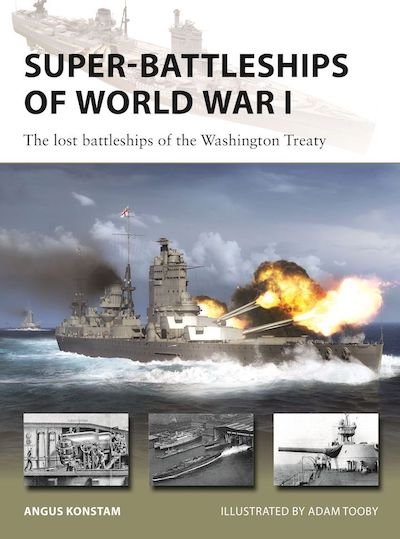
I read with interest Angus Konstam's recent book for Osprey (New Vanguard 338), Super-Battleships of World War I, about the intended new capital ships scrapped or never laid down due to 1922's Washington Naval Treaty. Regarding the six big Lexington-class battlecruisers being built for the US Navy, Konstam writes (p25) that those "unsurprisingly resembled the Hood, whose appearance had so long impressed American naval observers... Their five funnels... gave them the appearance of a cruiser rather than a capital ship. Their real limitation, though, was their weak armour, which reflected their role as 'battle scouts'. The designers argued that if the magazines, turrets and barbettes were well protected [i.e. by the USN's all-or-nothing schema], the failures of the British battlecruisers at Jutland wouldn't be repeated. The armour was also sloped, to make the most of what protection there was."

Evidently the United States didn't get the memo that the loss of three Royal Navy battlecruisers (and almost a fourth) during Jutland had nothing to do with their armor construction and was all Beatty's fault, as argued by some here on Secret Projects Forum. Yet I still fear that the Lexingtons as designed would have proved closer to British durability than German, and this seems to be the general consensus. If any American ever expressed regret that the US Navy didn't have six battlecruisers in service for the start of WW2, I haven't heard it. As it happened, to abide by the signed Treaty Lexington and Saratoga were converted to aircraft carriers, and the other four were scrapped on the stocks.

Hey USN officialdom of a century ago: instead of glass-jawed Hood, how about admiring peppery battlecruiser HMS Tiger instead?

Konstam_book.jpg
 
Hey USN officialdom of a century ago: instead of glass-jawed Hood, how about admiring peppery battlecruiser HMS Tiger instead?
The ship that was slower, had lighter guns, and less armor in a woefully outdated scheme? That ship?

There is nothing inherent to Tiger that made her any less prone to getting blown up than any other British battlecruiser.
 
Like Foo Fighter, you ascribe to David Beatty's self-interested biases the decision to add better protection to the surviving battlecruisers after Jutland. You therefore ignore that, for example, Jellicoe ordered the same thing. And maybe other persons around at that time had biases too; right? In his biography of Beatty, author Stephen Roskill engages with the official post-Jutland report of Eustace Tennyson D'Eyncourt. But Roskill noted archly, and I think with justice, that D'Eyncourt, as Director of Naval Construction since 1912, was perhaps not a disinterested authority to ask about battlecruiser design and construction flaws. If we check for bias, let's check thoroughly, Derfel Cadarn.
Do what now?
 
I read with interest Angus Konstam's recent book for Osprey (New Vanguard 338), Super-Battleships of World War I, about the intended new capital ships scrapped or never laid down due to 1922's Washington Naval Treaty. Regarding the six big Lexington-class battlecruisers being built for the US Navy, Konstam writes (p25) that those "unsurprisingly resembled the Hood, whose appearance had so long impressed American naval observers... Their five funnels... gave them the appearance of a cruiser rather than a capital ship. Their real limitation, though, was their weak armour, which reflected their role as 'battle scouts'. The designers argued that if the magazines, turrets and barbettes were well protected [i.e. by the USN's all-or-nothing schema], the failures of the British battlecruisers at Jutland wouldn't be repeated. The armour was also sloped, to make the most of what protection there was."

Evidently the United States didn't get the memo that the loss of three Royal Navy battlecruisers (and almost a fourth) during Jutland had nothing to do with their armor construction and was all Beatty's fault, as argued by some here on Secret Projects Forum. Yet I still fear that the Lexingtons as designed would have proved closer to British durability than German, and this seems to be the general consensus. If any American ever expressed regret that the US Navy didn't have six battlecruisers in service for the start of WW2, I haven't heard it. As it happened, to abide by the signed Treaty Lexington and Saratoga were converted to aircraft carriers, and the other four were scrapped on the stocks.
Strongly disagree.

The US "all or nothing" armor scheme was heavily tested in WW2 and came out very well indeed. The internal armored "raft" makes it very difficult to sink a ship armored "all or nothing," the raft must be breached in order to flood enough of the ship to sink.
 
Strongly disagree. The US "all or nothing" armor scheme was heavily tested in WW2 and came out very well indeed. The internal armored "raft" makes it very difficult to sink a ship armored "all or nothing," the raft must be breached in order to flood enough of the ship to sink.

No slur was made on the US Navy's judicious and successful 'all or nothing' armoring schema that started in 1912's Nevada-class battleships, Scott Kenny, a schema that was promptly adopted by Japan for its Nagato class and later by the Royal Navy, France, and Italy (although never Germany). What I said was that the six big Lexington-class battlecruisers, if built, would probably have turned out to be flimsy duds in USN service. All-or-nothing won't help much if there is too little armor to go around.

The famed Norman Friedman agrees with you, or at least he did in 1984 when he wrote U.S. Cruisers: An Illustrated Design History. Page 99: "Conventional wisdom holds that the [Lexington-class battlecruisers] were white elephants, that it was fortunate for the US Navy that they were sacrificed at [the 1922 Washington Naval Treaty]. But we now know that Admiral Earle was right about why the British ships had been lost at Jutland [i.e. because of 'poor magazine arrangements', according to Earle and Friedman], and that in modern battle very few hits were achieved anyway; it might have been reasonable [in the Lexington class] to go for the most powerful gun and the highest speed, and to trust to subtler protective mechanisms such as better flame protection within barbettes. World War II experience showed mainly that torpedo protection was more important than ballistic armor in most cases..." Page 103: "So we will never really know how much value those six big battle cruisers would have provided. They were all stopped on the ways by the Washington Treaty, and two of them, the Lexington and the Saratoga, were completed as carriers—in which form they demonstrated that the enormous [turbo-electric propulsion] plant worked. In the end it turned out that the two big carriers were quite a good investment...".

There is, if not a contradiction, at least a tension between Dr Friedman's professed inability to judge that Lexington-class battlecruisers would have been unsatisfactory in service and his praise of the converted carriers' airplanes as being much more effective for fleet scouting and for sinking enemies than battlecruisers. And regarding torpedo protection, may I remind you and Dr Friedman that Lexington took two bomb hits and two torpedoes before having to be scuttled during the Battle of Coral Sea, compared to the three bombs and four torpedoes that (half the displacement) Yorktown endured during Midway before at last succumbing—and Yorktown was already lugging around severe unrepaired damage. Suspicious.

Despite your and Dr Friedman's view, for my part I hold to the 'conventional wisdom' that Lexington-class battlecruisers as designed would probably have been white elephants for WW2: in contrast with a surviving HMS Tiger, which was demonstrated in battle to be more stout.
 
The ship that was slower, had lighter guns, and less armor in a woefully outdated scheme? That ship? There is nothing inherent to Tiger that made her any less prone to getting blown up than any other British battlecruiser.

Underlining the importance of contingency in human affairs, rebutting determinism, is acceptable. But to state that the materials and the (widely varying) blueprints of the fifteen British battlecruisers had zero effect on their respective damage tolerance is absurd. Each of the fifteen had an equal chance of being blown to bits from an enemy hit? No. You make evidence-free assertions, then refuse to engage with what actually happened to HMS Tiger, other British battlecruisers, and the seven German battlecruisers during combat. If reason and logic are disregarded, and real-world results are disregarded, then it is unclear to me what's left.

In the true history you ignore, Tiger proved able to take terrible punishment yet keep fighting, comparable to German levels. A great credit to her Royal Navy designers and her Scottish manufacturer. Sadly, the following Renown- and Courageous-class battlecruisers retrogressed to a much less protected layout, as was complained at the time by Admiral Jellicoe, Admiral Beatty, and others. Evidently those men on the spot didn't concur with your contention that a warship's design and construction are less relevant to whether she will be destroyed in battle than is the number of cabbages in her galley.

Go, Tiger, go!
 
Late to the party but my two cents for what they're worth: To the survival or loss of Royal Navy Battlecruisers at Jutland... The Invincible and Indefatigable classes were absolutely never intended to engage ships with Capital ship grade firepower. they were more battle Cruisers. (Spelling and capitalization intentional); Intended to sweep the seas of enemy cruisers. The Lion class and her near sisters (Lion, Princess Royal, Queen Mary, and Tiger) are Battlecruisers (One word) with Tiger being the most durably built if only slightly. Renown and Repulse were as built Battle cruisers (two words), not as compartmentalized as Tiger.

But there is a human factor involved: Yes, the Battlecruiser Fleet was heavily vested in the cult of rapid gunnery. Lion, herself survived not only due to the heroic sacrifice of Major Francis Harvey but because she had recently received a new gunnery officer who had transferred in from the Battle fleet and cracked down on ammunition handling procedures. Tiger; for her part, never developed the bad habits. No storing extra charges in the turrets, no removing of flash doors. Her Captain listened to a discussion of ways to 'speed up gunnery', saluted his peers and promptly ignored all such suggestions.
 
The Invincible and Indefatigable classes were absolutely never intended to engage ships with Capital ship grade firepower. they were more battle Cruisers. (Spelling and capitalization intentional); Intended to sweep the seas of enemy cruisers.
Actually they were... but mainly with either previous-generation capital ships (that could be placed by enemy to protect colonial stations) or seriously damaged capital ship (as part of "sweeping force", chasing and destroying fleeing enemy fleet)
 

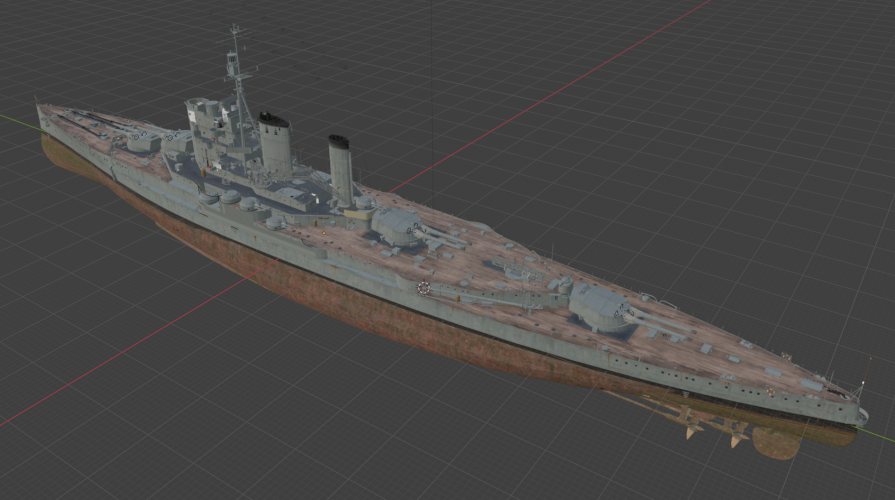
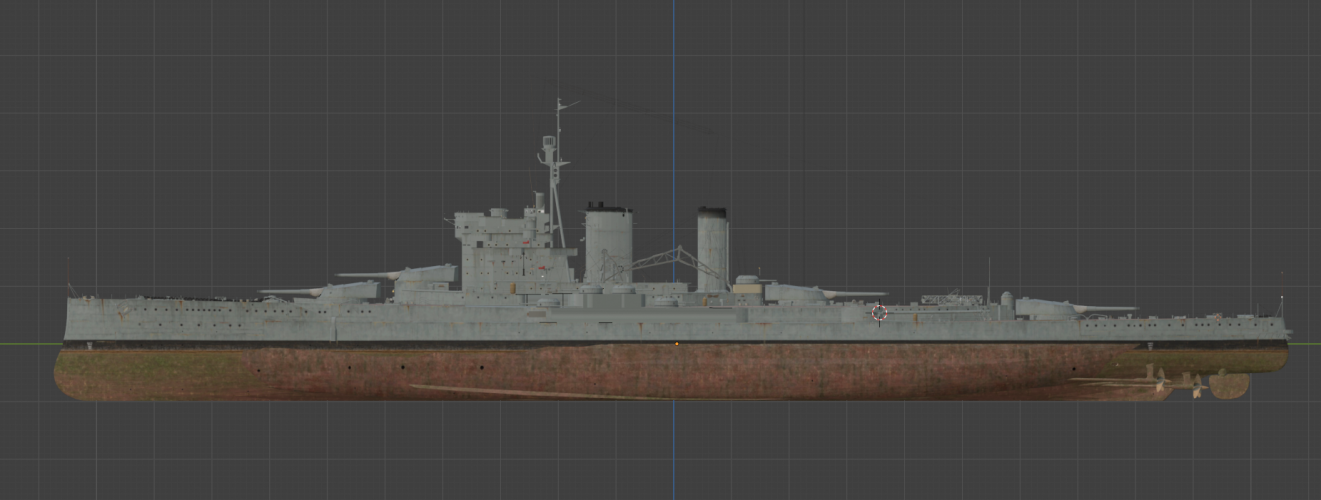
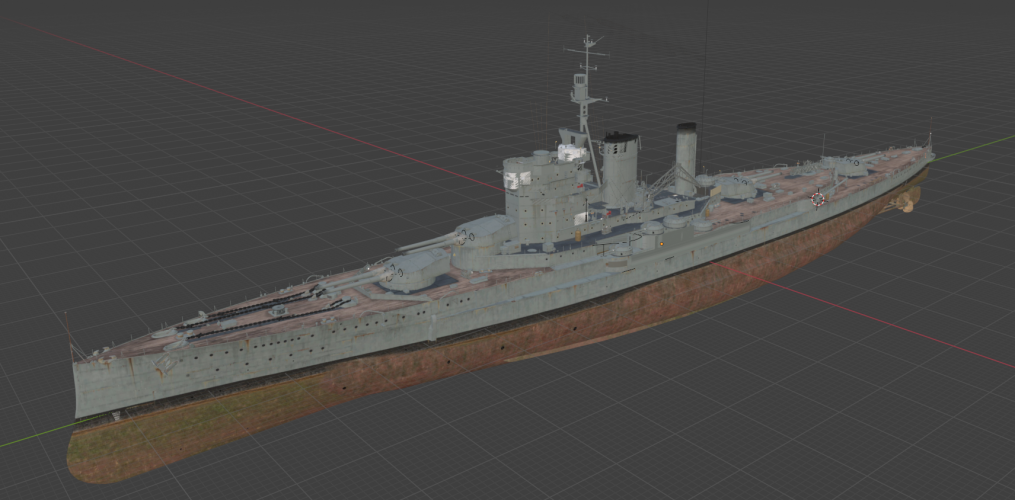
This art (as you said, a work in progress) of a rebuilt HMS Tiger looks good, Luminarycrush. Welcome to the thread. You have revised the superstructure from the original design to a Queen Anne's Mansion, like Drachinifel suggested. There are two funnels instead of three, but still rather stately looking. You left the battlecruiser's ram bow as it was. You deleted the stump mast added in 1918, which author Richard Hough and others found ugly. There is now a big King George V-type crane amidships, but (thankfully) no aircraft catapult for it to service. The unneeded crane could interfere with antiaircraft firing arcs. The ship as shown is fine for 1939, but had Tiger survived the savage fighting for God, King, and Country into 1944, her weather decks would be covered with light AA cannon, and the Queen Anne's Mansion and foremast festooned with communications antennae, radars, and electronic warfare jammers, as with other capital ships then.
 
Back
Top Bottom