Astronomy and Planetary Science Thread

100 new alien worlds: Scientists find hidden haul in data from NASA exoplanet-hunting spacecraft

Astronomers have discovered over 100 new worlds beyond the solar system hiding in data collected by NASA's exoplanet-hunting spacecraft TESS (Transiting Exoplanet Survey Satellite), and it's thanks to artificial intelligence. The technique also identified a further 2,000 or so candidate extrasolar planets, or exoplanets, around half of which were hitherto undetected.


TESS spots exoplanets by recording the tiny dips in starlight they cause when they pass in front of the face of the parent star, a passage called a "transit." RAVEN studied TESS observations of over 2.2 million stars collected during the NASA spacecraft's first four years, hunting for planets so close to their home stars that they complete an orbit in just 16 Earth days. The AI pipeline could therefore help to confirm how common these tight-orbit planets are and the kind of systems in which they are most often found.
 
Webb & Hubble capture new views of Saturn

The NASA/ESA/CSA James Webb Space Telescope and the NASA/ESA Hubble Space Telescope have joined forces to capture new views of Saturn, revealing the planet in strikingly different ways. Infrared and visible observations show layers and storms in the ringed planet’s atmosphere.
 
What would a Brown Dwarf turn into if a pair collided?
Good question

Depending on mass and composition of those two Brown Dwarfs.,
both have 60 to 80 time Jupiter mass
if both collide it would make it object around 120 to 160 Jupiter mass
Where Lithium fusion kick start in center of mass.
Making a Very Hot big brown dwarf

if there enough hydrogen or deuterium, it could start also fusion
were both brown Dwarf become one very small red dwarfs star
 
What would a Brown Dwarf turn into if a pair collided?
Good question

Depending on mass and composition of those two Brown Dwarfs.,
both have 60 to 80 time Jupiter mass
if both collide it would make it object around 120 to 160 Jupiter mass
Where Lithium fusion kick start in center of mass.
Making a Very Hot big brown dwarf

if there enough hydrogen or deuterium, it could start also fusion
were both brown Dwarf become one very small red dwarfs star

If the combined mass is greater than 76 Jupiter masses then sustained Hydrogen-fusion will start resulting in a low-mass M-class Red dwarf star (Any Deuterium and/or Lithium present will be rapidly consumed).

Edit: The threshold for Deuterium-fusion is 13 Jupiter masses (Which is the lower mass threshold for a Brown-dwarf) and the threshold for Lithium-fusion is 69 Jupiter masses.
 
Last edited:
From GEO GIRL (Dr. Rachel Phillips) and geosociety here's an interesting video concerning a newly discovered magma plumbing system:


In this video, @geogirl discusses a recent Geology study, which found evidence of a hidden magmatic plumbing system beneath the surface of Mars, suggesting that the Red Planet may be more geologically complex than we thought.'
0:00 New Mars Study
0:29 Study Area
1:30 Lava changes over time?
2:03 Changes in lava chemistry
3:44 Magmatic differentiation
5:07 Role of plate tectonics
6:47 Implications of this study
 
From Dr. Becky concerning why Dark Matter clumps don't appear to collapse into Blackholes:


Why doesn’t dark matter collapse? Think about it, gravity pulls on it. There’s a huge amount of it; outweighing all the normal matter in the Universe. So why doesn’t it form dark stars? Dark black holes? Or entire dark galaxies? Instead, it just sits there… in enormous, fuzzy clouds around galaxies. And that’s weird. Because normal matter doesn’t stay fuzzy, it collapses under its own gravity. It makes planets. It makes stars. It makes black holes. And it was after my last video about whether the Milky Way’s centre could be a dark matter cloud instead of a supermassive black hole, many of you asked: "if the dark matter cloud has the same mass, why doesn’t it just collapse?" So what is dark matter doing differently to normal matter...​
Similar questions but different:
Is dark matter made of lots of little black holes? (Instead of a particle) - • Is dark matter made of black holes? https://www.youtube.com/watch?v=d0wV5frSb6s
Once a black hole forms from normal matter, can dark matter then fall in? - • Do black holes contain dark matter? https://www.youtube.com/watch?v=9Qis5VDOd18
The first evidence for a black hole containing some dark matter - • The first evidence for DARK MATTER in a BL... https://www.youtube.com/watch?v=QeNspAwdgRY
00:00 Introduction
02:40 Why normal matter collapses under gravity in the first place
06:56 The crucial reason why dark matter can't
10:01 Bloopers
 
A somewhat exasperated Kyplanet. Nice coverage, some good thoughts, and I really respect his discipline. I'm inclined to agree that great filters are for drama queens and have to apply to every planet, while the cumulative effect of many small filters is more likely.

View: https://www.youtube.com/watch?v=BcabTQ7rZHo


I won't nitpick individual points ('if you evolve in water, you have fins instead of hands' ...um, some cephalopods and arthropods might disagree).

One thing that has me barely preventing a head/desk interface is that following the observation by many that since interstellar travel is in principle possible, then it follows that since it isn't an absolute barrier, its rigours are irrelevant. This is nonsense.

This is the universe. Big, isn't it?

From A Matter of Life and Death, 1946. One of my favourite films and it beat Douglas Adams by three decades. Highly recommended.

'[space is] God's quarantine regulations'

That's CS Lewis. Maybe not absolute the but the queue's really slow.

Being on one planet and then another planet is not a quantum transition. Relativistic spacetime is between. A LOT of it.

Instead of a great filter, I propose a great funnel: Hello biology (whatever kind you are), meet Darwinian spacetime. Squish!

What I mean is that any system that propagates across interstellar distances must be able to do so (almost a tautology, that). Indeed, it must be fit to do so (Hi Charlie!). It would be nice if you can tolerate thousands of years in a cold, radiation-sleeted void, but you'll only get far if you can thrive under such conditions. As a result, you would be disadvantaged if those conditions were absent. So, systems that can traverse interstellar spacetime like it there, and the time they spend there is no mere interval, it is their life. Consider the disadvantages of planets from such a perspective. Would you want to set up home in a hydrothermal vent or wherever life started on Earth?
 
Last edited:
This is the universe. Big, isn't it?

From A Matter of Life and Death, 1946. One of my favourite films and it beat Douglas Adams by three decades. Highly recommended.
Seconded. I need a hard copy, obvs.
 
Last edited:
’Space archaeology’ reveals first dynamic history of a giant spiral galaxy

For the first time, astronomers used galactic archaeology techniques to trace the chemical “fossil record” of a galaxy outside the Milky Way
NASA-JAXA’s XRISM Telescope Clocks Hot Wind of Galaxy M82

For the first time, astronomers have directly measured the speed of superheated gas billowing from a cauldron of stellar activity at the heart of M82, a nearby galaxy undergoing an extraordinary burst of star formation.

The material is moving more than 2 million miles (over 3 million kilometers) per hour and appears to be the primary force driving a cooler, well-studied, galaxy-scale wind.
Optical Vortex Phase Masks for the Detection of Habitable Worlds

A team of NASA researchers is developing new types of optical masks that could help enable the many orders of magnitude of starlight suppression needed for future space observatories to pick out very faint habitable exoplanets from the far brighter glare of their stellar hosts.
 
Last edited:
All 5 DNA, RNA bases found in Ryugu asteroid samples: Japan research team

TOKYO -- All five nucleobases that make up DNA and RNA have been found in rock samples that Japan's Hayabusa2 space probe brought back from the Ryugu asteroid in 2020, a team including the Japan Agency for Marine-Earth Science and Technology has announced.

The findings support the theory that the building blocks of life on Earth may have arrived from space.
 
So DNA RNA is found in asteroid samples Flyaway? That is certainly ground breaking news that will shake the current thinking about where life came from to the core completely. I originally thought that all life came from comets along with the water but now that theory has now been blown away.
 
Space-traveling microbes? An unusual experiment shocked skeptics.

Scientists have discovered that a hardy microbe can endure pressures strong enough to pulverize rock, strengthening the case that life might survive the impact of an asteroid blasting it off a planet.

In a series of experiments at Johns Hopkins University, Lily Zhao fired tiny samples of a microorganism with a room-sized gas gun. The gun drove a steel plate into a thin, carefully prepared layer of bacteria at up to 2.4 gigapascals — tens of thousands of times Earth's atmosphere at sea level. The purpose was to simulate the highest pressure a microorganism might face on its space journey: The initial launch.

Instead of total extermination, Zhao, a mechanical engineering doctoral student, found life — lots of it, in fact. After her initial test run, she cultured a regular sample, as well as the shocked sample so she could compare them side by side.
 
A protein is a complex molecule consisting of a string of amino acids.

Twenty-two different amino acids occur in biologically produced proteins. Other amino acids can be synthesised, but do not occur in living organisms.

Five different nucleobases are involved in RNA and DNA, they are the code letters for all protein.
Three-nucleobase sequences in DNA and RNA code for all 22 naturally occurring amino acids.

Nucleobases in DNA:
- Adenine
- Thymine
- Guanine
- Cytosine

Nucleobases in RNA:
- Adenine
- Uracil (replacing DNA's thymine)
- Guanine
- Cytosine

The three-nucleobase sequences are universal code for amino acids in all Earth life.
 
A unique NASA satellite is falling out of orbit—this team is trying to rescue it

Launch is scheduled for June 1, and there’s little margin for error. By late summer or early fall, Swift will slip below 200 miles (320 kilometers), too low for Katalyst to have confidence in controlling its spacecraft. “It’s a lot of drag with two big spacecraft docking together, ” Lee said. “Originally, we thought we had more time.”
When Ars visited Katalyst in late February, technicians were heads-down at work stations, soldering parts, assembling solar panels, and preparing components for environmental testing.
“No kidding, if we don’t launch in June, there’s real danger that this mission doesn’t come together,” Lee said.

Katalyst is trading reliability for time. “It’s better to put together a functional spacecraft that has a realistic shot pulling off the mission than delaying by two or three months to ensure another 1, 2, 3, 4 percent of reliability,” Lee said. “It’s just better to get it up there. I think NASA understands that.
 
JWST maps Europa's CO₂ beyond Tara Regio, hinting at subsurface exchange

The research, led by Gideon Yoffe and colleagues and posted to the arXiv preprint server, applied a sophisticated technique called spectral decomposition to JWST observations of Europa's leading hemisphere. Think of it as chemical fingerprinting at a distance. Every molecule absorbs and reflects light at characteristic wavelengths, leaving a distinctive signature that a sensitive enough telescope can detect and map. By analyzing nine separate spectral bands covering water ice, carbon dioxide, and other compounds, the team was able to unpick the different chemical layers on Europa's surface and reconstruct where each one sits.

They found that carbon dioxide, which had already been detected on Europa before, concentrated in a geologically chaotic region called Tara Regio, an area where the surface appears to have been broken up and refrozen, pulling material from deeper down. The working assumption was that this was a localized feature but the new analysis suggests otherwise. The carbon dioxide enrichment extends well beyond Tara Regio, sprawling across multiple regions of chaos terrain in a broad, lens-shaped distribution. Crucially, wherever the carbon dioxide is richest, the ice itself shows unusual textural properties, as if the surface has been reworked from below.
 
A new unexpected observation from a blackhole merger, from Anton Petrov:


0:00 Gravitational waves and the birth of new astronomical field
1:40 New detection that doesn't make sense
3:00 First detection of waves and what collided
4:25 Potential explanation - massive accretion disk of SMBH
6:30 Why this may make sense
7:30 Other strange detections
9:05 Conclusions and implications
10:00 How this helps theoretical physics
 
Comet C/2026 A1 (MAPS) Could Be 2026's Brightest – And This Saturday It Faces Either Death Or Glory

If this sungrazer comet survives its closest brush with the Sun, it could make for an exceptional show.


A better prospect for amateur observers is probably C/2025 R3 (PanSTARRS), which will never get as bright as C/2026 A1 (MAPS), but will be 20 degrees from the Sun on April 19. At that point, it is expected to be magnitude 3 – easily visible under dark skies, and forward scatter could make it brighter still.

The Earth formed from local building blocks

Planetary scientists at ETH Zurich have shown that the material that makes up the Earth originates exclusively from the inner solar system. This also sheds new light on the history of our planet’s formation.


In brief

The chemical composition of meteorites and asteroids acts as a kind of fingerprint, providing information about the origin of the building materials that formed the Earth.

Using a new analysis of existing data, the researchers show that this material must exclusively come from the inner solar system.

The material that formed the Earth is similar to that found on Mars and the asteroid Vesta. The Earth is thus part of a trend line extending from the Sun.

This close relationship also enables predictions to be made about the composition of Venus and Mercury, from which we have no known samples.
 
Five things Juice has revealed about Comet 3I/ATLAS

‘Extreme but not exotic,’ – a glimpse at Comet 3I/ATLAS through the eyes of the European Space Agency’s Jupiter Icy Moons Explorer (Juice).

In November 2025, Juice was in the right place, at the right time, with the right equipment to observe interstellar comet 3I/ATLAS just after its closest approach to the Sun. Our mission operations teams switched on five of Juice’s science instruments to collect information about how the active comet was behaving at the time.

Following a three-month wait to receive the data on Earth, scientists working on each of these instruments have spent the last few weeks delving into the photos, spectra and numbers. Results are still preliminary, work is still ongoing, but here are five things we’ve already learned.

1. The comet was releasing 70 Olympic swimming pools of water vapour every day

On 2 November 2025, just four days after 3I/ATLAS had made its closest approach to the Sun, Juice’s Moons And Jupiter Imaging Spectrometer (MAJIS) detected that the comet was spewing out 2000 kg of water vapour every second – equivalent to 70 Olympic swimming pools per day.

2. Most of this water vapour was being released in the direction of the Sun

Juice’s Submillimeter Wave Instrument (SWI) also detected water vapour from 3I/ATLAS, revealing that most of it was being released from the Sun-facing side of the comet. It also appears that a lot of this water vapour is not actually coming directly from the solid part of the comet (its nucleus), but from icy dust grains that have escaped into a surrounding halo of dust and gas (its coma).

3. Gas and dust stretch at least 5 million km from the comet’s nucleus

Juice’s Ultraviolet Imaging Spectrograph (UVS) captured light coming from oxygen, hydrogen and carbon atoms in the gas and dust surrounding and trailing behind the comet. Oxygen, hydrogen, carbon and dust emit photons of light at specific wavelengths, which UVS recorded as counts per second.

UVS saw these gas elements and dust stretching up to more than 5 million km from 3I/ATLAS’s nucleus. Gas and dust are common around active comets, with tails sometimes reaching up to 10 million km long.

4. This interstellar comet looks… just like a normal comet!

Juice’s high-resolution science camera, JANUS (short for ‘Jovis Amorum ac Natorum Undique Scrutator’ – or ‘Scrutiniser of Jupiter, and all his loves and descendants') also saw 3I/ATLAS spewing gas and dust.

Despite being over 60 million km from 3I/ATLAS, JANUS clearly reveals the coma in which the nucleus is hiding, as well as two tails. One tail stretches away from the Sun, and the other follows the path taken by the comet through the Solar System. We can also see fainter shapes within the coma and tails that indicate various processes and interactions with the radiation, particles and magnetic field from the Sun. The JANUS team is currently investigating these shapes in more detail.

Overall, JANUS shows that, despite its interstellar origin, Comet 3I/ATLAS was behaving like a typical comet from the Solar System during a close approach to the Sun.

5. 3I/ATLAS is supporting our planetary defence efforts – perhaps not in the way you might think

Comet 3I/ATLAS seen by Juice’s science camera JANUS
 
NASA spots comet reversing its spin in a first for science

Astronomers caught a comet in the act of reversing its spin. Using NASA’s Hubble Space Telescope, scientists noticed the never-before-seen behavior of Comet 41P/Tuttle-Giacobini-Kresák (41P to its friends) after it passed around the sun in 2017.

In May of that year, data from NASA’s Neil Gehrels Swift Observatory suggested the object was spinning some three times slower than it had just two months before, in March 2017. A follow-up Hubble analysis revealed something even more unusual: after the comet slowed down, it started spinning much faster again. The comet likely slowed to the point of almost stopping entirely before volatile activity at its surface forced it to spin in the opposite direction, the researchers suggest of the odd behavior.

This activity likely took the form of outgassing jets—as the comet approached the sun, the star’s heat would have caused frozen ices to become gas.
 
Visiting the Moon 3.5 billion years ago:


Despite 3.5 billion years being such an enormous amount of time, the Moon still had some of it's key characteristics that made it recognizable, this video however explores what the major differences were

Studies of Moon-rock samples indicate that the Moon had a thin atmosphere back then slightly denser than Mar's current atmosphere.

Visiting the Earth 3.5 billion years ago:


3.5 billion years ago the Earth looked like a different planet, it was a far simpler place with simple life forms, despite that there are still quite a few intersting things about it that are discussed in this video.

More Mars science updates:


0:00 Martian rock that shouldn't be here
1:35 Bad news - lost and canceled missions
3:05 Water discoveries - wet Mars evidence
6:30 Signs of ancient life? Or something else exciting
8:35 Electric effects on the surface
10:50 Spinning faster for a strange reason
 
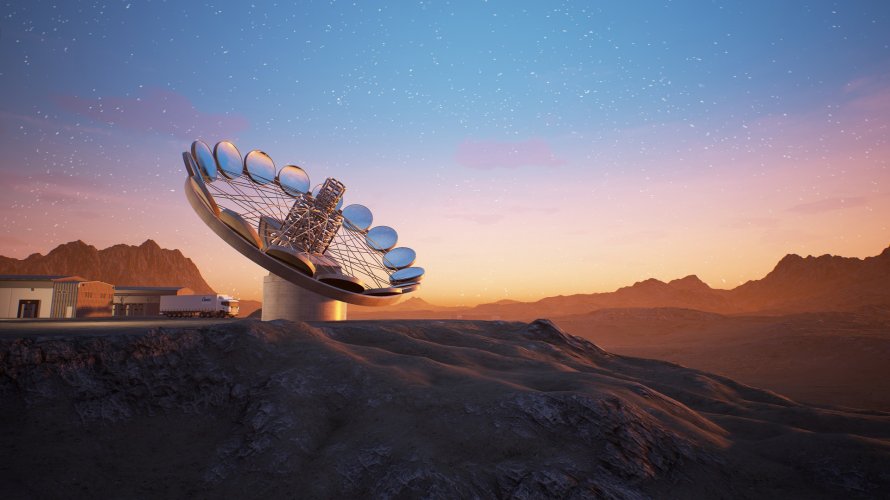
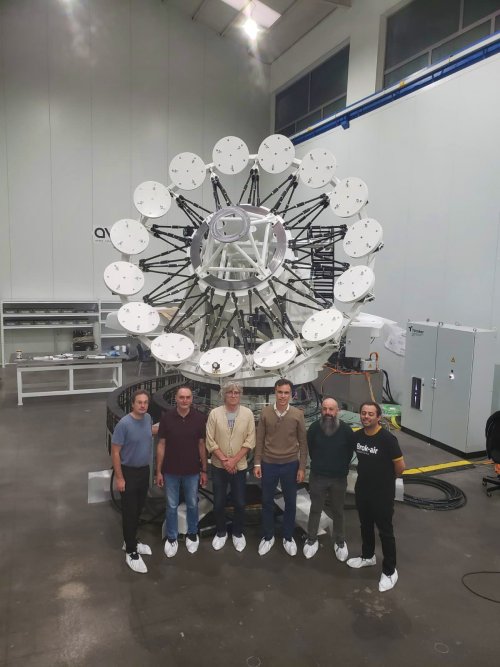
A telescope project that could enable the mapping of exoplanets within 25 light years. A demonstrator is already under construction in the Canary Isles. There are some radical construction techniques that promise to slash costs.

https://www.astronomy.com/science/could-this-telescope-find-life-on-alien-worlds/
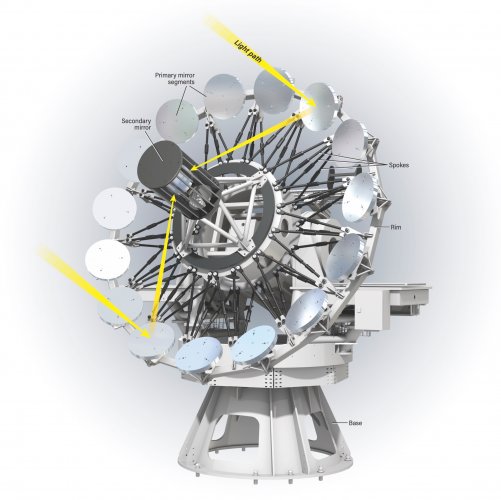
That ring of mirrors, working in sync, would use a cutting-edge technique — the equivalent of stellar noise canceling — to block out the glare of a host star so it can capture images of orbiting worlds. If it works, it could monitor planets, create surface maps, and possibly even detect heat given off by life-forms or their technology.

ELF borrows a concept from radio astronomy called interferometry. It will use many mirrors distributed in an array, and combine their light. With specialized optical equipment to combine the beams, extremely careful calibration, and a lot of math, this technique can produce an image as sharp as if it were taken with a single mirror the same size as the widest point of the array, called the baseline. ELF’s ring of mirrors is 115 feet (35 meters) across, rivaling the aperture of the largest telescope currently under construction, the 39-meter Extremely Large Telescope in Chile, but leaving out the central mirror segments — and the associated price tag.


Related pages

https://exolife-finder.com/https://exolife-finder.com/elf/https://www.iac.es/en/projects/elf-exolife-finderhttps://en.wikipedia.org/wiki/ExoLife_Finder
 

Attachments

  • ASY-EF0426_02ORIG.jpg
    ASY-EF0426_02ORIG.jpg
    858.6 KB · Views: 2
  • ASY-EF0426_05.jpeg
    ASY-EF0426_05.jpeg
    406.8 KB · Views: 2
  • 5b93c5f8-bbd1-4490-a775-87415116bf89.jpg
    5b93c5f8-bbd1-4490-a775-87415116bf89.jpg
    620.7 KB · Views: 2

Similar threads

Back
Top Bottom