
FighterJock
ACCESS: Above Top Secret
- Joined
- 29 October 2007
- Messages
- 6,692
- Reaction score
- 7,910
Not the toilet playing up again Flyaway?


MET 2D 17HR 30MIN
Summarized Status:
MCC reported that the attempted wastewater disposal at the beginning of the crew sleep period was aborted after dumping 3%. The tank quantity was at 64%. Despite the small amount dumped, the waste system and toilet remain functional. However, the crew was advised to use the backup collection devices overnight. An earlier outside camera survey indicated some ice buildup at the waste dump nozzle.
Due to these issues, the flight operation has decided to cancel today's OTC-2 correction schedule. Instead, the crew will initiate an attitude-reversal orientation maneuver to point that side of the Orion so the sun can hopefully melt the accumulated ice on the wastewater dump nozzle. There is no impact on the mission or lunar fly-by.
Despite the schedule for an OTC-2 correction, the mission team has determined that the initial TLI was sufficient and that this OTC-2 isn't needed, given yesterday's cancellation of OTC-1. Instead, the time scheduled for OTC-2 will be devoted to the attitude-reversal orientation maneuver.
All of this new information will be communicated to the crew once they wake up.
This is Mission Control Houston.
 arstechnica.com
 arstechnica.com
 arstechnica.com
 arstechnica.com

There was some discussion from MCC about the Collapsible Contingency Urinal (CCU). Astro Don Pettit posted this for us.What would the backup collection devices be ? Do they resort to Apollo style waste bags or is there something more sophisticated available for emergencies ?
Don Pettit
@astro_Pettit
·
The Collapsible Contingency Urinal (CCU) is now being used on Artemis 2 after a toilet malfunction. Essentially, an open container (reusable, sealable, and drainable) that controls the urine-air interface using capillary forces like my Space Cup does coffee. When you are in cislunar space with a broken toilet, you need contingencies, and the CCU replaces the need for about 25 pounds of diapers.
Ryan Caton
·
TOILET UPDATE: It is now available again.
Following ~2 hours of pointing the vent at the sun, whatever was blocking it appears to have melted, and a waste dump was conducted.
The crew can now dump the contents of their Contingency Urinals as required.
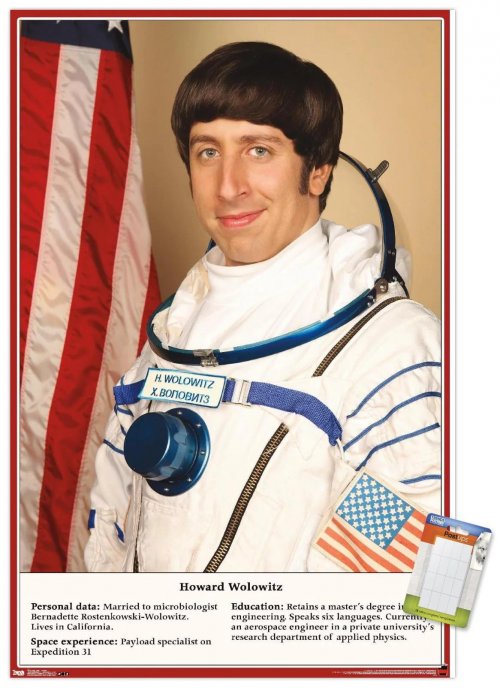
Shades of The Big Bang Theory there...There was some discussion from MCC about the Collapsible Contingency Urinal (CCU). Astro Don Pettit posted this for us.
View: https://twitter.com/astro_Pettit/status/2040495140800737649
View: https://x.com/dpoddolphinpro/status/2040518202350870908
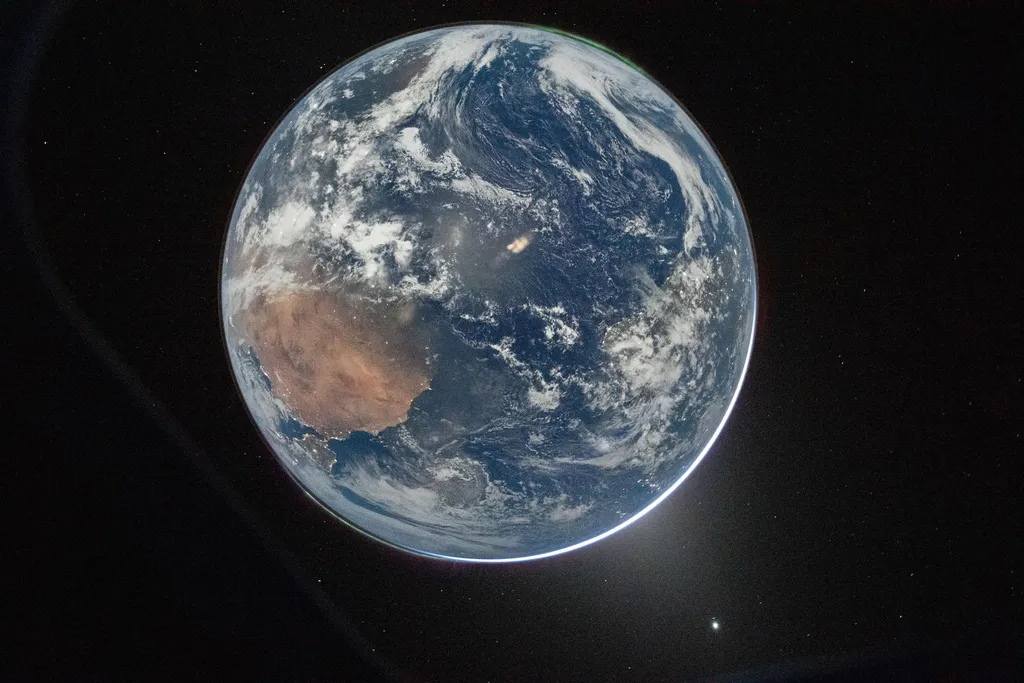
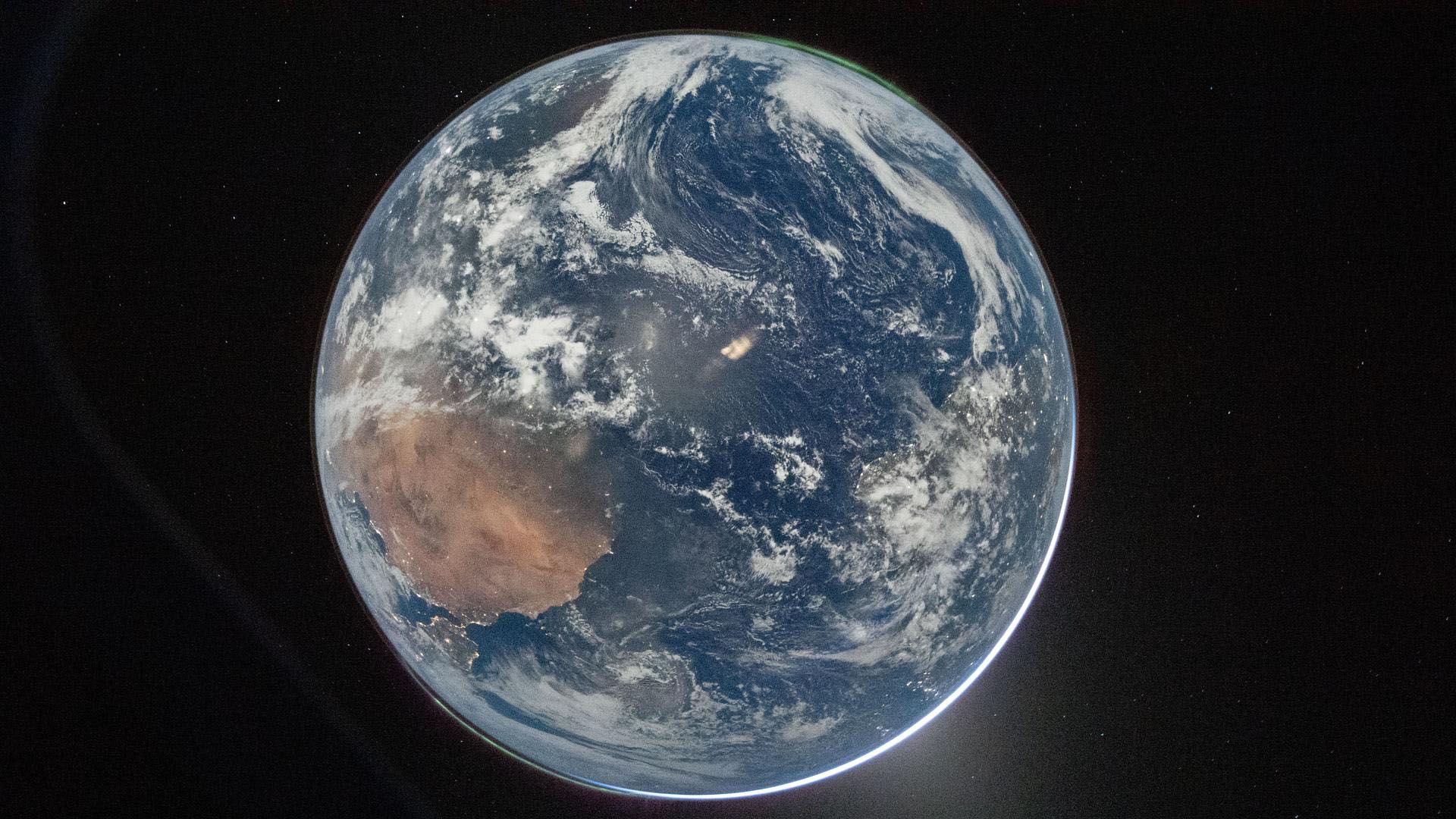


Shades of The Big Bang Theory there...
 forum.nasaspaceflight.com

It's like watching the paint of Michelangelo's frescoes in the Sistine Chapel dry IRT - hello Nurse, I think I need a Ludovico Treatment, stat...The first 7.5 seconds of launch slowed down to nearly nine minutes.
View: https://www.youtube.com/watch?v=csxCA49a_go
Space.com's Tariq Malik talks to Marie Henderson, Artemis 2 lunar science deputy lead, about the missions historic lunar flyby set to occur on April 6.
Credit: Space.com | animation courtesy: Ernie Wright/NASA's Scientific Visualization Studio

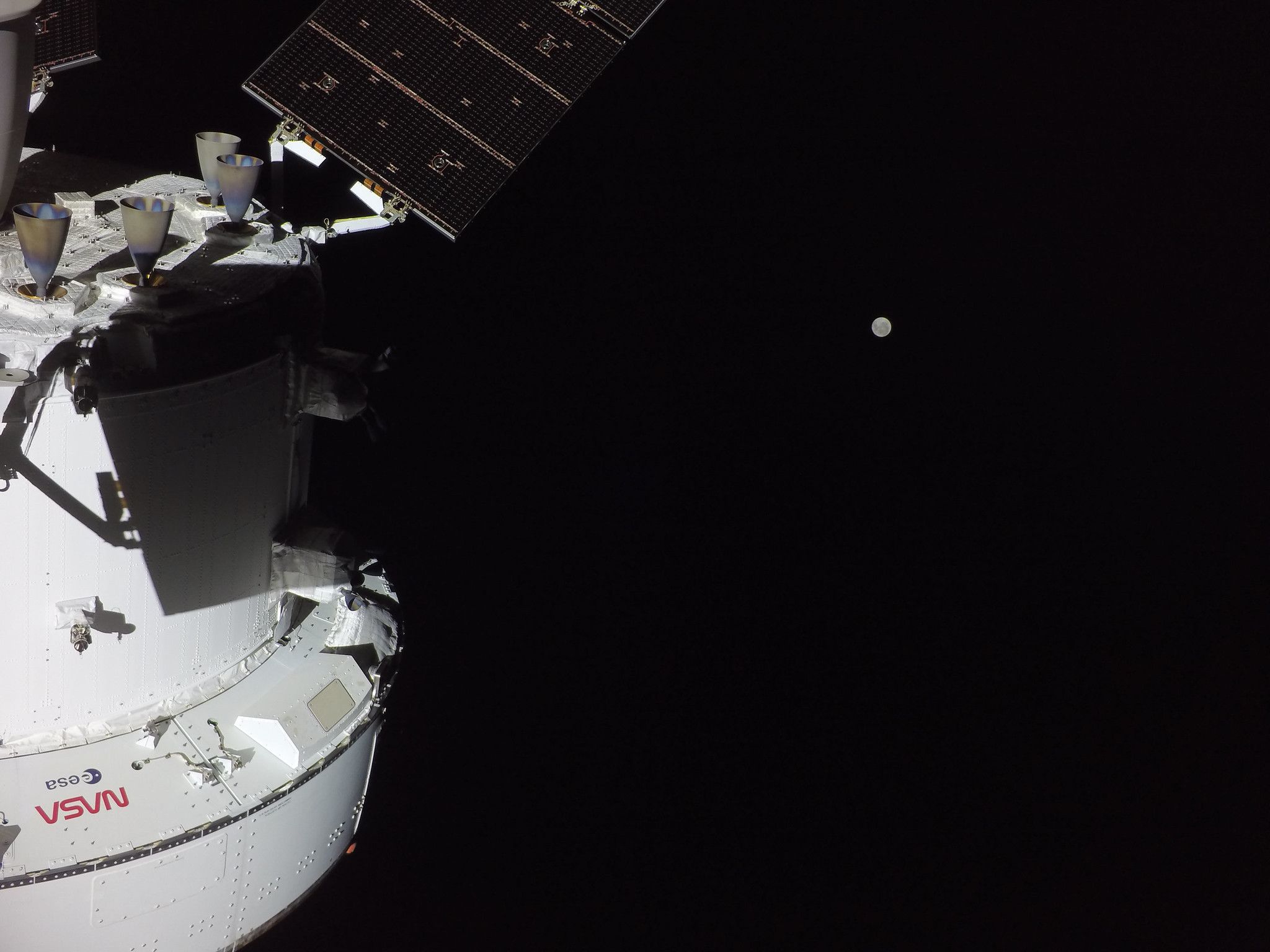
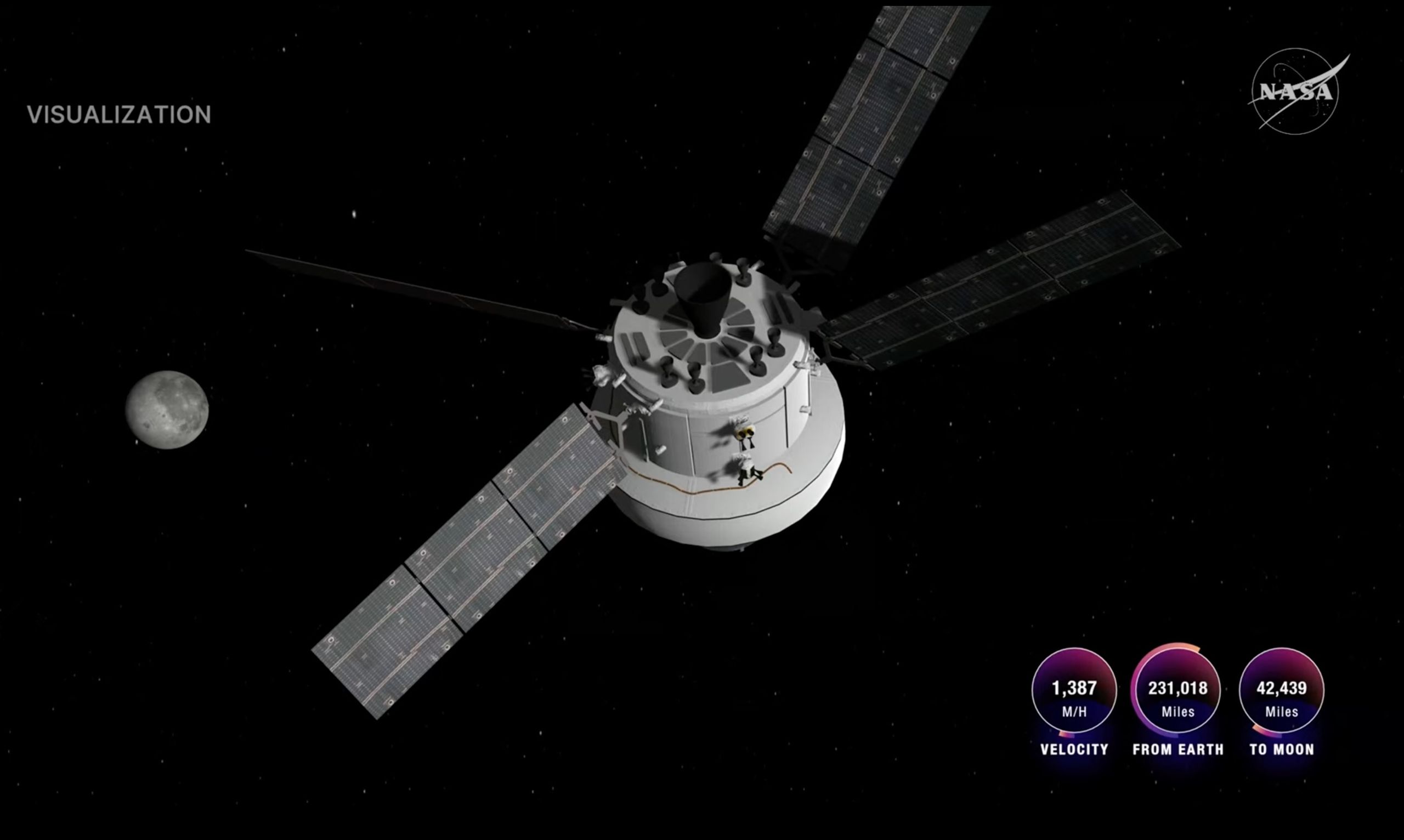
Happy Artemis II Moon Day
Orion Integrity and its crew will reach the farthest point in their journey today, and closest to the moon during the flyby later today.@NASASpaceflight will bring you all the coverage Live, from 12:30 PM EDT/16:30 UTC
View: https://youtube.com/watch?v=Fbpd2YB8seo
Make new friends, but keep the old.
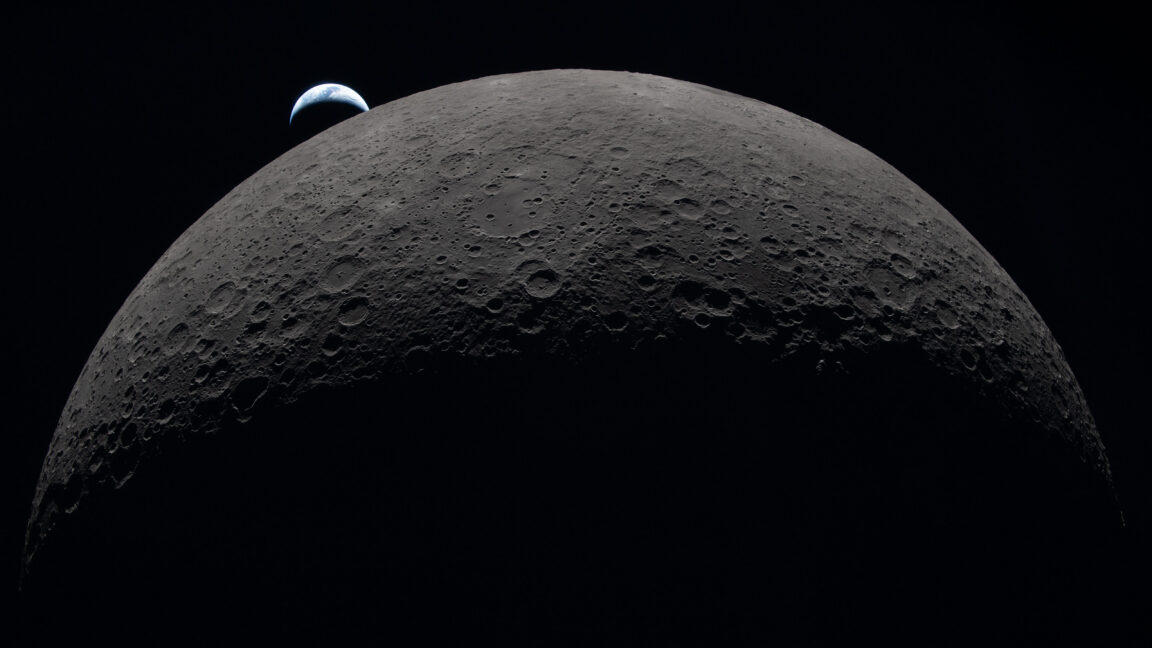
A new photo captures the Moon's near side on the right (the side we see from Earth, identifiable by its dark splotches) and its far side on the left. The Artemis II crew are the first to see the far side with human eyes.
"Welcome to my old neighborhood." Our @NASAArtemis II astronauts woke up on the sixth day of their mission to a special message recorded in 2025 by astronaut Jim Lovell, the pilot of Apollo 8.
R.I.P Jim Lovell.At 1:56 PM ET on April 6, 2026, Artemis II passed Apollo 13’s long-standing record of 248,655 miles from Earth and later reached a new peak distance of 252,757 miles, placing the crew 4,102 miles farther than any human has ever traveled.
2:45 p.m.
Due to last approximately seven hours, the lunar observation period is the duration of time that the crew is close enough to the Moon to make impactful science observations (4,070 miles altitude at closest approach) and the spacecraft is oriented such that the windows are pointed at the Moon.
At the beginning of the window, as Orion approaches the Moon on the near side, the side we can see from Earth, people in parts of the eastern hemisphere can view some of the same features the astronauts will observe. These include future CLPS landing site Reiner Gamma, a bright, mysterious swirl the origin of which scientists are still trying to understand, and Glushko, a bright, 27-mile-wide crater known for the white streaks that shoot out from it for up to 500 miles.
1:56 p.m.
The Artemis II crew of NASA astronauts Reid Wiseman, Victor Glover, and Christina Koch, along with CSA (Canadian Space Agency) astronaut Jeremy Hansen have set the record for the farthest distance from Earth traveled by a human mission, surpassing the Apollo 13 record of 248,655 miles set in 1970.
As we surpass the distance humans have ever traveled from Earth we do so in honoring the extraordinary efforts and feats of our predecessors in human space exploration. We will continue our journey into space even farther from Mother Earth succeeds in pulling back to everything that we hold dear. But we most importantly, choose this moment to challenge this generation and the next, to make sure this record is not long-lived.
Jeremy Hansen
Jeremy Hansen
Canadian Space Agency (CSA) Astronaut
NASA Flight Director Brandon Lloyd, Capsule Communicator Amy Dill, and Command and Handling Data Officer Brandon Borter also marked a lighthearted milestone today by emailing the crew what is now assumed to be the longest person-to-person message ever sent in human history.

I'm not sure how that's meant, so I'll add this;and getting to see the first images of the darkside of the Moon later tonight.
In October of 1959, the Luna 3 spacecraft launched from the Baikonur Cosmodrome in Kazakhstan. Luna 3 was the third spacecraft to reach the Moon and the first to send back pictures of the Moon's far side. The pictures were noisy and indistinct, but because the Moon always presents the same face to the Earth, they offered views of a part of the Moon that had never been seen before.
The far side of the Moon is surprisingly different. The most striking difference evident in the Luna 3 pictures is the absence of the large, dark seas of cooled lava, called maria, that cover a substantial fraction of the Earth-facing near side. The far side is instead densely peppered with impact craters of every size and age.
Fifty years later, in June of 2009, Lunar Reconnaissance Orbiter (LRO) launched from Kennedy Space Center in Florida. Using LRO's global elevation maps and photographic mosaics, both of which are of unprecedented quality and detail, it's possible to accurately recreate the view captured in the pictures from Luna 3. As seen here, Luna 3 was directly over 12°N 120°E at a distance of 61,700 kilometers above the surface, and its camera was banked 17.5° clockwise from vertical relative to the Moon's north pole.
The thicker blue longitude line at 90°E, along the left side of the LRO image, marks the boundary between the near and far sides of the Moon. To the left of that line are the familiar maria Crisium (the circular spot near the 9 o'clock position), Marginis, Smythii (both east of Crisium), Humboldtianum (in the north), Australe (near the south pole), and the eastern edge of Fecunditatis. The bright spot near the center of the disk is a complex of unnamed craters bordered by King, Langemak, Gregory, and Abul Wafa craters. The brightness is enhanced because it's near the subsolar point. The dark, sharp-edged shield shape in the southern hemisphere, with the white dot in the middle, is Tsiolkovskiy crater and its central peak. The dark spot to the southeast of Tsiolkovskiy is the crater Jules Verne. The mare in the northeast is Moscoviense.
South Korean orbiter returning spectacular views of lunar landscapes
May 27, 2023 Stephen Clark
...
South Korea’s Danuri spacecraft captured this view of Vallis Schrödinger March 24 on the far side of the moon. Credit: Korea Aerospace Research Institute
“Detailed shapes such as craters on the lunar surface and towering peaks within the craters can be clearly identified (in Danuri’s images),” the Korea Aerospace Research Institute said in a statement. “Such high-resolution images can be used as important data for understanding the components of the lunar surface and the formation process of peaks in craters in the future.”
Other images from South Korea’s Danuri spacecraft shows the regions of Vallis Schrödinger and Szilard crater, also located on the moon’s far side.
...
One of the payloads on the KPLO, or Danuri, mission is a U.S.-built instrument named ShadowCam.
Derived from the main camera on NASA’s Lunar Reconnaissance Orbiter, ShadowCam will peer inside dark craters near the moon’s poles, where previous missions detected evidence of water ice deposits. The NASA-funded ShadowCam instrument is hundreds of times more sensitive than LRO’s camera, allowing it to collect high-resolution, high signal-to-noise imagery of the insides of always-dark craters using reflected light.
KAGUYA orbits the Moon in polar orbit, meaning it passes above both the North and South poles, so it can observe the entire Moon as it rotates. This is allowing us to obtain a global topographic map of the Moon, including its polar regions, with the greatest accuracy ever achieved.
...
But because the Moon always shows one side - what we call the nearside - to the Earth, we cannot track the explorer when it goes to the lunar farside. Data acquisition becomes impossible. Our solution is to track KAGUYA on the farside using relay satellites, making precise measurement of lunar gravity on the farside possible for the first time
The fully operational phase of the mission began on Dec. 21, 2007, following a successful checkout of all the onboard instruments.
By April 9, 2008, JAXA announced that Kaguya, using its laser altimeter, had collected enough data to construct the topography of the entire lunar surface, with data points 10 orders larger than the previous model of the lunar surface. (The previous model was produced by the Unified Lunar Control Network in 2005, based largely on the American Clementine spacecraft.)
Kaguya’s other achievements included detecting gravity anomalies on both the near and the far side of the Moon (based on Doppler data from both Kaguya and the Okina satellite) and the first optical observation of the permanently shadowed interior of the Shackleton Crater.
Kaguya completed its original planned mission by late October 2008, with hopes to continue to March 2009 followed by impact in August 2009. However, because of a faulty reaction wheel, the extended mission ended early.
China Just Retrieved Rocks from the Dark Side of the Moon. What Does This Mean for Science?
June 28, 2024 Reynier Squillace
On Tuesday, a strange bell-shaped casket floated gently down onto the plains of Inner Mongolia. It came from outer space and carried rocks from the far side of the Moon.
The China National Space Administration successfully retrieved the payload, which their lunar probe Chang’e 6, named after the Chinese moon goddess, sent back to Earth in a return module.
The success of their five previous Chang’e probes highlights the progression of the Chinese Lunar Exploration Program from orbital satellites to sample return missions in just 13 years. But Chang’e 6 broke new ground. This is the first time in history that humans have collected rocks from the Moon’s “dark” side.
The Artemis II mission wrapped up a historic seven-hour lunar flyby, marking humanity’s first return to the Moon since Apollo 17 in 1972 and capturing images of the lunar far side.
After the lunar observation period concluded, the Artemis II crew was congratulated by President Donald J. Trump, in a live conversation that aired as part of NASA’s continuing live coverage of the mission. They also spoke with NASA Administrator Jared Isaacman and answered questions from social media.
The momentous day began at 1:56 p.m. EDT as NASA astronauts Reid Wiseman, Victor Glover, and Christina Koch, along with CSA (Canadian Space Agency) astronaut Jeremy Hansen, set the record for the farthest distance from Earth traveled by any human, surpassing Apollo 13’s distance of 248,655 miles.
During a planned 40-minute loss of signal as Orion passed behind the Moon, the spacecraft and its crew made their closest approach at 7:00 p.m., flying at about 4,067 miles above the surface. Two minutes later, the crew reached the mission’s maximum distance from Earth at 252,756 miles, setting a new record for human spaceflight.
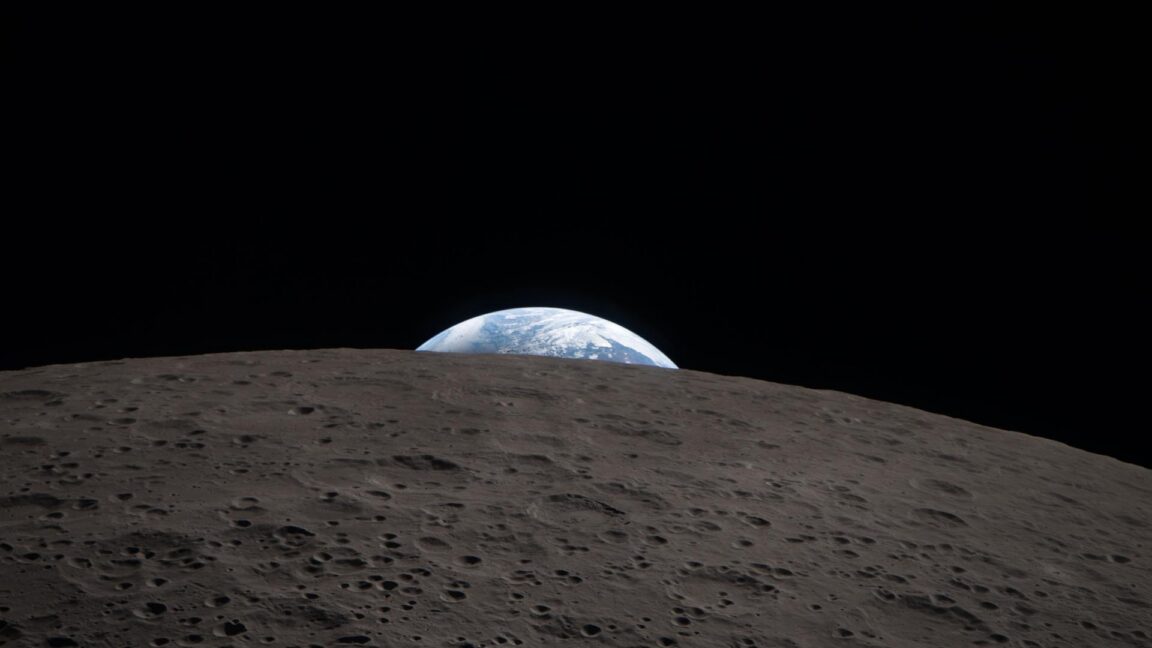
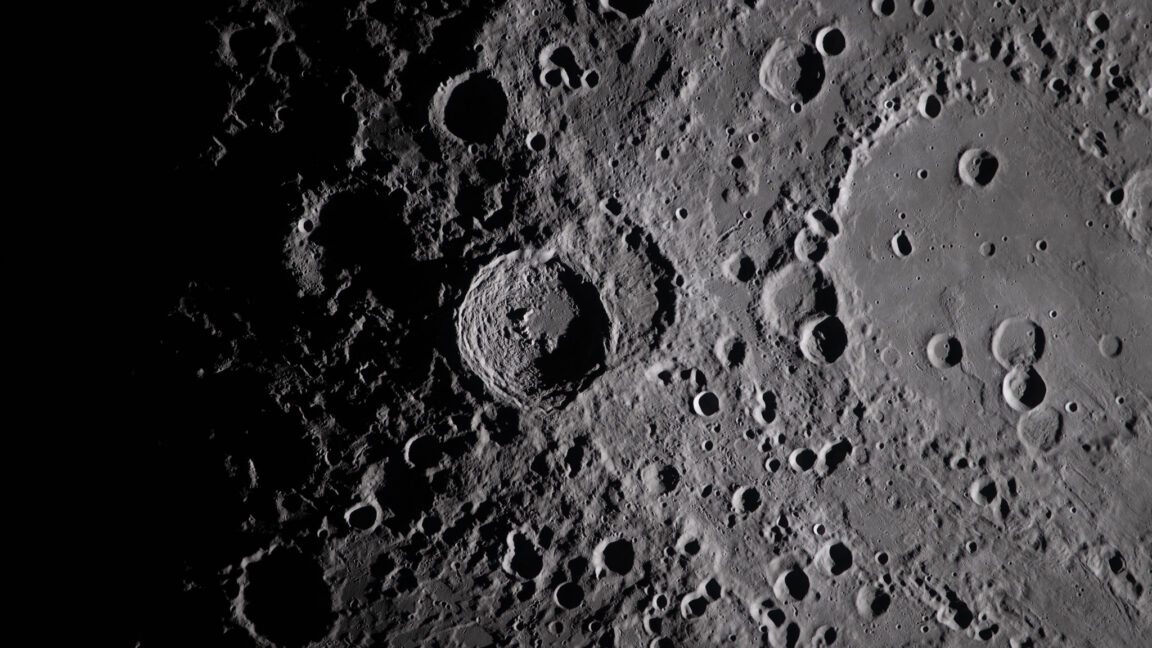
As they flew over the Moon’s far side, the crew photographed and described terrain features including impact craters, ancient lava flows, and surface cracks and ridges formed as the Moon slowly evolved over time. They also noted differences in color, brightness and texture, which provide clues that help scientists understand the composition and history of the lunar surface. The crew witnessed an “Earthset” — the moment Earth dropped below the lunar horizon — as Orion traveled behind the Moon and an “Earthrise” as the spacecraft emerged from the opposite edge of the Moon.
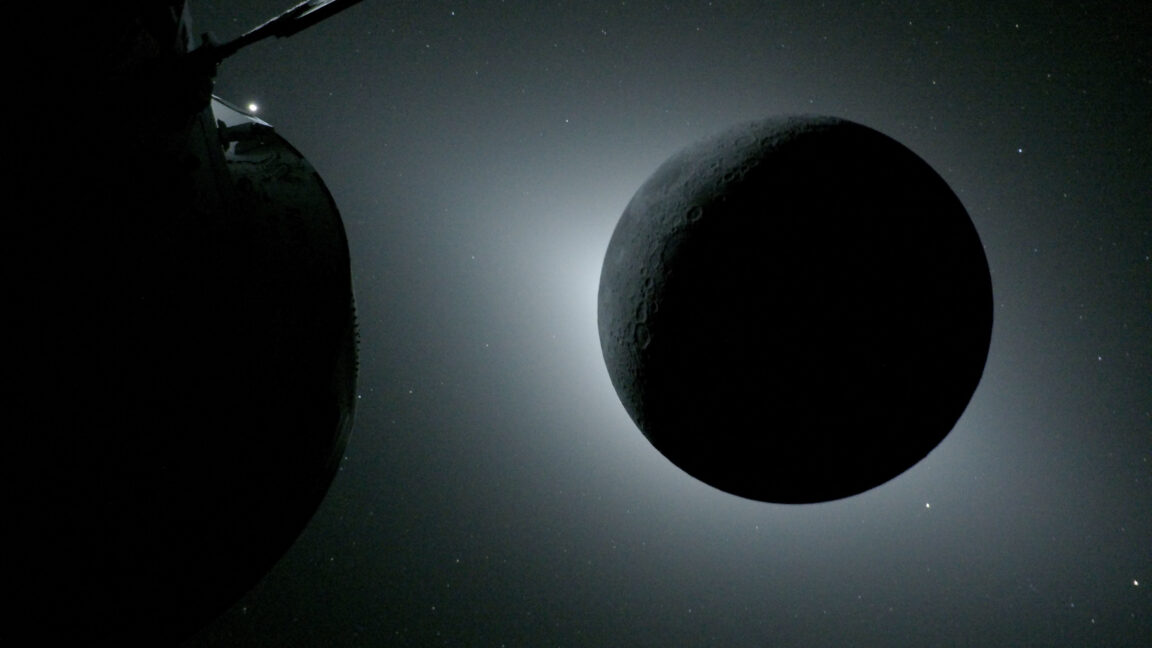
As the lunar observation period ended, the crew witnessed a nearly hour-long solar eclipse as the spacecraft, the Moon and the Sun aligned. With a view of a mostly darkened Moon, the crew analyzed the solar corona — the Sun’s outermost atmosphere — as it appeared around the Moon’s edge.
During the eclipse, the crew had an opportunity to look for some rarely seen phenomena that are only visible on an unlit portion of the Moon. They reported six light flashes created by meteoroids impacting the lunar surface while traveling many thousands of miles per hour.
Scientists already are looking forward to the images, along with the many others taken during the flyby. After the lunar data is downlinked from the spacecraft overnight, scientists will look at images, audio, and other data to determine better times and locations of the flashes and seek input from amateurs who were observing the Moon at the same time. The crew will discuss their observations with the lunar science team on Tuesday, April 7, in a conversation that will be broadcast in NASA’s live coverage.


 www.bbc.com
My favorite corner of the Moon. Real life trying very hard to make 2001 monoliths real (Clarke novelization I mean). Reiner Gamma has the look of AMT-2 (on Iapetus: a greyish eye) except on the Moon like AMT-1, magnetic anomaly included. It is just too good to be true.These include future CLPS landing site Reiner Gamma, a bright, mysterious swirl the origin of which scientists are still trying to understand,
Yep, we have known from 60 years at least that Zond (and Mars) manned flybys have zero science interest.I understand why NASA is trying to make this trip sound scientific, but it's really like some tourists turning up at Yellowstone after the geologists and ecologists have finished.
Because the only thing this administration seems to want to fund at NASA is Moon related, and anything science related is given the chop. So I imagine they’ve been told to do this to give the impression that they are still doing science at NASA.I understand why NASA is trying to make this trip sound scientific, but it's really like some tourists turning up at Yellowstone after the geologists and ecologists have finished.
Still, it was odd to look at the Moon this morning and think "there's a can of people out there."

Based on fundamental celestial mechanics, it's not the dark side (i.e. it gets just as much sunlight as the front per year - think Full/Half/New Moon), it's the *FAR* side - elementary, my dear Fighterjock...Looking forward to the flyby Flyaway, and getting to see the first images of the darkside of the Moon later tonight.
THE ARTEMIS II ECLIPSE.April 6, 2026.
Totality, beyond Earth. From lunar orbit, the Moon eclipses the Sun, revealing a view few in human history have ever witnessed. Photo: NASA
Earthset.
The Artemis II crew captured this view of an Earthset on April 6, 2026, as they flew around the Moon. The image is reminiscent of the iconic Earthrise image taken by astronaut Bill Anders 58 years earlier as the Apollo 8 crew flew around the Moon.
The Artemis II crew captured this image showing the rings of the Orientale basin during their lunar flyby on April 6.
At the 10 o’clock position of the Orientale basin, the two smaller craters – which the Artemis II crew has suggested be named Integrity & Carroll – are visible.
For the first time in over 50 years, humans saw the Moon from up-close.Science is beautiful!
More photos here: https://nasa.gov/gallery/lunar-flyby/
As Artemis II continues its journey, it’s a good moment to recognize the army of a team behind that it takes to undertake such a mission.
From the engineers and technicians who built the systems, to the launch team, Mission Control, and the recovery crews preparing for splashdown - and everyone behind this mission.
Thank you to the workforce making this mission possible every single day.

 nasawatch.com


