View: https://twitter.com/nasaadmin/status/2039734368898289927

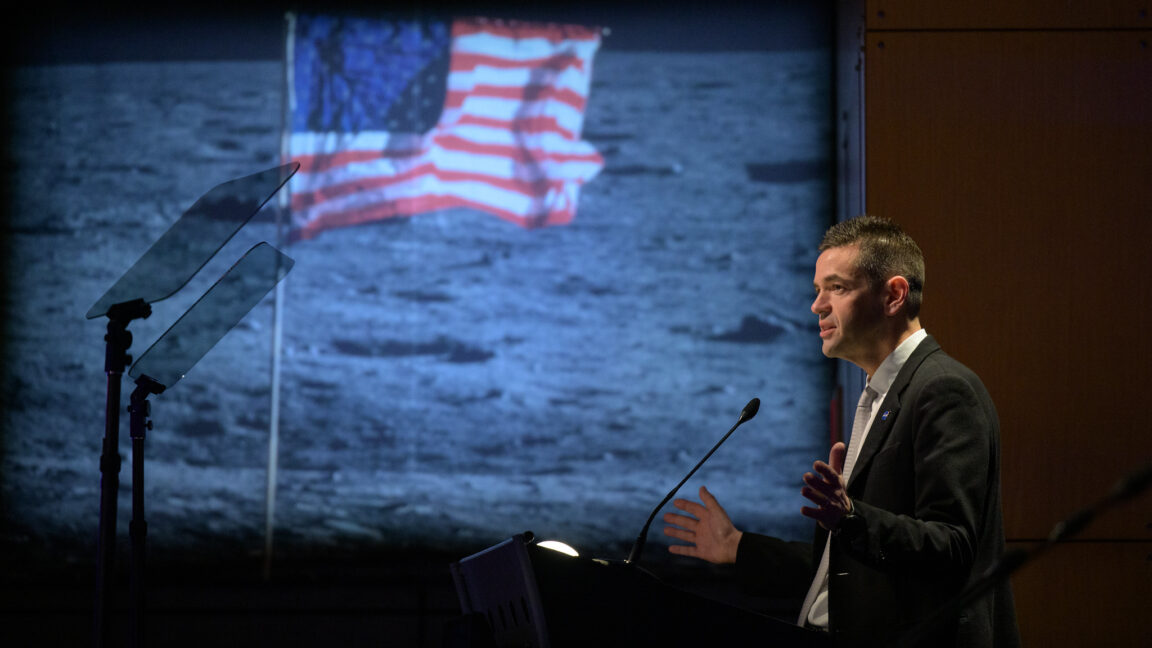
Artemis II astronauts are doing great. The Orion spacecraft is performing well in an impressive elliptical orbit, and the @NASA_Johnson Mission Control team is taking good care of the crew. Meanwhile, back at @NASAKennedy, the teams are out at the pad getting ready for what comes next. We are going to get into a rhythm of launching Moon rockets around here
View: https://twitter.com/UKSpaceCmd/status/2039672121270399175


UK Space Command, working alongside @spacegovuk in the National Space Operations Centre, monitored the Artemis II launch

Imagery was taken by our industry partners. UK Space Command wishes everyone at @NASA
well as they deliver this historic mission

@spacefluxHQ
View: https://twitter.com/planet4589/status/2039747144886669318


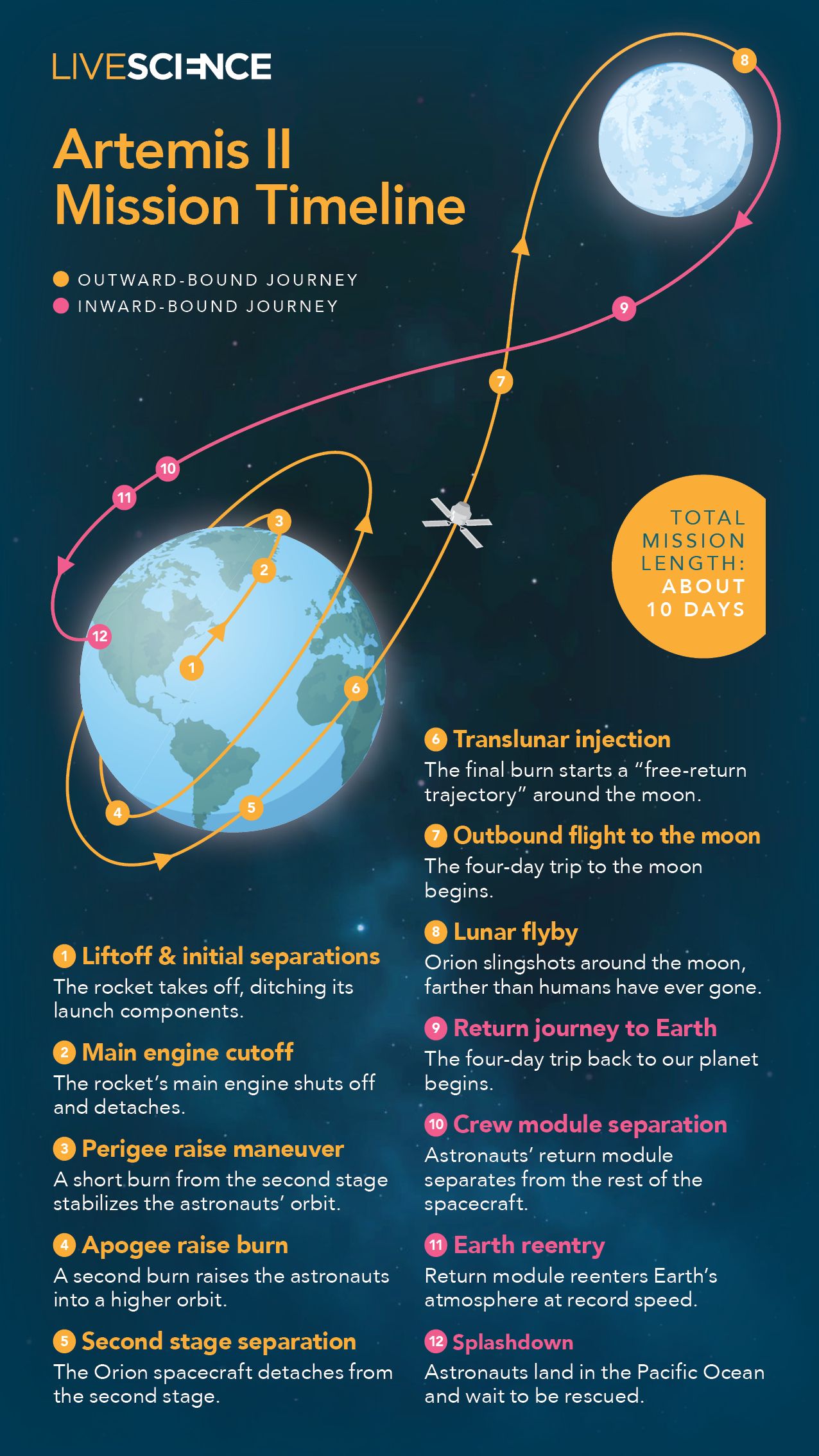
The Artemis II Integrity spacecraft is now coasting downwards and will reach perigee of about 195 km late on Apr 2. At 2349:50 UTC it will make the TLI (Trans-Lunar Injection) burn, a 388 m/s burn lasting 5m51s to raise apogee to lunar distance.


Tracker

Insertion

Home run

Up in the sky, look... it's

Ascent to glory


Even more powerful engines were looked at…once
 
Last edited:
From the Artemis Mission Blog

Artemis II Flight Update: Perigee Raise Burn Complete
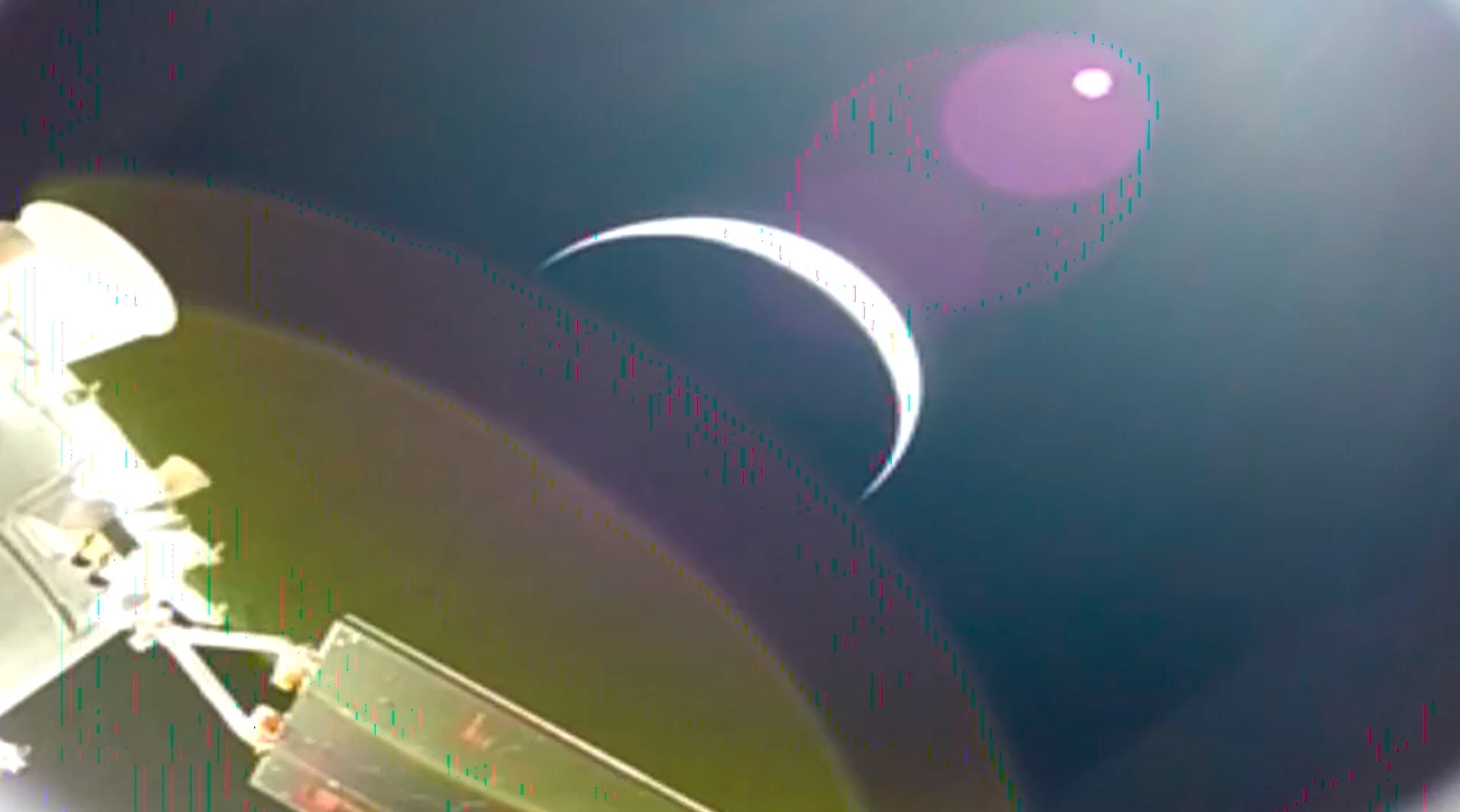
A view of the Earth from NASA’s Orion spacecraft as it orbits above the planet during the Artemis II test flight. NASA astronauts Commander Reid Wiseman, Pilot Victor Glover, and Mission Specialist Christina Koch, and CSA (Canadian Space Agency) astronaut Mission Specialist Jeremy Hansen, launched at 6:35 p.m. EDT on Wednesday, April 1, 2026, on an approximately 10-day mission around the Moon and back to Earth.
NASA
Editor’s Note: This blog has been updated with timing on the translunar injection burn.

The perigee raise burn is complete, marking another planned orbital adjustment in the early hours of the Artemis II mission.

After a brief rest period, the crew was awakened to monitor the Orion spacecraft’s systems through the burn. The ground team woke them at 7:06 a.m. EDT with the song “Sleepyhead” by Young and Sick.

The spacecraft ignited its service module’s main engine for 43 seconds, raising the lowest point of its orbit and refining the trajectory as it continues to circle Earth. This critical burn placed Orion, named Integrity by the Artemis II crew, into a stable high Earth orbit that aligns with its path to the Moon. The crew members will now move back into their rest period for another four and a half hours before they are again awakened to start their first full day in space.

Later today, the mission management team will gather for its first meeting of the mission to assess the spacecraft’s systems and will give their approval for the upcoming translunar injection burn that will send astronauts out of Earth orbit and toward the Moon for the first time since 1972.

Pending the mission management team’s approval, the translunar injection burn is scheduled for 7:49 p.m. EDT and will last for five minutes and 51 seconds, producing a change in velocity of 1,272 feet per second, sending humans out of low Earth orbit.

Flight controllers will closely monitor engine performance, guidance, and navigation data throughout the maneuver to ensure Orion remains precisely aligned for the outbound journey.

 
NASA Blog Update:

Artemis II Flight Day 2: Crew, Houston Poll ‘Go’ for Translunar Injection Burn

NASA’s Artemis II mission management team polled “Go” for the translunar injection burn to send the crew in the Orion spacecraft toward the Moon and send humans around Earth’s closest celestial neighbor for the first time since Apollo 17 in 1972.

The spacecraft will ignite its main engine on the service module for five minutes and 49 seconds beginning at 7:49 p.m. EDT.

Orion’s main engine provides up to 6,000 pounds of thrust, enough to accelerate a car from 0 to 60 mph in about 2.7 seconds.

NASA astronauts Reid Wiseman, Victor Glover, Christina Koch and CSA (Canadian Space Agency) astronaut Jeremy Hansen began their day at 2:35 p.m. with the playing “Green Light,” by John Legend and Andre 3000 by the mission control team and moved into their first full day of activities in space. The crew members are preparing for the burn and will conduct their first exercise sessions on the spacecraft’s flywheel exercise device, a key tool for maintaining fitness during long‑duration missions.

View the latest imagery from the Artemis II mission on our Artemis II Multimedia Resource Page. Please follow @NASAArtemis on X, Facebook, and Instagram for real-time updates. Live coverage of the mission is available on NASA’s YouTube channel.
 
CBS has uploaded a short article about crew preparations for the upcoming Artemis II TLI burn:


NASA's Artemis II astronauts are preparing for the "trans-lunar injection" burn, which would send their Orion capsule on a free return path around the moon and back to Earth. Former NASA astronaut Leroy Chiao joins CBS News to discuss.
 
Artemis II has completed its' six-minute TLI burn and is now on its way to the Moon.

From CBS:


The Artemis II had a successful translunar injection burn Thursday night, allowing the four-person crew to leave Earth's orbit and head for the moon. CBS News' Bill Harwood and Peter King have more.

From SciNews:


The “Integrity” Orion spacecraft, with NASA’s astronauts Reid Wiseman, Victor Glover, Christina Koch and CSA (Canadian Space Agency) astronaut Jeremy Hansen, has performed the Trans-lunar injection on 2 April 2026, at 23:48 UTC (19:49 EDT). The translunar injection burn (TLI) propelled Orion on a path toward the Moon and set it on the free-return trajectory that will ultimately bring crew back to Earth for splashdown.​
Credit: NASA

From ABC:


The translunar injection burn sending the Artemis II crew and Orion on its path toward the moon has been successfully completed.

As for the now separated ICPS I assume that after it has deployed the cubesats mounted inside the OSA it will move to its' graveyard orbit by burning to depletion to consume all remaining LH2 and LOX.
 
As for the now separated ICPS I assume that after it has deployed the cubesats mounted inside the OSA it will move to its' graveyard orbit by burning to depletion to consume all remaining LH2 and LOX.
I think the ICPS is actually going to burn up--asking Gemini on the web, for what that is worth

And they're off'

Here are the four cubesats

Space Weather CubeSat 1

ATENEA

K-RadCube

TACHELES

WE ARE GOING
 
Last edited:
I think the ICPS is actually going to burn up--asking Gemini on the web, for what that is worth

From what I've read on the new Artemis II mission profile it wouldn't take much for the ICPS to boost itself into a graveyard orbit as the Artemis II wikipedia article indicated in regards to its disposal, at an apogee of 38,000NM this is well above the GEO band.
 
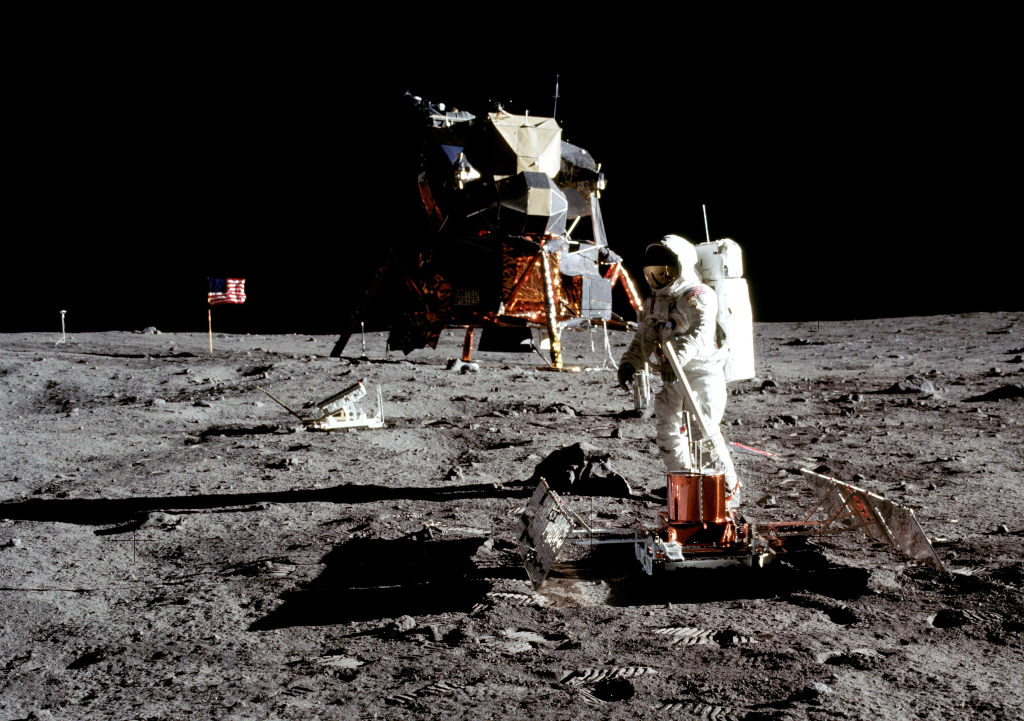
Fun fact: this mission and its trajectory are pretty similar to Jules Verne moonshot.
Without conscious realization of that, but perhaps with intuitive awareness, last night I ordered this along with a 2000 book about the Japanese and Indian space programs,
"
Arriving Monday
From the Earth to the Moon (Illustrated 1874 Edition): 100th Anniversary Collection
Sold by: Amazon.com
"
From the Earth to the Moon (Illustrated 1874 Edition): 100th Anniversary Collection Paperback – January 6, 2019

by Jules Verne (Author), Henri de Montaut (Illustrator), Louis Mercier (Translator)
4.7 out of 5 stars

Unabridged version translated by Louis Mercier with 80 black and white illustrations and the original cover. Includes the sequel A Trip Round It

A beautiful edition with 80 images from the 1874 English edition. Use Amazon's Lookinside feature to compare this edition with others. You'll be impressed by the differences. Don't be fooled by other versions that have no illustrations or contain very small print. Reading our edition will make you feel that you are traveling to the moon yourself. If you like our book, be sure to leave a review!

From the Earth to the Moon is an 1865 novel by Jules Verne. This edition combines that novel with his sequel, A Trip Round It. It tells the story of the Baltimore Gun Club, a post-American Civil War society of weapons enthusiasts, and their attempts to build an enormous Columbiad cannon and launch three people—the Gun Club’s president, his Philadelphian armor-making rival, and a French poet—in a projectile with the goal of a moon landing. The book is filled with Verne’s calculations on the requirements for the cannon and his analysis of what would happen in such a flight. His vision was finally realized 100 years later when astronauts landed on the moon.
 
Last edited:
Wait. I don't want to be a pisser, but those old translations are utter shit. Jules Verne wasn't properly translated in english until the last 50 years. I know a recent translation that is very faithfull. PM me if you are interested.
 
Wait. I don't want to be a pisser, but those old translations are utter shit. Jules Verne wasn't properly translated in english until the last 50 years. I know a recent translation that is very faithfull. PM me if you are interested.
We'd all like to know about that.

The "AMT high" call-out meant the launch over performed a bit:
View: https://www.dailymotion.com/video/xa44thw


This tracker makes it look like a contact binary

Record broken

Future challenges

More footage
 
Last edited:
SRB separation is the point of most relief in the ascent!

The part between igniting the SRBs and getting rid of them is the terrifying bit...
I saw video from inside one of the Shuttle launches during assent. While the solids were burning they were in a Jeep in Moab, trying to take trails at 50 mph. Once they jettisoned the boosters it was smooth as silk.
 
Christina Koch on the five segment SRBs:
Telemetry

NSF

Freebird

Finding out footing
 
Last edited:
MET 2D 17HR 30MIN

Summarized Status:

MCC reported that the attempted wastewater disposal at the beginning of the crew sleep period was aborted after dumping 3%. The tank quantity was at 64%. Despite the small amount dumped, the waste system and toilet remain functional. However, the crew was advised to use the backup collection devices overnight. An earlier outside camera survey indicated some ice buildup at the waste dump nozzle.

Due to these issues, the flight operation has decided to cancel today's OTC-2 correction schedule. Instead, the crew will initiate an attitude-reversal orientation maneuver to point that side of the Orion so the sun can hopefully melt the accumulated ice on the wastewater dump nozzle. There is no impact on the mission or lunar fly-by.

Despite the schedule for an OTC-2 correction, the mission team has determined that the initial TLI was sufficient and that this OTC-2 isn't needed, given yesterday's cancellation of OTC-1. Instead, the time scheduled for OTC-2 will be devoted to the attitude-reversal orientation maneuver.

All of this new information will be communicated to the crew once they wake up.

This is Mission Control Houston.
 
Last edited:

Similar threads

Back
Top Bottom