Survivability is more than stealth.
The primary threats for aircraft performing CAS are AAA, small arms, and MANPADS. You need an aircraft that can take a punch and stay in the fight.
AAA&Small arms are secondary now, because of MANPADS; you don't enter their range/altitude envelope. If anyone still meets AAA threat among fixed wings, it's in fact interdictors, when going for a low altitude penetration.
On the other hand, CAS aircraft over Ukraine did receive their fair share of SAMs and A2A missiles of all sizes.

That is so true quellish. The A-10 is just such an aircraft, unique in it's ability to take hits and still keep flying even with gapping holes in the airframe. Show me another aircraft that can survive like that.
Frogfoot, hah. Probably the most shot at aircraft of the last 50 years.
 
AAA&Small arms are secondary now, because of MANPADS; you don't enter their range/altitude envelope. If anyone still meets AAA threat among fixed wings, it's in fact interdictors, when going for a low altitude penetration. On the other hand, CAS aircraft over Ukraine did receive their fair share of SAMs and A2A missiles of all sizes. Frogfoot, hah. Probably the most shot at aircraft of the last 50 years.
A previous generation of experts declared AAA and small arms to be negligible threats. The need for the A-10 was one of the lessons learned. Plus ça change ...
 
A previous generation of experts declared AAA and small arms to be negligible threats. The need for the A-10 was one of the lessons learned. Plus ça change ...
In Vietnam, small arms were a threat because the entire country would point an AK into the air at a 45deg angle and let fly if they heard jet noise.

I'm never going to discount AAA. Not when every vehicle in the US military has at least one .50cal mounted on it. Not when there are quad 14.5mm and twin 23mm guns everywhere in a Russian TOE.
 
In Vietnam, small arms were a threat because the entire country would point an AK into the air at a 45deg angle and let fly if they heard jet noise.

I'm never going to discount AAA. Not when every vehicle in the US military has at least one .50cal mounted on it. Not when there are quad 14.5mm and twin 23mm guns everywhere in a Russian TOE.
i think days of low altitude ops over a capable enemy are generally gone, it's unsustainable, at least not with modern approaches to pilot training.
High-risk CSAR/risky high speed helo escort - perhaps, but by no means it's something normal/mundane.
Are those missions enough to build plane around them - i honestly wonder. Reasonable survivability and even armor can be bought cheaper
 
CSAR over enemy held territory is high risk, especially in daylight. Accuracy of small arms and MANPAD (any non-aided visual directed weapons) falls off significantly at night. This advantage of night will of course be reduced over time as more countries acquire night vision devices to be fielded to the tactical forces in numbers.
It would not surprise me if pilots are being briefed to not expect to be recovered during daylight hours due to the risk. This is also why many western air forces are providing extensive 'escape and evasion' training courses to the aircrews of aircraft that can be expected to operate near or beyond the front line trace of combat forces.
Radar operated weapon systems do present a different problem, but then this is a two way street as the emitter is certainly detectable. This leads back to CSAR mission packages that provide supporting fires to reduce the risk of electronic detection affecting the mission. Also the density of defenses tends to be around critical military and political nodes so finding a route of least risk is a time honored means of avoiding detection and/or engagement. Speed is important as it compresses command and control decision making. Of course the less time you spend in the danger area, the less chances someone is going to engage you.
 
In CSAR, as well as other mission types (CAS, air assault) temporary control of the air is necessary to facilitate them. It is nearly impossible to predict the specific circumstances that CSAR will need to be performed in or the composition (How far away is the downed aircrew, what sort of terrain are they surrounded by, density and composition of AD, etc). The question should be less of "How do I make an aircraft survive in such a hostile environment", as few aircraft are capable of doing a self escort through a forest of AD assets. Some capabilities that may lend themselves to survivability(such as speed) may also negatively affect the performance of said aircraft in its intended roles (CAS, FAC(A))

In near future scenario, a CSAR package may be expanded with sacrificial UAS swarm to prevent the rescue flight from getting shot down. It also may be able to provide some sort of way to detect opposing SPAAs. You could still operate an A-X-alike aircraft in that environment alongside the rescuing helicopter/tiltrotor. The need to suppress & destroy any search parties or pop-up manpads probably cannot be done by any near-future UAS.

Of course, this comes with a huge asterisk. As mentioned before, CSAR is one of the most highly variable missions there is and is currently going through it's own crisis now that there's no more future orders for the HH-60W and the 60G is starting to get long in the tooth. Divesting the A-10 is now only compounding the crisis.
 
Infantry don't kill infantry, artillery kill infantry.

Having ability to defeat enemy infantry in contact doesn't matter in a big war, since it is the enemy artillery and drones that is doing the killing on your infantry. Unless you can reduce the enemy to a light infantry force without functional radios, CAS is a unimportant mission. You can scalpel enemy rifleman away, and then a 155mm mission lands and the infantry is wiped. The idea that the air force should have aircraft for killing enemy infantry within 50m of friendlies instead of killing all enemy artillery and win the war can only come from people thinking of zero casualty wars.

The infantry themselves are getting long range fires ability, with fpv duels extending to 5 to 20km and every bit indirect fire from mortars to grenade launchers getting greatly increased effects with modern comms. Rifle fire is less and less relevant even when two light infantry formations get into contact and the level of dispersion can only go up and up with the increased sensing and weapons range of modern infantry.

With the level of drone spam common on many battlefields, interlocking ground based AD is necessary for survival against other ground forces. It is pretty funny to jump into this threat envelope with a platform 3 orders of magnitudes more expensive. Personally I don't think any IFV without AA capable autocannon can be considered acceptable as a new build today.

We should all realize that the current day formations have embarrassingly horrible air defense capability compared to what is being planned and what is necessary to survive current offensive weapons.
 
Last edited:
i think days of low altitude ops over a capable enemy are generally gone, it's unsustainable, at least not with modern approaches to pilot training.
High-risk CSAR/risky high speed helo escort - perhaps, but by no means it's something normal/mundane.
Are those missions enough to build plane around them - i honestly wonder. Reasonable survivability and even armor can be bought cheaper
The V-22 says hi. So does the V-280.

And the A-10 was technically designed as a CSAR escort to replace the old Skyraiders (among other jobs).

I mentioned this on the NGAD thread, how I see there being 4 basic types of CCA/Loyal Wingman drones:
  1. Flying AAM weapons bay. I don't have a good mental image for what this might look like. Needs to be big enough to carry about 2000lbs of AAMs, roughly 6x AMRAAMs and 2x Sidewinders. The Sidewinders are there to have an IR seeker in addition to the ARH missiles, not because we expect this thing to dogfight. If we get dual-seeker BVRAAMs, we can drop the 2x sidewinder requirement.
  2. Recon. Probably going to look like TACIT BLUE, even if it's not that big. Same job, flying into A2AD space and providing radar and EO data to the rest of the horde, ideally without the bad guys finding the drone. May end up as two separate airframes, depending on how much space and power the radar and EO eyeball need. Could be as small as a JASSM, if we're okay with near-disposable levels of drone, and that would absolutely have separate radar and EO CCAs. Might use the stretched JASSM-ER airframe and recover via parachute.
  3. EW. Replaces the EA-18G Growler, so it's going to have similar payload. ~7000lbs of jammers, a couple of AARGMs and a couple of JSOWs for time-critical SEAD/DEAD. Could use the same airframe as the Ground Attack CCA, but doesn't have to.
  4. Ground Attack. I'm picturing something akin to the Northrop A-12 proposal here. 2x AMRAAM (optional), 2x AARGM, and 4x 2000lb bombs. I want a bomb rack that will let me stick 8x SDBs into the volume that a 2000lb bomb takes up for capacity reasons.
The manned A-10 replacement is mostly going to quarterback the drones for this work. Two seats, so the pilot can concentrate on flying the plane and the backseater can quarterback the drones (and play flying FAC if necessary). I'm going to give the manned plane a 25mm gun with a big ammo drum (enough for 10x 1sec bursts). It probably won't be used but one time in a hundred flights.
 
I don't know why people care about minimum payload for a drone when logically such forces should operate in a formation. The drone only need to have enough payload to carry the heaviest munition or subsystem.

Now there is advantage of building small airframes in logistics and attrition tolerance, and there is advantage in building bigger with more efficiency.

I'd expect that existing suitable engines would impose strong constraints in the short term and it'd take 2nd generation developments driving new engine requirements for more optimized designs to be built.
 
I don't know why people care about minimum payload for a drone when logically such forces should operate in a formation. The drone only need to have enough payload to carry the heaviest munition or subsystem.
It's about control links.

If your drone only carries 2x AMRAAMs it can be very small but it's also basically a one-shot deal: you use up one drone to shoot down one enemy plane, so you need as many drones as the enemy has planes. Which means you need as many control links as the enemy has planes.

If your drones are already smart enough to fly in a formation all by themselves, the manned plane saying "follow me" or whatever, then it's okay to use smaller drones. Groups of drones acting as a single unit for control link purposes.

But if your drone control link abilities are limited, then you need each drone to be able to shoot more than once. That's why I think the early CCAs are going to be bigger. Well, that and the size of equipment they need to haul. That EW drone is going to be big because the jammers are heavy, for example. Plus a ~2000lb weapons bay with space for 4x weapons (though as fat as those weapons are the bay might end up big enough to hold 4x 2000lb bombs).


Now there is advantage of building small airframes in logistics and attrition tolerance, and there is advantage in building bigger with more efficiency.

I'd expect that existing suitable engines would impose strong constraints in the short term and it'd take 2nd generation developments driving new engine requirements for more optimized designs to be built.
Yes, I'm expecting the CCAs to be a whole new "Century Series" of rapid developments as appropriately sized engines and airframes are developed. Initially using things like FJ44s or that Honeywell F125 out of the Taiwanese F-CK-1 if you need afterburners; then going to newly designed engines that are better optimized militarily.
 
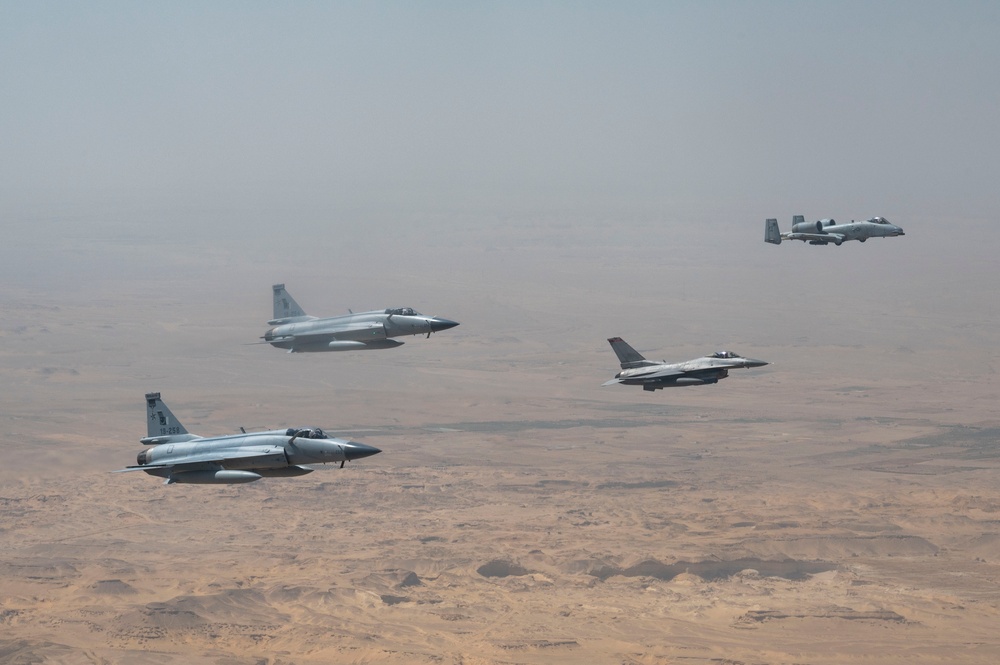
Whoever thought you'd see these three flying in formation?

View attachment 709376

There are pictures of the Concorde flying in formation with the Red Arrows Hawks, see https://www.alamy.com/red-arrows-ha...flypast-fairford-air-tattoo-image1857730.html, so I really don't comprehend your question? Any airplane may be photographed with any other airplane, as long as they share the same local airspace, so what's the surprise here?
 
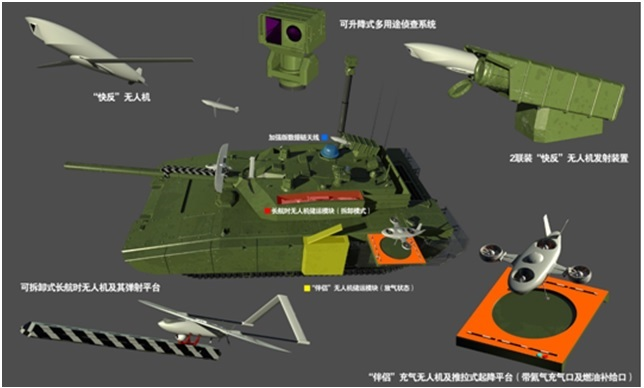
Future threat tanks maybe launching as many three classes of uas from a single tank while mounting ever advancing hard kill APS. both the USAF and the USA need to be thinking way more long term than they appear to be currently.
1728828615204.png
 
The Air Force wants to get rid of its remaining A-10 Warthogs in fiscal 2026 rather than gradually phase them out, a move the service hopes will open up funding for new weapons that are better suited for a future fight.

The service released its list of proposed retirements after the Pentagon’s unconventional budget rollout last week, which proposes cuts to the fifth-generation F-35 fighter jet and funnels more money into the sixth-generation F-47 fighter jet program.

Service officials have long sought to shed their A-10s, but lawmakers have repeatedly saved the plane, which was used for close air support in the Middle East. The Air Force originally planned to get rid of its A-10s by the end of the decade, but the new proposal shifts the timeline to fiscal 2026, a move that will almost certainly be met with resistance in Congress.
:rolleyes:
 
Here we go again, the USAF wants to retire the rest of its A-10s in 2026 and the proposal will get booted out by Congress, no surprises there then. :rolleyes:
 
Here we go again, the USAF wants to retire the rest of its A-10s in 2026 and the proposal will get booted out by Congress, no surprises there then. :rolleyes:
Without trying to make this too political this congress hasn't exactly been standing up for much against the administration...
 
Question: what will replace a-10 in case of full fleet retirement? One thing is to gradually retire, another - 200+ planes. It's a two years worth of F-35 production at full rate, ignoring other customers.
 
Not to mention that the F-35 is no A-10 replacement, despite numerous attempts to portray it as such.
 
Question: what will replace a-10 in case of full fleet retirement? One thing is to gradually retire, another - 200+ planes. It's a two years worth of F-35 production at full rate, ignoring other customers.
A bunch of hand-waving combined with declarations that its mission no longer exists. That's what will replace the A-10.
 
Question: what will replace a-10 in case of full fleet retirement? One thing is to gradually retire, another - 200+ planes. It's a two years worth of F-35 production at full rate, ignoring other customers.
I'm assuming Apache Guardians in the short term, TBH. And a whole system of drones with the replacement for the Apache as the drone quarterback in the longer term.

Let the USAF do Battlefield Air Interdiction all they want with F-35s, let the Army own support for troops in contact.
 
Question: what will replace a-10 in case of full fleet retirement? One thing is to gradually retire, another - 200+ planes. It's a two years worth of F-35 production at full rate, ignoring other customers.

No individual system. Loitering munitions, MALE UCAVs, F-16, F-15E, F-35 and AH-64 take over certain aspects each.

The role the A-10 filled doesn't require a bespoke system that replaces the A-10s use case as a perfect match. Rather it's mission profile is carved up and handed to the systems above and many more in pieces.
 
Given the general obsolescence of the A-10 in the northern hemisphere, I wonder if the US will sell them to allied regimes in South America, Africa and the near East.

I imagine they would be a decent COIN option for a relatively well off country on good terms with the US or looking to be on good terms with the US.
 
Question: what will replace a-10 in case of full fleet retirement? One thing is to gradually retire, another - 200+ planes. It's a two years worth of F-35 production at full rate, ignoring other customers.
I think the MQ-9 and MQ-20 make for a solid replacement; the F-35 is only a replacement in contested airspace where an A-10 wouldn't last for more than a single exchange before being shot down. I also would not be surprised if the new low-cost cruise missiles make the CAS role a much longer-range affair with more bomber-drone style platforms
 
I think the MQ-9 and MQ-20 make for a solid replacement; the F-35 is only a replacement in contested airspace where an A-10 wouldn't last for more than a single exchange before being shot down. I also would not be surprised if the new low-cost cruise missiles make the CAS role a much longer-range affair with more bomber-drone style platforms

MQ-20 wasn't adopted. A future platform under the CCA program or even the YFQ-42 would probably be the the future expendable strikers with reasonable survivability. Given that the MQ-9 lacks severely in the survivability department and takes up the role of the A-10 with regards to strikes and close air support against low end adversaries with little or no means to fight back against the drone. While also obviously being a surveillance and reconnaissance platform too.

In retrospect something like the Phantom Ray or X-47B would have made for a good replacement, especially if certain cost factors could have been driven down further with more developments and improvements.
 
Given the general obsolescence of the A-10 in the northern hemisphere, I wonder if the US will sell them to allied regimes in South America, Africa and the near East.

I imagine they would be a decent COIN option for a relatively well off country on good terms with the US or looking to be on good terms with the US.
You don’t want A-10s being used to strafe civilians. Beside the operating costs are too high. If there is a market for a dedicated manned COIN or close support type, it makes more sense to market the special forces “Skyraider II” cropduster.
 
You don’t want A-10s being used to strafe civilians. Beside the operating costs are too high. If there is a market for a dedicated manned COIN or close support type, it makes more sense to market the special forces “Skyraider II” cropduster.

How does one thing correlate with the other? Aside from that, when it comes to arms exports that's like the very last thing to be considered, if at all. Especially when we're talking about the US.

Cost certainly could be a factor, but the A-10 isn't all that expensive, no? And while the cropduster and more serious offerings like the A-29 or AT-6E have their merits, they certainly lack with regards to capability compared to an A-10. Meaning that there just needs to be a country that views the advantages of the A-10 being worth the increased cost. While still being cheaper to operate than other aircraft the US pushes, like the F-16 for example.

I personally see value for it on the second hand market in the southern hemisphere, but it comes down to political will in the end.
 
I think the MQ-9 and MQ-20 make for a solid replacement; the F-35 is only a replacement in contested airspace where an A-10 wouldn't last for more than a single exchange before being shot down. I also would not be surprised if the new low-cost cruise missiles make the CAS role a much longer-range affair with more bomber-drone style platforms
Which, of any of those can help a troops-in-contact situation as well as an A-10 rolling in with its 30mm? I'm fairly certain the bad guys would be more intimidated by an A-10 in the area than an MQ-9 they can't see. What would an MQ-9 even do? And an MQ-20? There are very few of those (single-digit as I recall) and cost more than an A-10. Also has no ground attack capability (effectively).
 
Which, of any of those can help a troops-in-contact situation as well as an A-10 rolling in with its 30mm?
An MQ-9 at 40,000 feet loitering behind the front lines with low-cost cruise missiles could take out enemy APCs, artillery, or tanks as small UAVs and ground troops detect them. Small-diameter glide bombs could clear structures from closer range, and I believe the MQ-9 has a gunpod attachment if you really just want to brrt some infantry in a trench. I don't think it's much less survivable than the A-10 if it's shot at with an S-400 or HQ-9, but it definitely has a longer endurance of 10-14 hours vs the A-10's 2-3 hours

 
Which, of any of those can help a troops-in-contact situation as well as an A-10 rolling in with its 30mm?

Well for one they wouldn't massacre friendlies with a horrendously useless and inaccurate gun.

In the age of a multitude of A2G munitions, most of which guided and providing stand off capabilities a paperweight chambered in 30mm isn't necessary.
 
An MQ-9 at 40,000 feet loitering behind the front lines with low-cost cruise missiles could take out enemy APCs, artillery, or tanks as small UAVs and ground troops detect them. Small-diameter glide bombs could clear structures from closer range, and I believe the MQ-9 has a gunpod attachment if you really just want to brrt some infantry in a trench. I don't think it's much less survivable than the A-10 if it's shot at with an S-400 or HQ-9, but it definitely has a longer endurance of 10-14 hours vs the A-10's 2-3 hours


Payload capacity is the biggest shortcoming. The A-10 can move plenty of ordnance in and move out. However the MQ-9 is persistent and can provide more reliable ID and is arguably far more of a precision tool. Getting a missile onto your position isn't fun, regardless what launched it.

But MALE UAVs like the MQ-9 are just one piece of the puzzle as more capable, more survivable UAVs with higher payload capacity are also in development. The US would also be wise to invest more into Lancet style, low cost, high effect loitering munitions with warhead variety to use against vehicles as well as infantry. Otherwise, an AH-64E can deal with most situations that would require an A-10, given similar vulnerabilities. While for anything high end and having to support your grunts in highly contested air space stand off munitions launched by F-16s and F-15Es as well as having F-35s in provides the high end of supporting your ground troops. With more advanced drones joining that constellation in the coming years, while highly attritable and cheaper UAVs/loitering munitions provide the grunts themselves with some extended firepower.
 
An MQ-9 at 40,000 feet loitering behind the front lines with low-cost cruise missiles could take out enemy APCs, artillery, or tanks as small UAVs and ground troops detect them. Small-diameter glide bombs could clear structures from closer range, and I believe the MQ-9 has a gunpod attachment if you really just want to brrt some infantry in a trench. I don't think it's much less survivable than the A-10 if it's shot at with an S-400 or HQ-9, but it definitely has a longer endurance of 10-14 hours vs the A-10's 2-3 hours

Watching an MQ-9 try to strafe would be hysterical.
 
One huey was shot down and the American Platoon leader killed. Cut off from the rest of the force, nearly leaderless, and taking heavy machine gun and mortar fire, the third Nung Platoon needed help, and the only help that could save them was close air support. However, 7th Air Force had decided to send F-100 Sabres instead of A-1 Skyraiders. Jet propelled, they were much faster than the skyraider, which is great for a fighter but not a desirable characteristic in an attack aircraft. A later report on the raid called the F-100's "worse than no air support." Hampered by their high speeds and low cloud cover, the F-100's released their bombs over the wrong area and bombed the Nungs, destroying a Huey on the ground and killing more friendly forces than were killed by the Viet Cong for the duration of the mission.
A half century later, and we have not improved much from this.
 
For the record, I have been a great fan of the A-10 for a very long time. It has demonstrated repeatedly that it conducts CAS splendidly. It's days are done. While it could still do a mission in less than large scale peer combat, it is becoming harder to maintain and many of the tasks can be done with other platforms and unmanned systems. Winess SDB and APKWS from F-16 at stand off. Very low flying rotorcraft with extended range muntions (like Spike, JAGM, APKWS, and various proposed mini-crusise missiles [my term] under development) will also be available.
Unmanned platforms will no doubt take on some of the tasks as witnessed in Ukraine. But I do caution that assuming this conflict is the totality of mid-21st Century warfare is a dangerous road. Until unmanned platforms are given to rational thinking (God help us) they will only do what they are told to do. In the coming age of quantum computing and machine learning one must anticipate that it is possible that an enemy will ffigure out how to give lawful commands to machines to shoot their own forces. A mission they will do until out of ammo. Let us not forget that Iran stole one of the United States most classified UAV this way. A pilot would likely have figured "Hey this isn't my airfield!" or ask higher headquarters if he really should fly into Iran. Machines do what they are told (.)
This is not a diatribe against UAS. It is more a caution that having all your capabilities in one means tends to be a bad idea when there is an existential threat. The enemy is always looking to defeat you. All of the major powers, and some less than major are very diligently working on ways to defeat command and control.
Pilots take a very long time to train, and war is a very hard teacher. Having none around leads to less flexibility to fight. CAS is one of the most difficult of missions due to proximity of troops. Pilots ask questions. UAS don't.

My opinion of course.
 
Very true @yasotay. If someone asks me "Is the Hog out of age with modern warfare?", I would not hesitate to say yes. Every facets of its designs call back to its 1960s origin. We could manage better solutions that come with lower costs all around. But mismanagement and ignorance permeated and persevered.

Currently, there's nothing that can supersede the A-10. It is a very low CFPH bomb truck that is paid for already and comes with some cool quirks like the armour plates and low speed operating regime, and of course loads of great pilots. Unfortunately, those will only last for another 10 years or so. The Hog fleet flies in a very adverse environment and it is doubtful if we can get them to run the deck for another 10 years even with a mouthful of Theseus's ship remedy. And when the Hog goes out of the room, what's next for CAS? If you look at the public's understanding of CAS, it's all conflating mouth fed BS. They think if a B-1 can perform CAS so can the F-35, or a drone, so there's no need for a Son of Hog! They neutered him! Or her. To your own choosing.

Do I believe there's a need for a future CAS platform? Absolutely yes. But it has to be understood that the State of the Stars and Stripes is no longer the great power it used to be, yet immersed itself into the delusion that lingers on to today. One day, someone is going to take the seat of SECWAR, and ask the attendees. Can we afford this?. A rationalist would cut the fleet, and by extension, the mission, to fill in a critical gap elsewhere. An old guard would keep the fleet, but has no money to put on another round of upgrades. More probably is that the first scenario takes place. And roll black to the segment I posted. I'm sure in the future, the USAF will have to learn by blood again. Not their blood. I think OSHA does it better solely because it is everyday routine for some and not mysticized to hell and back so bad the autists in charge of the public's understanding had their brain blown to smithereens and got stuck in "lOCkMArt".
 
I do not think that the F-35A is the ideal replacement platform for the A-10 yeetmahboi, but there is a need for another CAS platform for the USAF that can loiter on the battlefield for long periods of time supporting the troops taking multiple hits from AAA fire and missiles.
 
Why cant we put one of elon's robots in the cockpit, feed in 200K hours of real A10 pilots flying, and keep 100 of them for a rainy day? With no pilot the standards of maintenance can be lowered, no actual flying until D-day. Just basic maintenance(more robots).
 
I do not think that the F-35A is the ideal replacement platform for the A-10 yeetmahboi, but there is a need for another CAS platform for the USAF that can loiter on the battlefield for long periods of time supporting the troops taking multiple hits from AAA fire and missiles.
No, the F-35 is a faster, stealthy A-7.

Way back in the day, Congress ordered the USAF to run a comparison between the A-7 and A-10, and the USAF found that the A-7 did things that the A-10 could not (such as night/bad weather attacks or dashing in to hit a priority target), and the A-10 could do things that the A-7 could not (primarily loiter or long range escort for CSAR).

Today, the bare minimum of capabilities for a CAS plane includes night/bad weather attack capabilities, dodging all the power lines etc while terrain masking on the run in.

What I would like to see for the A-10 replacement is a whole cluster of CCAs:
  • Obviously the manned "quarterback" craft
  • a couple of recon birds that are super stealthy and can loiter around in S-400 radar bubbles. These would have a radar comparable to JSTARS, but would not be a C135 airframe. Think TACIT BLUE but as a smaller drone, maybe clear down at JASSM size.
  • And then your bomb truck drones. I'd want them to have about as much firepower as an Apache or Zulu Cobra, up to 16x Hellfire/JAGM or 76x APKWS but usually 8x Hellfire and 38x APKWS plus either mini AAMs (MANPADS size) and/or some small ARMs.
  • A weapon that the group will need is something akin to the old AGM-122 Sidearm mini ARMs.
I do not have a solid image for what the quarterback craft will look like, because I'm not sure who would be in charge of that system. IMO the Army should be in charge of the CAS system, which would make the quarterback and the bomb trucks tilt-rotors. But if the USAF maintains control of the system the quarterback and bomb trucks will likely be conventional aircraft (and therefore stealthier).
 
No, the F-35 is a faster, stealthy A-7.

Way back in the day, Congress ordered the USAF to run a comparison between the A-7 and A-10, and the USAF found that the A-7 did things that the A-10 could not (such as night/bad weather attacks or dashing in to hit a priority target), and the A-10 could do things that the A-7 could not (primarily loiter or long range escort for CSAR).

Today, the bare minimum of capabilities for a CAS plane includes night/bad weather attack capabilities, dodging all the power lines etc while terrain masking on the run in.

What I would like to see for the A-10 replacement is a whole cluster of CCAs:
  • Obviously the manned "quarterback" craft
  • a couple of recon birds that are super stealthy and can loiter around in S-400 radar bubbles. These would have a radar comparable to JSTARS, but would not be a C135 airframe. Think TACIT BLUE but as a smaller drone, maybe clear down at JASSM size.
  • And then your bomb truck drones. I'd want them to have about as much firepower as an Apache or Zulu Cobra, up to 16x Hellfire/JAGM or 76x APKWS but usually 8x Hellfire and 38x APKWS plus either mini AAMs (MANPADS size) and/or some small ARMs.
  • A weapon that the group will need is something akin to the old AGM-122 Sidearm mini ARMs.
I do not have a solid image for what the quarterback craft will look like, because I'm not sure who would be in charge of that system. IMO the Army should be in charge of the CAS system, which would make the quarterback and the bomb trucks tilt-rotors. But if the USAF maintains control of the system the quarterback and bomb trucks will likely be conventional aircraft (and therefore stealthier).
You probably want both. Army with a tilt-rotor, based close to the action, for quick response. Air Force with similar weapons, fixed wing, drone, 24h+ endurance.
 

Similar threads

Back
Top Bottom