
You are using an out of date browser. It may not display this or other websites correctly.
You should upgrade or use an alternative browser.
You should upgrade or use an alternative browser.
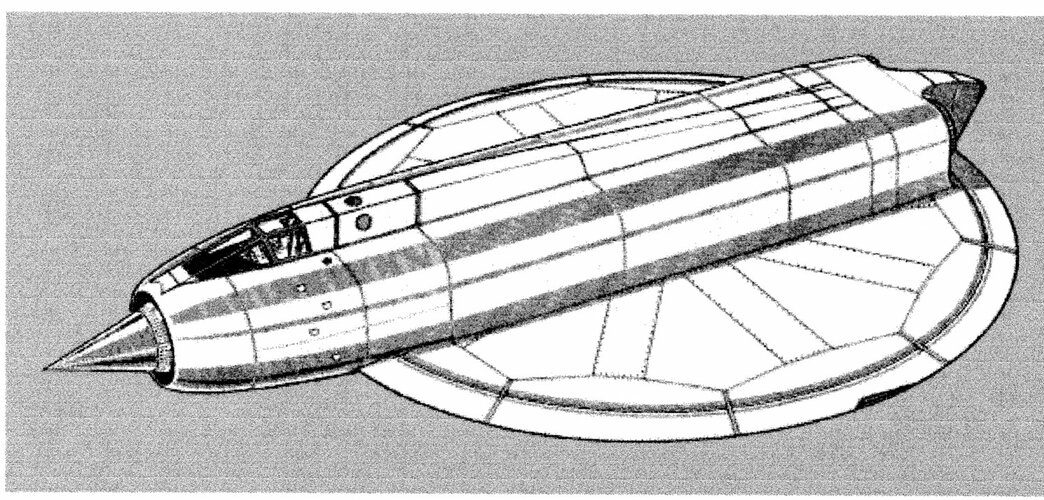
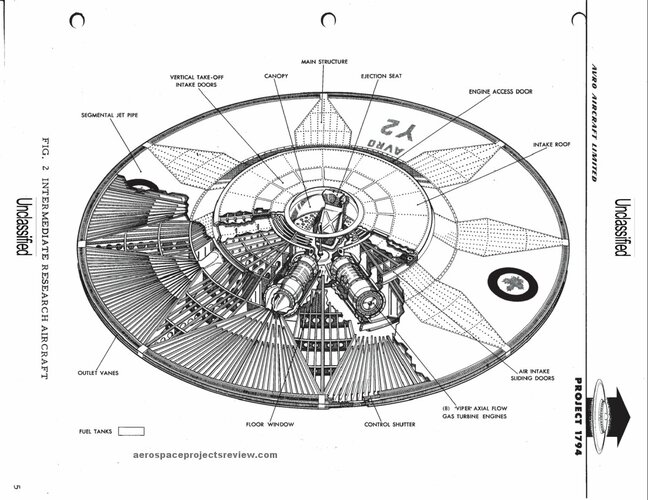
A.V. Canada Project Y-2 (Patent May 9, 1955)
- Thread starter Justo Miranda
- Start date
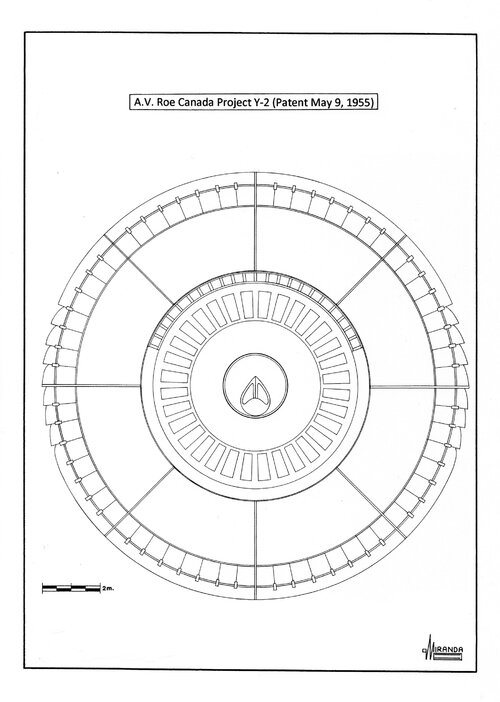
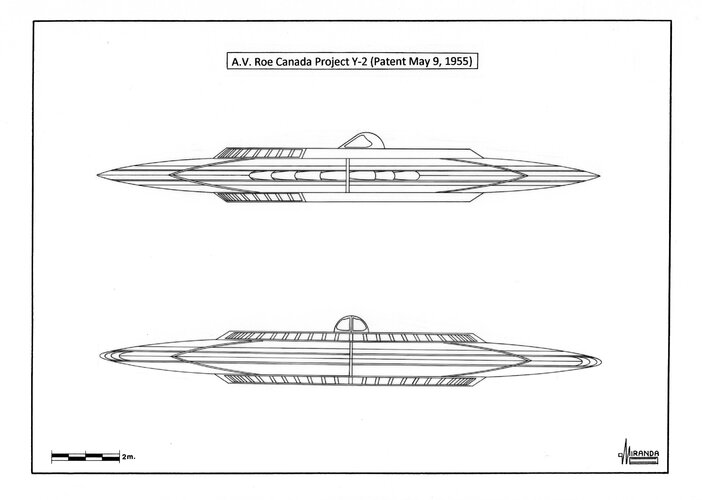

On February 7, 1952 the A.V. Roe Special Projects Group distributed an internal document titled ‘Description and Thoughts on the Turbo Disc’ (a simple gas turbine halfway between a ram-jet engine and centrifugal engine), Frost also submitted the design to the engineering department of McGill University.Looks nice, but I don't think it can fly
The radial-flow turbojet designed by the Frost team had twenty feet of diameter, 42,000 lbf minimum thrust at low pressure and an outstanding power to weight ratio of 1.73 to 1.
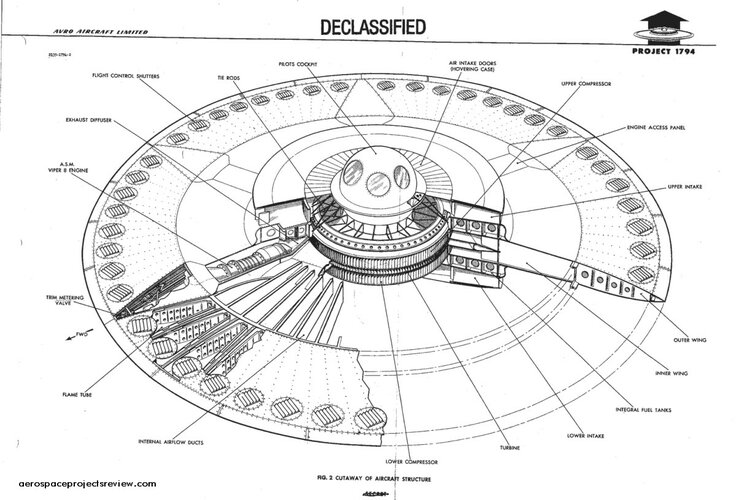
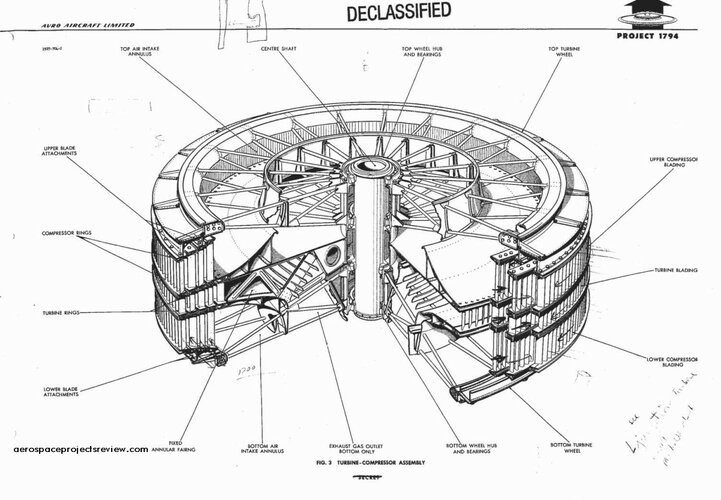
The horizontal Pelton-wheel turbine had a large multi-stage centrifugal compressor with the rotor blades mounted on the inner disc ring and the stator blades in the outer disc ring. The radial-flow gas turbine utilizes compressor air bleed as its only means of lubrication.
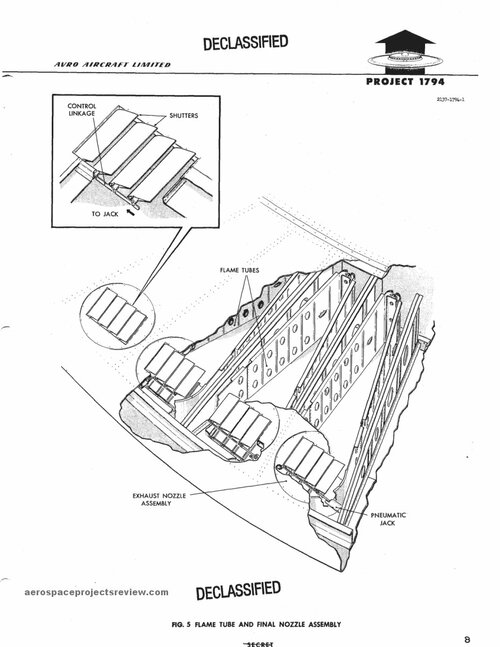
The separate combustion system consist of a number of combustion chambers with individual burners and nozzle guide vanes distributed in a radial pattern between the ribs of the vehicle.
It is proposed to control the vehicle by altering the direction of thrust forces.
The aircraft is controlled by regulating shutters which vary the amount of thrust through annular nozzles for pitch and roll control and through the peripheral backward facing nozzles for yaw control.
Vertical take-off was achieved by diverting the thrust downward, forward flight acceleration was achieved by diverting the flow aft.
Last edited:
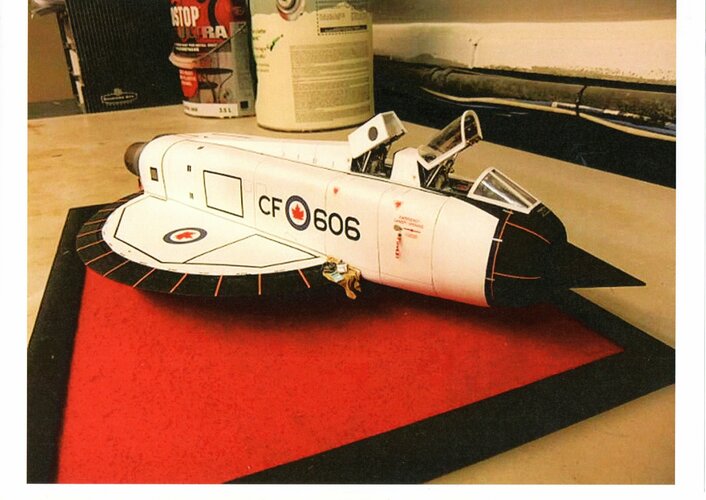
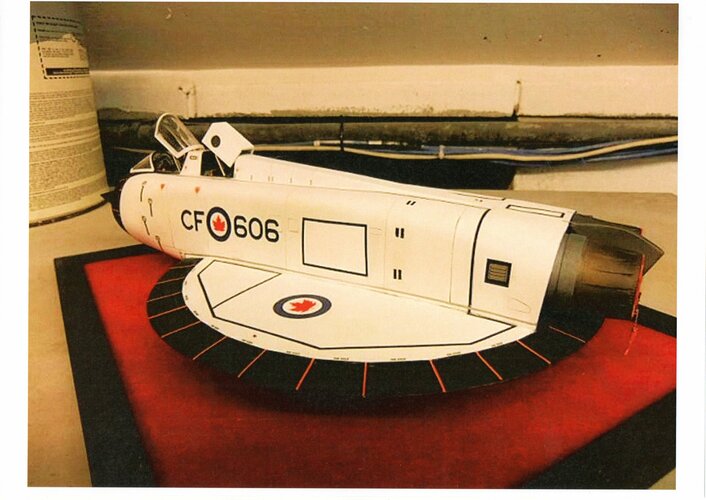
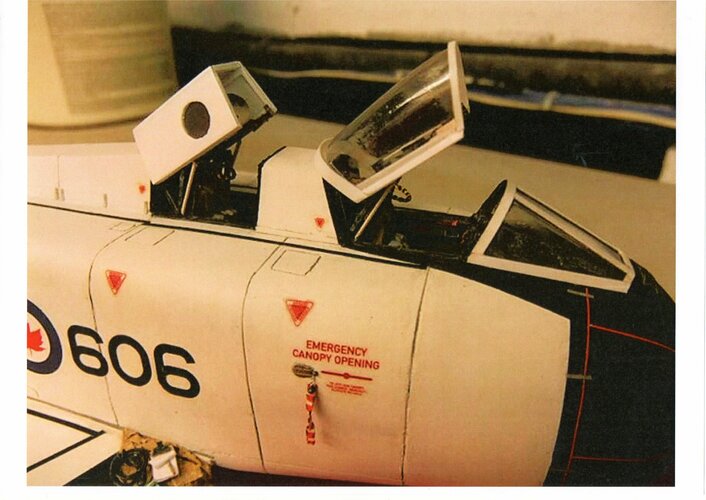
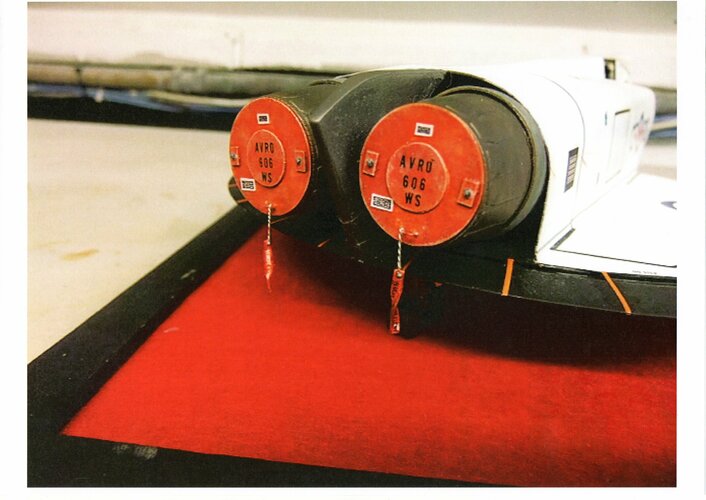
I hope this document reference appears in your upcoming book. Weapons System 606A was the designation for the failed Avrocar. It was also the designation for the above aircraft but with the words (Supersonic Application).
- On March 27, 1957 USAF extended the Project 1794 through October 1958 under the codename Weapons System WS-606A.I hope this document reference appears in your upcoming book. Weapons System 606A was the designation for the failed Avrocar. It was also the designation for the above aircraft but with the words (Supersonic Application).
The new research program was based on the GETOL (Ground Effect Take-off and Landing) concept that promised a fuel consumption rate 35 per cent lower than the VTOL system.
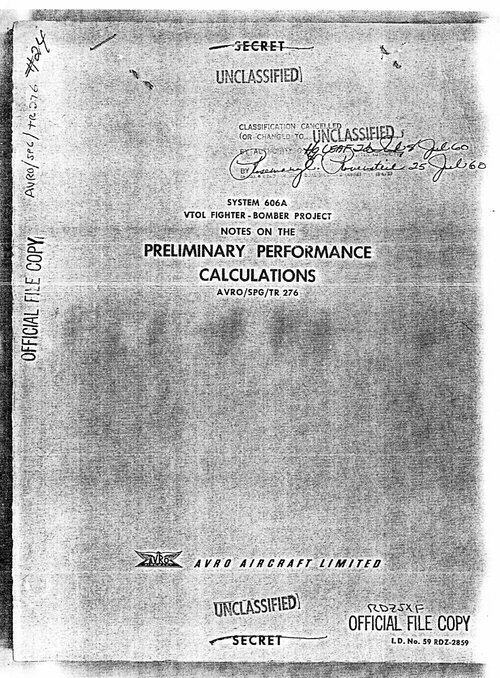
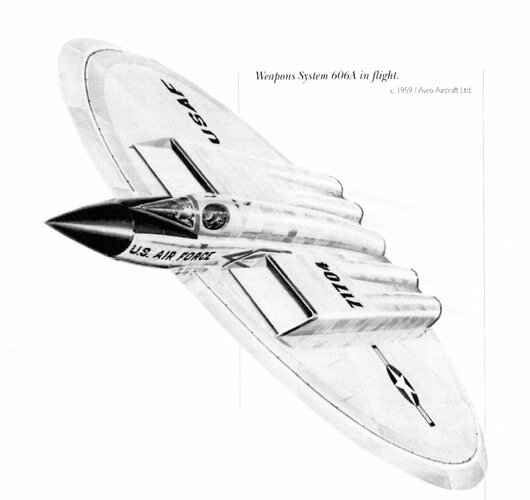
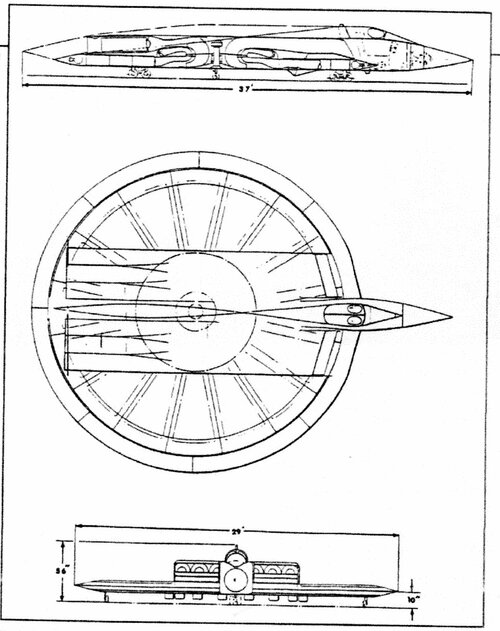
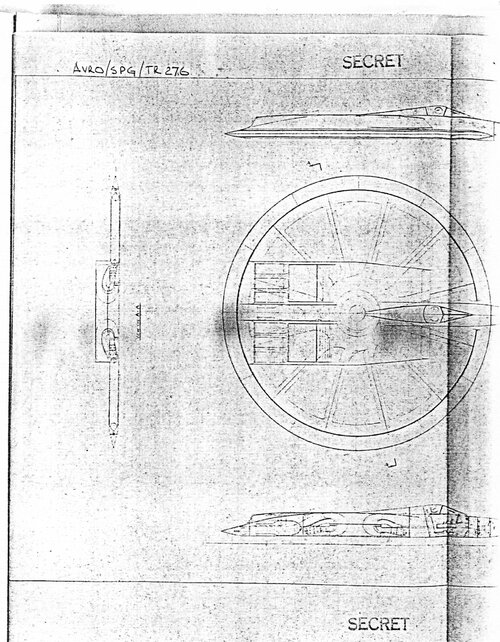
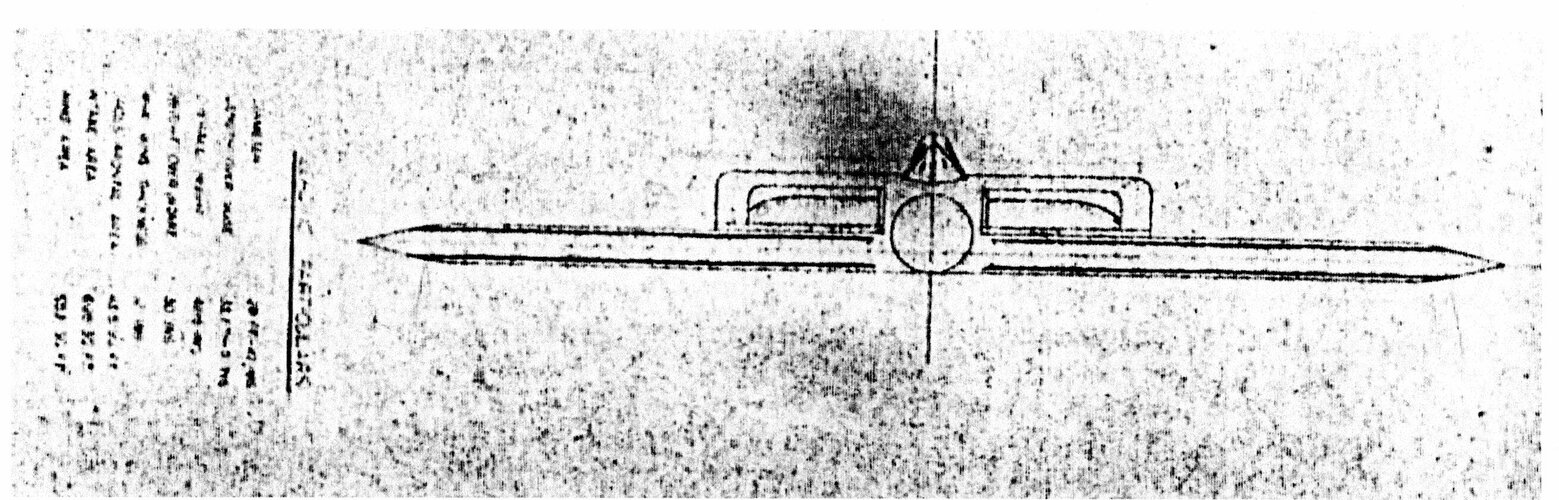
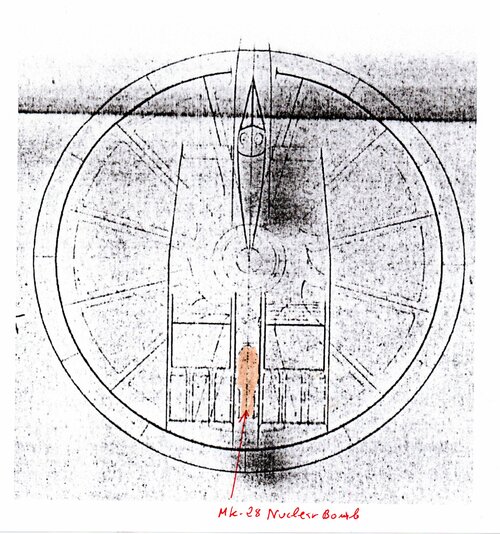
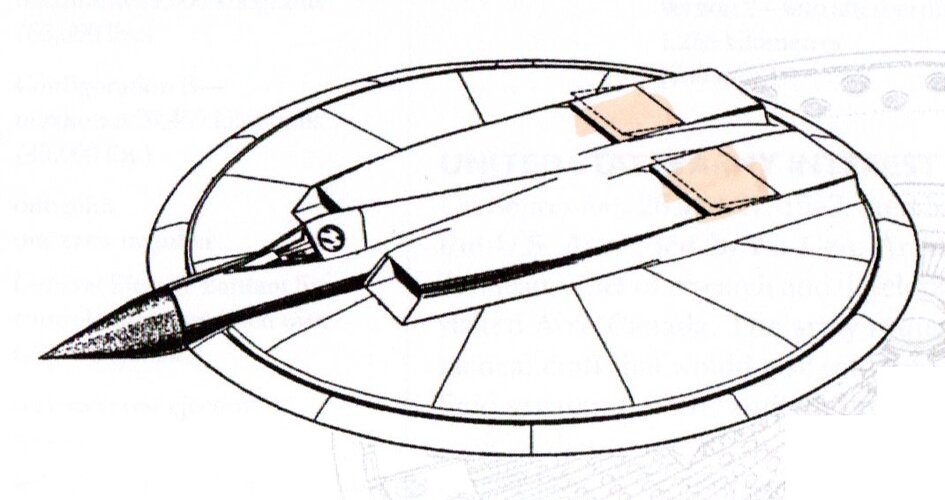
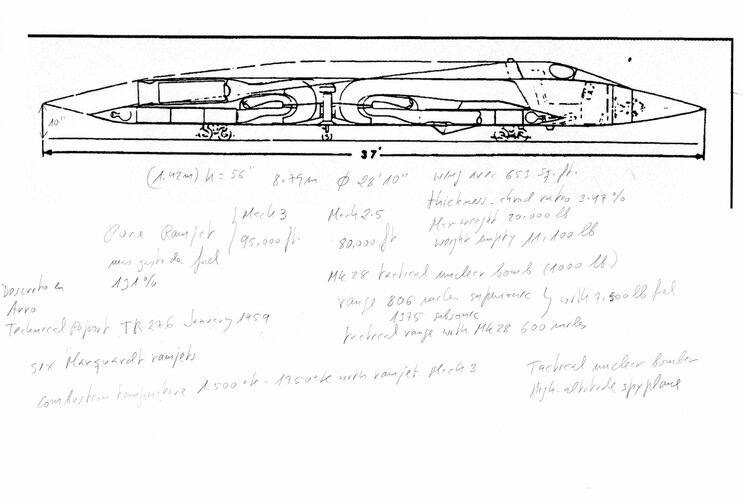
In January 1959 Avro issued Technical Report Nº 276 with preliminary performance calculations of a single seat Mach 3 tactical bomber, with GETOL and VTOL capabilities, known as “Configuration A”.
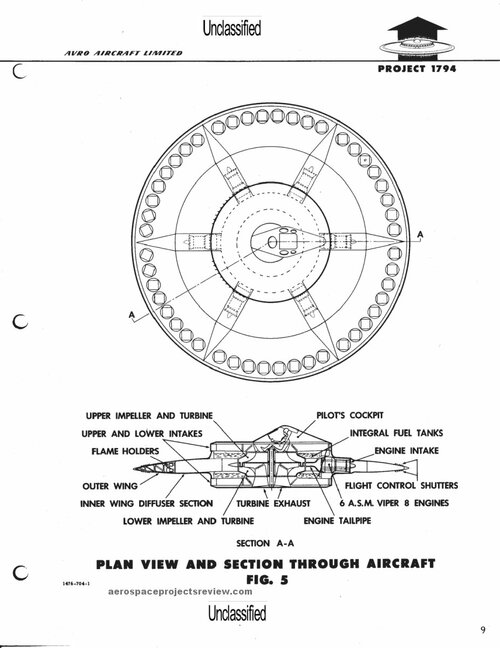
Propulsion was provided by one radial-flow turbine, twelve combustion chambers and six Marquardt ramjet engines.
Exhaust from the turbine was ducted radially outwards to the combustion chambers and to the propulsive nozzle system mounted around the wing periphery.
Vertical take-off was achieved by diverting the thrust downward and forward flight acceleration was achieved by diverting the flow aft. This was sufficient to reach the ignition velocity of the ramjets, for supersonic cruise.
The nozzle system was also used for control purposes but the manufacturing difficulties of obtaining accurate flow passages were severe.
One reconnaissance version was considered as successor of the Lockheed U-2 spy plane. It was expected that the jet control was more efficient at high-altitude than the conventional control surfaces, but the Lockheed -12 Blackbird was finally selected.
Configuration A technical data
Airframe: steel, titanium and light alloy, 37 ft (11.28 m) length, 4.7 ft (1.42 m) height, wing: laminar flow with boundary layer control by surface suction, 28.8 ft (8.79 m) of diameter and 653 sq.ft surface, thickness-chord ratio 3.47 per cent, estimated top speed: Mach 2.5 at 80,000 ft and Mach 3.0 at 95,000 ft, estimated climb rate: 354 m/sec, empty weight: 11,100 lb, max weight: 20,000 lb, range with 7,500 lb fuel: 806 miles (supersonic) and 1,375 miles (subsonic), tactical range with one Mk 28 nuclear bomb: 600 miles, fire control, navigation and communications were based on the General Electric Bantam system.
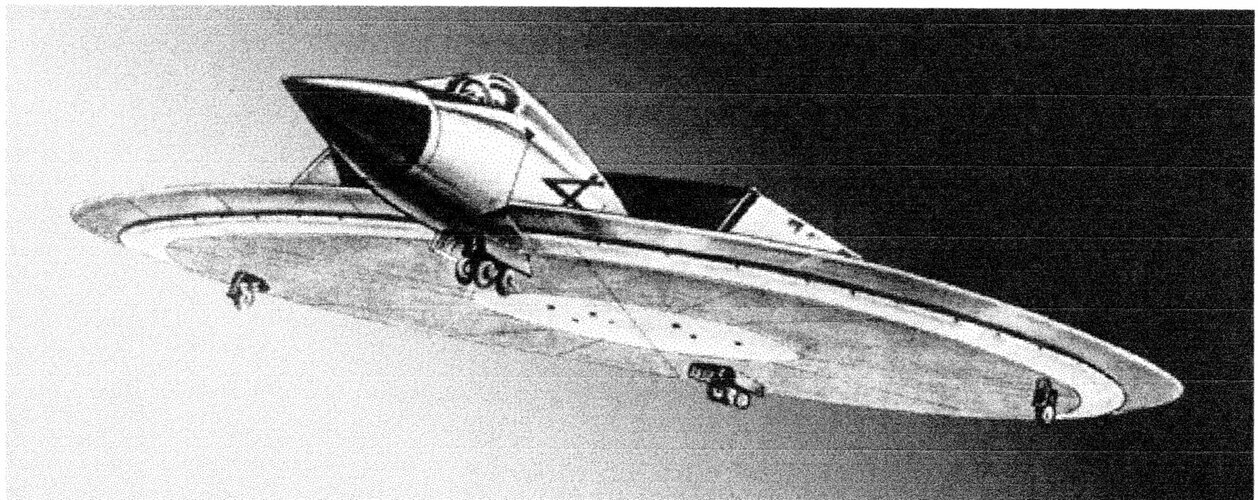
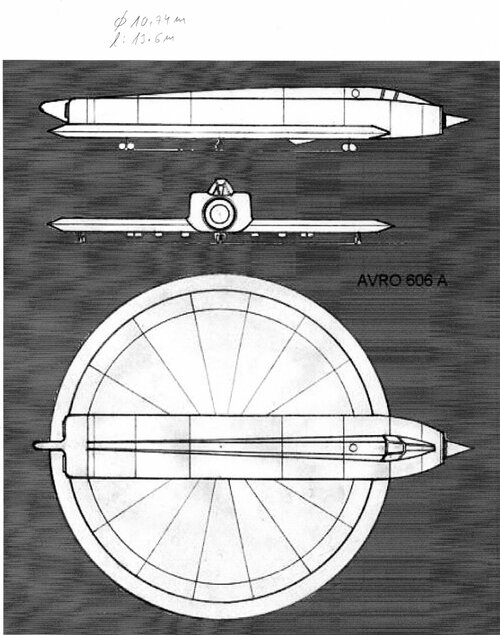
A second two seat design, known as “Configuration B”, was a Mach 2 all-weather interceptor powered by two Pratt & Whitney J58 turbojets, with 46,000 lb combined thrust, and one radial-flow turbine located in the centre of circular wing.
Configuration A technical data
Diameter: 35.3 ft (10.74 m), length: 44.7 ft (13.6 m), height: 6.5 ft (1.97 m), wing surface: 978 sq. ft, estimated max speed: Mach 2, estimated ceiling: 65,000 ft, max weight: 65,500 lb (29,670 kg), combat radius (VTOL): 500 miles (805 km), combat radius (GETOL): 700 miles (1,126 km), proposed armament: two air-to-air missiles.
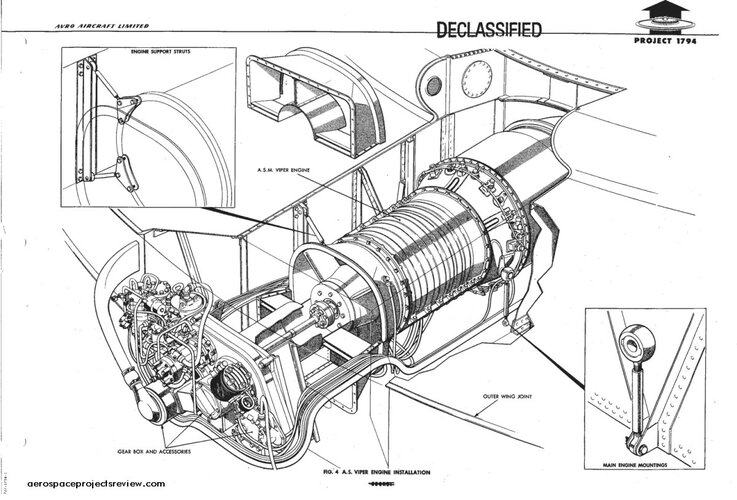
During test-rig trials conducted in October 1956, the turbine blew so hot (1,750º K) it melted the steel structure and its violent shaking would pop the rivets, causing three fires, hazardous oil leaks and nearly a catastrophic incident occurred with a Viper turbojet running out of control.
Noise and vibrations made the prospects of a manned vehicle frightening. The Lundström compressor produced a dangerous sonic boom at the point that observers were afraid of the machine.
During the flight tests of the XF-84F performed on July 1955, USAF have had bad experiences with the sonic waves produced by the supersonic propeller of the prototype. The ground crews were incapacitated getting nauseous and suffering headaches.
The wind tunnel tests suggested that the GETOL configuration had severe stability problems and the craft was in constant danger of flipping over during take-off.
The circular wing was displaying none of the theoretical advantages and a lot of practical shortcomings. The WS-606A configurations were simply too advanced and the technical challenges too great: a dead end project with insurmountable problems of overheating, ball-bearing over-speed and gyroscopic effect.
By March 1958, USAF recommended that all work on the GETOL concept and their radial-flow turbine should be halted.
There is no evidence that anyone has engineered an example of radial-flow turbo-disc engine.
Attachments
There is the Nathan Price design. Rene Couzinet developed a similar aircraft and photos of a scale model were published. Patents were filed in France in May, 1955. US Air Intelligence was concerned about this. There was also the work of Henri Coanda who designed a lenticular aerodyne. He was located by a combined British and American intelligence team at the end of the war and brought to the United States.
Posted hereRene Couzinet developed a similar aircraft and photos of a scale model were published. Patents were filed in France in May, 1955.
https://www.secretprojects.co.uk/threads/rené-couzinet-and-his-flying-saucers.4836/
Projects 1 and 2There was also the work of Henri Coanda who designed a lenticular aerodyne
Attachments
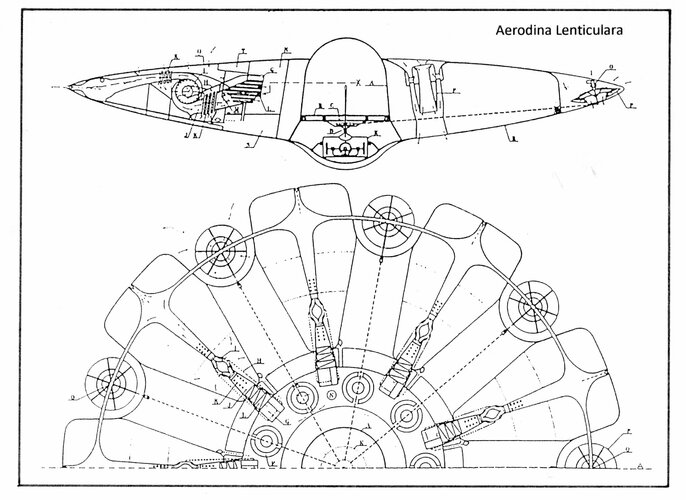
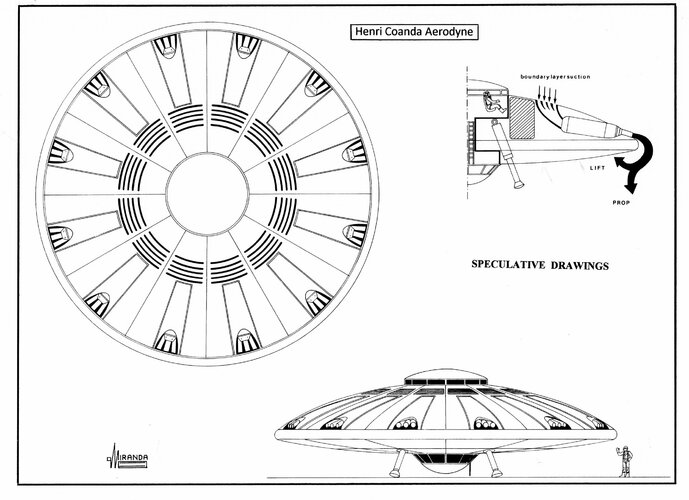
The Ljungstrom Brothers' first few steam turbines had radial out-flow discs and generated shore power for many decades. But the Ljungstrom Brothers soon switched to more efficient axial-flow turbines. I doubt if anyone has built an efficient radial out-flow turbine during the last 100 years." ... There is no evidence that anyone has engineered an example of radial-flow turbo-disc engine."
At the time, the nozzle system was also used for control purposes but the manufacturing difficulties of obtaining accurate flow passages were severe.
In October 7, 1959 tethered flight tests of the noisy prototype VZ-9AV (59-4975) indicated that one-third of the thrust was being lost to exhaust inefficiencies. This meant the aircraft would be incapable of hovering out the Ground Effect.
Thrust losses required a complete re-design, a costly decision that crippled the entire program.
With enough power even a brick can fly, but the Avrocar never had the power to do so.
In October 7, 1959 tethered flight tests of the noisy prototype VZ-9AV (59-4975) indicated that one-third of the thrust was being lost to exhaust inefficiencies. This meant the aircraft would be incapable of hovering out the Ground Effect.
Thrust losses required a complete re-design, a costly decision that crippled the entire program.
With enough power even a brick can fly, but the Avrocar never had the power to do so.

blackkite
Don't laugh, don't cry, don't even curse, but.....
- Joined
- 31 May 2007
- Messages
- 9,515
- Reaction score
- 9,661
Attachments

- Joined
- 27 December 2005
- Messages
- 19,230
- Reaction score
- 35,692
Hmm. UFOs are officially banned from the site. See the rules.
- Posts on UFOs, Nazi wunderwaffen/flying saucers, conspiracy theories, alien crashes, moon landing denials and the like are specifically discouraged and would be better posted elsewhere.
no, it uses a turbojet engine, the recently release #4 batch of the uap docs from war.gov has a pdf that describes the craft and engine in detail.It uses electrogavitic just like the TR6 Telos, so it should fly just fine
Given the highly complex and contradictory nature of the information about Avro Canada's VTOL ventures, the following is offered as a simple introduction to the topic.
In February 1953, the Royal Canadian Air Force (RCAF) revealed the existence of the new project, apparently named ‘Ace’ by Avro Canada but better known as Project Y. This announcement sparked enthusiasm among many journalists. The United States Air Force (USAF) also showed some interest. Representatives from the USAF may have seen the full-scale model of Project Y – a horseshoe-shaped supersonic day fighter – which was completed towards the end of the winter of 1952–53. Whilst the USAF seemed to be gradually assuming an increasingly important role, some Canadian agencies and departments were showing less and less enthusiasm. The Minister of Defence Production effectively withdrew his financial support in March 1955; Project Y “is too far-fetched to have any practical value to Canada,” stated the highly influential Clarence Decatur Howe.
Thanks to some financial backing from the United States, Avro Canada continued its research. Its engineers adopted a new circular configuration. This new project was renamed Y2 around 1954–55. It was also known within the USAF as Project 9961 Silver Bug. However, a concept developed by the USAF’s Air Research and Development Command – Project MX 1794, later renamed Project 1794 – appeared to be more promising. Project Y2 was therefore abandoned in 1955 and the Avro Canada team began work on the American concept. Despite their efforts, the USAF terminated Project 1794 (in early 1957??).
It is worth noting that in October 1955, the American government had confirmed that the development contract offered to Avro Canada ‘could result in a disc-shaped aircraft somewhat similar to the popular concept of a flying saucer’. The very timing of this statement was no coincidence. It came just a few days after the publication of Project Blue Book - Special Report #14, arguably the most comprehensive study on unidentified flying objects ever carried out by a government of the time.
Be that as it may, in 1957 Avro Canada was granted permission to work on a private project for a multi-role fighter aircraft with a circular wing, possibly PV 704, which had been initiated around 1955–56. This private project then became Weapon System 606, or WS 606. Its development apparently continued until after the Avro Canada CF-105 Arrow was scrapped in February 1959. The USAF withdrew its support for the WS 606 at an unspecified date.
It was apparently in 1957 that the Avro Canada team began developing a simplified, subsonic, multi-role version of Project 1794. This aircraft, the VZ-9AV, was christened the Avrocar at an unspecified date. In 1958, Avro Canada signed a contract with the United States Army for the construction of two prototypes. It wasn’t long before the press got wind of the matter. The existence of the Avrocar was officially announced in Washington in the spring of 1959.
The second Avrocar prototype undertook its first test flight, a mere hop in fact, without a hitch in November 1959. Meanwhile, after carrying out a series of test bench experiments, Avro Canada shipped the other Avrocar prototype to the United States for a further series of tests. The results obtained in Canada were quickly confirmed: the aircraft’s stability left much to be desired. Modifications were required.
At that time, both the USAF and the United States Army were fascinated by vertical take-off and landing aircraft. However, the two services did not share the same objectives. The United States Army, for example, envisaged a vehicle that was both simple and lightweight, a flying jeep, so to speak. In this respect, the Avrocar seemed highly promising. The USAF, for its part, was still planning to bring into service all-weather supersonic vertical take-off and landing fighters. That said, the service also appeared keen to acquire a hypersonic vehicle capable of operating at the edge of the Earth’s atmosphere. Without harboring any great illusions, Avro Canada submitted a few preliminary sketches for these various projects.
In the spring of 1960, Canada's Department of Defence Production considered providing financial support for the project. Keen to maintain the interest of the US military, it did so towards the end of the summer. However, the interest shown by the US military gradually waned. Indeed, the proposed modifications to the Avrocar proved ineffective. Wind tunnel tests continued, but enthusiasm had faded. The United States Army paid no attention to an improved version of the Avrocar. Worse still, it returned the first Avrocar to Avro Canada. The Canadian firm did not give up, however. The Avrocar made another flight in May 1961. It was a complete failure, as the test pilot was unable to control the aircraft. The Canadian aircraft manufacturer requested additional financial assistance, which was refused. Worse still, the American development contract, which was due to end in December 1961, was not renewed.
In February 1953, the Royal Canadian Air Force (RCAF) revealed the existence of the new project, apparently named ‘Ace’ by Avro Canada but better known as Project Y. This announcement sparked enthusiasm among many journalists. The United States Air Force (USAF) also showed some interest. Representatives from the USAF may have seen the full-scale model of Project Y – a horseshoe-shaped supersonic day fighter – which was completed towards the end of the winter of 1952–53. Whilst the USAF seemed to be gradually assuming an increasingly important role, some Canadian agencies and departments were showing less and less enthusiasm. The Minister of Defence Production effectively withdrew his financial support in March 1955; Project Y “is too far-fetched to have any practical value to Canada,” stated the highly influential Clarence Decatur Howe.
Thanks to some financial backing from the United States, Avro Canada continued its research. Its engineers adopted a new circular configuration. This new project was renamed Y2 around 1954–55. It was also known within the USAF as Project 9961 Silver Bug. However, a concept developed by the USAF’s Air Research and Development Command – Project MX 1794, later renamed Project 1794 – appeared to be more promising. Project Y2 was therefore abandoned in 1955 and the Avro Canada team began work on the American concept. Despite their efforts, the USAF terminated Project 1794 (in early 1957??).
It is worth noting that in October 1955, the American government had confirmed that the development contract offered to Avro Canada ‘could result in a disc-shaped aircraft somewhat similar to the popular concept of a flying saucer’. The very timing of this statement was no coincidence. It came just a few days after the publication of Project Blue Book - Special Report #14, arguably the most comprehensive study on unidentified flying objects ever carried out by a government of the time.
Be that as it may, in 1957 Avro Canada was granted permission to work on a private project for a multi-role fighter aircraft with a circular wing, possibly PV 704, which had been initiated around 1955–56. This private project then became Weapon System 606, or WS 606. Its development apparently continued until after the Avro Canada CF-105 Arrow was scrapped in February 1959. The USAF withdrew its support for the WS 606 at an unspecified date.
It was apparently in 1957 that the Avro Canada team began developing a simplified, subsonic, multi-role version of Project 1794. This aircraft, the VZ-9AV, was christened the Avrocar at an unspecified date. In 1958, Avro Canada signed a contract with the United States Army for the construction of two prototypes. It wasn’t long before the press got wind of the matter. The existence of the Avrocar was officially announced in Washington in the spring of 1959.
The second Avrocar prototype undertook its first test flight, a mere hop in fact, without a hitch in November 1959. Meanwhile, after carrying out a series of test bench experiments, Avro Canada shipped the other Avrocar prototype to the United States for a further series of tests. The results obtained in Canada were quickly confirmed: the aircraft’s stability left much to be desired. Modifications were required.
At that time, both the USAF and the United States Army were fascinated by vertical take-off and landing aircraft. However, the two services did not share the same objectives. The United States Army, for example, envisaged a vehicle that was both simple and lightweight, a flying jeep, so to speak. In this respect, the Avrocar seemed highly promising. The USAF, for its part, was still planning to bring into service all-weather supersonic vertical take-off and landing fighters. That said, the service also appeared keen to acquire a hypersonic vehicle capable of operating at the edge of the Earth’s atmosphere. Without harboring any great illusions, Avro Canada submitted a few preliminary sketches for these various projects.
In the spring of 1960, Canada's Department of Defence Production considered providing financial support for the project. Keen to maintain the interest of the US military, it did so towards the end of the summer. However, the interest shown by the US military gradually waned. Indeed, the proposed modifications to the Avrocar proved ineffective. Wind tunnel tests continued, but enthusiasm had faded. The United States Army paid no attention to an improved version of the Avrocar. Worse still, it returned the first Avrocar to Avro Canada. The Canadian firm did not give up, however. The Avrocar made another flight in May 1961. It was a complete failure, as the test pilot was unable to control the aircraft. The Canadian aircraft manufacturer requested additional financial assistance, which was refused. Worse still, the American development contract, which was due to end in December 1961, was not renewed.
Similar threads
-
A.V. Canada Project Y-2 (Patent April 18, 1955)
- Started by Justo Miranda
- Replies: 0
-
A.V. Roe Canada Project-Y "Praying Mantis" (August 25, 1953)
- Started by Justo Miranda
- Replies: 0
-
A.V. Roe Canada Project Y-1 "Ace of Spades" Mock-up (February 11, 1953)
- Started by Justo Miranda
- Replies: 8
-
A.V.Roe Canada Project Silver Bug (Patent February 15, 1955)
- Started by Justo Miranda
- Replies: 0
-
