does the AIM-260 JATM use “magic” to outrange the AIM-54 Phoenix while being significantly lighter and smaller?
The powder engines made a lot of improvements between the two.
The seeker and the calculation unit are also smaller and lighter since.
 
Last edited:
The powder engines made a lot of improvements between the two.
The seeker and the calculation unit are also smaller ans lighter since.

Do you speak English? You sort of sound like Yoda.
 
Regarding Aster production rates, an article was posted and widely shared a couple of days ago in which the popular Austrian influencer Markus Reisner claimed that Aster production rates had not been raised since 2022.
https://www.n-tv.de/politik/Das-ist-eine-entscheidende-Wendung-in-diesem-Konflikt-id31053579.html
Approximately 650 Patriot surface-to-air missiles are produced each year. However, the Patriot is currently in extremely high demand due to the war in Iran and the Gulf states. Ukraine has therefore offered the United States to manufacture these Patriot missiles under license in Ukraine. To this day, that proposal has received no response.
Europe could, in fact, help compensate for this, as it produces a system similar to the Patriot: SAMP/T. However, only around 100 to 150 SAMP/T surface-to-air missiles are produced each year. European production has not been increased since the start of the Russian invasion. Yet this would be necessary both to support Ukraine and to replenish national stockpiles.

This, of course, is completely wrong.

https://www.bfmtv.com/economie/entr...-pour-fabriquer-en-masse_AD-202603260451.html
"We have quadrupled our annual Mistral production. As for the Aster missiles, which are in extremely high demand, last year we delivered five times more than originally planned. Next year, we will deliver twice as many again. So we are undergoing an extraordinary production ramp-up," the CEO of MBDA said. "However, it's still not enough," he added.

The production was ~150 missiles in 2025 and should double again in 2026 (btw the initial goal was to reach 300+ per year in 2027/28)
Now you might wonder : does that mean production of new missiles was ~30 missiles/year in before the war ? Apparently yes.

All in all, this means the production rate will have been multiplied by ~10 in less than 5 years.
 
Last edited:
Ukraine will order 2 SAMP/T NG in 2026 and 2 more in 2027, evenly split between the French GF300 radar and the Italian KGMHP

https://www.president.gov.ua/en/new...zidenta-ukrayini-ta-prezidenta-francuz-105425

2. Air and Ballistic Anti-Missile Defense – Ukraine will become the first combat user of the Franco-Italian SAMP/T NG systems; France and Italy authorize the licensed production of Aster 30 missiles in Ukraine.

Ukraine also intends to order 4 Franco-Italian SAMP/T NG systems. The related financing will be requested under the 2026 and 2027 tranches of the Ukraine Support Loan (USL).

5 GM400 radars, 1 GF300 radar, 1 Kronos radar will also be included in the USL product schedules for 2026.

Regarding the operational context in Ukraine, France commits to deliver the SAMP/T NG systems as soon as possible, notably including the progressive deployment of modules upon delivery and qualification, starting in 2027. As a consequence, 1 GF300 radar will be deployed in Ukraine before the end of 2026 as a first component of the SAMP/T NG systems. For the period of production of the said systems, France commits to dispatch 2 SAMP/T complexes to Ukraine that shall be returned upon delivery of procured new SAMP/T NG.

The 5 GM400 radars will be delivered before the end of 2027.

Concurrently, to address the operational urgency, France and Italy have decided to accelerate the delivery of agreed number of Aster 30 missiles by October 2026, supporting the commitment made to Eurosam through the USL.

Furthermore, France and Italy authorize the licensed production of Aster 30 missiles in Ukraine before the end of 2026 and starting as soon as possible.

Finally, France supports the development of Ukrainian anti-ballistic interceptor missiles, notably the FREYJA project, by facilitating industrial cooperation with French companies and providing expertise from the French Procurement Agency (Direction générale pour l’armement, DGA).
 
Last edited:
That is what I said, SA-10, SA-12 and I suppose SA-20.
And soon the Firepoint FP-7.X ABM (The missile is based on the Soviet-era SA-10/12 airframe).
Your insistence on using NATO indexes is rather weird, as they confuse the heck out of you across multiple threads.
And as a result, it's sometimes hard to grasp which systems you refer to.

SA-10 and -12 refer to completely different systems. They aren't variants of one another, and they literally share nothing in common.
They have different development paths, which are indirectly covered by different NATO indexes(like, iirc, 8 of them altogether, including naval ones?)

They're good either for a staff officer/professional who needs to grasp a rough level of a system, or someone who knows both designation systems by heart. But then you can just use the OEM one, as it's obviously more precise.
So Ukraine will produce :
SCALP,
ASTER,
PATRIOT.
a little doubt....
Tbh, the only believable part is AASM.
 
Last edited:
Tbh, the only believable part is AASM.
They will probably become a supplier for some elements of each missiles, and maybe get final assembly lines.
INS, IR seakers or radar seakers won't be made in Ukraine.

AASM is probably the simplest since it's already being done in India and in the UAE
 
https://systematic.com/int/industri...trengthen-denmark-s-air-defence-capabilities/
Herning, Denmark – Thales and Systematic today announced a strategic partnership to provide the Danish Armed Forces with advanced, interoperable air defence capabilities.

The partnership, unveiled at DALO Industry Days 2026, combines Systematic’s expertise in command-and-control software with Thales’ combat-proven air defence systems, enabling stronger integration and co-ordination of capabilities including SAMP/T NG and other air defence systems.

This cooperation will support key Danish defence requirements, including Air Command and Control (C2) and Surface-Based Air Missile Defence (SBAMD), helping deliver a modern and interoperable approach to air defence.

It will also strengthen local industrial capabilities in Denmark, supporting long-term national value creation and opportunities for future export.

This alliance also reflects the growing importance of European industrial cooperation in delivering sovereign defence capabilities that can meet national and allied requirements.
 
Will they get any ammo? It doest seem like Italy and esspecially France are willing or able to send Aster 30s
Why wouldn't they get ammo ? Ukraine is ordering 4 batteries, they will get missiles like any other client, what a strange question.

As for military aid, Italy and France have both send Aster missiles, France will deliver dozens more missiles by the end-2026.
 
Last edited:
Why wouldn't they get ammo ? Ukraine is ordering 4 batteries, they will get missiles like any other client, what a strange question.

As for military aid, Italy and France have both send Aster missiles, France will deliver dozens more missiles by the end-2026.
Because France and Italy fail to supply the the launchers curently in Ukraine with adequat amounts of Aster 30s, why would that change?
 
Because France and Italy fail to supply the the launchers curently in Ukraine with adequat amounts of Aster 30s, why would that change?
Because production is ramping up, and Ukraine will be able to order missiles through the €90 billion European loan ?
Aster production has already increased fivefold since 2022 and is expected to double again in 2026...

Patriot batteries are also running short of missiles, so why make it sound like the supply crunch is somehow unique to Aster ?
 
Because production is ramping up, and Ukraine will be able to order missiles through the €90 billion European loan ?
How much of Ukraine will remain by the end of siesta?
For comparison, Dan-T (per GUR) output will reach 10'000 in 2027. That's just one model of affordable mass LACM, jet bombs, etc. There are many.
Aster production has already increased fivefold since 2022 and is expected to double again in 2026...
Fivefold sounds impressive, until you realise that the eventual goal is 300 (2028). In 2022 they were building interceptors slower than they were building Rafales, and even now the difference in output is not extreme.
Which is kinda meh for a wannabe medium-to-long-range system, which can neither deny air to aircraft (PAC-2 does that; Iris is very unsuitable for ambushes) nor can seriously affect ballistics.

What it can even do: intercept LACMs and Gerans? Sure, at a dozen missile units per month (for all clients, ground and navy, not Ukraine alone; how many VLS cells France and Italy finish per year?) sounds attractive. But each SAMPT battery costs many times as much as an Iris-T battery does, for doing the same job.
With the caveat that the production output for Iris is bigger by a factor of 8, it can actually be routed to Ukraine.
Patriot batteries are also running short of missiles, so why make it sound like the supply crunch is somehow unique to Aster ?
Patriots are being built faster by a factor of 6 to 8.
Term crisis applies to Patriots, as there are quite a lot of them, and their decreasing stocks have a huge impact from country to country.
Aster effectively has no impact.
 
Last edited:
How much of Ukraine will remain by the end of siesta?
They will get the first operationnal SAMP/T NG battery with B1NT missiles, even before France, Italy or Denmark (without taking into account the 2 FR/IT prototypes) … can't be much quicker.

Fivefold sound impressive, until you realise that the eventual goal is 300 (2028). In 2022 they were building them slower than they were building Rafales.
No the 300/year target for 2028 was the stated goal in early 2024, things have changed since then if you haven't noticed. Indeed the starting point was very low, around 30 missiles per year, so ~150 in 2025 and ~300 in 2026

Which is kinda meh for a wannabe medium-to-long-range system, which can neither deny air to aircraft (PAC-2 does that; Iris is very unsuitable for ambushes) nor can seriously affect ballistics.
Production rate was low ok … but what does that have to do with performance ?
B1NT can not deny air to aicraft ? It's litteraly designed for that. It's has better terminal performance at long range against ABT than PAC-2 simply because of it's design choices.

What it can even do: intercept LACMs and Gerans? Sure, at a dozen missile units per month (for all clients, ground and navy, not Ukraine alone; how many VLS cells France and Italy finish per year?) sounds attractive. But each SAMPT battery costs many times as much as an Iris-T battery does, for doing the same job.
With the caveat that the production output for Iris is bigger by a factor of 8, it can actually be routed to Ukraine.
Why are you comparing SAMP/T NG to IRIS-T SLM ?

Patriots are being built faster by a factor of 6 to 8.
Term crisis applies to Patriots, as there are quite a lot of them, and their decreasing stocks have a huge impact from country to country.
Aster effectively has no impact.
The demand for Patriot interceptor is also higher, probably by more than a factor 10.
That makes Aster missiles more available...
 

Attachments

  • image.jpeg
    image.jpeg
    369.9 KB · Views: 28
@Ainen A thread by someone who knows what he is talking about if you want to learn something

View: https://x.com/letmepickthat/status/2071192311438999938

@Fabian Hoffmann, PhD published today a very interesting piece about European ATBM systems dynamics on his substack, and it's well worth a read.https://missilematters.substack.com/p/the-last-frontier-european-manufacturersStill, while I agree with 90% of the content of his post, I nontheless think that some of the points he makes about the SAMP/T and SAMP/T NG systems are worth a discussion.​


"The outstanding question with SAMP/T remains its capabilities. Reports from Ukraine indicate that its performance has at times fallen significantly short of Patriot’s, particularly in ballistic missile defense."

This is true, but with a significant caveat. The system used in Ukraine is the legacy SAMP/T Block 1, which was designed from the onset with a very limited ATBM capability, mainly for self-defense. It was never envisioned as a dedicated ATBM platform; but as an expeditionary system that was to provide medium range protection to battlefield units against ABTs.
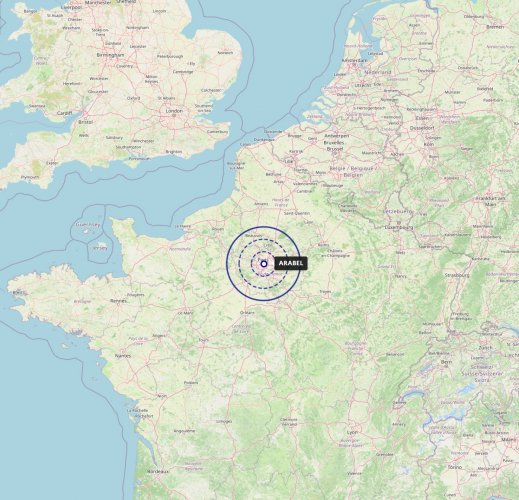
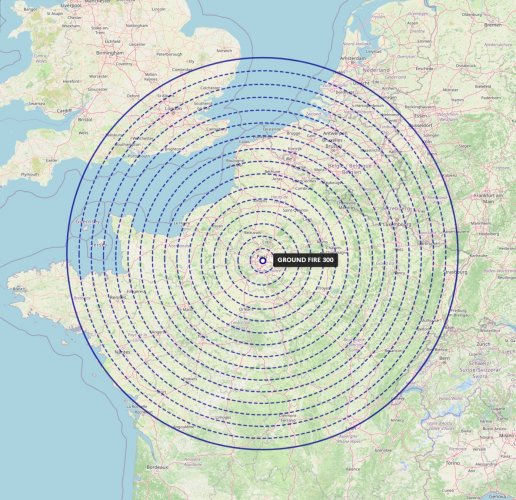
The ARABEL radar is inadequate for ATBM, and is the main performance limiter. Both the GF300 and KGMHP radars of the SAMP/T NG are in a different performance class altogether.


"Switzerland’s decision to stay with Patriot throughout its procurement difficulties, rather than switching to SAMP/T as was considered".

Switzerland never considered the SAMP/T during the original competition, and EUROSAM never offered it either since the production line was basically closed at the time of the selection.
The SAMP/T was also not considered *after* said competiton, when the Patriot procurement issues became obvious.EUROSAM's original proposal was based on the SAMP/T NG, which has *zero* commonality with the SAMP/T beside the ability to fire the legacy Aster 30 Block 1 missile. The radars are different, the engagement modules are different, there's not a single performance figure from the SAMP/T that applies to the SAMP/T NG except the encamp/decamp time requirement.

Historically, the SAMP/T NG program was launched when it became obvious that the legacy SAMP/T Block 1 system could not be brought up to modern standards of performance, notably on the ATBM front, and that starting from a blank page would be a better choice. This led to the cancellation of the planned SAMP/T Block 1NT upgrade package, of which only the Aster 30 Block 1NT interceptor survived and was integrated in the SAMP/T NG program.

To put things in perspective, the gap between the SAMP/T Block 1 and the SAMP/T NG is best compared to that between a 1990 Patriot PAC-2 and a 2026 Patriot PAC-3 w. MSE/GEM+ and LTAMDS.
There is no reason to expect potential SAMP/T NG customers to look at legacy SAMP/T performance figures when deciding whether to procure the NG or to go down a different road. There is a point to be made that EUROSAM should have renamed the system back when the B1NT update was dropped, but it is what it is...


"Switzerland’s decision to stay with Patriot [...] lends some credibility to these reports"

Switzerland is considering buying the SAMP/T NG as part of its new acquisition program. The NG is facing a South Korean proposal (my guess is M-SAM Block 2) and an Israeli one. Germany proposed the IRIS-T SLX, but it was deemed unfit and did not make it to the current phase of the selection process. The end goal here is to buy roughly the same number of units as for Patriot, i.e five. That is not an unsignificant order. The reason why Switzerland sticked with Patriot for its original order has as much to do, if not more, with sunken costs and political considerations than with system performance. It is also worth noting that one of the reasons why Patriot was selected over the SAMP/T NG in the first place was that, at the time, the NG was still a paper system without a proper production line, leading to exceedingly long lead times. Performance-wise, the system was deemed adequate.


“there are hopes that the introduction of the Aster 30B1NT interceptor will help close the gap to Patriot”

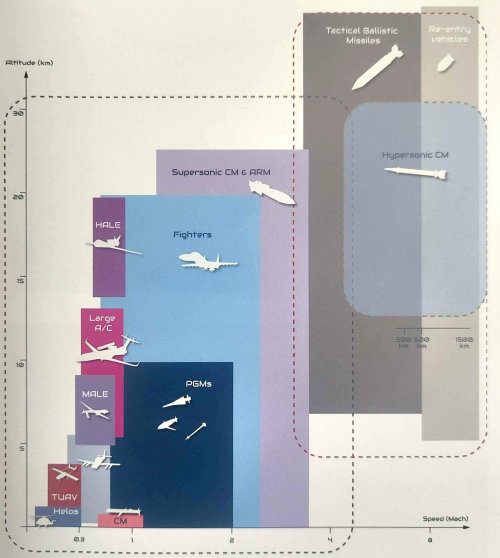
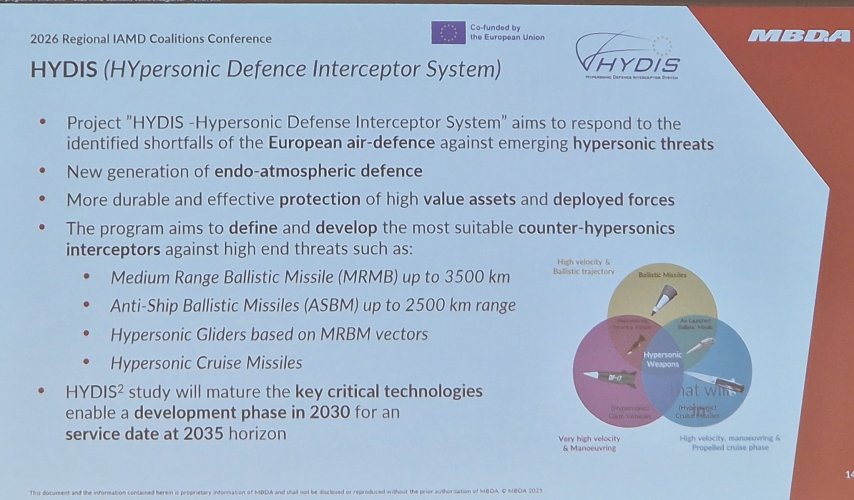
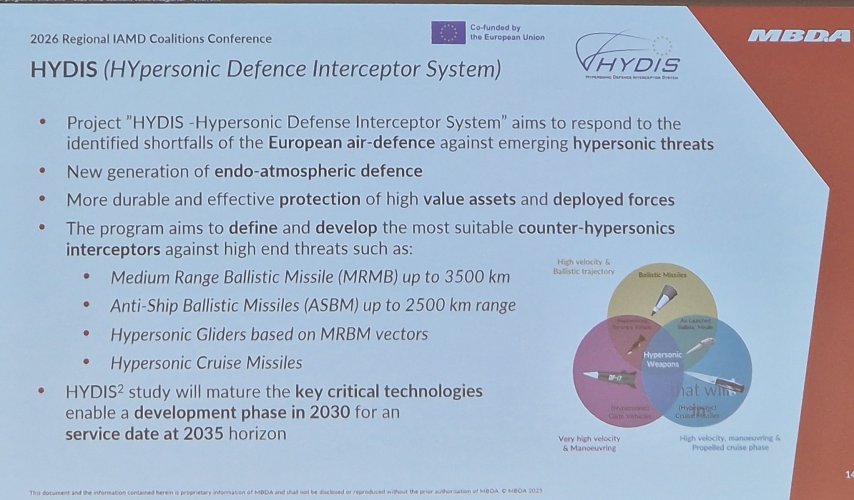
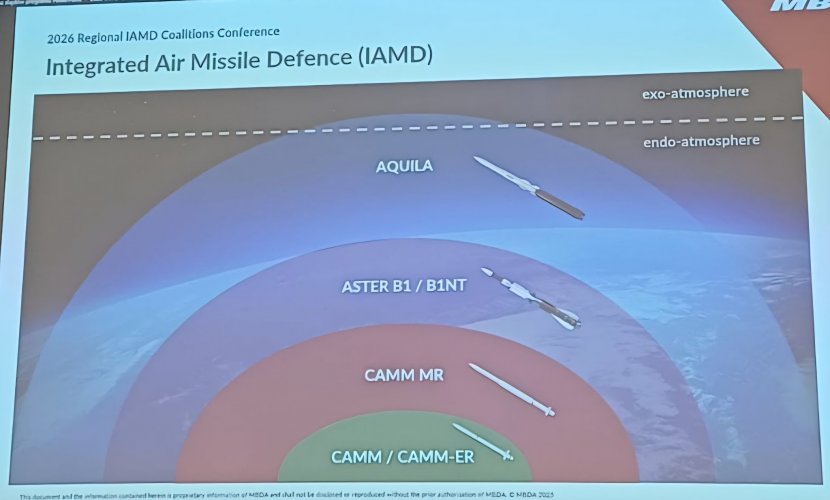
Even the Aster Block 1NT is only considered a stop-gap solution when it comes to ATBM. It is supposed to be the main c-ATB round for the NG, while having only point defense capabilities against 1500 km-class MaRVs. The FCU NG on the other hand is designed to accommodate 3500 km-class threats, and is fitted for but not with an additional, dedicated ATBM interceptor, the multi-stage Aquila missile.
Because most European nations (and, notably, France and Italy) cannot afford to buy, maintain and man dedicated ATBM systems like THAAD, the idea is to use the SAMP/T NG FCU coupled with that new interceptor as a low-exo/high-endo system, while simultaneously performing c-ABT and ATBM PD using the Aster 30 Block 1NT. This approach, of course, entails compromises compared to a proper multi-layered approach such as what the US Army is doing. Overall, the SAMP/T NG with the Aster 30 Block 1NT should be highly competitive with MSE-enabled Patriot, while introducing Aquila in 203X should allow the system to deal with some of the threats that are currently engageable only by THAAD (and sea-based systems).(images from @Tomasz Kwasek)


"The SAMP/T supply chain is also operating at or near capacity, but its significantly smaller customer pool, currently five (including Denmark’s recent order), means that additional capacity added for fire units and interceptors over the coming years will be distributed across fewer actors, reducing lead times."

I wish I shared that optimism, but the truth is that MBDA and Thales remain boutique manufacturers when it comes to truly high-end stuff, and the ability to scale up production is inherently limited by the lack of skilled manpower, notably in the supply chain. The Danish order was probably sped up by using the usual French export technique, that is by reallocating French Air and Space Force slots to the foreign customer. The lead time for that order is thus, in my opinion, not indicative of the ability of EUROSAM's partners to meaningfully increase production until at least 2030-2035, assuming that there is enough demand for that.


As a sidenote, it is worth underlying that the ATBM mission was not a priority of the SAMP/T program, and that the original SAMP/T system made no specific provision for engagements against ballistic missiles (though they could be dealt with using the c-ABT chain, albeit with great difficulty). Just like with the Patriot PAC-1 upgrade, it proved necessary to modify some of the software of what was retrospectively called the "SAMP/T Block 0" in order to achieve the 600 km class ATBM requirement. This led to the serially-produced SAMP/T Block 1 and Aster 30 Block 1.


Pictures from the thread —>

 

Attachments

  • image.jpeg
    image.jpeg
    404 KB · Views: 17
  • image.jpeg
    image.jpeg
    473.2 KB · Views: 9
  • image.jpeg
    image.jpeg
    167.9 KB · Views: 9
  • image.jpeg
    image.jpeg
    182.7 KB · Views: 8
  • image.jpeg
    image.jpeg
    296.4 KB · Views: 7
  • image.jpeg
    image.jpeg
    296.4 KB · Views: 10
  • image.jpeg
    image.jpeg
    158.9 KB · Views: 21
Last edited:
Production rate was low ok … but what does that have to do with performance ?
B1NT can not deny air to aicraft ? It's litteraly designed for that. It's has better terminal performance at long range against ABT than PAC-2 simply because of it's design choices.
In Ukrainian conditions, either a full system is mobile and survivable enough, or the ambush component is reasonably disposable. Either way, big system operating within drone range will die a lot.

SAMPT, while datalinked, requires all the expensive parts to go to the ambush site due to system design. It is likely unaffordable.
As a result, all but one known ambushes were done by Patriots (the exception was by S-300V).

Yes, SAMP/T absolutely can deny airspace, with the important caveat that the enemy shouldn't fight back. Taking risks with a system is part of the requirement; if a battery is disabled for every attempt, it shouldn't be used against these targets.
Why are you comparing SAMP/T NG to IRIS-T SLM ?
Roles. If you can't claim high-end aerodynamic targets (planes) and ballistic targets, the natural niche is fighting PGMs.
Intercepting LACMs requires numbers, ammo depth(overall). Range is useful insofar you have LOS to engage.
SAMPT is built for neither.
As a result, in theory it's a good solution, which allows you to buy one system and cover all 3. In practice, it can't match decades-old GEM even in fighting air-breathing targets (not that PAC-2 is really adequate).

Overall, I suspect Aster is a good solution in naval conditions. On land, as things stand, it's more of fooling oneself that you did something.
 
In Ukrainian conditions, either a full system is mobile and survivable enough, or the ambush component is reasonably disposable. Either way, big system operating within drone range will die a lot.

SAMPT, while datalinked, requires all the expensive parts to go to the ambush site due to system design. It is likely unaffordable.
As a result, all but one known ambushes were done by Patriots (the exception was by S-300V).
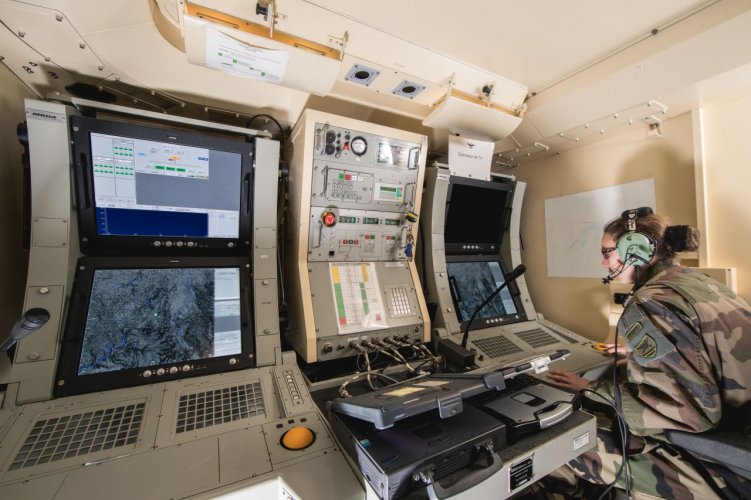
If you want to ambush, SAMP/T NG requires only four 8x8 trucks and less than 15 people … the system is designed to be deploy/decamp in less than 30 minutes.
  • 1 KGMHP or GF300 radar module
  • 1 engagment module (C2)
  • 1 generator module
  • 1 launcher with 8 missiles

Roles. If you can't claim high-end aerodynamic targets (planes) and ballistic targets, the natural niche is fighting PGMs.
Intercepting LACMs requires numbers, ammo depth(overall). Range is useful insofar you have LOS to engage.
SAMPT is built for neither.
As a result, in theory it's a good solution, which allows you to buy one system and cover all 3. In practice, it can't match decades-old GEM even in fighting air-breathing targets (not that PAC-2 is really adequate).
Read the above.
 
Last edited:
Because production is ramping up, and Ukraine will be able to order missiles through the €90 billion European loan ?
Aster production has already increased fivefold since 2022 and is expected to double again in 2026...
It doesnt matter what Ukraine is maybe allowed to buy in the future but what France and Italy are willing and able to provide.
Patriot batteries are also running short of missiles, so why make it sound like the supply crunch is somehow unique to Aster ?
Ukraine was provided with around 600 Patriot missles over 600 IrisT SLMs and with Aim9s, Aim 120s, IrisTs and Asraams all of them in the hundreds. But how many Aster 30s were delivered, 30-80 at max? The supply crunch is unique to Aster 30 because in difference to the others there should not be a supply crunch with Aster 30s.

 
If you want to ambush, SAMP/T NG requires only four 8x8 trucks and less than 15 people … the system is designed to be deploy/decamp in less than 30 minutes.
  • 1 KGMHP or GF300 radar module
  • 1 engagment module (C2)
  • 1 generator module
  • 1 launcher with 8 missiles
That's the point. That's more or less the entire fire section, and if it gets caught, it's an unaffordable loss.
Patriot is smaller footprint; Buks come in one armored (recently mostly uparmored) tracked vehicle (one of dozens in the entire battery).

Otherwise, it probably would've been the best possible use for a few available Aster 30 interceptors.
 
Last edited:
It doesnt matter what Ukraine is maybe allowed to buy in the future but what France and Italy are willing and able to provide.
Ukraine will receive dozens more missiles in the coming months from France, idk for Italy.
By 2027 they will receive their first NG batteries, again with missiles.
But how many Aster 30s were delivered, 30-80 at max?
According to SIPRI, at least 235 missile were delievred in 2024 and 2025 alone … you are way off.
Ukraine was provided with around 600 Patriot missles over 600 IrisT SLMs and with Aim9s, Aim 120s, IrisTs and Asraams all of them in the hundreds. But how many Aster 30s were delivered, 30-80 at max? The supply crunch is unique to Aster 30 because in difference to the others there should not be a supply crunch with Aster 30s.
There were simply way more Patriot missiles available than Asters, thus more were donated.


Patriot is very small footprint
I'm sorry ?
Buks come in one armored (recently mostly uparmored) tracked vehicle.
We're comparing SAMP/T NG to a Buk o_O
Otherwise, it probably would've been the best possible use for a few available Aster 30 interceptors. And it appears Ukraine tried, but it neither worked nor was worth the risk.
Ukraine doesn't have SAMP/T NG … have you read the thread ?????
btw great display of "if i didn't see it, it didn't happen".
 
Last edited:
Ukraine doesn't have SAMP/T NG … have you read the thread ?????
btw great display of "if i didn't see it, it didn't happen".
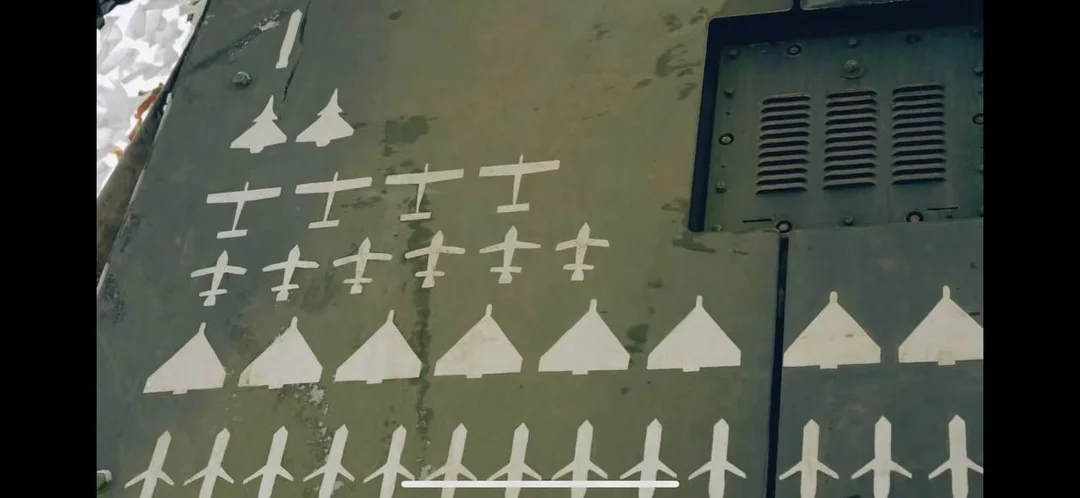
Indeed, secretly there are dozens of shootdowns of manned fighters; all by SAMP/T.

SAMP/T NG is a 2026 system. Old 2011 SAM can't outdo a modern, mid-1980s one in one role it was built for(ABT) - and PAC-2 does engage ballistic targets after all. Comparing SAMP/T with 2015 MSE(only partial hardware upgrade) is indeed unfair; there are years between them.

Maybe a 2026 one with the same unit design but without missile stocks will do better. But judging from Ukrainian interest, it is difficult to expect.
 
Last edited:
Indeed, secretly there are dozens of shootdowns of manned fighters; all by SAMP/T.
Nice strawman, i never claimed that, simply that we lack information.
They did post some SAMP/T fighter killmarks, but who knows if it's even true.

SAMP/T NG is a 2026 system. Old 2011 SAM can't outdo a modern, mid-1980s one in one role it was built for(ABT) - and PAC-2 does engage ballistic targets after all. Comparing SAMP/T with 2015 MSE(only partial hardware upgrade) is indeed unfair; there are years between them.

Maybe a 2026 one with the same unit design but without missile stocks will do better. But judging from Ukrainian interest, it is difficult to expect.
We'll see what the future holds… I don't think I’m going to change your mind and i don't care tbh, so i'll stop here.
 

Attachments

  • image.png
    image.png
    382.1 KB · Views: 10
In Ukrainian conditions, either a full system is mobile and survivable enough, or the ambush component is reasonably disposable. Either way, big system operating within drone range will die a lot.

Two SAMP/T batteries have in been in continuous active service for more than three years in Ukraine.
 
Two SAMP/T batteries have in been in continuous active service for more than three years in Ukraine.
Yes, and over that period it appears to be perhaps the least useful system in service.
Despite being very modern, expensive, and coming from some of the most willing allies, who were almost forcing it onto Ukraine and delaying contracts for actually impactful systems.
Nice strawman, i never claimed that, simply that we lack information.
We don't lack information on shot down planes since 2022... It's effectively 100% understanding.
Which exact planes, where, with what systems. And that's perhaps the most damning thing - one thing SAMP/T - Aster-30 was supposed to do well is indeed to extend the kill range of a medium system v highly maneuverable ABT.

I.e. there are 3 main groups of targets(cruise missiles, ballistics, planes). Against 2, it doesn't work, against 1 it is supposed to work - we know it doesn't either. We also know France tried to force SAMP/Ts onto Ukraine. We know Ukraine nevertheless managed to defend procuring Patriots with European money, i.e., arguments were just unrefutably obvious.
Sometimes system is just bad.
 
Last edited:
Yes, and over that period it appears to be perhaps the least useful system in service.
Despite being very modern, expensive, and coming from some of the most willing allies, who were almost forcing it onto Ukraine and delaying contracts for actually impactful systems.

Neither you or me have definitive information about the eficacity of Western SAM's in Ukraine...
Stop making arguments based on exactly zero info.
 

Similar threads

Back
Top Bottom