@Ainen A thread by someone who knows what he is talking about if you want to learn something
View: https://x.com/letmepickthat/status/2071192311438999938
@Fabian Hoffmann, PhD published today a very interesting piece about European ATBM systems dynamics on his substack, and it's well worth a read.https://missilematters.substack.com/p/the-last-frontier-european-manufacturersStill, while I agree with 90% of the content of his post, I nontheless think that some of the points he makes about the SAMP/T and SAMP/T NG systems are worth a discussion.
"The outstanding question with SAMP/T remains its capabilities. Reports from Ukraine indicate that its performance has at times fallen significantly short of Patriot’s, particularly in ballistic missile defense."
This is true, but with a significant caveat. The system used in Ukraine is the legacy SAMP/T Block 1, which was designed from the onset with a very limited ATBM capability, mainly for self-defense. It was never envisioned as a dedicated ATBM platform; but as an expeditionary system that was to provide medium range protection to battlefield units against ABTs.
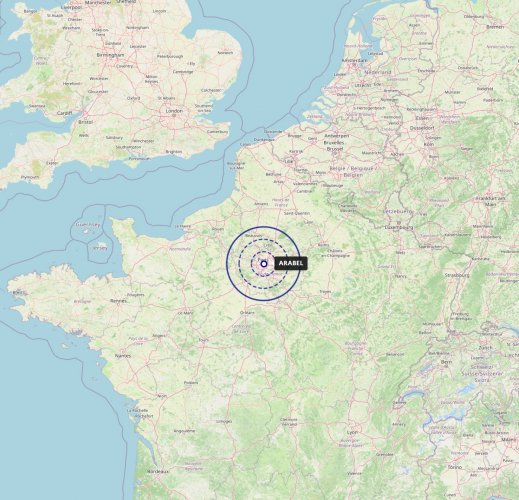
The ARABEL radar is inadequate for ATBM, and is the main performance limiter.
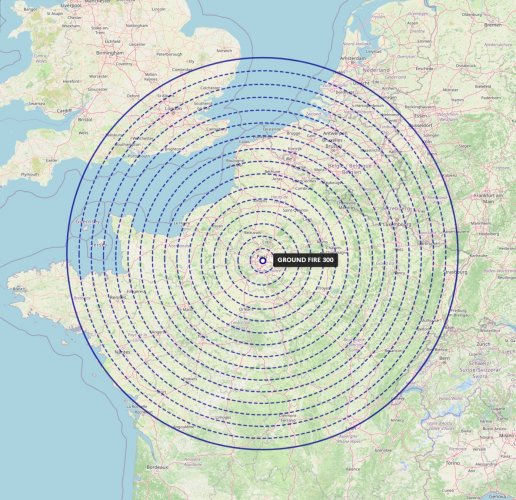
Both the GF300 and KGMHP radars of the SAMP/T NG are in a different performance class altogether.
"Switzerland’s decision to stay with Patriot throughout its procurement difficulties, rather than switching to SAMP/T as was considered".
Switzerland never considered the SAMP/T during the original competition, and EUROSAM never offered it either since the production line was basically closed at the time of the selection.
The SAMP/T was also not considered *after* said competiton, when the Patriot procurement issues became obvious.EUROSAM's original proposal was based on the SAMP/T NG, which has *zero* commonality with the SAMP/T beside the ability to fire the legacy Aster 30 Block 1 missile. The radars are different, the engagement modules are different, there's not a single performance figure from the SAMP/T that applies to the SAMP/T NG except the encamp/decamp time requirement.
Historically, the SAMP/T NG program was launched when it became obvious that the legacy SAMP/T Block 1 system could not be brought up to modern standards of performance, notably on the ATBM front, and that starting from a blank page would be a better choice. This led to the cancellation of the planned SAMP/T Block 1NT upgrade package, of which only the Aster 30 Block 1NT interceptor survived and was integrated in the SAMP/T NG program.
To put things in perspective, the gap between the SAMP/T Block 1 and the SAMP/T NG is best compared to that between a 1990 Patriot PAC-2 and a 2026 Patriot PAC-3 w. MSE/GEM+ and LTAMDS.
There is no reason to expect potential SAMP/T NG customers to look at legacy SAMP/T performance figures when deciding whether to procure the NG or to go down a different road. There is a point to be made that EUROSAM should have renamed the system back when the B1NT update was dropped, but it is what it is...
"Switzerland’s decision to stay with Patriot [...] lends some credibility to these reports"
Switzerland is considering buying the SAMP/T NG as part of its new acquisition program. The NG is facing a South Korean proposal (my guess is M-SAM Block 2) and an Israeli one. Germany proposed the IRIS-T SLX, but it was deemed unfit and did not make it to the current phase of the selection process. The end goal here is to buy roughly the same number of units as for Patriot, i.e five. That is not an unsignificant order. The reason why Switzerland sticked with Patriot for its original order has as much to do, if not more, with sunken costs and political considerations than with system performance. It is also worth noting that one of the reasons why Patriot was selected over the SAMP/T NG in the first place was that, at the time, the NG was still a paper system without a proper production line, leading to exceedingly long lead times.
Performance-wise, the system was deemed adequate.
“there are hopes that the introduction of the Aster 30B1NT interceptor will help close the gap to Patriot”
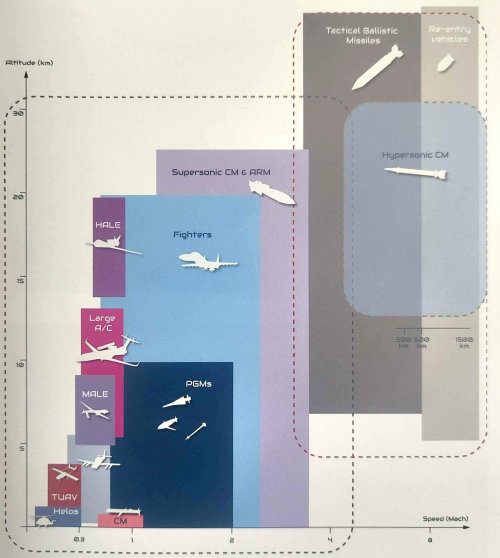
Even the Aster Block 1NT is only considered a stop-gap solution when it comes to ATBM. It is supposed to be the main c-ATB round for the NG, while having only point defense capabilities against 1500 km-class MaRVs.
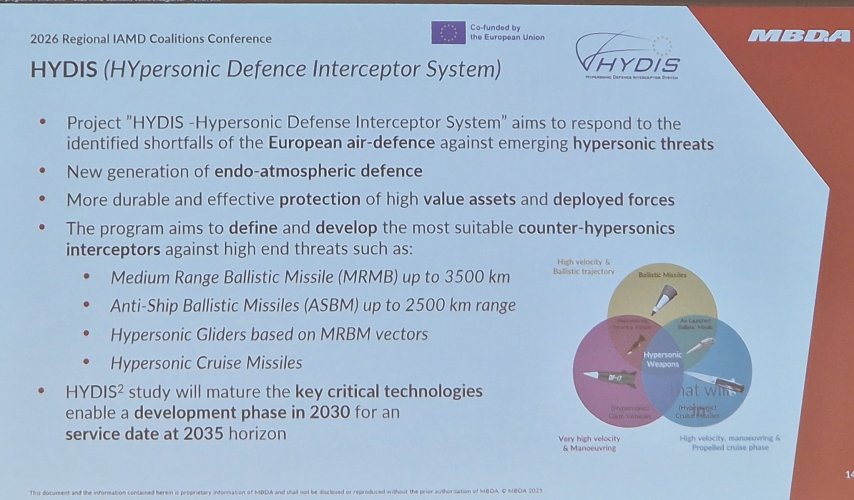
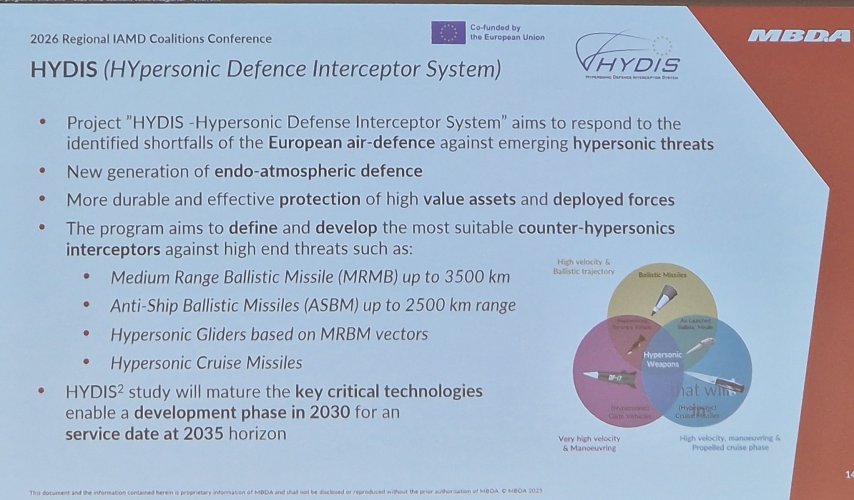
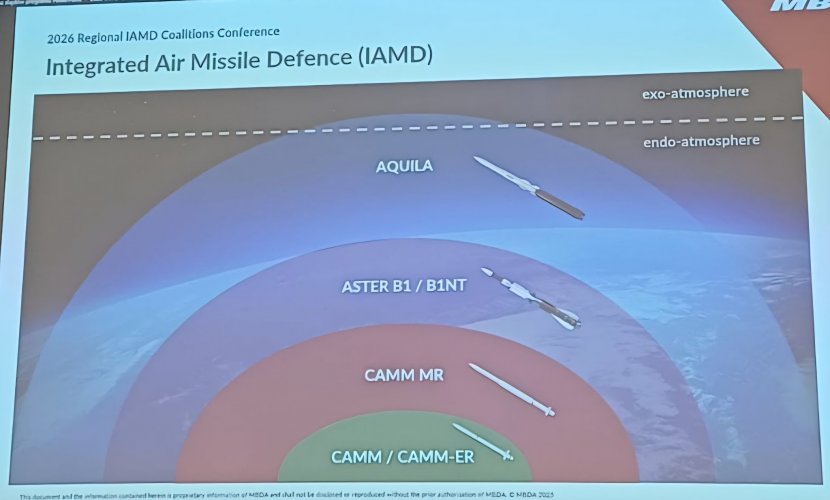
The FCU NG on the other hand is designed to accommodate 3500 km-class threats, and is fitted for but not with an additional, dedicated ATBM interceptor, the multi-stage Aquila missile.
Because most European nations (and, notably, France and Italy) cannot afford to buy, maintain and man dedicated ATBM systems like THAAD,
the idea is to use the SAMP/T NG FCU coupled with that new interceptor as a low-exo/high-endo system, while simultaneously performing c-ABT and ATBM PD using the Aster 30 Block 1NT. This approach, of course, entails compromises compared to a proper multi-layered approach such as what the US Army is doing.
Overall, the SAMP/T NG with the Aster 30 Block 1NT should be highly competitive with MSE-enabled Patriot, while introducing Aquila in 203X should allow the system to deal with some of the threats that are currently engageable only by THAAD (and sea-based systems).(images from
@Tomasz Kwasek)
"The SAMP/T supply chain is also operating at or near capacity, but its significantly smaller customer pool, currently five (including Denmark’s recent order), means that additional capacity added for fire units and interceptors over the coming years will be distributed across fewer actors, reducing lead times."
I wish I shared that optimism, but the truth is that MBDA and Thales remain boutique manufacturers when it comes to truly high-end stuff, and the ability to scale up production is inherently limited by the lack of skilled manpower, notably in the supply chain. The Danish order was probably sped up by using the usual French export technique, that is by reallocating French Air and Space Force slots to the foreign customer.
The lead time for that order is thus, in my opinion, not indicative of the ability of EUROSAM's partners to meaningfully increase production until at least 2030-2035, assuming that there is enough demand for that.
As a sidenote, it is worth underlying that the ATBM mission was not a priority of the SAMP/T program, and that the original SAMP/T system made no specific provision for engagements against ballistic missiles (though they could be dealt with using the c-ABT chain, albeit with great difficulty). Just like with the Patriot PAC-1 upgrade, it proved necessary to modify some of the software of what was retrospectively called the "SAMP/T Block 0" in order to achieve the 600 km class ATBM requirement. This led to the serially-produced SAMP/T Block 1 and Aster 30 Block 1.
Pictures from the thread —>