One of the most astounding punchlines in the HBO series was the hero scientist telling the politician
"Look, what is happening here; that disaster: it something that has never happened, never been seen in planet Earth 4 billion years of existence."

In a nutshell: congrats Dyatlov and others, you created the ultimate human-made disaster ! Now, go try taming that nuclear volcano and inferno... !
 
I was listening to a podcast interviewing Serhii Plokhy and he mentioned that there had been a similar incident elsewhere in the USSR but because that time it was an experience day shift and not a less experience night shift as at Chernobyl they were able to prevent it getting it out of hand.
 
An interesting discussion about one of the biggest flaws in the HBO series - that supposed steam / thermal explosion that could have razed Ukraine and made Western Europe a sterile parking lot.

https://physics.stackexchange.com/q...ld-the-steam-explosion-at-chernobyl-have-been
That only multiplies the amount of useful fluid a few times, but then there is the exterior reservoir that is itself connected to internal pumps that might also be part of someone else's calculation, since that reservoir would have had nearly 10^6 tons of water judging from Wikipedia's map, which would make the yield upper bound 150 kT TNT.

or 149 tonnes of TNT equivalent.

1.8×10⁻⁷ MJ In terms of tonnes equivalent of TNT, it is ~4 kilotonnes TNT equivalent

Even if no megaton by any mean (of course) it compares well with the largest non-nuclear bangs in human history

https://en.wikipedia.org/wiki/Largest_artificial_non-nuclear_explosions
Beirut August 2020

Following early estimates of the yield of the explosion ranging from hundreds of tons of TNT equivalent to 1.1 kilotons, a study by researchers from the Blast and Impact Research Group at the University of Sheffield estimated the energy of the Beirut explosion to be equivalent to 0.5 - 1.2 kt of TNT.

PEPCON disaster 1988

PEPCON disaster

On 4 May 1988, about 4,250 short tons (3,860 metric tons) of ammonium perchlorate (NH4ClO4) caught fire and set off explosions near Henderson, Nevada. A 16-inch (41 cm) natural gas pipeline ruptured under the stored ammonium perchlorate and added fuel to the later, larger explosions. There were seven detonations in total, the largest being the last. Two people were killed and hundreds injured. The largest explosion was estimated to be equivalent to 0.25 kilotons of TNT (1.0 TJ)

Halifax explosion

Halifax explosion​

An evaluation of the explosion's force puts it at 2.9 kilotons of TNT (12 TJ)
 
Something to remember the heroes who died preventing an even larger disaster makes sense to me. They did not die for nothing after all.
A bigger thing to remember is Chernobyl is a monument to the corrupt power of an unaccountable government building an inherently unsafe reactor system in the name of saving money.
 
I took an Engineering 100 course in college, we covered both TMI and Chernobyl in the section on nuclear power (course was before Fukushima).

I ran out of expletives in the class section where the instructor went over the RMBK design, and then the experiment design.


I was listening to a podcast interviewing Serhii Plokhy and he mentioned that there had been a similar incident elsewhere in the USSR but because that time it was an experience day shift and not a less experience night shift as at Chernobyl they were able to prevent it getting it out of hand.
Yes, having a shift expecting the low-power burbles would have helped.
 
A sobering read.
https://en.wikipedia.org/wiki/Midnight_in_Chernobyl

There had been a couple of "almost Chernobyl" RBMK incidents in the previous decade : Leningrad 1975 of course but also another one at Chernobyl itself in 1982.

The HBO Chernobyl series had its flaws, but one line stuck with me. When Legasov tells the apparatchiks
You're dealing with something that has never occurred on this planet before.
Surely enough, they have created an atomic volcano belching radioactivity like crazy.
 
Last edited:
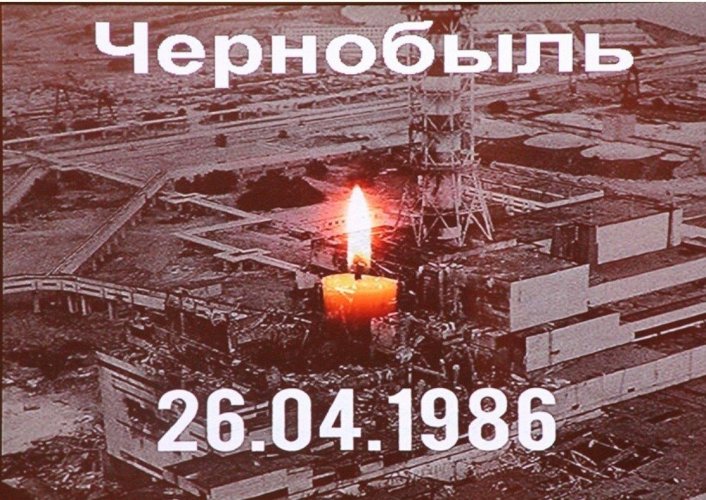
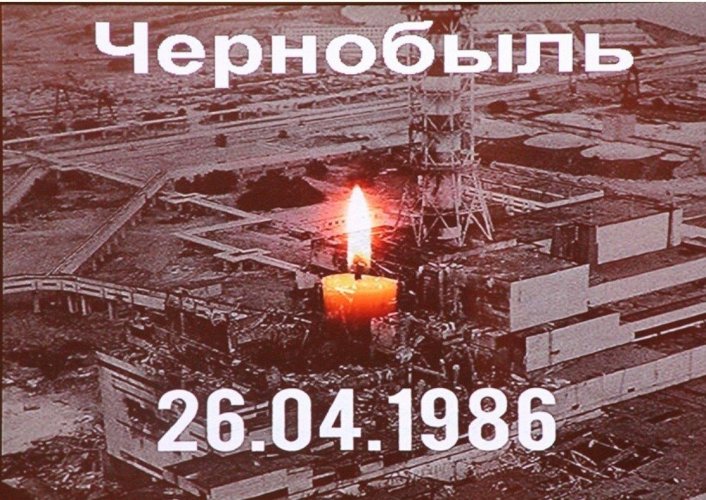
Today marks 40 years since the Chernobyl nuclear disaster of April 26, 1986.

Chernobyl Disaster | Rare Soviet-Era Footage From Inside the Exclusion Zone (1990) | ITN Archive (April 24, 2026):

"On 5 June 1990, ITN's cameras ventured inside the exclusion zone surrounding Chernobyl Nuclear Power Plant in the Ukrainian SSR in the Soviet Union – just four years after the site became the epicentre of the world's worst-ever civil nuclear incident. Following the catastrophic meltdown of reactor No. 4 on 26 April 1986, the plant as well as the nearby city of Pripyat were evacuated and an exclusion zone of 2,600 square kilometers was established around Chernobyl. But the energy generated by the plant's remaining reactors was still needed – and so, therefore, were the workers who operated the plant.

"As well as capturing pictures of the plant, including the newly constructed concrete shell designed to contain the lethal radiation being emitted by reactor No.4, ITN's crew captured the working rhythms of those who commuted daily to and from the plant's control room. Geiger counters in hand, the crew also made their way into the ghost city of Pripyat, capturing the eery, unsettling signs of a once-bustling city abandoned in a moment of crisis. Not all fled in 1986, however, and some returned. The crew also recorded the farmers who stayed behind to till the land inside the exclusion zone."

00:00 Introduction
01:28 Passing Through the Checkpoint
02:50 Chernobyl Nuclear Power Plant (Reactor No. 4)
03:39 Clocking In (Decontamination)
04:07 Inside the Control Room
06:20 The Ghost City of Pripyat
06:57 Classroom
10:40 Pripyat Amusement Park
13:00 Tilling the Land
17:02 Hospital (Young Patients at Play)
20:00 Chernobyl Seen From the Sky
22:20 Air Views of Pripyat
 
Wildlife
https://phys.org/news/2026-04-chernobyl-wildlife-real-story-isnt.html
the underlying science didn't actually show any genetic differences were caused by radiation. The idea of "radioactive dogs of Chernobyl" is better understood as a modern scientific myth. Indeed, our appetite for scare stories about mutant animals is obscuring the reality: the most significant and fascinating thing about the animals there is the absence of humans, not the presence of radiation.

Forty years after the Chernobyl explosion, the controversy over how the accident affected people and ecosystems goes on. I've been studying the environmental impacts of the disaster since I began my Ph.D. research in 1990 on radioactive fallout in the English Lake District. Scientists have learned a lot since then, with thousands of studies published.

But the mainstream and social media remain rife with misinformation and exaggeration about the accident's effects. Scientists often blame the media for this, but maybe we should put some of the blame on ourselves....Stories of radioactive dogs play into those fears. As scientists, we owe it to the public to communicate our science more responsibly.


More:
https://sciencex.com/news/2026-05-decades-chernobyl-disaster-radioactive-landscape.html

A recent study investigated the impact of human presence and activities on mammal diversity in Northern Chernobyl. Information obtained from camera traps indicated that the Ukrainian CEZ and the adjacent Drevlianskyi Reserve, protected areas (PAs) with the least human activity, had the highest mammal diversity and occupancy rates. Compared to nearby PS and non-PAs, this area has the highest numbers of rare or sensitive animals—such as the Eurasian lynx, gray wolf, red deer, and the endangered Przewalski's horse.

The findings are published in Proceedings of the Royal Society B: Biological Sciences.
 
Last edited:

Similar threads

Back
Top Bottom