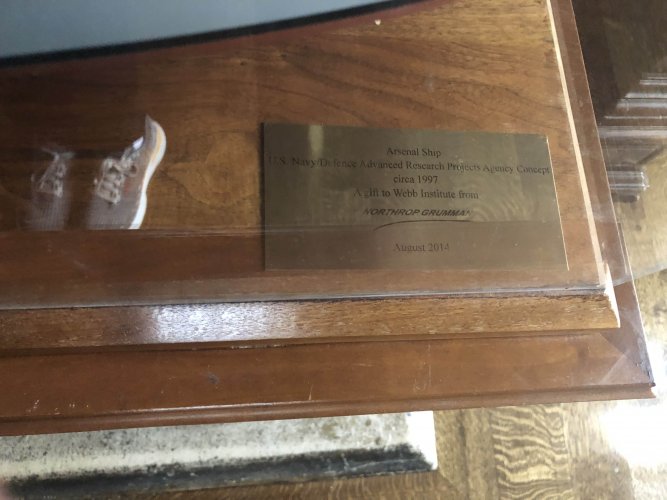
I don't think this has been posted on the forum before, a 1997 Lessons Learned Paper authored by then Captain Charles S. Hamilton who was the Arsenal Ship Programme Manager. His career, including later roles, is
described at this link.
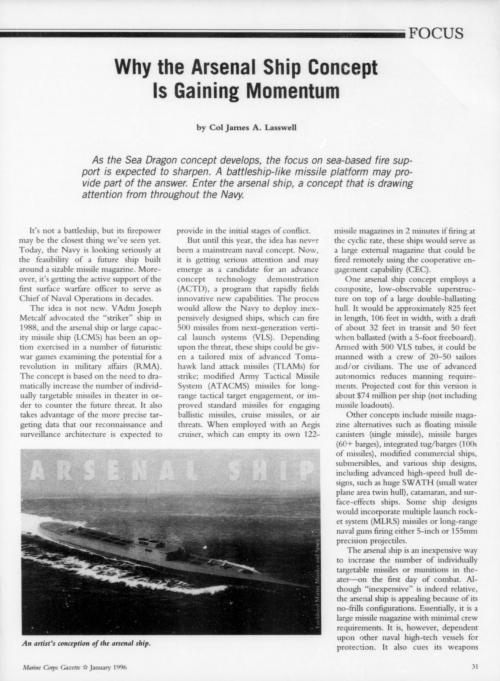
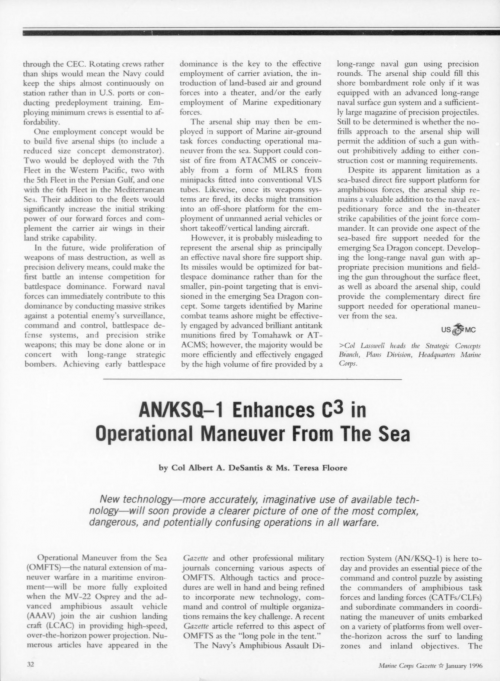
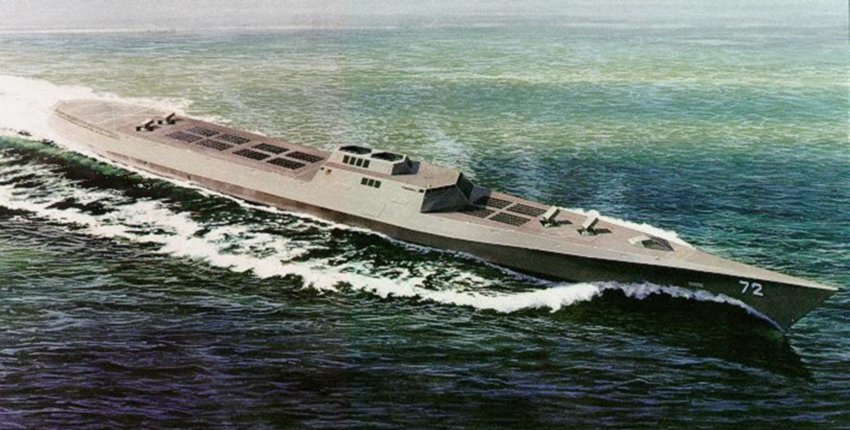
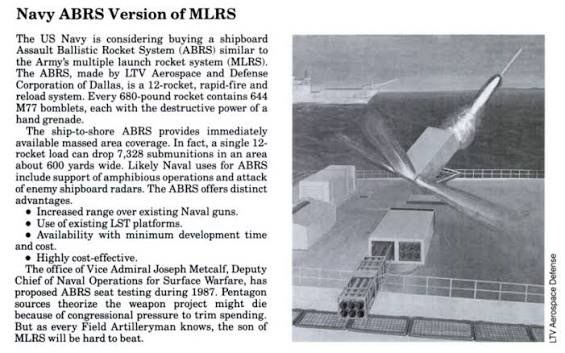
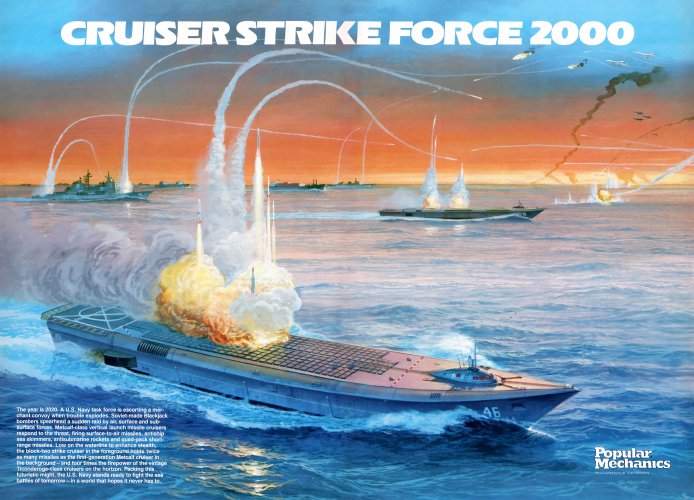
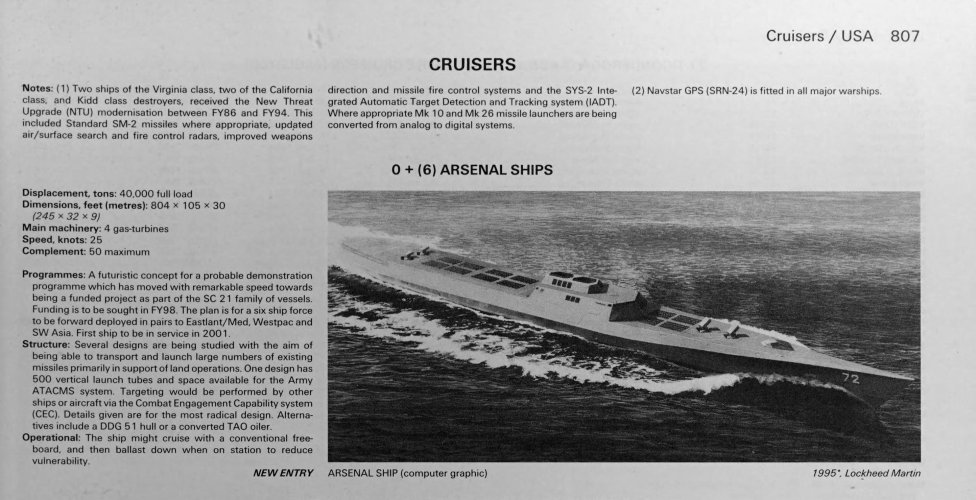
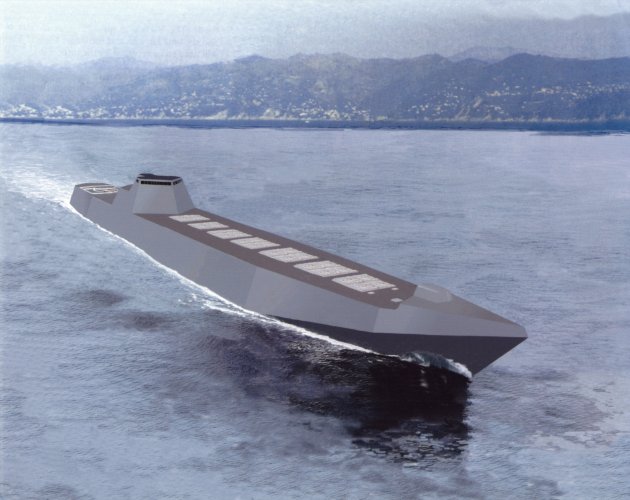
The Arsenal Ship appears to have been predicated on changing the way that fire-support was provided to land forces (Marine and Army) ashore (hence "Maritime Fire Support Demonstrator"). There was a deep strike role but general fire support appears to have been the part of the CONOPs that drove the C4 systems requirement, and provided the justification for the considerable addition of VLS cells (512 per Arsenal Ship) to the fleet. This required deep integration with land forces and associated surveillance assets (e.g. direct targeting from JSTARS). However, this created a need to:
- Convince the Marines that a small amount of precision ordnance was more cost effective, and generally preferable, to a large amount of dumb ordnance for general and direct fire support
- Provide sufficiently low cost precision munitions to deliver #1
- Provide assured airspace deconfliction between the munitions being fired by the Arsenal Ship and other airborne assets in theatre
With regard to the number of VLS cells in the fleet, I have attached a footnote from a 1997 GAO report on the Navy Surface Combatant programme indicating that the Navy could not afford to fill the cells it had programmed. The objective for DD-21 was 256 cells per ship though I don't know how that relates to the attached statement.



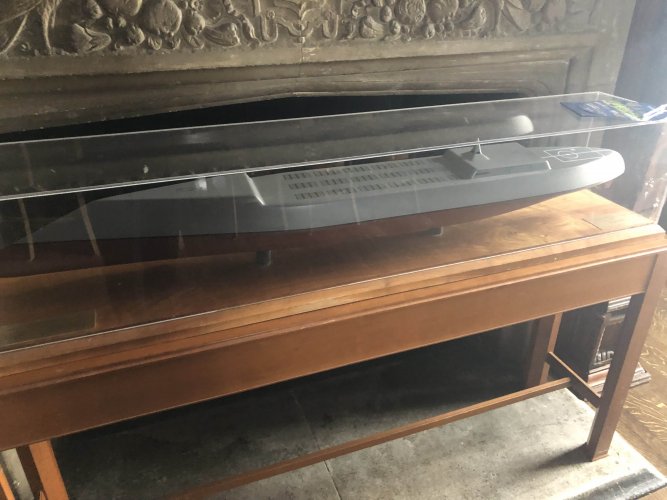
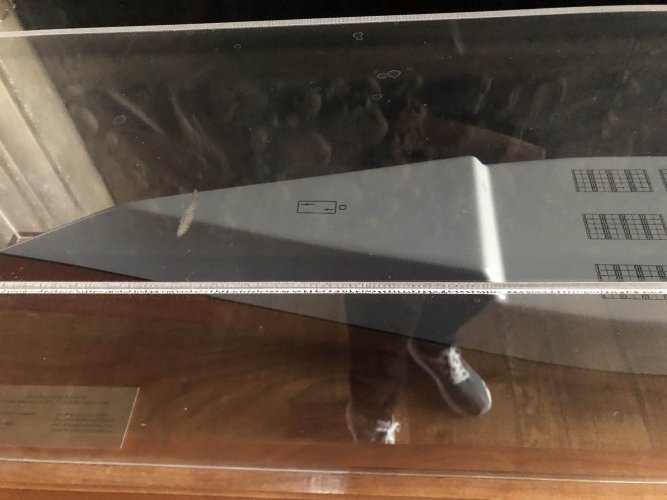
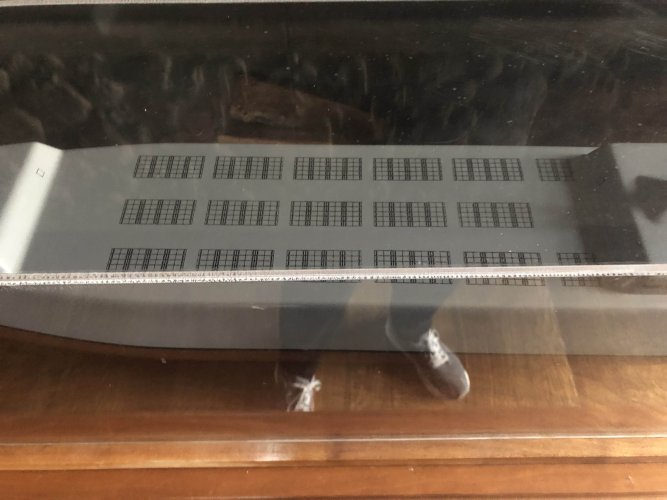

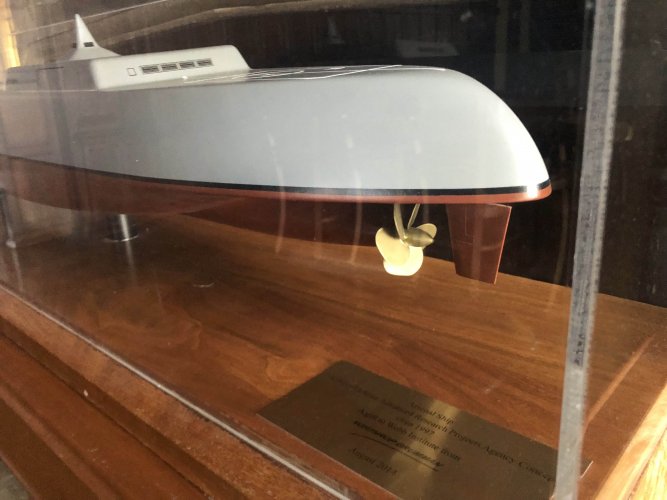


 Maybe some PR rep will be nice enough to dig through the achieves, you never know!