While we're talking about it, what's the premium reference book(s) for the Blackbirds?

That depends on what exactly you are looking for.

SOC mentions two excellent books.
Note that Paul Crickmore's latest book "Lockheed Blackbird, beyond the secret missions" is especially about the missions all over the world through the decades, but it also contains some info over the development of the Blackbird and some technical info.

I would add the book by James Goodall & Jay Miller "Lockheed's SR-71 Blackbird Family".
It is sold out but can be bought 2nd hand for a very reasonable price if you live in the US:
https://www.abebooks.com/book-search/isbn/9781857801385/
Suhler's book is also sold out but readily available 2nd hand, especially in the US:
https://www.abebooks.com/book-search/isbn/9781600867125/
 
Suhler's From Rainbow to Gusto covers a lot of the early RCS reduction work. Pair that with Paul Crickmore's latest SR-71 edition and you've got a solid starting point.

That depends on what exactly you are looking for.

SOC mentions two excellent books.
Note that Paul Crickmore's latest book "Lockheed Blackbird, beyond the secret missions" is especially about the missions all over the world through the decades, but it also contains some info over the development of the Blackbird and some technical info.

I would add the book by James Goodall & Jay Miller "Lockheed's SR-71 Blackbird Family".
It is sold out but can be bought 2nd hand for a very reasonable price if you live in the US:
https://www.abebooks.com/book-search/isbn/9781857801385/
Suhler's book is also sold out but readily available 2nd hand, especially in the US:
https://www.abebooks.com/book-search/isbn/9781600867125/

Thank you both!
 
I wouldn't be surprised if an SR-71 reached 100,000Ft in altitude.
 
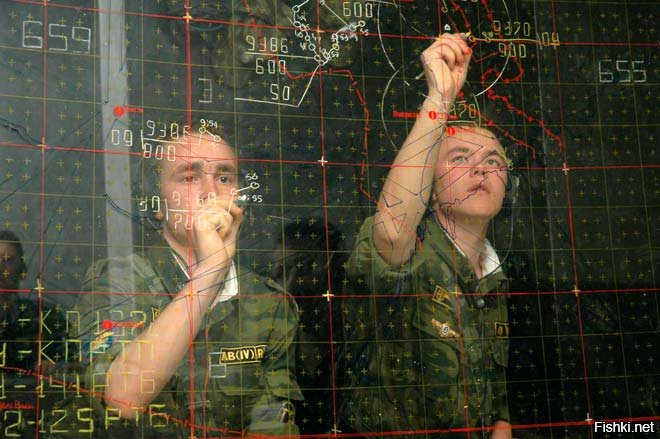
There were no problems with the detection of the "Blackbird". Only the person at the tablet should be faster

6485e601342856cbfb9465cc9d8e8830.jpg
 
There were no problems with the detection of the "Blackbird". Only the person at the tablet should be faster

6485e601342856cbfb9465cc9d8e8830.jpg
Sure, but they'd know how tough it was to intercept at Mach 3.2 and 75,000ft, and now they have one going M3.46 at 90kft.

That's got to induce some profanity about how bullshit it is that the Blackbirds are that much faster and higher than normal!
 

An SR-71 Blackbird Has Vanished (Updated)​

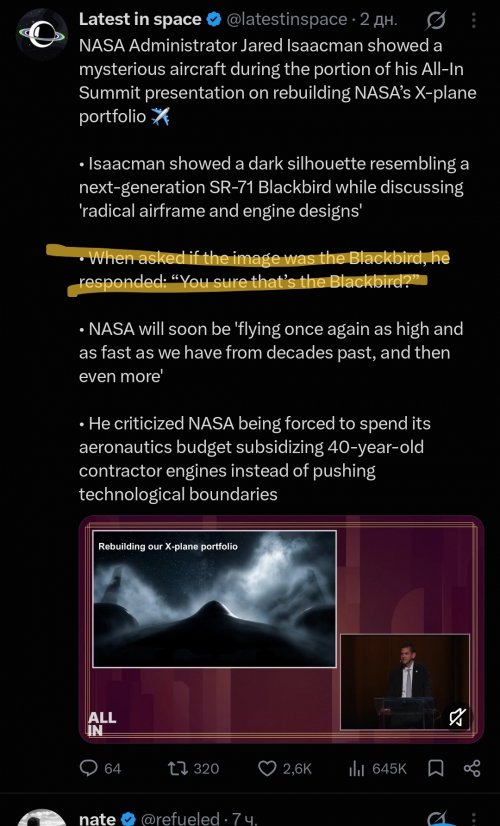
The head of NASA just cryptically teased a new X-plane with an image that looked a lot like the iconic Blackbird. Now a very particular SR-71 is missing.
https://www.twz.com/air/a-sr-71-blackbird-has-vanished
Last week, NASA Administrator Jared Isaacman cryptically teased plans for a new high- and fast-flying X-plane with a silhouette of an aircraft that immediately drew comparisons to the famed SR-71 Blackbird as a backdrop. In our report, we looked at what it could mean, including the possibility of reviving the SR-71, or at least using it to inform or even cobble together a new airframe. Now it turns out that an SR-71 that had been on display at NASA’s Armstrong Flight Research Center for years is suspiciously missing.
View: https://www.youtube.com/watch?v=KrhJ3vFD3fE
 

Attachments

  • 1790323707156.png
    1790323707156.png
    1.2 MB · Views: 87
While it would cost a LOT of money to recommission one of the Blackbirds to flightworthy status it would be nice to see one of these timeless beauties fly again.

As the LASRE programme IIRC it was cancelled before inflight tests of the half-aerospike engine could be conducted.
 
Not only is this re-commission expensive in monetary terms, I think they need to get a lot of experienced people back together, re-certify their security clearance, etc ......
 
Not only is this re-commission expensive in monetary terms, I think they need to get a lot of experienced people back together, re-certify their security clearance, etc ......

Don't forget also all of the needed spare-parts and various pieces of maintenance equipment plus a new batch of JP-10 fuel would have to be manufactured.
 
Not only is this re-commission expensive in monetary terms, I think they need to get a lot of experienced people back together, re-certify their security clearance, etc ......
If it's strictly a NASA project, they may not need clearances. But they're all in their 70s at the youngest. Making some new pilots would not be easy.
 
If it's strictly a NASA project, they may not need clearances. But they're all in their 70s at the youngest. Making some new pilots would not be easy.
You can bet everything you own that those ex-pilots still with us (a lot of whom gave a great series of seminars recently at Duxford) would drop everything to be involved. Most of them seemed quite sprightly too.
 
How are they sourcing parts?
I'd assume cannibalizing from Blackbirds on display.

Making new parts would be ... challenging. Not impossible, we know a whole lot more about working with titanium today. Ironically, that knowledge came from the Blackbird and then every supersonic plane since. But it'd be challenging since I suspect all the Blackbird blueprints are still paper. Manual machining fun, and making new sets of certified cadmium-free tools will be interesting, if no sets were saved as artifacts to go to the museums.
 
Why the frack bringing back a SR-71 that hasn't flown since 1998, almost 30 years, plus what @Whisperstream said; when Hermeus* is making good strides with their MIPCC technology ? itself a much clever path to Mach 4+ than the antiquated and very temperamental J58-ramjet system. With the complicated start system, full of very toxic chemicals (boron ?)

*you may have noted that I'm usually very sceptical of supersonic and hypersonic flight startups promising a lot yet often going bankrupt - from Aerion to REL, the mass-grave-yard is packed full. The reason why I support Hermeus is that MIPCC is a reasonable, clever "hack" to Mach 4 and beyond. No pie-in-the-sky tech, just plain old turbofans boosted by clever chemistry, to high mach numbers.
 
Last edited:
I am pretty sure the amount of $$ that this will end up costing they could have just built a few of the SR-72.

Seems illogical to get a 59-yr old extreme high-performance airframe back in the air?

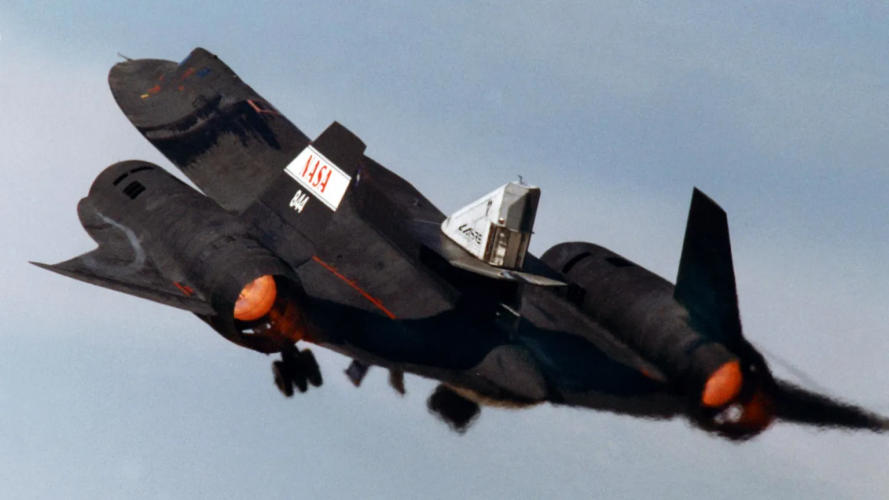
Lockheed SR-71A tail number 844 (USAF serial number 61-7980) first flew on September 25, 1967.

Regards,
 
Once they were retired by the USAF it's a pity NASA didn't get some of the A-12 Oxcarts for high-speed research.
 

Similar threads

Back
Top Bottom