Naval Gun Projects

Friedman "US Amphibious Ships and Craft - An Illustrated Design History", pg 404:
"By 1969 a long-range gun system (LRGS), approximately a 12-in/70, was in the advanced development stage. According to a 1 July 1969 Op-36 point paper, this 300,000-lb weapon could throw a 100-lb projectile 70 nm."

Found this while looking for more info on the US Marines' quest for a new fire support ship, and I'm...intrigued. Does anyone know any more about this thing?
Not much at all, but some very limited information from here:
https://apps.dtic.mil/sti/tr/pdf/AD0513935.pdf
The objective of the LRGS is given as ' To provide a lightweight gun system to the fleet hich will have the capability of: (1) Shore bombardment for area neutralization out to approximately 25 nautical miles; (2) Landing force fire support out to approximately 50 nautical miles; (3) Long Range ship-to-shore weapon support to the landing force out to ranges of approximately 100 miles. Accuracy at these ranges will be provided through the use of terminal guidance in conjunction with the inherent gun launch accuracies.'

The 8-inch MCLWG came out of this project, but it does also seem like the guided projectile was seen as a technology demonstrator for the LRGS. The best that was hoped for from MCLWG was a 40 nautical mile range with rocket assistance, so something else would be needed for the long-range requirement.

There's even a reference to possible anti-radiation and passive IR guided projectiles, as well as semi-active laser.
From IDR 1/1991: [60mm ETC gun on Phalanx mount]
I wonder if this was related to the Phalanx Block II / CIWS 2000 efforts?
 
20-30 years later.. 155mm
Gun that doesnt work well.

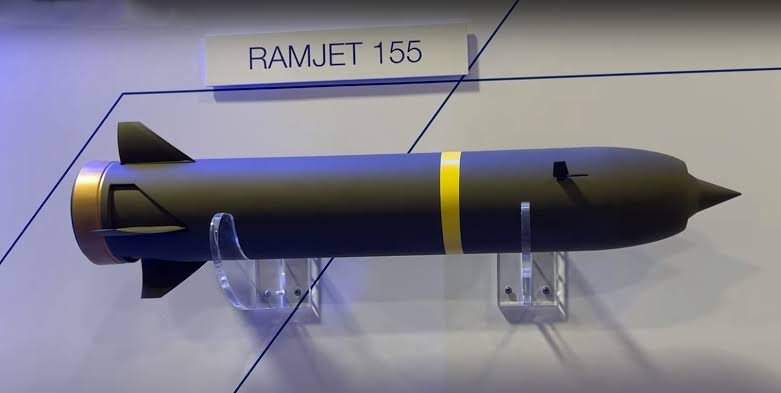
Now next development is application Ramjet artillery.
1000034566.jpg
 
Ramjet artillery makes sense on land harassment from land. Maybe exempt the tradeoffs are too inapplicable at sea so it poses no benefit for Navy to adopt. Unless range drastically increased.
- A range of 150 km is 93 miles. Impressive...except its not. Ships participate in amphibious warfare bombardment are in danger in age as we saw Ukraine widely accessible anti-ship missiles. Or terror attacks like Cole. Expeditionary warfare requires stand off ranges to protect it from land borne threats. US Ships maintain expeditionary distances of 60-100 miles. Leaving it out range guns to fire. Even if ship is just a mile off shore that only leaves 90 miles or so to exploit and some targets are far too inland. Baghdad was over 120 miles inland. As most Iran major cities like Tehran
- Ships that close to shore with deep drafts operate dangerously close littoral zones, vulnerable to running aground, hitting Shoals or underwater infrastructure, mines, anti ship missiles, hell even harassment. Even 50 caliber bullets well placed or cheap recoiless rockets can be very dangerous as they can rupture fuel lines, strike magazine or hit or damage sensitive electronics leaving ship blind or unable communicate. Most AN/designated electronics are highly visible.
- ramjet artillery sounds great til practicality set in. Typical 155mm round weighs 70-100 lbs (35-55 kg) most of the mass is the explosive; Adding a ramjet, fuel for a ramjet and guidance package doesnt leave much room for a warhead.
- With smaller warhead round accuracy has to be very High. Close with 1-2 meters. GPS even military GPS is only accurate within 10-30 meters making a 10-20 lb warhead not very effective. A small diameter bomb weighs 285 lbs of which its warhead is 200 lbs.
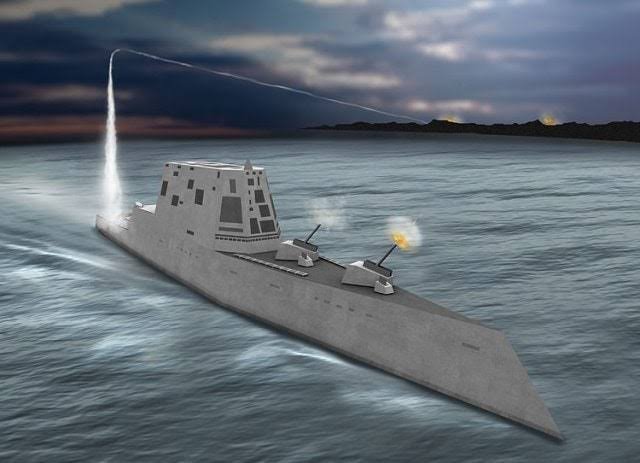
- Naval ships haven't been equipped guns this large for years even if they did ad hoc or modification. Relegating a large gun for naval bombardment activities compared to higher rate of fire but smaller naval guns like Bofors 57, OTO 76mm that have multiple uses like point defense and anti boats which requires ship carry multiple caliber rounds aboard. The largest modern ship to have 155mm guns is zumwalt at 600 feet long few navies can afford. Surely smaller magazine and stiffening armature for recoil for smaller vessels is possible. One strategy is integrate gun vertically like a mortar against its superstructure like a mast. This allows a longer barrel and loaded by sailors on deck. Far less complicated than automated volume intensive loading machinery.

Only way sufficient naval gunfire requires range 250 miles. 100 miles standoff distance and 150 miles range. That would probably need larger round caliber (175-203 mm), longer rounds or barrel length
1000034567.jpg
 
Your explosive estimates are inflated. Most artillery warheads are a fraction of the weight in explosive and are designed for the shell to fragment or direct the energy.
 
Ramjet artillery makes sense on land harassment from land. Maybe exempt the tradeoffs are too inapplicable at sea so it poses no benefit for Navy to adopt. Unless range drastically increased.
- A range of 150 km is 93 miles. Impressive...except its not. Ships participate in amphibious warfare bombardment are in danger in age as we saw Ukraine widely accessible anti-ship missiles. Or terror attacks like Cole. Expeditionary warfare requires stand off ranges to protect it from land borne threats. US Ships maintain expeditionary distances of 60-100 miles. Leaving it out range guns to fire. Even if ship is just a mile off shore that only leaves 90 miles or so to exploit and some targets are far too inland. Baghdad was over 120 miles inland. As most Iran major cities like Tehran
Roughly 90% of the world's population is located within 100nmi/200km of the coastline.

That a couple locations aren't that close merely makes them outliers in the target index.


- ramjet artillery sounds great til practicality set in. Typical 155mm round weighs 70-100 lbs (35-55 kg) most of the mass is the explosive; Adding a ramjet, fuel for a ramjet and guidance package doesnt leave much room for a warhead.
- With smaller warhead round accuracy has to be very High. Close with 1-2 meters. GPS even military GPS is only accurate within 10-30 meters making a 10-20 lb warhead not very effective. A small diameter bomb weighs 285 lbs of which its warhead is 200 lbs.
US M107 shell has a filler than weighs all of 6.86kg. 15.1lbs of Composition B.
US M584A1 HERA round also contains 15.1lbs of CompB.
M795 contains 10.8kg/24lbs of TNT or IMX-101.
M982 Excalibur contains 5.4kb/12lbs of PBXN-9.
And all of those have a ~150m lethal radius.


SDB1/GBU-39 only has 36lbs of boom in that 200lb warhead.


Only way sufficient naval gunfire requires range 250 miles. 100 miles standoff distance and 150 miles range. That would probably need larger round caliber (175-203 mm), longer rounds or barrel length
View attachment 806056
I'm sure the various naval powers are working on that range.
 
Also there's need to be considered that the Newest Shells?

They are made of High Density Reactive Material.

IE the Shell itself is explosive and makes shraplen that explodes on impact.

This includes the ramjet shell.

So the entire 100 pound deal is explosives that explode TWICE.


Also the 100 mile range?

That's From the 39 caliber 155s on the M109/M777.

The AGS had a 64 caliber barrel, basically twice as long, meaning you looking at a range closer to 180 miles.

Then there's that new shell that basically a glide bomb with a rocket motor that can go just as far but has more payload so...

Eyeah.

Oh then you have the Railgun which is expected to reach 200 miles and the shell is made of the same HDRM stuff mix with Tungsten as well...
 
Not much at all, but some very limited information from here:
https://apps.dtic.mil/sti/tr/pdf/AD0513935.pdf
The objective of the LRGS is given as ' To provide a lightweight gun system to the fleet hich will have the capability of: (1) Shore bombardment for area neutralization out to approximately 25 nautical miles; (2) Landing force fire support out to approximately 50 nautical miles; (3) Long Range ship-to-shore weapon support to the landing force out to ranges of approximately 100 miles. Accuracy at these ranges will be provided through the use of terminal guidance in conjunction with the inherent gun launch accuracies.'

The 8-inch MCLWG came out of this project, but it does also seem like the guided projectile was seen as a technology demonstrator for the LRGS. The best that was hoped for from MCLWG was a 40 nautical mile range with rocket assistance, so something else would be needed for the long-range requirement.

There's even a reference to possible anti-radiation and passive IR guided projectiles, as well as semi-active laser.

I wonder if this was related to the Phalanx Block II / CIWS 2000 efforts?
ETC gun was proposed to counter Constant Soviet upscaling of its tank guns caliber without having design new weapon. Its cancelation had more do with post cold war, also by late 80s Strategic defense initiative gobbled up most project funding.

ETC project didn't last long to the Navy it wasn't advantageous, had servicing and expense issues and its overall rate of fire wasn't decent enough to be deemed suitable CIWS. Likely 60mm was chosen for role fulfillment of programmable ammunition which at time was still new. Radio fuses as far back 2nd world war the digital proximity fuse with distance measured detonation was still fairly tricky.
 
As announced recently Raytheon begun program upgrade Phalanx. Would be a block II? Scenarios include
- improved batteries run auxiliary
- better liquid cooling to supplant seawater because corrosion.
- improved radar for sea skimming discrimination.

But Real changes would entail
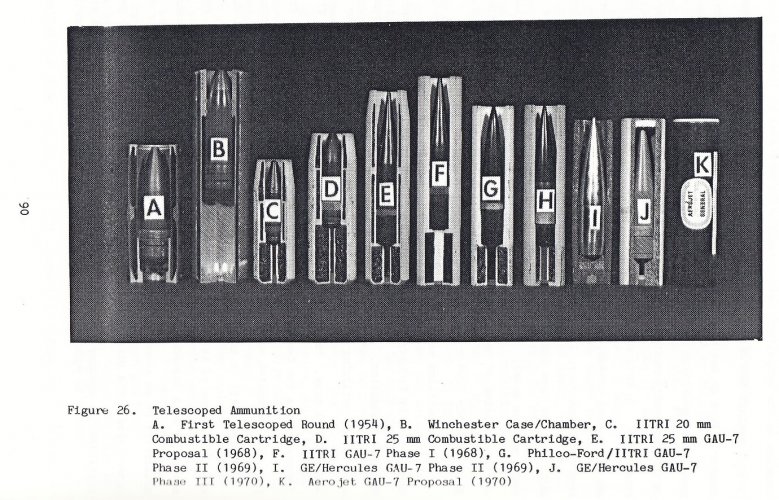
- caliber conversion? (25mm NATO.. or possible cased telescope ammunition)
- higher velocity cartridge (submunition in superior propellant)
- one new technology optical color discrimination
- Spectroscopy cameras like those on space probes to segregate Oxygen/hydrogen from metal/plastics.
1000035618.jpg
 
As announced recently Raytheon begun program upgrade Phalanx.
"As part of the contract, Raytheon will provide upgrades, conversions, overhauls, and related equipment."

Provide, not develop. Sounds to me like they've been contracted to cover any remaining Block 0/1/1A to Block 1B upgrades alongside overhauls etc. $205m isn't nearly enough to cover a major development programme as well as ongoing sustainment.
 
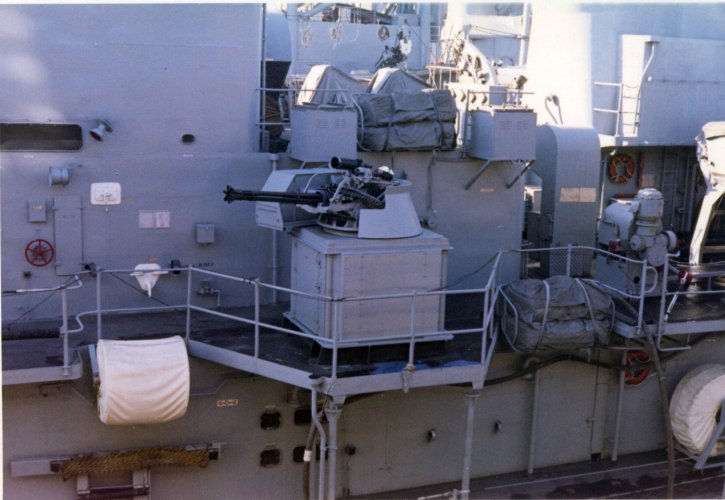
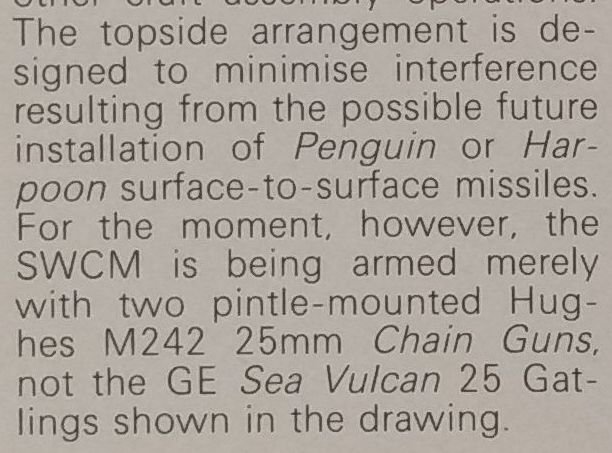
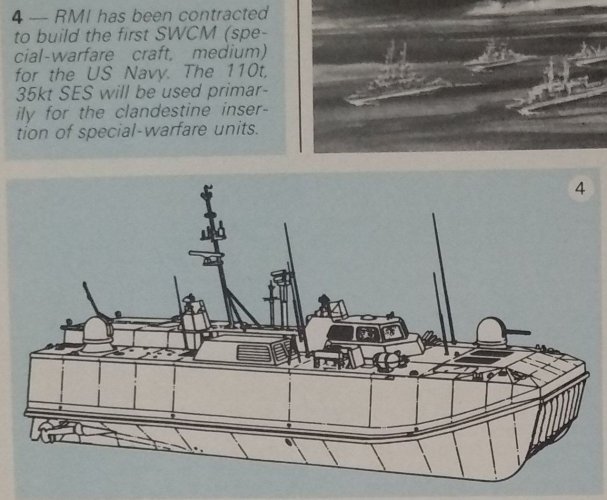
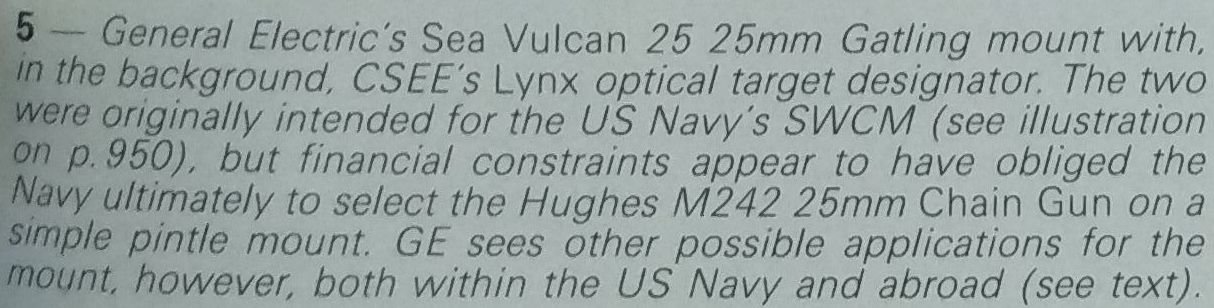
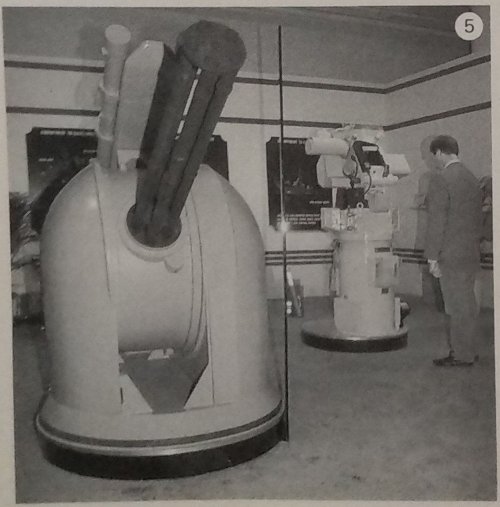
While browsing through skylancer-3441s collection of scans, looking for something else, I came across this bit of trivia on the Sea Vulcan 25 from IDR 6/1985.

So apparently the USN SWCM - Special Warfare Craft, Medium - was planned to to mount two Sea Vulcans 25, which were then changed to pintle-mounted M242 Bushmasters on cost grounds.

Makes me wonder if that applies only to this SWCM or if the Sea Vulcan 25 was actually looked at for all the other ships that ended up with the Mk38.

Note also that the Stinger launcher mounted on the Sea Vulcan 25 might be stackable, but I don't know if the mount would support that.
 

Attachments

  • Sea Vulcan 25 03.jpg
    Sea Vulcan 25 03.jpg
    55.7 KB · Views: 91
  • Sea Vulcan 25 02.jpg
    Sea Vulcan 25 02.jpg
    166.7 KB · Views: 341
  • Sea Vulcan 25 01.jpg
    Sea Vulcan 25 01.jpg
    77.1 KB · Views: 84
  • Sea Vulcan 25 00.jpg
    Sea Vulcan 25 00.jpg
    109.1 KB · Views: 76
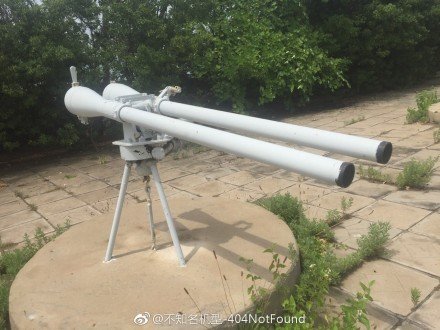
Ai tempi del progetto di sviluppo dell'aereo d'attacco AX, che avrebbe portato alla realizzazione degli A9 e A10, si sviluppò un sistema di lancio di razzi Gatling.
Non è una cattiva idea, anche se un caricatore pieno di razzi sembra pericoloso per un aereo, potrebbe essere un concetto ideale per un CIWS.
Possono trasportare testate di dimensioni superiori a quelle dei proiettili, raggiungere velocità supersoniche grazie a un'accelerazione graduale ma rapida e alla prossimità della miccia, esplodendo sul bersaglio. In sostanza, un cannone spara missili guidati in miniatura.


View attachment 806372
Il progetto risale al 1952, poco prima del programma AX...
 
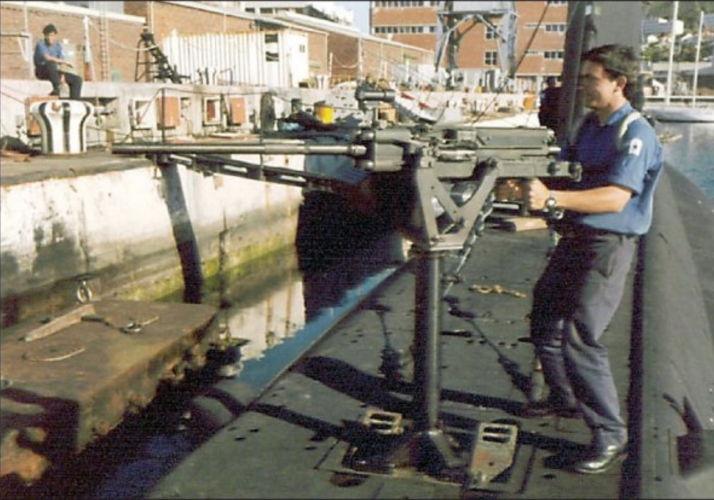
And now a really secret project: a GA1 20-mm automatic cannon (actually a copy of the MG151/20) aboard a Daphne-class submarine of the South African Navy. It was to give the submarines some anti-surface firepower during their supporting of special forces operations. The mounting was developed in the mid-1980s but never used operationally.

Source: Iron Fist from the Sea. South Africa's Seaborne Raiders 1978—1988 by Daniël (Douw) Steyn and Arnè Söderlund
 

Attachments

  • GA1 submarine.png
    GA1 submarine.png
    1.5 MB · Views: 103
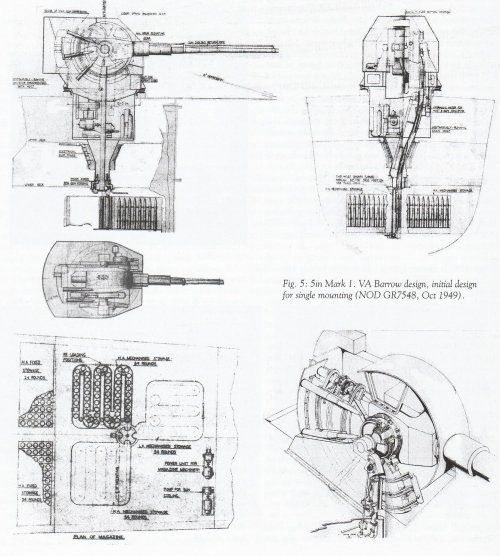
October 1949 design from Vickers-Armstrong (Barrow) the single 5"/70 QF Mk N1 mounting from Navweaps:

WNBR_5_70_N1_sketche_pic.jpg

Vickers Armstrong (Barrow) and Vickers Armstrong (Elswick) also each put forward designs twin mountings for the same gun. Later in November 1951 this gun became a 62-calibre weapon, before being replaced by the slower firing (40rpm, rather than 60+rpm) 5"/56 QF Mk N2.

(Edit, I have this image saved as a png, but it seems to have been converted into a jpg when uploaded here, is there anyway to prevent that?)
 
Last edited:
Or, y know, the 5" gun.

5-inch guns have fallen off a bit since the 1950s though:

October 1949 design from Vickers-Armstrong (Barrow) the single 5"/70 QF Mk N1 mounting from Navweaps:

View attachment 821363

Vickers Armstrong (Barrow) and Vickers Armstrong (Elswick) also each put forward designs twin mountings for the same gun. Later in November 1951 this gun became a 62-calibre weapon, before being replaced by the slower firing (40rpm, rather than 60+rpm) 5"/56 QF Mk N2.
 
5-inch guns have fallen off a bit since the 1950s though:
The USN explored a 5"/54 high RoF gun in the Mk.65 and Mk.66, they didn't choose it for various reasons. The Italian 127/64 has a notably higher fire rate, as does the AK-130. It's eminently possible. But this is part of why I'm a fan of 76mm. You get a very solid RoF and much more punch than light guns while being easier to stick around smaller ships than a 127.
 
The USN explored a 5"/54 high RoF gun in the Mk.65 and Mk.66, they didn't choose it for various reasons. The Italian 127/64 has a notably higher fire rate, as does the AK-130. It's eminently possible. But this is part of why I'm a fan of 76mm. You get a very solid RoF and much more punch than light guns while being easier to stick around smaller ships than a 127.
The Mk 45 uses a single transfer arm from a single hoist, effectively cutting the Mk 42's system in half and eliminating the need for the transfer arm to flip into the "transfer tray" position before being rammed making it a fairly simple system. 127/64 uses a pair of transfer arms fed by a single hoist which makes feeding a bit easier than the Mk 42. I have heard nothing good about the operation of the AK-130 and would treat its rate of fire as a highly theoretical figure.

You can get even faster rates of fire with magazine fed systems like with Bofors but those designs are less adaptable with more limited feed options so probably aren't as useful in the modern context where the main gun is very much a secondary weapon/utility.

As a side note the images for the British 5"/70 show a "continuous scavanging conveyer synchronized with the hoist" (resolution makes it pretty hard to read) in the mount. Were shells rammed directly from this or were they transfered into a seperate ramming position before ramming?
 
As a side note the images for the British 5"/70 show a "continuous scavanging conveyer synchronized with the hoist" (resolution makes it pretty hard to read) in the mount.

I have an Google Books copy of Warship 2015, which shows the same image in slightly higher resolution, the label is "continuously - running conveyer synchronized with hoist"

Were shells rammed directly from this or were they transfered into a seperate ramming position before ramming?

Unfortunately the text Peter Marland provides for the 5-inch QF Mk N1 in said Warship 2015 article is relatively limited, and other than the mountings weights and rate of fire, the only other information is that they used "catapult ('flick') rammers.

I'm inferring from the above diagram, and those of the 3"/70 provided in the Warship 2015 article, but I think that the 5"/70 single mounting is, in effect, a scaled up version of one half of the 3"/70 mounting (specifically the left gun), albeit greatly simplified to feed one barrel instead of two.

The gunbay of the 3"/70 mounting has four hoppers feeding an outer ring that rotates anticlockwise at 40° per second, that then passes the ammunition to the inner ring which rotates clockwise at 72°, via a middle ring with five transfer scuttles, the rotation speed of which is set by the differential of the outer and inner rings, plus or minus the mounting training rate. Two vertical intermediate hoists, one for each respective gun, then pick rounds off the inner ring, and carry them into the gunhouse, into a radial conveyer, which carries the rounds to the transfer tray at whatever elevation the gun is at, before loading them into said gun.

The 5"/70 single mounting seems to have the last three stages of that system in common, namely the vertical intermediate hoist, feeding into a radial conveyer, which then feed into the gun (presumably via a transfer tray which cannot be seen in the diagram). Having only to feed a single gun, the system is considerably simplified, with what looks like a single transfer scuttle.feeding ammunition directly into the intermediate hoist from the three ammunition hoppers.
 
Last edited:
I'm surprised with guns like the twin 120 mm (4.7-inch) available that everything devolved to singles.
 
I'm surprised with guns like the twin 120 mm (4.7-inch) available that everything devolved to singles.
It’s easier to automate a single feed hoist since the intermediate magazines/drums can be stationary. This cuts down on weight, manning, cost, and volume, all of which is very important when the guns are seen as a secondary weapon/utility.

Even designs which retain much of the complexity of twin guns (like the 5”/54 Mk 42 and the TAK 120) did so largely for weight reasons.
 
There are ways around reload complexity being a problem. Storing shells in the turret is the main solution. The Swedes managed a rate up to 80 rounds a minute on the twin. But like anything else, sustained rate after the stowed shells runs out is a whole new story. Obviously the gun utility determines the commitment to keeping them in action. The 120 mm shell was an odd duck for a naval gun, but it had several northern European users.
 
Last edited:

Similar threads

Back
Top Bottom