Agreed, on global scale - esp. in comparison to Europe - it is, however they are not built completely ingeniously and well, 222 since 2004 – and unfortunately I don’t know the annual breakdown (though I’d be happy to be corrected) – that’s just 10 aircraft a year over 22 years … compared to 400+ J-16s (alongside other Flanker variants) in China since 2014!
And their share of domestic production is also significantly lower!
Even new contract for 12 Su-30MKI ( I suppose the replacement for lost ones) ,means production throughout 2027 and 2028, so 6 aircraft per year only.
W/o the great Russian support in all domains, HAL will never be capable to 'produce' Su-57E/D and not only from the beginning but in the phase of assembling them like you mentioned earlier.From the Sukhoi 's book we found out what kind of difficulties KnAAZ had with some Al-Li Alloys. I think that complete composite made parts for the skin will be transfered to HAL from Russia for the each aircraft if they start to 'produce' them at all.
That's a solid, mainline level manufacturing output. Few countries have money to even afford more.
China specifically is one of two that can. It is just an unfair comparison; China is simply a several times larger economy.
It's like asking why Su-57 numbers per year are so low. Is 12...18 heavy fighters really low when measured against economy scale and VKS size?
It'll be low if notional Su-75 were to try to substitute several types in a sufficiently affordable package. But there's no su-75.
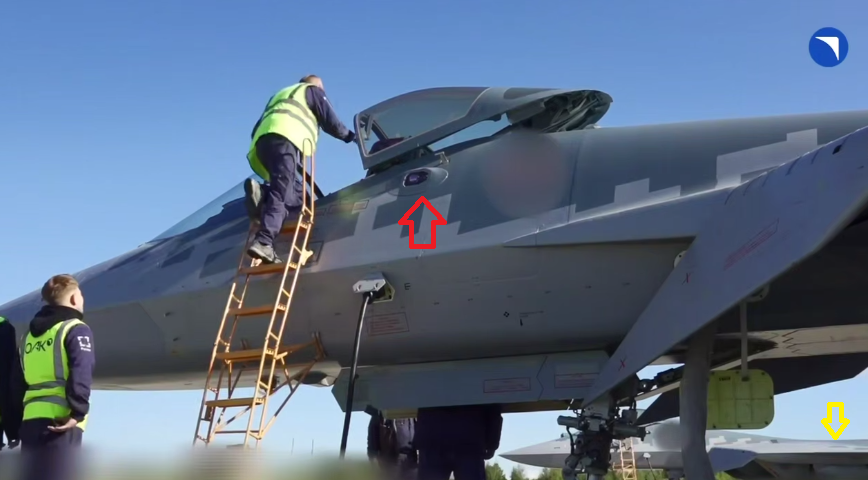
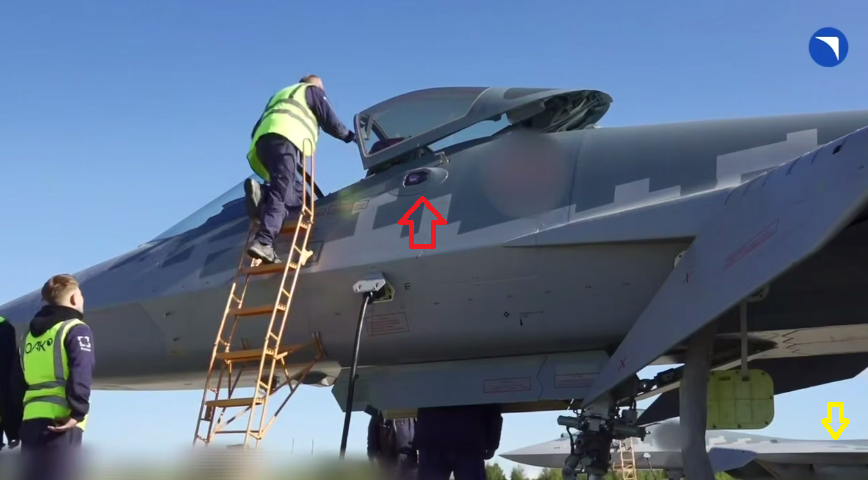
At least two new upgraded Su-57s have been delivered to the VKS. The 101KS-U window, featuring a massive infrared sensor, is clearly visible. This component probably bears a different designation now.
That's a solid, mainline level manufacturing output. Few countries have money to even afford more.
China specifically is one of two that can. It is just an unfair comparison; China is simply a several times larger economy.
It's like asking why Su-57 numbers per year are so low. Is 12...18 heavy fighters really low when measured against economy scale and VKS size?
It'll be low if notional Su-75 were to try to substitute several types in a sufficiently affordable package. But there's no su-75.
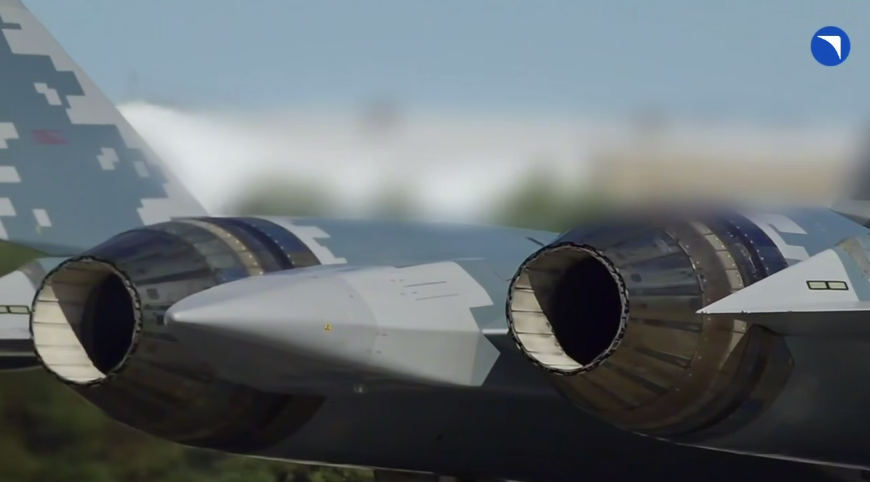
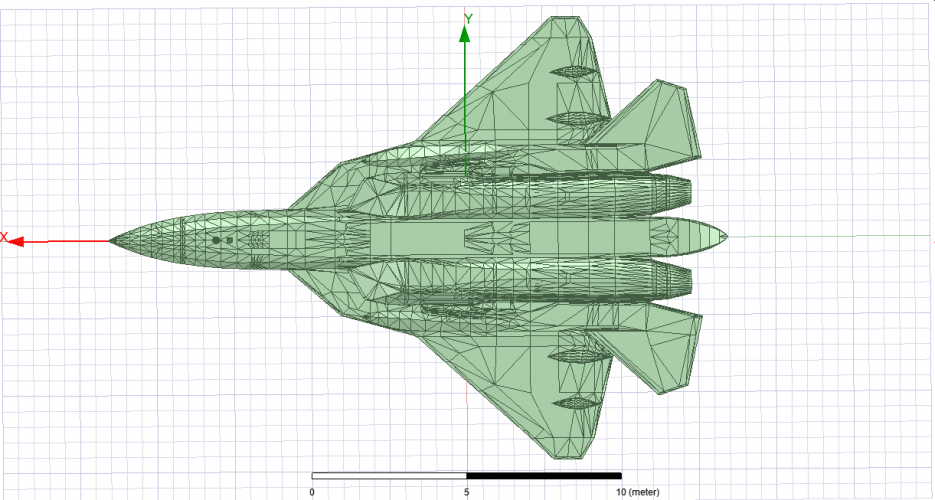
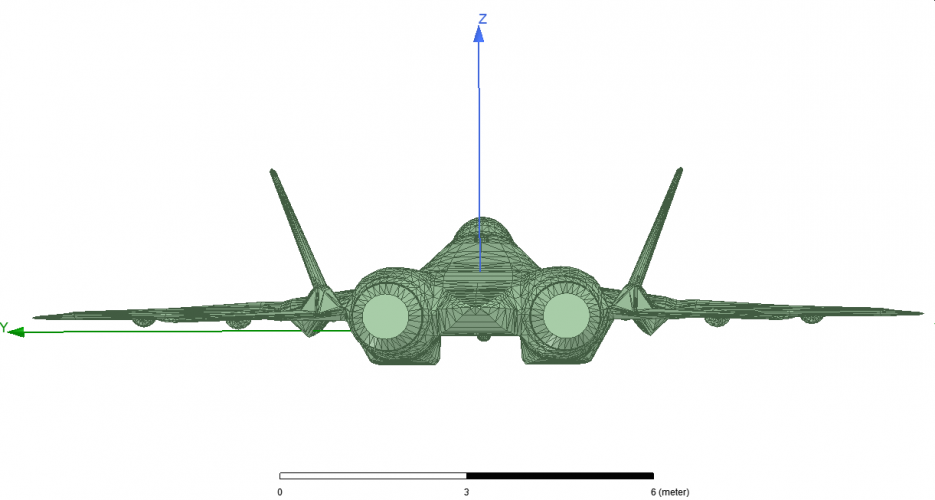
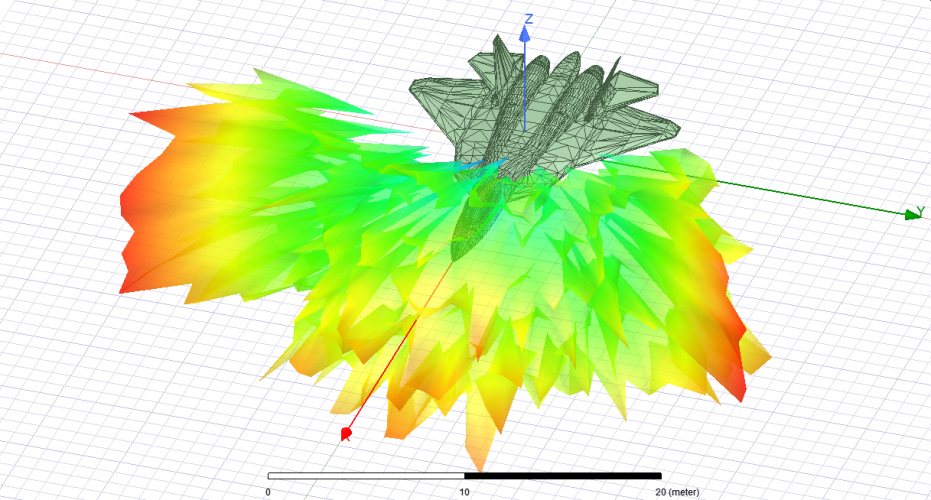
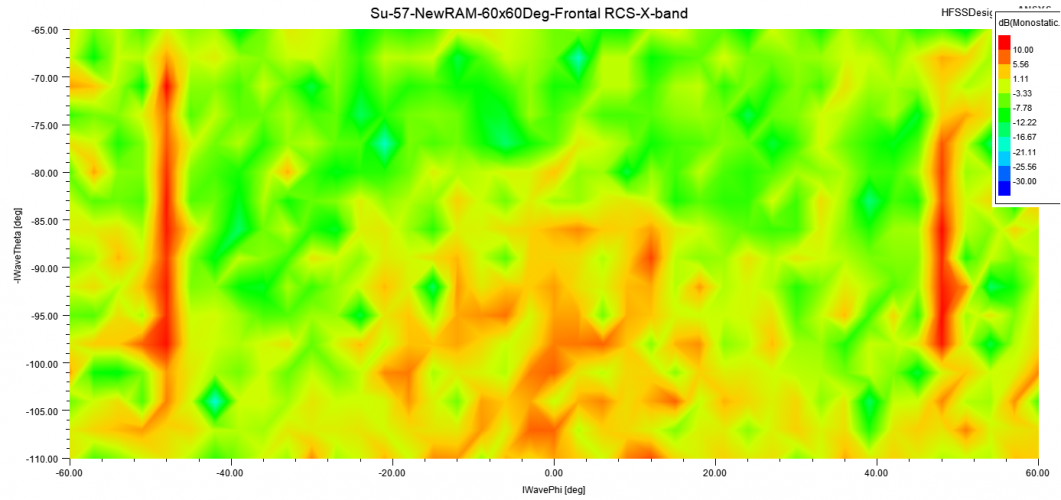
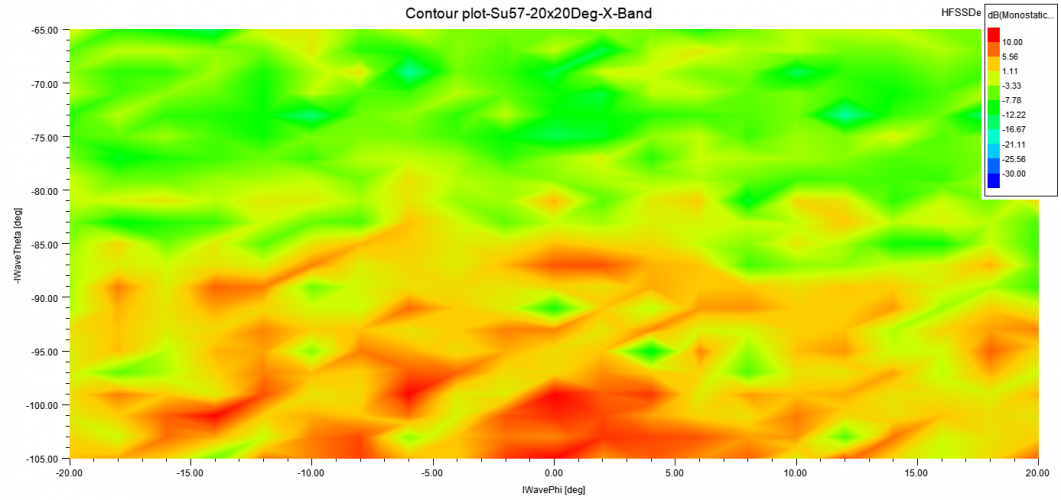
Aircraft101 argued that the fuselage tunnel between the Su-57's engine nacelles forms a corner reflector that produces strong radar returns.
The problem is his model.
He states that, because there is no reliable public data on exactly what kind of RAM/RAS is used on the actual Su-57's external surfaces, he modeled the entire outer surface as PEC (Perfect Electric Conductor), essentially treating it as a perfect metal surface. At the same time, however, he did apply RAM to the intake interiors and radar blockers.
This creates a fundamental problem.
However, I do not think that using PEC as an initial modeling assumption is necessarily a problem by itself.
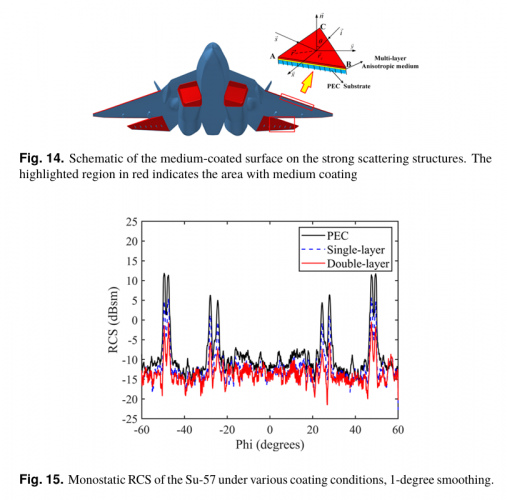
In fact, a 2024 study on Su-57 RCS modeling used a similar approach: the aircraft was first modeled under ideal conducting conditions to identify the dominant scattering regions, and radar-absorbing coatings were then selectively applied to those regions and the RCS was recalculated.
In other words, the PEC result was treated as an intermediate step for identifying where absorptive material should be applied, rather than as the final radar signature of the actual aircraft.
Obviously, a real operational aircraft is not simply a bare PEC model. RAM and RAS are part of the aircraft's radar-signature design. Aircraft101 chose to include those effects where he considered them relevant, such as the intake and radar blocker, but completely excluded them from the external surfaces containing the very corner reflector he later identifies as a major source of RCS.
In other words, he may have thought he was making the model more neutral by leaving the external RAM/RAS unspecified. But in practice, he failed to control an important variable consistently.
And this matters much more than I initially expected.
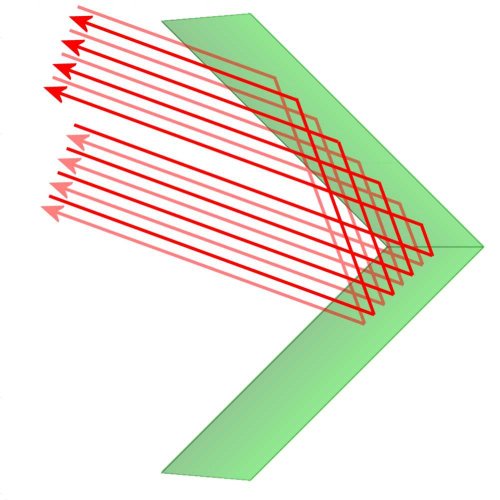
While looking into this issue today, I found an experiment by Nohara et al. in which researchers applied the same RAM to an actual metal flat plate and to a dihedral corner reflector, and measured their RCS from 8–12 GHz. They explain that the strong scattering from a corner reflector is produced by multiple reflections between the two faces.
And this multiple-reflection mechanism can actually become a weakness once RAM is applied.
As the electromagnetic wave reflects back and forth inside the corner, the losses introduced by the RAM act repeatedly during those reflections.
The experimental results show exactly this difference.
At 8 GHz, the flat plate showed an RCS reduction of about 9 dB, while the same RAM applied to the dihedral corner reflector produced a reduction of about 17–20 dB in certain regions. The researchers attribute this additional reduction to the multiple reflections inside the corner.
At 10 GHz, the central peak of the flat plate was reduced by about 20 dB, while the central peak of the dihedral corner reflector was reduced by about 24 dB. The difference is only 4 dB if we look at the dB values themselves, but the picture changes when we convert them into linear RCS reduction factors.
20 dB reduction = RCS reduced to about 1/100
24 dB reduction = RCS reduced to about 1/251
In other words, with the same RAM, the reduction factor for the dihedral corner reflector was about 2.5 times greater than for the flat plate.
And this creates a very important problem for Aircraft101's conclusion.
The fact that his model produces a strong scattering source at the corner between the engine nacelles can certainly be true for a PEC geometry.
But using that result to conclude:
“This corner makes a large contribution to the RCS of the actual Su-57.”
The reason is simple: he never calculated how much the RCS of that corner changes when the corner is given the kind of RAM/RAS treatment that an actual aircraft may have.
More importantly, this is not something that can simply be fixed by saying:
“Then we can just subtract the RAM's nominal performance in dB from the PEC result.”
Corner scattering is formed differently from the scattering of a flat plate. It involves multiple reflections and interference, so RAM acts repeatedly along those reflection paths while also changing the phase relationships within the scattered field. The experiments likewise show that the amount of reduction varies significantly with observation angle, and in some cases it cannot be described as a simple uniform dB reduction.
So the problem is not simply that “he did not account for RAM, so his RCS is somewhat too high.”
The bigger problem is that he treated RAM as an important variable when it came to the intake and radar blocker, but effectively treated it as irrelevant when it came to the external corner reflector that he identifies as a major scattering source.
He appears to have thought he was controlling the variables by using PEC wherever the actual RAM properties were unknown. But that does not make the model more neutral. It creates an asymmetric model in which some stealth treatments are represented while another potentially important stealth treatment is deliberately excluded from the exact feature being criticized.
His model therefore shows:
How strong the corner reflection is on a PEC Su-57
Actual experiments on RAM-coated corner reflectors have demonstrated around 20 dB of RCS reduction, with even greater reductions under some conditions. Therefore, using his simulation alone to claim that “the tunnel between the Su-57's engine nacelles is a major stealth-design flaw” is not sufficiently supported.
One important distinction should be made here. The PEC simplification itself is understandable. If the actual RAM/RAS properties are unknown, using PEC can be a reasonable way to isolate the effect of geometry. The problem is taking the result of that simplified model and extending it into a conclusion about an actual aircraft's stealth performance. The simulation can show that the geometry is capable of producing a strong corner-reflection mechanism; it does not establish that the same corner remains a major RCS contributor once the actual aircraft's RAM/RAS treatment is taken into account.
Without an electromagnetic model that includes the external RAM/RAS, we cannot determine how strong that scattering source actually is on the operational aircraft.
This site uses cookies to help personalise content, tailor your experience and to keep you logged in if you register.
By continuing to use this site, you are consenting to our use of cookies.