

You are using an out of date browser. It may not display this or other websites correctly.
You should upgrade or use an alternative browser.
You should upgrade or use an alternative browser.
GA-ASI MQ-9 Reaper
- Thread starter Matej
- Start date
Scott Kenny
ACCESS: USAP
- Joined
- 15 May 2023
- Messages
- 19,560
- Reaction score
- 28,017
I may have underestimated the endurance. If the advertised numbers with the radar pod in place are 30+, now we're talking a 15" hour patrol.Indeed....but the area it covers as a result of its slow speed is not huge. Great for loitering over a choke point, but only really useful as an adjunct for a manned MPA like Poseidon.
Especially with the Mojave-derived STOL wing.Could make it very useful as a carrier borne ASW platform though....

Forest Green
ACCESS: USAP
- Joined
- 11 June 2019
- Messages
- 14,523
- Reaction score
- 31,578
USAF Wants “MQ-9 Next” Reaper Replacement To Be Modular, Cheap
https://www.twz.com/air/usaf-wants-mq-9-next-reaper-replacement-to-be-modular-cheapjsport
what do you know about surfing Major? you're from-
- Joined
- 27 July 2011
- Messages
- 8,602
- Reaction score
- 6,906
Forest Green
ACCESS: USAP
- Joined
- 11 June 2019
- Messages
- 14,523
- Reaction score
- 31,578
$1.5bn...  Using triple costs for MQ-9s and I still can't reach $1.5bn unless I price an F-35 at $800m.
Using triple costs for MQ-9s and I still can't reach $1.5bn unless I price an F-35 at $800m.- Joined
- 23 August 2011
- Messages
- 2,564
- Reaction score
- 8,444
About the UK's recently retired 10 strong fleet...one had only been purchased in the last 4 years to replace a lost one...if the daft buggers have scrapped that one instead of selling on....the others may well have reached End of Life, and had sensors etc stripped....but even then you'd think they would have had some value in just preserving and sticking in a hangar as emergency reserves...they do use the same GA-ASI control system after all...
View: https://x.com/GarethJennings3/status/2062888999992033748
- Joined
- 23 August 2011
- Messages
- 2,564
- Reaction score
- 8,444
And as if by magic....General Atomics has 'less than 10' Reaper in stock for the USAF to buy to replace losses....would that number be 9 by any chance...i.e. the ex-UK fleet, minus 1 at Cosford?
Please tell me the MoD didn't hand them on to General Atomics for free....
https://www.twz.com/air/usaf-scramb...-9-reapers-it-can-find-after-epic-fury-losses
Please tell me the MoD didn't hand them on to General Atomics for free....
https://www.twz.com/air/usaf-scramb...-9-reapers-it-can-find-after-epic-fury-losses
Shall I start a new thread with a title like the Great Aircraft Bazaar, part II: UK Donated airframe
Forest Green
ACCESS: USAP
- Joined
- 11 June 2019
- Messages
- 14,523
- Reaction score
- 31,578
Japan considers AEW radar pod for MQ-9B SeaGuardian drones
https://www.navalnews.com/naval-new...s-aew-radar-pod-for-mq-9b-seaguardian-drones/
FighterJock
ACCESS: Above Top Secret
- Joined
- 29 October 2007
- Messages
- 7,239
- Reaction score
- 8,554
What are the chances of the UK buying the AEW pod for the Protector for use with the Royal Navy QE carriers to replace the Crowsnest Merlins?
CastleBravo
ACCESS: Confidential
- Joined
- 21 January 2026
- Messages
- 197
- Reaction score
- 184
What are the chances of the UK buying the AEW pod for the Protector for use with the Royal Navy QE carriers to replace the Crowsnest Merlins?
Not the standard Protector, but the MQ-9B STOL which will have a shorter takeoff run and shorter wings that fold.
FighterJock
ACCESS: Above Top Secret
- Joined
- 29 October 2007
- Messages
- 7,239
- Reaction score
- 8,554
Thanks CastleBravo, the STOL MQ-9B would be a huge advantage over the Crowsnest Merlins offering longer range in detecting threats.
Scott Kenny
ACCESS: USAP
- Joined
- 15 May 2023
- Messages
- 19,560
- Reaction score
- 28,017
Expected.Japan considers AEW radar pod for MQ-9B SeaGuardian drones
https://www.navalnews.com/naval-new...s-aew-radar-pod-for-mq-9b-seaguardian-drones/
For the STOL Reaper? I'd say really really good.What are the chances of the UK buying the AEW pod for the Protector for use with the Royal Navy QE carriers to replace the Crowsnest Merlins?
FighterJock
ACCESS: Above Top Secret
- Joined
- 29 October 2007
- Messages
- 7,239
- Reaction score
- 8,554
The sooner the Crowsnest Merlins are replaced the better.

Sineva
ACCESS: Secret
- Joined
- 29 April 2010
- Messages
- 472
- Reaction score
- 1,326
Another one downed,looks like it might be carrying an external tank under the wing.
Possibly a qaem-118 intercept?
Possibly a qaem-118 intercept?
Forest Green
ACCESS: USAP
- Joined
- 11 June 2019
- Messages
- 14,523
- Reaction score
- 31,578
‘The threat is there’: Germany to pair P-8s with MQ-9 drones to keep an eye on Russian subs
https://breakingdefense.com/2026/06...h-mq-9-drones-to-keep-an-eye-on-russian-subs/
Air Superior
ACCESS: Confidential
- Joined
- 31 October 2025
- Messages
- 54
- Reaction score
- 146
Fuel tank is standard for the Block 5 ER configuration. It's very rare to see one deployed without a tankAnother one downed,looks like it might be carrying an external tank under the wing.
Possibly a qaem-118 intercept?
Forest Green
ACCESS: USAP
- Joined
- 11 June 2019
- Messages
- 14,523
- Reaction score
- 31,578
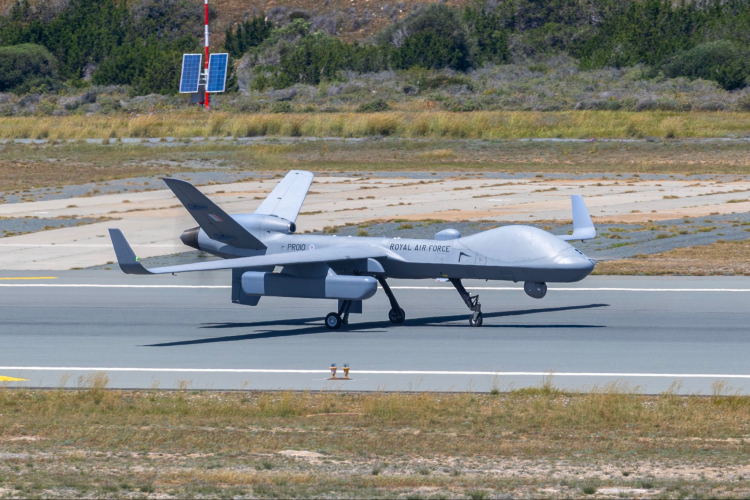
MQ-9 Getting Airborne Early Warning Radar Is A Huge Deal
https://www.twz.com/air/mq-9-getting-airborne-early-warning-radar-is-a-huge-dealTurning the MQ-9 into a radar-toting airborne early warning (AEW) platform for detecting and tracking aircraft, drones, and missiles. A Reaper in this exact configuration just flew for the first time recently.

The MQ-9 sortie in question was the product of a partnership between General Atomics and Saab, with Saab, already a leader in AEW systems, providing the podded radar system named LoyalEye. This initial test flight took place on May 19th, and a full demonstration of the pairing’s capabilities is planned for next year.
Air Superior
ACCESS: Confidential
- Joined
- 31 October 2025
- Messages
- 54
- Reaction score
- 146
Scott Kenny
ACCESS: USAP
- Joined
- 15 May 2023
- Messages
- 19,560
- Reaction score
- 28,017
They really need to speed that development up, and let the STOL Reaper fly with it.MQ-9 Getting Airborne Early Warning Radar Is A Huge Deal
https://www.twz.com/air/mq-9-getting-airborne-early-warning-radar-is-a-huge-deal
View attachment 815786
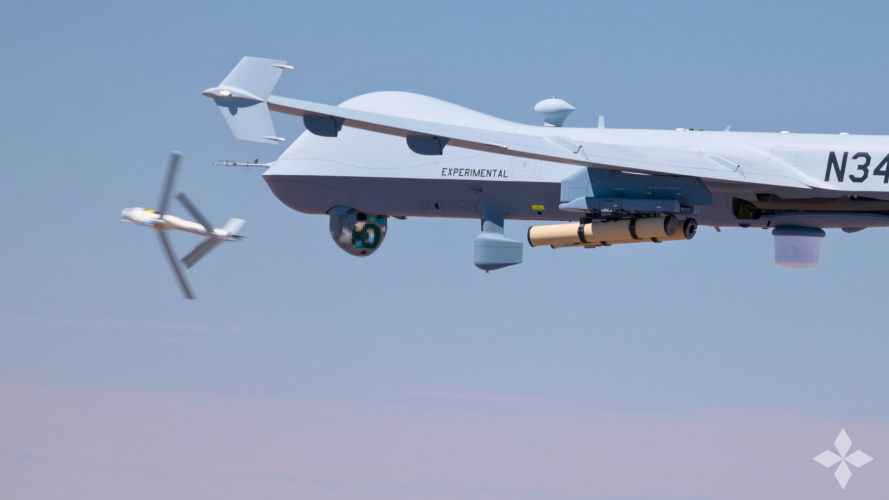
Because it'd let any carrier without a catapult have AEW. I can hear the USMC whining already.
Air Superior
ACCESS: Confidential
- Joined
- 31 October 2025
- Messages
- 54
- Reaction score
- 146
Forest Green
ACCESS: USAP
- Joined
- 11 June 2019
- Messages
- 14,523
- Reaction score
- 31,578
Ainen
I really should change my personal text
- Joined
- 25 August 2011
- Messages
- 2,831
- Reaction score
- 4,937
https://www.washingtonpost.com/nati...-its-reaper-drones-iran-war-depletes-arsenal/
I wonder how Israeli statistics look like.
U.S. military has lost roughly 25% of its Reaper drones as Iran war depletes arsenal - WP
The U.S. military has lost at least 45 MQ-9 Reaper drones during the war with Iran, or roughly 25 percent of its fleet, according to three U.S. officials familiar with the matter.
The Reaper is used to conduct surveillance and targeted strikes, and it can cost between $30 million to $50 million depending on the type of sensors and weapons it carries, according to the Air Force. The potential taxpayer cost of recent losses is over $1.3 billion for that weapon system alone.
I wonder how Israeli statistics look like.
Forest Green
ACCESS: USAP
- Joined
- 11 June 2019
- Messages
- 14,523
- Reaction score
- 31,578
It can cost that for 4 and a ground station.

- Joined
- 18 October 2006
- Messages
- 4,779
- Reaction score
- 6,841
Much of the cost is the associated systems on the aircraft. The platform cost the same as an H-60. No matter how you cut it, they are not cheap at a loss rate that is statistically worse than the loss rate for bombers in WW2. 25% of the fleet in five months. If we put survivability equipment on the UAS those numbers might go down, but then they would cost as much as an Apache. Tactics might help as well. Plodding along at a constant altitude, or better yet, in a circle at a constant altitude makes you target practice for the air defense. One has to wonder how many missiles got shot per kill. I am pretty sure no one knows because there is no warning systems. The videos only show you the missile that got it.
UAS are a very useful tool, not an invincible panacea of air warfare. Wait till quantum driven AI tells you UAS fleet to "roll 180, pull 90, accept no further commands." A pilot might ask for clarification first.
https://www.defenseone.com/policy/2...ay: Aug 14, 2026&utm_term=newsletter_d1_today
UAS are a very useful tool, not an invincible panacea of air warfare. Wait till quantum driven AI tells you UAS fleet to "roll 180, pull 90, accept no further commands." A pilot might ask for clarification first.
https://www.defenseone.com/policy/2...ay: Aug 14, 2026&utm_term=newsletter_d1_today
Last edited:
Forest Green
ACCESS: USAP
- Joined
- 11 June 2019
- Messages
- 14,523
- Reaction score
- 31,578
Worse than the loss rate for bombers during WW2? Let's see the stats on that and how you're calculating them.
Total aircraft losses during Epic Fury were 42 (Reapers, fixed wing and rotary wing) and 10,200 sorties were flown. That's a loss rate of ~4/1,000 sorties. Meanwhile RAF bomber loss rate during WWII was 2.5/100 sorties but >3/100 in 1940.
https://www.militarytimes.com/news/...craft-lost-or-damaged-in-operation-epic-fury/
https://www.whitehouse.gov/releases...ushes-iranian-threat-as-ceasefire-takes-hold/
https://www.airandspaceforces.com/article/1008daylight/
Total aircraft losses during Epic Fury were 42 (Reapers, fixed wing and rotary wing) and 10,200 sorties were flown. That's a loss rate of ~4/1,000 sorties. Meanwhile RAF bomber loss rate during WWII was 2.5/100 sorties but >3/100 in 1940.
https://www.militarytimes.com/news/...craft-lost-or-damaged-in-operation-epic-fury/
https://www.whitehouse.gov/releases...ushes-iranian-threat-as-ceasefire-takes-hold/
https://www.airandspaceforces.com/article/1008daylight/
Scott Kenny
ACCESS: USAP
- Joined
- 15 May 2023
- Messages
- 19,560
- Reaction score
- 28,017
Doesn't help that Reapers use a really expensive TPE-331 for power. 600k just for an engine, because it's human-rated.Much of the cost is the associated systems on the aircraft. The platform cost the same as an H-60. No matter how you cut it, they are not cheap
I think the fact that the engine is human rated is accessory. The prime selection factor was certainly reliability with flight lasting up to 24hr. No way your casual attritable UCAS power unit could do that today. (at least for more than a couple of flight).
Scott Kenny
ACCESS: USAP
- Joined
- 15 May 2023
- Messages
- 19,560
- Reaction score
- 28,017
It's still way overbuilt.I think the fact that the engine is human rated is accessory. The prime selection factor was certainly reliability with flight lasting up to 24hr. No way your casual attritable UCAS power unit could do that today. (at least for more than a couple of flight).
Let's use the example of the J85. It was originally designed as the engine for the ADM-20 Quail. So it used simple stainless steel in the compressor till the -21 version made for the F-5E/Fs. Those got high end titanium compressors with a larger inlet and an extra compressor stage at the front.
Forest Green
ACCESS: USAP
- Joined
- 11 June 2019
- Messages
- 14,523
- Reaction score
- 31,578
SOUTHCOM Conducts First Drug Boat Strike Under New Counter-Cartel Task Force
https://www.airandspaceforces.com/s...t-strike-under-new-counter-cartel-task-force/U.S. Southern Command recently announced its first lethal strike on a suspected narco-trafficking vessel in two months, and the first under a newly formed permanent counter-cartel task force. The U.S. is also reportedly planning to transfer MQ-9 drones to Colombia to bolster its counter-cartel efforts.

- Joined
- 3 June 2011
- Messages
- 20,930
- Reaction score
- 19,148
Something to go with the F-35Bs.They really need to speed that development up, and let the STOL Reaper fly with it.
Because it'd let any carrier without a catapult have AEW. I can hear the USMC whining already.
Doesn't help that Reapers use a really expensive TPE-331 for power. 600k just for an engine, because it's human-rated.
Even if you integrate another engine that cost half as much and some how still meets all the same performance metrics (this by itself will not be cheap and likely cost many multiple millions), you’d be saving 300k per aircraft, this is a literal rounding error on an aircraft that cost $30M. There isn’t enough engine on an MQ-9 for you to find enough savings to move the needle on reducing the cost of a cheaper MQ-9 by swapping engines.
If I had to guess the primary cost drivers on building an MQ-9 are likely the carbon fiber and sensor/camera ball, and other avionics like datalinks. You need the sensors and avionics for it to do its mission and you need the carbon to meet your long endurance performance requirements.
People that design successful aircrafts aren’t idiots. If the aircraft is successful it means the designers and engineers found just about the most optimal solution to a set of design requirements there is at the time it was designed. If you go in a redesign it, you might be able to improve upon it on the margins, but the cost of the aircraft isn’t going to magically go from $30M/plane to $10M/plane without either a radical change in requirements or a radically new technology that wasn’t available before (like going from piston to turbines). Meaning if the US DoW really want a much cheaper MQ-9, then something from either performance or mission systems will have to be dailed back. You’d count your lucky stars if you can find a 10% reduction in cost ($3M/plane) without changing mission requirements nor performance metrics.
Scott Kenny
ACCESS: USAP
- Joined
- 15 May 2023
- Messages
- 19,560
- Reaction score
- 28,017
Have Reapers really shot up to 30mil each?Even if you integrate another engine that cost half as much and some how still meets all the same performance metrics (this by itself will not be cheap and likely cost many multiple millions), you’d be saving 300k per aircraft, this is a literal rounding error on an aircraft that cost $30M. There isn’t enough engine on an MQ-9 for you to find enough savings to move the needle on reducing the cost of a cheaper MQ-9 by swapping engines.
Not 30mil for the system (4 airframes, ground control station, satellite uplink)?

The cost is also driven by Honeywell financial considerations...Doesn't help that Reapers use a really expensive TPE-331 for power. 600k just for an engine, because it's human-rated.

EmoBirb
ACCESS: Top Secret
- Joined
- 18 January 2025
- Messages
- 2,700
- Reaction score
- 6,926
All of this ultimately comes down to the Reaper being an unoptimized system that was developed for a very different time and battlefield. By today's standard, it's performance and cost cannot be reasonably reconciled, as there are systems, in some cases a multitude of systems working together that offer comparable performance while being cheaper to purchase and maintain.People that design successful aircrafts aren’t idiots. If the aircraft is successful it means the designers and engineers found just about the most optimal solution to a set of design requirements there is at the time it was designed. If you go in a redesign it, you might be able to improve upon it on the margins, but the cost of the aircraft isn’t going to magically go from $30M/plane to $10M/plane without either a radical change in requirements or a radically new technology that wasn’t available before (like going from piston to turbines). Meaning if the US DoW really want a much cheaper MQ-9, then something from either performance or mission systems will have to be dailed back. You’d count your lucky stars if you can find a 10% reduction in cost ($3M/plane) without changing mission requirements nor performance metrics.
You also forget a the fact that the Reaper is a product designed, developed and sold by a private company. It is sold at a significant higher price than it realistically costs to construct, because it's main purpose above all else is to generate profit through sales. Weapons systems developed by private contractors are commodities first and foremost, accomplishing set out performance goals comes after that. Military contractors are businesses, at least in the US and most of Europe.
Which means in total that these days a system or network of systems that can conduct the same mission sets as the Reaper could be developed and achieve a significantly lower unit cost as well. The Reaper itself simply was never meant to be particularly cheap, it wasn't optimized for it and isn't marketed as a budget conscious solution either.
Scott Kenny
ACCESS: USAP
- Joined
- 15 May 2023
- Messages
- 19,560
- Reaction score
- 28,017
I mean, yes, they do need to make a profit on the things and it is defined as a % of the total costs.The cost is also driven by Honeywell financial considerations...
But a human-rated aircraft engine has a hell of a lot of paperwork attached to it, and it's the paperwork that costs.
I think you are misguided by the rating certificate label. If you put an engine in an unmanned vehicle, whatever the first intended application of that engine is, it will be the vehicle that would eventually dictate the legal path to flight worthy approval.
Regarding cost of engineering and manufacturing, Reaper had the opportunity to chose an engine with dual application, reducing the cost on overall. It is even probable that certain accessories have been modified to remove any unnecessary or overbuilt items and tune down it to the mission.
I will direct you to the wiki page to see all aircraft that have or use that engine:
https://en.wikipedia.org/wiki/Honeywell_TPE331
The 331 offers a lot of power in a minimal footprint. It's also a quite engine, a huge difference regarding other power unit found in UAV.
Regarding cost of engineering and manufacturing, Reaper had the opportunity to chose an engine with dual application, reducing the cost on overall. It is even probable that certain accessories have been modified to remove any unnecessary or overbuilt items and tune down it to the mission.
I will direct you to the wiki page to see all aircraft that have or use that engine:
https://en.wikipedia.org/wiki/Honeywell_TPE331
The 331 offers a lot of power in a minimal footprint. It's also a quite engine, a huge difference regarding other power unit found in UAV.
Last edited:
Let's just say that Honeywell is special in this area...I mean, yes, they do need to make a profit on the things and it is defined as a % of the total costs.
But a human-rated aircraft engine has a hell of a lot of paperwork attached to it, and it's the paperwork that costs.
Scott Kenny
ACCESS: USAP
- Joined
- 15 May 2023
- Messages
- 19,560
- Reaction score
- 28,017
No.I think you are misguided by the rating certificate label. If you put an engine in an unmanned vehicle, whethever the first intended application of that engine is, it will be the vehicle that would eventually dictate the legal path to flight worthy approval.
Regarding cost of engineering and manufacturing, Reaper had the opportunity to chose an engine with dual application, reducing the cost on overall. It is even probable that certain accessories have been modified to remove any unnecessary or overbuilt items and tune down it to the mission.
That is NOT how engine costs work if the core design was for passenger aircraft.
Doesn't matter that this particular serial number is going into a drone. It was built for a certified manned-aircraft use, and costs accordingly.
A PT6A is even more...Let's just say that Honeywell is special in this area...

