Depend, if you are directly ahead at the center of the missile then the missile body will shield the engine from radar view when your aircraft at higher altitude. But if you slightly off to either side though then the missile fuselage won’t block the view


How can I?. I literally have the manual myself. You will need something very strong for me to go against manual data

Of course,you are right .It will depend on the target angle aspect,logically. Let us assume head on head situation or angle aspect 0/4 .

Sorry but which Flight Manual ?

Flight Manual for the Su-27SK with N001E ( export) tell us this :

Дальность действия РЛПК в свободном пространстве и на фоне земли практически одинакова и зависит от высоты полета самолета, полусферы атаки и составляет по истребителям (σ = 3 м2):

а) при полете самолета на больших высотах:
в ЗПС:
при атаке сверху вниз: Добн = 30 – 40 км;
Дзахв = 30 – 35 км;
при атаке снизу вверх: Добн = 50 – 55 км;
Дзахв = 45 – 50 км;
в ППС: Добн = 80 – 100 км, Дзахв = 65 – 80 км;
б) при полете самолета на средних высотах (более 1000 м):
в ППС: Добн = 80 – 100 км, Дзахв = 65 – 80 км;
в ЗПС: Добн = 25 – 35 км, Дзахв = 25 – 30 км;
в) при полете самолета на малых в
ысотах (200 м):в ЗПС: Добн = 20 – 25 км, Дзахв = 18 – 20 км;
в ППС: Добн = 35 – 40 км, Дзахв = 28 – 32 км;​

Su-27SM/SM3 have N001V with additional PPS-DO combat mode where in the narrow FoV incoming MiG-21 can be detected from 150km.With that version ,it is also possible to engage two differ air targets in very short period of time. Exported Su-30MK2/MKK have N001VE (VEP).
 
Of course,you are right .It will depend on the target angle aspect,logically. Let us assume head on head situation or angle aspect 0/4 .
My point is that dead center would be different from even a slightly off side
Sorry but which Flight Manual ?
Su-30MK2

Flight Manual for the Su-27SK with N001E ( export) tell us this :

Дальность действия РЛПК в свободном пространстве и на фоне земли практически одинакова и зависит от высоты полета самолета, полусферы атаки и составляет по истребителям (σ = 3 м2):

а) при полете самолета на больших высотах:
в ЗПС:
при атаке сверху вниз: Добн = 30 – 40 км;
Дзахв = 30 – 35 км;
при атаке снизу вверх: Добн = 50 – 55 км;
Дзахв = 45 – 50 км;
в ППС: Добн = 80 – 100 км, Дзахв = 65 – 80 км;
б) при полете самолета на средних высотах (более 1000 м):
в ППС: Добн = 80 – 100 км, Дзахв = 65 – 80 км;
в ЗПС: Добн = 25 – 35 км, Дзахв = 25 – 30 км;
в) при полете самолета на малых в
ысотах (200 м):в ЗПС: Добн = 20 – 25 км, Дзахв = 18 – 20 км;
в ППС: Добн = 35 – 40 км, Дзахв = 28 – 32 км;​
To be honest, number is pretty much identical to Su-30MK2, the only different is how they arrange the section
Su-27SM/SM3 have N001V with additional PPS-DO combat mode where in the narrow FoV incoming MiG-21 can be detected from 150km.
Where is this number from though?, I'm skeptical of this value because even N001VEP does not have that
 
Where is this number from though?, I'm skeptical of this value because even N001VEP does not have that
Export N001VEP might lack additional mode PPS-DO (narrow sector scan) present on Russian radars.
 
My point is that dead center would be different from even a slightly off side

Su-30MK2


To be honest, number is pretty much identical to Su-30MK2, the only different is how they arrange the section

Where is this number from though?, I'm skeptical of this value because even N001VEP does not have that

Su-30MK2 ? From which AF?

About N001VEP ,hm, I 've found one Russ. source that tell us next:

РЛПК-27ВЭП *

(изд. Н001ВЭП)

Количество одновременно атакуемых целей

* может быть увеличено до 2​

Дальность обнаружения воздушной цели типа истребитель (ЭПР=3 м2, с вероятностью 0,5), км:

- в свободном пространстве:

в переднюю полусферу * в режиме дальнего обнаружения может быть увеличена до 150 км


http://library.voenmeh.ru/jirbis2/files/materials/ifour/book2/book_on_main_page/15.7.htm

Reference RCS for 320km range for Zaslon-M was 19 sqm according to NIIP. But the radar developers are not to be trusted over random people on the internet, it seems.


Same source for the N007M tell us next:

''Наибольшая дальность обнаружения для цели с ЭПР 20 м² — 400 км, для ЭПР 5 м² — 282 км.''

http://library.voenmeh.ru/jirbis2/files/materials/ifour/book2/book_on_main_page/15.8.htm
Even 'NIIP' is not valuable source like this one.As I wrote ,only Military Manuals,books, Bulletins ,nothing else...

No sign of military production btw....

https://www.niip.ru/
P.S.

I've tried to find valuable and real military data/info about N007M Zaslon-M for over 25 years.Besides the info about 1.4m wide reflector of the antenna (PESA) ,there is almost nothing else worth of attention.What about average power of the main TWT,max output pulse power on the HPRF/MPRF mode ,PRF in both modes ,some data about receiver unit etc.Nothing at all,hm....

It would be great to find what kind of targets did MiG-31M '057 blue' engaged on April 1994 where one of them was engaged from 304km with K-37.

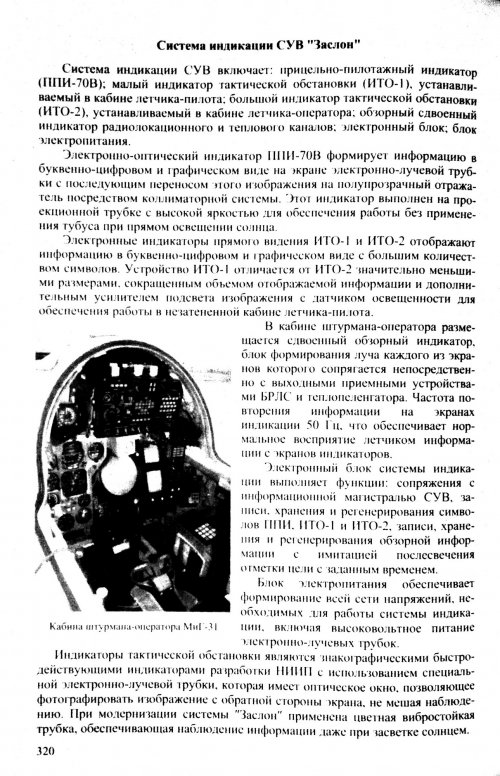
Front cockpit of the MiG-31M.

MIG-31M 057 PLAVI PREDNJA KABINA.jpg

Rear cockpit of the MiG-31M.

MIG-31M ZADNJA KABINA.jpg
 
Why I am so suspicious about all of those 'public' data about N007M . E.g. on 2006 ,NIIP tested the main TWT from the N035 Irbis with average power on the HPRF mode of 1kW . As Y.Beliy once said ,it was actually the first test version of the N035. After that N035 got TWT with 5kW of the average power. With antenna diameter of only 0.9m they achieved result of detecting incoming Su-27 ( frontal RCS=10-15 sqm) from 300km. 1kW-TWT and 0.9m antenna.

Of course, N007M radar and computer technology is dated back to 80's but antenna of 1.4m, the main TWT with who knows how many kW 's of the average power.

As wrote before,during real,flight tests of their radars ,they used RC-aircraft as standard like MiG-21 for the fighters ( RCS of 3sqm ) and Tu-16M or M-16-1/-2/-3 ( RCS of 19-20 sqm) even with ECM equipment.

One detail :

''Государственные испытания МиГ-31М завершились в апреле 1994 г. успешным поражением учебной воздушной цели на удалении 300 км. Поздравления с окончанием госиспытаний МиГ-31М и успешным поражением ракеты-мишени коллективу ОКБ МиГ направил Президент России Борис Николаевич Ельцин.''

''The state tests of the MiG-31M were completed in April 1994 with the successful destruction of a training air target at a distance of 300 km. Russian President Boris Nikolayevich Yeltsin sent congratulations to the MiG Design Bureau team on the completion of the state tests of the MiG-31M and the successful destruction of the target missile.''

http://militaryrussia.ru/blog/topic-651.html
In any case for the comparison ,I've once found info that AN/APG-71 in F-14D was capable to detect incoming bomber-sized target from about 150nm with its 0.9m antenna, TWT average power,max output pulse power?
 
Last edited:
Su-30MK2 ? From which AF?
The manual is written fully in Russian and from Sukhoi bureau

About N001VEP ,hm, I 've found one Russ. source that tell us next:

РЛПК-27ВЭП *

(изд. Н001ВЭП)

Количество одновременно атакуемых целей

* может быть увеличено до 2​

Дальность обнаружения воздушной цели типа истребитель (ЭПР=3 м2, с вероятностью 0,5), км:
- в свободном пространстве:
в переднюю полусферу * в режиме дальнего обнаружения может быть увеличена до 150 км
http://library.voenmeh.ru/jirbis2/files/materials/ifour/book2/book_on_main_page/15.7.htm
The thing is, I have checked the whole manual but there is nothing like that
 
The manual is written fully in Russian and from Sukhoi bureau


The thing is, I have checked the whole manual but there is nothing like that

So it seems that like 'overscan' wrote before ,exported N001VE/VEP don't have that PPS-DO combat mode at all ?


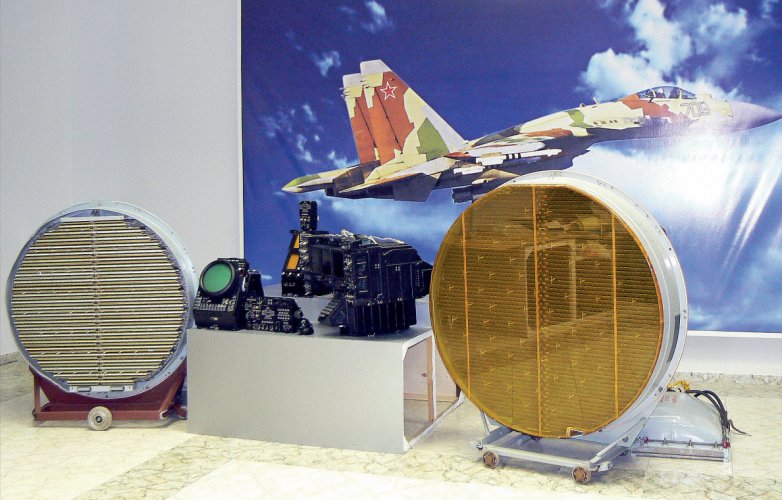
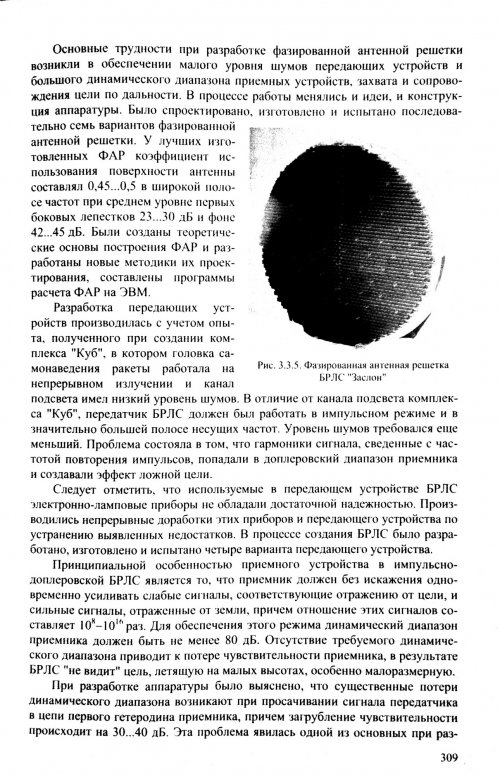
Antennas of the N007 and N007M in the higher res. The reflector of the antenna of the N007M is very similar to the one of the N035 Irbis.
 

Attachments

  • peAETeZ.jpg
    peAETeZ.jpg
    419 KB · Views: 34
Last edited by a moderator:
The Su-35 gets its 20kw power from employing 2 TWT (as say the ASG-18 on the YF-12, oh so many years ago) which also gives wider channel coverage and greater ECCM options but only insofar as 'half of each' they are stepped between lower and upper X band (H/I Band) with an overlap in the middle.

Now some details about that bolded ...In fact,it never happened and it was only a myth.Record-breaking launch distance was exactly 304 km for one of the six launched K-37 on April 1994.RC-channel has max range from the on-board radar of 100km( this is the data for original N007 and we don't know the real data for the N007M).

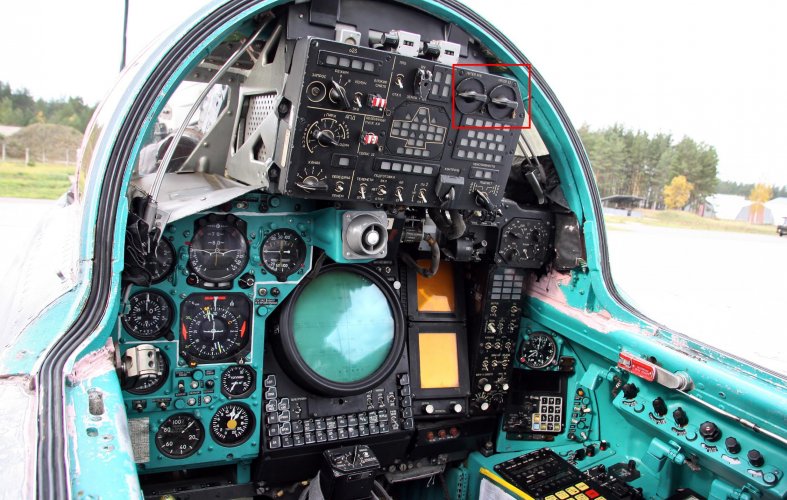
But instead of all of this ,there is one catch.The catch is in the working frequencies for the CWI mode and there is that so called pairing/liter process where attached radar guided AAM is paired with the on-board radar.Now let us see how is it work in MiG-31 with the old R-33.

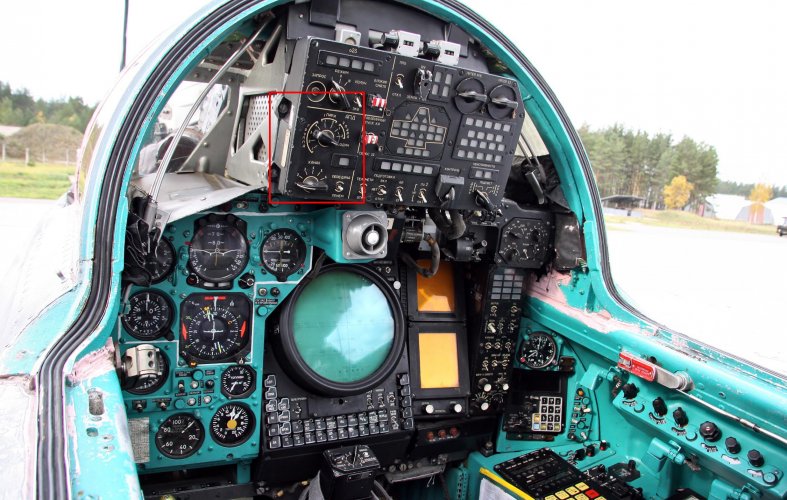
What can we see on this photo ? We can see two switches ( ЛИТЕР РЛС ,ЛИТЕР 33 ) , marked with red square and those switches are for the pairing/''LITER-ing'' between N007 and R-33. I wrote before that LITER are special codes/programes where we have given working frequencies that can be used during engagement of one or max four air targets with those inertial+SARH guided R-33. So called combat mode 'Tandem' enables engaging some air targets in the complete radio silence mode by one or more MiG-31 in the patrol/combat group.So from four MiG-31's in the main combat group there is possibility that only one use illumination of its on-board radar and other can launch its R-33's with no illumination at all.So all job can be done by only one MiG-31,even in the CWI mode using it RC-channel signals first for the mid-course update then CWI signals in the terminal phase of guidance /SARH.

Cockpit_of_Mikoyan-Gurevich_MiG-31_(7) mod2.JPG

When we talk about those combat /patrol groups, besides the main with four MiG-31's ,there is possibility to unite four base groups into one big united combat where we have 16 MiG-31's .

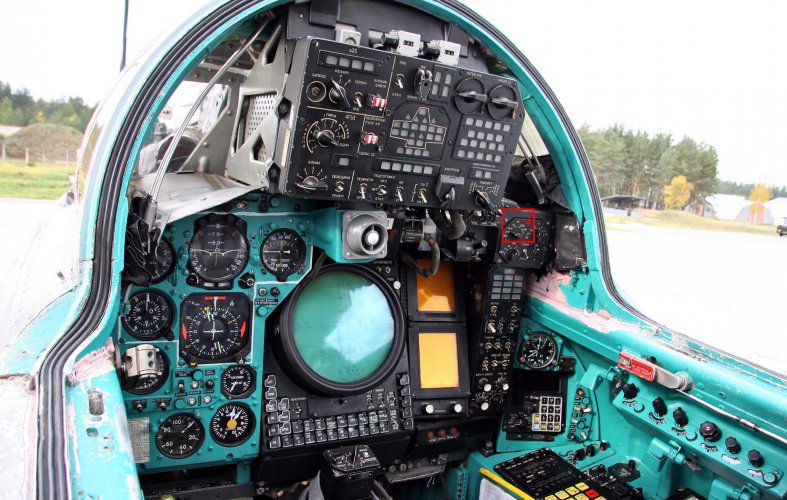
On this photo we can see inside of the red square the control panel of the АПД /APD ( Аппаратура Передачи Данных or Data Transmission Equipment).There is a switch to choose combat group ( four of them) or a combat pair ( first or second),then switch for working channels ( six of them) and one small 'transmit/receive' switch.

Cockpit_of_Mikoyan-Gurevich_MiG-31_(7)mod.JPG

Other interesting detail.With these switch ,RIO give data about chosen launch speed (the real speed) and the Mach number for launching the R-33 is: M 0.85, 1.4, 1.9, 2.35 and 2.8 .

Cockpit_of_Mikoyan-Gurevich_MiG-31_(7) (1)mod.JPG
 
Last edited by a moderator:
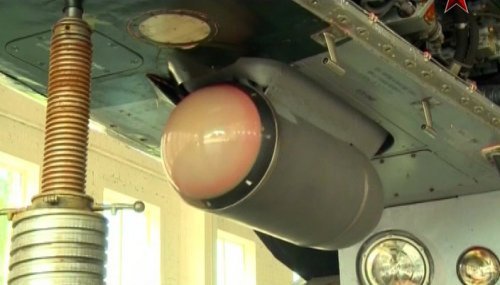
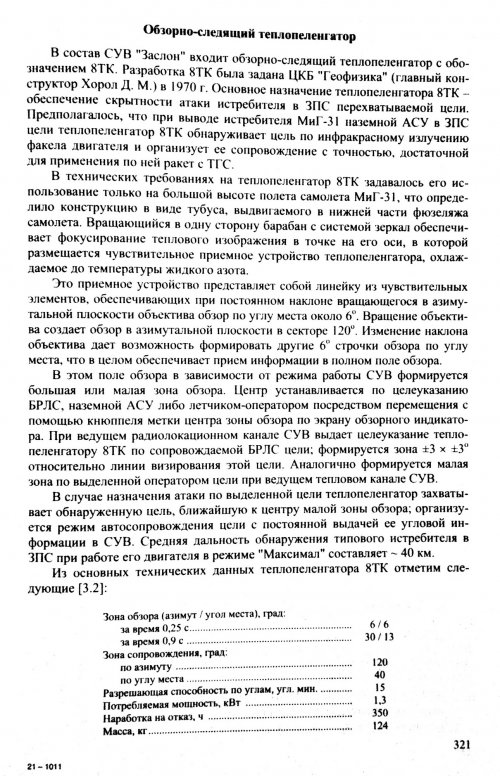
Rare photo where we can see IRST '8TK ' as extracted plus photo on the ground.

Interesting detail :

''Применение теплопеленгатора возможно на скорости до 3000 км/ч.''

"The use of the IRST is possible at speeds of up to 3,000 km/h."

Source ( page 83) : http://www.kr-magazine.ru/upload/iblock/45d/KR_3_4_2018_.pdf


8TK could detect incoming SR-71 from 100-120km away.

''The SR-71 was intercepted using only a thermal channel (infrared, IR). The massive IR emissions of its engines permitted it to be detected at a distance of 100-120km (62-75 miles).''

''The MiG-31’s thermal detection system was called OMB (or optical multifunctional apparatus) and was mounted in the lower nose of the aircraft. The device was lowered and turned on by the WSO. The MiG’s radar was not turned on. On combat alert the radar was set on a combat frequency, and in order not to expose this frequency to a ‘probable enemy’, the radar was not turned on. A passive system (the thermal apparatus) was adequate for a reliable intercept.''

On the other side N007 Zaslon could detect incoming SR-71 from 200km away

''200 км для SR-71, летящего на 25000 м..''

''200 km for an SR-71 flying at 25,000 m.''

Also interesting is this ...

''When the SR-71 alert was first given, the technical personnel ran to the aircraft and initially removed its R-60 (AA-8 Aphid’) short-range missiles because they would be disabled at velocities above Mach 1.75 (the standard MiG-31 ordnance load included four R-60s and four long-range R-33s (AA-9 ‘Amos’).''


Source: https://theaviationgeekclub.com/fox...ept-and-shoot-down-an-sr-71-mach-3-spy-plane/
 

Attachments

  • 8TK 1.jpg
    8TK 1.jpg
    27.1 KB · Views: 18
  • 0323-01-2-4.jpg
    0323-01-2-4.jpg
    96.6 KB · Views: 19
Last edited by a moderator:
...
 

Attachments

  • vvs-12_suv.jpg
    vvs-12_suv.jpg
    710.6 KB · Views: 19
  • vvs-11_suv.jpg
    vvs-11_suv.jpg
    789.7 KB · Views: 21
  • vvs-10_suv.jpg
    vvs-10_suv.jpg
    788.1 KB · Views: 20
  • vvs-09_suv.jpg
    vvs-09_suv.jpg
    778.6 KB · Views: 18
  • vvs-08_suv.jpg
    vvs-08_suv.jpg
    608.8 KB · Views: 22
  • vvs-07_suv.jpg
    vvs-07_suv.jpg
    701.9 KB · Views: 27
  • vvs-06_suv.jpg
    vvs-06_suv.jpg
    615.1 KB · Views: 23
  • vvs-05_BRLS.jpg
    vvs-05_BRLS.jpg
    803.4 KB · Views: 18
  • vvs-04_BRLS.jpg
    vvs-04_BRLS.jpg
    932.6 KB · Views: 17
  • vvs-03_BRLS.jpg
    vvs-03_BRLS.jpg
    784.8 KB · Views: 19
  • vvs-02_BRLS.jpg
    vvs-02_BRLS.jpg
    866.8 KB · Views: 15
  • vvs-01_BRLS.jpg
    vvs-01_BRLS.jpg
    585.8 KB · Views: 18
Last edited by a moderator:
...
 

Attachments

  • zaslon-03.jpg
    zaslon-03.jpg
    1.1 MB · Views: 29
  • zaslon-02.jpg
    zaslon-02.jpg
    1.2 MB · Views: 29
  • zaslon-01.jpg
    zaslon-01.jpg
    1.2 MB · Views: 24
Last edited by a moderator:
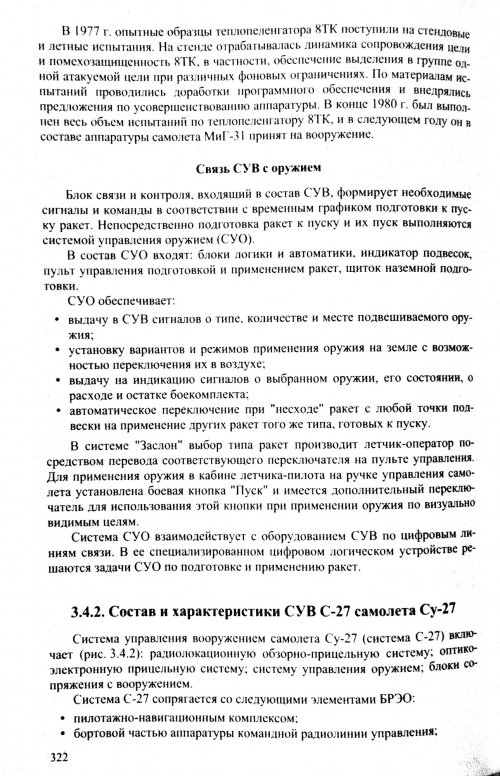
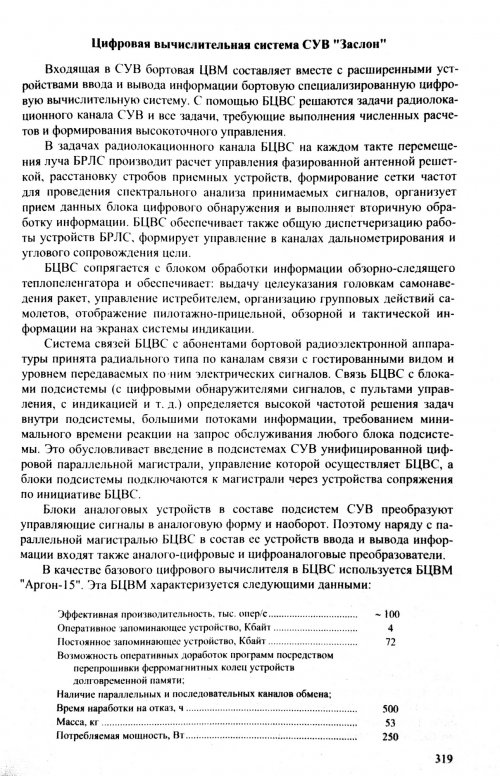
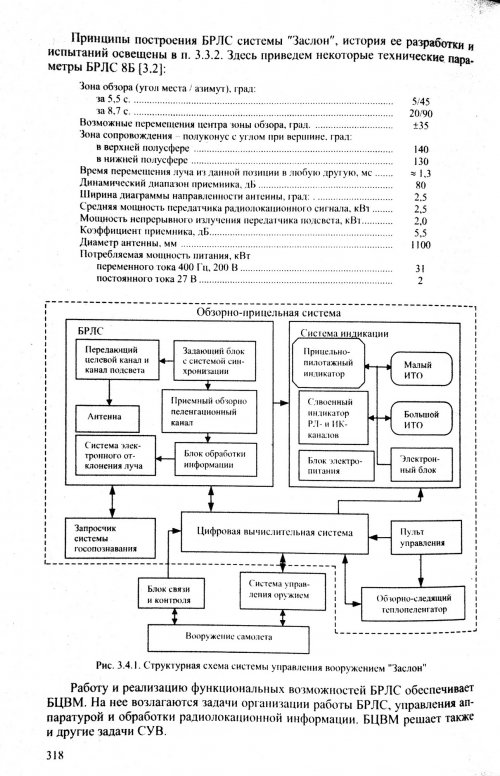
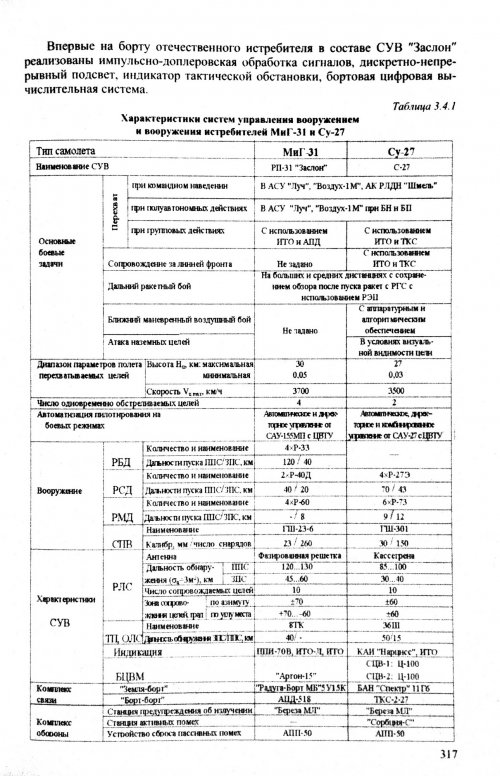
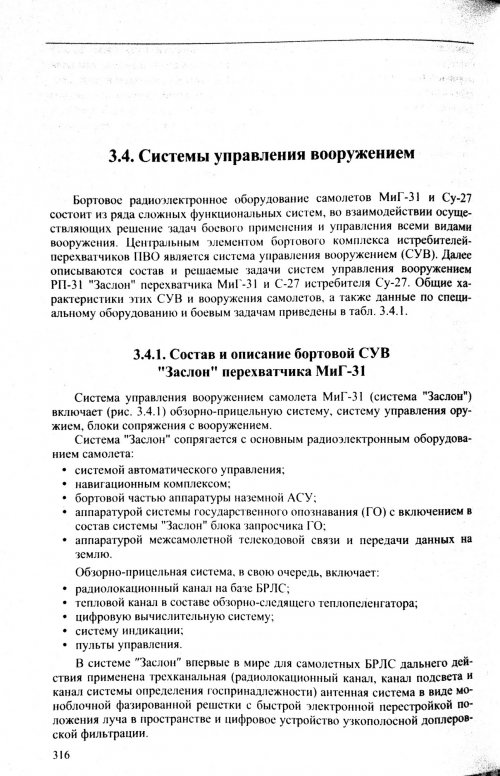
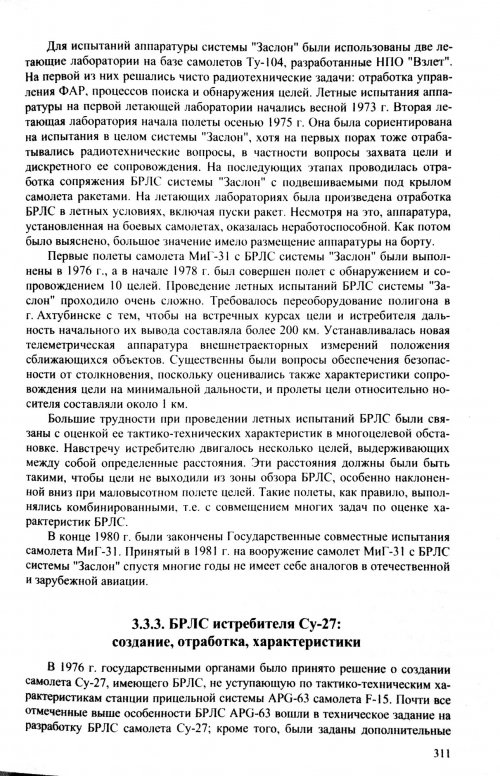
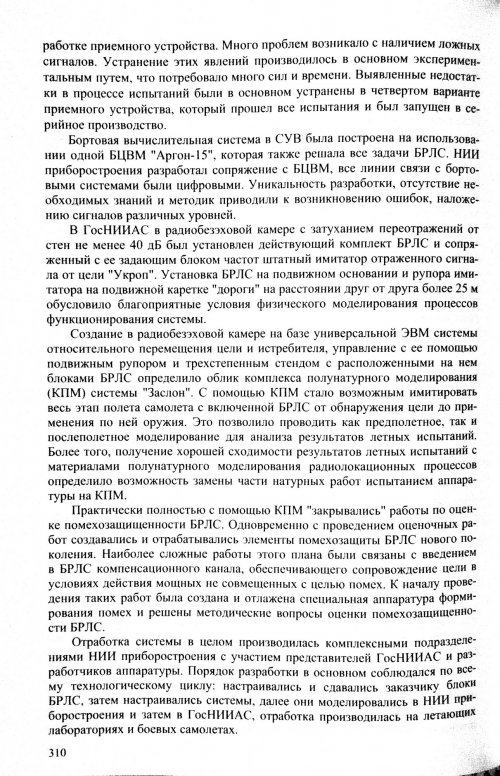
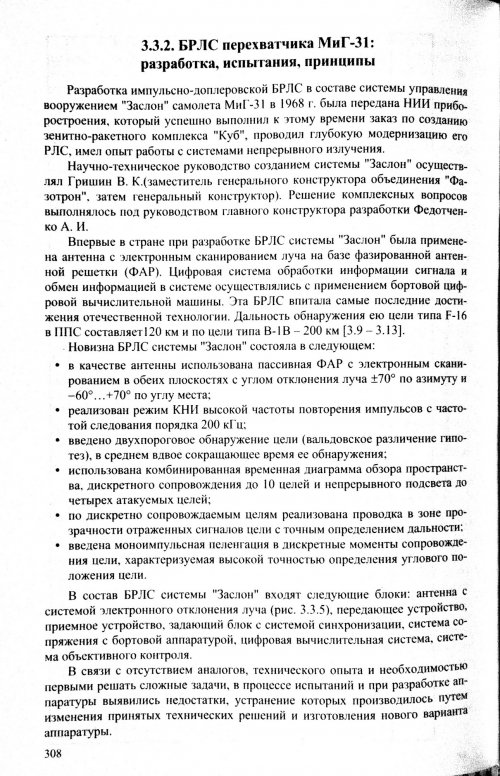
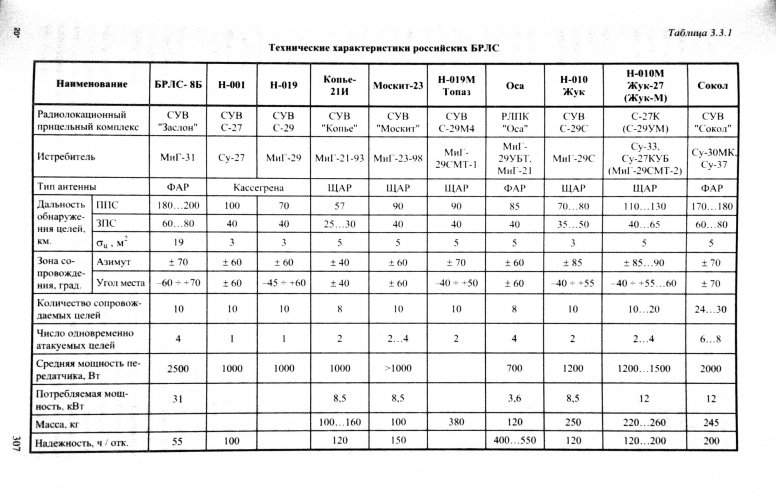
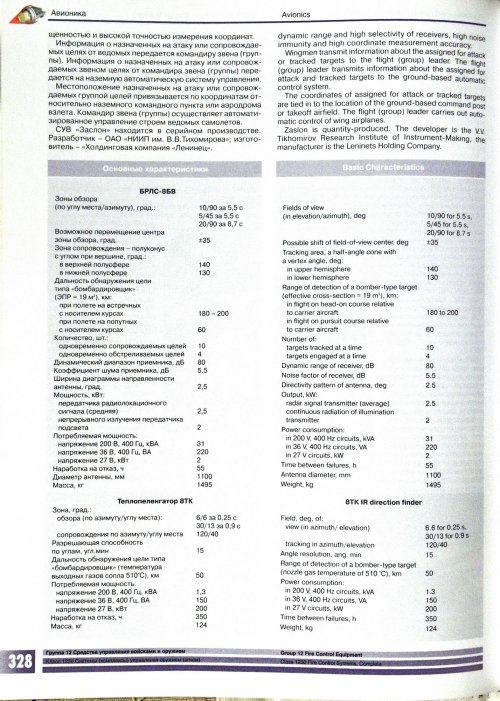
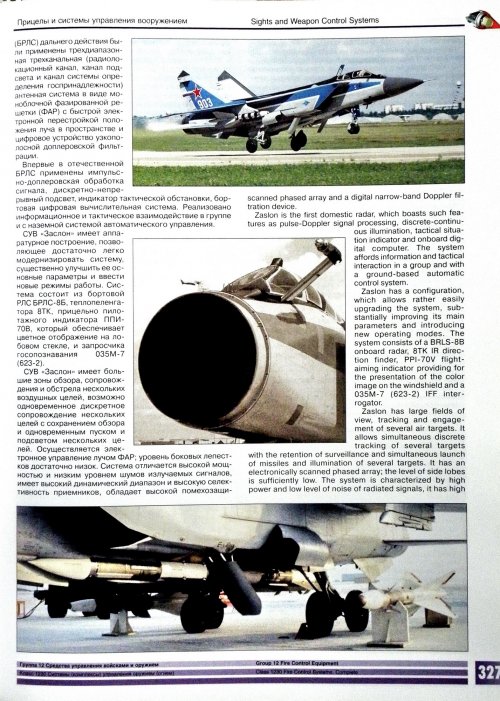
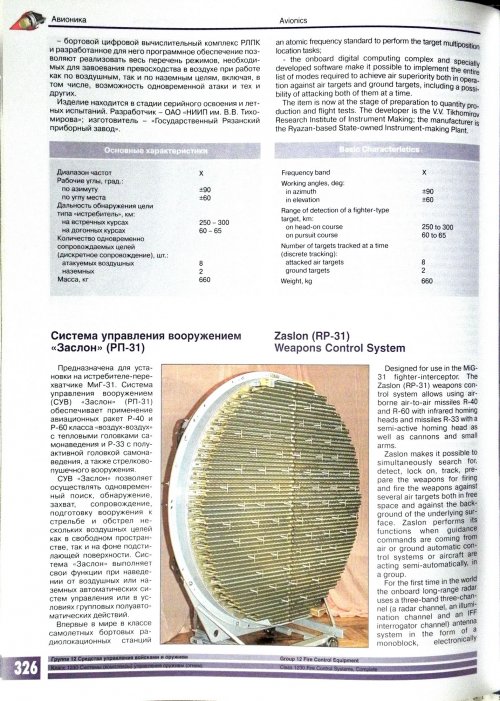
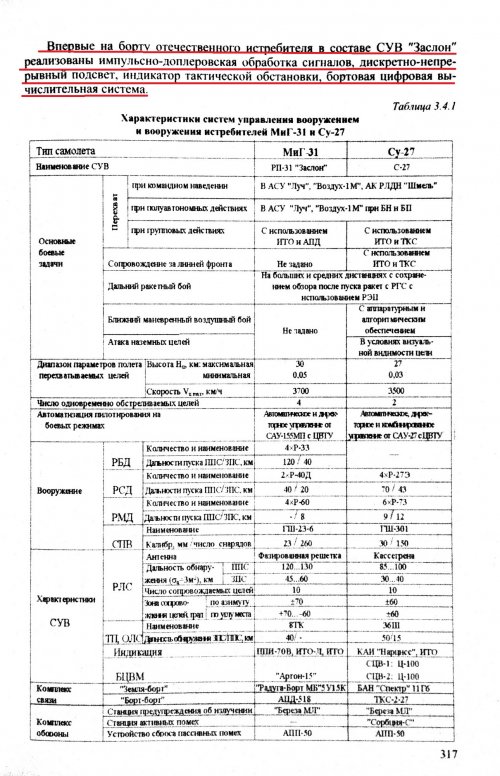
From all these pages this is maybe most interesting :

Can we say that N007 Zaslon was the first Soviet pulse-Doppler radar , first MPRF/HPRF radar and the first one with that DNP mode, also first with the digital comp/ BTsVM 'Argon-15A' ?

All Soviet fighter radars from Sapfir-21/22 in all MiG-21 ,Sapfir-23 ( N003,006,008 Ametist) in all MiG-23, RP-25 Smerch and N005 Sapfir-25 in all MiG-25P/PD/PDE,PDS ,then older Almaz in the Su-9,Oryol in the Su-11 and Typhoon in the Su-15T/TM ( also radars in the Yak-28P and Tu-28P ) were LPRF and pulse only radars ,is that right ? Their antennas were mostly inverse and later twisted Cassegrain ones with those 'xenon lamps'.

So after N007 with first in the world PAA/PESA on one fighter,they had N001 Myech in the Su-27 and N019 Rubin in the MiG-29 as MPRF/HPRF pulse-Doppler radars ,also with DNP mode ( both with twisted Cassegrain).

Also we can say that basic N007 Zaslon has next max detection ranges in the forward hemisphere:

for the small target ( fighter with 3 sqm of frontal RCS , RC M-21) ,it is 90km.
for the small target ( fightert with 5 sqm of frontal RCS, F-16), it is 120km.
for the medium target ( aircraft with 15-20 sqm of frontal RCS like SR-71,B-1B and RC M-16 ), it is 200km.
for the big target ( aircraft with 50-100 sqm of frontal RCS like strategic bombers/missile carriers,airlifters,aerial tankers,AWACS etc.) it is ( can be) ,300-600km.
 

Attachments

  • vvs-07_suv  mod.jpg
    vvs-07_suv mod.jpg
    752.7 KB · Views: 26
Last edited by a moderator:
From another thread:

@Ronny

''nice, so maybe recent Mig-31BM got some upgraded radar over the old one''


I don't think they modernised/upgraded actual,operational N007AM integrated into MiG-31BM ( Izdeliye 28,58 and 78 if I remember well) . What is described in the first table by those high-ranking officers is in fact detection range against 3sqm aircraft and it is 320 km ,so not 240 km as it was described by some open sources so far.


The reference RCS for 320 km detection range of Zaslon-AM should be 16 m2

Keep in mind friend that old N007 Zaslon detected 16 sqm target ( usually it was RC- M-16/Tu-16 ) at max 210 km during the Feb 1978 test.

''The maximum detectable range of targets (had EPR on the order of 16 m2) was 210 kilometers.''

https://www.secretprojects.co.uk/threads/mig-31-avionics.153/#post-10425

From ''paralay'' 's comment :

''The energy capabilities of the Zaslon-AM radar have been increased by about 2 times in comparison with the usual Zaslon 8B: the target detection range with an RCS of 1m2 reached 200-230 km.''

What we also know from the NIIP's Yu.Bely interview ,N007AM has 30% greater detection ranges in comparison with the N007A.

Zaslon-AM is basically Zaslon A with new processor

Yes ,the new processor, old antenna ( B1.01M) but what about the transmitter/receiver unit.Yuriy also told several times that N007AM works in different radar band,hm.
 
That's what I mean. Radar power of MiG31 = 2.5 kW, radar power of MiG-23 = 70 kW? :-[

If I may (after 20 years,yes ) .... Difference is in fact in the PRF. Old radars like those in the MiG-21,23 and 25 were Low PRF only radars and max output pulse power was measured in tens or hundreds of kW's ( e.g. 600kW in the case of RP-25 Smerch-A). PRF was only several kHz ? On the other side ,we have radars from the 1970's ( in the MiG-29,31 and Su-27 ) with the integrated Medium and High PRF working mode of the TWT where max output pulse power was measured from 5kW to 10kW ( with average power in the HPRF mode 1kW-2.5kW) but PRF was very high from 150kHz to 200kHz.

'2.5kW' of the N007 was in fact average power in the HPRF mode. '70kW' of the N003 I think was max output pulse power. I hope 'overscan' will agree this?


@Ronny

Friend I hope it is time to consider some real facts and data which we can get from some interviews,videos etc... Of course data/info coming mostly from the military establishment.

Now we have this info from the author ( only author nothing else), Bulgarian Alexander Mladenov from his article called ''Sharpening the Foxhound's claws'' :

''The lock-on range of the upgraded Zaslon-AM against low-flying cruise missiles, such as the BGM-109 Tomahawk, is claimed to have been extended to about 22nm (40km), representing a 30% improvement in detection/tracking performance.''

Yes on the paper but in the reality we know that N007AM Zaslon-AM can lock-on incoming low flying CM ( Tomahawk or Kh-55 nevermind) from almost 100km. So lock-on range is about 100 km for the 0.3-0.5 sqm low flying target. What about the max detection/tracking range than?

This is citation from the Dr. Carlo Kopp 2008 article ( about basic N007 ) :

''Rated at 2.5 kiloWatts average power, with a 25% duty cycle peak power rating of 10 kiloWatts, this immense radar is claimed to be capable of detecting a 0.3 m2 RCS cruise missile at 35 nautical miles range.''

https://ausairpower.net/APA-Flanker-Radars.html

So if that was real ,N007 in the MiG-31/DZ was capable to detect low flying CM at about 70km. N007A in the MiG-31B/BS was more capable ( powerful ???) and that range was certainly greater. We must keep in mind that Russian military sources gave forward RCS value for the former USAF stealth strategic CM type AGM-129A ACM only 0.01 sqm.

What is confusing after so many decades is e.g. this, for the basic N007 we have next data: 120-130km detection range against 3sqm ( source from NIIP gave value about 100km) ,almost 200 km for the 16(19) sqm aircraft. In the Feb 1978 test max detection distance against 16 sqm target was in fact 210km.

Zaslon-A range:

From your Feb 2023 comment but it wasn't data for N007A ,rather for basic N007. What we have next is that 'mixed salad' of many data for the N007M and N007A ,also for the N007AM where we have values like detection/tracking ranges but w/o any info for the given target RCS.Info like ,this or this version has 1.5 x or 2/2.5 x better performances (greater ranges) in most situations means nothing.

That 'mixed salad' of data can only confused all of us and the best solution is to find real data coming from some videos,documentaries,interviews etc.

P.S.

Fifty years ago :

''B 1976 году первый МиГ-31, который был оснащен ФАР Б1.01 и СУВ «Заслон», был направлен в испытательный центр ВВС в городе Ахтубинске для проведения комплекса летных испытаний.''

''In 1976, the first MiG-31, equipped with the B1.01 phased-array antenna and the Zaslon fire-control system, was sent to the Air Force flight test center in Akhtubinsk to undergo a series of flight tests.''
 
Typically, Russian experts assign an RCS of 0.2 m² to cruise missiles
That's a pointless number. LACMs are different, and they have different aspects.
Absolutely nothing prevents stealthy LACM from being as or more stealthy than a full size aircraft.
 
@Ronny

Friend I hope it is time to consider some real facts and data which we can get from some interviews,videos etc... Of course data/info coming mostly from the military establishment.

Now we have this info from the author ( only author nothing else), Bulgarian Alexander Mladenov from his article called ''Sharpening the Foxhound's claws'' :

''The lock-on range of the upgraded Zaslon-AM against low-flying cruise missiles, such as the BGM-109 Tomahawk, is claimed to have been extended to about 22nm (40km), representing a 30% improvement in detection/tracking performance.''

Yes on the paper but in the reality we know that N007AM Zaslon-AM can lock-on incoming low flying CM ( Tomahawk or Kh-55 nevermind) from almost 100km. So lock-on range is about 100 km for the 0.3-0.5 sqm low flying target. What about the max detection/tracking range than?
We have been over this before
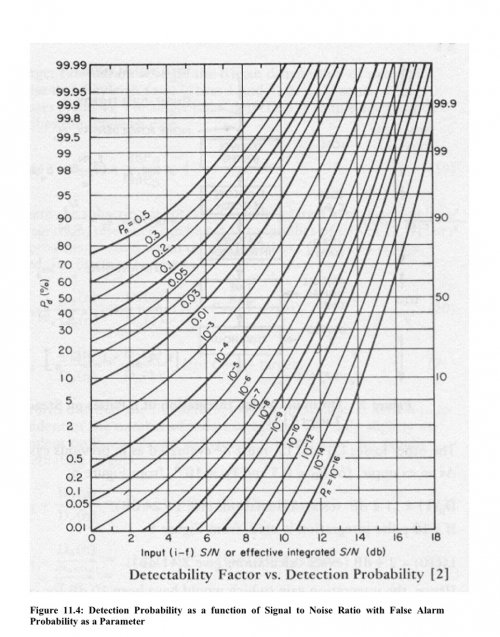
Radar detection range in the real world doesn't work like in video games, where a target with a given RCS is always detected at a fixed distance. In reality, detection is probabilistic and depends heavily on the signal-to-noise ratio (SNR).
For example, you might achieve a 50% probability of detection with a 50% false alarm rate at an SNR of 0 dB. However, if you require a 99.9% detection probability and a false alarm rate as low as 10⁻¹⁶, the necessary SNR increases to around 18 dB. This difference in SNR translates to a significant change in detection range.
IMG_0143.jpeg
In short, is it possible for a radar to detect a target at a greater distance than the manufacturer's stated range under certain real-world conditions? Absolutely. However, the advertised detection range typically reflects the distance at which the signal-to-noise ratio (SNR) is sufficient to ensure reliable chance of detection with a low probability of false alarm.


We must keep in mind that Russian military sources gave forward RCS value for the former USAF stealth strategic CM type AGM-129A ACM only 0.01 sqm.
But have Zaslon ever been tested against AGM-129 though
 
That's a pointless number. LACMs are different, and they have different aspects.
Absolutely nothing prevents stealthy LACM from being as or more stealthy than a full size aircraft.
RCS 0.2 m² is the level of sixth‑generation aircraft. According to Russian radar specialists, the RCS of fifth‑generation aircraft is twice as large.
 
RCS 0.2 m² is the level of sixth‑generation aircraft. According to Russian radar specialists, the RCS of fifth‑generation aircraft is twice as large.
Twice the su-57 patent?
 
Any fifth‑generation aircraft, their level is 0.5–0.3 m². There is a wealth of documentation on Russian air defense systems / radars.
 
Last edited:
We have been over this before
Radar detection range in the real world doesn't work like in video games, where a target with a given RCS is always detected at a fixed distance. In reality, detection is probabilistic and depends heavily on the signal-to-noise ratio (SNR).
For example, you might achieve a 50% probability of detection with a 50% false alarm rate at an SNR of 0 dB. However, if you require a 99.9% detection probability and a false alarm rate as low as 10⁻¹⁶, the necessary SNR increases to around 18 dB. This difference in SNR translates to a significant change in detection range.

Yes we had been over that but that wasn't the catch. Story began with that ''320km detection range'' against 3 sqm aircraft for the N007AM. Very interesting and I gave the example where we have lock-on range against 0.3 sqm low- flying target of almost 100km ( exactly 90km). So the possible detection/tracking range was (I assume) in the range 100-150km.What we have here is for the 0.3 sqm low-flying aircraft detection range almost 150km ,hm , why would be impossible than to detect high-flying ,fighter-sized aircraft (e.g. clean MiG-21 / 3 sqm flying 1000m and above) from 320 km?

In short, is it possible for a radar to detect a target at a greater distance than the manufacturer's stated range under certain real-world conditions? Absolutely.

Yes and we have that example from Feb 1978 'real life' N007 flying test when Zaslon detected 16 sqm target from 210km.

But have Zaslon ever been tested against AGM-129 though


No,I doubt it but that value came from the 2nd Central Scientific and Research Institute of the Army of Air&Space Defence in the vicinity of the city of Tver ( so called 'test centre for the RCS of aircraft and spacecraft' ) .

Typically, Russian experts assign an RCS of 0.2 m² to cruise missiles

OK but there must be some difference between the metallic circular Tomahawk/Kh-55 and the newer ( older) composit,plastic rhomboid AGM-129A ( with the forward swept wing e.g.), Kh-101/102, Europian tactical stealth low flying subsonic CM's like : Storm Shadow, KEPT-350 Taurus or SCALP ...

If I remember well, Russian sources gave the forward RCS value for the new S-71M/K of only 0.07 sqm.
 
Yes we had been over that but that wasn't the catch. Story began with that ''320km detection range'' against 3 sqm aircraft for the N007AM.
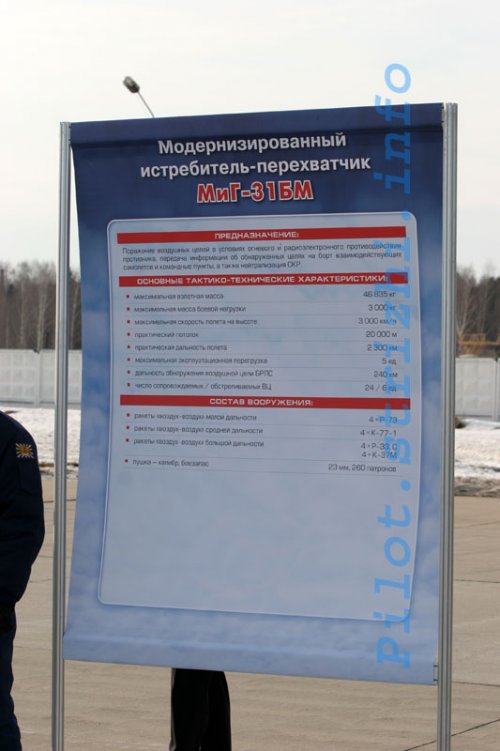
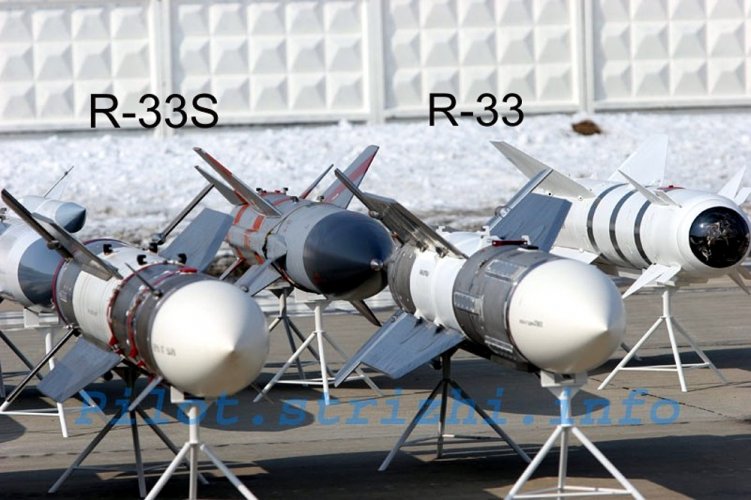
To be fair, this is somewhat questionable since there is only 1 version of Mig-31BM and we saw the manufacturer information card from exhibition. This is also the same exhibition where they show R-33S for the first time
Mig-31BM detection range.jpg
That said, Тактика применения авиационных управляемых ракет "воздух воздух" большой дальности в ходе СВО appear to be credible sources, and they suggest a range of 320 km. So, I'm still somewhat on the fence about which figure to believe. Or maybe they are both correct, just refer to different RCS value. According to radar equation, if your radar can detect target with RCS of 3 m2 from 320 km, it can detect target with RCS of 1 m2 from 243 km

Very interesting and I gave the example where we have lock-on range against 0.3 sqm low- flying target of almost 100km ( exactly 90km). So the possible detection/tracking range was (I assume) in the range 100-150km.What we have here is for the 0.3 sqm low-flying aircraft detection range almost 150km ,hm , why would be impossible than to detect high-flying ,fighter-sized aircraft (e.g. clean MiG-21 / 3 sqm flying 1000m and above) from 320 km?
If your radar track target with RCS of 0.3 m2 from 90 km, it can do so against target with RCS of 3 m2 from 160 km

Yes and we have that example from Feb 1978 'real life' N007 flying test when Zaslon detected 16 sqm target from 210km.
That only 5% longer than their manufactured claim of 200 km against bomber size target? no?
Also, I'm a bit skeptical of the claim that Tu-16 RCS is only 16 m2, I mean, that more like F-15 size, Tu-16 is significantly larger
 
Last edited:
To be fair, this is somewhat questionable since there is only 1 version of Mig-31BM and we saw the manufacturer information card from exhibition. This is also the same exhibition where they show R-33S for the first time

In fact ,BM or Izdeliye 01BM has three subversions: first was Izd. 01BM made from the serial MiG-31B ( Izd 01B). That subversion has IFR probe. Than there is so called MiG-31BSM ( this designation is not official in the VKS/MA-VMF) made from the modernised Izd 01BS or MiG-31BS. This subversion hasn't IFR probe. Third subversion of the BM is made from the serial MiG-31 basic version from the first half of 1980's. Also has not IFR probe. Already mentioned that those three subversions have designations : Izd 28, 58 and 78. Of course all three of them have N007AM. What I could understand from some sources, version DZ or Izd 01DZ wasn't use for the modernisation to the BM level.That version was used for the MiG-31K.

If that is right for the R-33S ,than photo was made after 2005 ( same source ).

R-33S  R-33 u prvom redu.jpg

On the table for the BM it is written that 240km is detection range of the BM' radar but there is no sign of target's RCS in fact.So we can only assume for which RCS value is that number.


If your radar track target with RCS of 0.3 m2 from 90 km, it can do so against target with RCS of 3 m2 from 160 km

90 km is for the lock -on in fact but it's OK.

That only 5% longer than their manufactured claim of 200 km against bomber size target? no?
Also, I'm a bit skeptical of the claim that Tu-16 RCS is only 16 m2, I mean, that more like F-15 size, Tu-16 is significantly larger

Yes of course that's right. Some sources mentioned that M-16 or RC -model of the Tu-16 has in fact forward RCS of 19m2.
 
type 28 — a modernized type 12
type 78 — It looks no different from type 58
type 58 — modernized type 01BS
type 85 — MiG‑31BSM, a modernized type 01BS and type 01DZ
type … — updated type 28 and type 78
 
Last edited:
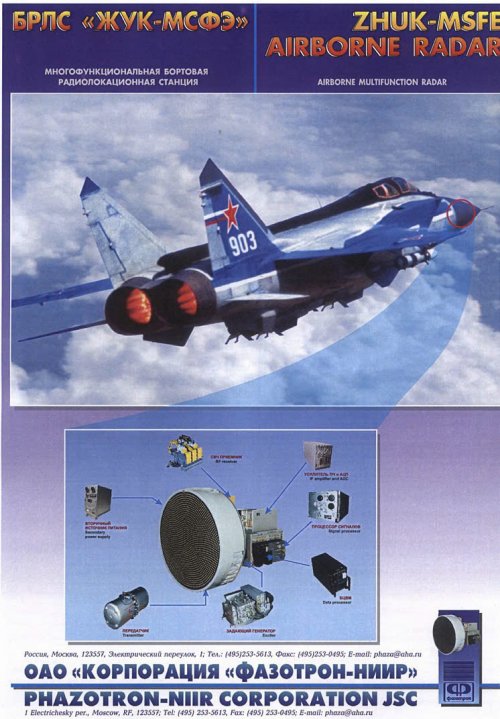
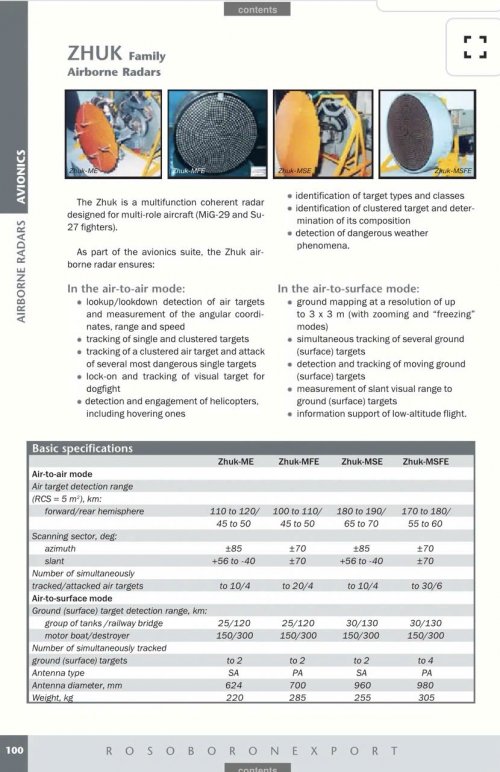
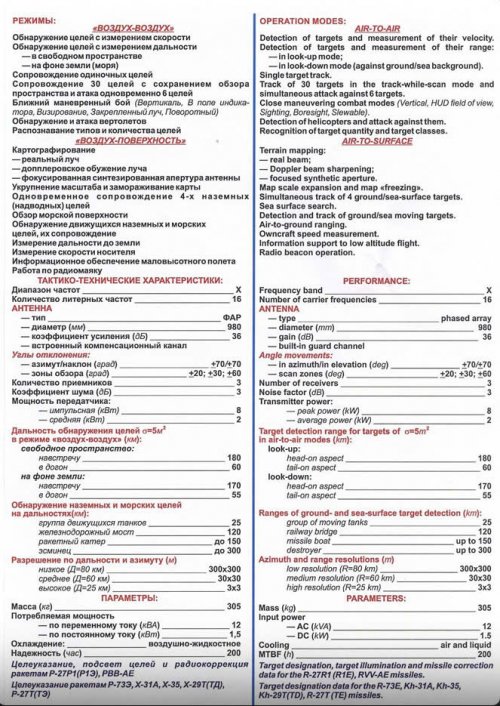
There was some point where Zhuk MSFE were offered for Mig-31, unfortunately, none were bought I think

That was for the export version only. MiG-31E, I guess. As we can see ,Zhuk-MSFE was inferior in some characteristics even to the old basic N007.

Did Mig-31 ever get to carry towed decoys?

Very interesting detail btw , thanks.
 
@Ronny

From known thread ( R-33,33S,37/M .... ) :

''I have mentioned this in another thread, but it seem like the 320 km value for Zaslon-AM is again, a reference back to "Mikoyan MiG-31: Famous Russian Aircraft" book written by Yefim Gordon and Dmitriy Komissarov.''

Left pic there is for the N007 Zaslon ( not N007A Zaslon-A), right pic is for the modernised Zaslon ( not N007AM Zaslon-AM) intended for the MiG-31BM from the late 1990's,not the real MiG-31BM.

As we can see ,that version could simultaneously track max 15 aircraft in the SNP ,not 24 as the real N007AM.
 
Last edited:

Similar threads

Back
Top Bottom