Depend, if you are directly ahead at the center of the missile then the missile body will shield the engine from radar view when your aircraft at higher altitude. But if you slightly off to either side though then the missile fuselage won’t block the view


How can I?. I literally have the manual myself. You will need something very strong for me to go against manual data

Of course,you are right .It will depend on the target angle aspect,logically. Let us assume head on head situation or angle aspect 0/4 .

Sorry but which Flight Manual ?

Flight Manual for the Su-27SK with N001E ( export) tell us this :

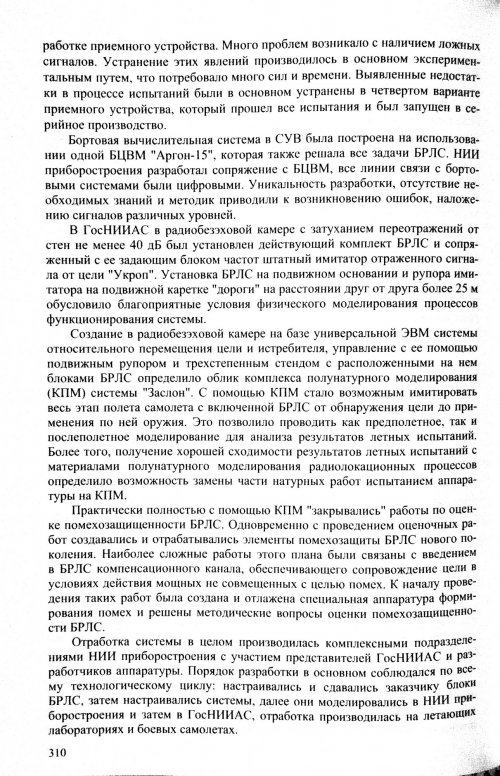
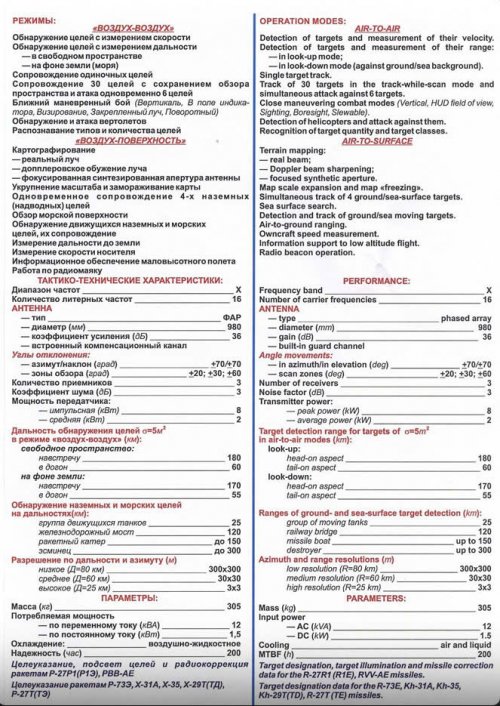
Дальность действия РЛПК в свободном пространстве и на фоне земли практически одинакова и зависит от высоты полета самолета, полусферы атаки и составляет по истребителям (σ = 3 м2):

а) при полете самолета на больших высотах:
в ЗПС:
при атаке сверху вниз: Добн = 30 – 40 км;
Дзахв = 30 – 35 км;
при атаке снизу вверх: Добн = 50 – 55 км;
Дзахв = 45 – 50 км;
в ППС: Добн = 80 – 100 км, Дзахв = 65 – 80 км;
б) при полете самолета на средних высотах (более 1000 м):
в ППС: Добн = 80 – 100 км, Дзахв = 65 – 80 км;
в ЗПС: Добн = 25 – 35 км, Дзахв = 25 – 30 км;
в) при полете самолета на малых в
ысотах (200 м):в ЗПС: Добн = 20 – 25 км, Дзахв = 18 – 20 км;
в ППС: Добн = 35 – 40 км, Дзахв = 28 – 32 км;​

Su-27SM/SM3 have N001V with additional PPS-DO combat mode where in the narrow FoV incoming MiG-21 can be detected from 150km.With that version ,it is also possible to engage two differ air targets in very short period of time. Exported Su-30MK2/MKK have N001VE (VEP).
 
Of course,you are right .It will depend on the target angle aspect,logically. Let us assume head on head situation or angle aspect 0/4 .
My point is that dead center would be different from even a slightly off side
Sorry but which Flight Manual ?
Su-30MK2

Flight Manual for the Su-27SK with N001E ( export) tell us this :

Дальность действия РЛПК в свободном пространстве и на фоне земли практически одинакова и зависит от высоты полета самолета, полусферы атаки и составляет по истребителям (σ = 3 м2):

а) при полете самолета на больших высотах:
в ЗПС:
при атаке сверху вниз: Добн = 30 – 40 км;
Дзахв = 30 – 35 км;
при атаке снизу вверх: Добн = 50 – 55 км;
Дзахв = 45 – 50 км;
в ППС: Добн = 80 – 100 км, Дзахв = 65 – 80 км;
б) при полете самолета на средних высотах (более 1000 м):
в ППС: Добн = 80 – 100 км, Дзахв = 65 – 80 км;
в ЗПС: Добн = 25 – 35 км, Дзахв = 25 – 30 км;
в) при полете самолета на малых в
ысотах (200 м):в ЗПС: Добн = 20 – 25 км, Дзахв = 18 – 20 км;
в ППС: Добн = 35 – 40 км, Дзахв = 28 – 32 км;​
To be honest, number is pretty much identical to Su-30MK2, the only different is how they arrange the section
Su-27SM/SM3 have N001V with additional PPS-DO combat mode where in the narrow FoV incoming MiG-21 can be detected from 150km.
Where is this number from though?, I'm skeptical of this value because even N001VEP does not have that
 
Where is this number from though?, I'm skeptical of this value because even N001VEP does not have that
Export N001VEP might lack additional mode PPS-DO (narrow sector scan) present on Russian radars.
 
My point is that dead center would be different from even a slightly off side

Su-30MK2


To be honest, number is pretty much identical to Su-30MK2, the only different is how they arrange the section

Where is this number from though?, I'm skeptical of this value because even N001VEP does not have that

Su-30MK2 ? From which AF?

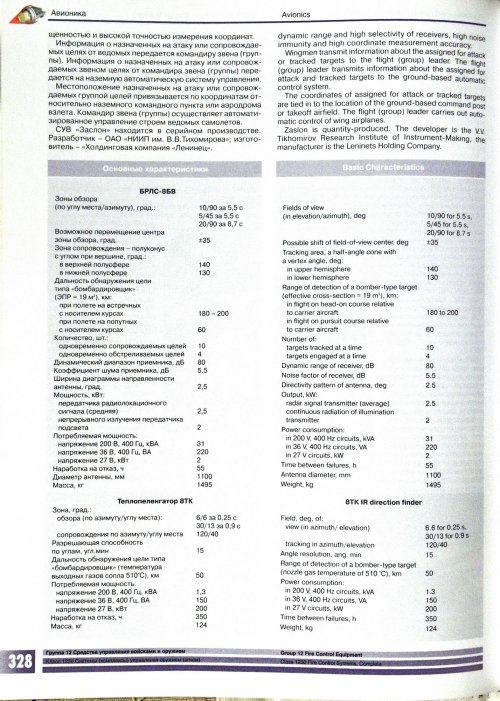
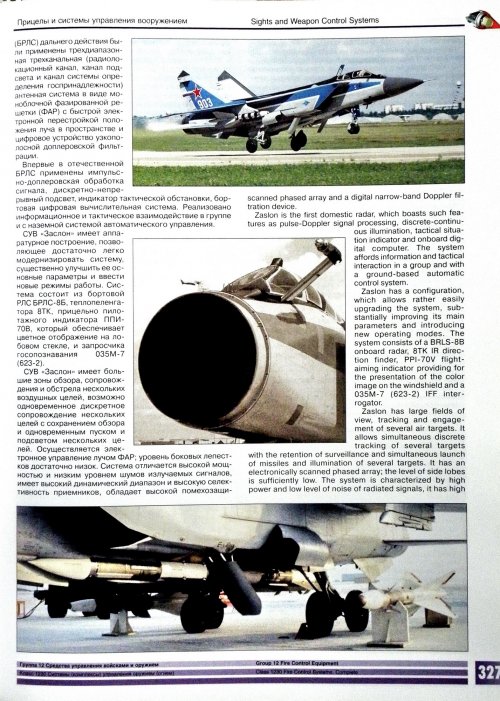
About N001VEP ,hm, I 've found one Russ. source that tell us next:

РЛПК-27ВЭП *

(изд. Н001ВЭП)

Количество одновременно атакуемых целей

* может быть увеличено до 2​

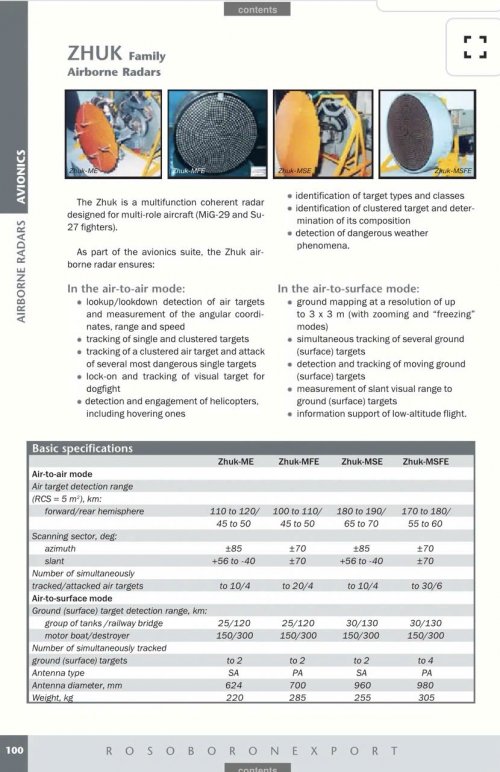
Дальность обнаружения воздушной цели типа истребитель (ЭПР=3 м2, с вероятностью 0,5), км:

- в свободном пространстве:

в переднюю полусферу * в режиме дальнего обнаружения может быть увеличена до 150 км


Reference RCS for 320km range for Zaslon-M was 19 sqm according to NIIP. But the radar developers are not to be trusted over random people on the internet, it seems.


Same source for the N007M tell us next:

''Наибольшая дальность обнаружения для цели с ЭПР 20 м² — 400 км, для ЭПР 5 м² — 282 км.''


Even 'NIIP' is not valuable source like this one.As I wrote ,only Military Manuals,books, Bulletins ,nothing else...

No sign of military production btw....


P.S.

I've tried to find valuable and real military data/info about N007M Zaslon-M for over 25 years.Besides the info about 1.4m wide reflector of the antenna (PESA) ,there is almost nothing else worth of attention.What about average power of the main TWT,max output pulse power on the HPRF/MPRF mode ,PRF in both modes ,some data about receiver unit etc.Nothing at all,hm....

It would be great to find what kind of targets did MiG-31M '057 blue' engaged on April 1994 where one of them was engaged from 304km with K-37.

Front cockpit of the MiG-31M.

MIG-31M 057 PLAVI PREDNJA KABINA.jpg

Rear cockpit of the MiG-31M.

MIG-31M ZADNJA KABINA.jpg
 
Why I am so suspicious about all of those 'public' data about N007M . E.g. on 2006 ,NIIP tested the main TWT from the N035 Irbis with average power on the HPRF mode of 1kW . As Y.Beliy once said ,it was actually the first test version of the N035. After that N035 got TWT with 5kW of the average power. With antenna diameter of only 0.9m they achieved result of detecting incoming Su-27 ( frontal RCS=10-15 sqm) from 300km. 1kW-TWT and 0.9m antenna.

Of course, N007M radar and computer technology is dated back to 80's but antenna of 1.4m, the main TWT with who knows how many kW 's of the average power.

As wrote before,during real,flight tests of their radars ,they used RC-aircraft as standard like MiG-21 for the fighters ( RCS of 3sqm ) and Tu-16M or M-16-1/-2/-3 ( RCS of 19-20 sqm) even with ECM equipment.

One detail :

''Государственные испытания МиГ-31М завершились в апреле 1994 г. успешным поражением учебной воздушной цели на удалении 300 км. Поздравления с окончанием госиспытаний МиГ-31М и успешным поражением ракеты-мишени коллективу ОКБ МиГ направил Президент России Борис Николаевич Ельцин.''

''The state tests of the MiG-31M were completed in April 1994 with the successful destruction of a training air target at a distance of 300 km. Russian President Boris Nikolayevich Yeltsin sent congratulations to the MiG Design Bureau team on the completion of the state tests of the MiG-31M and the successful destruction of the target missile.''


In any case for the comparison ,I've once found info that AN/APG-71 in F-14D was capable to detect incoming bomber-sized target from about 150nm with its 0.9m antenna, TWT average power,max output pulse power?
 
Last edited:
Su-30MK2 ? From which AF?
The manual is written fully in Russian and from Sukhoi bureau

About N001VEP ,hm, I 've found one Russ. source that tell us next:

РЛПК-27ВЭП *

(изд. Н001ВЭП)

Количество одновременно атакуемых целей

* может быть увеличено до 2​

Дальность обнаружения воздушной цели типа истребитель (ЭПР=3 м2, с вероятностью 0,5), км:
- в свободном пространстве:
в переднюю полусферу * в режиме дальнего обнаружения может быть увеличена до 150 км
The thing is, I have checked the whole manual but there is nothing like that
 
The manual is written fully in Russian and from Sukhoi bureau


The thing is, I have checked the whole manual but there is nothing like that

So it seems that like 'overscan' wrote before ,exported N001VE/VEP don't have that PPS-DO combat mode at all ?


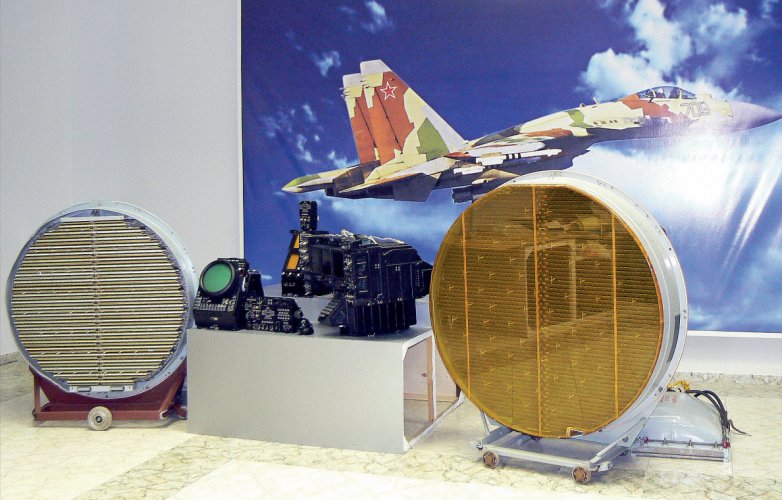
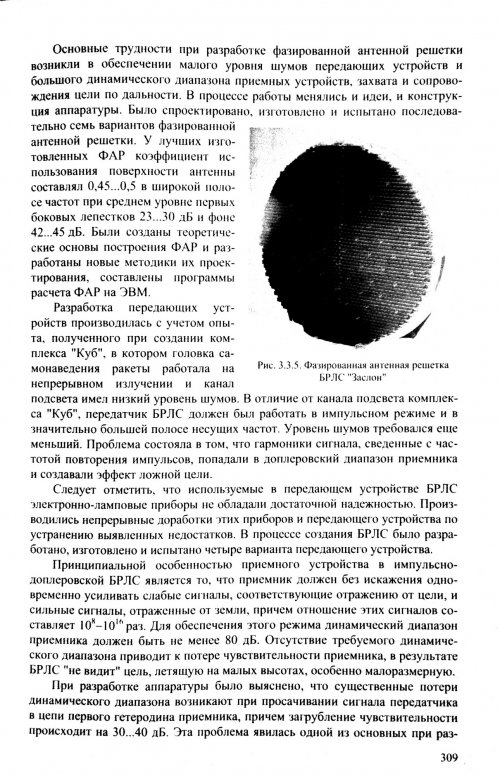
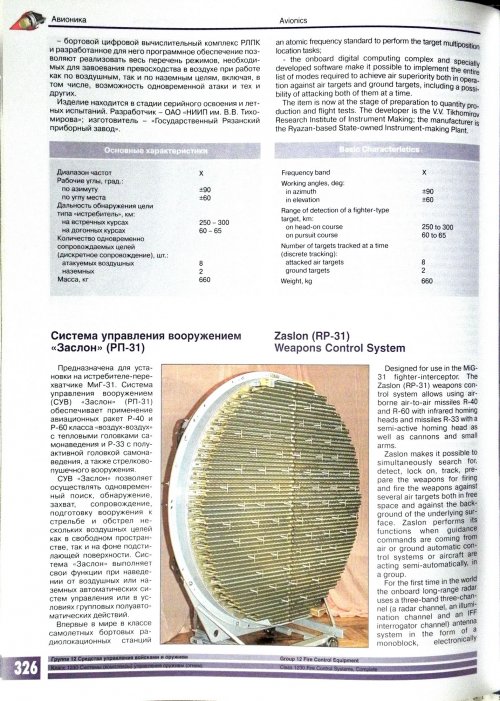
Antennas of the N007 and N007M in the higher res. The reflector of the antenna of the N007M is very similar to the one of the N035 Irbis.


peAETeZ.jpg
 
The Su-35 gets its 20kw power from employing 2 TWT (as say the ASG-18 on the YF-12, oh so many years ago) which also gives wider channel coverage and greater ECCM options but only insofar as 'half of each' they are stepped between lower and upper X band (H/I Band) with an overlap in the middle.

My understanding is that this causes coherency and frequency lock issues which effects S/Nr at the PSP which in turn denies the use of a high end radar dataprocessor.

In any case, the VKS has lost a couple Su-35s over Ukraine under circumstances where the likelihood of techint recovery was almost certain. Putting No-35 Irbis tech into the Zaslon is thus kind've a yeah but...no deal at this point. The No-36 Byelka of the Su-57 would be a better option or one of the Type 1245/1248 series (Chinese) AESA if the russians cannot do the tech development.

The SBI-16 Zaslon gains it's power by virtue of being FMICW.

Meaning it operates at high PRF equivalent, all the time. At 2,600kg, it weighs almost twice as much as the AWG-9 and there is a good chance that that is at least partially a PAO cooling loop for a radar that operates at scaled outputs approaching 30kw (you can't measure FMICW by duty cycle).

This is why it has such an enormous range. This is why it can track TBM targets of .1m2 and guide missiles on them with closures above Mach 7.

This is why Zaslon was built to track and kill .3-.5m2 TLAM-N and .25m2 AGM-86B (mod 1) ALCM. And later was adapted to track the .01m2 AGM-129.

Even equipped with the older R-33 missile, it was never intended solely as a 'bomber/tanker/C4ISR killer' but rather to kill small, agile, targets over heavy terrain clutter, after handoff from central Russian EWR, acting as part of the Russian national air defense system in a nuclear environment.

In this, it is necessary to understand that FMICW radars work to a nominally 'older' style of LDSD capability. Where Pulse Doppler is based on eliminating anything that isn't generating frequency compression by movement, leaving a 'blank screen' effect.

FMICW takes an alternative, additive, approach of measuring real beam flashback from the immediate terrain under illumination and then looking harder at anything which is higher than the average db of that averaged return. This was standard as a means of locking up targets below the jet in the F-4 era and the machine-tracking was actually quite good at it, though the WSO/RIO needed effectively a video trick to adjust target display contrasts in seeing the initial bright-blip (which the filter also automated).

This is actually innately superior to PD tracking, provided you have an EPAR which can rapidly refresh and frequency surf the given illumination zone while having a large enough framing buffer that you can average out aspect shifts and chaff blooms etc. by a maneuvering target. A PD system is simply too vulnerable to beaming and the null speed doppler filter. Whereas a FMICW system will always see additive differences between base clutter and target multiplier, even if the latter is negative as a function of shadowing (due to multipath).
FMICW always has issues with range finding and ECCM inserts as it depends on specific waveform encoding to split targets into range gated filter stacks. But, conversely, it's never bothered by hi/lo interleave in determining range uncertainty, simply because it has such fast scanning.

The original Zaslon, which Adolf Tolkachev compromised to the West, being a product of the 1970s, was almost certainly an analogue system which was limited in it's tracking capabilities (numbers and active scan waveforms). But the later Zaslon A introduced a digital Argonne 5/7/11/15 and then the Baget radar dataprocessor which are actually pretty good.

Over Ukraine, one of the key commonalities of the rash of R-37 kills which has all but denuded the ZPU of fighter inventory (after 30 days of 6 missiles fired per day, even at .25 SSPK, we're talking ~45 downings with one Foxhound pilot claiming 9 kills...) has been the lack of hard track warning.

Back in the day (1980s) a lot of 'new' RWR like the ALR-56 did not pick up the signal or at least did not treat it as AI. This led to scenarios like the 36th TFW out of Bitburg being constantly bushwacked in their new-hotness F-15As by older-and-cunninger F-4Es of the Wolfhounds 'Royal Squadron' because the Phantom WSOs would unplug the APQ-120 breaker and perform the lock-on (from a zoom climb) with the TISEO. Then flip on the CW for Sparrow illumination and zap the Rodans without a hard pulse track since the APQ-120 was linked to the optics boresight and performing angle off calculations which the CW floods sent to the missile.

Something similar may be going on with the Zaslon/Axehead pairing in that the latter missile _does_ use PD as a range:rate lead steering mechanism and, with the parent radar offering radio correction updates and the VLRAAM using it's incredibly high cruise speed, the missile may actually be engaging in a form of track via missile as the datalink is confirmed to be two-way. TVM flies an inertial flight path for part of the trip, sees the SARH reflection and begins homing (for the R-37M) around 18nm and then says: "Okay, is _this the guy_" which the radar's long range angle tracking with the Zaslon confirms as the missile again uses it's spectacular (Mach 6.7) kinematics to always positive-lead steer to a high RCS aspect. And then, as LOS-R goes to zero, activates a separate, Ka band, active seeker which snaps the missile back to collision lead and scores the hit.

Again, this corresponds with what Ukrainian pilots have said it the 'bolt from blue' effect of sudden kills with no passive threat warning as the SARH becomes ARH.

Finally, the Russians have long used idiomatic scientific expressions which have rather different meanings in English or German (the two engineering languages) to strongly imply that the Zaslon is capable of not just datalink shared tracking but true _cooperative sensing_ which is to say that Foxhounds up to 200km apart can link scans and tick / tock \ derive common triangulated reads of target bearing from enhanced/multi-aspect illumination.

Again, if true, with such powerful baseline systems operating in a mode similar to the USNs CEC mode, flinging dual mode, dual band, hypervelocity VLRAAM; it would go a long ways towards explaining why the Russians are both confident in their ability to track stealth and able to achieve long range intercepts of 217km or more against fastjets, low in the clutter.

The Russians always admired the F-14, it fits in with their 'artillery rocket' mindset. When Belenko defected in the Foxbat, we gave him a fam ride in one and he said: 'How do you even get close...?'.

The MiG-31 is the answer to that question and, over multiple upgrades, now has an SBI-16AM radar weapons system specifically optimized to the delivery of the R-37M in three modes:

Anti-fighter, in which the missiles fly a direct trajectory and shift immediately to ARH in what we would call Fire And Forget or Skating.

Radio-corrected inertial, which is the primary long range mode for SARH-TVM.

And 'Reprogrammable' which has alternately been asserted to mean the ability to set a homing point (airfield baselane) where target activity is expected to be. Or/and a method of seconding illumination authority to another aircraft.

When the original K-37 (AA-X-13 Arrow) program achieved it's 308km, 1994, hit, the distance was so great that an intermediate Su-30 was used (as was the No-11 Bars-M antenna frontend in the MiG-31BM upgrade) to provide the midcourse update as the launching Foxhound was literally firing beyond its baseline tracking range.

While at least two of the operational R-37M kills are known to have been attributed to the Su-57 Felon. Of course the Axehead itself is a third of a meter shorter than the testbed missile. But the engagement circumstances and supposed LPI/LPD capability of the No-36 radar do highlight a possible 'feature not workaround' intentional operation mode which simply maximizes the missile kinematic capabilities while perhaps compensating for any residual Su-57 signature issues as well.

The point here is that the Russians are always methodical and careful with their planned mission increment changes in capabilities, rather than simply the 'More range, speed, or ECCM?' 'Yes!' approach of pushing boundaries for its own sake, in the West. They have to carefully weigh capabilities improvements and so have time to bring things all together.

Given the K-37 program nominally ended in 1998, yet incremental development continued until a 2016-18 service debut of the R-37M; it would not be at all impossible for the Zaslon to be what it (now) is because the Axehead is what the Russians deemed necessary as an ultimate counter to the AMRAAM evolutionary potential. All the way back in 1988 when development first started.

The very notion that Zaslon could grow that far is a hallmark of how capable the system, itself an artifact of a 1970s, pre-digital, era really may be. As a multi-role set, the No-35 is likely too compromised to be as good, in the pure air defense mission.

Now some details about that bolded ...In fact,it never happened and it was only a myth.Record-breaking launch distance was exactly 304 km for one of the six launched K-37 on April 1994.RC-channel has max range from the on-board radar of 100km( this is the data for original N007 and we don't know the real data for the N007M).

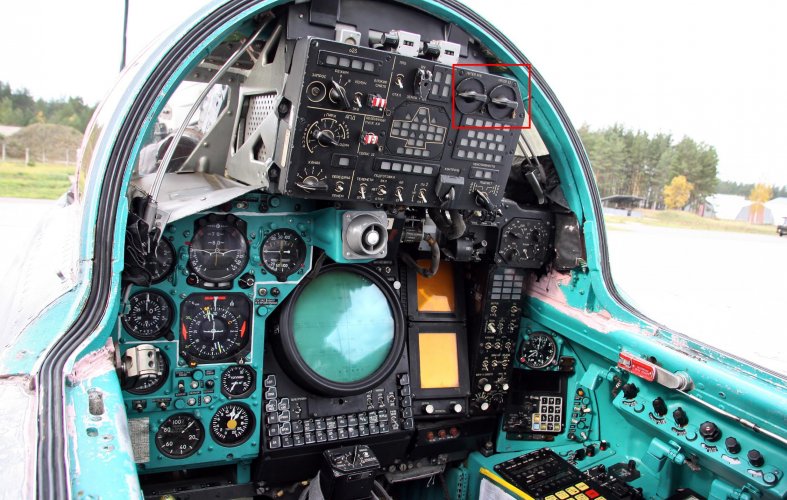
But instead of all of this ,there is one catch.The catch is in the working frequencies for the CWI mode and there is that so called pairing/liter process where attached radar guided AAM is paired with the on-board radar.Now let us see how is it work in MiG-31 with the old R-33.

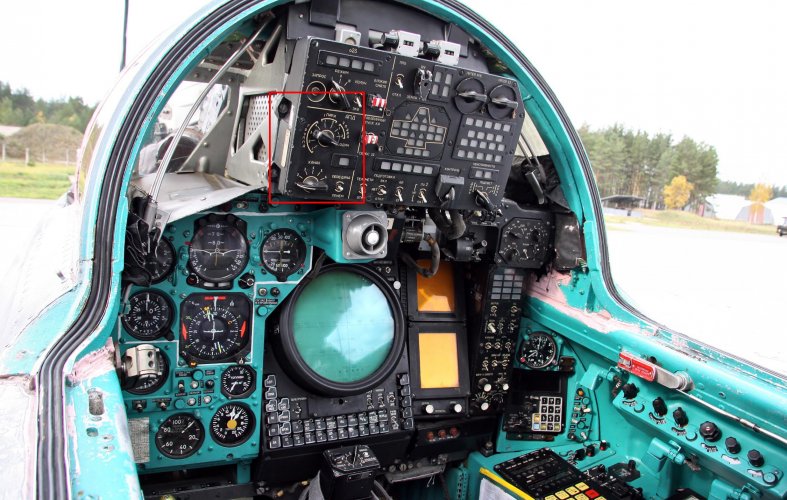
What can we see on this photo ? We can see two switches ( ЛИТЕР РЛС ,ЛИТЕР 33 ) , marked with red square and those switches are for the pairing/''LITER-ing'' between N007 and R-33. I wrote before that LITER are special codes/programes where we have given working frequencies that can be used during engagement of one or max four air targets with those inertial+SARH guided R-33. So called combat mode 'Tandem' enables engaging some air targets in the complete radio silence mode by one or more MiG-31 in the patrol/combat group.So from four MiG-31's in the main combat group there is possibility that only one use illumination of its on-board radar and other can launch its R-33's with no illumination at all.So all job can be done by only one MiG-31,even in the CWI mode using it RC-channel signals first for the mid-course update then CWI signals in the terminal phase of guidance /SARH.

Cockpit_of_Mikoyan-Gurevich_MiG-31_(7) mod2.JPG

When we talk about those combat /patrol groups, besides the main with four MiG-31's ,there is possibility to unite four base groups into one big united combat where we have 16 MiG-31's .

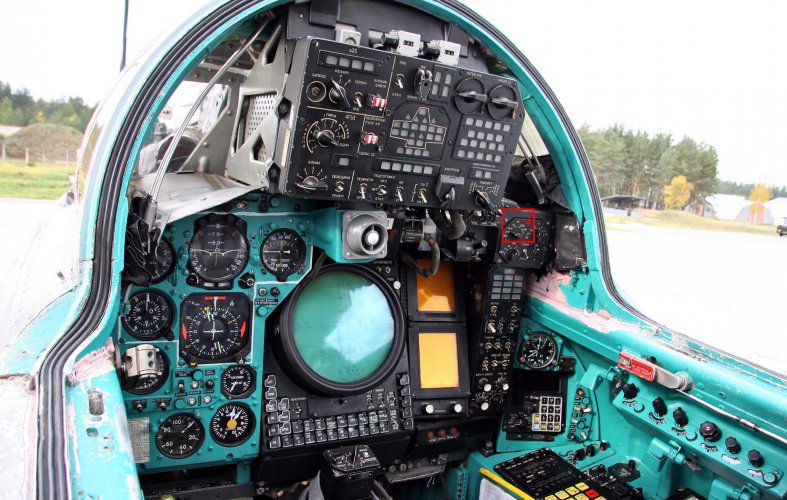
On this photo we can see inside of the red square the control panel of the АПД /APD ( Аппаратура Передачи Данных or Data Transmission Equipment).There is a switch to choose combat group ( four of them) or a combat pair ( first or second),then switch for working channels ( six of them) and one small 'transmit/receive' switch.

Cockpit_of_Mikoyan-Gurevich_MiG-31_(7)mod.JPG

Other interesting detail.With these switch ,RIO give data about chosen launch speed (the real speed) and the Mach number for launching the R-33 is: M 0.85, 1.4, 1.9, 2.35 and 2.8 .

Cockpit_of_Mikoyan-Gurevich_MiG-31_(7) (1)mod.JPG
 
Last edited:
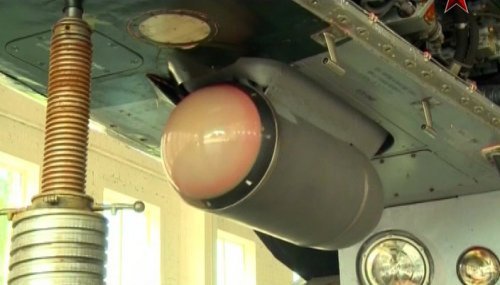
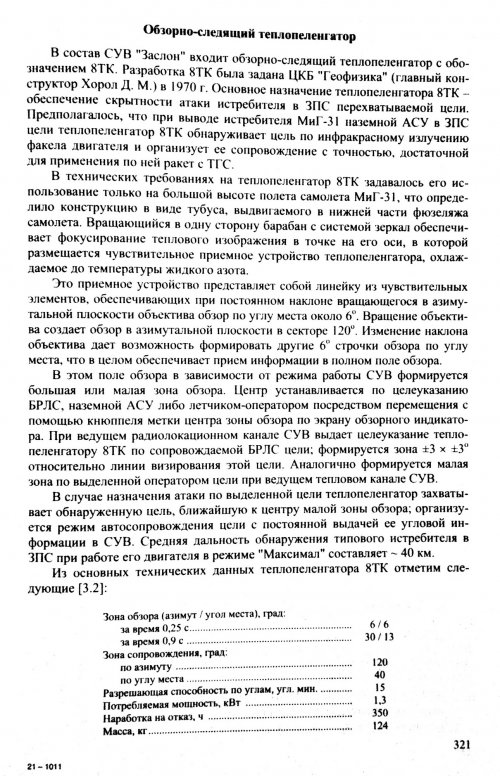
Rare photo where we can see IRST '8TK ' as extracted.

0323-01-2-4.jpg

On the ground :

8TK 1.jpg

Interesting detail :

''Применение теплопеленгатора возможно на скорости до 3000 км/ч.''

"The use of the IRST is possible at speeds of up to 3,000 km/h."

Source ( page 83) : http://www.kr-magazine.ru/upload/iblock/45d/KR_3_4_2018_.pdf


8TK could detect incoming SR-71 from 100-120km away.

''The SR-71 was intercepted using only a thermal channel (infrared, IR). The massive IR emissions of its engines permitted it to be detected at a distance of 100-120km (62-75 miles).''

''The MiG-31’s thermal detection system was called OMB (or optical multifunctional apparatus) and was mounted in the lower nose of the aircraft. The device was lowered and turned on by the WSO. The MiG’s radar was not turned on. On combat alert the radar was set on a combat frequency, and in order not to expose this frequency to a ‘probable enemy’, the radar was not turned on. A passive system (the thermal apparatus) was adequate for a reliable intercept.''

On the other side N007 Zaslon could detect incoming SR-71 from 200km away

''200 км для SR-71, летящего на 25000 м..''

''200 km for an SR-71 flying at 25,000 m.''

Also interesting is this ...

''When the SR-71 alert was first given, the technical personnel ran to the aircraft and initially removed its R-60 (AA-8 Aphid’) short-range missiles because they would be disabled at velocities above Mach 1.75 (the standard MiG-31 ordnance load included four R-60s and four long-range R-33s (AA-9 ‘Amos’).''


Source: https://theaviationgeekclub.com/fox...ept-and-shoot-down-an-sr-71-mach-3-spy-plane/
 
Last edited:
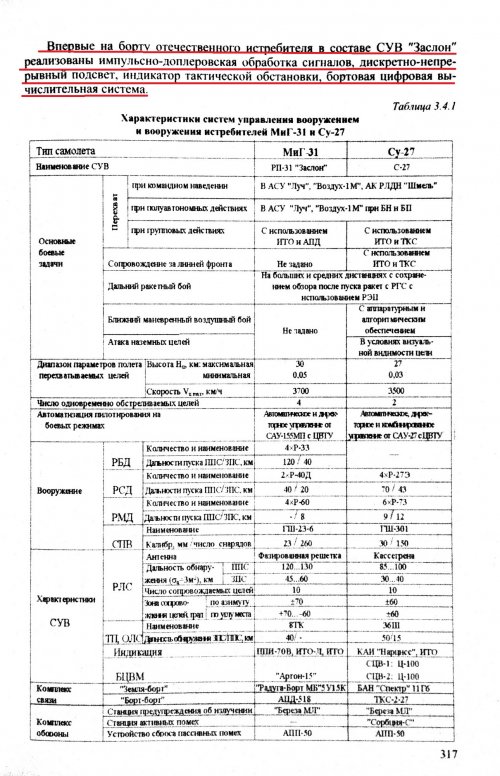
From all these pages this is maybe most interesting :

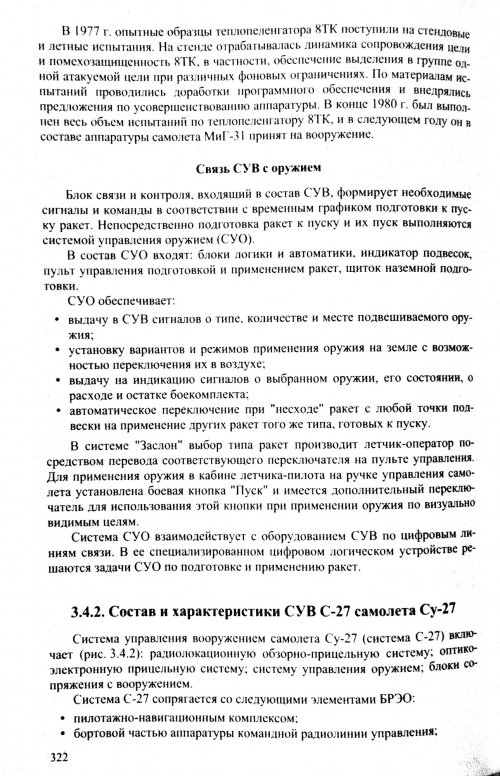
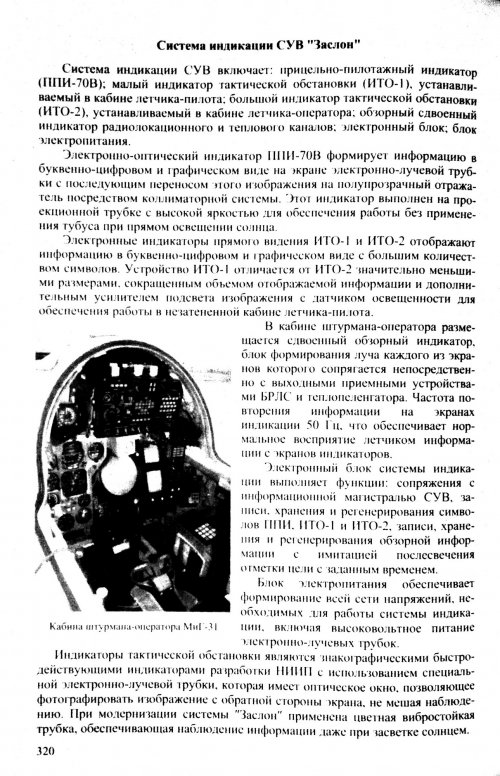
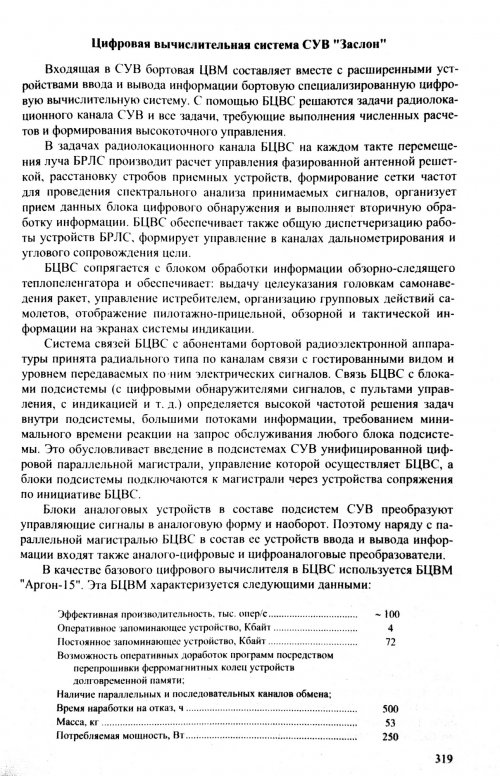
vvs-07_suv  mod.jpg

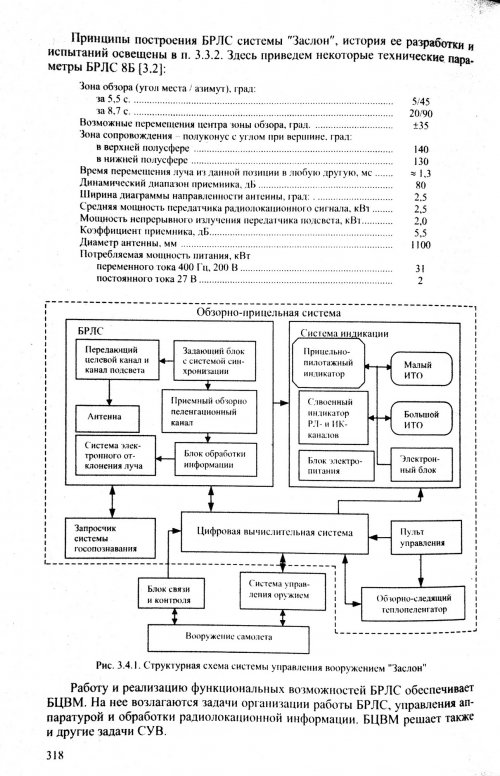
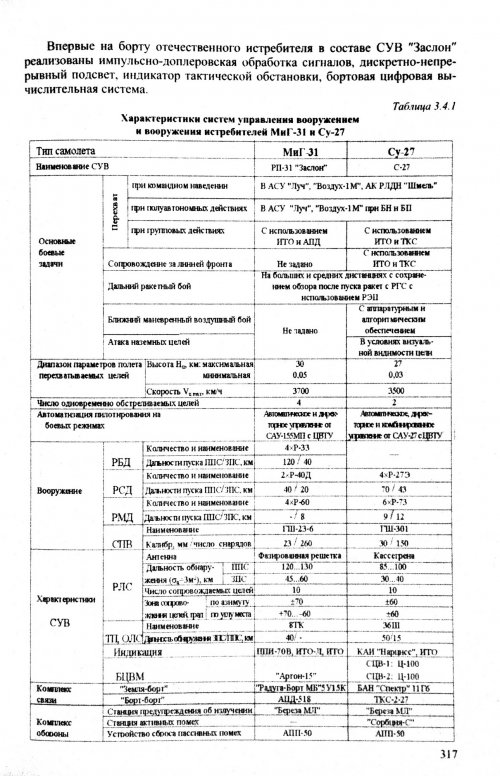
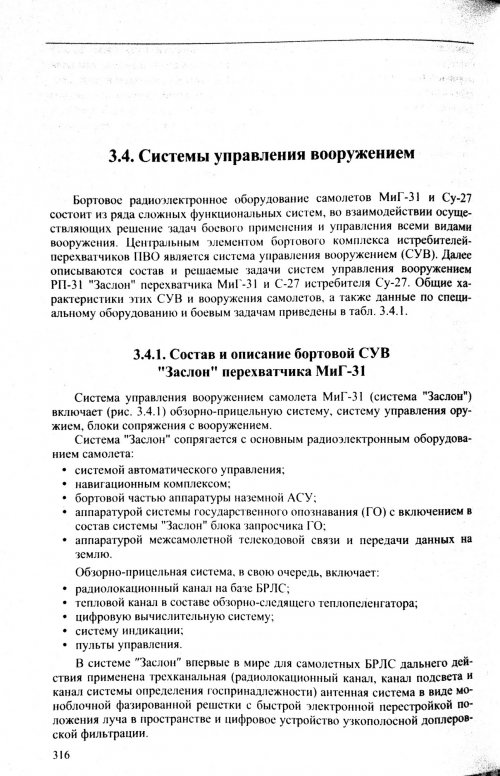
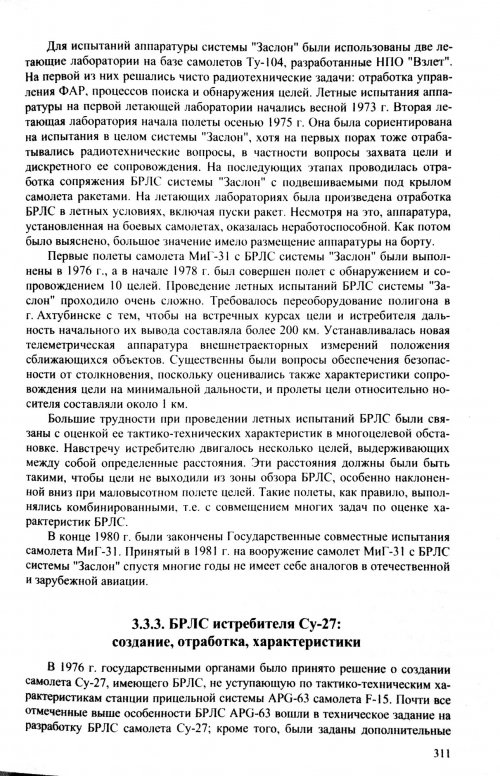
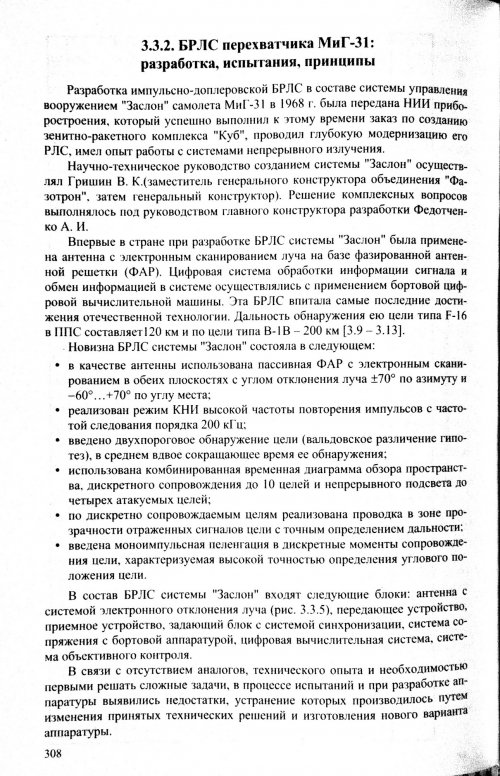
Can we say that N007 Zaslon was the first Soviet pulse-Doppler radar , first MPRF/HPRF radar and the first one with that DNP mode, also first with the digital comp/ BTsVM 'Argon-15A' ?

All Soviet fighter radars from Sapfir-21/22 in all MiG-21 ,Sapfir-23 ( N003,006,008 Ametist) in all MiG-23, RP-25 Smerch and N005 Sapfir-25 in all MiG-25P/PD/PDE,PDS ,then older Almaz in the Su-9,Oryol in the Su-11 and Typhoon in the Su-15T/TM ( also radars in the Yak-28P and Tu-28P ) were LPRF and pulse only radars ,is that right ? Their antennas were mostly inverse and later twisted Cassegrain ones with those 'xenon lamps'.

So after N007 with first in the world PAA/PESA on one fighter,they had N001 Myech in the Su-27 and N019 Rubin in the MiG-29 as MPRF/HPRF pulse-Doppler radars ,also with DNP mode ( both with twisted Cassegrain).

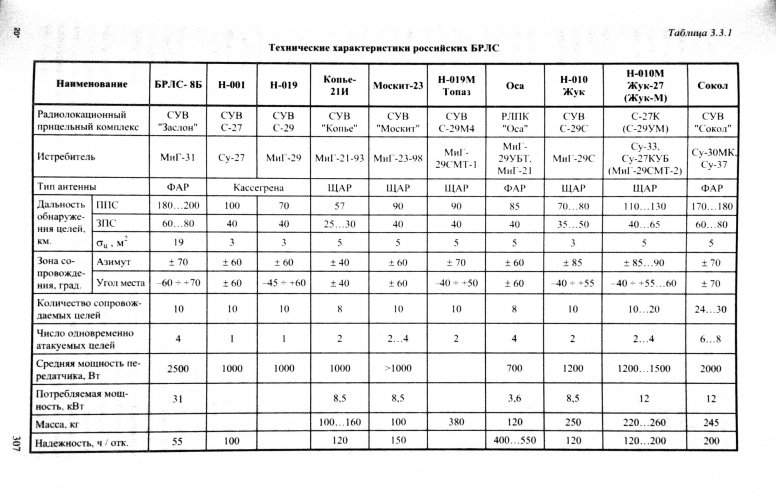
Also we can say that basic N007 Zaslon has next max detection ranges in the forward hemisphere:

for the small target ( fighter with 3 sqm of frontal RCS , RC M-21) ,it is 90km.
for the small target ( fightert with 5 sqm of frontal RCS, F-16), it is 120km.
for the medium target ( aircraft with 15-20 sqm of frontal RCS like SR-71,B-1B and RC M-16 ), it is 200km.
for the big target ( aircraft with 50-100 sqm of frontal RCS like strategic bombers/missile carriers,airlifters,aerial tankers,AWACS etc.) it is ( can be) ,300-600km.
 
Last edited:

Similar threads

Back
Top Bottom