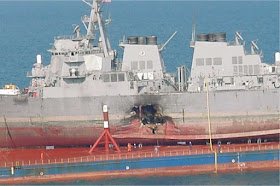
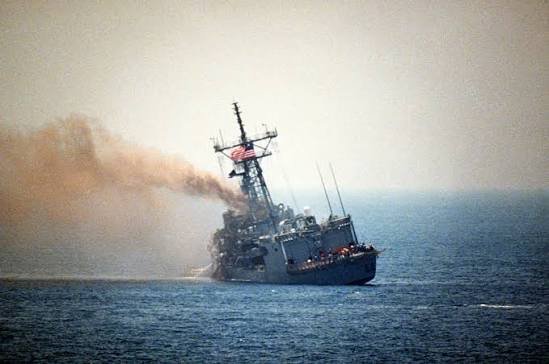
Armor and the internal armor (transverse bulkheads) provided by bulkheads are two things that the Navy has abandoned to its future detriment somewhere along the line.
You've been making a lot of assertions with no backing and refusing to address counterarguments. So I'm getting blunt about this: prove it.
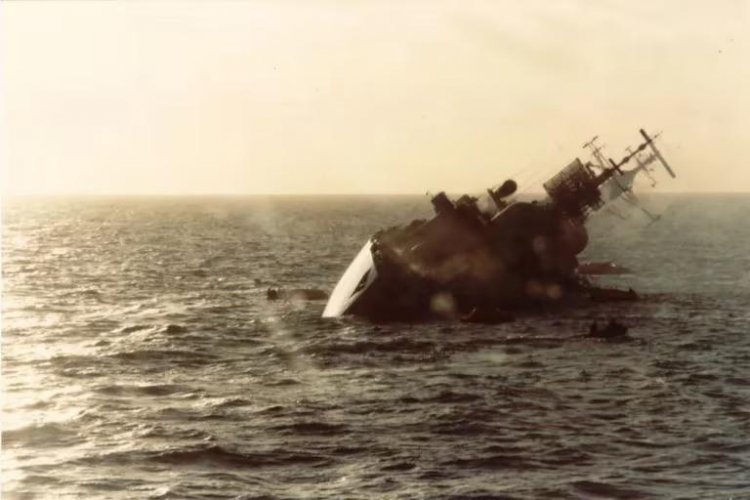
The Royal Navy took to the Falklands both older ships designed to WWII or near-WWII armor and damage control standards, and newer ships designed to less stringent armor and damage control standards. Four of the older ships took significant hits and stayed afloat. Four of the newer ships took significant hits and went to the bottom.
The Royal Navy of the 1980s is not the United States Navy of today - for one, the US Navy took a very long look at the Falklands and adjusted design standards accordingly.
Second, this is just... flat-out wrong? Yes, the ships sunk were all more recent 1970s vessels (Type 42s Sheffield and Coventry; Type 21s Antelope and Ardent), but the ships
damaged included three of those newer ships you were pooh-poohing (Type 21s Arrow and Avenger and Type 42 Glasgow) and the other three (Counties Antrim and Glamorgan and Leander Argonaut) were not
that much older. Certainly to call them "designed to WWII/near-WWII armor standards) is a laughable take given how much handwringing there was about the cruiser-sized Counties being designed to destroyer standards in these regards.
Further, let's actually evaluate the hits taken, shall we? Of the sunken ships:
- Ardent was hit by three 1000-lb bombs in the first attack, one of which was a dud. Notably, her survivability measures worked, and she had full power and steering after this attack. This was followed up by 2-4 500-pounders that went off, and multiple dud hits and near-misses. That sank her after the fire aboard went out of control.
- Antelope was hit by two dud bombs, at least one of which was a 1000-lber; attempts to dispose of them failed catastrophically, with one of the bombs going off and knocking out her engine and electrical power. She was also abandoned.
- Coventry was hit by three 500-lbers, one of which was a did, one of which ripped open her engine room to the sea.
- Sheffield was hit by an Exocet that may or may not have exploded and completely took out her electrical power and fire mains.
Of the damaged ships:
- Antrim was hit by a dud 1000-lb bomb, several near-misses, and some strafing.
- Glamorgan was hit by an Exocet that blew up her helicopter.
- Glasgow was hit by a single dud that passed through the engine room.
- Argonaut was hit by two duds that blew up a Sea Cat launcher and took out her boiler room.
- Arrow and Avenger were not hit by any heavy weaponry, so we'll dismiss them.
You're making a mistake I've seen before: taking the results as a judgement on the ships' durability without considering the vagaries of shot placement and plain luck. Generally speaking, the British ships damaged in the Falklands were just plain hit less - both Ardent and Coventry straight-up ate more ordnance than any of the four damaged ships. Antelope had her propulsion taken out, but at least that was from an actual bomb
explosion, compared to the older Argonaut who was just plain dead in the water after a
dud in her boiler room.
To be clear, there were significant failures of damage control during the Falklands; the Royal Navy didn't completely overhaul their equipment, doctrine, and training afterward for no reason. But the results do not bear out your hypothesis. Ardent especially is a major blow - she ate more ordnance than any other British ship in the
first attack and would've limped home no problem had the Argentines not followed up. Not bad for a sub-3000-ton frigate.
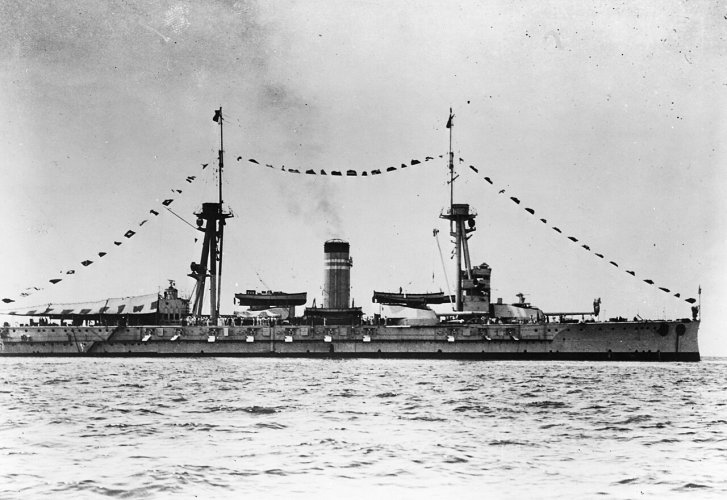
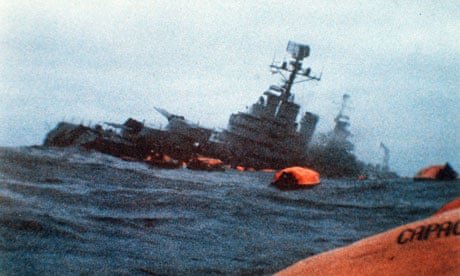
Argentine cruiser, really a US WWII cruiser. 4 inches armor took 2 torpedo hits but still took 2 hours to sink. Even with watertight doors initially open during action.
It's almost like she was twice the size of the largest British ships hit during the conflict!
Like, size matters when it comes to this sort of thing. Bigger ships will take more damage to sink, that should be obvious. I should also note that Belgrano's armor was completely irrelevant to the torpedo hit - like the vast majority of WW2 cruisers she had no defense against torpedoes besides good compartmentalization.



 ️of electricity.