- Joined
- 6 November 2010
- Messages
- 6,359
- Reaction score
- 8,240
Which was exactly why I found it a fascinating read.a bit heavy on the politics and financials

Which was exactly why I found it a fascinating read.a bit heavy on the politics and financials
Did the lessons Grumman learned from the fixed-price contract in the F-14 program influence the Northrop/Grumman team's decision to reject a fixed-price contract from the Navy for the ATA program?Yes, our Northrop ATA had a wider wingspan, was slightly larger but we proposed OTS F404 engines as compared to the A-12 but we tried to convince the USN that to attack using an LO aircraft, you have to do it from medium to high altitudes, this is from vast experience on other programs. A flying wing on the the deck, a sitting duck. So our bid was unresponsive since the FFP contract had loads of risk and the USN kept jacking around with the spec, that my friends is what kills programs. And CTR you are correct, if anyone has a chance to read the $5 Billion Dollar Misunderstanding, is good reading but a bit heavy on the politics and financials but a very good book overall.
Was the YF-23's canopy design also due to the difficulty of manufacturing a large, one-piece canopy, leading to the choice of a conventional two-piece design? Considering the F-22, F-35, and even China's J-20 and J-35, which all use one-piece canopy designs, can a non-one-piece canopy design still meet LO requirements?That would be a very difficult canopy to fabricate plus it has to survive testing.
We had a hard time with TSSAM, tri-service and a fixed-price contract, at least JSF/F-35 pulled off the tri-service part.Did the lessons Grumman learned from the fixed-price contract in the F-14 program influence the Northrop/Grumman team's decision to reject a fixed-price contract from the Navy for the ATA program?
Was the YF-23's canopy design also due to the difficulty of manufacturing a large, one-piece canopy, leading to the choice of a conventional two-piece design? Considering the F-22, F-35, and even China's J-20 and J-35, which all use one-piece canopy designs, can a non-one-piece canopy design still meet LO requirements?
That would be a very difficult canopy to fabricate plus it has to survive testing.
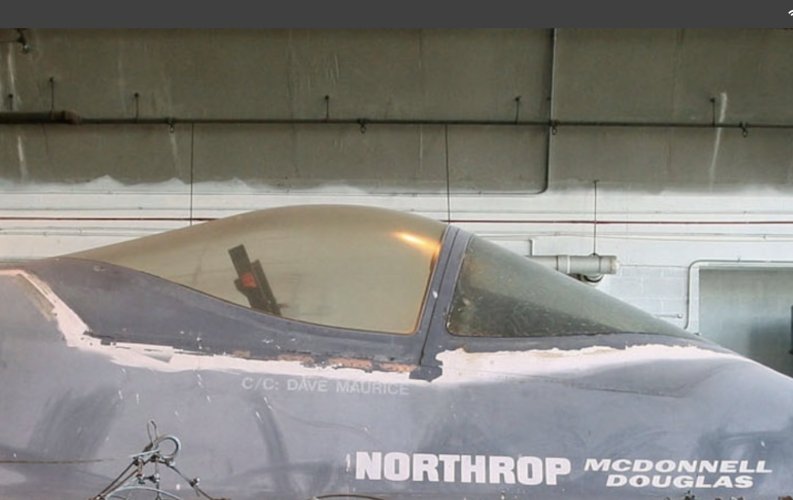
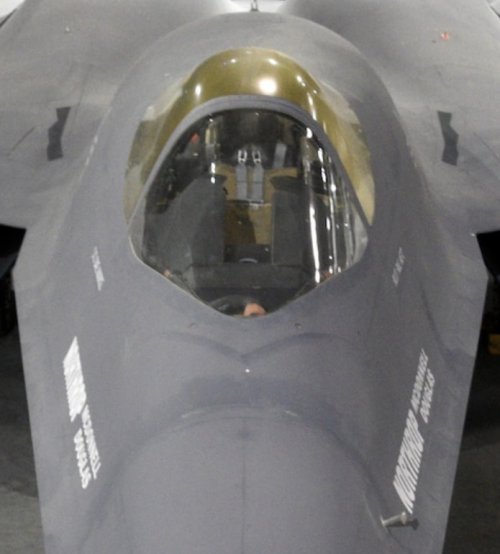
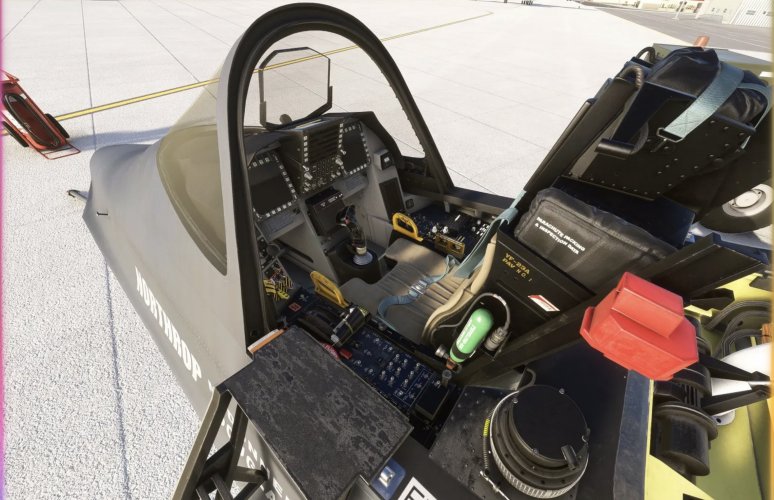
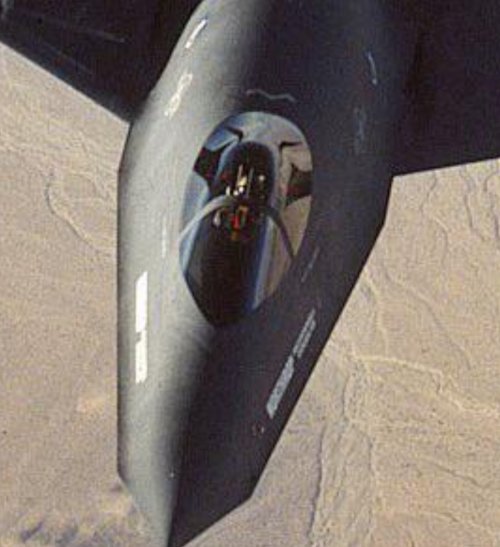
The the forward most transparency was over 1 inch thick, the center transparency was thinner to save weight which was possible because the stresses were lower, but it was still about 3/4 an inch thick. I don’t recall if we thinned the aft most transparency further or it was the same as the center.I'm still confused about how the polycarbonate transparencies are secured. Judging from the first photo, I assumed the transparencies were mounted on the exterior side of the support frames. But the second photoraises a question for me, where metallic strips that fasten the outer face of the transparencies to the support frames are plainly visible. Moreover, these strips appear to lie flush with the transparencies. This differs from the canopies of the F-15 and F/A-18, where the support frames protrude slightly above the transparencies.
Finally, will all seams be treated to make them invisible or optimize RCS?
The ATF and ATA development aircraft canopies were not designed or manufactured to achieve production aircraft LO requirements. Additionally, for the X-32 and X-35 having a separate thicker windshield for bird strike allowed for a thin stretched acrylic canopy transparency over the pilot to punch through without jettisoning the canopy. This reduced development schedule and cost, plus eliminated the ejection time delay of waiting for the canopy to fully clear the seat trajectory. For VTOL aircraft configurations minimum escape system time is critical. Note the installation of MDC on both ATF development aircraft canopies. FYI. The X-32 reused the AV-8B Harrier windshield and canopy.Did the lessons Grumman learned from the fixed-price contract in the F-14 program influence the Northrop/Grumman team's decision to reject a fixed-price contract from the Navy for the ATA program?
Was the YF-23's canopy design also due to the difficulty of manufacturing a large, one-piece canopy, leading to the choice of a conventional two-piece design? Considering the F-22, F-35, and even China's J-20 and J-35, which all use one-piece canopy designs, can a non-one-piece canopy design still meet LO requirements?

BTW, I believe you mean X-32 and X-35. Just saying.The ATF and ATA development aircraft canopies were not designed or manufactured to achieve production aircraft LO requirements. Additionally, for the YF-34 and YF-35 having a separate thicker windshield for bird strike allowed for a thin stretched acrylic canopy transparency over the pilot to punch through without jettisoning the canopy. This reduced development schedule and cost, plus eliminated the ejection time delay of waiting for the canopy to fully clear the seat trajectory. For VTOL aircraft configurations minimum escape system time is critical. Note the installation of MDC on both ATF development aircraft canopies. FYI. The YF-34 reused the AV-8B Harrier windshield and canopy.

Thanks, having new carpet put in the house and I’ve been working too many hours moving furniture to type straight. Just edited it correct.BTW, I believe you mean X-32 and X-35. Just saying.
The YF-23/F-23 even though was not a single piece did meet all LO requirements.Did the lessons Grumman learned from the fixed-price contract in the F-14 program influence the Northrop/Grumman team's decision to reject a fixed-price contract from the Navy for the ATA program?
Was the YF-23's canopy design also due to the difficulty of manufacturing a large, one-piece canopy, leading to the choice of a conventional two-piece design? Considering the F-22, F-35, and even China's J-20 and J-35, which all use one-piece canopy designs, can a non-one-piece canopy design still meet LO requirements?
I concur that the YF-23 demonstrator and supporting documentation were compliant to the contract specifications. However ATF submissions permitted final production aircraft performance to be supported by analysis and for LO requirements, element and full scale model testing.The YF-23/F-23 even though was not a single piece did meet all LO requirements.
The B-2 windows don’t open for crew entry. And I don’t believe it’s practical to putty in the pilots every time you close a canopy.Just like B-2 with it's non-aligned windows frame. Conductive putty seal etc.


Did F-22 EMD proposal have the same fuel and payload as actual F-22A? If so that is quite massive empty weight increase of about 6,700lbs? If so, using Breguet range equation for approximation, and assuming same internal fuel, that is over 12% range loss.Thanks for the historical ATA detail. I offer one ATF clarification from firsthand knowledge:
- Actual F-22A takeoff gross weight (TOGW) for the design missions (Mission 1, all subsonic; Mission 2, mixed sub/supersonic) were both a bit over 64,000 lb.
- The design TOGW in the EMD proposal was 57,300 lb. During EMD, GDFW often complained (even in front of Gen. Fain) that the Lockheed proposed weights were way off and unachievable. [this public display of insubordination later was a factor in the Lockheed purchase of GDFW ... more someday on this ...]
- The F-22A max TOGW of 85,000 lb was for Mission 3 (an all-subsonic one-way ferry mission employing (4) 600-gal external tanks and carrying a ferry load of internal and external AIM-120 weapons). The EMD proposal number for max TOGW was above 80,000 lb, but I don't have a more exact recollection.

As I recall they took 5th and 3rd place respectively in the previous ATF competition. Unless they'd been flying something in secret, this was their first stealth aircraft. That's bound to have a hell of a learning curve.After reading through the almost 20 years of A-12 Avenger posts on Secret Projects, I was disappointed to find only posts from individuals never directly on the MD/GD team (please correct me if I am in error). Additionally, the few posts by individuals that worked for Northrup or Lockheed are equivalent to a few small puzzle pieces from a ten thousand piece picture puzzle. One cannot realistically know from a few puzzle pieces of the sky if a picture puzzle is of a tree or a ship. Especially when individuals more interested in their government careers than exposing the truth dump additional puzzle pieces in the box that don't belong.
Think about it, how could the two companies that designed and built the F-15 Eagle and F-16 Fighting Falcon fail so badly?
The YF-22 had quite a bit more fuel IIRC. ~22k to 18k for the production version. The back end got a lot slimmer.Did F-22 EMD proposal have the same fuel and payload as actual F-22A?
YF-22 wasn’t EMD F-22 proposal, it predated by a few years so that it could be built and flown by time EMD proposal was submitted. Actual EMD proposal (Config 637 or 638) outer lines are near identical to actual F-22A (Config 645) but not the internal structure it seems which saw a lot of revisions as @timmyjohn has talked about.The YF-22 had quite a bit more fuel IIRC. ~22k to 18k for the production version. The back end got a lot slimmer.
Was the noncompliance mainly in the LO? As mentioned McDonnell Douglas had hired Alan Weichmann due to lacking prior experience and according to some accounts was elevated in response to poor performance on ATF proposal.The US Airforce was downright pissed when they read the MD ATF RFP response in 1986. Out of either arrogance or honesty MD told the Airforce SPO that it was not possible to build an ATF with the specified performance, weight, and estimated production cost in the RFP. So MD submitted proposals for multiple different aircraft designs, with no one design promising to meet all the RFP requirements.
…
But the US Navy told MD and GD that they had used data from on F-117 and B-2 programs to develop their aircraft weight estimates (including the weight of necessary RAM). This was a lie, and by government regulation invalidated the contract.
The YF-22, that flew, is very different than the F-22A. I think you are saying that the YF-22 that they flew is not the same as what they proposed?YF-22 wasn’t EMD F-22 proposal, it predated by a few years so that it could be built and flown by time EMD proposal was submitted. Actual proposal outer lines are near identical to actual F-22A but not the internal structure it seems which saw a lot of revisions as @timmyjohn has talked about.
Yes and it makes sense. F-22 EMD proposal was submit by December 1990 but actual YF-22 has to fly well before then, so naturally it needed to come before so it could be built and flown first before submitting EMD proposal.The YF-22, that flew, is very different than the F-22A. I think you are saying that the YF-22 that they flew is not the same as what they proposed?
The noncompliances used for termination for cause by the US government were cost schedule and weight. LO was never listed as a primary consideration for terminationin any of the information published.Was the noncompliance mainly in the LO? As mentioned McDonnell Douglas had hired Alan Weichmann due to lacking prior experience and according to some accounts was elevated in response to poor performance on ATF proposal.
Did government not own the IP for RAM and other LO data for the F-117 and B-2? Because otherwise the USN should have been able to furnish that to contractors for the ATA?

The archived flightglobal.com article accurately states the weight status at that time, and is correct that the all-subsonic Mission 1 radius and the transonic sustained-g threshold were the performance specs that were driving the team-wide weight control program.Did F-22 EMD proposal have the same fuel and payload as actual F-22A? If so that is quite massive empty weight increase of about 6,700lbs? If so, using Breguet range equation for approximation, and assuming same internal fuel, that is over 12% range loss.
You then mention internal fuel capacity increase in EMD, is this the fin and saddle tank discussed in some sources, like Miller 2005? I believe in 1995 reporting was F119 missed subsonic TSFC by 8% while HPT redesign eventually allowed it to get within 2%.
https://web.archive.org/web/2026040...xed-wing/1995/05/f-22-weight-increase-agreed/
On this note, what was the reputation for Northrop or Grumman for predicting weights?Thanks for this. I had always heard that MAC had one of the best weights groups in the business and I figured they probably accurately predicted what the ATF was going to weigh and were penalized for it. Although, I understand they were still lacking in L.O. tech, which is why they hired Alan Wiechman.
IMHO, I believe all of the major legacy aircraft manufacturers are an order of magnitude better at estimating final aircraft weights, than the USAF and USN are at specifying not to exceed weights.Interesting, all this makes one wonder if Northrop/McDonnell Douglas would have experienced as much weight growth on the ATF, and also if Northrop/Grumman ATA weights were realistic.
On this note, what was the reputation for Northrop or Grumman for predicting weights?
As for Lockheed, ironically one thing I heard about Kelly Johnson is that he’s excellent at estimating aircraft weight, often just by looking at it.
Thanks for teeing up another one. Yep, I worked X-29 in the pre-FSED days, and since that's the only new Grumman aircraft since the F-14A, it's an ideal case of gauging how well the (relatively small) team was able to predict the weight of a unconventional design with a few state-of-the-art features.Interesting, all this makes one wonder if Northrop/McDonnell Douglas would have experienced as much weight growth on the ATF, and also if Northrop/Grumman ATA weights were realistic.
On this note, what was the reputation for Northrop or Grumman for predicting weights?
I'm going to say "not unreasonably off, and probably would have been better if Grumman had better information on how heavy the wing ended up." Even with composites and exotic layup methods to turn the normal FSW wingtip-AoA-increasing twist into a spanwise flex.The actual TOGW was a bit more than 10% higher than the initial parametric estimate. I'll leave it to the audience to decide how good or bad a prediction this was.

Pretty typical and quite a bit worse than some parametric methods.The actual TOGW was a bit more than 10% higher than the initial parametric estimate. I'll leave it to the audience to decide how good or bad a prediction this was.
The Grumman X-29 was a Technology demonstrator aircraft program. Development costs and schedule time for the X-29 were also minimized by reuse of existing aircraft components like the fuselage from an F-5. This made estimation of aircraft weight a much different challenge than for a clean sheet production stealth aircraft like the ATA.Thanks for teeing up another one. Yep, I worked X-29 in the pre-FSED days, and since that's the only new Grumman aircraft since the F-14A, it's an ideal case of gauging how well the (relatively small) team was able to predict the weight of a unconventional design with a few state-of-the-art features.
A bit of background. A source of pride within the Advanced Design organization was the homegrown parametric sizing tool, known as WISE (Weight Integrated Sizing Evaluation). In fact, during the early ATF studies (1976-1981) one of the few attaboys that the Air Force Flight Dynamics Lab (AFFDL) engineers in Dayton often passed on to Grumman was how thorough and believable the parametric-based weight estimates appeared, as compared to the 'competition'...
The X-29 design was initially drawn in late 1977, and the configuration was sized with the following weight values:
TOGW = 16.000 lb. Fuel wt = 4,000 lb. Maneuver Design wt = 14,000 lb (50% fuel).
With the 185 sqft forward swept wing, the intended lift coefficient at the FSW design point (4.5-g sustained, Mach 0.9, 30Kft altitude) was: CL = (4.5*14,000)/(356*185) = 0.955
Fast forward to the Dec. 1984 first flight, the X-29 actual weight values were:
TOGW = 17,700 lb. Fuel wt = 3,978 lb. Maneuver wt @50% fuel = 15,710 lb.
The actual TOGW was a bit more than 10% higher than the initial parametric estimate. I'll leave it to the audience to decide how good or bad a prediction this was.
Relative to the Northrop/Grumman/Vought ATA effort, I'll add that Grumman-Bethpage sent absolutely their first-string team to Northrop-Pico Rivera (nope, I wasn't picked). One of the Grumman technical leaders told me that he was under the impression that "Northrop has the C-team on the program" -- which in hindsight makes sense: ATB/B-2 first string; ATF/F-23 second string; ATA third string.
I think we had a very good ATA design and having the "C-team" on the effort makes sense, we (N/G/LTV) just thought the fixed-price contract made no sense and had too much risk. Our "mini-me" B-2 made sense, with our experience on B-2, Tacit Blue, ATF and other programs not to mention trying to convince the USN to attack from mid to high altitudes for an LO platform, the USN was wrapped round the axle with a direct A-6 replacement and flying on the deck, I've stated this previously in other posts, an LO subsonic flying wing on the deck; no, no, no. I think we could have given the USN a very good aircraft but you have to use common sense as well. Plus, large-scale LO programs were new territory for military aviation during this period, difficult problems to solve and things had to be invented. Our full-scale ATA mock-up in the "blue and gold" room at Pico was pretty and I think our friends at Grumman built it. Very sad seeing it cut up though.The Grumman X-29 was a Technology demonstrator aircraft program. Development costs and schedule time for the X-29 were also minimized by reuse of existing aircraft components like the fuselage from an F-5. This made estimation of aircraft weight a much different challenge than for a clean sheet production stealth aircraft like the ATA.
Based on the three Northrop programs phase start dates and my industry experience, ATB preliminary design engineers would have been transitioned over to the ATA program. This may explain the Northrop Grumman mini me B-2 version for the ATA proposal.
With the ATB proposal effort being years before the ATA, my guess was that the ATA was staffed with ATB preliminary design engineers. Was this guess correct? The B-2 rolled out of it's hanger for public view in November 1988, and the ATA contract was awarded in January 1988.I think we had a very good ATA design and having the "C-team" on the effort makes sense, we (N/G/LTV) just thought the fixed-price contract made no sense and had too much risk. Our "mini-me" B-2 made sense, with our experience on B-2, Tacit Blue, ATF and other programs not to mention trying to convince the USN to attack from mid to high altitudes for an LO platform, the USN was wrapped round the axle with a direct A-6 replacement and flying on the deck, I've stated this previously in other posts, an LO subsonic flying wing on the deck; no, no, no. I think we could have given the USN a very good aircraft but you have to use common sense as well. Plus, large-scale LO programs were new territory for military aviation during this period, difficult problems to solve and things had to be invented. Our full-scale ATA mock-up in the "blue and gold" room at Pico was pretty and I think our friends at Grumman built it. Very sad seeing it cut up though.
1. The F-5A forward fuselage, cockpit, nose gear were reused, the rest of the X-29 airframe was all-new. Subsystems were off-the-shelf, and the main landing gear was from F-16A. Two fellas (Glenn Spacht and Nate Kirschbaum) set these groundrules and instructed the configuration designer and the 3 or 4 other project members in the Fall of 1977. These weights were readily accessible, except some subsystems were TBD. But your point is well taken, it wasn't a completely new build, and there was no intention to produce more than 2 articles.1. The Grumman X-29 was a Technology demonstrator aircraft program. Development costs and schedule time for the X-29 were also minimized by reuse of existing aircraft components like the fuselage from an F-5. This made estimation of aircraft weight a much different challenge than for a clean sheet production stealth aircraft like the ATA.
2. Based on the three Northrop programs phase start dates and my industry experience, ATB preliminary design engineers would have been transitioned over to the ATA program. This may explain the Northrop Grumman mini me B-2 version for the ATA proposal.


So what exactly happened? Routine equipment additions should not drive up empty weight by roughly 6,000 pounds. Does this mean the airframe structure requires extensive reinforcement?Makes for an interesting comparison to the F-14A/original B.
Design spec empty weight was 36,000 lbs, and as delivered (early blocks with with TF30-P-412's) was ~38,200. The intended F401's (as flown in ship 7) brought that down to 37,000 lbs which gives an overage of only 3%. Not too shabby for such a complex aircraft.
Of course, by the time they got to the D, empty weight ballooned to almost 44,000 lbs (and that was with wing glove vane deletion)
...but that wasn't Grumman's fault.
Since you were part of the engineering effort for the A-12, on the McDonnell Douglas side of things, I have a question for you. By 1988 most of the basic shape of the aircraft was probably frozen. During that same year the B-2 was first revealed (the initial painting in the spring of 1988 and the rollout that November) and also the reveal of the F-117 that November. Was there ever any conversation on whether anything needed to change on the A-12 to improve its low observables? Or was it ultimately too late in development and would have added too much more to the program?To support my claim that I was actually on the A-12 program, I took a photo of my program coffee cup. I gave away my A-12 badge extender a couple years ago to a FARA program manager after the US Army canceled his program. I wanted to let him know I felt for him, and that it could have been a lot worse.
I was deployed by MCAIR to the ATA proposal effort to support the canopy actuation and escape system RFP response sections. On my first ATA trip to Fort Worth to meet with our GD partner, I discovered that the older GD good old boy's on the ATA didn't like having to listen to a 'Carlos' comment on their canopy design. This led to me telling a GD Chief engineer that he didn't know squat on canopy jettison loads. I was pulled out of the meeting by the MCAIR Chief, reprimanded, being told 'I don't care that you are right, still you don't tell a GD Chief that he doesn't know squat. Even if he is being an asshole". The link below is to a video of A-12 Ingress Egress compliance testing conducted in March of 1989 at MCAIR. Sorry for the quality, but it is the best VCR tape restoration current software can generate.
Enjoy
A-12 Ingress Egress Video March 1989
So what exactly happened? Routine equipment additions should not drive up empty weight by roughly 6,000 pounds. Does this mean the airframe structure requires extensive reinforcement?