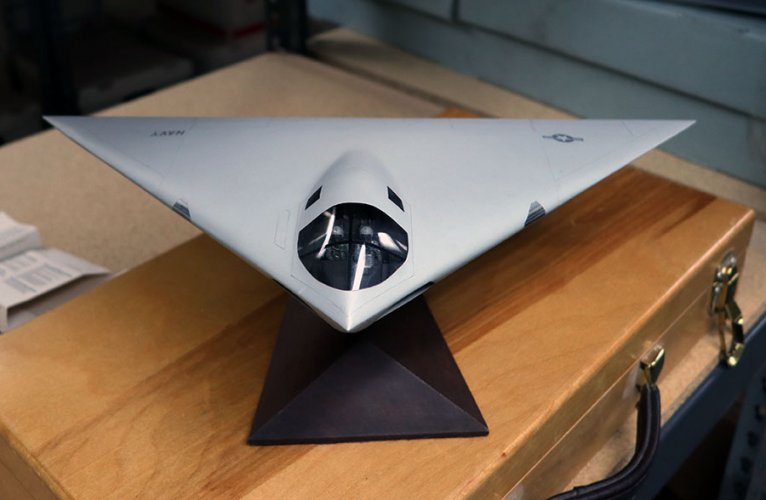
You're most welcome. I had dm'd Flateric to suggest he subsume the uploaded images in to his post (delete mine) and maybe dispense with the cardboard box images ?Cheers!
p.s.: where do I order mine for $31.50 ?

You're most welcome. I had dm'd Flateric to suggest he subsume the uploaded images in to his post (delete mine) and maybe dispense with the cardboard box images ?Cheers!
Hi Sir, Nice to know you here.I only recently joined Secret Projects to follow and discuss the Bell MV-75 Cheyenne II developments. Last week, out of curiosity I decided to search Secret Projects for any posts on the A-12 Avenger II. At MCAIR St Louis in January of 1985 I was deployed to the ATA proposal effort and stayed on past it's cancelation through the spring of 1991 to support the A-12 closeout effort. That was 35 years ago, and the pain in my gut still comes back when I recall the A-12 cancelation and the impact to the lives of my friends.
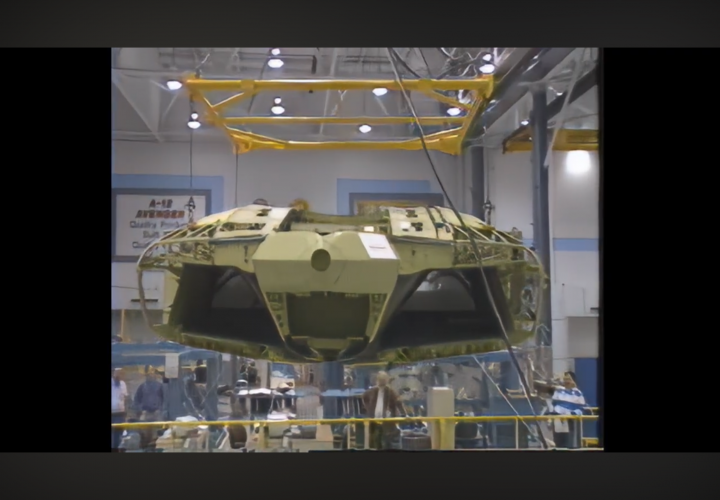
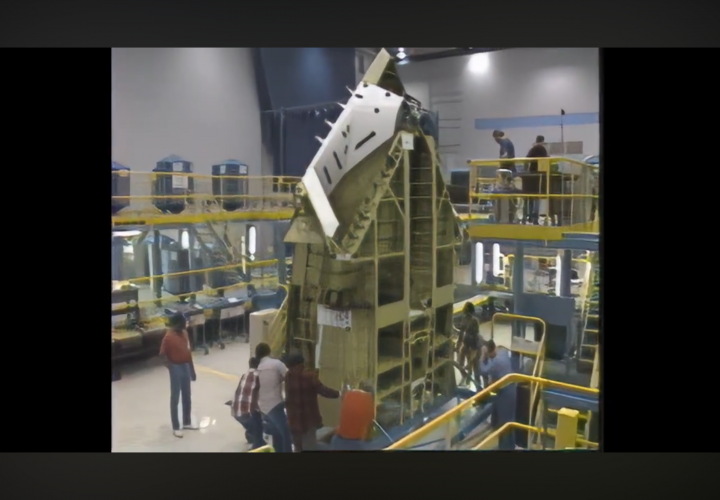
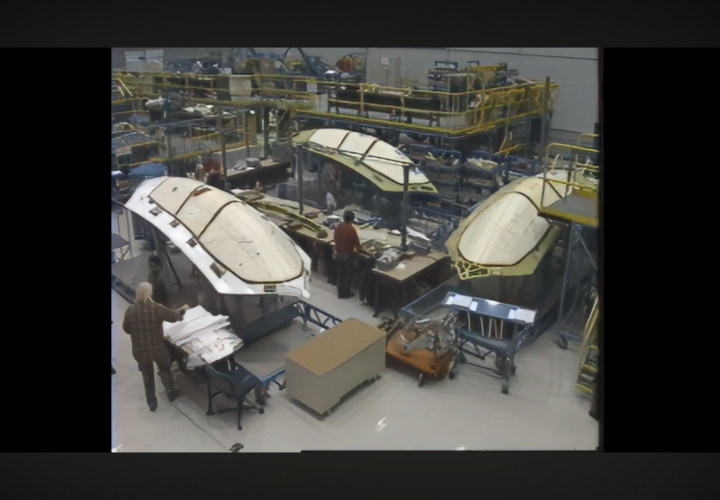
It took me a couple of days to read through the 14 pages of A-12 posts on Secret Projects. Thanks to all that posed photos, technical data. articles and video links. There is a lot of distorted and just plain false information regarding the A-12 on the internet. But the data that has been posted on Secret Projects is closer to the full true story that anywhere else I have found. Over the next few months I will be posting previously unseen A-12 videos taken at MCAIR in late 1990. In support of my 1991 presentation of an SAE technical paper I was cleared to have copies by NAVAIR. Below are a few stills from some of the videos.

If you go back to page 11 in this thread you will find the answer(s) you are looking for.Does anyone know if photos exist of Northrop's ATA mockup? I think it was built by Grumman. Thanks in advance.

Life, uh, finds a way!I remember seeing the A-12 mockup back during the prolonged "litigation" days. Went into the high bay area, was looking mainly at the tailhook display, showing how much titanium was usually machined away and was thus saved by forging, and all of a sudden a rabbit hopped by! How it got indoors I don't know, and then to get in through the locked inner door - but it was there somehow!


fabrication of a single piece canopy of that size at the time seems to complicate things even more than that - tooling etc. without frames it would have been much thicker and heavier, also you need to jettison much heavier stuff on eject.As I understand it, a segmented design complicates seam fabrication and sealing processes.
It’s difficult to appreciate how large the A-12 canopy from pictures. I used to tell people that the A-12 canopy was longer and almost as wide as a 1985 Cadillac Eldorado. To minimize RCS the canopy would’ve ideally been one piece. Treating the canopy bow frames for RCS was a challenge.Hi Sir, Nice to know you here.
I am curious why the cockpit canopy glass consists of three panels joined together instead of a single continuous pane. As I understand it, a segmented design complicates seam fabrication and sealing processes.
You and I were responding at the same time. I am surprised how closely our response is aligned.fabrication of a single piece canopy of that size at the time seems to complicate things even more than that - tooling etc. without frames it would have been much thicker and heavier, also you need to jettison much heavier stuff on eject.
Holy cow!It’s difficult to appreciate how large the A-12 canopy from pictures. I used to tell people that the A-12 canopy was longer and almost as wide as a 1985 Cadillac Eldorado. To minimize RCS the canopy would’ve ideally been one piece. Treating the canopy bow frames for RCS was a challenge.


I'm sure everyone would appreciate reading a countering view from someone involved directly in the program. When a program is classified, people who worked on it are often rightly reticent to share much, and in the A-12 case, there's the additional complication of the long-running court battles betwen the companies and the government that complicate any attempt to uncover information.After reading through the almost 20 years of A-12 Avenger posts on Secret Projects, I was disappointed to find only posts from individuals never directly on the MD/GD team (please correct me if I am in error).
In the same time frame. McDonnell-Douglas' ATF proposal was apparently quite poor, despite their track record on F-15 and F-18.Think about it, how could the two companies that designed and built the F-15 Eagle and F-16 Fighting Falcon fail so badly?

As noted by Barnaby Wainfain, just look at the A-12 carry through structures. It's piece meal, which is going to add so much weight. But I would love to hear more from CTR on what he experienced. It's cool to read about their canopy design decisions, especailly given that Northrop stayed with the side by side seating AFAIK. It would also be interesting to know how ingree/egress worked on the Northrop design. Does Hydroman or Cancerman remember?I would suggest the main themes of the A-12 story as told here so far are
1) Issues with stealth design - non-optimal basic planform shape, lack of rigorous application of planform alignment principle, expectation of government providing the required technology. Possibly, lack of US Navy buy-in on Stealth.
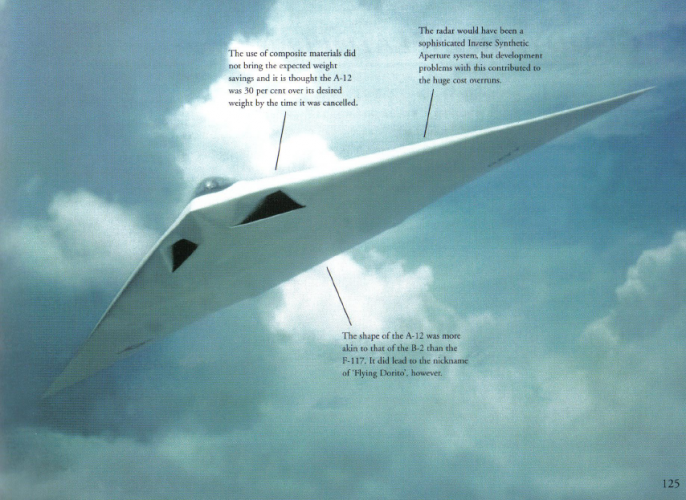
2) structural / weight issues (all aircraft tend to put on weight during design).
3) Agreeing to a contract that set GD/McDonnell-Douglas up for failure.
I'd be interested in your views.
I would suggest the main themes of the A-12 story as told here so far are
1) Issues with stealth design - non-optimal basic planform shape, lack of rigorous application of planform alignment principle, expectation of government providing the required technology. Possibly, lack of US Navy buy-in on Stealth.
2) structural / weight issues (all aircraft tend to put on weight during design).
3) Agreeing to a contract that set GD/McDonnell-Douglas up for failure.
I'd be interested in your views.
i have read 'The $5 Billion Misunderstanding' a while back, was keen to see if you agreed.Overscan,
Thank you for this list.
Instead of responding to these questions in the order you listed, I will start with '3) Agreeing to a contract that set GD/McDonnell-Douglas up for failure.' The MD ATF down select loss from four to two teams ties in significantly with your earlier comment on the McDonnell-Douglas' ATF proposal being quite poor.
The US Airforce was downright pissed when they read the MD ATF RFP response in 1986. Out of either arrogance or honesty MD told the Airforce SPO that it was not possible to build an ATF with the specified performance, weight, and estimated production cost in the RFP. So MD submitted proposals for multiple different aircraft designs, with no one design promising to meet all the RFP requirements.
The lesson MD leadership took from this ATF down select loss was, it doesn't mean shit to the government customer that your company currently produces the preeminent fighter aircraft in the world. You don't tell your government customer that their requested aircraft cannot be built with the performance, weight, and production cost they specified. They not only expect, they want you to lie. This ATF down select loss ended many promising careers on the MD proposal team.
To understand fully all of the factors that convinced MD and GD leadership to commit to a technically flawed contract, you need to read 'The $5 Billion Misunderstanding' by Stevenson. But the US Navy told MD and GD that they had used data from on F-117 and B-2 programs to develop their aircraft weight estimates (including the weight of necessary RAM). This was a lie, and by government regulation invalidated the contract. MD leadership likely knew the US Navy was lying. But based on the ATF down select loss lesson learned, MD leadership decided to play the game. I was informed of this personally by the my A-12 Chief Engineer at MD. I will not comment on GD leadership knowledge and motivations to commit to the contract.
FYI, the original USAF contract max takeoff weight for the YF-22 and YF-23 was 50,000 LBS. This was later revised to 60,000 LBS during Aircraft development. The final take off weights for the YF-22 and YF-23 respectively were 62,000 LBS and 64,000 LBS. The final production F-22 max takeoff weight was 85,500 LBS, a 71% increase over the original RFP weight. Final development cost for the F-22 was more than double the original contract estimate.
Next up, '1) Issues with stealth design.... '.
The St. Louis ATF effort was led by a conservative retired USAF fighter general who had rejected a stealth-driven approach in favour of what programme officials called a "super F-15." McDonnell Douglas placed fifth, behind Boeing.
Sweetman, Bill
Interavia Business & Technology
Friday, November 1 2002
Thanks for the link to MD ATF information. As I stated in my picture puzzle metaphor, this concept art is only a piece of a much larger puzzle. MD submitted a LO ATF configuration along with the others. I doubt however it was the lowest weight and cost.i have read 'The $5 Billion Misunderstanding' a while back, was keen to see if you agreed.
In terms of the ATF response, McDonnell-Douglas is the least well documented. There's the RFI designs of course from 1983, but later on this single image published of a McDonnell-Douglas ATF concept:
I've always wondered if this was an actual design or just concept art.
Discussion on McDD ATS/ATF designs and precursors is here https://www.secretprojects.co.uk/threads/mcdonnell-douglas-ats-pre-atf-and-atf-studies.399/
What I was informed by USG personnel after the contract award, and what I was told by Grumman engineers later when supporting the AX effort, the Northrup Grumman ATA was bottom entry with a side by side crew station. The wing span of the Northrup Grumman ATA was larger than the A-12 and the engine inlet position provided greater crew station width for bottom entry. The wing span and engine inlet differences however resulted in the Northrup Grumman ATA proposal being non compliant with other specification requirements. More on this in later posts.As noted by Barnaby Wainfain, just look at the A-12 carry through structures. It's piece meal, which is going to add so much weight. But I would love to hear more from CTR on what he experienced. It's cool to read about their canopy design decisions, especailly given that Northrop stayed with the side by side seating AFAIK. It would also be interesting to know how ingree/egress worked on the Northrop design. Does Hydroman or Cancerman remember?
I don't think I'd say lack of USN buy-in on stealth so much as lack of USN understanding how stealth changed your operational model. No need to fly down in the weeds like an A-6 when the enemy radar cannot detect the plane at 30,000ft until weapons release (or after).I would suggest the main themes of the A-12 story as told here so far are
1) Issues with stealth design - non-optimal basic planform shape, lack of rigorous application of planform alignment principle, expectation of government providing the required technology. Possibly, lack of US Navy buy-in on Stealth.
2) structural / weight issues (all aircraft tend to put on weight during design).
3) Agreeing to a contract that set GD/McDonnell-Douglas up for failure.
Thanks for this. I had always heard that MAC had one of the best weights groups in the business and I figured they probably accurately predicted what the ATF was going to weigh and were penalized for it. Although, I understand they were still lacking in L.O. tech, which is why they hired Alan Wiechman.Overscan,
Thank you for this list.
Instead of responding to these questions in the order you listed, I will start with '3) Agreeing to a contract that set GD/McDonnell-Douglas up for failure.' The MD ATF down select loss from four to two teams ties in significantly with your earlier comment on the McDonnell-Douglas' ATF proposal being quite poor.
The US Airforce was downright pissed when they read the MD ATF RFP response in 1986. Out of either arrogance or honesty MD told the Airforce SPO that it was not possible to build an ATF with the specified performance, weight, and estimated production cost in the RFP. So MD submitted proposals for multiple different aircraft designs, with no one design promising to meet all the RFP requirements.
The lesson MD leadership took from this ATF down select loss was, it doesn't mean shit to the government customer that your company currently produces the preeminent fighter aircraft in the world. You don't tell your government customer that their requested aircraft cannot be built with the performance, weight, and production cost they specified. They not only expect, they want you to lie. This ATF down select loss ended many promising careers on the MD proposal team.
To understand fully all of the factors that convinced MD and GD leadership to commit to a technically flawed contract, you need to read 'The $5 Billion Misunderstanding' by Stevenson. But the US Navy told MD and GD that they had used data from on F-117 and B-2 programs to develop their aircraft weight estimates (including the weight of necessary RAM). This was a lie, and by government regulation invalidated the contract. MD leadership likely knew the US Navy was lying. But based on the ATF down select loss lesson learned, MD leadership decided to play the game. I was informed of this personally by the my A-12 Chief Engineer at MD. I will not comment on GD leadership knowledge and motivations to commit to the contract.
FYI, the original USAF contract max takeoff weight for the YF-22 and YF-23 was 50,000 LBS. This was later revised to 60,000 LBS during Aircraft development. The final take off weights for the YF-22 and YF-23 respectively were 62,000 LBS and 64,000 LBS. The final production F-22 max takeoff weight was 85,500 LBS, a 71% increase over the original RFP weight. Final development cost for the F-22 was more than double the original contract estimate.
FYI.
1) I was a Carrier Suitability Specialist for A-12 development, and interfaced frequently with USN representatives that supported both ATA proposal teams.
2) Many major component suppliers for the ATA RFP were common to both teams.
3) Although the YF-23 Northrup/MD team and the A-12 MD/GD teams in St Louis were technically brick walled from each other, we shared the same building and cafeteria.
4) I have been an aerospace engineer on US military programs for over 45 years, working for both primes plus major subcontractors I have shared many stories over drinks in my career.


It's entirely likely they're all relying on the same evidence given the way AIs search the internet and treat everything as having equal value.four neural networks agreed that the flight range does not exceed 2300 nautical miles or 4260 km. Probably somewhat lower

Thanks for the historical ATA detail. I offer one ATF clarification from firsthand knowledge:FYI, the original USAF contract max takeoff weight for the YF-22 and YF-23 was 50,000 LBS. This was later revised to 60,000 LBS during Aircraft development. The final take off weights for the YF-22 and YF-23 respectively were 62,000 LBS and 64,000 LBS. The final production F-22 max takeoff weight was 85,500 LBS, a 71% increase over the original RFP weight. Final development cost for the F-22 was more than double the original contract estimate.
Thank you for the more detailed information on the F-22. Unique to carrier launched aircraft are the weight limitations of the catapult, arresting system and elevators. MD told the USN carrier suitability and mission requirements should set the aircraft weight limits. The USN however was indexing aircraft production cost to aircraft weight.Thanks for the historical ATA detail. I offer one ATF clarification from firsthand knowledge:
- Actual F-22A takeoff gross weight (TOGW) for the design missions (Mission 1, all subsonic; Mission 2, mixed sub/supersonic) were both a bit over 64,000 lb.
- The design TOGW in the EMD proposal was 57,300 lb. During EMD, GDFW often complained (even in front of Gen. Fain) that the Lockheed proposed weights were way off and unachievable. [this public display of insubordination later was a factor in the Lockheed purchase of GDFW ... more someday on this ...]
- The F-22A max TOGW of 85,000 lb was for Mission 3 (an all-subsonic one-way ferry mission employing (4) 600-gal external tanks and carrying a ferry load of internal and external AIM-120 weapons). The EMD proposal number for max TOGW was above 80,000 lb, but I don't have a more exact recollection.
Agreed, I have had Google Gemini and Microsoft Copilot incorrectlyinterpret data in papers I personally published. Then I have fun asking a machine how it came up with the wrong answer when I am the original author of the data.It's entirely likely they're all relying on the same evidence given the way AIs search the internet and treat everything as having equal value.
One more note ... the EMD program was a cost plus award fee contract. The US Govt does not rely on the contractor's bottomline proposed cost for cost-plus development contracts, but does consider specific cost elements within the total "price" proposal. The Govt relies on the service's cost agency (in this case, the AFCAA and local program personnel in Dayton) and the OSD CAPE (then called CAIG) for the official Govt estimate, from which budgets are built and defended.FYI, the original USAF contract max takeoff weight for the YF-22 and YF-23 was 50,000 LBS. This was later revised to 60,000 LBS during Aircraft development. The final take off weights for the YF-22 and YF-23 respectively were 62,000 LBS and 64,000 LBS. The final production F-22 max takeoff weight was 85,500 LBS, a 71% increase over the original RFP weight. Final development cost for the F-22 was more than double the original contract estimate.
fabrication of a single piece canopy of that size at the time seems to complicate things even more than that - tooling etc. without frames it would have been much thicker and heavier, also you need to jettison much heavier stuff on eject.
Thank you very much for your patient replies.It’s difficult to appreciate how large the A-12 canopy from pictures. I used to tell people that the A-12 canopy was longer and almost as wide as a 1985 Cadillac Eldorado. To minimize RCS the canopy would’ve ideally been one piece. Treating the canopy bow frames for RCS was a challenge.
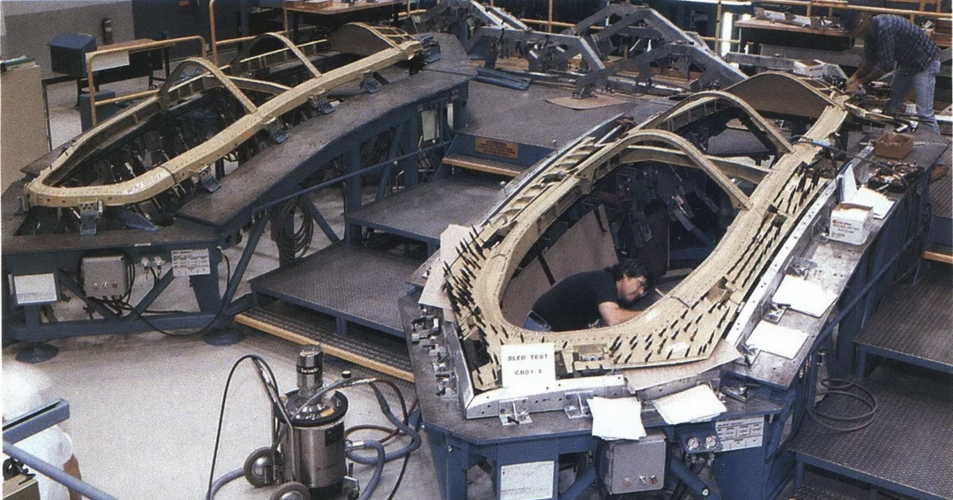
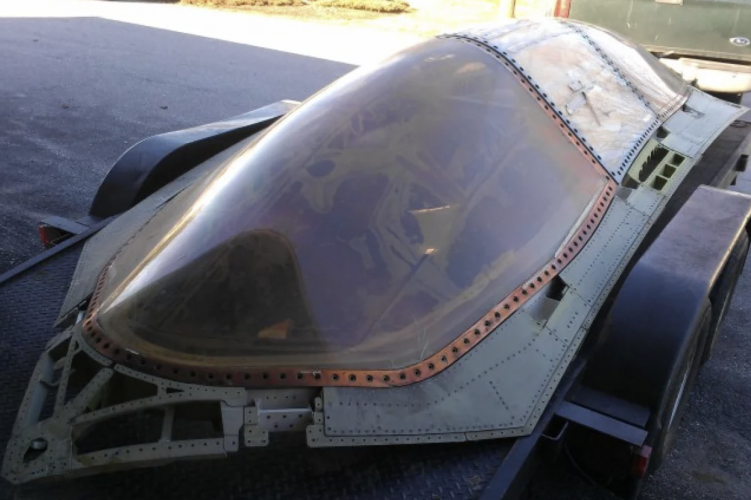
I had worked on the canopies and windshields for the two place carrier AV8-B. The large bubble canopy not only provided exceptional over the side vision, for a pressurized cockpit it was also the ideal shape to minimize transparency weight. The A-12 canopy shape was driven by RCS requirements, hence the large flat sides. This was a horrible shape as a pressure vessel, made worse by the need for high stiffness to prevent deflections affecting the RCS requiredshape. The compound curvature of the forward transparency improved stiffness, and combined with the thicker requirements for bird, strike protection, set the transparency thickness. The back two transparencies were made as thin as possible to save weight, but to maintain stiffness required additional frames. We looked into not cutting the transparency into sections, so to not have to deal with the seam, and have the frame attach underneath. This however, did not gain us anything for RCS, and larger transparencies are harder to produce. All transparencies were polycarbonate with a with a ITO vapor deposit coating. Fully assembled and installed the canopies weighed close to 800 pounds each. To reduce the weight for jettisoning we used flexible linear shape charge to cut away a large portion of the canopy frame.
I'm still confused about how the polycarbonate transparencies are secured. Judging from the first photo, I assumed the transparencies were mounted on the exterior side of the support frames. But the second photoraises a question for me, where metallic strips that fasten the outer face of the transparencies to the support frames are plainly visible. Moreover, these strips appear to lie flush with the transparencies. This differs from the canopies of the F-15 and F/A-18, where the support frames protrude slightly above the transparencies.It’s difficult to appreciate how large the A-12 canopy from pictures. I used to tell people that the A-12 canopy was longer and almost as wide as a 1985 Cadillac Eldorado. To minimize RCS the canopy would’ve ideally been one piece. Treating the canopy bow frames for RCS was a challenge.
I had worked on the canopies and windshields for the two place carrier AV8-B. The large bubble canopy not only provided exceptional over the side vision, for a pressurized cockpit it was also the ideal shape to minimize transparency weight. The A-12 canopy shape was driven by RCS requirements, hence the large flat sides. This was a horrible shape as a pressure vessel, made worse by the need for high stiffness to prevent deflections affecting the RCS requiredshape. The compound curvature of the forward transparency improved stiffness, and combined with the thicker requirements for bird, strike protection, set the transparency thickness. The back two transparencies were made as thin as possible to save weight, but to maintain stiffness required additional frames. We looked into not cutting the transparency into sections, so to not have to deal with the seam, and have the frame attach underneath. This however, did not gain us anything for RCS, and larger transparencies are harder to produce. All transparencies were polycarbonate with a with a ITO vapor deposit coating. Fully assembled and installed the canopies weighed close to 800 pounds each. To reduce the weight for jettisoning we used flexible linear shape charge to cut away a large portion of the canopy frame.
Yes, our Northrop ATA had a wider wingspan, was slightly larger but we proposed OTS F404 engines as compared to the A-12 but we tried to convince the USN that to attack using an LO aircraft, you have to do it from medium to high altitudes, this is from vast experience on other programs. A flying wing on the the deck, a sitting duck. So our bid was unresponsive since the FFP contract had loads of risk and the USN kept jacking around with the spec, that my friends is what kills programs. And CTR you are correct, if anyone has a chance to read the $5 Billion Dollar Misunderstanding, is good reading but a bit heavy on the politics and financials but a very good book overall.What I was informed by USG personnel after the contract award, and what I was told by Grumman engineers later when supporting the AX effort, the Northrup Grumman ATA was bottom entry with a side by side crew station. The wing span of the Northrup Grumman ATA was larger than the A-12 and the engine inlet position provided greater crew station width for bottom entry. The wing span and engine inlet differences however resulted in the Northrup Grumman ATA proposal being non compliant with other specification requirements. More on this in later posts.
That would be a very difficult canopy to fabricate plus it has to survive testing.I'm still confused about how the polycarbonate transparencies are secured. Judging from the first photo, I assumed the transparencies were mounted on the exterior side of the support frames. But the second photoraises a question for me, where metallic strips that fasten the outer face of the transparencies to the support frames are plainly visible. Moreover, these strips appear to lie flush with the transparencies. This differs from the canopies of the F-15 and F/A-18, where the support frames protrude slightly above the transparencies.
Finally, will all seams be treated to make them invisible or optimize RCS?