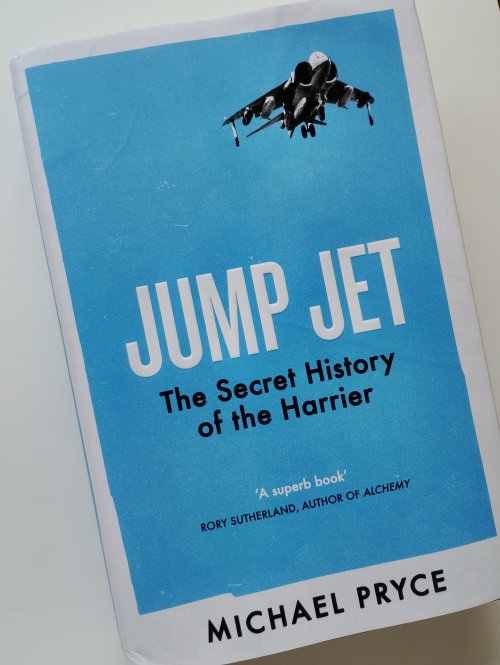
There's a lot in my book about the techno-politics of aviation. Some quotes from Duncan Sandys (and a hint of scandal). Julian Amery's wild reasons for supporting TSR.2, and Roy Jenkins outrageous language on cancelling the P.1154. All add colour and detail to some of what we already know.
The big one, though, is Maggie Thatcher. As a trained scientist, and one whose work actually found its way onto the Harrier, you would hope she was more sensitive to how fighters are designed.
You'd be wrong. She was impulsive, opinionated and, while seeking to soak up post-Falklands glory, as susceptible to the British state's obsession with analysis and data over common sense as many of those she criticised. She was also pretty easy for industrial interests to 'play' to get what they wanted, to fill their factories, rather than what the front-line needed.
The result was to go ahead with a European project, EFA, now Typhoon, over what the RAF and RN really wanted and had written requirements for - ASTOVL.
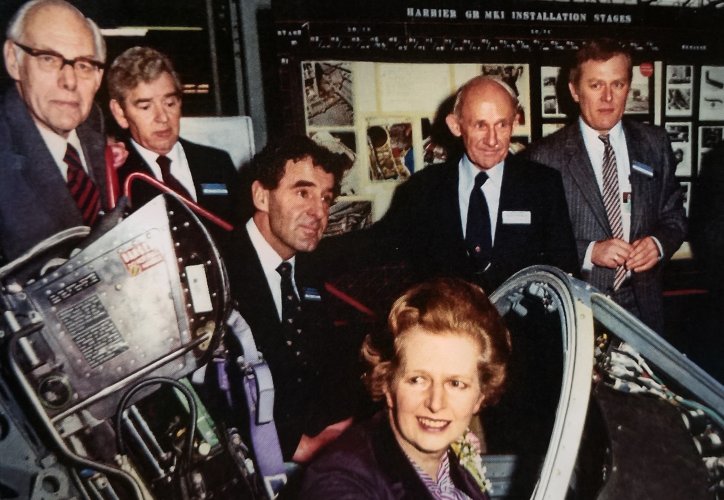
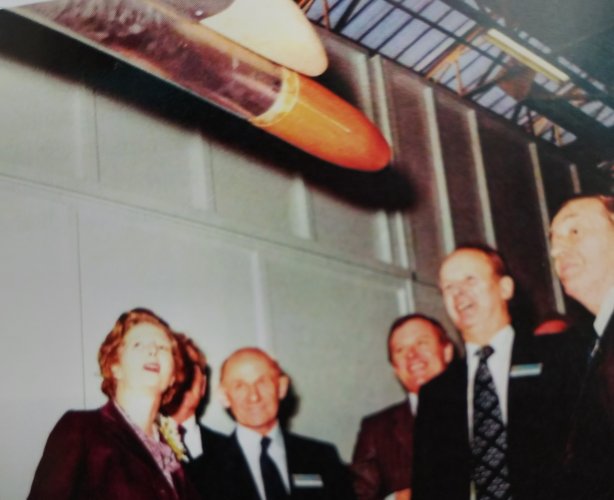
The first picture here shows her in a Harrier cockpit at Kingston in December 1982. The second picture shows a key moment when her lack of imagination changed everything. After lunch that day, the knife went into hopes for US/UK development of the supersonic P.1216 ASTOVL jump jet with McDonnell Douglas - the year before Kingston designers had been embedded at St Louis on a joint future project for the US Navy. It is the moment that the path changed, leading us to Typhoon and the F-35B.
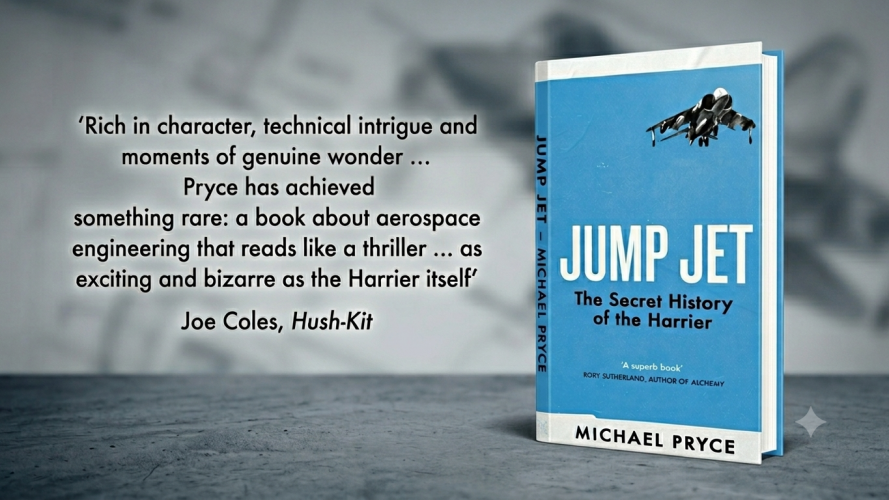
The book tries to show such moments, and explain their causes and impacts, as well as how politics mixes with technical issues. Mrs T had views on wingtip missiles, but how she got them is the real story.
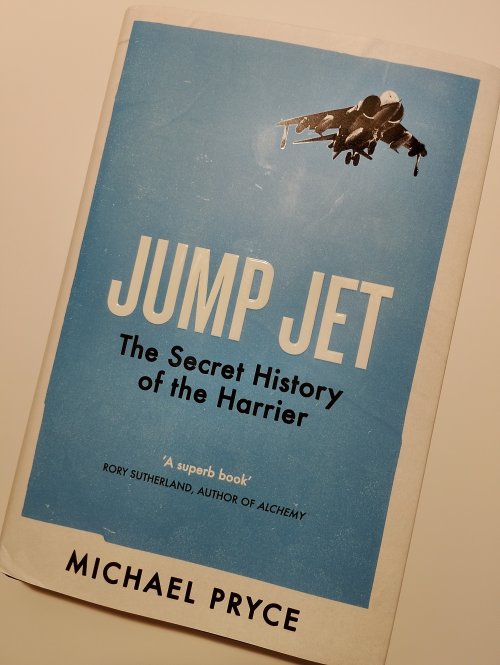
Pics are copyright BAE Systems, and both are in my book - out in just over three weeks. Pre-orders open at
www.jumpjetpenguin.com