NPOMash 3M22 Zircon / Tsirkon (SS-N-33)

Back then it was just a tactical bomb at max yield though.
Same warhead as on a Minuteman I ICBM, in an honest-to-God reentry vehicle. If it was in service today the only weapon, in the US, that would give it a run for it's money would be the B83.
 
Then it would be entirely appropriate to compare the Iskander-M, weighing 4 tons and with a range of 800 km, with the Tsirkon, weighing 3 tons and with a range of 1,400 km. This difference is the benefit of using an air-breathing engine.
I mean it's tricky.

AFAIK, Iskander-M uses 450+kg warhead for 800km range.

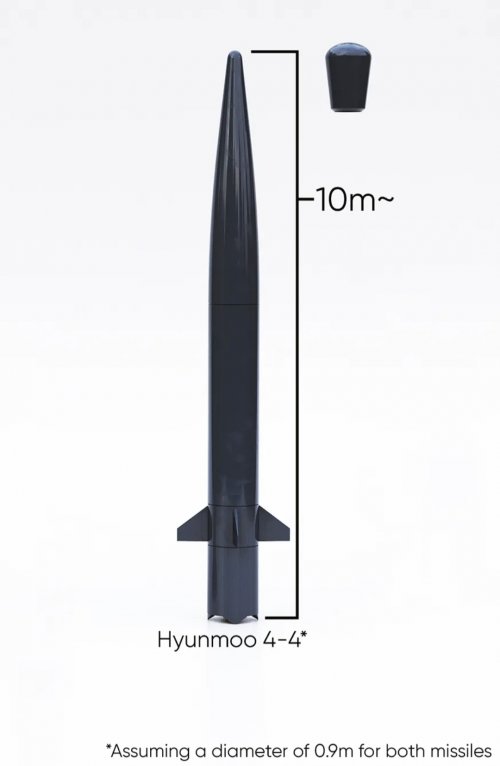
Hyunmoo 4-4/2 sub launched SRBM, with a length of ~9-10m and diameter of 0.8-0.9m, 1 ton warhead(Conventional), ~5.5 tons total weight, has a range of ~1000km( based on open source data)

View: https://fixvx.com/mason_8718/status/1739200728303034787?s=20

This missile weighs 1.375 times as much as the Iskander-M, with a warhead more than twice as heavy — yet it still delivers somewhat greater range.
Without using an air-breathing engine.
 

Attachments

  • 456.png
    456.png
    56.2 KB · Views: 169
  • Screenshot_20260620_140700_Gallery.jpg
    Screenshot_20260620_140700_Gallery.jpg
    104.1 KB · Views: 81
Last edited by a moderator:
I don't think a Korean or Russian ballistic missile is a good analog for the zircon. I see you guys are trying to make some estimates but the articles I've read imply it goes up to 35-40 klicks, starts cruising at a sustained altitude of 28-30 km and maintains this at hypersonic speeds (claims anywhere from mach 7 to mach 9). Sources then describe a short boost in acceleration as it begins it's terminal dive. It loses speed at it descends and is said to finally shake hands with it's opponent at speeds of about mach 4 or 5.

Official sources classify it as a cruise missile. Official sources claim hypersonic speeds throughout it's cruising flight envelope. I haven't seen direct official sources say it but it is heavily implied that there is a continuous thrust impulse during cruise and even during terminal dive. I think this is all backed up by the claimed flight times and distances made by us as well as the Russians.

Now you might not believe any of this but the Russians sure do as they spend up to eight figures (if one were to calculate in freedom money) on each and every one of those "effectors" as brits seem to like calling them these days. I think it works as advertised and if it indeed works as advertised I do not see how it is physically possible to be a simple solid rocket guided missile. Happy to be corrected if I am wrong.
 
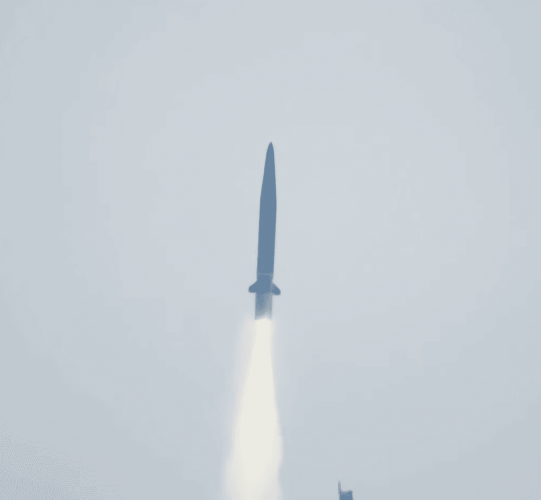
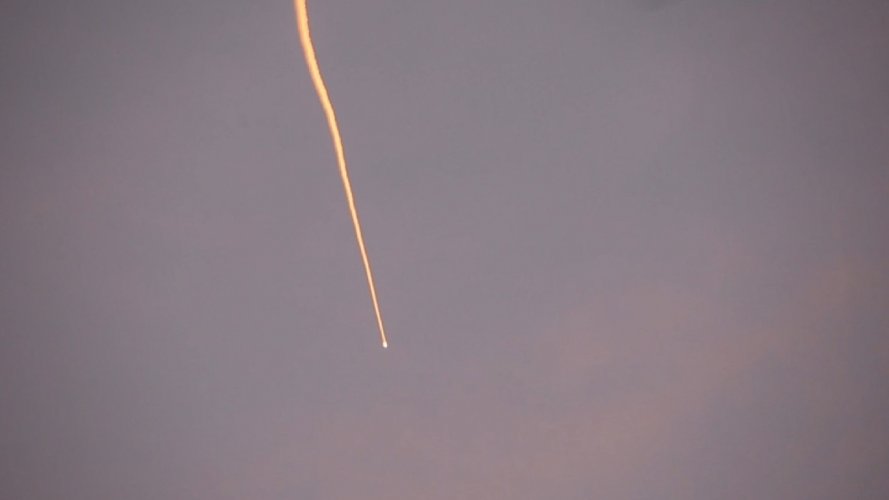
One of the videos shows the flight of the Zircon after the launch vehicle separation, and it is clearly visible how the air-jet engine works
 
Last edited:
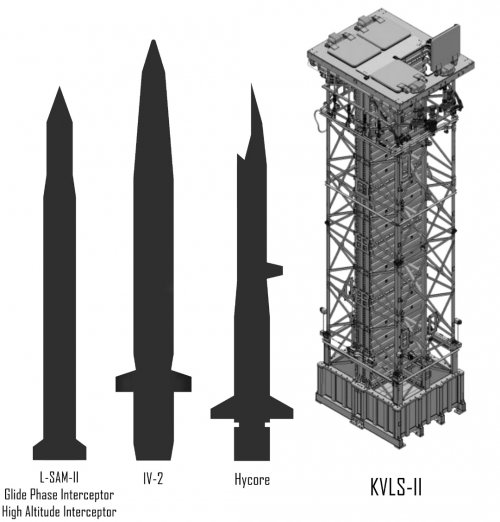
I did this so that you can compare the characteristics of these two rockets with different types of engines.
Hyunmoo 4-4/2 and Hycore
 
This is one of the official videos, I'm at a resort, and I can't find it on my phone. Here's a screenshot
To be fair, it can be, in principle, a SRF sustainer stage.
 
Sustainer is solid rocket motor. Zircon does not breath air, it does not have a intake.

Up to now all of the reports I've read indicate that the SS-N-33 is a supersonic air breathing cruise-missile.
 
Up to now all of the reports I've read indicate that the SS-N-33 is a supersonic air breathing cruise-missile.
There have never been any credible proofs that the Zircon is air breathing, there is no evidence of a inlet, we have however seen the Zircon nose cone which does not feature a inlet, and even the Zircon wreckages in Ukraine corroborate that there is no air breathing element.

https://tass.ru/nauka/26372405
"In 2023, he received the title of Hero of Labor, one of his most significant merits is the development of a fuel that has no analogues in the world for the latest Zircon hypersonic missiles."

"In total, under his leadership, more than 20 high-performance formulations of solid rocket propellant, and over 50 solid-propellant charges of solid-propellant rocket engines"

This Zircon rocket fuel scientist has literally won awards for his work in solid rocket fuels, and solid propellant charges for solid rocket engines.

Where is the evidence that Zircon is air breathing other than hyped media outlets?

Also btw if you trust george or you don't, he has vehemently said that Zircon is not air breathing and is meant to be a low cost missile..
 
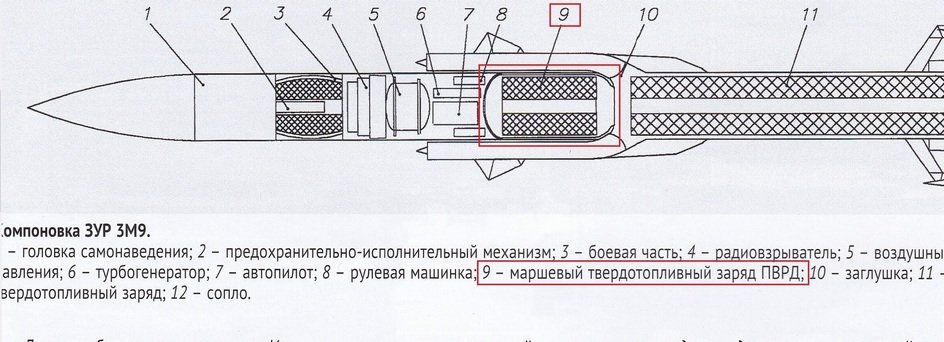
There are solid-fuel engines that use air as an oxidizer...
3M9M3 surface-to-air missile, "Kvadrat" air defense missile system
 

Attachments

  • 6194160_06646bbeb7dcf16490f42e614f5fee8d.jpg
    6194160_06646bbeb7dcf16490f42e614f5fee8d.jpg
    123.4 KB · Views: 126
Last edited:
There are solid-fuel engines that use air as an oxidizer...
3M9M3 surface-to-air missile, "Kvadrat" air defense missile system
Yes but where exactly is the proof of inlets on the Zircon?
 
Yes but where exactly is the proof of inlets on the Zircon?
There's none.

There's nothing inherently wrong with SRF - there's enough cruise missiles on rocket engines, in fact, you don't absolutely have to breathe for that(original Exocet as an obvious example), as long as you "cruise", and overall specification is fulfilled.

The main problem is it has unexplainably long range for a powered SRF flight. At least same as brahmos-ER, which is exactly the same size.
 
The main problem is it has unexplainably long range for a powered SRF flight. At least same as brahmos-ER, which is exactly the same size.
What if for medium distances the missile climbs high enough for drag to drop, but not too high, so it would still produce good enough L/D and not too high AoA while slowly decelerating from mach (9?, 10?). This also allows for small maneuvers.
And for long distances the missile goes semi-ballistic.

I lack the competence to directly say the alt range, but eyeballing it a bit lower than stratopause, personally, makes sense. Also thermal load on this altitude will be lower…
 
Erm... so? Come on, solid-fuel ramjets are used since late 1950s!
as far as I understand, main “problem” with using (SC)RAMJETs is their relatively high production cost and complexity. I have once CFD’ed fuel-ejector for axis-symmetric one and that was not a pleasant experience. Even using high ISP fuel, long-burning solid fuel rocket, will allow us to produce enough of 3M22 to both replace P-800 and use them in relatively large numbers. You don’t want an anti ship missile to cost similar to an IRBM. (SC)RAMJET designs also have non-negligible drag penalty after the fuel rans out, since intakes are worse than “perfect nosecone”.
 
as far as I understand, main “problem” with using (SC)RAMJETs is their relatively high production cost and complexity. I have once CFD’ed fuel-ejector for axis-symmetric one and that was not a pleasant experience. Even using high ISP fuel, long-burning solid fuel rocket, will allow us to produce enough of 3M22 to both replace P-800 and use them in relatively large numbers. You don’t want an anti ship missile to cost similar to an IRBM. (SC)RAMJET designs also have non-negligible drag penalty after the fuel rans out, since intakes are worse than “perfect nosecone”.
Point is, (sc)ramjet is doable and Russia, as a country with huge expertise in the topic, would definitely know the “pros and cons” of such design. It is not that such engine is not feasible and too advanced, but I, personally, think it’s just suboptimal for this P-800 replacement for variety of reasons.
 
The Weight Volume and Speed/Range of Mach 9 to ~ 1000 km indicates this is scramjet engine/propulsion , As the missile fits into UKSK cell which can fit Onyx and Kalbir , A small volume /weight with high mach speed and range indicates its scramjet , imho.
 
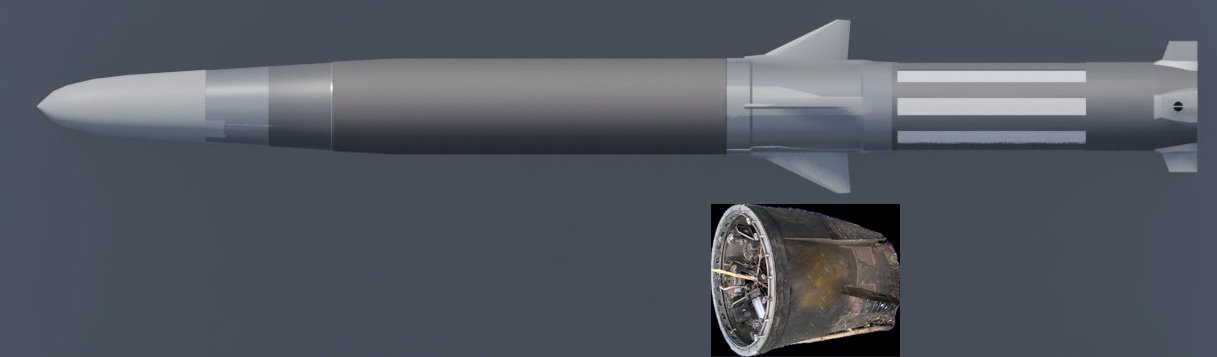
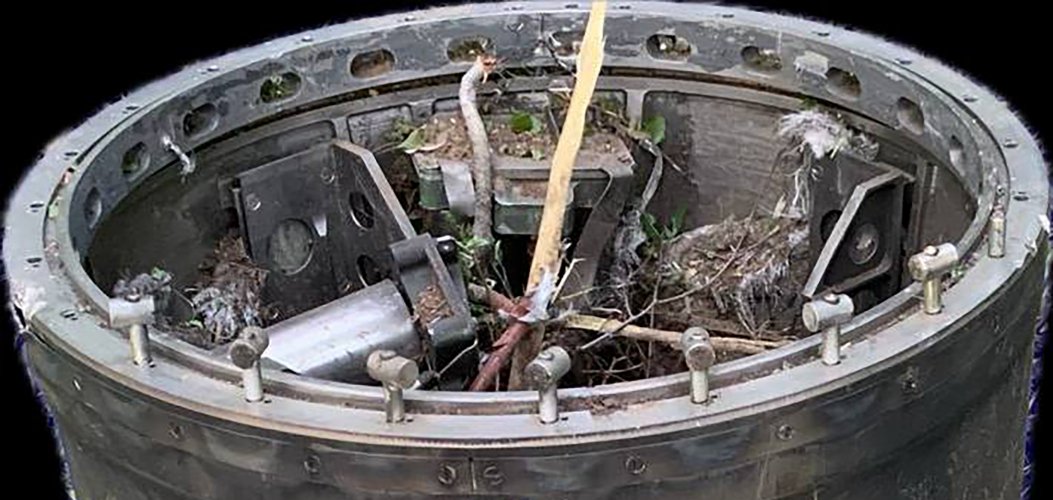
The tail section has very little space for the engine nozzle
 

Attachments

  • tail.jpg
    tail.jpg
    51.7 KB · Views: 113
  • tail_2.jpg
    tail_2.jpg
    656.4 KB · Views: 129
The weight of the 3M22 warhead is about 120 kg, which is an extremely small figure for the most expensive missile among all Russian strike weapons. For example, even the small-class cruise missile - “Banderol” has a warhead weighing 150 kg.
After the starter motor is separated, the main propulsion motor is started. Both engines (boost and propulsion) are solid-fuel.
Guess that settles it, not so advanced after all.
The enemy has stated that at certain stages of the flight the missile can reach a speed of Mach 9, however, the currently recorded maximum flight speed of the 3M22 missile does not exceed Mach 6.8 and is not maintained throughout the flight.
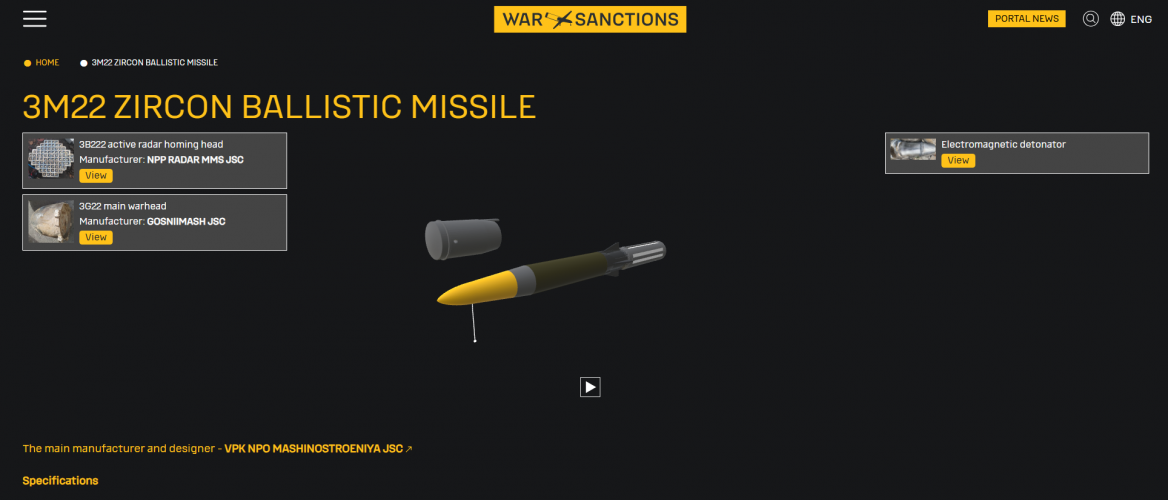
The 3M22 has a combined guidance system - inertial in the cruising phase of the flight and an active radar homing head in the final phase of the flight.
The entire tail section of the 3M22 rocket is made of titanium.
 
Last edited:
So this is a solid rocket fuel weapon not ram/scramjet after all?
It seems massively over-hyped now. It's like they added a stage to a 48N6 and an A2G ARH system (which is probably the most advanced part). Heavy use of Ti is likely to increase cost too.

So I guess if Ukraine bobs an extra stage of an FP-7, they just made an equivalent.
 
Can someone calculate the maximum range for a ballistic missile travelling at mach 6.8 and 30-40 km (or whichever altitude the zircon flies at) because this looks like one of those ridiculous hit pieces the Ukrainians have been doing on Russian weapon systems since the beginning of the war (i remember when the Iskander was considered a useless pos, the lancet and geran were getting shot down without hitting anything, UMPK's missed targets by miles)
As for what i personally can say:
- They said it was a scramjet before, now it's "just" a Solid Fuel Ballistic missile
- 120 kg warhead is bogus, perhaps the total explosive mass but the footage i've seen doesn't look like a 120 kg warhead total
- ARH seeker is expected, it was originally designed as an anti ship missile, and it seems to perform well enough, unlike the Kinzhal
- The claim for top speed looks bogus to me, the only open source intel i've seen is AMK and i've seen 9000+ km/h reported for these, which should be more than possible for a two-stage ballistic missile

 
The fuel can be any type, including solid. According to rumors, it’s a gel‑like fuel called “Luminal‑A”. But this doesn’t mean that the oxidizer isn’t supplied through the air intake.
 
Last edited by a moderator:
Can someone calculate the maximum range for a ballistic missile travelling at mach 6.8 and 30-40 km (or whichever altitude the zircon flies at) because this looks like one of those ridiculous hit pieces the Ukrainians have been doing on Russian weapon systems since the beginning of the war (i remember when the Iskander was considered a useless pos, the lancet and geran were getting shot down without hitting anything, UMPK's missed targets by miles)
As for what i personally can say:
- They said it was a scramjet before, now it's "just" a Solid Fuel Ballistic missile
- 120 kg warhead is bogus, perhaps the total explosive mass but the footage i've seen doesn't look like a 120 kg warhead total
- ARH seeker is expected, it was originally designed as an anti ship missile, and it seems to perform well enough, unlike the Kinzhal
- The claim for top speed looks bogus to me, the only open source intel i've seen is AMK and i've seen 9000+ km/h reported for these, which should be more than possible for a two-stage ballistic missile
It has been known to be a solid fuel powered missile for some time already. Whether you consider it a (hypersonic) ballistic, aero/quasi-ballistic, or cruise missile, that is up to your definitions.
 
It has been known to be a solid fuel powered missile for some time already.
Not "known", merely "suspected". The most powerful argument against such suspicions was exactly the Ukrainean engineers stance; previously they did not comment on Zirkon engine (apparently, they weren't exactly sure from the fragments they managed to recover)
 
Not "known", merely "suspected". The most powerful argument against such suspicions was exactly the Ukrainean engineers stance; previously they did not comment on Zirkon engine (apparently, they weren't exactly sure from the fragments they managed to recover)
There have been very strong arguments why Zircon was not air breathing for awhile now, and literally no evidence it was air breathing, but people still for some reason held to the belief that it MUST be air breathing because it was a "cruise" missile.

For some, just the mere thought of Zircon being solid rocket powered was thought to be slander to Russia.
 

Similar threads

Back
Top Bottom