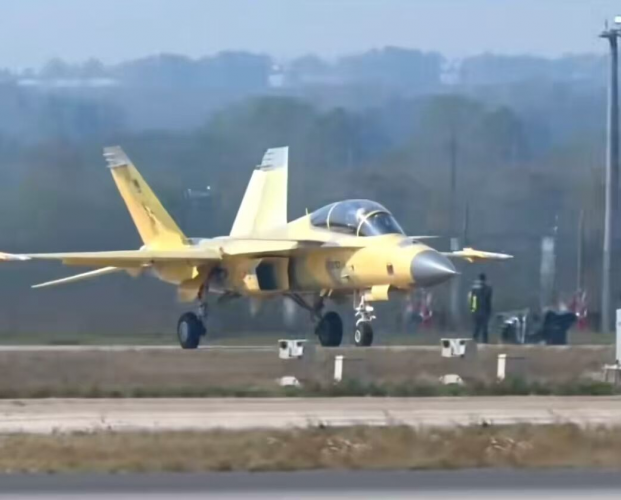
Atleast from current pictures, the engine that JL-XX uses has a variable area nozzle that doesn't match any AI-222 variants. This likely indicates that JL-XX uses the WS-17 afterburning turbofan, allegedly having maximum thrust of 4.7tf each.
IMO, this would give JL-XX excellent maneuverbility, very high TWR while also granting good supersonic performance which would be particularly useful given Chinese 5th and 6th generation fighters are expected spend large chuck of their time supersonic.
The design of the aircraft would also allow relatively easy conversion to a proper single seater unlike other trainers with raised tandem cockpits. Combined with a good amount of LO treatment, high manuverbility, good supersonic performance and a large nose radar, I could see this turn into competitive entry into the global light fighter market comparable to Gripen E and superceding JF-17.