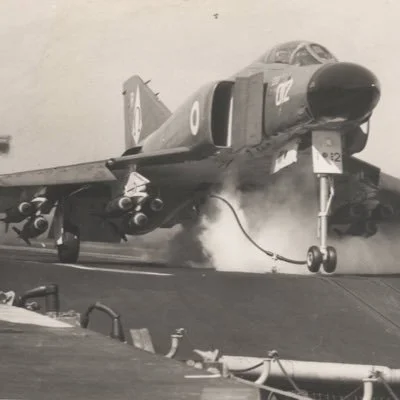
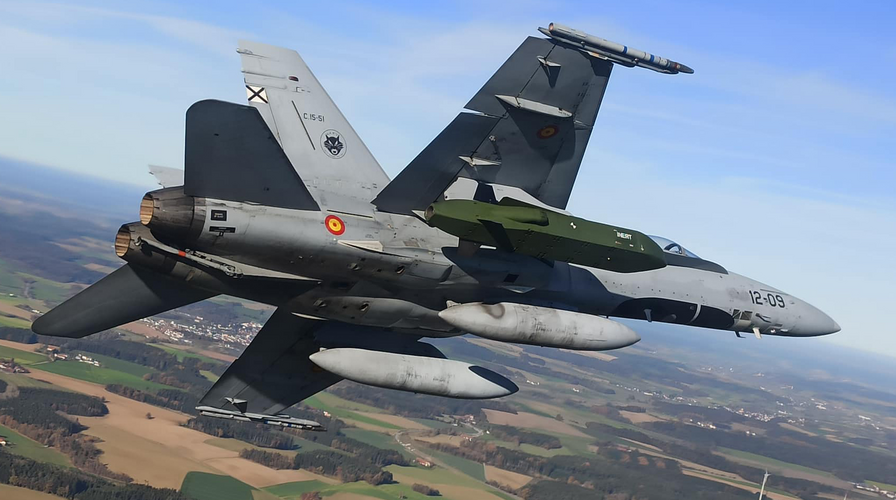
The issue of the catapults is closely related to Verdun and other projects like Hermes refits or CVA-01. Don't know whether it merits a thread of its own, I'll just add this:

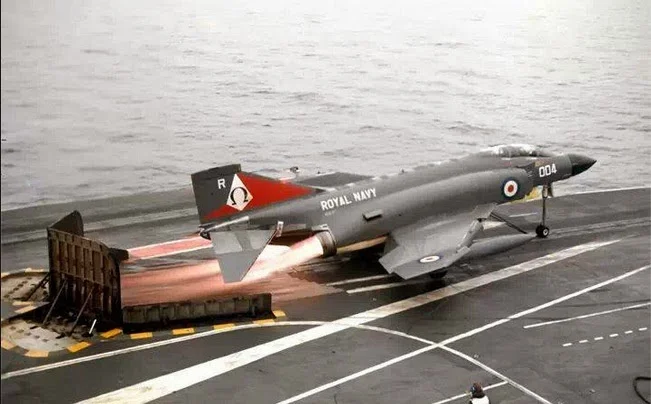
Returning to the table above and comparing with the bs5 from the McD F-4K report, the catapults have similar performance even though the british boilers provided much lower pressure:

Clem Ark
33k lbs 110 ~110
40k lbs 100 ~100

Some snippets on google books suggest that the Clems had (initially?) bs4 catapults. A later improvement is likely, otherwise the F-8 would have been extremely marginal.

According to Friedman, Postwar Naval Revolution: "The first British steam catapult , BS4 , could launch 30,000 pounds at 105 knots in its least powerful version". Length not mentionned.
Hobbs has for
Centaur: bs4 139 ft 40k lbs @ 94 kts
Victorious: bs4 145ft 50k lbs @97 kts (better than the slightly longer bs5)
Hermes: bs4 175 ft and 151 ft, both 50k lbs @ 94 kts (odd and from other sources, these lengths were only planned for the F-4)
Eagle and Ark: bs5 151 ft 50k lbs @ 91 kts, abs5 199 ft 50k lbs @105 kts (as in the F-4K charts)

And on some forums, there is the BS4 103ft with 40,000lb@78kt (which fits the Centaur data)

As the numbers are all over the place, I suggest the hypothesis that
- the change of bs mk4 to mk5 included an improvement, somewhere in the 10-15 kts region
- that change was probably retrofitted to the carriers still in service

Unfortunately, from the sources available, it is unclear what that change was.

Amazon now has the softcover version of Moulin's book on Clemenceau and Foch for Kindle. From this, a part of the puzzle can be solved.

He states a more powerful 51,5m (169 ft) bs5 with 110 kts @ 20 metric t replacing a bs4 with 95 kts @ 20t, 110 kts @ 15t and 130 kts @11t.
Together with the table from old training material I linked above, this means the catapult was improved, but also extended from 157 to 169 ft (fitting the 12 ft increments). He does not say when this happened, but it's probably related to the crusader buy.

For comparison, this improved bs5 is about 15 kts better than the 151ft bs5 Ark Royal bow cat, about equal to the 199ft bs5a Ark waist cat, and maybe 10-12 kts short of the C-11.

It would require about 20 kts wod for the F-8J, 20-25 kts for the F-4B (internal fuel/missiles only) and something in that ballpark for the F-18 in fighter trim (1 droptank, missiles). Fits nicely with the F-8 operating smoothly and no big problems seen for the F-18.

This should also explain the various claims that the Clems were limited to 15 or 18 ton jets: The initial bs4 or the short bs5 on RN carriers would be marginal for say the F-8 (30-32k lbs, 30-35 kts wod).

Extending the improved bs5 to 75m as in the PA-58 projects should result in something like the USN's C-7 catapult.

Some other interesting stuff in that book...
 
The above post is BRILLIANT. Lots of things immediately came to my mind reading it

1- This explains why a Clemenceau could not handle a Phantom (or a Hornet, or a Rafale !) or marginally at best, closer from 1959 Hermes... or a SBC-125 Essex, in that regard.

2- (in 1963 France considered both - Phantom AND Crusader. Wanted the former, like the British; went for the later)

3- But an Audacious, or... the CdG can handle all three of them: Phantom, Hornet or Rafale. All of them 18 - 25 tons in weight.
a) Because the Ark Royal had the 199 ft BS-5A, rather than a truncated-to-171-feet BS-5 as the Clems - or Hermes BS-4
b) because the CdG actually has a truncated C-13 : 75 m long (rather than a Nimitz' 95 m - but otherwise, the very same).

4- (yes, France put a catapult from a 90 000 tons carrier on a 45 000 tons one - but sacrifices had to be made... !)

5- Bottom line: 1959-Hermes-Centaur, SBC-125-Essex, and Clemenceaus all had the same issue: they were just a touch too small for a Phantom.
a) USN validated Phantoms on SBC-125 Essex carriers, but it remained marginal: Crusaders clearly were the prefered option
b) RN FAA bought more powerful Phantoms with Speys, but they were marginal on Hermes, not much better on Victorious, and took heavy rebuild of Audaciouses to get the full potential
c) MN considered Phantoms before Crusaders for the Clemenceaus, but went for Crusaders in the end.

6- so what was the right size to operate Phantoms properly ? (and Hornets later, and Rafales even later: 1960, 1980, 2000 !)
a) Midway rather than Essex
b) Audacious rather than Hermes
c) Verdun or CdG rather than Clemenceau

7- There is clearly a heavy trend there, converging to 42 000 - 55 000 tons, rather than 25 000 - 35 000 tons.

8- The tipping point seems to be 40 000 tons. Clemenceaus were below that treshold, PA58 & CdG were / are above it.
 
Last edited:
3- But an Audacious, or... the CdG can handle all three of them: Phantom, Hornet or Rafale. All of them 18 - 25 tons in weight.
a) Because the Ark Royal had the 199 ft BS-5A, rather than a truncated-to-171-feet BS-5 as the Clems - or Hermes BS-4
b) because the CdG actually has a truncated C-13 : 75 m long (rather than a Nimitz' 95 m - but otherwise, the very same).

Well, you can launch them like the Ark - even better, you have two cats strong enough. But it's still light weights only.

And then, landing seems to have been the bigger problem.... :eek:
 
Another aspect: Crusaders for Hermes are not an easy option; more likely, no option: catapults -15 kts, speed -5 kts, so a 20 kts gap compared to the Clems.
 
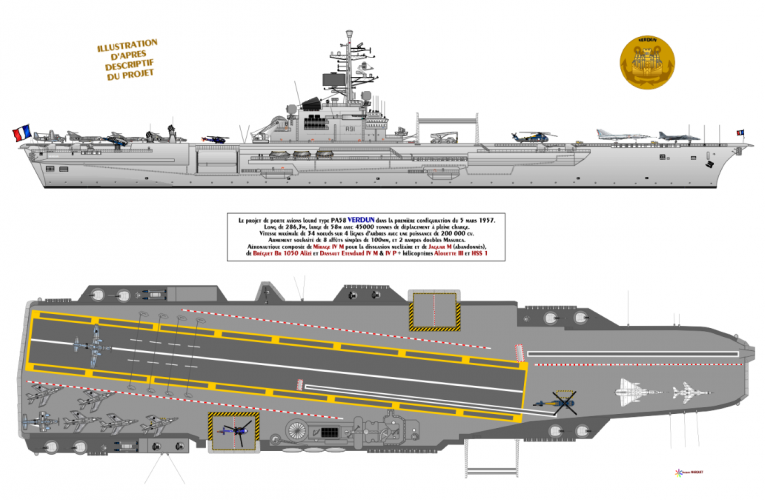
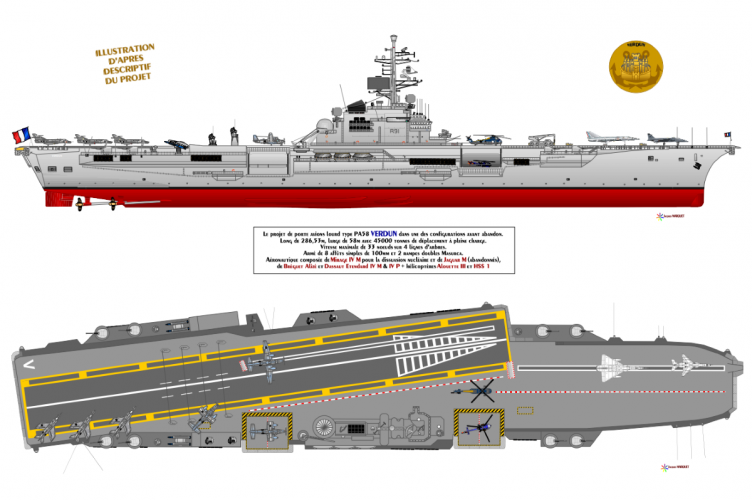
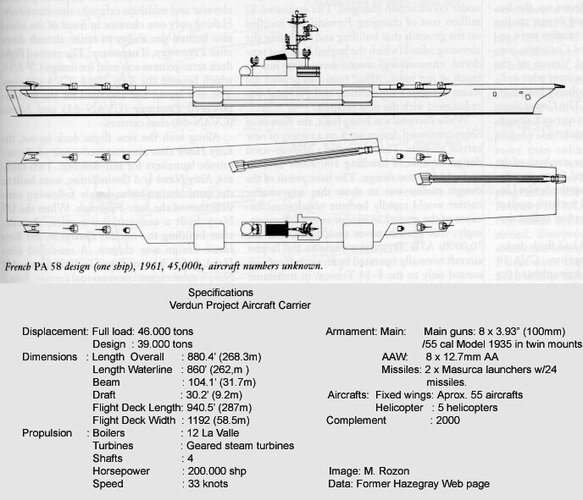
I don't remember where i get this image, but in the file data said year 2005.
Verdun_class_CV.jpg
The dimensions of PA58 in the image are somewhat peculiar.
Length
860ft 0in (262.0m) waterline.​
880ft 4in (268.3m) overall.​
940ft 5in (287.0m) flight deck.​
Beam
104ft 1in (31.7m) waterline​
192ft 0in (58.5m) flight deck. It actually says 1192ft but I think that's a typo for 192ft because 58.5m =191ft 11in and a bit.​

The flight deck length is longer than the overall length, which can't be correct. The waterline beam is the same as the waterline beam for Clemenceau & Foch in Conway's 1947-1995.

The dimensions for PA58 in Conway's 1947-1995 have been quoted in this thread (e.g. by @alejandrogrossi in Post 78) and they are:
Length
860ft pp​
939ft overall​
Beam
112ft waterline​
190ft flight deck​

@alejandrogrossi in Post 78 had also has a line drawing from another source whose dimensions match those in Conway's i.e.:
Length
939ft overall length​
939ft flight deck length​
Beam
112ft waterline​
190ft flight deck​

Therefore, is:
860ft 0in (262.0m) the pp length? Because 860ft is the pp length in the other sources.​
880ft 4in (268.3m) the waterline length?​
940ft 5in (287.0m) the overall length? Because it's close to the overall length of 939ft in the other sources.​
104ft 1in (31.7m) for the waterline beam wrong? Because, the other sources say 112ft.​
 
Last edited:
I found this thread because I'm doing a comparison of the Clemenceau class, PA58 & Charles de Gaulle and am looking for the waterline lengths of Clemenceau & PA 58 and the pp length of Charles de Gaulle. This is because my reference books have the pp lengths for Clemenceau & PA 58 but not their waterline lengths and the waterline length for CdG but not her pp length.

The information that I have from Conway's 1947-1995 is.
781ft (238.0m) pp length of Clemenceau​
860ft (262.0m) pp length of PA58​
781ft (238.0m) wl length of Charles de Gaulle​

Does anyone have the missing information?

Edit 12.27 PM GMT Thursday 09.11.23.
To be absolutely clear, the questions that I am asking, are:
  • What was the waterline length of Clemenceau?
  • What was the waterline length of PA58.
  • What was the between perpendiculars (pp) length of Charles de Gaulle?
 
Last edited:
John Jordan's article on the Clemenceau and Foch in Warship 2023 puts Clemenceau's length as 238 metres between perpendiculars, and 257.5 metres overall.
Thank you for the information.

However, that doesn't help, because I want to know her waterline length, not her between perpendiculars length.

I knew that Clemenceau's between perpendiculars length was 238.0 meters (781ft) because my copies of Conway's 1947-1995 & Roger Chesneau's aircraft carriers book say so. That's why I was able to write "781ft (238.0m) pp length of Clemenceau" in Post 88.

Incidentally both books say that the overall length of Clemenceau was 265.0m (870ft) not 257.5m (845ft).
 
Thank you for the information.

However, that doesn't help, because I want to know her waterline length, not her between perpendiculars length.

I knew that Clemenceau's between perpendiculars length was 238.0 meters (781ft) because my copies of Conway's 1947-1995 & Roger Chesneau's aircraft carriers book say so. That's why I was able to write "781ft (238.0m) pp length of Clemenceau" in Post 88.

Incidentally both books say that the overall length of Clemenceau was 265.0m (870ft) not 257.5m (845ft).
The extra length is the bow mounted catapult bridle catcher.
 
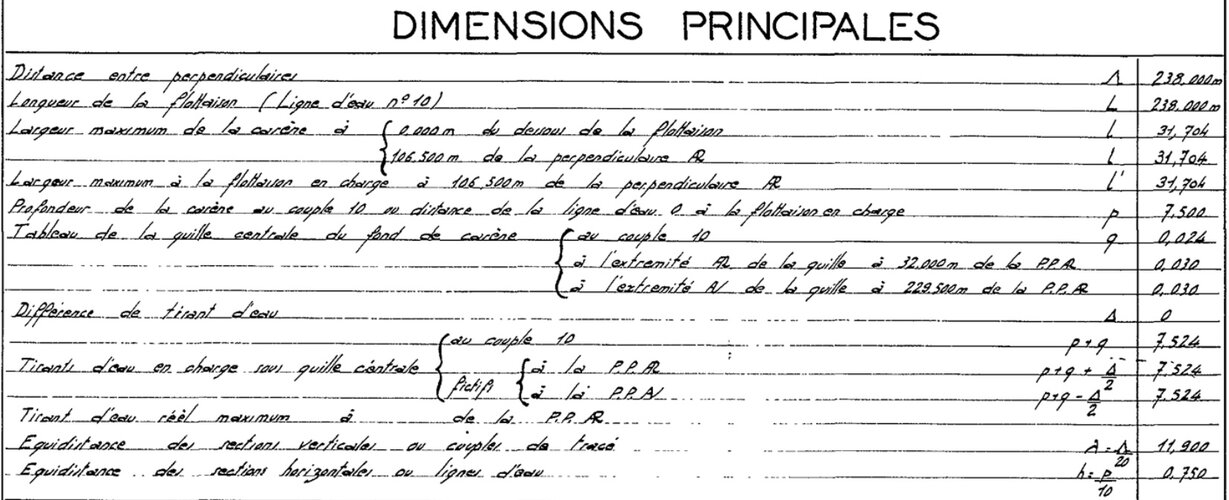
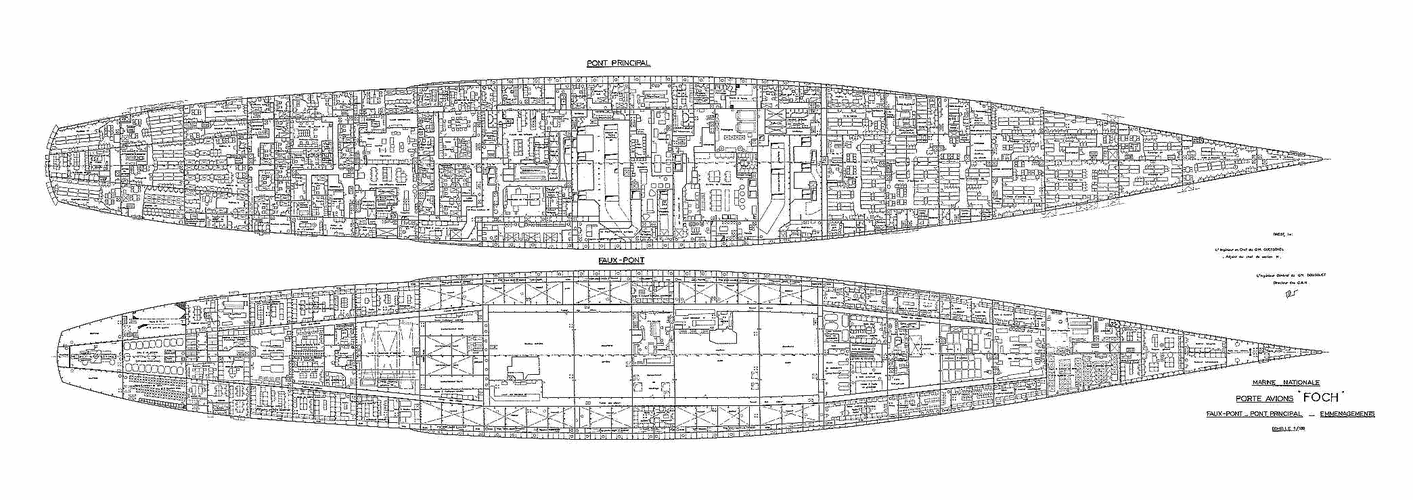
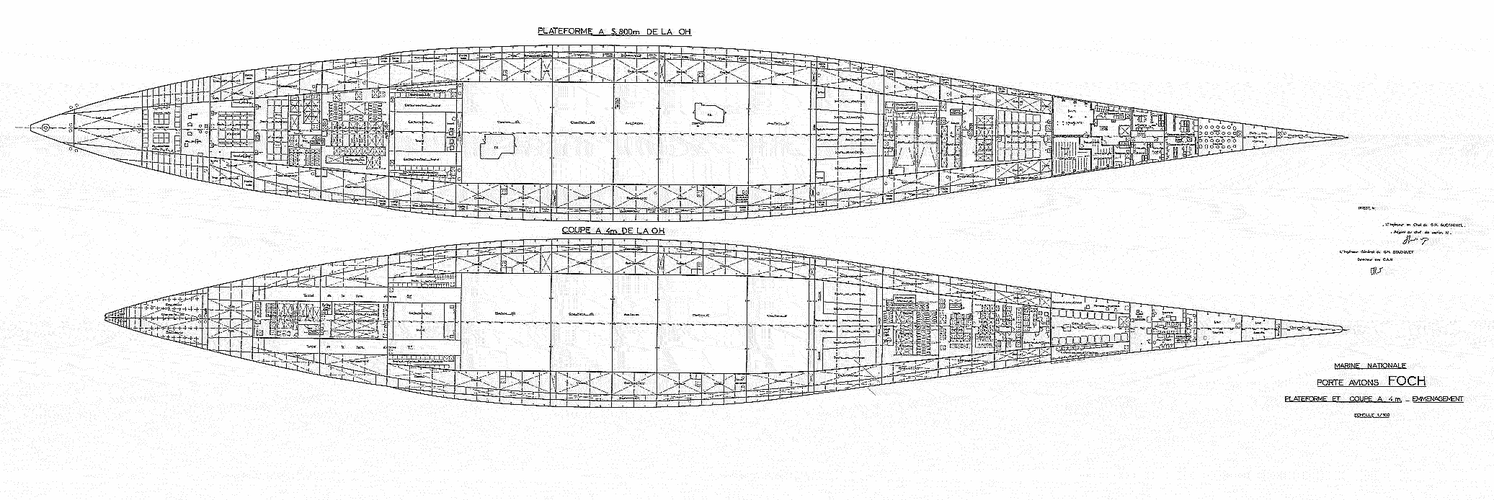
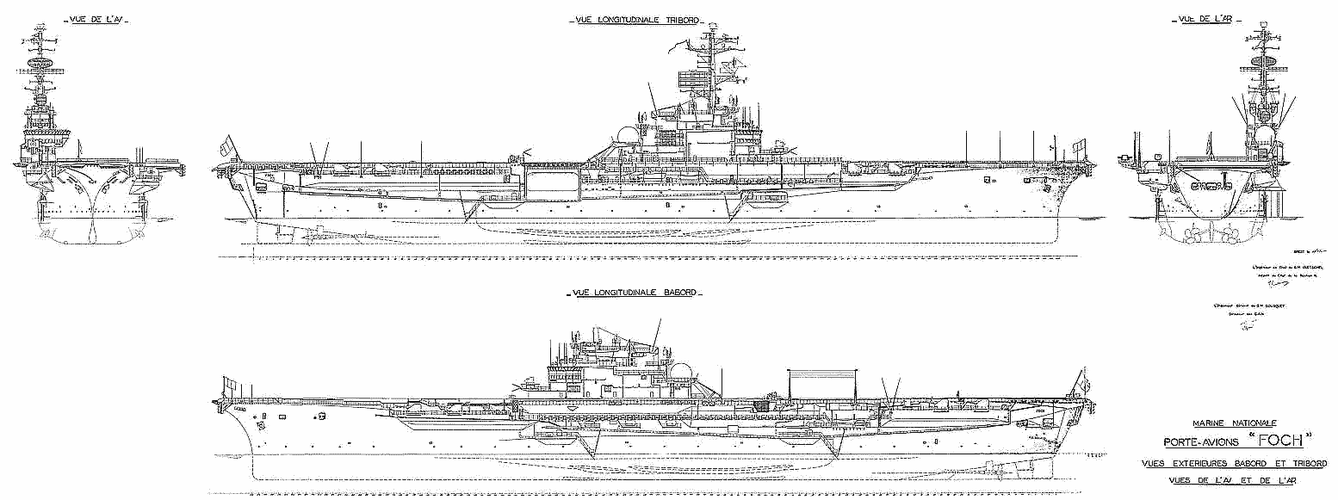
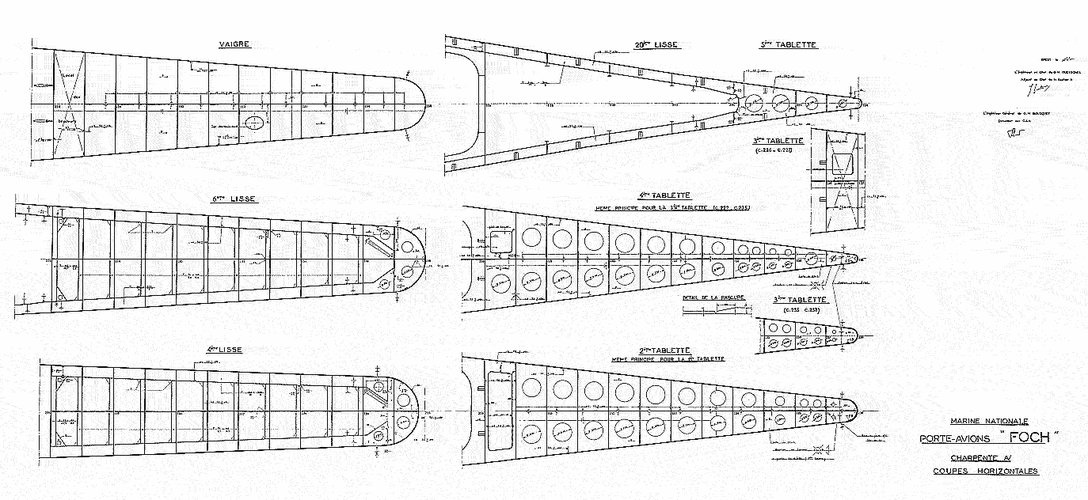
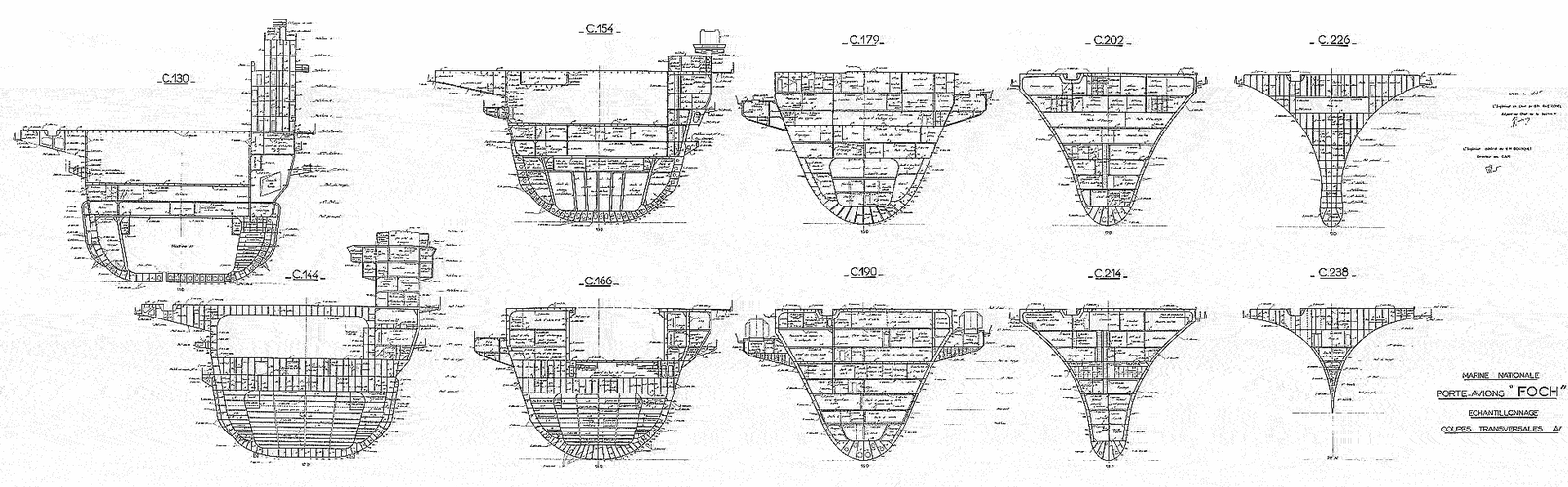
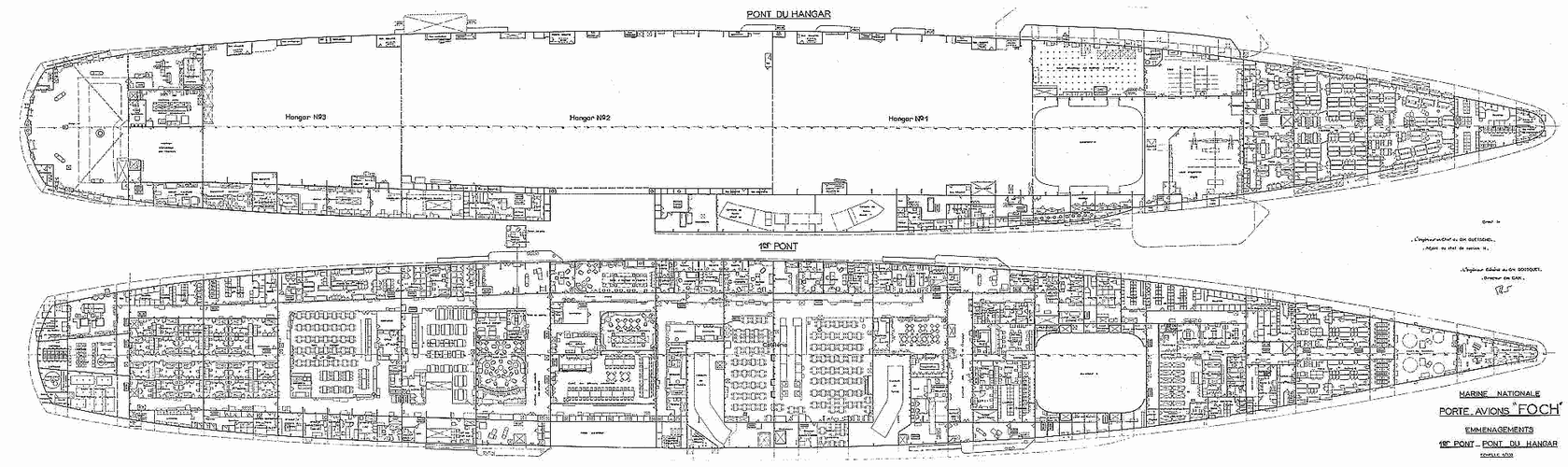
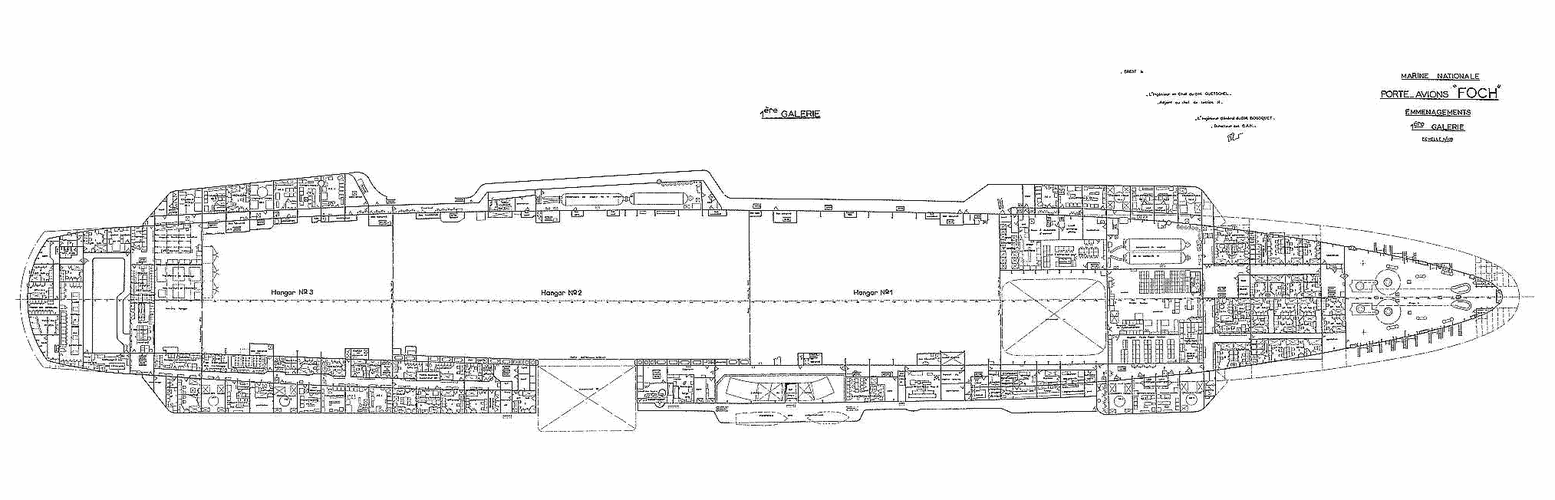
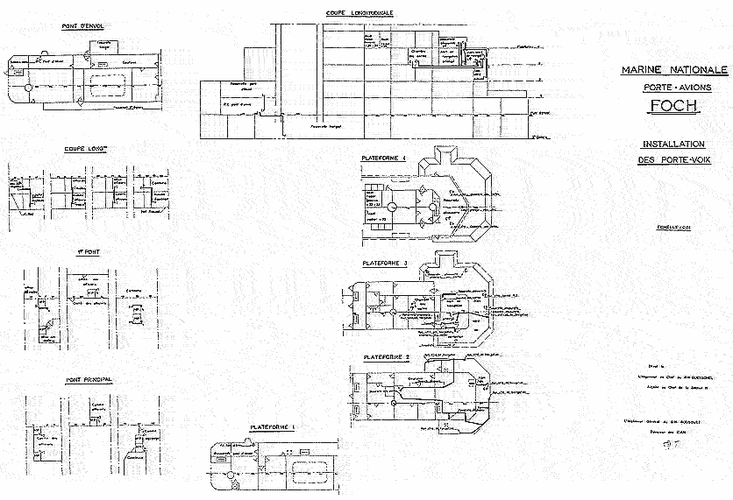
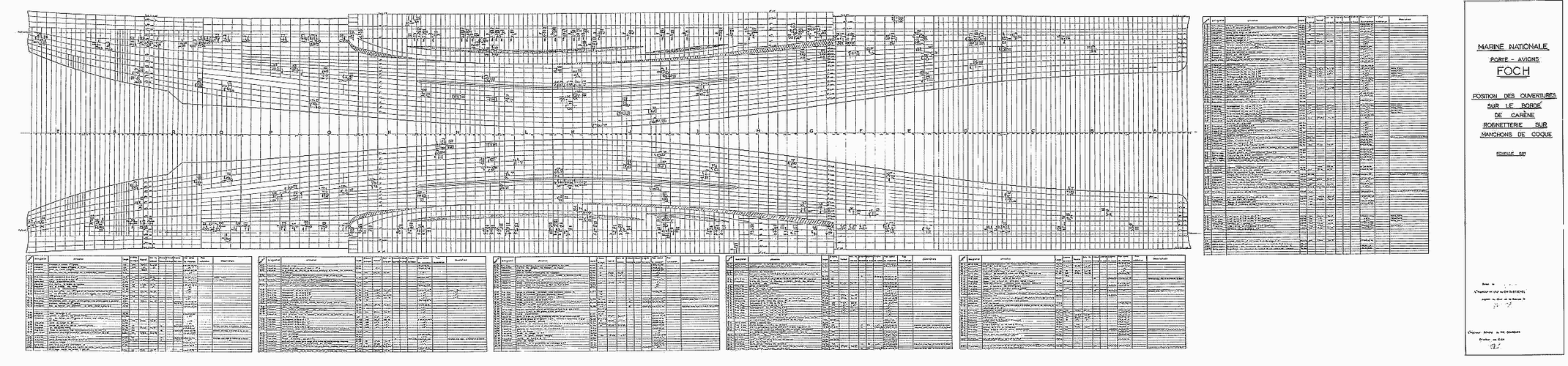
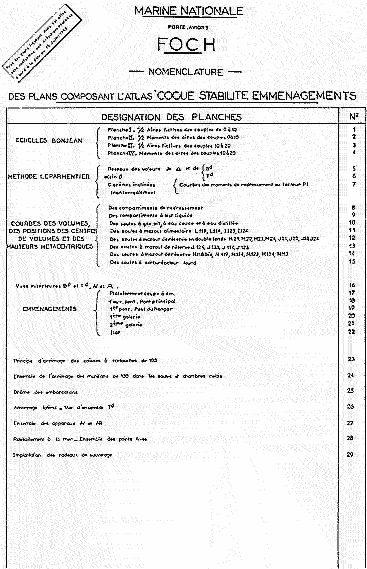
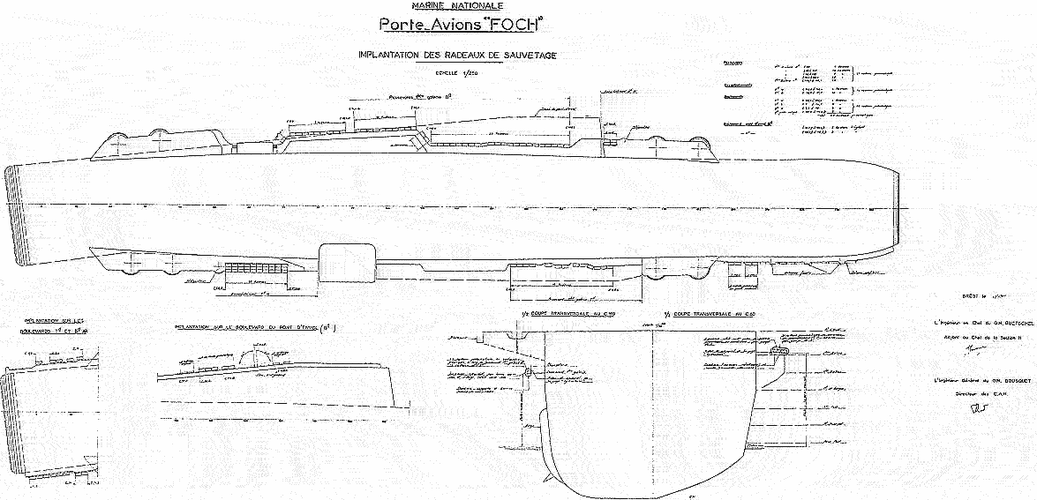
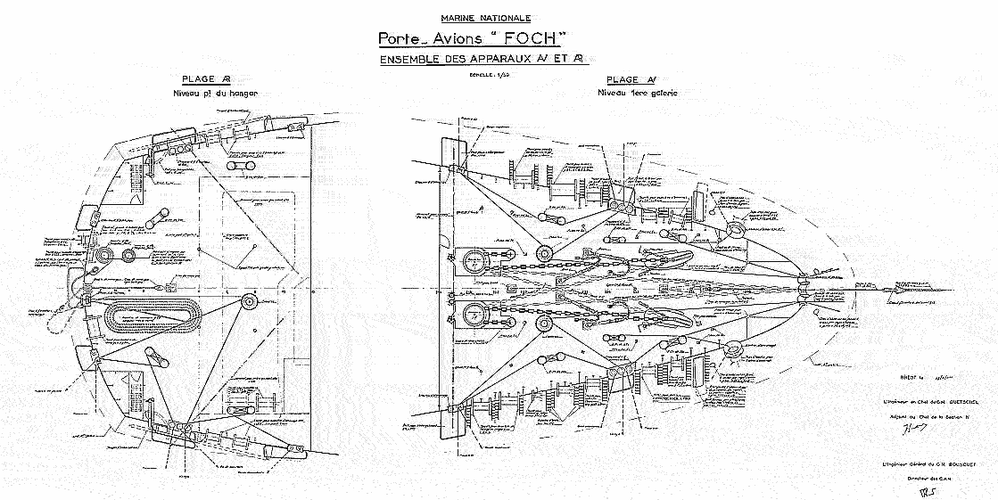
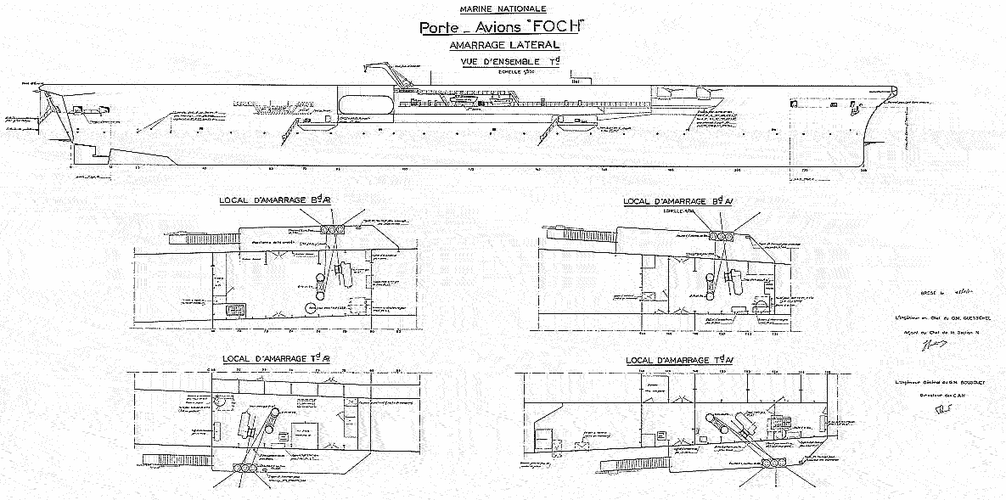
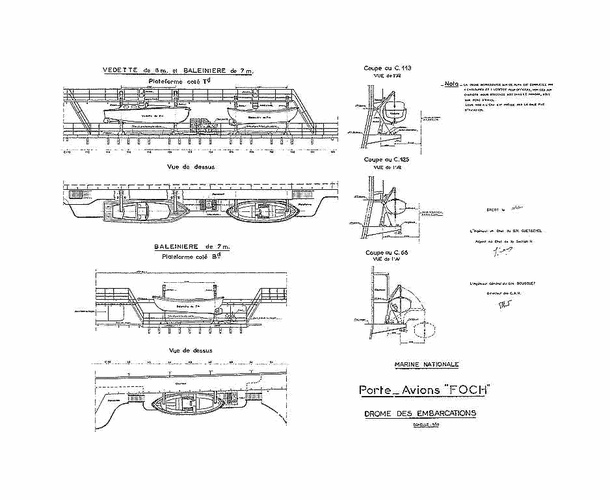
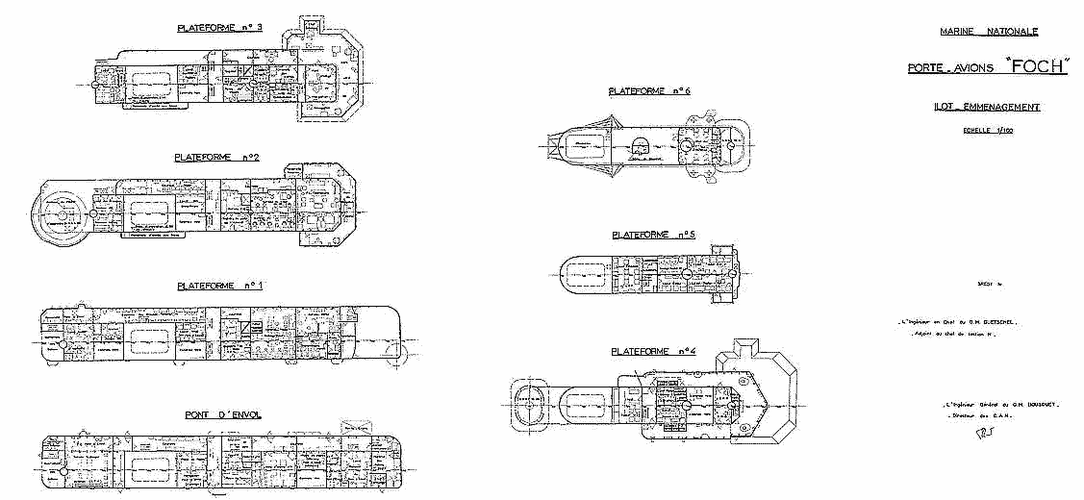
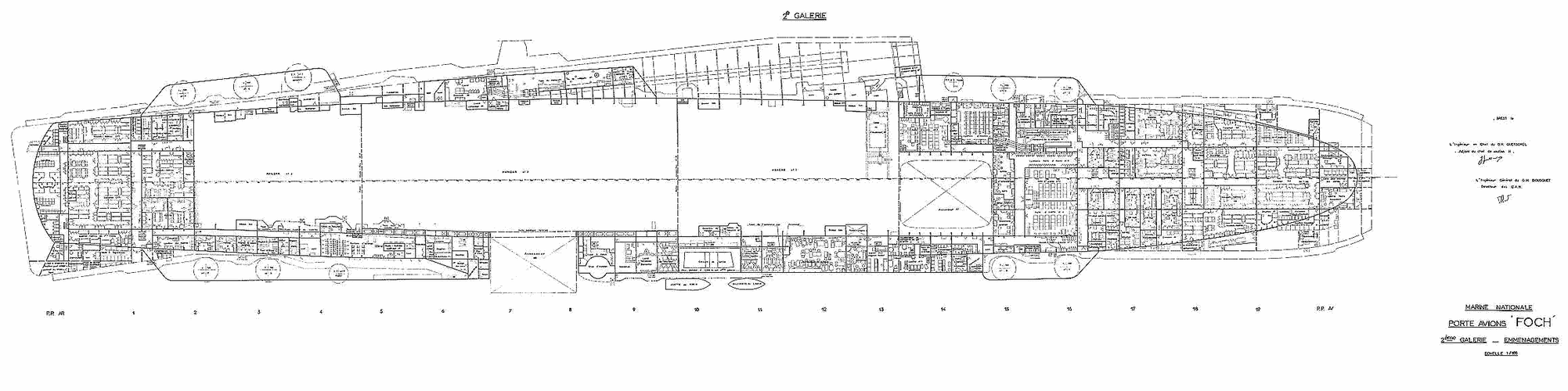
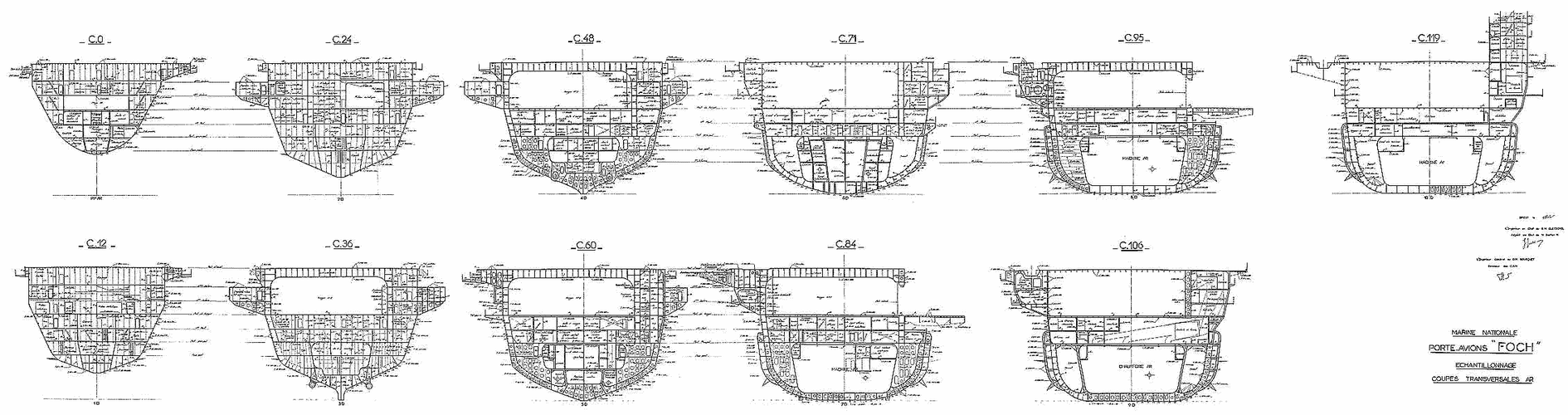
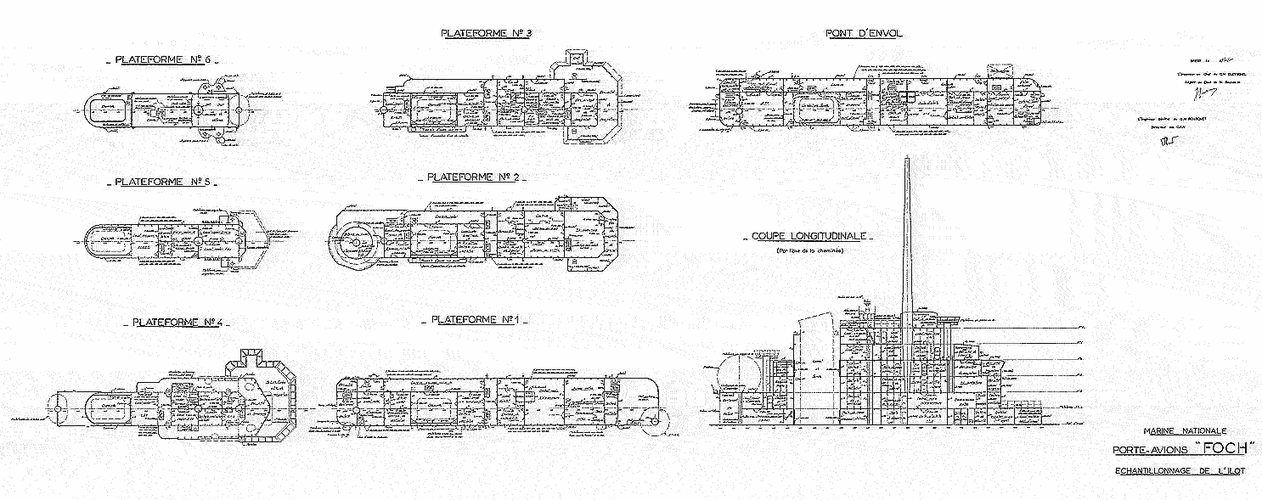
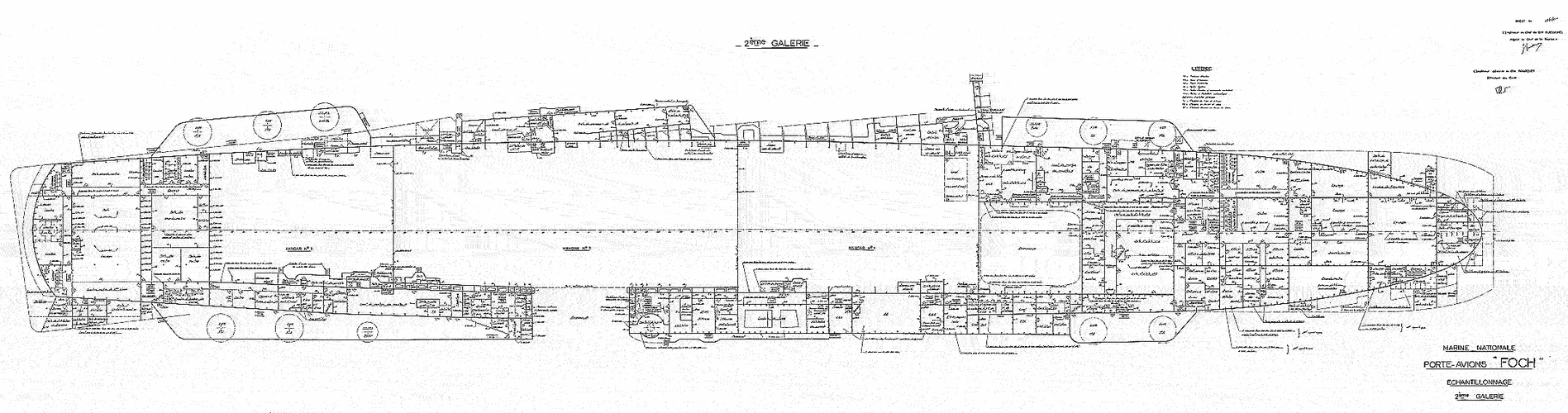
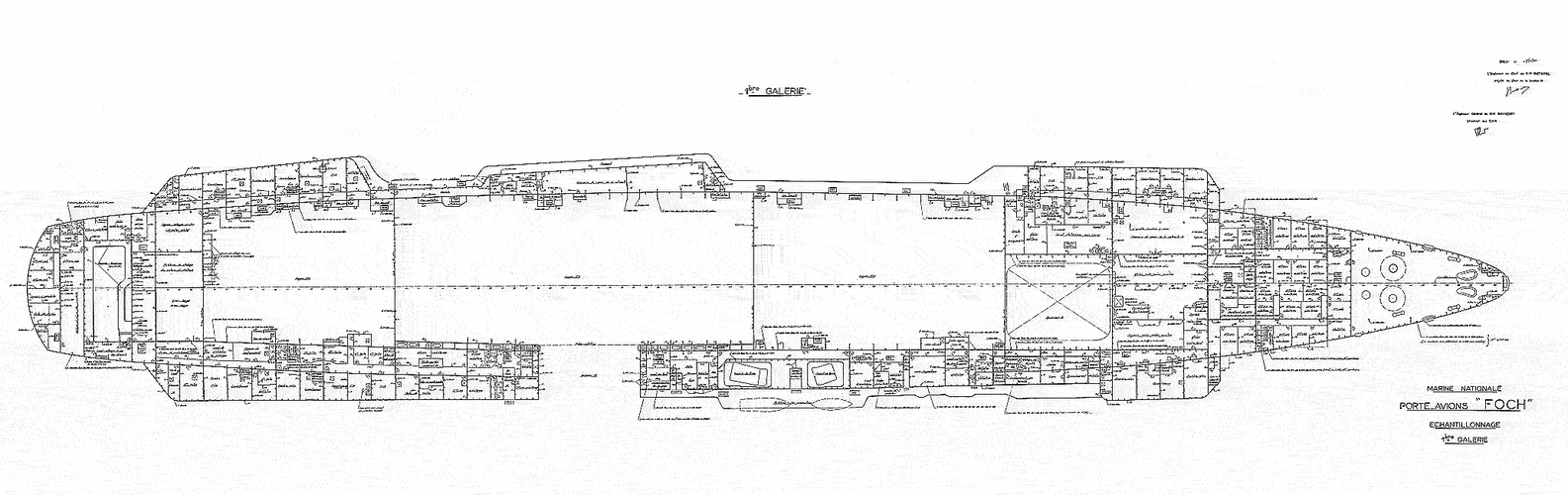
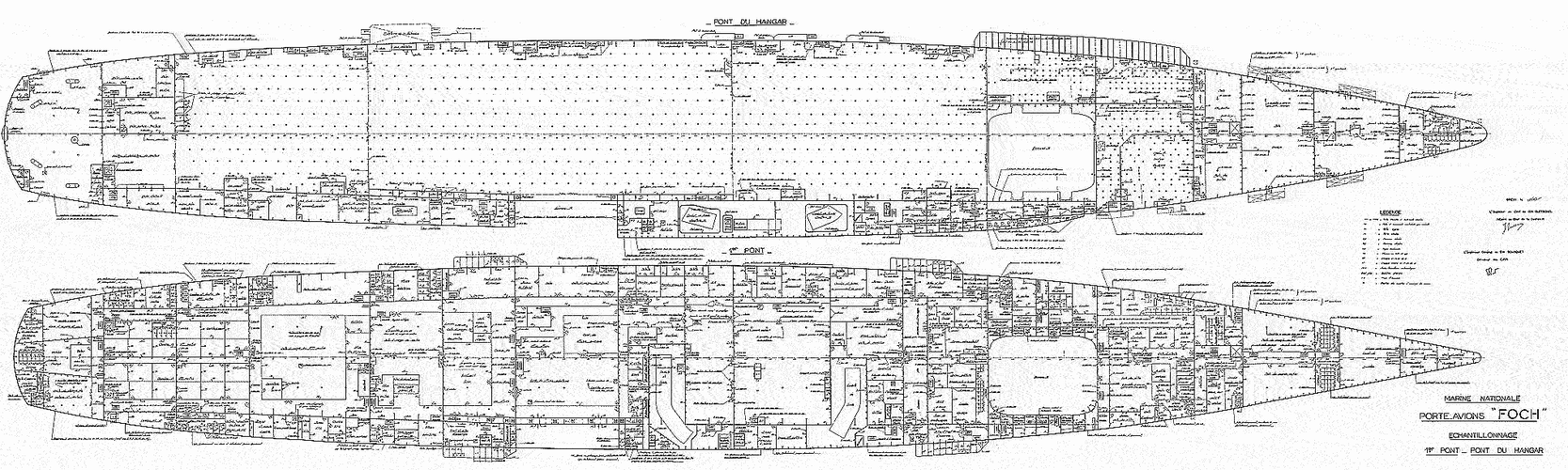
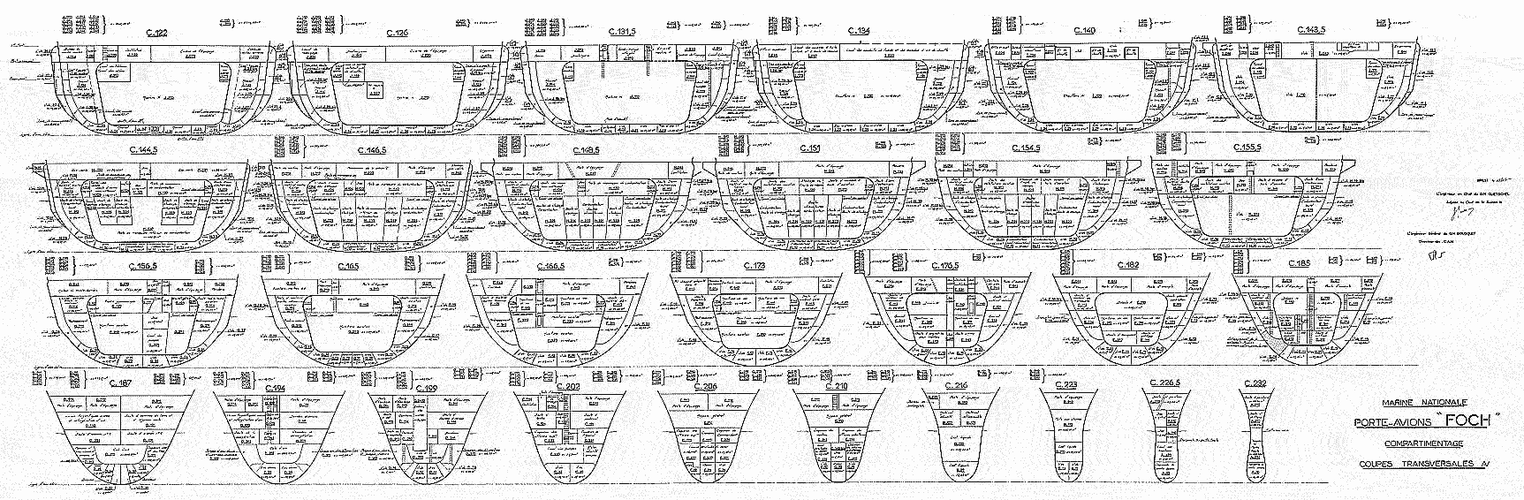
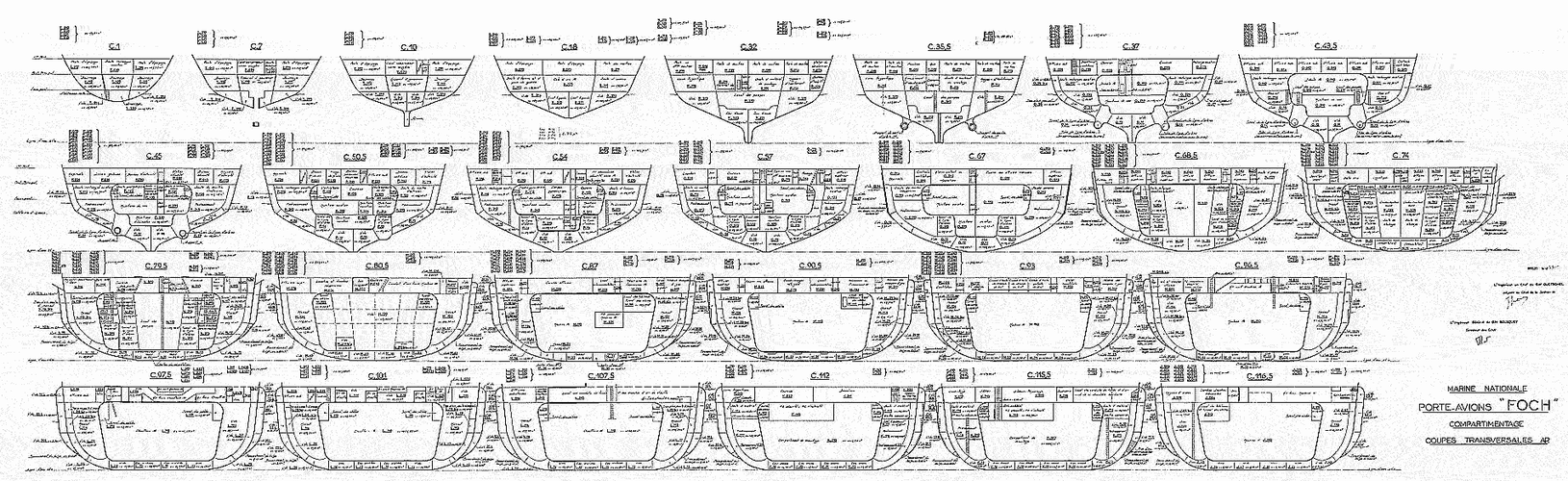
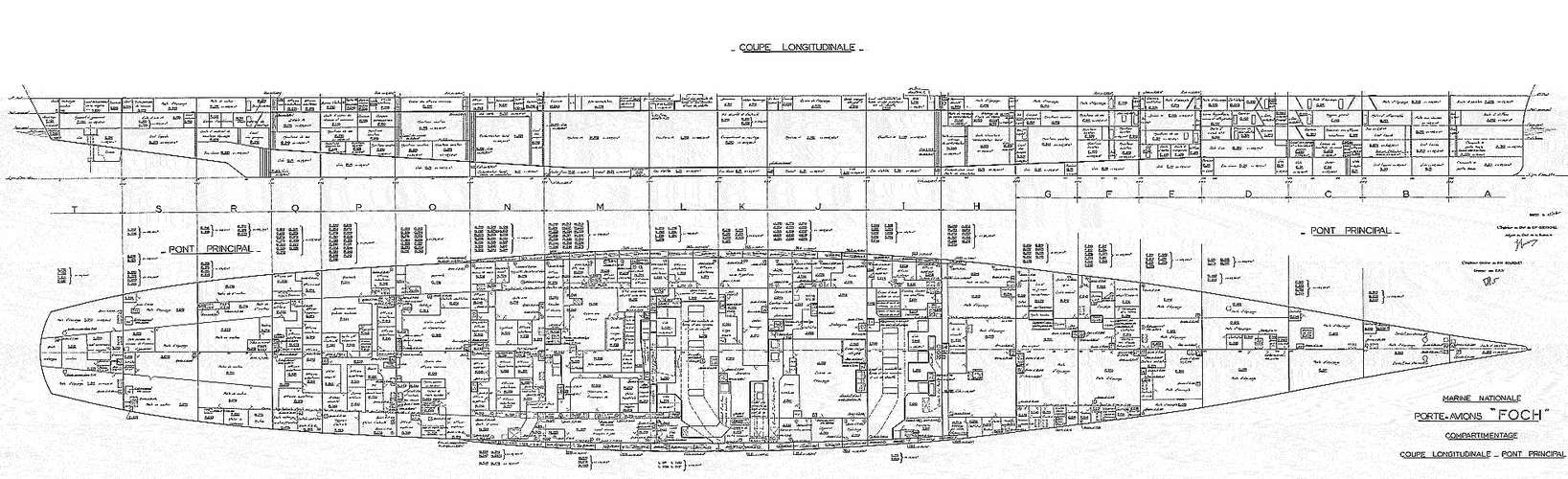
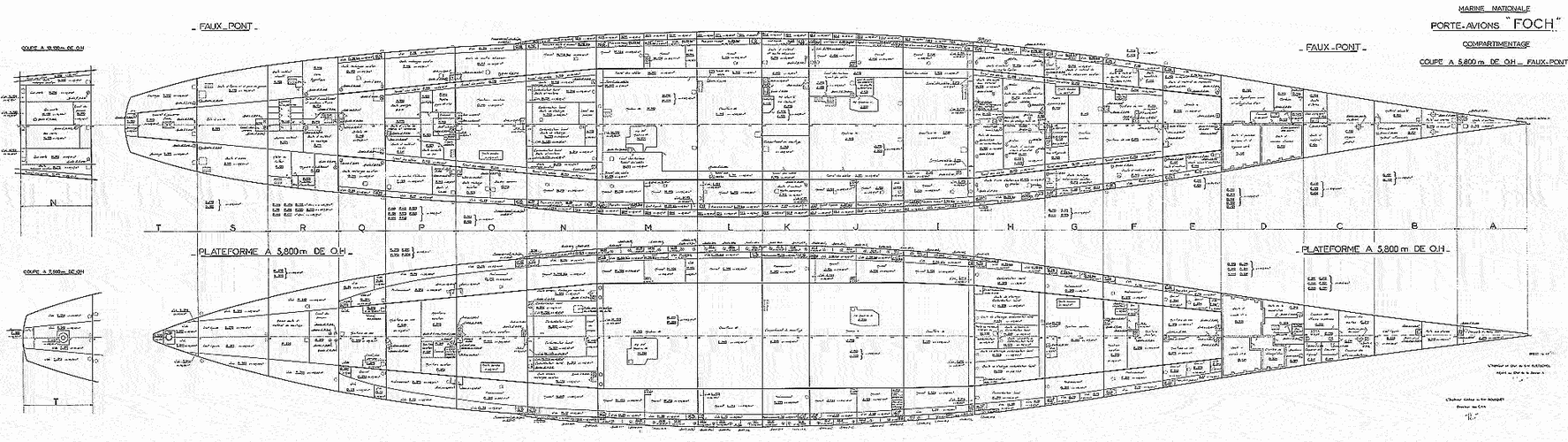
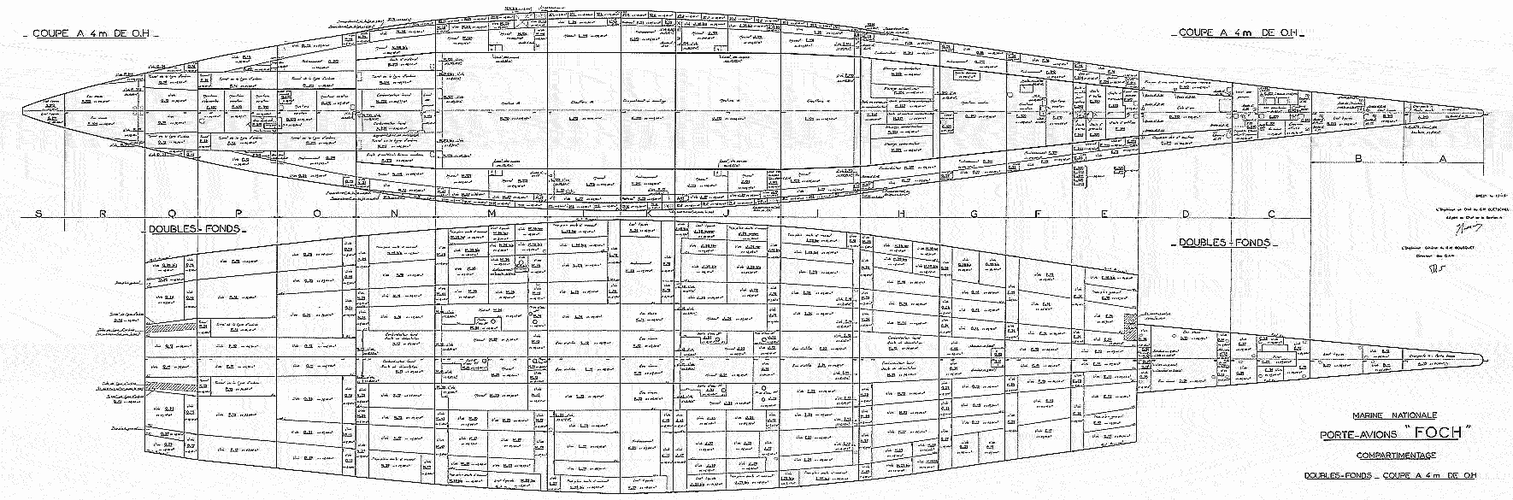
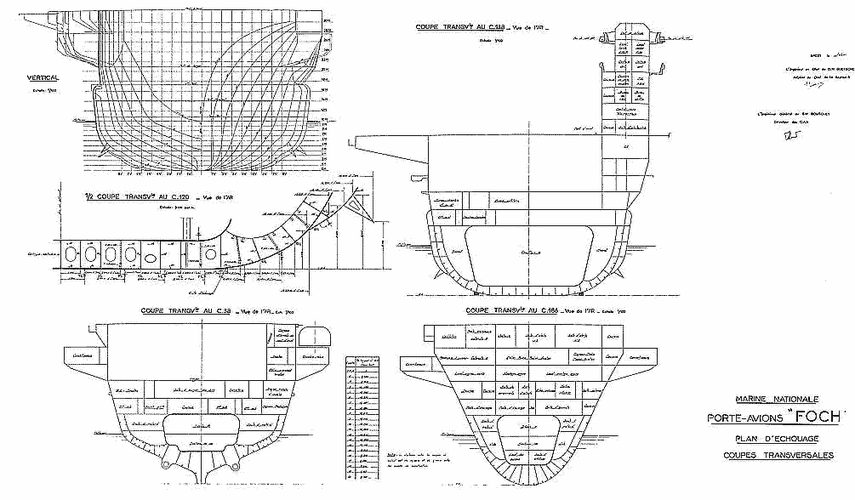
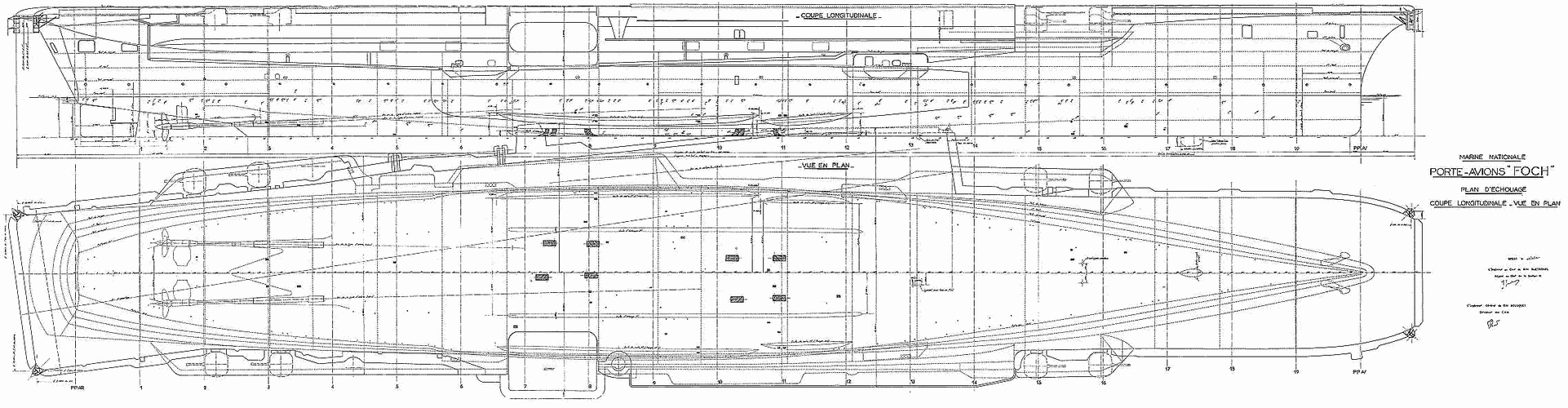
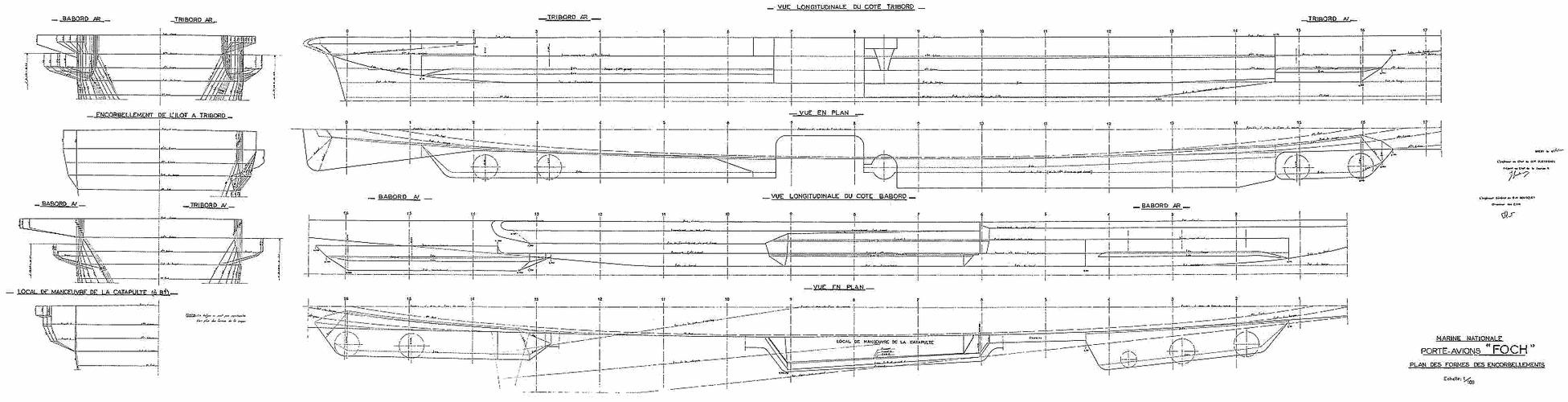
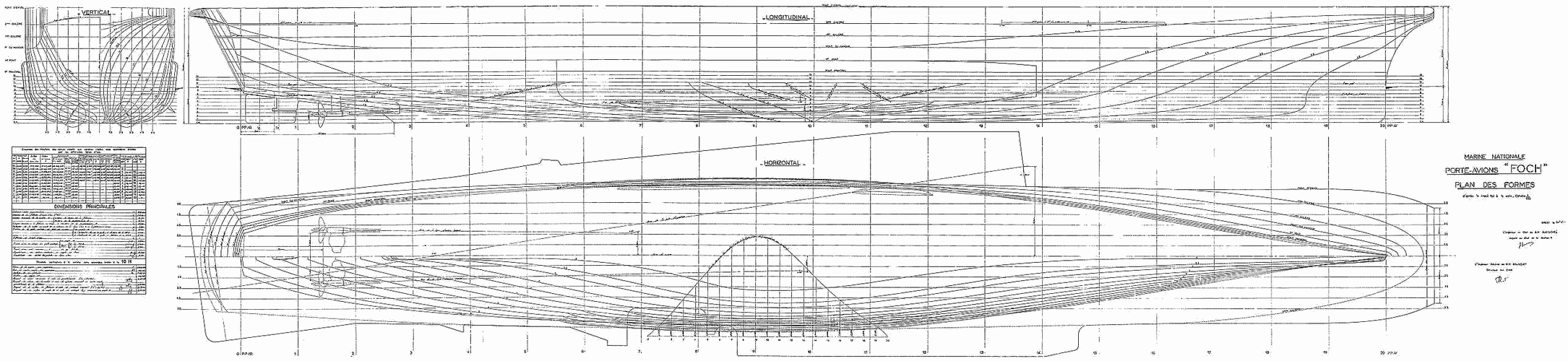
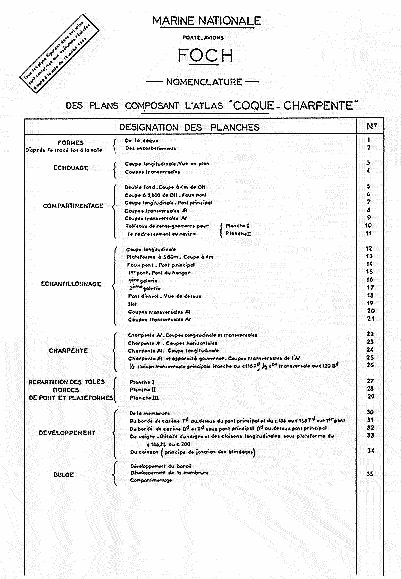
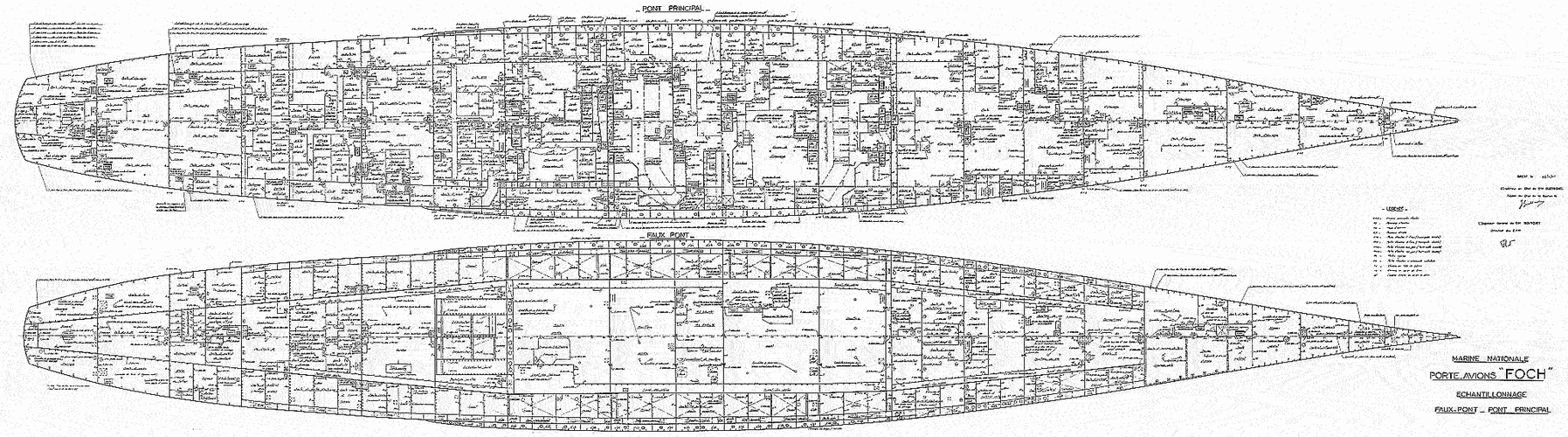
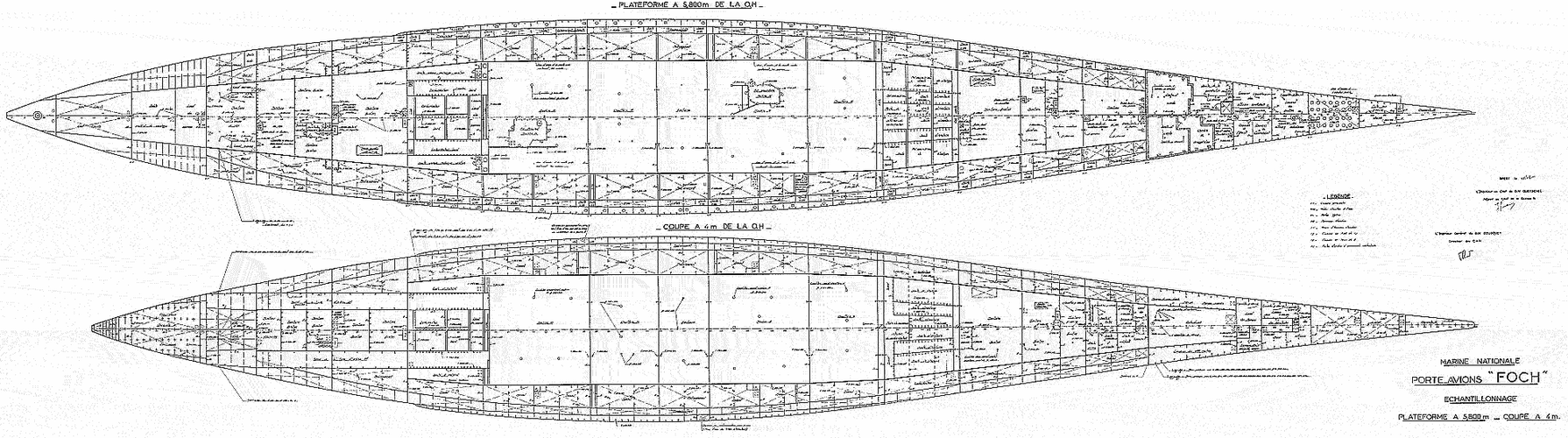
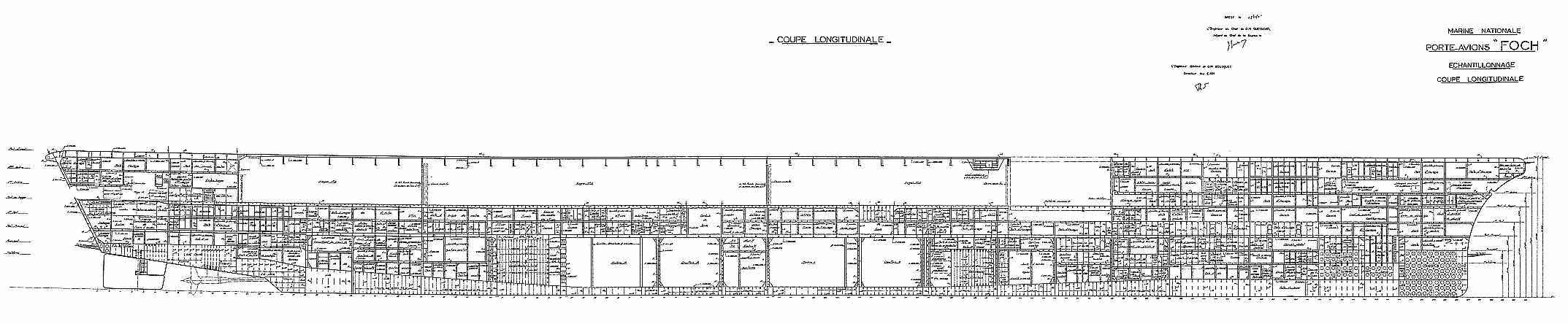
@NOMISYRRUC I’m attaching some info from the Foch ship plans available here… you can download to view them in high definition.

Length PP and WL were both 238m.
Length OA was 258.727m
(Not counting removable nets and the bridle catcher added later)
Displacement at the design draft of 7.5m was 28,300 mt.
The plans also show clearly the bulges that were added.l during construction.
 

Attachments

  • IMG_1722.jpeg
    IMG_1722.jpeg
    308.2 KB · Views: 221
PP should never equal to waterline length because of the definition of the PP being calculated from the centre pivot of the rudder to the waterline on the nose, while pure waterline is between the tow end points of the hull on waterline level.
Of course myself too seen such values on official US documents though the waterline length omitted but the value stated for PP corresponded to numerous sources of said ship's waterline length. (Essex class carrier for example)
 
@Tzoli Well apparently different countries have different practices. On the official Foch plans the mark for “PP AR” (aft perpendicular) is set at the stern waterline and the “length between perpendiculars” is drawn as an arrow all the way from bow to stern, and clearly marked as 238m.

The rudder post is 6m in front of the stern PP mark, so yes “real” LPP to the rudder post would be 232m.

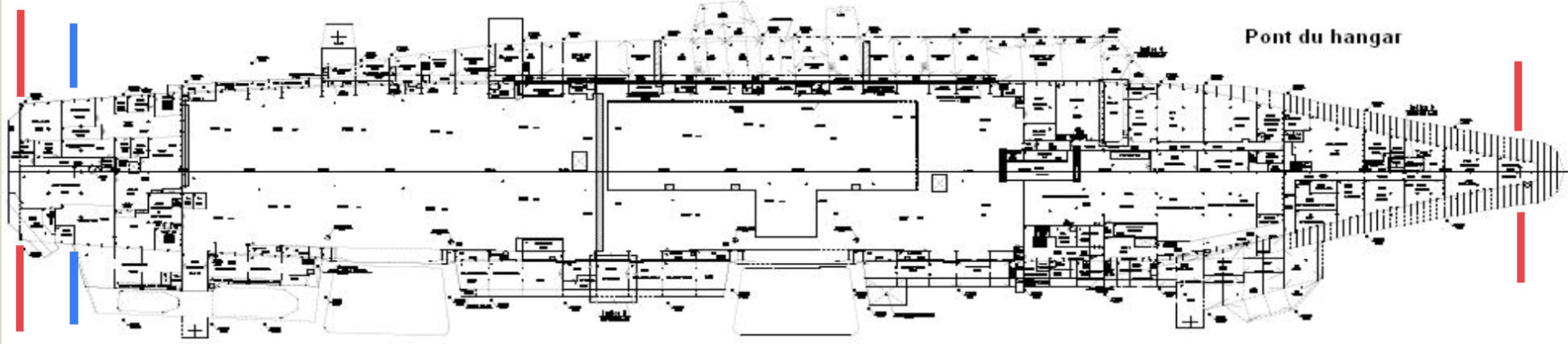
@NOMISYRRUC to answer your question about CdG’s waterline length it appears to be roughly 247m, based on scaling the 138m long hangar below. I’ve marked the waterline in red and the rudder post in blue which gives you an LPP of 238m.
 

Attachments

  • IMG_1731.jpeg
    IMG_1731.jpeg
    323 KB · Views: 219
Last edited:
@NOMISYRRUC I’m attaching some info from the Foch ship plans available here… you can download to view them in high definition.

Length PP and WL were both 238m.
Length OA was 258.727m
(Not counting removable nets and the bridle catcher added later)
Displacement at the design draft of 7.5m was 28,300 mt.
The plans also show clearly the bulges that were added.l during construction.
The plans for the Clemenceau don’t show the bulges, as they weren’t retrofitted until 1966! Foch was built with them. Personally, I think the stability issues
corrected by the bulges weren’t severe. As to the source of the stability issue, I have my suspicions.
 
@NOMISYRRUC I’m attaching some info from the Foch ship plans available here… you can download to view them in high definition.

Length PP and WL were both 238m.
Length OA was 258.727m
(Not counting removable nets and the bridle catcher added later)
Displacement at the design draft of 7.5m was 28,300 mt.
The plans also show clearly the bulges that were added.l during construction.
That site for the plans gives me a virus warning when I try to download the high-res plan set.
My antivirus blocks the download.
 
That appears to be a ad link. Do you use adblocker? Also Avast ain't good it is or was known to sell your browsing data.
 
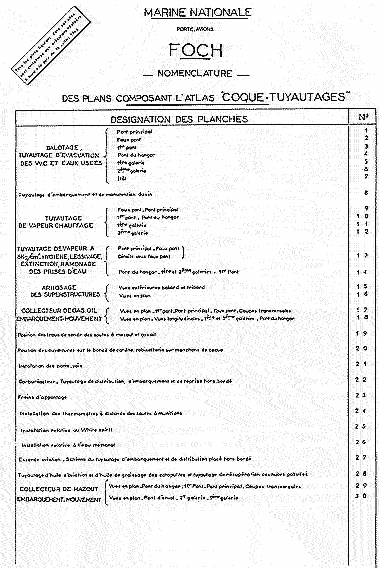
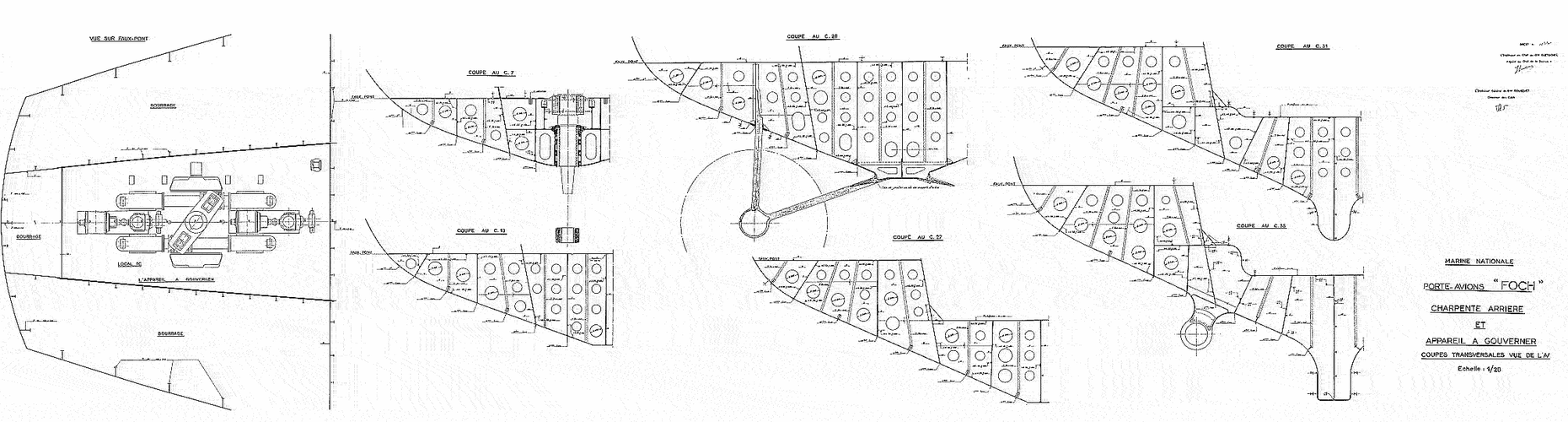
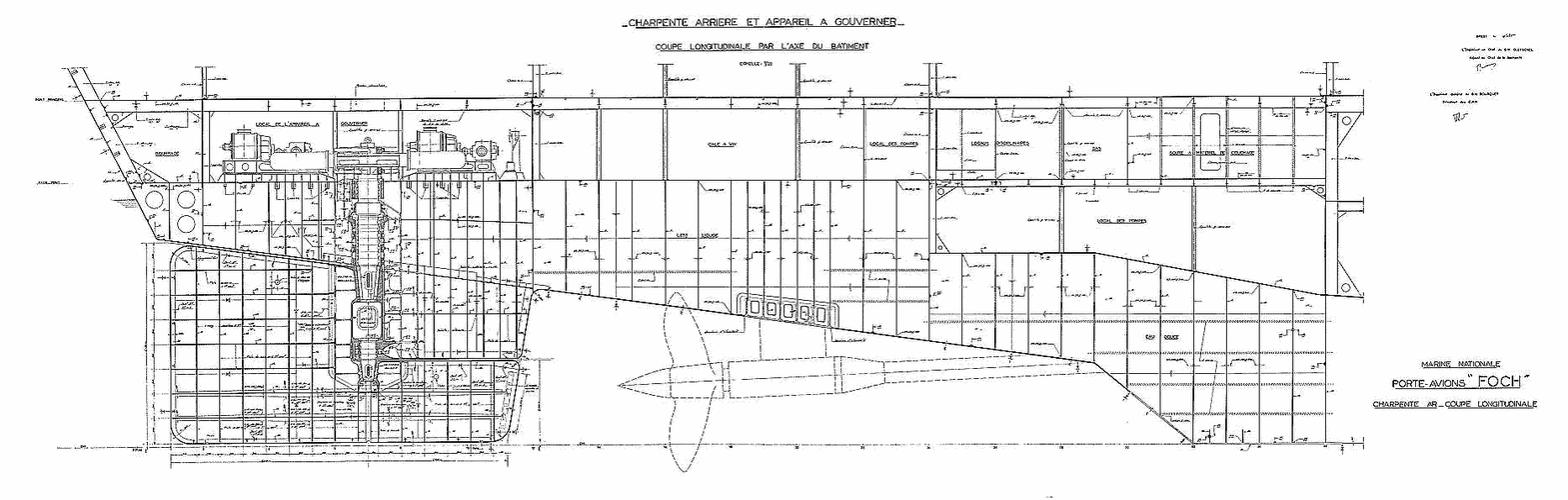
I got to that site and downloaded the drawings, find them attached and in the following post.
But that button "Click here to download the hires set" led me directly to a mail-order company on the first attempt, then to an online shop for pet supplies, and then I stopped ...
 

Attachments

  • FOCH1960C2-18.gif
    FOCH1960C2-18.gif
    135 KB · Views: 157
  • FOCH1960C2-17.gif
    FOCH1960C2-17.gif
    59 KB · Views: 164
  • FOCH1960C2-16.gif
    FOCH1960C2-16.gif
    49.1 KB · Views: 171
  • FOCH1960C2.gif
    FOCH1960C2.gif
    9.5 KB · Views: 155
  • FOCH1960C1-25.gif
    FOCH1960C1-25.gif
    47.2 KB · Views: 111
  • FOCH1960C1-24.gif
    FOCH1960C1-24.gif
    73.5 KB · Views: 104
  • FOCH1960C1-23.gif
    FOCH1960C1-23.gif
    32.7 KB · Views: 97
  • FOCH1960C1-22.gif
    FOCH1960C1-22.gif
    41.8 KB · Views: 102
  • FOCH1960C1-21.gif
    FOCH1960C1-21.gif
    57.3 KB · Views: 104
  • FOCH1960C2-19.gif
    FOCH1960C2-19.gif
    114.3 KB · Views: 111
  • FOCH1960C2-20.gif
    FOCH1960C2-20.gif
    69 KB · Views: 109
  • FOCH1960C5-21.gif
    FOCH1960C5-21.gif
    16.9 KB · Views: 97
  • FOCH1960C5-20.gif
    FOCH1960C5-20.gif
    172.2 KB · Views: 92
  • FOCH1960C3.gif
    FOCH1960C3.gif
    8.8 KB · Views: 103
  • FOCH1960C2-29.gif
    FOCH1960C2-29.gif
    16.9 KB · Views: 108
  • FOCH1960C2-27.gif
    FOCH1960C2-27.gif
    27.9 KB · Views: 108
  • FOCH1960C2-26.gif
    FOCH1960C2-26.gif
    21.4 KB · Views: 98
  • FOCH1960C2-25.gif
    FOCH1960C2-25.gif
    31.4 KB · Views: 90
  • FOCH1960C2-22.gif
    FOCH1960C2-22.gif
    33.1 KB · Views: 103
  • FOCH1960C2-21.gif
    FOCH1960C2-21.gif
    81.5 KB · Views: 106
..and the rest
 

Attachments

  • FOCH1960C1-20.gif
    FOCH1960C1-20.gif
    101.6 KB · Views: 115
  • FOCH1960C1-19.gif
    FOCH1960C1-19.gif
    33.9 KB · Views: 129
  • FOCH1960C1-18.gif
    FOCH1960C1-18.gif
    72.1 KB · Views: 133
  • FOCH1960C1-17.gif
    FOCH1960C1-17.gif
    48.6 KB · Views: 132
  • FOCH1960C1-16.gif
    FOCH1960C1-16.gif
    43.2 KB · Views: 104
  • FOCH1960C1-15.gif
    FOCH1960C1-15.gif
    76.4 KB · Views: 97
  • FOCH1960C1-14.gif
    FOCH1960C1-14.gif
    83.6 KB · Views: 93
  • FOCH1960C1-13.gif
    FOCH1960C1-13.gif
    57.3 KB · Views: 92
  • FOCH1960C1-12.gif
    FOCH1960C1-12.gif
    69.4 KB · Views: 91
  • FOCH1960C1-09.gif
    FOCH1960C1-09.gif
    68.8 KB · Views: 92
  • FOCH1960C1-08.gif
    FOCH1960C1-08.gif
    78.2 KB · Views: 83
  • FOCH1960C1-07.gif
    FOCH1960C1-07.gif
    65.9 KB · Views: 85
  • FOCH1960C1-06.gif
    FOCH1960C1-06.gif
    65 KB · Views: 85
  • FOCH1960C1-05.gif
    FOCH1960C1-05.gif
    56 KB · Views: 89
  • FOCH1960C1-04.gif
    FOCH1960C1-04.gif
    40.2 KB · Views: 93
  • FOCH1960C1-03.gif
    FOCH1960C1-03.gif
    108.1 KB · Views: 89
  • FOCH1960C1-02.gif
    FOCH1960C1-02.gif
    67.6 KB · Views: 81
  • FOCH1960C1-01.gif
    FOCH1960C1-01.gif
    99.3 KB · Views: 92
  • FOCH1960C1.gif
    FOCH1960C1.gif
    9.4 KB · Views: 112
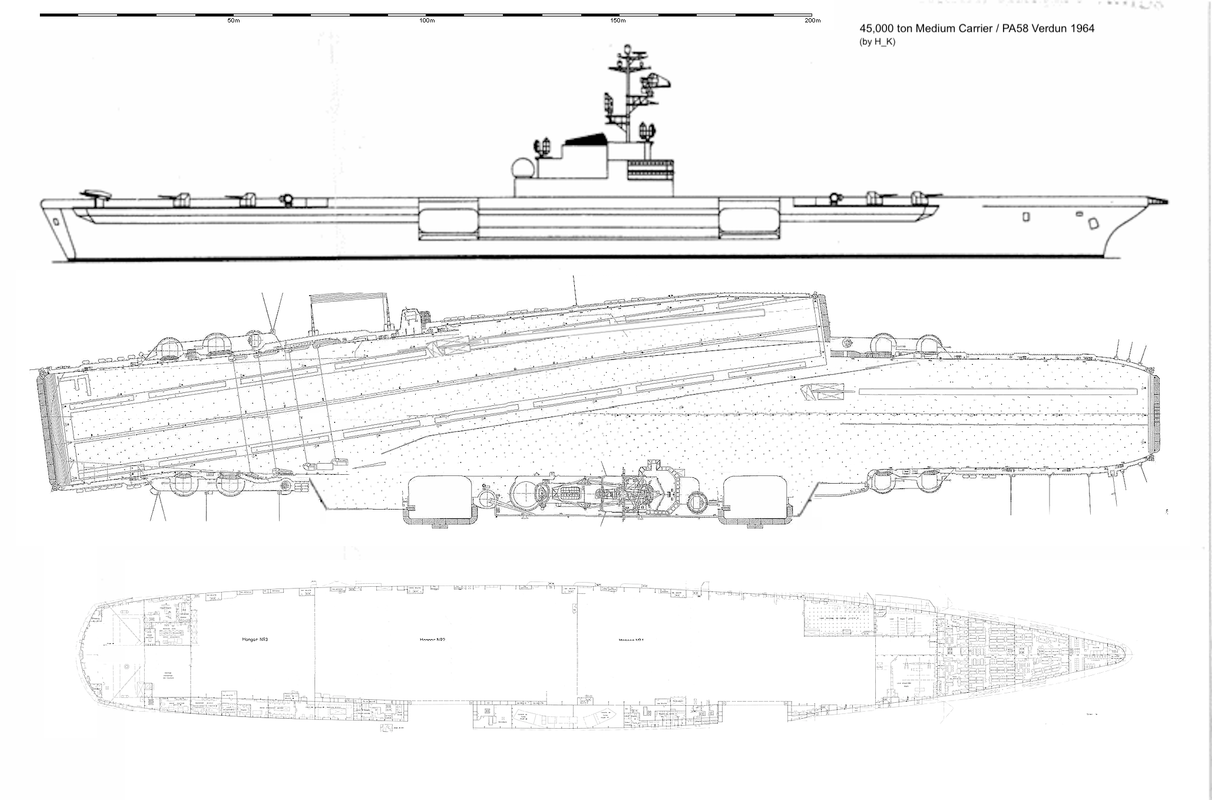
I’m going to repost from another thread some PA58 Verdun drawings that I’d done using the Foch plans as a starting point. These are an educated guess but helpful to illustrate relative scale.
While you guys have been debating fighters, I've been working on my 45,000 ton medium carrier proposal. ;)

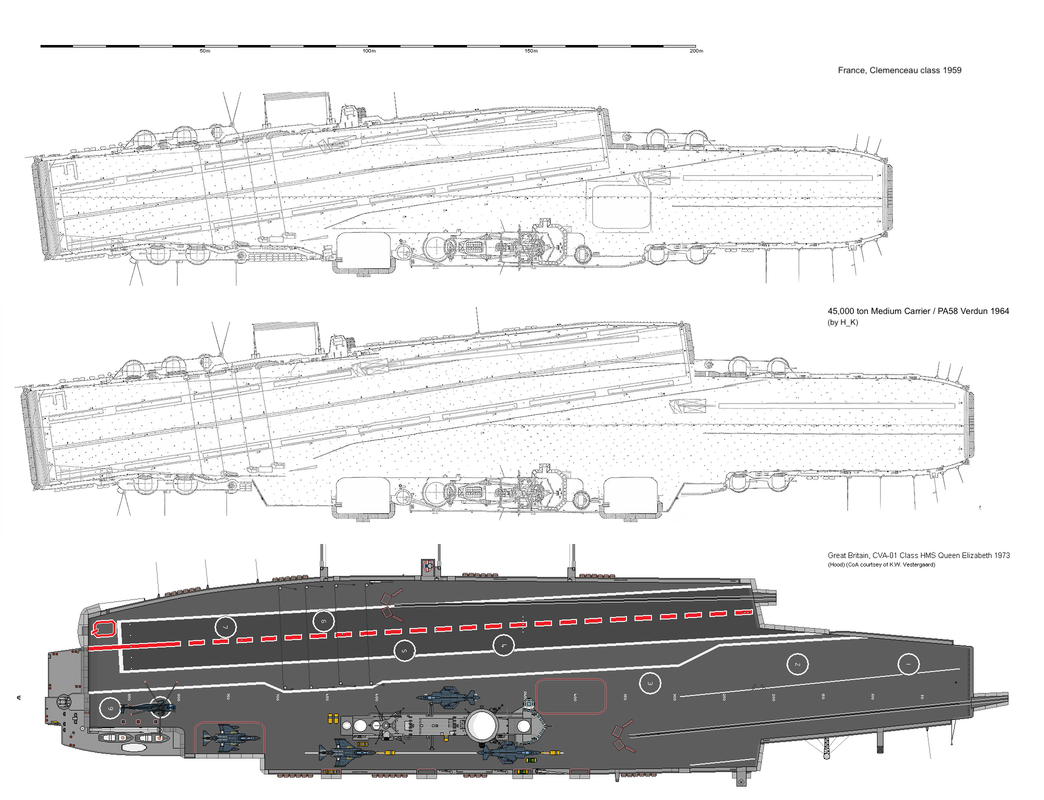
Starting point is the PA58 design. I've drawn it in detail by upscaling the Clemenceau plans (as that's basically what PA58 was), adding the longer 199ft BS5a catapults used on Eagle/Ark Royal. This is not meant to imply that the RN would buy PA58, just meant to illustrate what a 45,000ton RN carrier might look like.

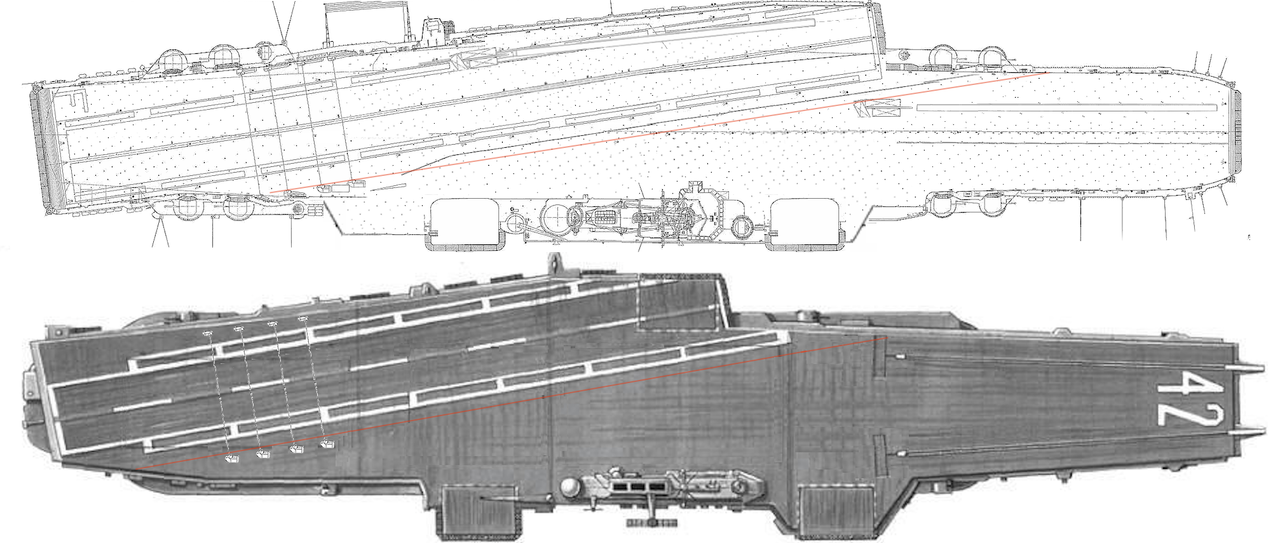
Also including a side-by-side comparison vs. Clemenceau, CVA-01 and CVA-42 (FDR).

Next up... going to add the air group!

PA-58-2px-1ft-clean.png


Clemenceau-vs-PA-58-vs-CVA-01-clean.png


pa58-vs-cv-42.png

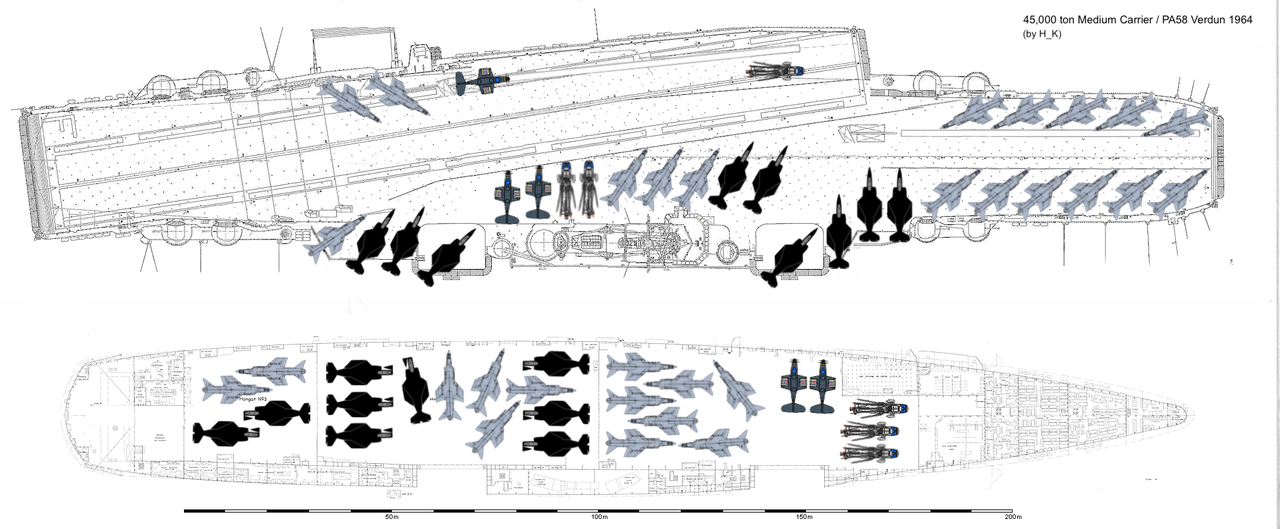
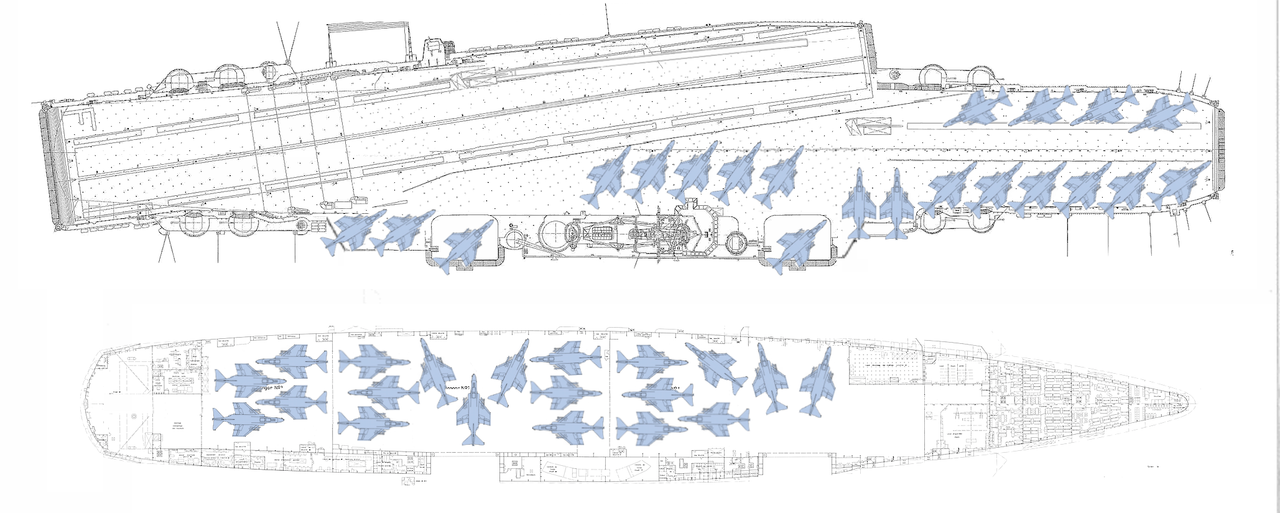
Now here's my 45,000 ton carrier with a mixed airgroup of 48 jets... using the usual USN 75% spotting density factor. It's a little tight as the Buccaneer takes up more space than I expected, but otherwise looks good.

30x F-8 Crusaders (could be replaced 1:1 with Super Tigers)
18x Buccaneers
5x Gannet AEW/COD
6x Sea King ASW/plane guard

PA-58-spotting-ops-F-8-Buccaneer-2px-1ft-v2.png

Or 40 F-4 Phantoms (+ 8-10 Gannets/Sea Kings - space reserved but not shown on drawing).
PA-58-spotting-ops-2px-1ft.png
 
Last edited:
The above post is BRILLIANT. Lots of things immediately came to my mind reading it

1- This explains why a Clemenceau could not handle a Phantom (or a Hornet, or a Rafale !) or marginally at best, closer from 1959 Hermes... or a SBC-125 Essex, in that regard.

2- (in 1963 France considered both - Phantom AND Crusader. Wanted the former, like the British; went for the later)

3- But an Audacious, or... the CdG can handle all three of them: Phantom, Hornet or Rafale. All of them 18 - 25 tons in weight.
a) Because the Ark Royal had the 199 ft BS-5A, rather than a truncated-to-171-feet BS-5 as the Clems - or Hermes BS-4
b) because the CdG actually has a truncated C-13 : 75 m long (rather than a Nimitz' 95 m - but otherwise, the very same).

4- (yes, France put a catapult from a 90 000 tons carrier on a 45 000 tons one - but sacrifices had to be made... !)

5- Bottom line: 1959-Hermes-Centaur, SBC-125-Essex, and Clemenceaus all had the same issue: they were just a touch too small for a Phantom.
a) USN validated Phantoms on SBC-125 Essex carriers, but it remained marginal: Crusaders clearly were the prefered option
b) RN FAA bought more powerful Phantoms with Speys, but they were marginal on Hermes, not much better on Victorious, and took heavy rebuild of Audaciouses to get the full potential
c) MN considered Phantoms before Crusaders for the Clemenceaus, but went for Crusaders in the end.

6- so what was the right size to operate Phantoms properly ? (and Hornets later, and Rafales even later: 1960, 1980, 2000 !)
a) Midway rather than Essex
b) Audacious rather than Hermes
c) Verdun or CdG rather than Clemenceau

7- There is clearly a heavy trend there, converging to 42 000 - 55 000 tons, rather than 25 000 - 35 000 tons.

8- The tipping point seems to be 40 000 tons. Clemenceaus were below that treshold, PA58 & CdG were / are above it.
Archibald
The bow catapult of the Ark (151ft) can launch the FG. 1. as far I know.
1720815661367.png
but in what role?
AAW like this
1720815878283.png

this is the waist (191) not doubt
1720815781736.png
1720815810851.png
So if you have (what If) only FG.1 upgraded for multirole.
The strike ac, have to be lunch for the 199, yes or yes, and maybe the CAP or scort role for the 151.
That´s apply to to the F/A-18
AAW
1720816506140.png
1720816623858.png
From 151 or 199?
the phot are only for loads purpose
 
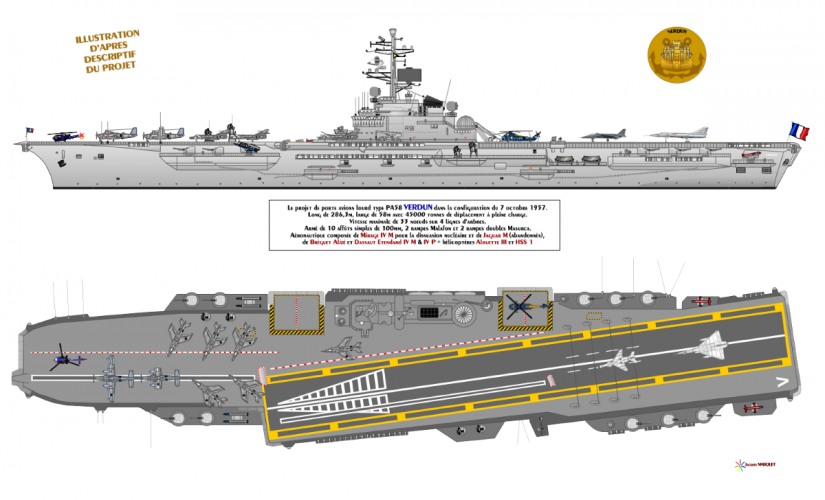
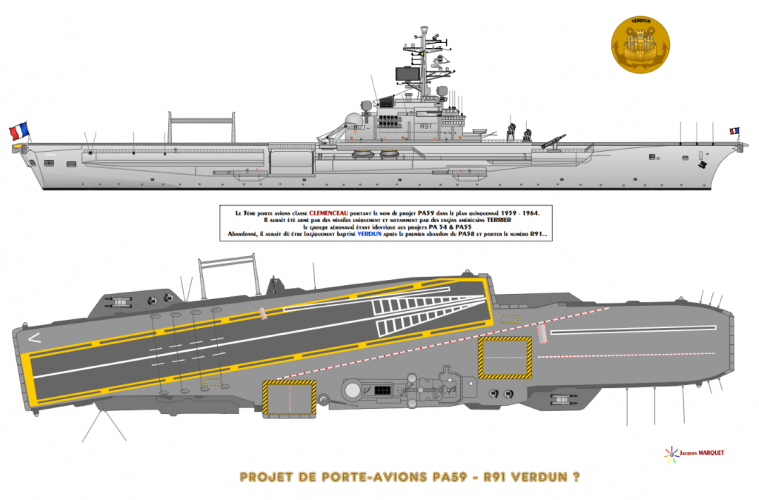
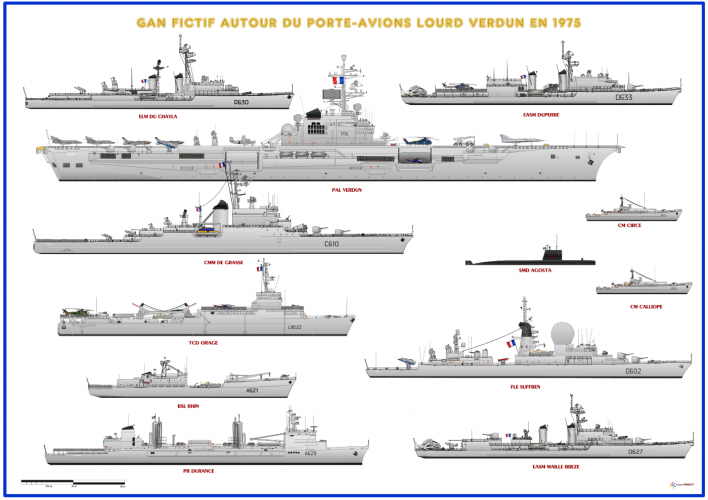
I spent my childhood in Verdun, the site of a fierce battle in 1916, and as I'm passionate about aircraft carriers, I designed variations of the PA59 Verdun project abd also a complete task force. Here they are, enjoy !
 

Attachments

  • PA 58 Verdun A Td.png
    PA 58 Verdun A Td.png
    345.3 KB · Views: 3
  • PA 58 Verdun B Td.png
    PA 58 Verdun B Td.png
    359.9 KB · Views: 3
  • PA 58 Verdun C Bd.png
    PA 58 Verdun C Bd.png
    356.2 KB · Views: 3
  • PA 59 Verdun Td & top.png
    PA 59 Verdun Td & top.png
    312.6 KB · Views: 2
  • GAN avec PA Verdun.png
    GAN avec PA Verdun.png
    436.3 KB · Views: 2
I spent my childhood in Verdun, the site of a fierce battle in 1916, and as I'm passionate about aircraft carriers, I designed variations of the PA59 Verdun project abd also a complete task force. Here they are, enjoy !
Thank you for bringing the thread back to topic. Really fed up from the hijacking on the same sempiternal other themes.
 
Oh boy, french carrier galore !!

EDIT. Never realized that the third Clemenceau (PA59, desperate move by the Navy to get a third carrier) was to have Terrier missiles for self defense. Must have been a tight fit, perhaps done at the expense of the air group ? For the record, Foch and Clem' got Crotale short range missiles in the 1980's, not really the same performance as Terrier. CdG for its part has Aster.

@JJMM do you know this blog ? part serious, part what if fantasy, and a minegold of french naval projects.
 
Last edited:
Of course, my dear ArchIbald ! Some drawings are online...
 
Last edited:
Amazon now has the softcover version of Moulin's book on Clemenceau and Foch for Kindle. From this, a part of the puzzle can be solved.

He states a more powerful 51,5m (169 ft) bs5 with 110 kts @ 20 metric t replacing a bs4 with 95 kts @ 20t, 110 kts @ 15t and 130 kts @11t.
Together with the table from old training material I linked above, this means the catapult was improved, but also extended from 157 to 169 ft (fitting the 12 ft increments). He does not say when this happened, but it's probably related to the crusader buy.

For comparison, this improved bs5 is about 15 kts better than the 151ft bs5 Ark Royal bow cat, about equal to the 199ft bs5a Ark waist cat, and maybe 10-12 kts short of the C-11.

It would require about 20 kts wod for the F-8J, 20-25 kts for the F-4B (internal fuel/missiles only) and something in that ballpark for the F-18 in fighter trim (1 droptank, missiles). Fits nicely with the F-8 operating smoothly and no big problems seen for the F-18.

This should also explain the various claims that the Clems were limited to 15 or 18 ton jets: The initial bs4 or the short bs5 on RN carriers would be marginal for say the F-8 (30-32k lbs, 30-35 kts wod).

Extending the improved bs5 to 75m as in the PA-58 projects should result in something like the USN's C-7 catapult.

Some other interesting stuff in that

Amazon now has the softcover version of Moulin's book on Clemenceau and Foch for Kindle. From this, a part of the puzzle can be solved.

He states a more powerful 51,5m (169 ft) bs5 with 110 kts @ 20 metric t replacing a bs4 with 95 kts @ 20t, 110 kts @ 15t and 130 kts @11t.
Together with the table from old training material I linked above, this means the catapult was improved, but also extended from 157 to 169 ft (fitting the 12 ft increments). He does not say when this happened, but it's probably related to the crusader buy.

For comparison, this improved bs5 is about 15 kts better than the 151ft bs5 Ark Royal bow cat, about equal to the 199ft bs5a Ark waist cat, and maybe 10-12 kts short of the C-11.

It would require about 20 kts wod for the F-8J, 20-25 kts for the F-4B (internal fuel/missiles only) and something in that ballpark for the F-18 in fighter trim (1 droptank, missiles). Fits nicely with the F-8 operating smoothly and no big problems seen for the F-18.

This should also explain the various claims that the Clems were limited to 15 or 18 ton jets: The initial bs4 or the short bs5 on RN carriers would be marginal for say the F-8 (30-32k lbs, 30-35 kts wod).

Extending the improved bs5 to 75m as in the PA-58 projects should result in something like the USN's C-7 catapult.

Some other interesting stuff in that book...
Maybe this increase in catapult performance of Clemenceau comes from higher working pressure. 640 psi vs 400-440 psi is almost 50% higher.
 
Maybe this increase in catapult performance of Clemenceau comes from higher working pressure. 640 psi vs 400-440 psi is almost 50% higher.

If I understood that correctly, it also depends on the accumulator pressure, which was 520 psi für the C-11 catapult and a similar nr for the Clems after overhaul, while 350-400 for the RN.

The first "incarnation" of the Clemenceau catapults is about the same performancewise as the short RN BS4/BS5 versions.

The improved one gained 12 ft and in all likelihood higher pressure: With the BS- and C-11 series it was always about 1kt per 1m length. So the 211ft c-11 would have 42 ft/13 kts over the 169ft-Clem-BS5, fitting the numbers perfectly for a very similar operating pressure.

For rough comparisons in the SACs, vs the USN C-11:

151ft RN BS5 ~ -25kts
157ft Clem initial BS4 or 5 ~ -25kts
199ft RN BS5 ~ -12kts
169ft Clem BS5 ~ -12kts
USN C-7 ~+13kts
 
The french Wiki entry has some (probably recently added) info based on Moulin Clem/Floch, which is not entirely clear: PA59 might have had the short bs5, but then this changed:

"C'est l'avant-projet du 30 août 1957 du conseil supérieur de la Marine qui fige les caractéristiques du PA 59 avec ces catapultes de 75 ou 100 mètres"
Note: "Jean Moulin, Les porte-avions Clemenceau et Foch, Marines Editions, 2006 (ISBN 978-2-915379-47-1), p. 224"

This may refer to the large version as a "PA59". For the improved Clem variant, 75m may be feasable by going to a configuration similar to Ark/Eagle. But 100m, that would be... interesting.
Maybe someone can check the reference?

I have now a copy of the 2006 edition of Clem/Foch. The longer catapults refer to pa58 only. There is a drawing of the Clem-sized pa59, looks like it dropped the guns.

And I think I have the solution to the catapult conundrum...
 
Typical government thing...;)
Guess I should write it up as a topic, the issue is all over the place now. Just not sure where, naval projects? Alternate history?
 
Summarized from French Aircraft Carrier 1910-2000 (John Jordan & Jean Moulin) *It's was mentioned briefly from p.265-p.266 in four short paragraphs (unfortunately no graphics)
PA 58 (Verdun)
Length: 262 m (pp)
Beam: 34 m (maximum allowable in available docks)
Displacement:
- Standard: 35,000 tons
- Normal: 42,000 tonnes
- Deep: 45,550 tonnes
Flight Deck:
- 280 m x 58 m (flight deck maximum)
- 8°30' angled deck (192 m length)
- Two 75 m Catapult (one port forward and one on angle deck)
Others:
- Two 17 m x 14 m Side Lift for and aft of the island
Machinery (200,000 shp):
- 4-shaft, 8-boilers, 4 sets of geared turbine
Speed:
- Maximum: 32.5~33 kn
- Trial: 35 kn
Armament
- 8 x 100 mm DP
- 2 x Twin Masurca SAM Launcher (Similar arrangement to USS Kitty Hawk)
Air Group: 60
- 3 x Nuclear-capable Bomber (CB 62)
- 3 x Refueling Aircraft (CB 62)
- 8 x All-weather Interceptor (CB 62)
- 24 x Strike Fighter (Breguet 1100M/Dassault Etendard IV)
- 12 x ASW Aircraft (Breguet 1050 ASW Variant)
- 6 x ASW Helicopter
- 6 x AEW Aircraft (Breguet 1050 AEW Variant)
- 6 x SAR Helicopter
 
Last edited:
Summarized from French Aircraft Carrier 1910-2000 (John Jordan & Jean Moulin) *It's was mentioned briefly from p.265-p.266 in four short paragraphs (unfortunately no graphics)
PA 58 (Verdun)
Length: 262 m (pp)
Beam: 34 m (maximum allowable in available docks)
Displacement:
- Standard: 35,000 tons
- Normal: 42,000 tonnes
- Deep: 45,550 tonnes
Flight Deck:
- 280 m x 58 m (flight deck maximum)
- 8°30' angled deck (192 m length)
- Two 75 m Catapult (one port forward and one on angle deck)
Others:
- Two 17 m x 14 m Side Lift for and aft of the island
Machinery (200,000 shp):
- 4-shaft, 8-boilers, 4 sets of geared turbine
Speed:
- Maximum: 32.5~33 kn
- Trial: 35 kn
Armament
- 8 x 100 mm DP
- 2 x Twin Masurca SAM Launcher (Similar arrangement to USS Kitty Hawk)
Air Group: 60
- 3 x Nuclear-capable Bomber (CB 62)
- 3 x Refueling Aircraft (CB 62)
- 8 x All-weather Interceptor (CB 62)
- 24 x Strike Fighter (Breguet 1100M/Dassault Etendard IV)
- 12 x ASW Aircraft (Breguet 1050 ASW Variant)
- 6 x ASW Helicopter
- 6 x AEW Aircraft (Breguet 1050 AEW Variant)
- 6 x SAR Helicopter
Also two Malafon launchers (on lower aft sponsons, port and starboard).
 
If I may ask, does it have any additional information on the bs4/5 catapults in Clemenceau and Foch?
Regarding BS.5 (From the section on Clemenceau and Foch (p.219))
- Built by Brown Bros.
- Can launch a 20-tonne aircraft at 90 kn with 2.8 g acceleration
- Interval between launch: 35 s (theoretical), 45 s (practical)
- The remainder are information about the installation itself such as the cylinders counts and connection + location of things such steam accumulator + blast deflector + bridle catchers

Nothing on the BS.4 unfortunately (I didn't seem to see it mentioned at all)

Also two Malafon launchers (on lower aft sponsons, port and starboard).
There were? Hmm... I didn't seemed to see it mention at all in book. Could you point me to a source?
 
Regarding BS.5 (From the section on Clemenceau and Foch (p.219))
- Built by Brown Bros.
- Can launch a 20-tonne aircraft at 90 kn with 2.8 g acceleration
- Interval between launch: 35 s (theoretical), 45 s (practical)
- The remainder are information about the installation itself such as the cylinders counts and connection + location of things such steam accumulator + blast deflector + bridle catchers

Nothing on the BS.4 unfortunately (I didn't seem to see it mentioned at all)


There were? Hmm... I didn't seemed to see it mention at all in book. Could you point me to a source?
Thanks, actually the same as in the Clem+Foch book.
Which also has for pa58, p 225: "1 rampe Malafon".
 
Back
Top Bottom