He 100 vs. Bf 109

papacavy

ACCESS: Confidential
Joined
13 April 2006
Messages
123
Reaction score
34
I would like members' opinions about whether the Heinkel He-100 would have done better in the Battle of Britain than the Messerschmitt Bf-109. Would it have been an effective opponent of the Spitifre and Hurricane?

How would an advanced Heinkel He-112 have performed in combat?
 
Prior to the Bf 109E-7, Messerschmitt range was only 660 km (410 miles). The He 100 combat range was at least 900 km (560 miles). However, the He 100D's airframe arrangement does not allow for the comparatively easy drop tank installation of the Bf 109E-7 - which increased Messerschmitt range to 1,325 km (820 miles).

The actual installed armament for the He 100D was 3 x MG 17s - two synchronised and one firing through the prop hub. [1] By contrast, the Bf 109E-3 was armed with E-3 with 2 x synchronised MG 17s and 2 x MG FF wing guns.

I haven't seen any performance figures for the DB 600Aa- or DB 601Aa-powered He 112 V10 or V11 ... so I can't comment on "advanced" He 112s.

The comparisons above suggest to me that the Bf 109E-7 was the best fighter available to the Luftwaffe during the actual Battle of Britain.

___________________________

[1] The planned MG FF Motorkanone never working as intended. And the much superior 15 mm Mauser MG 151 didn't appear until after the BoB ended.
 
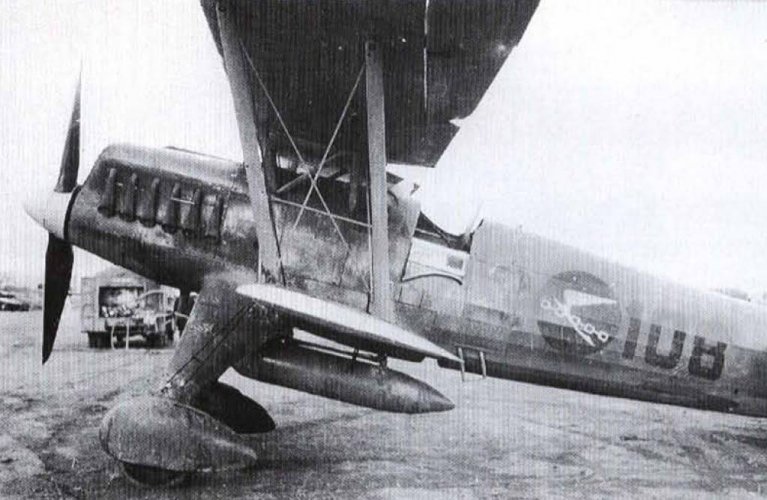
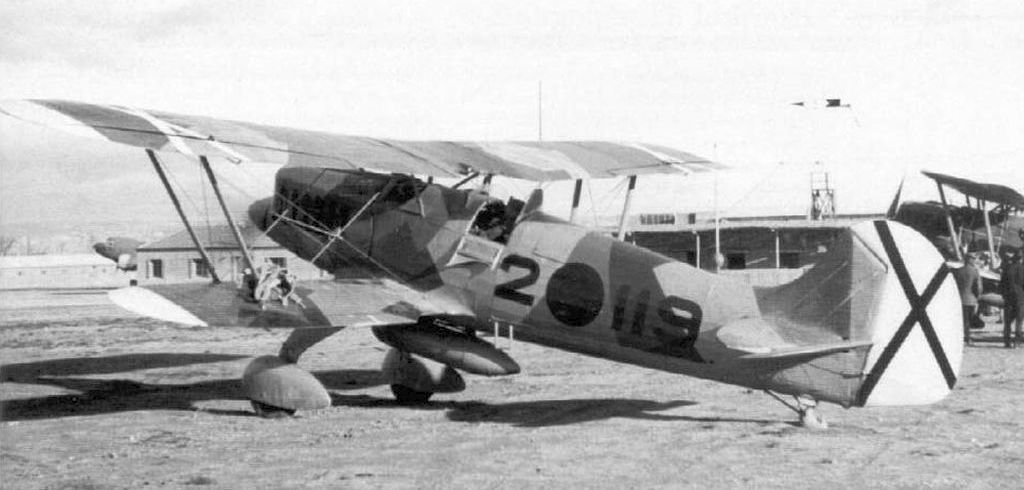
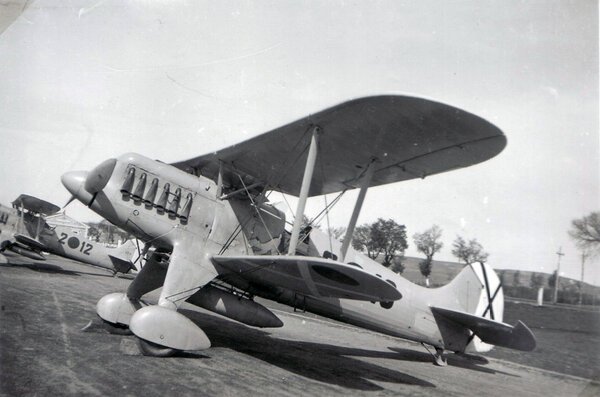
Heinkel fighters already used external fuel tanks during the Spanish Civil War, but the Messerschmitt was much easier to manufacture in large series.

The Bf 109 was conceived as a point defense light interceptor, not as an escort fighter. In the invasion of Poland only a small number were used because the escort fighter was the BF 110.

Its use during the Battle of England was an emergency solution to the failure of the Bf 110 in dogfight against British single-engined fighters, a matter of elementary physics that Göring chose to ignore.

In this type of fighter combat, the 20-mm guns of the Bf 109 E-3 were unnecessary dead weight because that version had been designed to combat the RAF's Wellingtons during their daylight raids on Kriegsmarine bases.
 
I have read somewhere that the He-100's unique cooling system could have been a liability to relatively light damage.
 
I have read somewhere that the He-100's unique cooling system could have been a liability to relatively light damage.
In the 1935 contest for the future fighter of the Jagdwaffe, the Heinkel He 112 lost against the Messerschmitt Bf 109 because of its elliptic wing, more difficult to manufacture.

In 1937, in an effort to remain in the contest, Dr. Heinkel promised to General Luftzeugmeister Udet that he would be able to manufacture a fighter that, propelled by a Daimler Benz DB 601, would be capable of reaching 700 km/h. Although Udet considered it impossible, the project – named Heinkel P1035 - started on 25 May 1937. The design team, led by Siegfried Günter, followed the streamlining and drag reduction in the main guidelines. They adopted a well faired cockpit, a fully retractable tail wheel and a stressed skin wing covering, reducing the number of ‘Butter’ rivets.

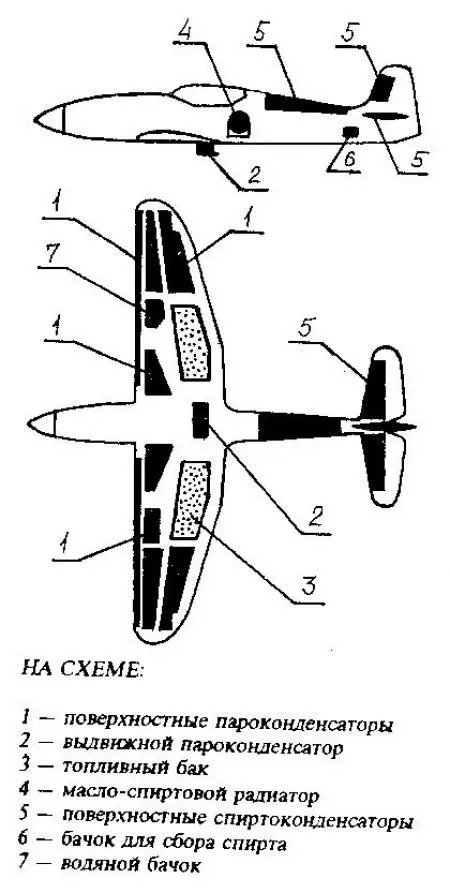
The DB 601 engine had exhaust ejectors for a small amount of thrust and the supercharger inlet was moved from the side of the cowling to a location under the propeller hub. The frontal radiator was replaced by a surface cooling system, inspired by the Macchi seaplane racers, which was already being tested on the He 119 V1.

The steam generated at high temperature was separated from the cooling fluid coming from the engine, using a centrifugal compressor and an expansion chamber. The heat exchangers, located in the wings, had a total capacity of 345 lt and transferred the heat outside through the light alloy stressed covering. The steam was then condensed into liquid by cooling and returned to the engine circuit by means of 22 electric driven centrifugal pumps.

A similar system was designed to refrigerate the oil, by passing it through a heat exchanger where methyl alcohol was added. The resulting vapour was then being ducted to the tail surfaces, where it was to be condensed back to liquid before returning to the heat exchanger. By the end of October, the project was presented to the Luftwaffe Technisches Amt, receiving the He 100 number type.

During the flight tests of the first prototype, it turned out that the wing suffered a structural distortion, caused by the high temperatures. It was also confirmed that the oil cooling system did not work at all. The second prototype had a reinforced wing cladding and was equipped with a retractable auxiliary cooler for the ground running and another, on the port wing root, for the oil.

On 30 March 1939, the prototype Heinkel He 100 V8, powered by one 1,800 hp Daimler Benz DB 601 ReV engine, set a world speed record flying at 746.6 kph. In order to minimise drag, the conventional radiator was replaced by one experimental surface-evaporation cooling system that used pressurised water at 110 ºC.

More prototypes and a short preproduction series were built and the He 100 achieved several speed records. But its little reliable cooling system - that made it very vulnerable in combat- together with its maintenance problems and the lack of DB 601 engines, advised against its mass production, foreseen for 1939.

 
Not sure about the "stressed skin wing covering, reducing the number of ‘Butter’ rivets."

The explosive rivets devised by ing Karl Butter in 1934 were only intended for applications where there was access to only one side of a component. As such, these 'Sprengniet' might be employed along trailing edges, etc., but explosive rivets were never going to be used extensively.

BTW: Karl Butter invented those rivets at the behest of his brother Otto Butter, who had been a designer at the Ernst Heinkel Flugzeugwerke since 1931.
 
I would like members' opinions about whether the Heinkel He-100 would have done better in the Battle of Britain than the Messerschmitt Bf-109. Would it have been an effective opponent of the Spitifre and Hurricane?

How would an advanced Heinkel He-112 have performed in combat?

IMO, the He 100 as-is would've been somewhat like very fast and a more sturdier Ki-43 Oscar, with shorter range - so very dangerous against the enemy fighters, while also being susceptible to the combat damage (but not to the point of becoming a ball of flame when hit), and with meagre forepower.
Considering that IIRC neither of the two British fighters have had the self-sealing tanks during the BoB, and they still were very useful fighters in the day, I don't consider the He 100 as being too fragile.

Advanced He 112, if it is from the small-statured 112B lineage and with the DB 601, would've probably been as good (ans as bad) as the Bf 109.

The actual installed armament for the He 100D was 3 x MG 17s - two synchronised and one firing through the prop hub. [1] By contrast, the Bf 109E-3 was armed with E-3 with 2 x synchronised MG 17s and 2 x MG FF wing guns.
Yes, that is the main shortcoming of the historical He 100.

The comparisons above suggest to me that the Bf 109E-7 was the best fighter available to the Luftwaffe during the actual Battle of Britain.
It probably was. But it was a rare fighter in the actual combat, being too late. Same with the pre-series Bf 109Fs.
Heinkel was promising, at 330L of fuel and with 60% of engine power, 1050 km at 8 km at 510 km/h cruise speed, or 875 km at 5 km at 560 km/h. Take these figures FWIW. Same for the 670 km/h @ 5m for the max speed.
MTT gave, for the 109E on best cruise power and on 400L, 635 km at 6 km at 360 km/h.

In the 1935 contest for the future fighter of the Jagdwaffe, the Heinkel He 112 lost against the Messerschmitt Bf 109 because of its elliptic wing, more difficult to manufacture.
The Bf 109 won because it was better in the comparative testing.
Heinkel did two redesigns of the 112 in order to cut the drag and weight, in order to equal or surpass the 109, while also designing the He 100, by what time the 109 was firmly in production stage.
He 112 was difficult to manufacture because it used too many parts, and He 100 was also an attempt to slash on that. They succeeded with that, but it was in vain.
 
I believe they were used for local and factory protection at some stage but, I may be conflating with another type.
 
IIRC rumor has it that a few Fw 187s were used for factory protection.
The He 100 were used as a hoax, to fool the Allies, and were called He 113 for that purpose. Letting the Allied pilots claim a few kills of the He 113s before 1941.
 
IIRC rumor has it that a few Fw 187s were used for factory protection.
The He 100 were used as a hoax, to fool the Allies, and were called He 113 for that purpose. Letting the Allied pilots claim a few kills of the He 113s before 1941.
Thank you Sir, much appreciated. The grey cells have been put on a diet.
 
In this type of fighter combat, the 20-mm guns of the Bf 109 E-3 were unnecessary dead weight because that version had been designed to combat the RAF's Wellingtons during their daylight raids on Kriegsmarine bases.
If they were unecessary they would have simply unbolted the guns and taped over the ports in the wings.

During this phase is when self-sealing fuel tanks and armour plate came in, which rendered any small calibre weapon fairly ineffective, or certainly not immediately lethal.

The armour needed to protect against cannon was so heavy it was impractical, hence, cannon remained lethal.
 
If they were unecessary they would have simply unbolted the guns and taped over the ports in the wings.

During this phase is when self-sealing fuel tanks and armour plate came in, which rendered any small calibre weapon fairly ineffective, or certainly not immediately lethal.

The armour needed to protect against cannon was so heavy it was impractical, hence, cannon remained lethal.
It was a mistake of the Germans not to use auxiliary dop tanks to stay longer escorting the bombers, they had the technology since 1936 but did not use it because they trusted the range of action of the Bf 110. The task of an escort fighter is not to destroy enemy interceptors but to keep them away from bombers and that is best achieved with a lighter and more maneuverable aircraft armed with machine guns such as the Mustang.

That's why they lost.
 

Attachments

  • 5-B.jpg
    5-B.jpg
    87.4 KB · Views: 37
  • Heinkel He-51 Legion Condor.jpg
    Heinkel He-51 Legion Condor.jpg
    68.7 KB · Views: 31
  • BB9U5FECIAAOeub.jpg
    BB9U5FECIAAOeub.jpg
    48.3 KB · Views: 40
Even so, as many as a third of the Bf 109s used in the Battle of Britain were E-1s which lacked cannon armament.


Ikaria MG FF (20 mm.)​

During the 20s, the Swiss firm SEMAG committed itself to the design of the 20 mm gun Becker used during the WWI by some German bombers. During the first years of the 30s, the research was continued by the Swiss firm Oerlikon who, in 1933, started to commercialize three basic models using cartridges of progressive length and power. They were the Oerlikon FFF type (72 mm case length), the Oerlikon FFL type (100 mm case length) and the Oerlikon FFS type (110 mm case length).

The FFS was acquired by l’Armèe de l’Air to serve as a base for its own Hispano Suiza H.S.7 and H.S.9 designs which were both modified for aircraft engine mounting. The FFL was acquired by the Imperial Japanese Navy in 1939 and manufactured under license from 1941 onwards, as 99-2 Type, to be used in the Zero-Sen fighters. The FFF was chosen by the German, Polish and Romanian Air Forces to equip the Bf 109 E-2/E-3, Bf 110C, PZL P-24 C/F/G and IAR 80 fighters.

The Luftwaffe version was extensively modified to adapt the original design to the German production techniques, being mass manufactured by the Ikaria Werke Berlin as MG FF (Maschinen Gewehr Flügel Fest = Machine Gun Wing Installation) from 1935 onwards. It was the lightest short-barrelled weapon in its class with just 28 kg. But it had a lower effective range and power of penetration than the contemporary French and Swiss designs.

These shortages were partially compensated by a higher rate of fire and the introduction of the MG FFM (Modifizierung = Modification) which could fire the HE ammunitions Minengeschoss.

It is unclear if the MG FFM was ever used during the Battle of France. Some authors state that the Bf 109 E-2 were armed with four MG 17 machine guns and at 20 mm cannon located behind the engine, firing through the axis of the hub propeller. As per this version of facts, the 'M' meant Motor.

The Bf 109 E-2 passed through some operational tests with discouraging results because of the strong vibrations that the cannon produced in the engine crankcase during firing. Apparently, the decision to mount the two cannons in the wings of the Bf 109 E-3 went against the initial German project that preferred the French moteur-canon device. This system was eventually adopted as a matter of urgency after the failure of the Bf 109 E-2 to alleviate the big difference in firepower between the Bf 109 E-1 and the Morane and Hurricane fighters.

The MG FF fired 20 mm ammunition of the 20 x 80RB type that could be HE (134 g), HEI (115 g) or M-Geschoss (92 g). When installed in the Bf 109 E and Bf 110 C fighters of, it used a 60 rounds drum while the Do 17Z night fighters used a 15-45 rounds drum which could be manually replaced in combat. The Luftwaffe always considered the MG FF a transition weapon to fill the gap until the excellent MG 151 was available.
 
This is also nonsense, the Mustang was very heavy, over a ton more than a 109 empty, and 2 tons heavier max takeoff.
At the time it was used as an escort fighter the Mustang was a light fighter compared to the Thunderbolt, Lightning and Tempest.

Don't use a cannon to kill mosquitoes. Confucius.
 
The 8th AF escorts trying to protect bombers were unsuccessful. They won when they were cut loose to attrit the interceptors. This is in every account ever written about the conflict and is in line with the basics of air power theory which is that aerial warfare is attritional warfare. Big Week involved large bomber losses and the USAAF won because they attrited the interceptors more than the Germans could withstand, not because the bombers were protected. They were not protected very well.
 
The 8th AF escorts trying to protect bombers were unsuccessful. They won when they were cut loose to attrit the interceptors. This is in every account ever written about the conflict and is in line with the basics of air power theory which is that aerial warfare is attritional warfare. Big Week involved large bomber losses and the USAAF won because they attrited the interceptors more than the Germans could withstand, not because the bombers were protected. They were not protected very well.
Theorists talk about heroes with many aerial victories and talk about the performance of fighters and their armament, professionals talk about logistics, production capacity, number of available pilots and ability to train them better than those of the enemy. Germany was crushed by the production of the three million American workers who were not sent to the front. During the last months of the war in Europe, groups of up to three hundred Mustangs defended the sides of the bomber stream and when enemy fighters withdrew to refuel, they chased them to their bases, destroying them on the ground because they had a superior range. If during the Battle of Britain, the German fighters had had more range than the British fighters, they could have exterminated the RAF on the ground as planned in Göring's dreams.
 
Check the production figures of the UK vs Germany in 1940. No more replies because this is farcical.
 
My comment about the Mustang was just a collateral example, not an attempt to deflect the main Heinkel versus Messerschmitt issue.

Germany had the technology and resources to win the Battle of Britain and exterminate the RAF, but it did not use them correctly because the Luftwaffe was conceived as auxiliary artillery to the Werhmatch and not as a strategic force.

If the Bf 109s had been equipped with drop tanks and the bombers had been used as bait to lure the Hurricanes into multiple engagements against vastly superior fighter forces while the Bf 110s flew across the channel under the radar cover of the Chain home, to attack the fighter bases of Group 11 they would have managed to destroy many British fighters, but above all they could have killed many pilots who were the weak point of Fighter Command.

That would not have defeated England because the Home Fleet would have prevented any attempted invasion by sea and the Luftwaffe had lost most of its Ju-52s between Norway and Holland, but it would have delayed the invasion of Normandy by at least a year due to lack of secure bases in England.
 
Germany had the technology and resources to win the Battle of Britain and exterminate the RAF, but it did not use them correctly because the Luftwaffe was conceived as auxiliary artillery to the Werhmatch and not as a strategic force.
Sources for these claims?

If the Bf 109s had been equipped with drop tanks and the bombers had been used as bait to lure the Hurricanes into multiple engagements against vastly superior fighter forces while the Bf 110s flew across the channel under the radar cover of the Chain home, to attack the fighter bases of Group 11 they would have managed to destroy many British fighters, but above all they could have killed many pilots who were the weak point of Fighter Command.
This scenario requires that Dowding, Park and other people drink lead paint instead of tea, as well as that they don't have and Spitfires, all while the British industry is hit by worker strikes one after another.
 
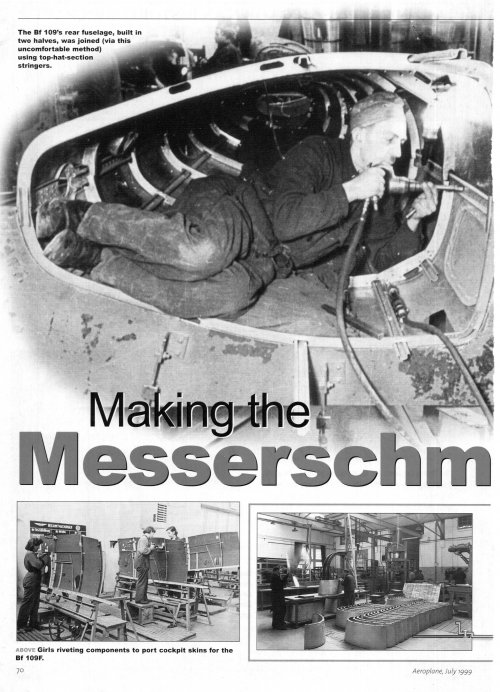
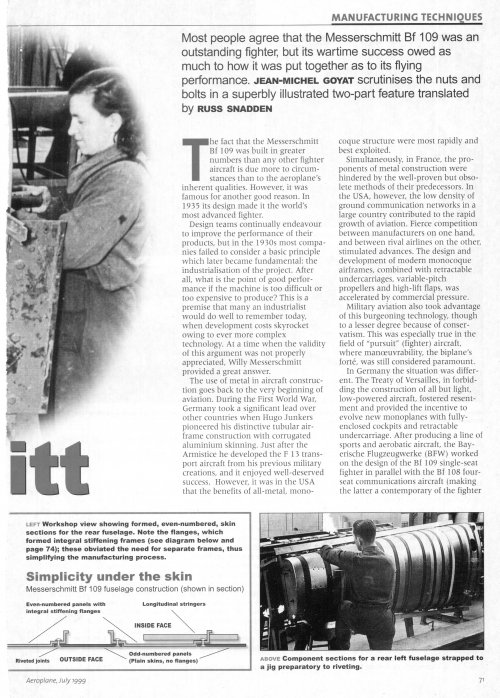
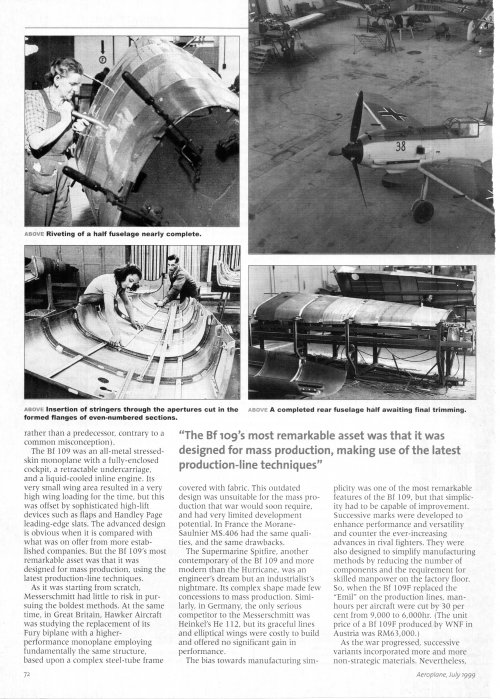
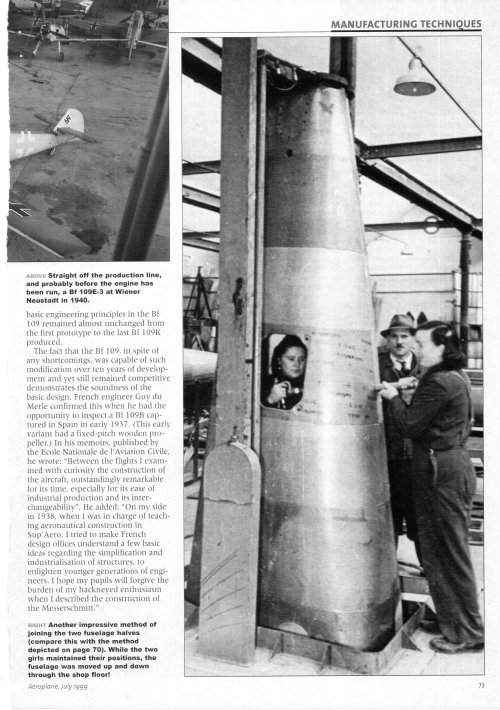
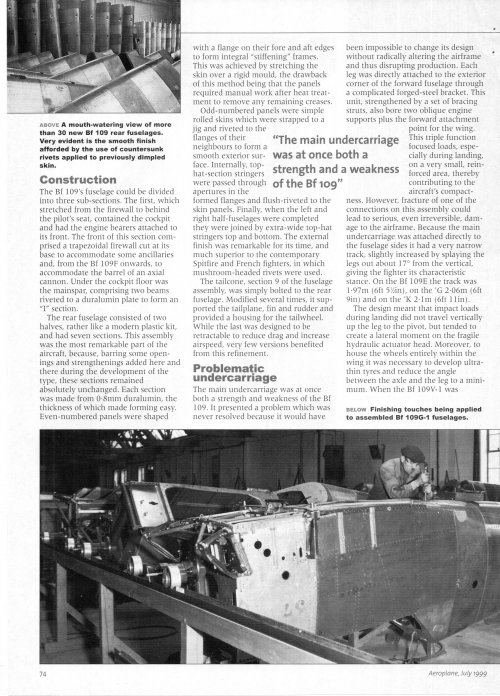
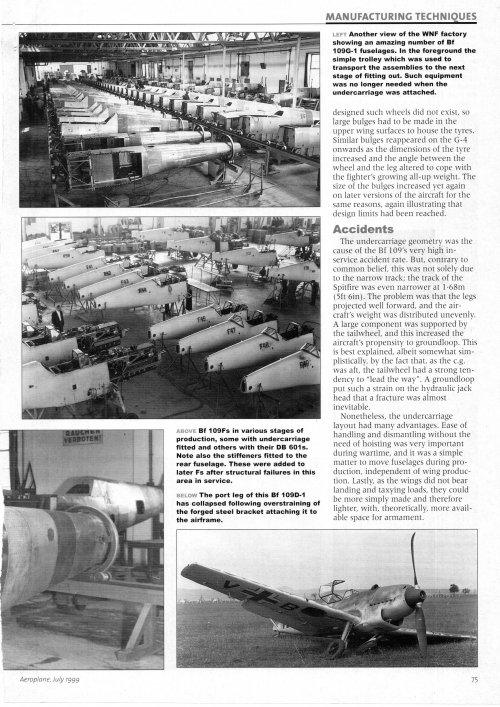
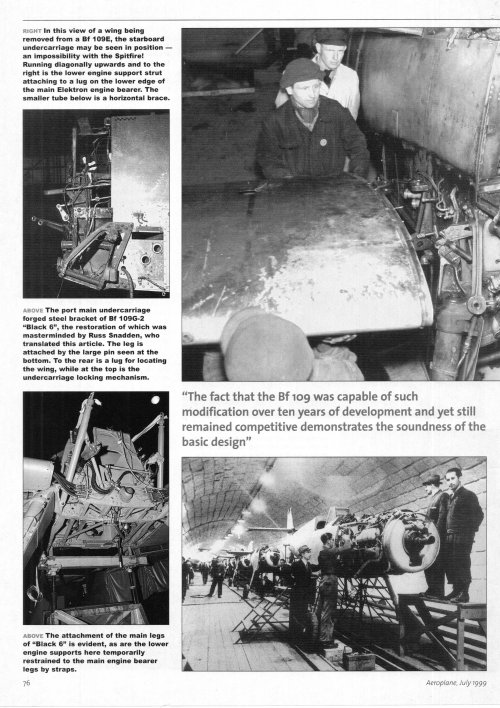
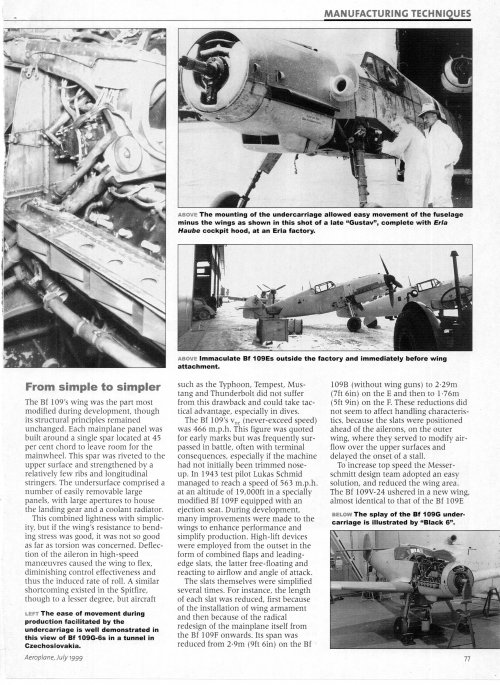
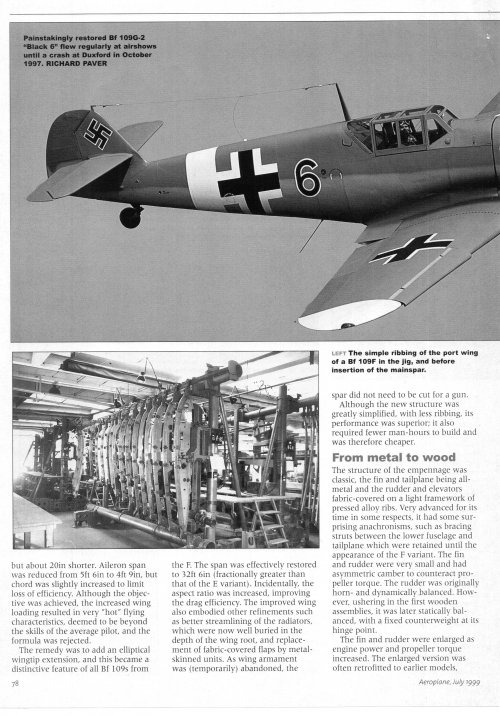
Making the Messerschmitt
Aeroplane July 1999
 

Attachments

  • 920.jpg
    920.jpg
    2.4 MB · Views: 40
  • 921.jpg
    921.jpg
    1.8 MB · Views: 36
  • 922.jpg
    922.jpg
    2.2 MB · Views: 30
  • 923.jpg
    923.jpg
    2.4 MB · Views: 28
  • 924.jpg
    924.jpg
    2.2 MB · Views: 32
  • 925.jpg
    925.jpg
    2.4 MB · Views: 36
  • 926.jpg
    926.jpg
    2.5 MB · Views: 31
  • 927.jpg
    927.jpg
    2.4 MB · Views: 29
  • 928.jpg
    928.jpg
    2.3 MB · Views: 28
  • 929.jpg
    929.jpg
    2.3 MB · Views: 30
Speaking as an aircraft mechanic, the surface-cooling systems of the He100 would be very vulnerable to damage.

It'd be acceptable for a point-defense interceptor, not for a long range escort that would do all its fighting over enemy territory.

Edit: Point defense interceptors are fine because if they get damaged they land on your territory. Long range escorts are not good because the planes may not land on your territory.
 
Last edited:
Hi Scott,

Speaking as an aircraft mechanic, the surface-cooling systems of the He100 would be very vulnerable to damage.

It'd be acceptable for a point-defense interceptor, not for a long range escort that would do all its fighting over enemy territory.

While the vulnerable surface of a surface-condensation cooling system is much larger than that of a liquid-cooling radiator, it's worth remembering that the operating pressure in the enclosed volume is very low, nowhere near steam engine boiler pressures.

Accordingly, I'd expect the water loss through a bullet hole to be fairly to be very gradual only, in no way comparable to the instant stream of vapor that follows a liquid-cooling radiator puncture.

Of course, that liquid radiator has a much lower chance of getting hit, but the consequences of even a single bullet hitting it are much more serious, or at least take effect much quicker, so I have no idea what an engineering risk analysis would say. Imagine 50 bullets hitting an airframe ... what's the chance of one hitting the liquid-cooling radiator, and how long would it typically take for the engine to overheat and seize afterwards? Then compare it to the same 50 bullets hitting an aircraft equipped with surface cooling - how many bullets will hit the cooling cells, and how quickly would the steam stream out and cause the same engine seizure? I wouldn't see an easy answer to that question, and I haven't seen any historical data on this either.

Heinkel seems to have argued that all considered, the surface cooling system was no more susceptible to combat damage than conventional radiators, but I only read about this in a passing comment somewhere ... probably in his autobiography "Stürmisches Leben", but I can't look it up at the moment.

However, as far as the He 100 is concerned, the practical problem seems to have been that the surface of the fairly small aircraft was not entirely sufficient to guarantee proper cooling under all circumstances, or at least didn't have any reserves for future engine power increases, and from documents published years ago in the now defunct deutscheluftwaffe.de archive section, it seems that near the end of the He 100's development history, Heinkel had decided to convert the He 100 type to conventional wing radiators for (future) production anyway.

Regards,

Henning (HoHun)
 
Speaking as an aircraft mechanic, the surface-cooling systems of the He100 would be very vulnerable to damage.

It'd be acceptable for a point-defense interceptor, not for a long range escort that would do all its fighting over enemy territory.

It would've been interesting to compare the vulnerable volume or surface of a He 100 vs. these of the Bf 110. We still have the liquid cooling systems, fuel tanks, as well as the generous cockpit & crew - all susceptible to the fire of 8 LMGs, yet the 110 managed to have a positive kill/loss ratio during the BoB.
The He 100 should be harder to spot since it was a smaller aircraft, and it should be also harder to hit due to it's small size and the much higher speed (even if we subtract 10% from the 670 km/h that Heinkel claimed, to be on the conservative side).

Can it win the BoB just on it's own? No. Could it be useful, with a positive kill/loss ratio? I'd say yes.
 
While the vulnerable surface of a surface-condensation cooling system is much larger than that of a liquid-cooling radiator, it's worth remembering that the operating pressure in the enclosed volume is very low, nowhere near steam engine boiler pressures.

Accordingly, I'd expect the water loss through a bullet hole to be fairly to be very gradual only, in no way comparable to the instant stream of vapor that follows a liquid-cooling radiator puncture.
That's caused by the sudden change in pressure inside the system. When you have a system running at 15psi or whatever is needed to keep water from boiling at 240degF and it suddenly drops to 0psi, the entire volume of water in the system above ~150degF flashes into steam due to lowered outside air pressure.

Whether the entire system pops or just a local area goes is a debate that we'd need to have. I'm not understanding how that system works in terms of what pressures are where.

Is there a thread on surface-evaporation cooling systems here?


However, as far as the He 100 is concerned, the practical problem seems to have been that the surface of the fairly small aircraft was not entirely sufficient to guarantee proper cooling under all circumstances, or at least didn't have any reserves for future engine power increases, and from documents published years ago in the now defunct deutscheluftwaffe.de archive section, it seems that near the end of the He 100's development history, Heinkel had decided to convert the He 100 type to conventional wing radiators for (future) production anyway.
I was reading this as the entire upper wing surface was a radiator, which is one of the main targets of an opposing fighter.
 
Hi Scott,

That's caused by the sudden change in pressure inside the system. When you have a system running at 15psi or whatever is needed to keep water from boiling at 240degF and it suddenly drops to 0psi, the entire volume of water in the system above ~150degF flashes into steam due to lowered outside air pressure.

It was my impression that the system would be run under (approximately) atmospheric pressure, but I am not aware of any good technical description of the system anywhere that could help to verify this.

I was reading this as the entire upper wing surface was a radiator, which is one of the main targets of an opposing fighter.

Not the entire area, as it would be difficult to collect the condensed water from every nook and cranny of the wing structure, but certainly the greater part. I seem to believe there were diagrams showing the cooling area shaded in some material on the He 100 and follow-up projects, probably published in Flugzeug Classic if I remember correctly, but it's always difficult to find a specific article in a collection of magazines ... :-/

Regards,

Henning (HoHun)
 
How incompetent was it to not realize that a radiator could be made to compress incoming air, heat it, and accelerate it out the back in order to compensate for some of the drag caused by the radiator? Did they calculate the weight added by this low parasite drag system and see how much drag was induced by the increased weight?
 
How incompetent was it to not realize that a radiator could be made to compress incoming air, heat it, and accelerate it out the back in order to compensate for some of the drag caused by the radiator? Did they calculate the weight added by this low parasite drag system and see how much drag was induced by the increased weight?
Doing that math would take a significant time to set up and compute back then. Slide rules and logarithms for days!
 
Doing that math would take a significant time to set up and compute back then. Slide rules and logarithms for days!
Ok, then engineering intuition suggests, hey maybe there is a better way to do it. Like, maybe how EVERY other company does it...
 
The Soviets found the cooling system to be unreliable, with all the vibration from the engine causing constant problems with all the pumps and valves. This vibration issue may have been why a motorcannon wasn't fitted. Furthermore, most of these valves were concentrated in the center fuselage, which presented a maintenance nightmare that was exacerbated by the complicated controls.

The Soviets also found it couldn't adequately cool the aircraft in level flight during hot summer days. This likely means that the development potential of the airframe was limited since it more or less had every reasonable bit of surface area already occupied by cooling;
opitnii-istrebitel-he-100-20-450x893.jpg
How incompetent was it to not realize that a radiator could be made to compress incoming air, heat it, and accelerate it out the back in order to compensate for some of the drag caused by the radiator? Did they calculate the weight added by this low parasite drag system and see how much drag was induced by the increased weight?
The weight of a normal radiator installation is probably a lot more than you are assuming. One of the selling points of the evaporation cooling is that it was actually fairly low weight, essentially making the already existing structure pull double duty.
 
The weight of a normal radiator installation is probably a lot more than you are assuming. One of the selling points of the evaporation cooling is that it was actually fairly low weight, essentially making the already existing structure pull double duty.
Not so much the radiator(s) but the volume of coolant required.
 
I would like members' opinions about whether the Heinkel He-100 would have done better in the Battle of Britain than the Messerschmitt Bf-109. Would it have been an effective opponent of the Spitifre and Hurricane?

How would an advanced Heinkel He-112 have performed in combat?

The He 100D performance data that we know of are not very helpful.
It would have lost much speed, range and climb rate as well as gained even higher take-off and landing speeds if fully equipped with a functioning 20 mm armament equivalent to Bf 109E-3 and armour. Production machines would not have been equal to the handcrafted pre-series machines.

Overall, the He 100 would likely have had superior range (for good air combat duration up to the Bristol-Norwich line), but not enough to hit the Derby and Crewe Rolls-Royce factories for Merlins in daylight, for example.

The even smaller wing would have yielded agility more comparable to Bf 109G/K, whereas Bf 109E was agile enough for an experienced pilot to turnfight well against an inexperienced Spitfire pilot.


All in all, the Bf 109 modifications after the E-3 were in large part efforts to come close to solutions the He 100 already had*, but IMO the He 100D was not production-representative, the MG FF had proven unsuitable as motor gun and the wing area was simply too small.


*:
no struts horizontal stabilizers
fully covered retractable main landing gear
fully retractable tail wheel
fully covered retracted tail wheel
superior view from cockpit
cleaner aerodynamics of engine covers
well-designed wingtips
greater range


The Luftwaffe really only needed three frontline aircraft (not counting Fi 156 and transport planes), but it had pursued many specialised airframes pre-WW2 instead of few mass-produced versatile airframes. They needed a single engine aircraft (Fw190 was the closest to this), a two-engine fast aircraft (Me210 was the closest to this) and a long range (=short range with huge external bombload for night bombing) four-engined aircraft (He 277 / B-24).
 
How incompetent was it to not realize that a radiator could be made to compress incoming air, heat it, and accelerate it out the back in order to compensate for some of the drag caused by the radiator? Did they calculate the weight added by this low parasite drag system and see how much drag was induced by the increased weight?
Keep in mind how long it took to turn exhausts into thrust generators .
 
Back
Top Bottom