What is the source of your information?
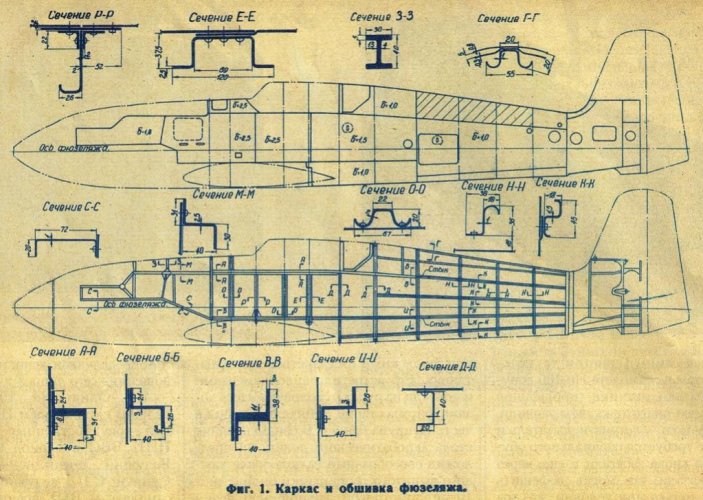
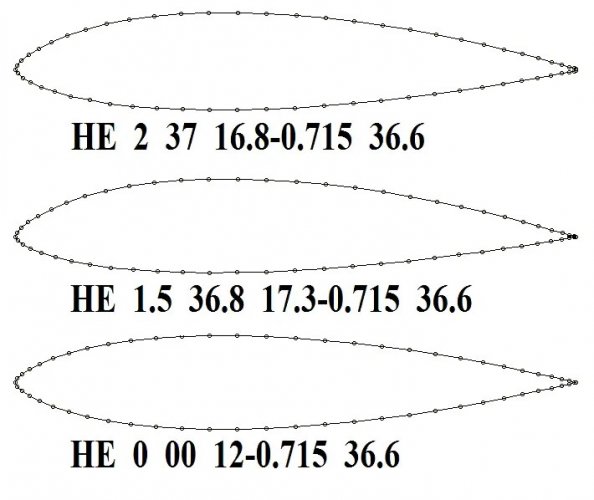
I have posted a facsimile of an original Heinkel drawing, a copy of the Soviet fuselage drawing of the He-100 and information on airfoils known to have been in use by Heinkel at the time. Those peculiar Heinkel airfoil sections are a close match to the drawings posted.
Furthermore Soviet TSAGI documents state that the airfoil had a very rear max t/c, as does Erwin Hoods well researched book on the He-100.
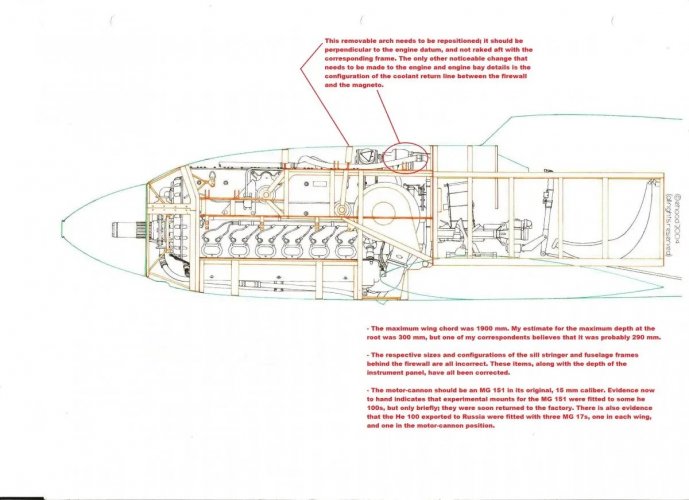
This drawing is from Erwin Hood;
View attachment 800374
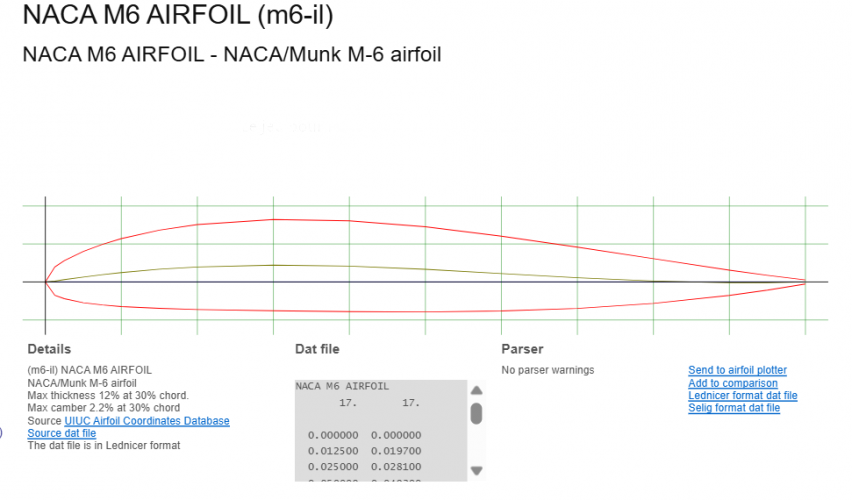
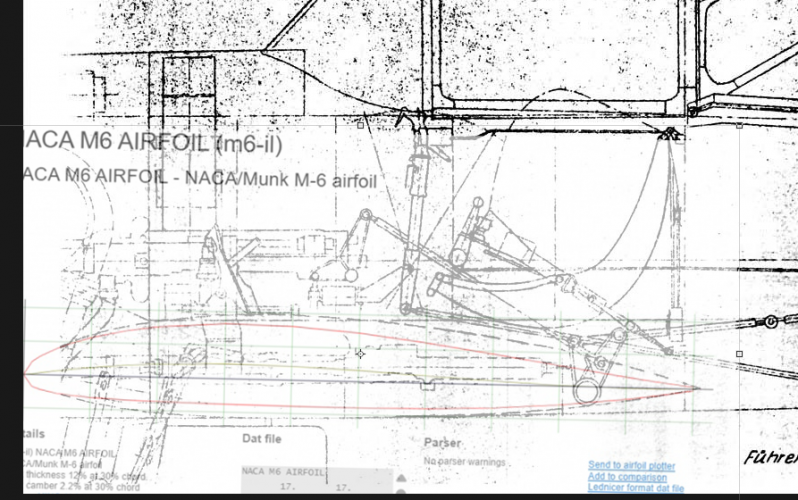
Then lets do a comparison. Munk M-6 is a poor match to the original Heinkel side view;
View attachment 800377
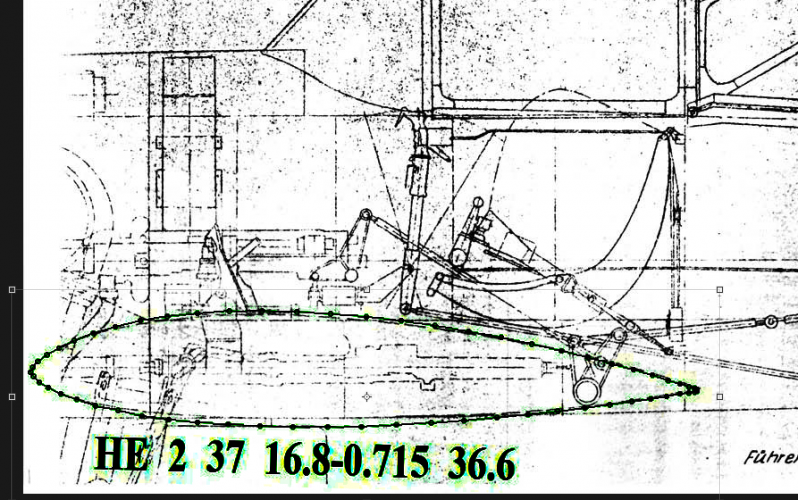
However the Heinkel 16.8% tc 2% camber does show a near match in contour. I'd guess that the real root airfoil was 14% or so thick.
View attachment 800380
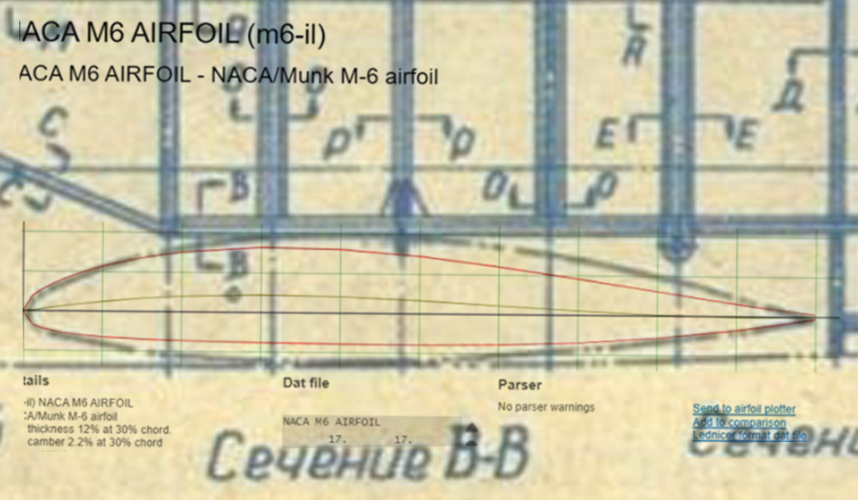
Now the Soviet side view. Again the Munk M-6 does not match well.
View attachment 800381
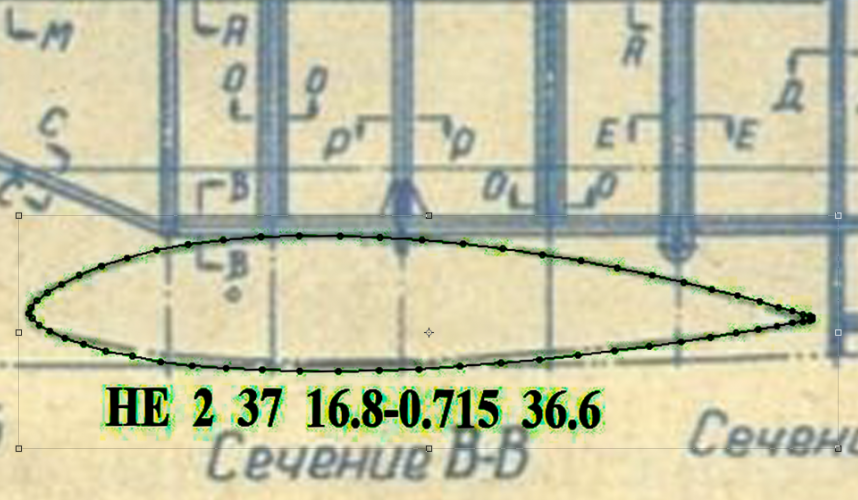
The Heinkel airfoil section is a close match, but here the camber looks like a bit much and the nose LE is a touch too sharp.
View attachment 800382
I think it is very clear that the airfoil on the He-100, at least at root, is something like the Heinkel family known to exist. I'll note that the He-176 and He-178 are also known to have used in-house Heinkel airfoils, and these aircraft are shortly after the He-100 design wise.
I'll
speculate that the actual root section is something like HE 1 37 14-0.85 36.6 or maybe HE 1.5 .........
Have you read "The German Development of the Swept Wing" by Hans-Ulrich Meier? It sporadically talks about the manufacturers own airfoil testing and development.
There is also this;
https://www.cia.gov/readingroom/document/cia-rdp78-02646r000400190001-3
pg.103 is where the airfoil summary starts. It even has the equations and design rational for some of them.
I'm aware of the Re# issue and how its impossible to match mach and Re# and subscale.
I was just explaining what I
think the design logic was, not that it actually worked.
For whats its worth Soviet sources give;
Landing speed of 159km/h
To run of 310m
Landing run of 325m
No weights given so who knows the Cl, but I don't think that points to an impressive Clmax.



 I definitely wish there were more information on the He 100 available, for example about the Russian tests.