

You are using an out of date browser. It may not display this or other websites correctly.
You should upgrade or use an alternative browser.
You should upgrade or use an alternative browser.
Royal Navy Type 45 ("D" Class) Destroyer Daring Class concepts

Grey Havoc
ACCESS: USAP
- Joined
- 9 October 2009
- Messages
- 24,500
- Reaction score
- 18,173
Via the Foreign Policy blog:
http://www.usnwc.edu/getattachment/8c48e9ba-b7ca-42f1-868b-451f9ac72cd0/The-Type-45-Daring-Class-Destroyer--How-Project-Ma.aspx
http://www.usnwc.edu/getattachment/8c48e9ba-b7ca-42f1-868b-451f9ac72cd0/The-Type-45-Daring-Class-Destroyer--How-Project-Ma.aspx
Grey Havoc
ACCESS: USAP
- Joined
- 9 October 2009
- Messages
- 24,500
- Reaction score
- 18,173
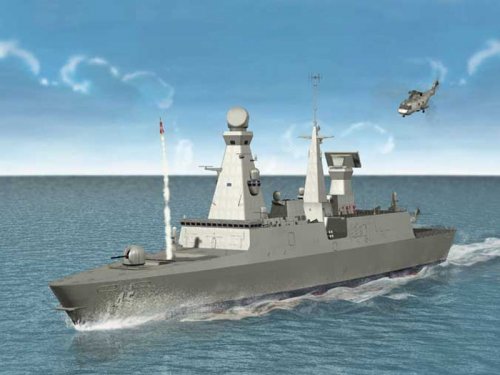
Via Navy Matters, an early (late 1999) design concept:


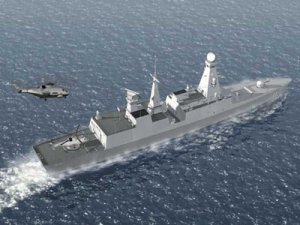
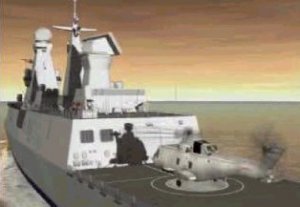
Three pictures from November 1999 showing the early design concepts for the Type 45. Particularly note:
1) The flush-deck VLS Sylver missile silo
2) The original Sampson radar design.
3) Harpoon SSM launcher tubes in a superstructure break amidships
4) Phalanx CIWS mount on the hanger roof
(Source: BAE Systems)
Attachments

- Joined
- 21 April 2009
- Messages
- 14,356
- Reaction score
- 9,446
http://www.independent.co.uk/news/uk/home-news/britain-warships-type-45-destroyer-drones-defence-spending-a7563471.html
Britain’s Type 45 destroyers – which have been plagued by engine problems – are “as noisy as hell”, a former director of operational capability for the Ministry of Defence (MoD) Rear Admiral Chris Parry told The Sunday Times
Extended TV series featuring HMS Duncan. Likely to be removed due to copyright.
https://www.youtube.com/watch?v=Sepj1wpfrfs
https://www.youtube.com/watch?v=s5zoS5D5Ryk
https://www.youtube.com/watch?v=BVa4LcaGlzo
https://www.youtube.com/watch?v=2uq3y8gnR7w
https://www.youtube.com/watch?v=Sepj1wpfrfs
https://www.youtube.com/watch?v=s5zoS5D5Ryk
https://www.youtube.com/watch?v=BVa4LcaGlzo
https://www.youtube.com/watch?v=2uq3y8gnR7w

- Joined
- 16 April 2008
- Messages
- 10,588
- Reaction score
- 18,127
Frankly, current Phalanx 1B with optimized barrel group is probably better than Goalkeeper (and definitely easier to fit).
Bushmaster isn't even in the same class -- it's akin to the DS30 mounts, which I believe are on the Type 45.
Bushmaster isn't even in the same class -- it's akin to the DS30 mounts, which I believe are on the Type 45.
Grey Havoc
ACCESS: USAP
- Joined
- 9 October 2009
- Messages
- 24,500
- Reaction score
- 18,173
Grey Havoc
ACCESS: USAP
- Joined
- 9 October 2009
- Messages
- 24,500
- Reaction score
- 18,173

- Joined
- 18 May 2019
- Messages
- 640
- Reaction score
- 1,758
Babcock International, the Aerospace and Defence Company, is pleased to announce a further year contract extension has been agreed to continue in-service support to the Harpoon Missile System for the Royal Navy.
Babcock provides specialist air, defence and missiles engineering expertise supporting the availability of the Harpoon Missile System fitted to Type 23 Frigates and Type 45 Destroyers. Its role in the programme covers operational defect support, post design services and the procurement of spares, enabling maintenance of the system and its operational availability to the fleet.
Martin Laity, Director Mission Systems, Babcock said: “We are pleased to continue supporting the Harpoon programme, ensuring asset availability for our customer. This is a vital piece of anti-ship equipment on board both the Type 23 and Type 45 that enables them to operate safely wherever they are deployed.”
https://www.babcockinternational.co...e-system-in-service-support-extension-agreed/
Babcock International announced on 7 January that has received a 12-month contract extension from the UK MoD to continue in-service support for the Harpoon missile system operated by the RN.
https://www.shephardmedia.com/news/...&utm_medium=auto_post&utm_campaign=news_promo
Babcock provides specialist air, defence and missiles engineering expertise supporting the availability of the Harpoon Missile System fitted to Type 23 Frigates and Type 45 Destroyers. Its role in the programme covers operational defect support, post design services and the procurement of spares, enabling maintenance of the system and its operational availability to the fleet.
Martin Laity, Director Mission Systems, Babcock said: “We are pleased to continue supporting the Harpoon programme, ensuring asset availability for our customer. This is a vital piece of anti-ship equipment on board both the Type 23 and Type 45 that enables them to operate safely wherever they are deployed.”
https://www.babcockinternational.co...e-system-in-service-support-extension-agreed/
Babcock International announced on 7 January that has received a 12-month contract extension from the UK MoD to continue in-service support for the Harpoon missile system operated by the RN.
https://www.shephardmedia.com/news/...&utm_medium=auto_post&utm_campaign=news_promo
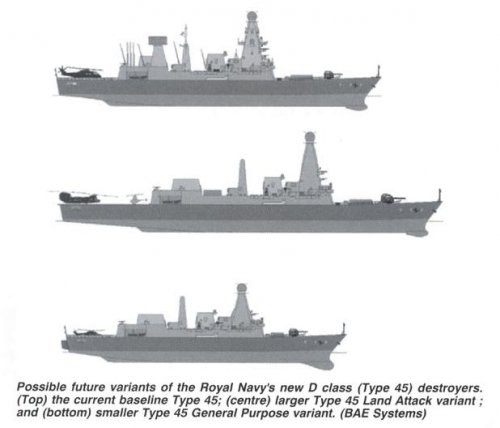
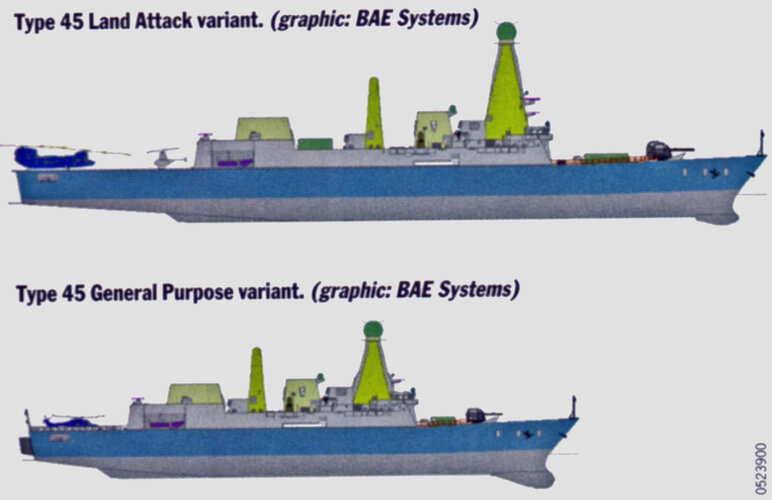
What was the intended armament of the Land Attack variant, and given its increased length was there an increase in beam and was an alteration to the engines needed?Possible future variants of the Royal Navy Type 45 ("D" or Daring Class) Destroyer include Type 45 Land Attack variant and Type 45 General Purpose variant.
Grey Havoc
ACCESS: USAP
- Joined
- 9 October 2009
- Messages
- 24,500
- Reaction score
- 18,173
I believe that Tomahawk and the Naval version of the Storm Shadow (the MdCN) were both studied as part of the planned loadout.What was the intended armament of the Land Attack variant

- Joined
- 1 February 2011
- Messages
- 3,341
- Reaction score
- 5,029
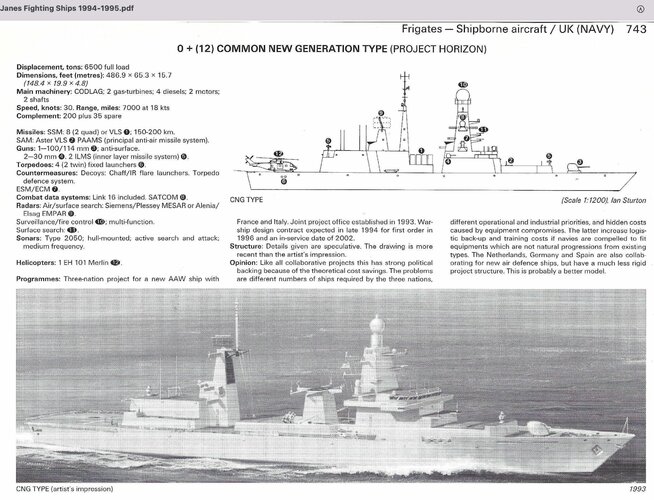
Does anybody know where are these drawings from? From the opening post of this thread? Which shows 3 proposed variants of the Daring Class / Type 45 Destroyers?Possible future variants of the Royal Navy Type 45 ("D" or Daring Class) Destroyer include Type 45 Land Attack variant and Type 45 General Purpose variant.

- Joined
- 6 September 2006
- Messages
- 5,316
- Reaction score
- 11,544
Off topic discussion on warship classifications has been moved to here: https://www.secretprojects.co.uk/threads/warship-classification-designation-discussion.41950/

- Joined
- 22 January 2006
- Messages
- 4,434
- Reaction score
- 2,796
From post#14 we're off topic. Please try to focus on
Otherwise I'm going to start cleaning it up because the discussion about what's the definition of cruiser/frigate/destroyer isn't new in the forum
"Royal Navy Type 45 ("D" Class) Destroyer Daring Class concepts"
Otherwise I'm going to start cleaning it up because the discussion about what's the definition of cruiser/frigate/destroyer isn't new in the forum
D
Deleted member 29851
Guest
Is the Land Attack T45 just another name for the Global Cruiser? Also interesting to note that other, non-USN navies, where looking at ships orientated for land attack.

CommanderRenHoek
ACCESS: Restricted
- Joined
- 1 August 2023
- Messages
- 41
- Reaction score
- 78
Land attack was all the rage in US and Western European navies back in the late 1990s-2000s. The "end of history" and the Global War on Terror made them think bombing low-rent dictator states and non-state actors with relative impunity would be their main job moving forward. Even Germany got in on the act with the F125.
In hindsight, that focus was a mistake and caused tremendous damage in terms of wasted industrial and design effort (e.g. see Zumwalt) that some aren't sure the US and Western Europe can really recover from.
In hindsight, that focus was a mistake and caused tremendous damage in terms of wasted industrial and design effort (e.g. see Zumwalt) that some aren't sure the US and Western Europe can really recover from.
D
Deleted member 29851
Guest
Eh, I wouldn’t call the Zumwalt a waste. The design is sound and the tech all works. Had we not seen a giant shift in geopolitics, and thus defense strategy and fleet architecture, we probably would’ve seen a dozen or so built. And all of that tech is being reused in DDG(X).
Ron5
I really should change my personal text
- Joined
- 19 January 2016
- Messages
- 164
- Reaction score
- 264
They're from Jane's Navy International 107-9 :Does anybody know where are these drawings from? From the opening post of this thread? Which shows 3 proposed variants of the Daring Class / Type 45 Destroyers?

- Joined
- 22 April 2012
- Messages
- 2,274
- Reaction score
- 2,847
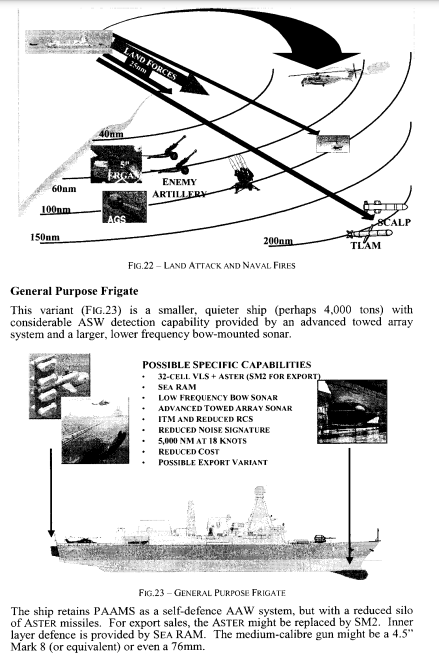
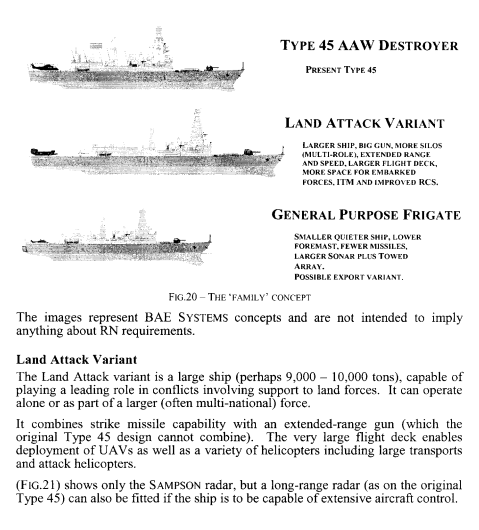
Courtesy of the Institute of Marine Engineering, Science and Technology, from a a 2002 article by the BAE Type 45 programme director. This is the most detail I have seen on the land attack and ASW frigate concepts. In particular I note that the S1850M (LRR) could be fitted to the Land Attack version. Presumably, if that design had used the 4.5" Mk.8 it could have also had the space for 16 additional Mk.41 cells ahead of the Sylver silos for a total VLS outfit of 96.
Attachments

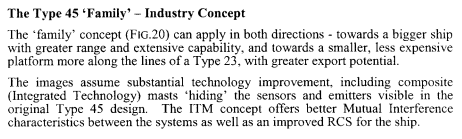
The book British Destroyers and Frigates mentions that there was (is?) a reserved space on the Type 45 as built for two 8-cell (total 16) VLS launchers for Tomahawk or comparable size of missiles.
Where is this space? Midships, abaft the funnel? Or where the Harpoons/NSM launchers are now?
Where is this space? Midships, abaft the funnel? Or where the Harpoons/NSM launchers are now?
- Joined
- 5 May 2007
- Messages
- 2,016
- Reaction score
- 4,277
Ahead of the Sylver nest, in the space being used for the Sea Ceptor fit.The book British Destroyers and Frigates mentions that there was (is?) a reserved space on the Type 45 as built for two 8-cell (total 16) VLS launchers for Tomahawk or comparable size of missiles.
Where is this space? Midships, abaft the funnel? Or where the Harpoons/NSM launchers are now?
The lower portion of that space was also identified for the larger magazine required for the 155mm TMF fit, so that option was mutually exclusive with fitting Mk 41.
Thanks, @Yellow Palace !
But it is compatible with the 4.5" gun?
The lower portion of that space was also identified for the larger magazine required for the 155mm TMF fit, so that option was mutually exclusive with fitting Mk 41.
But it is compatible with the 4.5" gun?
Obviously, since the space was available. In fact it was used as a gym until the Sea Ceptor conversion.
Is it known why? Amphibious operations support?IIRC one requirement for the T45 was that the landing pad was large enought for Chinook helicopter.
Last edited:

Anderman
ACCESS: Secret
- Joined
- 30 September 2006
- Messages
- 275
- Reaction score
- 250
Is it known why? Amphibious operations support?
I don´t know but when i read about the program i think end 1990 or early 2000 joint operation between different services were the buzz word of the day.
- Joined
- 5 May 2007
- Messages
- 2,016
- Reaction score
- 4,277
A large part of that is that the ship's boats are outboard of the hangar. You could get enough width for two Merlins, but the boats would have to go elsewhere. Though the RN has never really gone in for more than one helicopter on a surface combatant; the Type 22s could in theory carry two Lynx, but AFAIK it wasn't really common practice.Looking at the ship closer, I noticed that the flight deck and the hangar are really, really large. On Chinese or Soviet standard ships the same length of the hull occupied by the landing pad and the hangar on Type 45 would likely house 2 helicopters side by side and a second VLS cluster. I suppose this was mostly caused by the decision to place Merlins on the ships, but was there any special reason to go for a single, and such a large helicopter instead of pair of Lynxes, for instance?
It was the era when a Chinook full of men with pixelated faces was seen as the solution to many problems.What for? Amphibious operations support?
Or at least a Merlin full of the same people?It was the era when a Chinook full of men with pixelated faces was seen as the solution to many problems.
It's not so much about the width, but the length of the flight deck and hangar combined. Merlin does require a very large deck to land even if it's folded later, not mentioning Chinook, and that's what takes the place of a second potential VLS cluster that could've doubled the ship's missile payload.You could get enough width for two Merlins, but the boats would have to go elsewhere.
- Joined
- 5 May 2007
- Messages
- 2,016
- Reaction score
- 4,277
Width is what dictates whether you can have two helicopters side by side. If the requirement was only for Lynx - and realistically it'd be an embarked Lynx with a Merlin flight deck - the result would have been a shorter ship, not more missiles. Remember that the ships were already built with space for more missiles than were initially fitted!does require a very large deck to land even if it's folded later, not mentioning Chinook, and that's what takes the place of a second potential VLS cluster that could've doubled the ship's missile payload.
We didn’t installed the available extra 16 cells, there’s zero chance they’d have done an amidships vls
Those oscillations in planning - from 18 projected Future Surface Combatants in 2003 to "fitted for but not with" on Darings are always so heartbreaking.
Scott Kenny
ACCESS: USAP
- Joined
- 15 May 2023
- Messages
- 19,533
- Reaction score
- 27,978
"Fitted For but not With" should be a swear word.Those oscillations in planning - from 18 projected Future Surface Combatants in 2003 to "fitted for but not with" on Darings are always so heartbreaking.
You mean it really is Chinook-sized?so if you sized it only for Merlin you would only gain about 7ft 6in.
- Joined
- 5 May 2007
- Messages
- 2,016
- Reaction score
- 4,277
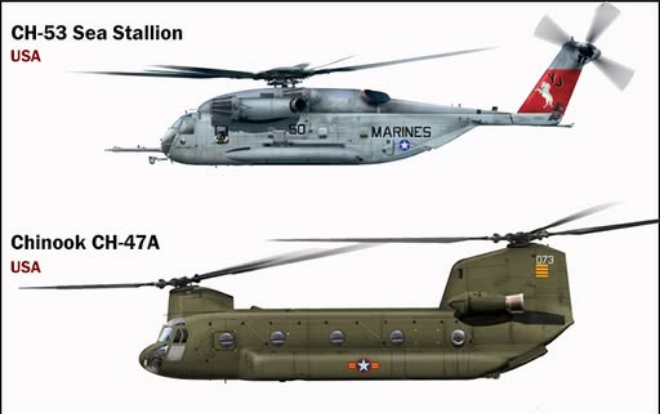
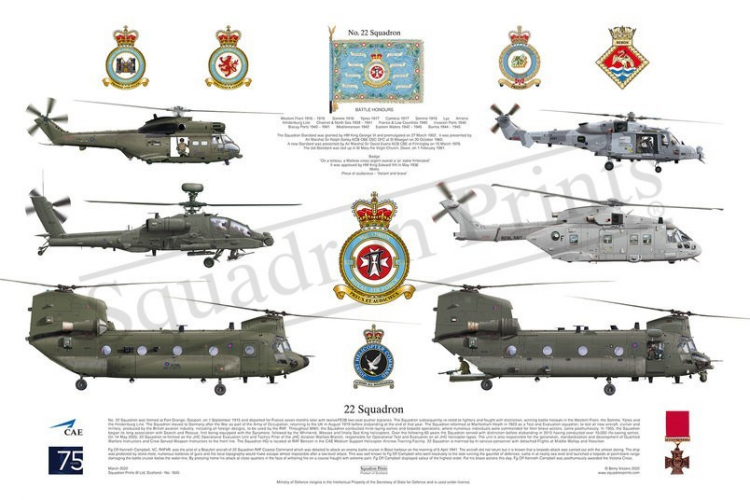
Chinook is a surprisingly small helicopter for how big it is. A lot of the overall length comes from the aft rotor blade overhang, which doesn't need to be on deck.The flight deck was around 25% longer than the Type 23's - so if you sized it only for Merlin you would only gain about 7ft 6in.
- Joined
- 23 August 2011
- Messages
- 2,557
- Reaction score
- 8,430
Though the RN has never really gone in for more than one helicopter on a surface combatant; the Type 22s could in theory carry two Lynx, but AFAIK it wasn't really common practice.
There was at least one T45 deployment in the early days that had 2 Lynx onboard. I remember the photos of the hangar...there was more room than you'd think with them in.
Is it known why? Amphibious operations support?
T45 was designed to replace T42. The RN wanted to have a ship that took all the lessons from the Falklands, Gulf War and intervening periods baked in for once. These were things like:
- High radar placement for early detection of low level threats
- Large calibre gun that could leverage developments that others would pay for, that meant TMF 155mm. The idea was it wouldn't be an 'orphan' calibre like 4.5inch, and could leverage, at little to no cost to the RN, all the exciting developments in guided shells or carrier shells that were proposed at the time. It was pretty sensible in that regard....RN had also realised NGFS was still a thing...
- Lots of spare space, spare power, spare cooling for upgrades during the ships lifetime (RN had been stung heavily by costs to upgrade small Leander Class ships in living memory, and the T21's because of their inability to accept upgrades had effectively become obsolete within 10 years). The mantra here was 'steel is cheap, and air is free'....this also carried over into the CVF programme, and to a degree T26 (the large mission bay takes the concept far further).
- One of the Falklands lessons, and GW1, was that if you were going to have a helideck it made sense to have a size that would accommodate the largest RN helo on all vessels. No more Wasp or Lynx sized decks, with SeaKing having to stay onboard larger vessels. This meant from T23 onwards that all decks were and are 'Merlin capable', just decks initially, but all hangars built now are for Merlin as well. T45, due to the increased focus on 'Purple' i.e. Joint operations took this further by making the deck 'Chinook capable'. The largest helo in UK service. This also went along with the mantra of giving the ships room to grow for future systems as well. Type 26 and Type 31 also have Chinook capable decks as standard (the UK even did a study on powered blade fold for CH-47 at one point, but that was mainly for CVF).
- Additional accommodation for Embarked Military Force (EMF) and 'overflow' accommodation for additional personnel onboard above the usual complement (and the hotel services, galley space, storage etc to support). This was a lesson that could have been learnt at any point in the last 200 years...but the RN finally learnt it post Falklands...most ships since have included it, from River Class, T45, T26, T31 and CVF. T23 was a little too soon....turns out crew complements always grow...and in wartime you always carry more personnel than you thought you would...
- Massively upgraded accommodation for crew....this was with the realisation that modern recruits would just not accept the cramped quarters of before. Good accommodation meant better retention.....T45 is very much the gold standard, QE Class and T26 are very good, but apparently are not as 'luxurious' as T45 (and certainly nowhere near RFA's...),
Last edited:
Yes, that's exactly how I arrived to this realization - I compared the FSC (and a couple of Chinese ships) models to T45 and hardly believed my eyes for the difference in the layout, because then you begin to look at T45 as a kind of "radar picket ships", akin to Soviet project 1077, which combines long-range AA radars, advanced AA missile system, and extensive flying facilities aft.(which is tiny and the similarly sized FSC could fit one in aft)
Last edited:
Similar threads
-

-

-
-
 RN Type 42 AAW Destroyer (Study 382) 1964 question
- Started by Thorvic
- Replies: 2
-
