Steve Pace
Aviation History Writer
- Joined
- 6 January 2013
- Messages
- 2,266
- Reaction score
- 262



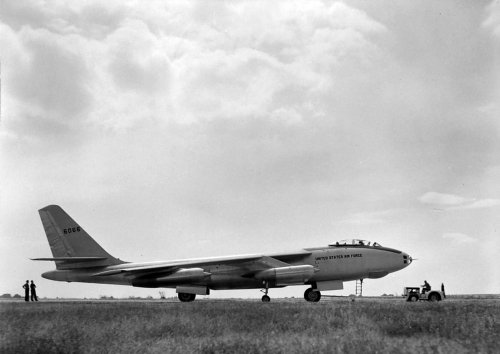
Who might that be?archipeppe said:Someone has a good cutaway of B-47?


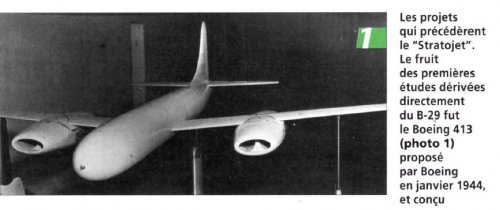
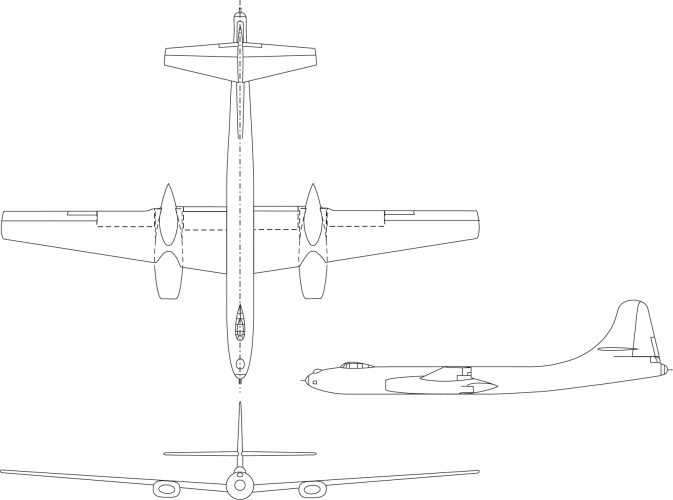
GTX said:That first one looks like a B-29 with jet pods.


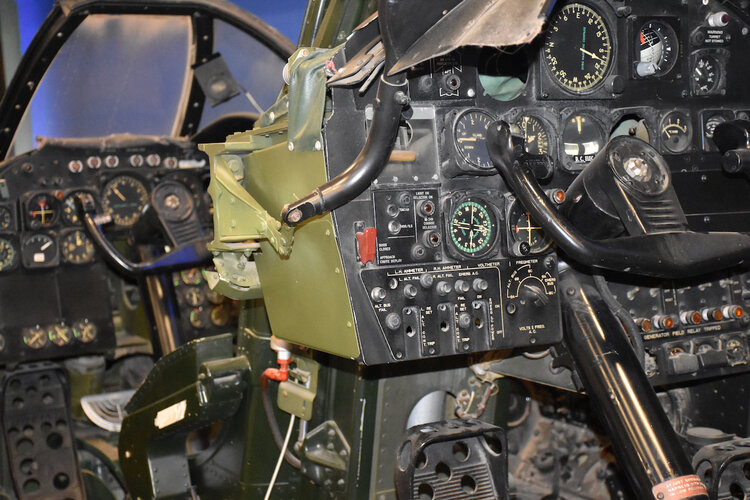
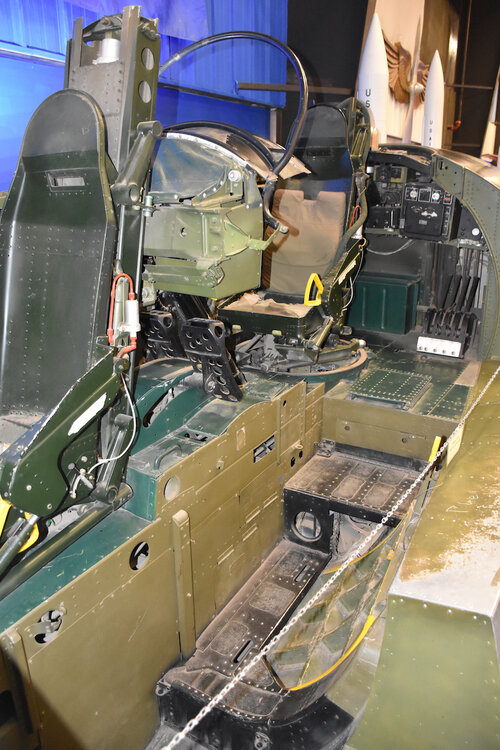
aim9xray said:Oddly enough, this aircraft has survived the years and is on display today at the Chanute Air Museum, Rantoul, Illinois... see http://www.aeromuseum.org/aircraft_xb47.html

"The move will be expensive" where are they moving the collection?The Artist said:aim9xray said:Oddly enough, this aircraft has survived the years and is on display today at the Chanute Air Museum, Rantoul, Illinois... see http://www.aeromuseum.org/aircraft_xb47.html
The Chanute Air Museum has announced that it will close down on 12/31/2015.
http://www.illinoishomepage.net/story/d/story/chanute-air-museum-closing-for-good/34873/j76_FGQ4SEGr9uO-fnW4-w
hesham said:We can transfer this topic to Postwar Aircraft Projects section;
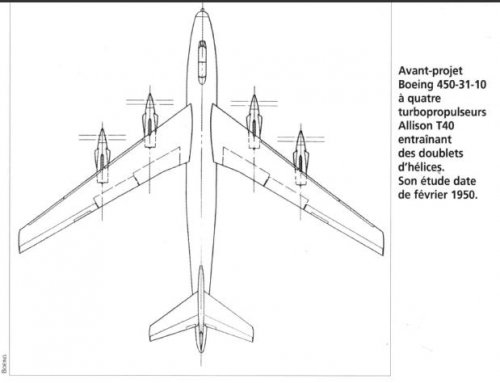
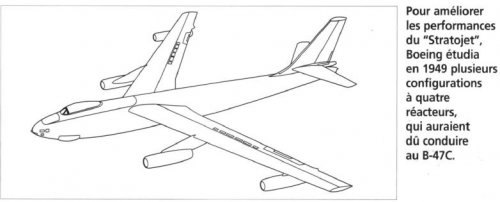
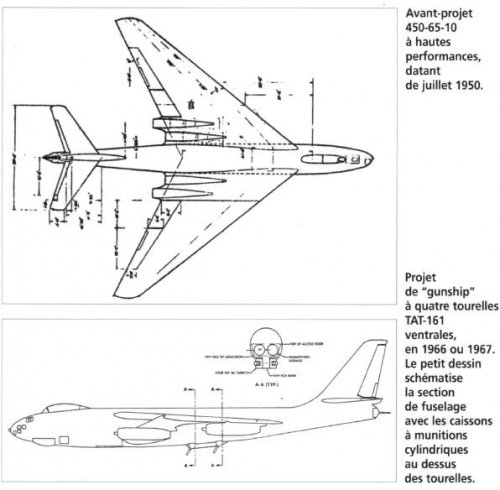
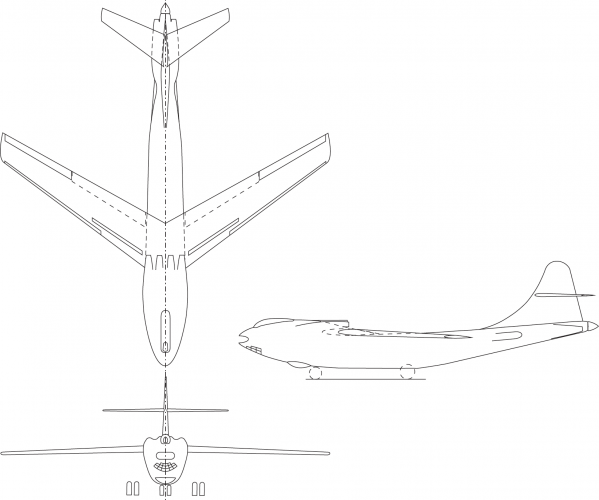
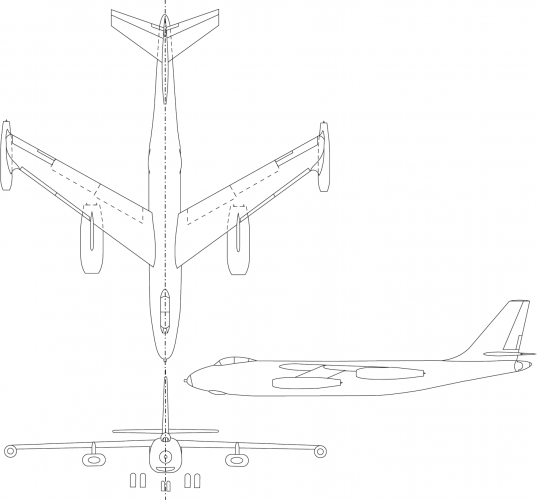
From Le FANA 432,here is some Boeing B-47 projects.


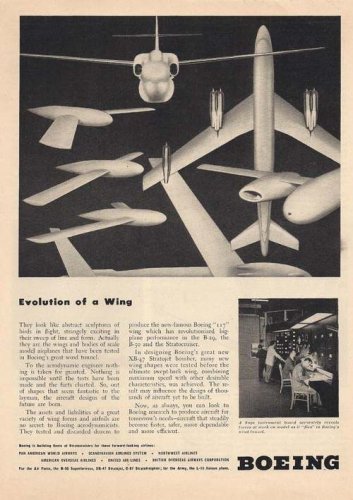
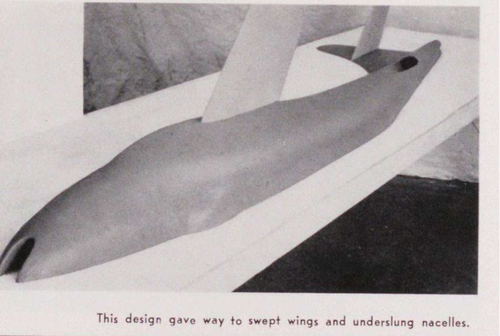
Yikes! That Model 432 is ugly. Goes right into the "fugly" category. I cannot believe it had any structural advantages over layouts with wing-mounted engines. Medium to high aspect ratio wings are wing-bending-moment critical (hence few spars, with the loads primarily carried in the wing skins, and the skins get thick). Moving the engines out on the wing puts their mass outboard and greatly reduce wing-bending moments (and correspondingly wing skin thickness and weight). That's the "span loading" concept.The Evolution that led to the B-47
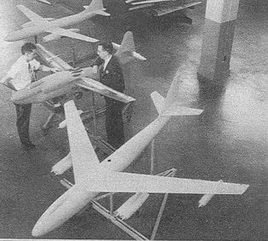
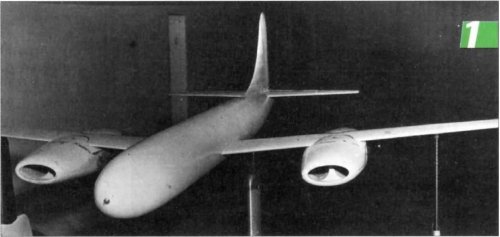
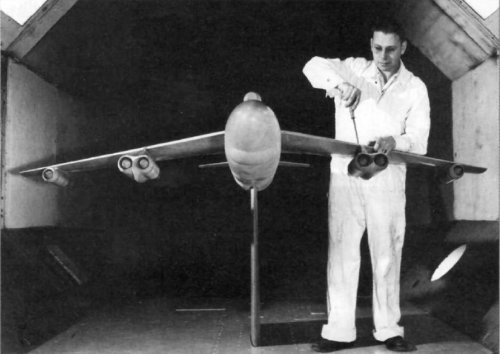
I came across this intriguing wind tunnel model (below) from 1944 of a Boeing Model 432 that I had not come across before, which led to dome digging. All I know about the Boeing Model 432 is that the project arose from a 1943 US Army Air Force (USAAF) requirement for a jet bomber / reconnaissance aircraft that ultimately led to the XB-47.
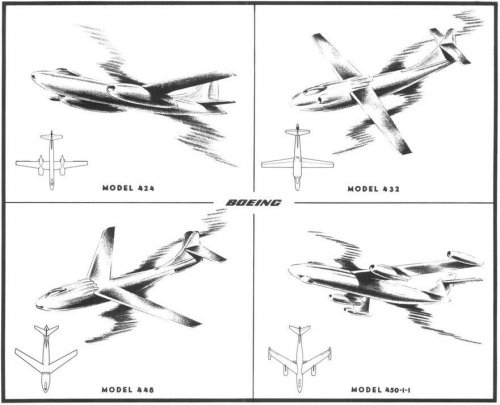
North American, Convair and Boeing all responded with proposals. The first Boeing proposal, the Model 424, was a modification of a conventional propeller-driven bomber design, a scaled-down version of the Boeing B-29 Superfortress fitted with four TG-180 turbojets.
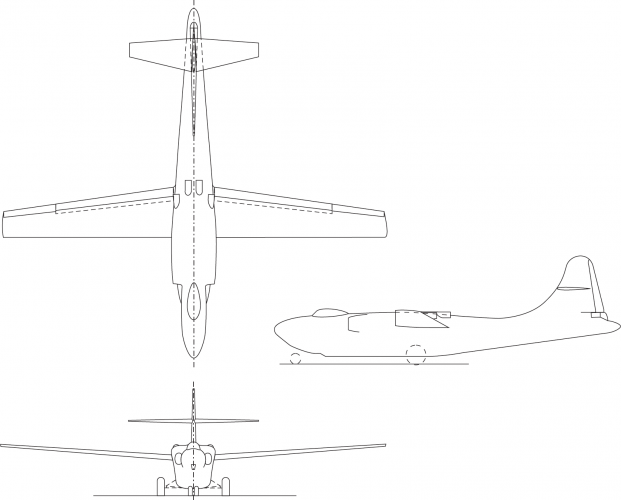
The US National Advisory Committee for Aeronautics (NACA) performed wind tunnel tests on a model of the design. The NACA wind tunnel tests showed that the model suffered from excessive drag. Boeing engineers then tried a revised design, the Model 432, which had the four engines buried in the forward fuselage. Changing the engine layout didn't really reduce drag all that much. The main benefit of the change was found to be structural advantages. The Boeing engineers turned to the swept-wing of 35 degrees.
Boeing then modified the Model 432 design with swept wings and tail, resulting in the Model 448, which was presented to the USAAF in September 1947.
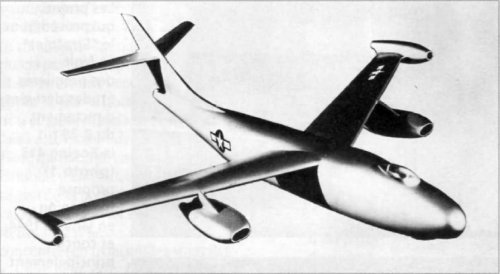
The Model 448 had the four TG-180s in the forward fuselage as had the Model 432, plus two TG-180s buried in the rear fuselage. Boeing submitted the Model 448 to the USAAF in October 1945, only to have it rejected. The Air Force strongly disliked fitting the engines in the fuselage on safety ground in the event of in-flight fires and the engines were moved back out on the wings.
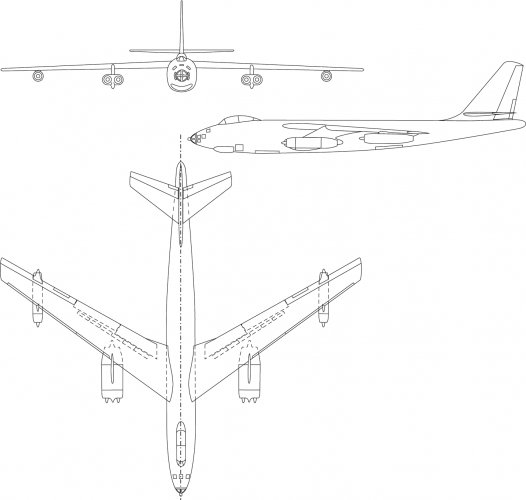
That led straight back to the drag problem, but the engineering team came up with a clean, elegant solution, with the engines in streamlined pods attached to the wings. This innovation led to the next iteration, the Model 450, which featured two TG-180s in a single pod mounted on a pylon about a third of the way outboard on each wing, plus another engine slung from the wingtip.
The USAAF was very pleased with the refined Model 450 design, and in April 1946 the service ordered two prototypes, to be designated XB-47. Assembly began in June 1946 and the Stratojet flew on into fifties history.
Searching in an Artwork folder I also found some drawings of the designs mentioned above, that led eventually to the Boeing B-47 Stratojet.
Looks a bit like an amphibian, as does the 448. I think Convair had an amphibian or sea plane with a similar design.Yikes! That Model 432 is ugly. Goes right into the "fugly" category. I cannot believe it had any structural advantages over layouts with wing-mounted engines. Medium to high aspect ratio wings are wing-bending-moment critical (hence few spars, with the loads primarily carried in the wing skins, and the skins get thick). Moving the engines out on the wing puts their mass outboard and greatly reduce wing-bending moments (and correspondingly wing skin thickness and weight). That's the "span loading" concept.

I've read that a major reason for the underestimation of the B-47's performance was an overestimation of the drag produced by externally mounted jet engines due to experience with piston engine nacelles and a misunderstanding of how much of their drag was due to intake and exhaust of cooling air. This probably contributed to the British enthusiasm for buried engines also.Yikes! That Model 432 is ugly. Goes right into the "fugly" category. I cannot believe it had any structural advantages over layouts with wing-mounted engines. Medium to high aspect ratio wings are wing-bending-moment critical (hence few spars, with the loads primarily carried in the wing skins, and the skins get thick). Moving the engines out on the wing puts their mass outboard and greatly reduce wing-bending moments (and correspondingly wing skin thickness and weight). That's the "span loading" concept.The Evolution that led to the B-47
I came across this intriguing wind tunnel model (below) from 1944 of a Boeing Model 432 that I had not come across before, which led to dome digging. All I know about the Boeing Model 432 is that the project arose from a 1943 US Army Air Force (USAAF) requirement for a jet bomber / reconnaissance aircraft that ultimately led to the XB-47.
North American, Convair and Boeing all responded with proposals. The first Boeing proposal, the Model 424, was a modification of a conventional propeller-driven bomber design, a scaled-down version of the Boeing B-29 Superfortress fitted with four TG-180 turbojets.
The US National Advisory Committee for Aeronautics (NACA) performed wind tunnel tests on a model of the design. The NACA wind tunnel tests showed that the model suffered from excessive drag. Boeing engineers then tried a revised design, the Model 432, which had the four engines buried in the forward fuselage. Changing the engine layout didn't really reduce drag all that much. The main benefit of the change was found to be structural advantages. The Boeing engineers turned to the swept-wing of 35 degrees.
Boeing then modified the Model 432 design with swept wings and tail, resulting in the Model 448, which was presented to the USAAF in September 1947.
The Model 448 had the four TG-180s in the forward fuselage as had the Model 432, plus two TG-180s buried in the rear fuselage. Boeing submitted the Model 448 to the USAAF in October 1945, only to have it rejected. The Air Force strongly disliked fitting the engines in the fuselage on safety ground in the event of in-flight fires and the engines were moved back out on the wings.
That led straight back to the drag problem, but the engineering team came up with a clean, elegant solution, with the engines in streamlined pods attached to the wings. This innovation led to the next iteration, the Model 450, which featured two TG-180s in a single pod mounted on a pylon about a third of the way outboard on each wing, plus another engine slung from the wingtip.
The USAAF was very pleased with the refined Model 450 design, and in April 1946 the service ordered two prototypes, to be designated XB-47. Assembly began in June 1946 and the Stratojet flew on into fifties history.
Searching in an Artwork folder I also found some drawings of the designs mentioned above, that led eventually to the Boeing B-47 Stratojet.

The Boeing Model 413 could have been a better choice for the USAAF/USAF's first purpose-built reconnaissance plane than the XF-11 or XF-12 because it was powered by jet engines and would have flown faster than the XF-11 or XF-12 (in other words, the USAAF picking the Model 413 instead of the XF-11 or XF-12 would have made the first year of Howard Hughes' life after WW2 easier).GTX said:That first one looks like a B-29 with jet pods.
My dear GTX,yes,it is,please read the comment.
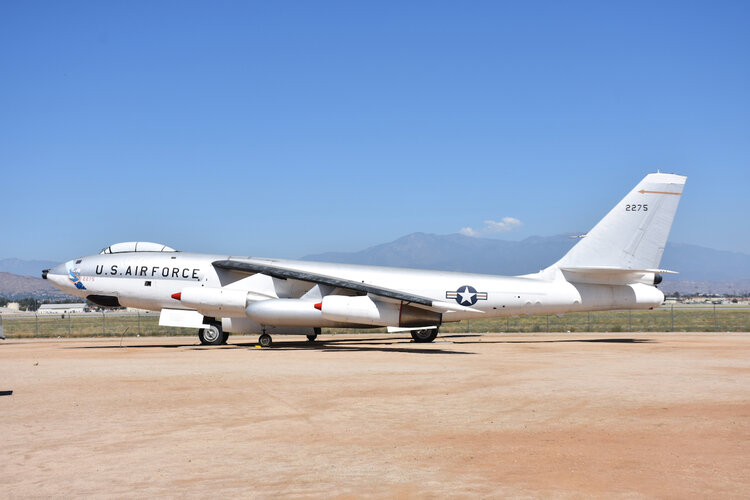
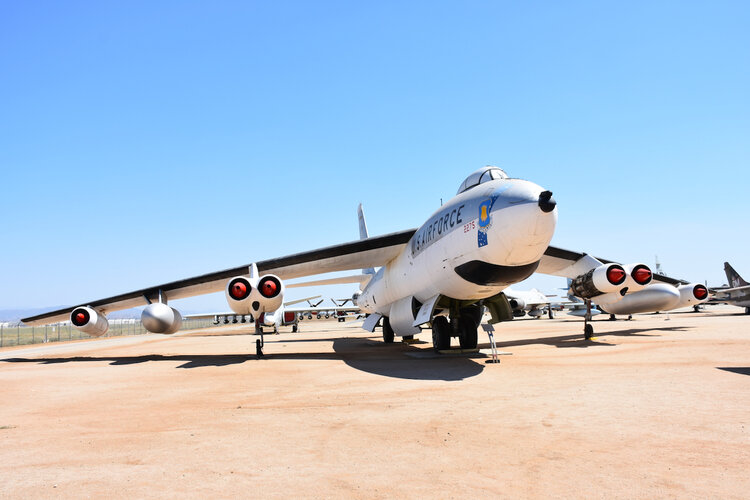
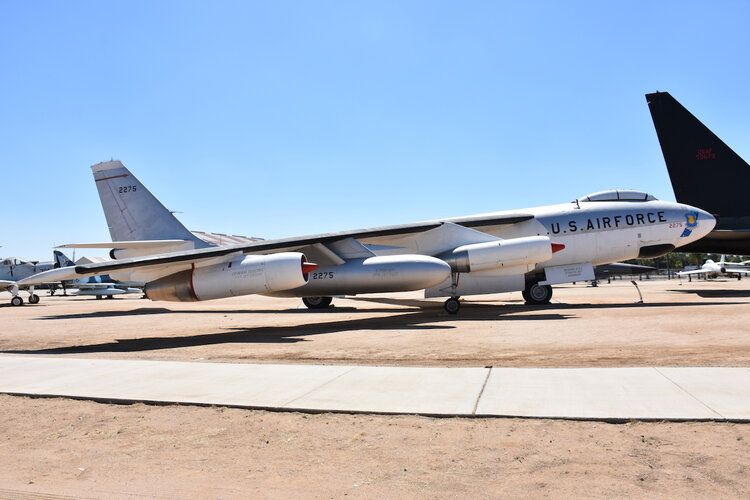
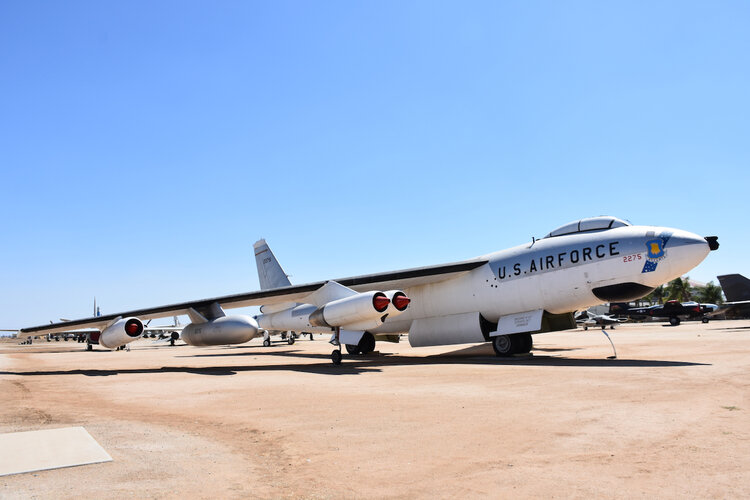
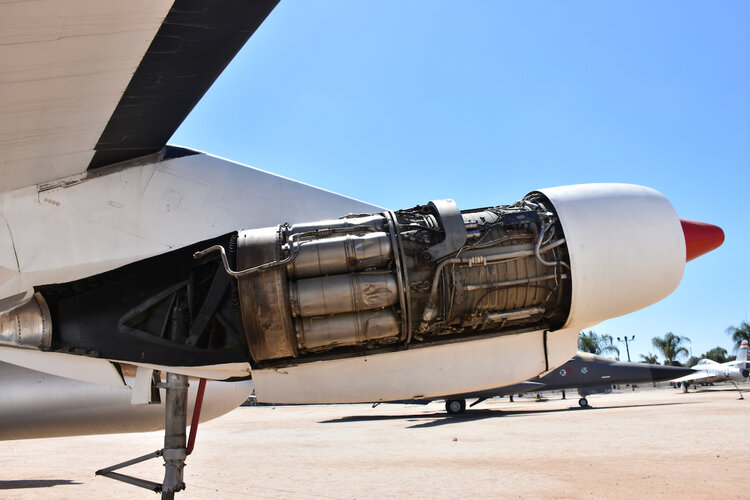
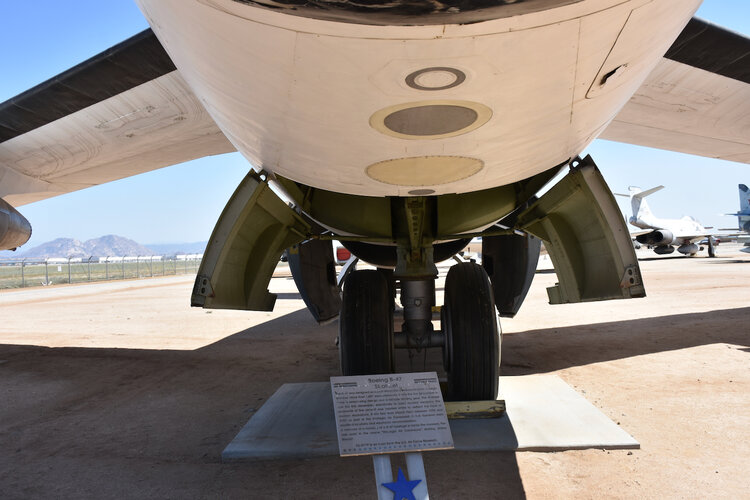
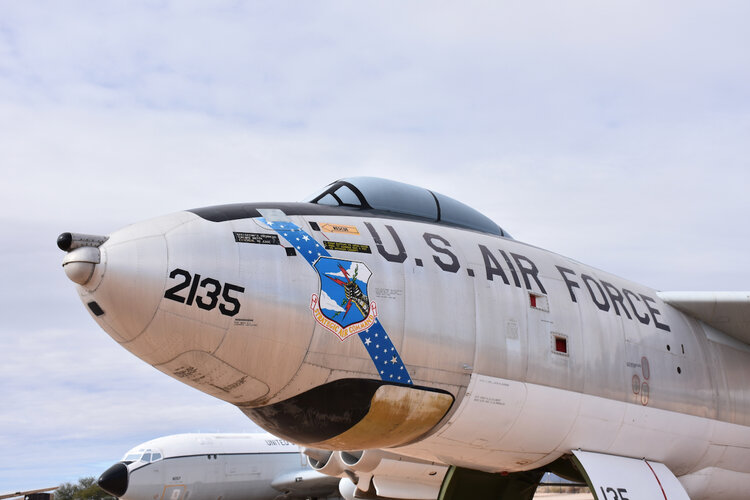
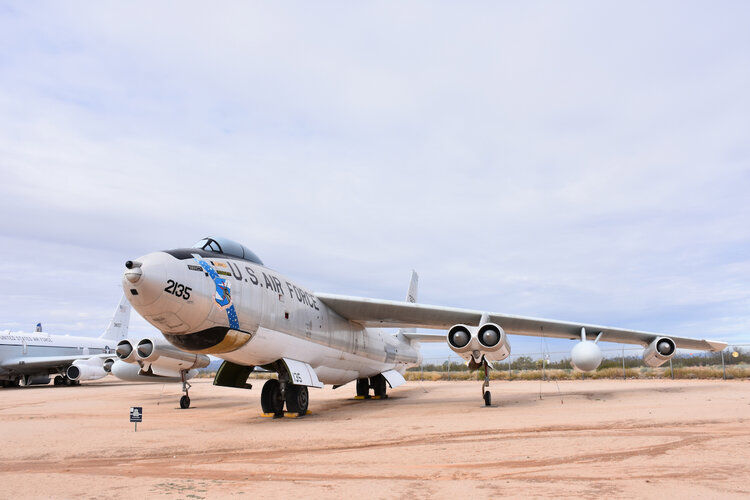
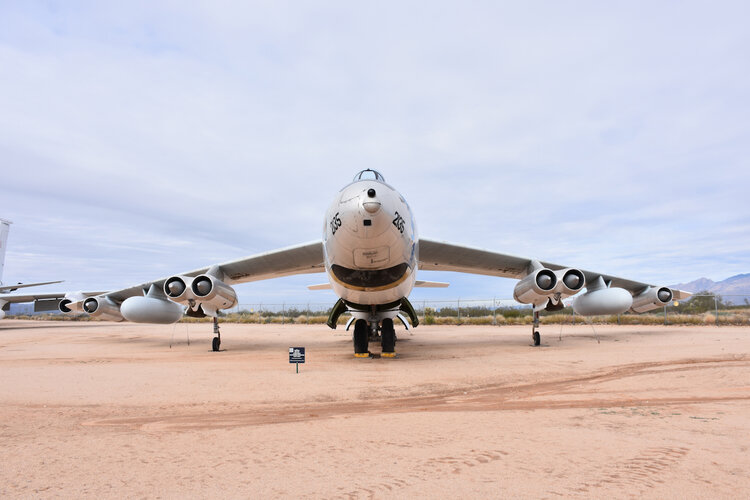
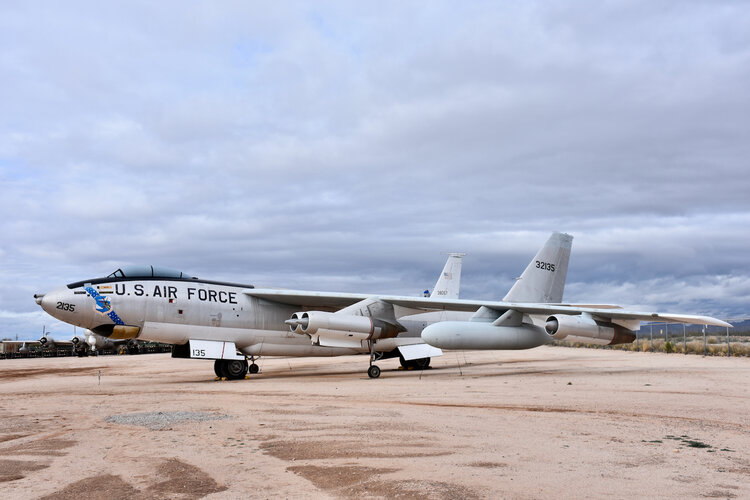
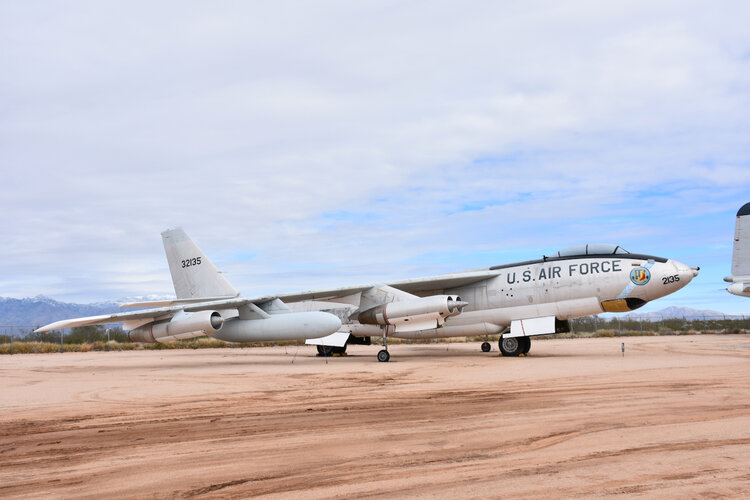
46-066 was dismantled and moved to Edwards, one of those to survive the closure of Chanute. Thanks to the Flight Test Historical Foundation.Oddly enough, this aircraft has survived the years and is on display today at the Chanute Air Museum, Rantoul, Illinois... see http://www.aeromuseum.org/aircraft_xb47.html

During the 43 minute trip, the aircraft had several systems fail, including airspeed sensors, intercom, and partial aileron control. On approach to Castle Air Force Base, a 16 foot (4.9 meters) approach parachute was deployed. This created enough aerodynamic drag to slow the airplane while the early turbojet engines were kept operating at high power settings. These engines took a long time to accelerate from idle, making a go-around a very tricky maneuver. Releasing the chute allowed the airplane to climb out as the engines were already operating at high r.p.m.

Seems like a lot of potential was left on the table with the B-47, with such a high focus on the B-52, B-58 and others. Was there any interest from foreign buyers for improved variants?
Reengined with a quartet of more powerful, more efficient engines (TF-33s for commonality?) and perhaps a wet wing and external hard points inboard like the B-52 would’ve given it great flexibility……
Granted there were alot of other designs available for those non-bomber tasks. And for poops and laughs a full turboprop implementation would’ve been fascinating.
We can transfer this topic to Postwar Aircraft Projects section;
From Le FANA 432,here is some Boeing B-47 projects.
10% of accident does not constitute a record loss rate for a 1950s jet.
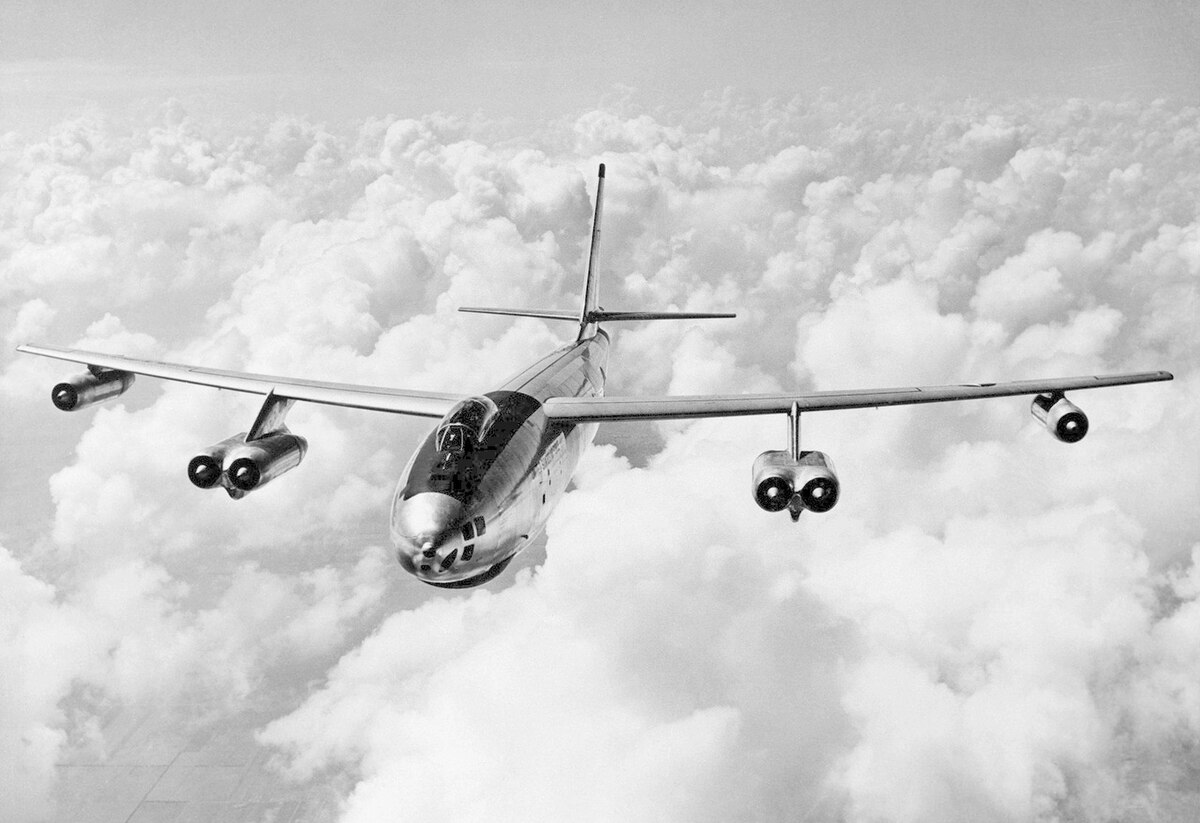
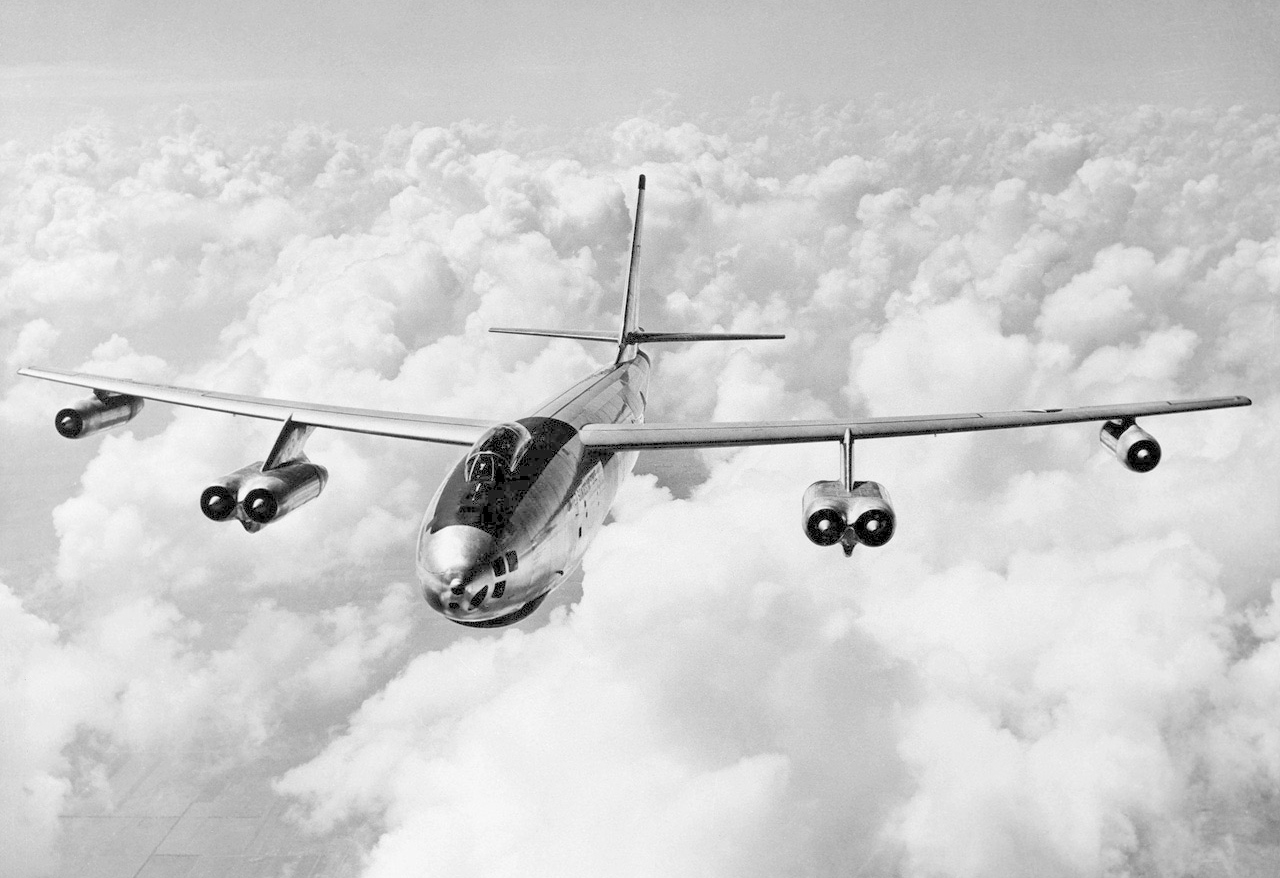
By December 1956 the Strategic Air Command had 27 combat-ready B-47 wings, with 1204 combat-ready B-47 crews and 1306 B-47 aircraft assigned.
PROJECT FAST FLY COMPLETED
In the first half of 1966 the accelerated phase out of all B-47, KC-97, and B-52B aircraft, was completed. On 11 February, SAC's last two B-47 bombers (there were still RB-47s assigned to the 55th Strategic Reconnaissance Wing) were transferred to the storage facility. By June 30, 1003 B-47s were in storage at Davis Monthan AFB, Arizona.
McNamara wanted to shrink the Strategic Air Command and got ride of many obsolete / unuseful nuclear strike systems.I don't know why the USAF retired almost all of their B-47s then because despite their age they still had a lot of useful life left in them.