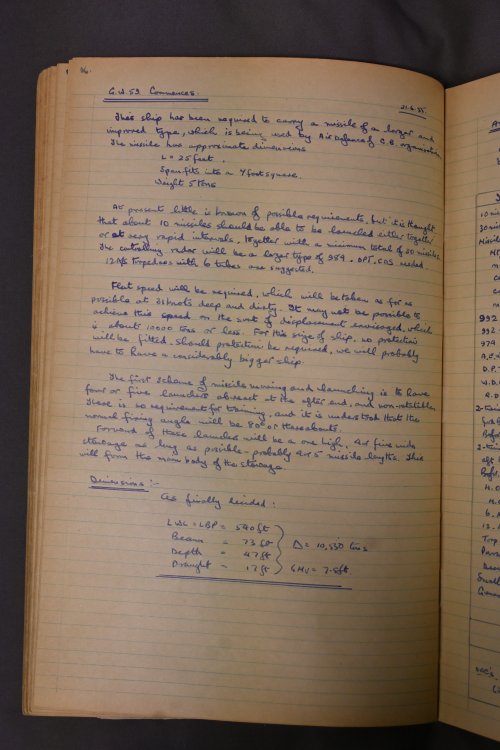
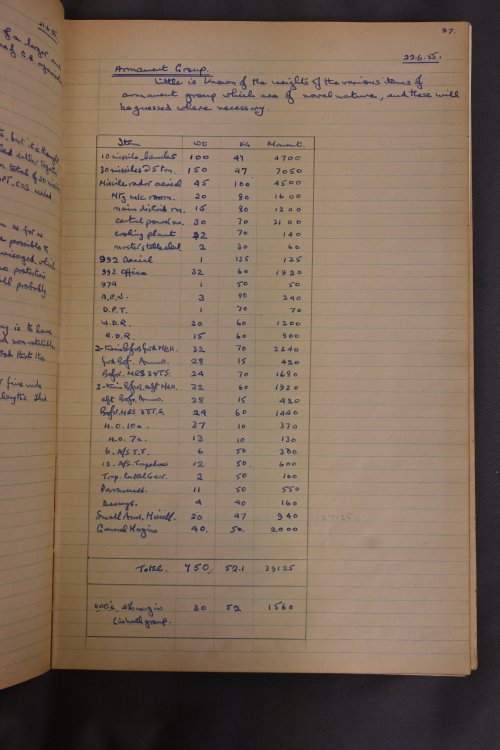
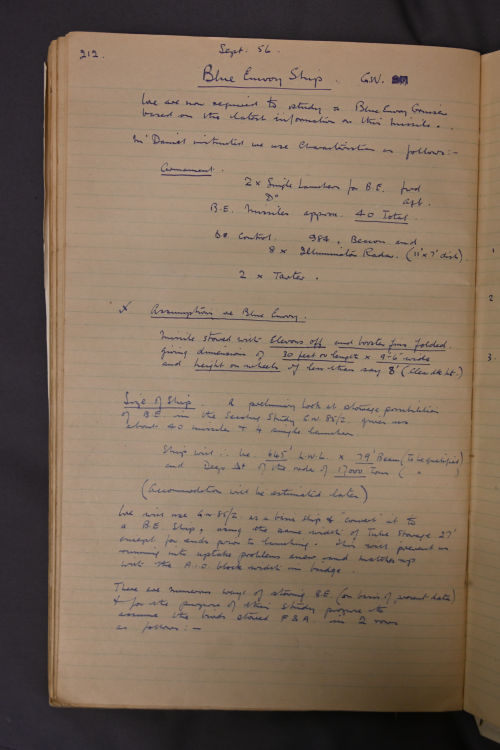
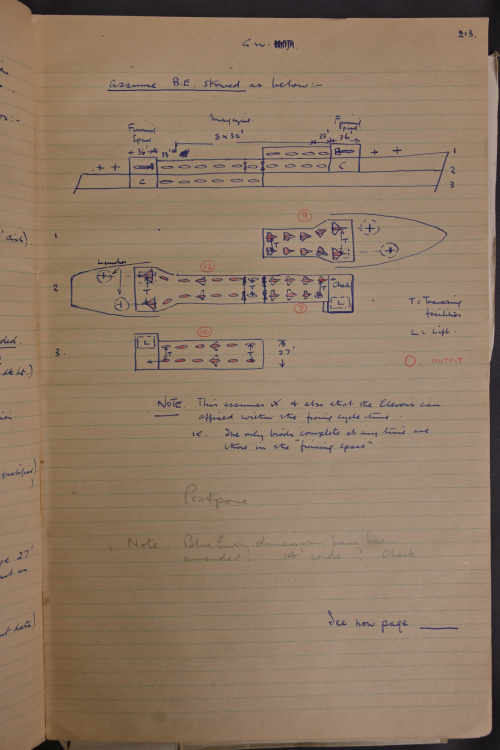
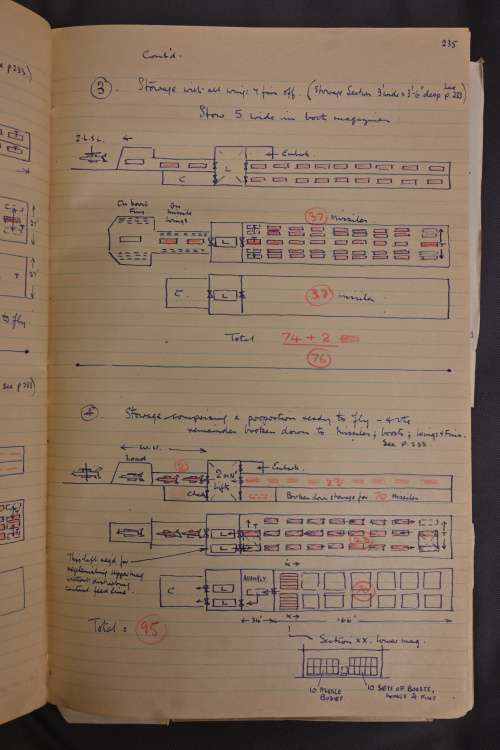
Apparently in 1959 so in the last phases of the design of the County Class Destroyers (Design GW.54), there were ideas to equip them with the large Type 984 Radar! First note tells that all gun armament had to be removed for it to be installed.
 
Interesting. I have Red Flannel as a Q-band H2S.

Chris

Red Flannel was definitely used by the Royal Navy for an active homing surface to air missile with mid-course guidance - a weapon that was to be common with the RAF Stage II system, though not necessarily in terms of radar environment. I talked about it last year in this post. This is now the third document I have seen it in.

Apparently in 1959 so in the last phases of the design of the County Class Destroyers (Design GW.54), there were ideas to equip them with the large Type 984 Radar! First note tells that all gun armament had to be removed for it to be installed.

Friedman discusses this too and I added some additional context here two years ago. TLDR: Cancelling the Seaslug cruiser removed a Type 984 set and a host of depot ship functions from the Seaslug squadron (previously to consist of one cruiser and four destroyers). Mountbatten hoped to recover this by installing one Type 984 set in one of every four destroyers and building a dedicated Seaslug depot ship that would carry test, training, and maintenance functions in addition to a full set of reloads for a four ship destroyer squadron.

Perhaps the most interesting bit is "1 type 98- radar with aperture 2x 984", and the estimated 45 tons weight of the 98- aerial. Friedman in his list calls it the Type 985.
Well whatever it is, it's obviously a rotating single array twice the size of the 984 antenna, something of the order of 308ft2 area, weighing 15 tons more (but 16 tons less than Double 984 layout).
I wonder if there was any link with Orange Yeoman or Type 84/MEW.

My guess would be a scaled-up Type 984; the Navy had little interest in RAF radars, quite the opposite, they made the case for the RAF adopting the Type 984 in place of its own ground based long-range radar programme. The studies for the radar to accompany the naval Blue Envoy initially focussed on Type 984.
 
Last edited:
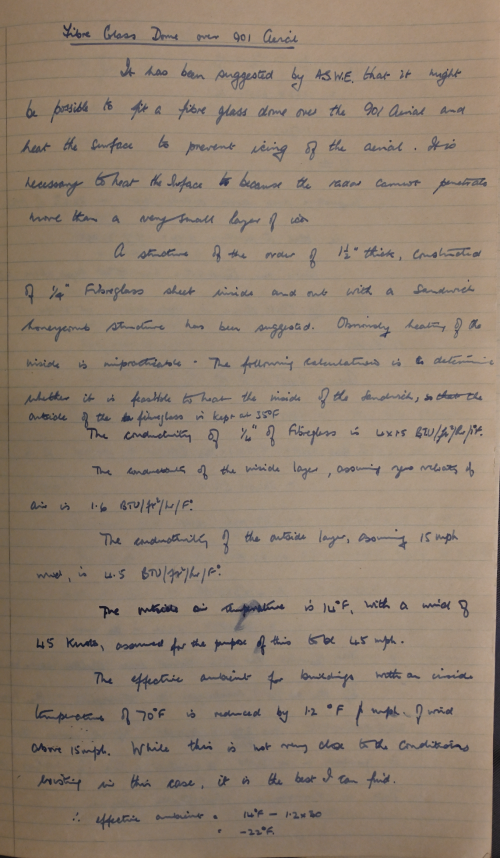
It occurs to me that if you shield the Type 901 from rain and ice by using a fiberglass dome. Then the de-icing system becomes unnecessary. Which would lower cost of the system.
 
It occurs to me that if you shield the Type 901 from rain and ice by using a fiberglass dome. Then the de-icing system becomes unnecessary. Which would lower cost of the system.
The problem is that you then have ice build-up on the dome.
 
If memory serves, Type 901 used small tubes pumping ammonia to melt ice and then hot air to de-ice and dry the 'face' of the system. Quite a complex but effective setup that could clear it in seconds.

A heated environment inside a fiberglass dome is actually far simpler and keeps the mechanism free of salt encrustation.
 
If memory serves, Type 901 used small tubes pumping ammonia to melt ice and then hot air to de-ice and dry the 'face' of the system. Quite a complex but effective setup that could clear it in seconds.

A heated environment inside a fiberglass dome is actually far simpler and keeps the mechanism free of salt encrustation.
Every time I look at a lot of British Cold War stuff I think that they had one rule: IT CANNOT BE SIMPLE!
 
If memory serves, Type 901 used small tubes pumping ammonia to melt ice and then hot air to de-ice and dry the 'face' of the system. Quite a complex but effective setup that could clear it in seconds.

A heated environment inside a fiberglass dome is actually far simpler and keeps the mechanism free of salt encrustation.
The use of an electric/hot air had been considered, but it would have needed 200kW for 10 minutes to melt the ice. The use of ammonia was lighter, had a much lower power requirement, and was quicker -around 20-25 seconds to clear the radome front of ice.

SRJ
 
The use of an electric/hot air had been considered, but it would have needed 200kW for 10 minutes to melt the ice. The use of ammonia was lighter, had a much lower power requirement, and was quicker -around 20-25 seconds to clear the radome front of ice.

SRJ
Wasn't air used to flush out the ammonia?
 
My archive on the GW designs Workbooks:
It is available for a week if anybody wishes it to download feel free, if cannot do so after the expiration date tell me and I re-upload them.
Hope they contain some important data to you all!
It includes T.J. O'Niell's Workbooks as well
 
Last edited:
"Enlarged Type 989 radar"?
 
I think it's "984" given the style of the handwriting. Note the 4 is similar to others at the bottom of the page and does not match the 9s.
 
My archive on the GW designs Workbooks:
It is available for a week if anybody wishes it to download feel free, if cannot do so after the expiration date tell me and I re-upload them.
Hope they contain some important data to you all!
It includes T.J. O'Niell's Workbooks as well
Oh that's rather large!

I don't think I can spare the storage for over 20GB of data.
 
W. J. Williams' Workbooks:
Note that Book 3 contains some calculations for the preliminaries of the SSN HMS Dreadnought (Studies 6,9,11/11A,12)

Also, does anybody know the full names of these naval engineers/Architects?
T. J. O'Neill
W. G. John
W. J. Williams
R. J. Daniel (or R. G. Daniel)
J. Paffett (or G. Paffett)
L. G. Franklin
K. G. Mans-Bridge
P. J. R. Lymons (or P. G. R. Lymons)
R. G. Pitt
O. E. Sharpe (or A. E. Jharpe)
 
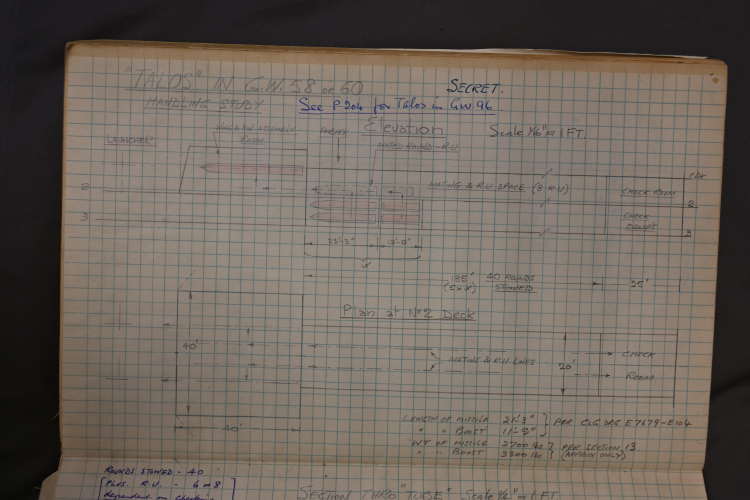
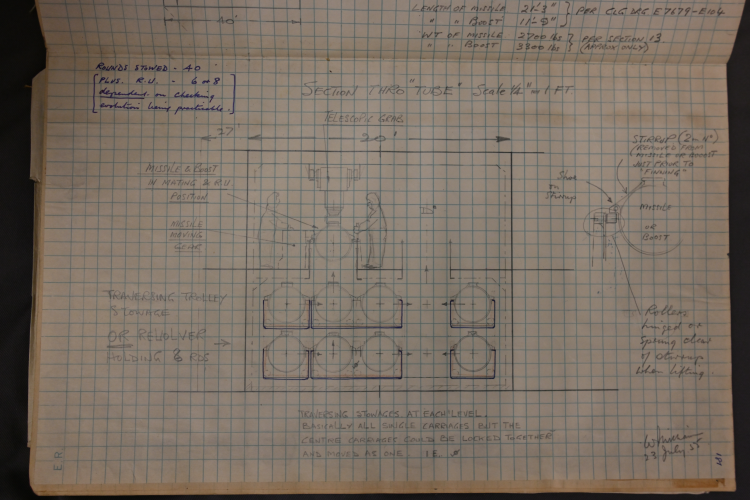
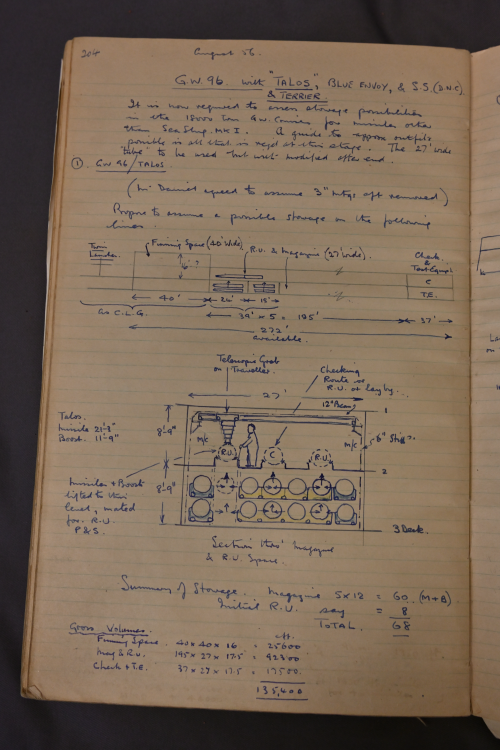
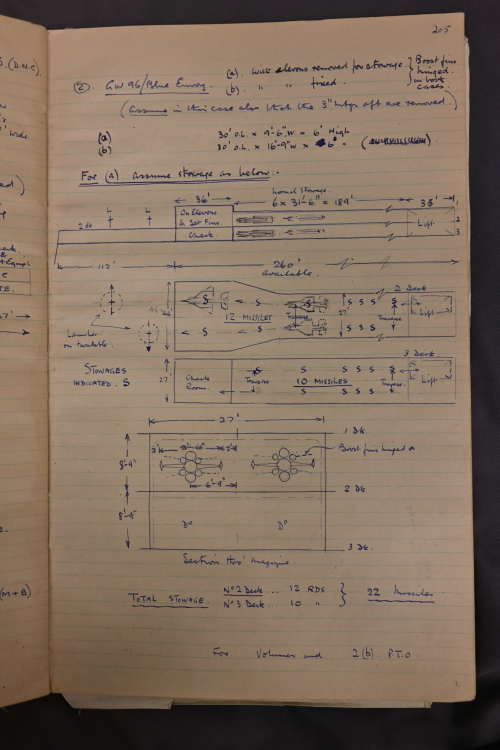
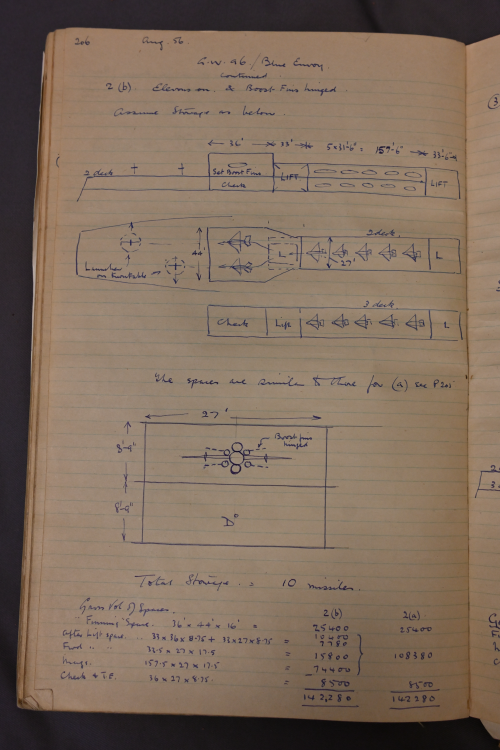
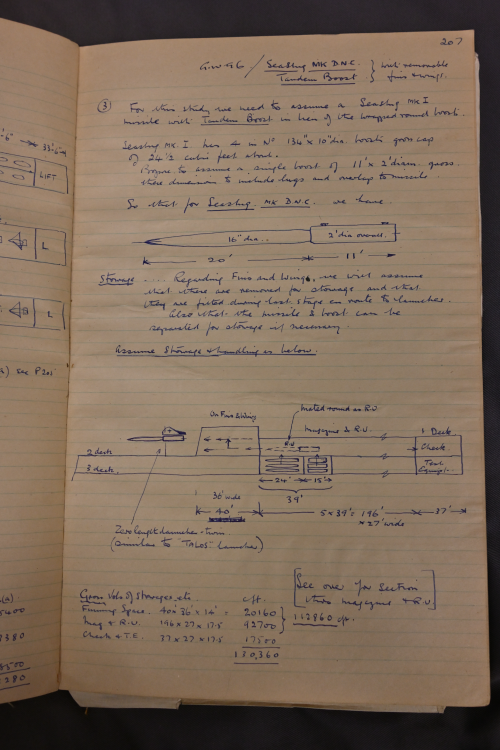
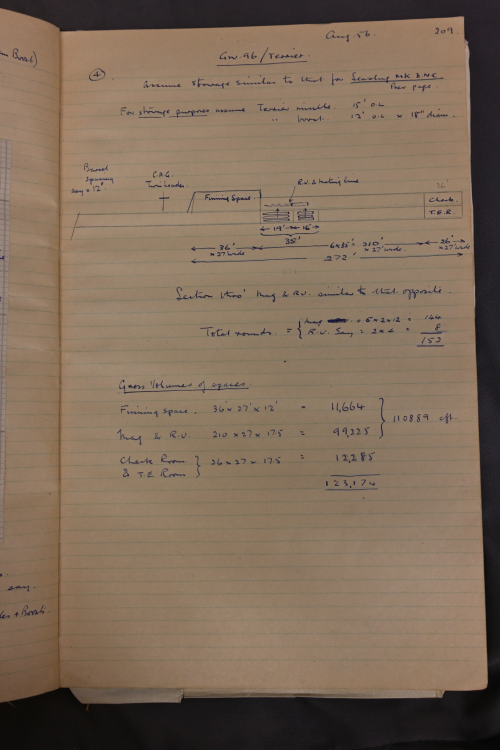
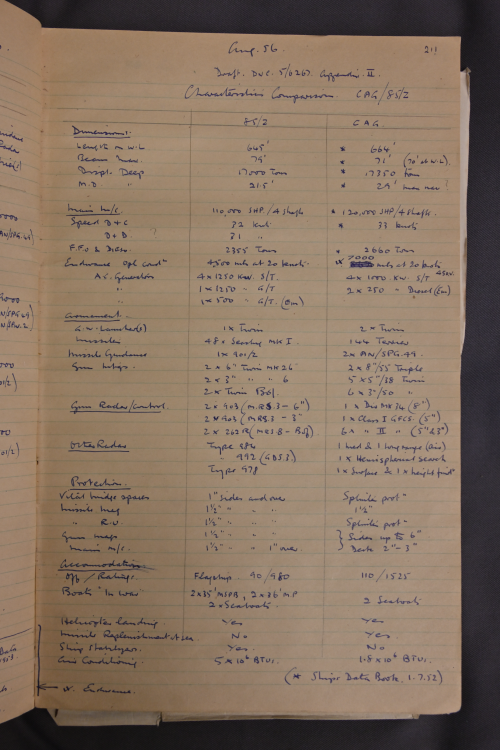
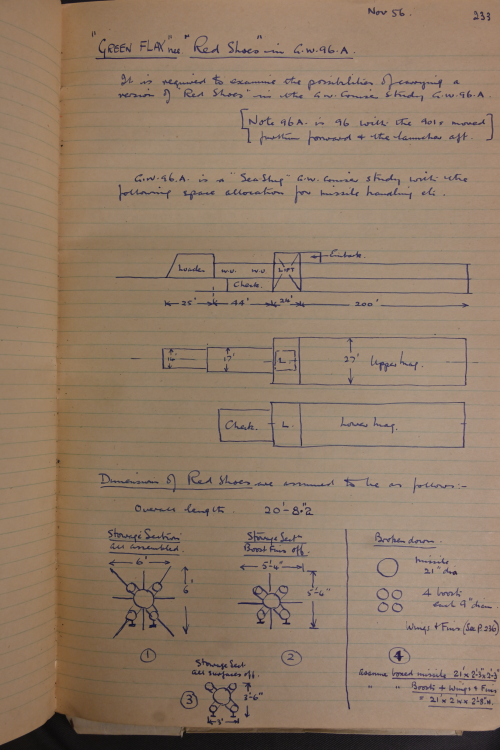
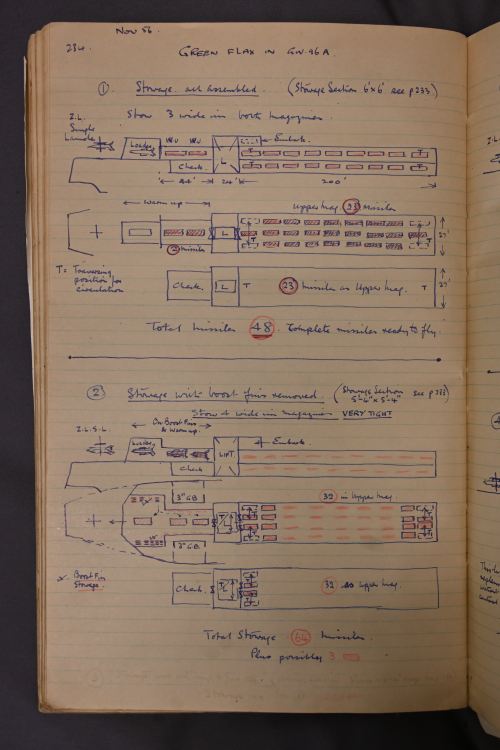
And GW.96 with Talos, Blue Envoy & S.S. (DNC) & Terrier:
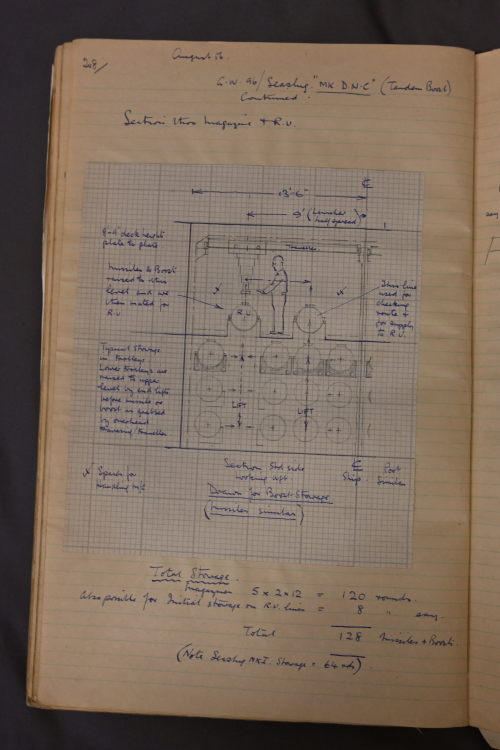
Seaslug (DNC) as sketched by Williams is reassuringly similar to my own estimate of 30 ft 9 in long and a 21-inch diameter booster. No real surprise there, but I would say that.

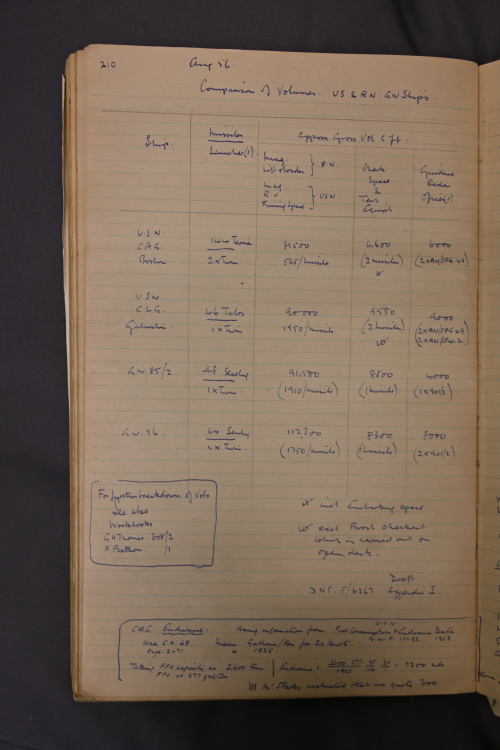
It's abundantly clear that Seaslug (DNC) is a much better use of space than the actual missile, getting 128 missiles onto a ship (GW96) that would carry 64 of the 'official' version. Using the calculation methodology shown on Page 210 of Williams's workbook, it gets 881 cubic feet per missile, compared to 1,750 cubic feet per missile for 'standard' GW96. Quite why the idea that Seaslug made efficient use of space got established I don't know: itt's manifestly incorrect.

Also, it would be really handy if we could go back to using Workbooks. I've had cause to refer to some in the day job, and they're very useful indeed for understanding a design process.
R. J. Daniel (or R. G. Daniel)
First name? No. Have his autobiography? Yes. Every single reference to him which I can easily find uses his initials. Referring to Daniel's autobiography, though, James Paffett was his predecessor in the cruiser design section. Does prompt the thought that I've definitely got three degrees of separation to R. J. Daniel, and possibly just two.
 
Oh that's rather large!

I don't think I can spare the storage for over 20GB of data.
My archive on the GW designs Workbooks:
It is available for a week if anybody wishes it to download feel free, if cannot do so after the expiration date tell me and I re-upload them.
Hope they contain some important data to you all!
It includes T.J. O'Niell's Workbooks as well
Could ypu re-upload it I was a few days away and missed it, so I could not download it
 
Last edited:
@Tzoli , thank you for posting these but most of all thank you, and to anyone who is supporting you, for having the patience to go through the constructors workbooks. I started this process myself but abandoned it as I found the effort to reward ratio misaligned.

For context, these are workbooks in the truest sense, literally books in which individuals worked on whatever task they had been given. It could be the basic calculations for an early ship concept or detailed workings for a subcomponent, e.g. I read one book that contained nothing but calculations for rudder size on the 1952 carrier. Some of the workbooks are virtually empty.

I have long assumed they contain un-mined gold on 1950s designs and you have shown they do when it comes to GW ships. I suspect there is more to be found on the fast A/S escort (a design so detailed that DNC was concerned by the width of the gangways at the point it disappeared) and probably some of the early 1950s cruiser designs.

Seaslug (DNC) as sketched by Williams is reassuringly similar to my own estimate of 30 ft 9 in long and a 21-inch diameter booster. No real surprise there, but I would say that.

It's abundantly clear that Seaslug (DNC) is a much better use of space than the actual missile, getting 128 missiles onto a ship (GW96) that would carry 64 of the 'official' version. Using the calculation methodology shown on Page 210 of Williams's workbook, it gets 881 cubic feet per missile, compared to 1,750 cubic feet per missile for 'standard' GW96. Quite why the idea that Seaslug made efficient use of space got established I don't know: itt's manifestly incorrect.

The 64 Seaslugs in GW.96A were to be stored with their wings and fins attached so they could be run out on to the launchers with minimal human involvement. It was the fins and wings that were space inefficient but this was a trade to ensure a high rate of fire (hence two Type 901s against one launcher). In that context, the boosters were in the spaces created by the missile's wings and fins, and were space efficient.

On the later County class destroyers, probably driven in part by the presence of only one Type 901, higher missile density was achieved by removing the wings and fins, up from 24 to ~40 IIRC. Apply the same scaling to the 64 in GW.96A and you get to triple digits.

@SeaslugMk2 knows more about this than I do but from my perspective Seaslug gets a bad reputation for three reasons:

1. A disastrous recasting of the future building programme in late 1954 by 1SL Rhoderick McGrigor that turned the GW ships into hybrid missile/gun cruisers, compounded by 1SL Louis Mountbatten commanding that Seaslug be fitted to the GP destroyers (1955) that resulted from the same recasting seemingly without understanding the missile was part of a much wider system, then cancelling the cruiser (1956/7). Net result, the only ships fitted with Seaslug looked like weird hybrids and had sub-optimal installations (only one Type 901 and no 3D radar).

2. Some overly harsh criticism by certain authors that doesn't align with known test results and operational history.

3. The design not being taken any further. For instance, pressing on with the semi-active radar seeker that was an early part of the programme and taking full advantage of the unused space in the handling and launching system could have produced a 50nm semi-active homing missile for mid-1960s.
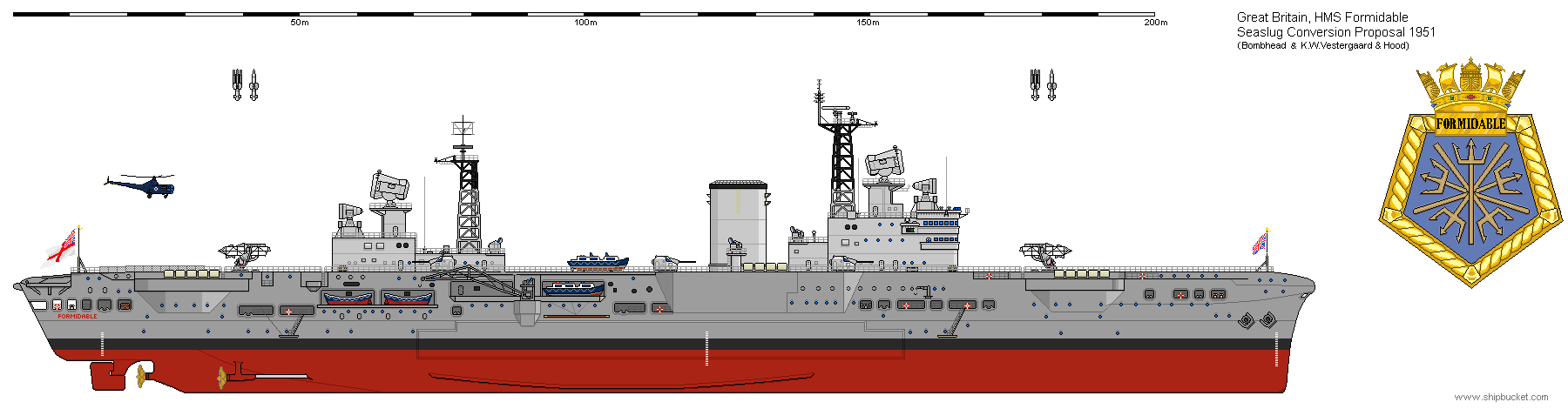
 
disastrous recasting of the future building programme in late 1954 by 1SL Rhoderick McGrigor that turned the GW ships into hybrid missile/gun cruisers, compounded by 1SL Louis Mountbatten commanding that Seaslug be fitted to the GP destroyers (1955) that resulted from the same recasting seemingly without understanding the missile was part of a much wider system, then cancelling the cruiser (1956/7). Net result, the only ships fitted with Seaslug looked like weird hybrids and had sub-optimal installations (only one Type 901 and no 3D radar).
I really must refresh my memory on the events of this period, as it does seem to be key to the UK's Cold War defence - this is the Radical Review, or something separate.
The design not being taken any further.
Yes - there's a particular tendency (for all UK weapons systems) to compare an obsolete system at the end of its life with its US counterpart that had been continually updated.
 
Here it is, for the next 6 days:
I have all of W. G. John's Workbooks (1-16) but it starts with Destroyer designs of 1927/28 and altogether weights 77Gb! so I only included the last two which is relevant to this topic.
 
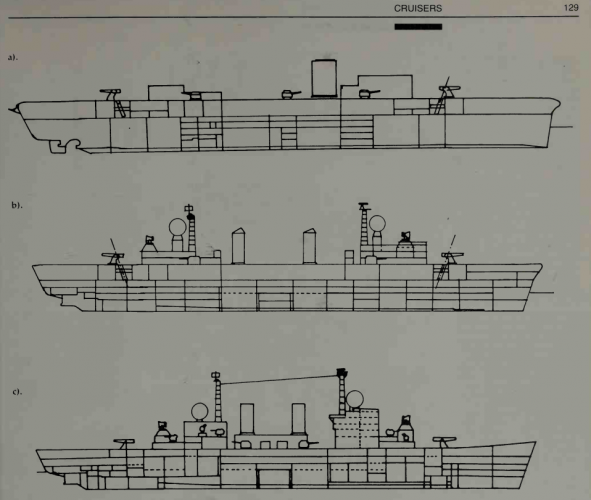
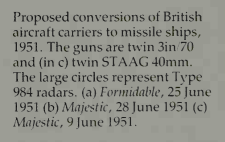
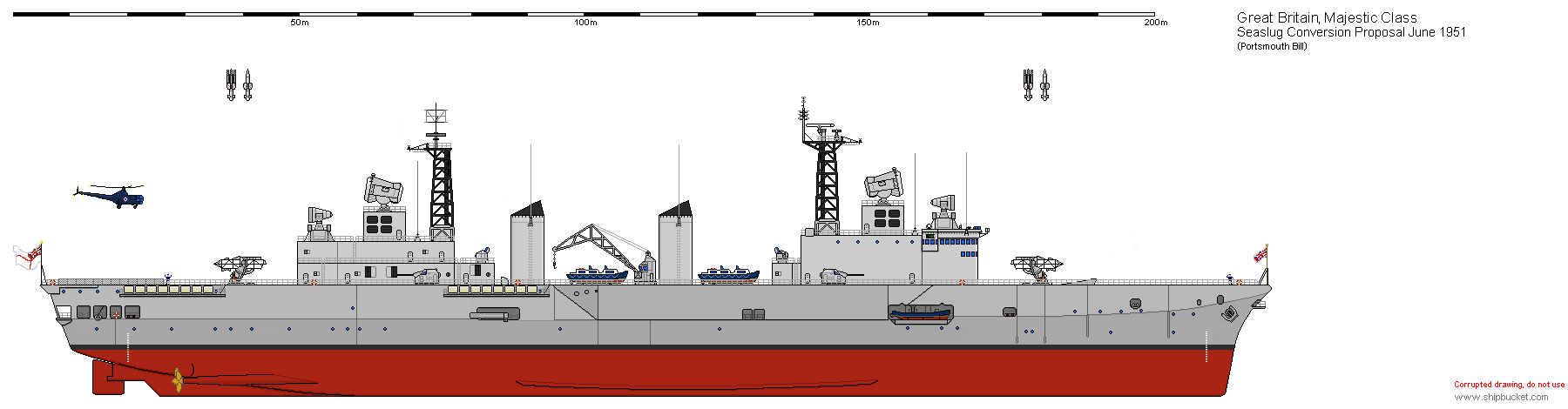
Nope, those conversion proposals in 1951 were for air defence ships, not the missile-armed carrier uk75 refers to.
 
The appropriate part from Friedman, Post War Naval Revolution:

1770518302207.png


1770518311641.png

In December 1950, the Ship Design Policy Committee defined a missile ship program:

— A: Task force ship, 30 knots, two triple launchers.

...

Tvpe A was to operate with the fleet and with special convoys. Its main requirements were speed and missile stowage capacity, although fighter direction would also be desirable. Three carrier classes were investigated: the existing Colossus class light fleet carrier, which was too slow; the Majestic class, no faster, but still under construction and so perhaps less expensive to convert; and the armored fleet carrier Formidable, which in anv case would have to be rebuilt to operate modern aircraft.

Tentative staff requirements were drawn up in 1949 for a light carrier conversion. She would be armed with two triple launchers (90 missiles each) each with its GMS 1 (Type 901 radar) director; four twin 3in/70 controlled by the new MRS 4 director (905 radar), and four close-range weapons (unspecified) with their director. The search radars would be limited to a 960 long-range unit and a 992 target acquisition radar (working with the GDS 3 system); there would be no fighter control facilities. The light carriers were entirely unprotected; 2in splinter protection would be applied to their missile magazines. Such ships were also too slow, at about 25 knots (40,000shp). They would have to be re-engined. It was estimated that they could make 31 knots on 68,000shp at an increased displacement of 21 ,000 tons. Endurance would be 4500nm at 22.5 knots; the standard figure in the later designs was 4500nm at 20 knots.
 
Hmm, MRS.4 would be the director for the 3" guns?
In the fleet the MRS.3 was used for this role.
Do you have any more about this MRS.4 or Type 905 radar?

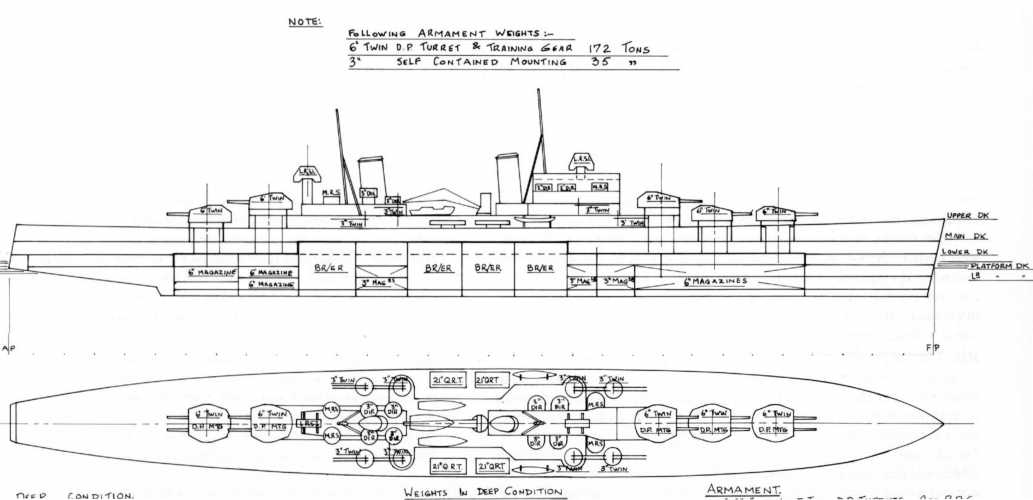
One of the Minotaur (The British Worcester) preliminaries featured two LRS for the 6" guns, four MRS and eight 3" directors:
1770543293682.png

I thought the MRS would be the MRS.3 but the 3" director I have no idea of (used the CRBFD in their place)
 

Similar threads

Back
Top Bottom